Jump to ratings and reviews
Rate this book

LAMPEDUSA: A NOVEL

Rate this book
SHORTLISTED FOR THE 2019 SCOTIABANK GILLER PRIZEFrom the #1 nationally bestselling author of By Gaslight , a novel of exquisite emotional force about love and art in the life of one of the great writers, reminiscent of Colm T�ib�n's The Master , or Michael Cunningham's The Hours .In sun-drenched Sicily, among the decadent Italian aristocracy of the late 1950s, Giuseppe Tomasi, the last prince of Lampedusa, struggles to complete the novel that will be his lasting legacy, The Leopard . With a firm devotion to the historical record, Lampedusa leaps effortlessly into the mind of the writer and inhabits the complicated heart of a man facing down the end of his life, struggling to make something of lasting worth, while there is still time.Achingly beautiful and elegantly conceived, Steven Price's new novel is an intensely moving story of one man's awakening to the possibilities of life, intimately woven against the transformative power of a great work of art.

336 pages, Paperback

First published January 1, 2019

116 people are currently reading
2433 people want to read

About the author

Steven Price

5 books271 followers
Steven Price is a Canadian poet and novelist.

He graduated from the University of Victoria with a BFA in 2000, and from the University of Virginia with an MFA, in poetry.

Price's first collection of poems, Anatomy of Keys (2006), won Canada's 2007 Gerald Lampert Award for Best First Collection, was short-listed for the BC Poetry Prize, and was named a Globe and Mail Book of the Year. His first novel, Into That Darkness (2011), was short-listed for the 2012 BC Fiction Prize. His second collection of poems, Omens in the Year of the Ox (2012), won the 2013 ReLit Award.

Price teaches poetry and fiction at the University of Victoria, where he lives with his partner, novelist Esi Edugyan.

Ratings & Reviews

What do you think?
Rate this book

Friends & Following

Create a free account to discover what your friends think of this book!

Community Reviews

5 stars
376 (25%)
4 stars
600 (40%)
3 stars
356 (24%)
2 stars
105 (7%)
1 star
40 (2%)
Displaying 1 - 30 of 232 reviews
Profile Image for Jaidee .
772 reviews1,511 followers
June 2, 2021
5 "languid, dignified, melancholy" stars !!

The 2020 Gold Award (Mostest favorite Read)

Giuseppe Tomassi di Lampedusa was the last of his royal line. The prince of Lampedusa and the author of "the Leopard" the top selling novel in Italian history that was published posthumously and won the 1959 Strega Prize.

Canadian author Steven Price has written a fictionalized biography of this enigmatic, complex and self-doubting man of erudition, intelligence and deep emotion. This is amidst the turbulent times of Sicily from 1900s to 1950s.

This is one of the most quiet and beautiful novels that I have ever experienced. I cannot say I read this novel as it was like being immersed in a bath covered in the freshest and most fragrant rose petals. It is a book of interior psychological states amidst exterior turbulence, politics and war.

The Prince is slowly dying from emphysema and takes the last few years of his life to explore the nature of memory, the nature of love, the nature of melancholia. He is elegant, self-effacing and appreciates beauty and art in all its forms. He forms strong bonds of love that both oppress and soothe him. He is a gentleman and does not understand that his losses of wealth and home due to politics and war are not personal but more macro in nature. He grieves throughout his life and although very reflective cannot discern his own nature and often those of others. He loses himself in pleasant reveries, painful memories, pastries and cigarettes. He admires both men and women but is also apart from all despite his great love and devotions. He longs for simplicity despite his immense complexities.

I read this most insightful and gorgeous novel with a pain in my heart, a lump in my throat and a shivery pleasure of both melancholy and quiet joy.

I am astounded and grateful that this novel was created and was a perfect read for this time of pandemic and turmoil. Thank you Mr. Price for creating this masterpiece.

I want to leave you with one passage before I go:

Now he thought about her dead body, and the unbroken sunlit palazzo she had once walked through with the gliding footsteps of a god, and the intelligence in her liquid eyes. She had become a part of his, a second great house, a loss he could inhabit that was his and his alone and that could not be taken from him again for it no longer stood in the world of the living. She had become memory, and this he could not reject, for it was not sepatate from his self , and so she had achieved what she had desired in the end.

Profile Image for Katie.
298 reviews504 followers
October 9, 2021
Very rarely there arrives a book I never want to finish. Lampedusa tells the story of the Italian writer at the end of his life. It's a deeply moving account of old age in a world that has dramatically changed. (He has lived through both world wars, fought in the first one.) Mostly set in Sicily which is stunningly evoked it's extraordinary how much wisdom there is in this novel and how eloquently and beautifully it's expressed. My favourite read of the year and massive thanks to Jaidee whose fabulously enthusiastic review inspired me to buy it.
Profile Image for TBV (on hiatus).
307 reviews70 followers
January 11, 2020
”He had lived sixty years on this earth and his memories had grown up around him like a garden, so that he now could walk among them and reach out a hand and crush their leaves in his fingers for the scent.”
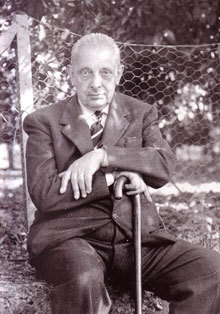

Historical Background


Giuseppe Tomasi di Lampedusa (1896-1957)


Lampedusa by Steven Price
After being diagnosed with advanced emphysema (later he was diagnosed as having lung cancer) Giuseppe Tomasi commenced writing his novel Il Gattopardo.

This novel, Lampedusa, commences in the year 1955 with Tomasi’s visit to the doctor and focuses on Tomasi’s thoughts and feelings as he writes his grand opus.

Through his thoughts we learn of Tomasi’s past, of his mother’s grief at various losses in her family (I won’t go into detail in order not to spoil anyone’s reading), and his own feeling of loss at the destruction of his ancestral home (the family had other properties too) during WWII. Nothing in his life is as it was. Everything has changed and keeps changing. And so he sets about writing about the world that was and the changing world.
”He had thought to write a novel in the manner of Joyce, a single twenty-four hour account of his astronomer great-grandfather during the landings of Garibaldi’s soldiers in May of 1860. His prince, Don Fabrizio, would observe uneasily the passing of his world, and his class, and the coming of the new Italy. A nephew, Tancredi, handsome, charming, changeable, would see his opportunity and fight alongside the redshirts.”

However, as the novel progresses Tomasi’s ideas change, and so does the novel and its time span. The novel almost takes on a life of its own: ”What surprised him now was the increasing certainty he felt that it was not new but very old, that he had not created this novel but rather helped it to create itself. It was not he but the novel that had made demands.”. He writes, changes, adds, changes, and so on, and as he writes he uncovers hidden corners in himself and he writes away the cobwebs he finds there. He also thinks about the fact that he is the last of his family line, and soon they would be no more: “Three times in their known history the Tomasi had nearly died of extinction, had relied on the survival of a single child.” “And he understood his great regret: after him would come nothing. He had produced neither son nor daughter. He had failed them all.”
###
“This state of things won’t last; our lively new modern administration will change it all.” The Prince was depressed. “All this shouldn’t last; but it will, always; the human ‘always’ of course, a century, two centuries . . . and after that it will be different, but worse. We were the Leopards and Lions; those who’ll take our place will be little jackals, hyenas; and the whole lot of us, Leopards, jackals and sheep, we’ll all go on thinking ourselves the salt of the earth.” Don Fabrizio, 'The Leopard' by Giuseppe Tomasi di Lampedusa]

#####
This moving biographical novel about the last few years of author Tomasi’s life is well researched. There are repeated references to change, and change is also a major theme of 'Il Gattopardo'. I chose to rate it five stars as it immediately sent me scurrying to a biography of Giuseppe Tomasi di Lampedusa (The Last Leopard: A Life of Giuseppe Tomasi di Lampedusa by David Gilmour). Years ago I read 'The Leopard' and saw the film (starring Burt Lancaster as Don Fabrizio, Alain Delon as Tancredi and Claudia Cardinale as Angelica), but I am now motivated to read 'Il Gattopardo' in the original. A novel which inspires me thus deserves a high rating in my estimation.

Extracts
“His true home stood behind thick walls several streets away, in a slump of cracked stone and wind-rotted masonry from a bomb borne across the Atlantic, a bomb whose sole purpose was the obliteration of the world as it had been.”

“He had loved this house as he had loved nothing else in his life. He remembered the rooms where he had slept until two months before the Allied bomb obliterated the palazzo. He had been born on a table five yards from that bed and he had believed his entire life that he would die staring at the plaster of that ceiling. No other house had been a home to him. Only here did he sense how belonging and time and space were one, how a life entered the world in a place fraught with pain and love. He had walked the halls of that love for most of his life.”

“In Palermo, Excellency, it is 1955. But there is no date in Agrigento, there is no year in Palma di Montechiaro. You will see. It is a world that has already passed elsewhere.”

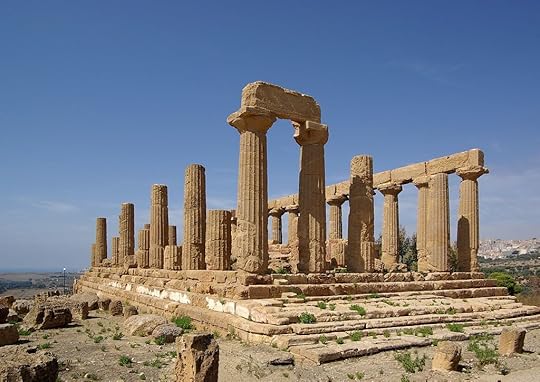
Temple of Hera - Agrigento, Sicily

attribution

“It seemed to him, he said, they were describing an island he had read about once, a place and time long since vanished.”

“He had learned over a lifetime of reading that no word could be the only word and that art held value precisely because it answered nothing. All it could do was ask the old questions, over and over. What Virgil had feared, Eliot had feared. Homer’s longing had been suffered by Stendhal. No book made any other less necessary.”

“Perhaps, he thought, art could not be created without the failings of its maker. Perhaps it was the very weakness of the writer that made the writing human, and therefore moving, and therefore worth preserving.”

“All this was in his mind as he read slowly, carefully, the craggy blue scrawl in his notebook. He listened as his prince strode through the pages, a figure with his own gravity, desiring some spiritual substance in the flesh that he would not find, for it did not exist, and he found himself moved by his own words.”

“The sentences were strong, tensile, and when he tried to pare them away they would not let themselves be pruned.”

“There were truths inside the story that surprised him, that he had not intended. It felt at times as if he were overhearing the novel speaking to itself. His prince, he saw, whom he had always thought of as hollowed out by an absent faith, in fact was the last of the devout. But his prince’s faith was a faith in tradition, in the fate of a bloodline, and at such moments Giuseppe saw that he had written his way through his own bitterness, towards the man he might have wished to be. His prince stood alone, impassive, needing no one; and because of this, and because there is no true survival in isolation, it would be his prince’s very strength that destroyed him.”


#####
Sadly Giuseppe Tomasi di Lampedusa’s masterpiece was not published during his lifetime; it was published in 1958 to great acclaim, but he never knew what a resounding success it would be.
Profile Image for Charles.
231 reviews
October 27, 2025
Steven Price is a fresh face for me: I hadn't read By Gaslight when it came out, but I may want to fix this now. Not in 2020, an annus horribilis when everything Victorian or Victorian-inspired seems to feel grating somehow, but at some point in the future, certainly. In short, Price made a fantastic impression on this reader. Fun fact: Esi Edugyan and him are an item and live in British Columbia. Maybe this is common knowledge and I’m just late to the party, mind you.

Not only had I not read By Gaslight, I hadn't read The Leopard before cracking open Lampedusa either. In fact, I debated whether it made sense for me to even consider reading a fictionalized account of the life of Giuseppe Tomasi, duke of Palma, prince of Lampedusa, and author of The Leopard, without being familiar — at all — with the man’s renowned work. I figured it could go two ways: either being knowledgeable about his Sicilian novel from 1958 would provide me with insight when I read Lampedusa, which it likely does for people who are, or reading Lampedusa first would pave the way for my heightened enjoyment of The Leopard, one day. In the end, I went along with plan B, so to speak, seeing how Price’s novel was offered to me as a birthday gift a few months ago and has kept tempting me ever since.

I needn’t have hesitated so. Lampedusa — evasive impressions of a faraway island never visited, childhood memories of a collapsed palazzo on the mainland, a fading bloodline with wonderfully rendered family dynamics, the considerate thoughts of his genteel soul at the end of the prince’s life — greeted me with open arms. Taking place mostly in Palermo, on via Butera, the novel features an aristocracy painted in half-tones and with much humanity, at a time when culture and politics were changing fast, in the 1950s, with a monarchy left in ruins, women liberating themselves, and technology making serious headway in people’s lives. Giuseppe Tomasi di Lampedusa comes across as a benevolent and sensitive protagonist, an unarrogant man of letters, and an entirely relatable character — despite his aristocratic descent. At the time of the prince’s death, The Leopard hadn’t been published yet, with no guarantee that it would ever be; Lampedusa is a delicate tale of doubts and hopes, rather than entitlement.

Big feels for this contemplative, more than competent novel. I will definitely read more of Steven Price’s books. Bonus: I still have The Leopard to enjoy, with quite the historical background under my belt now.
Profile Image for Jennifer (Insert Lit Pun).
314 reviews2,229 followers
Read
October 6, 2019
The descriptions of Sicily in here are genuinely transporting, and this is one of those rare books that earns its sentimentality. Elegant and precise and very, very sad.
Profile Image for Krista.
1,469 reviews860 followers
September 17, 2019
The past seemed a great flowing passage through which his bloodline passed, back through the wastrel grandfathers and great-grandfathers, to the saints and holy men of the eighteenth century, to the legendary civic figures of the seventeenth and the royal granting of Lampedusa in 1667 and the first Tomasi's wedding to the heiress of Palma, and deeper, back up the coast to Naples, to Capua, and further back to Siena, and then into the fog of an almost time, to Lepanto or Cyprus or the age of Tiberius in Rome. And he understood his great regret: after him would come nothing. He had produced neither son nor daughter. He had failed them all.

In real life, Italian author Giuseppe Tomasi – the last Prince of Lampedusa – wrote his only novel near the end of his life (The Leopard) which was rejected for publication, twice, while he was still alive and has never been out of print since its postmortem release; currently considered the classic of twentieth-century Italian literature, it is taught and studied widely. Now, Canadian author Steven Price has fictionalised Giuseppe's life in Lampedusa, suggesting the forces that would have led the Prince to take up novel writing late in life, making clear that when Giuseppe was writing about his own great-grandfather's witnessing of the end of an era (as Garibaldi ushered in the Risorgimento) he was really examining the end of his own era (in the aftermath of WWII), and in a flash of dramatic irony (for how can it be otherwise when an author imagines another author's struggles), Price makes clear Giuseppe's (I suppose any writer's) quest for meaning and immortality. Lampedusa is stuffed with biographical and period detail, has a heavy and elegiac tone, and makes for slow reading. It is also thoughtful, lyrical, and tells the story of an extraordinary life. One thing for sure: now I want to read The Leopard. (Note: I read an ARC and passages quoted may not be in their final forms.)

All summer as he had set down his pen and screwed the lid back onto his jar of ink and studied his hands he had seen the flesh of an old man, a failed man. Perhaps, he thought, art could not be created without the failings of its maker. Perhaps it was the very weakness of the writer that made the writing human, and therefore moving, and therefore worth preserving. He had understood for a long time that the world was greater by far than anything he could offer it, and that what he had most longed for, the creation of something to outlive him, a testament in his own hand, would most likely fail in the end. But what he had not understood before was how the strain of the attempt constituted the greater labour. Which, he supposed, as the evenings had lightened in the curtains of his study, was not so very different from the labour of living itself.

According to this narrative, Giuseppe Tomasi was diagnosed with emphysema in 1955, at fifty-nine years old, and this was the primary prompting he (an aristocratic man of leisure who had always read and studied literature for pleasure) needed to begin to write his only novel; the effort taking twelve months and instantly declared a masterpiece by his wife and close friends. Over the course of this year, Giuseppe consciously makes parallels between himself and the fictional prince he writes about, has occasion to contemplate his entire biographical history, and takes trips to various family estates for inspiration and fact-checking; an entire life and its setting is organically related in this way. Between Giuseppe's physical discomfort, his yearnings to be well-received by the literary world, and the regrets that his life has left him with, this is a consistently downbeat read, but I guess that's life; Giuseppe certainly feels real and whole and deserving of empathy.

His gaze would pass first over the dark entrance of a street he knew too well, and it was here that the old quarter lost its beauty for him and became something other than a part of an ancient city on a quiet coastline of Sicily. For Via Valverde opened onto Via di Lampedusa, and he knew that there lay the crumbling plaster and stone of his beloved palazzo, where his mother had lived out her final years, thin, sullen, solitary, a faint reflection of the dazzling creature she had once been, where she had been discovered dead one morning in a ruined armchair in the bombed-out library, under an open sky, one more casualty of a war that had been ended for two years already and yet would not ever end, having destroyed both the past and the future and leaving in the present nothing but devastation and grief.

I wouldn't call this an enjoyable read, exactly – unlike Price's last novel, By Gaslight, which I loved for its twisting plot and punchy language – but Lampedusa is artful and fascinating in its own way. Four stars is a rounding up.
Profile Image for Jin.
846 reviews148 followers
November 21, 2020
Dieses Buch gehört zu denen, die schwierig sind in Worte zu fassen. Manchmal reicht es nicht eine Zusammenfassung der Handlung wiederzugeben; es geht um die Atmosphäre, die das Buch beim Erzählen kreiert, die faszinierend melancholisch und liebevoll über die letzten Jahre des letzten Geschlechts der Lampedusa, Guiseppe Tomasi, erzählt. Wir machen eine Reise, nein, ein besseres Wort wäre wohl eher Spaziergang, durch die Gassen von Sizilien und beobachten aus den Augen des alternden und kranken Guiseppe wie sich die Welt wandelt aus der Tradition in die Moderne. Die Wörter und die Poesie waren grandios, wie ich es von einem Roman erwartet habe, welches in Italien spielt. Es war wirklich wunderschön wie sich vor dem geistigen Auge die schönen Gegenden Italiens gezeichnet hatten und dabei Guiseppe bis zum Schluss begleiten durften.


Du stellst dir immer vor, dass alles besser wird, sagte er jetzt.
Sie sah ihn überrascht an. Wird es ja auch, erwiderte sie.
Du bist eine Optimistin. Hätte ich das gewusst, hätte ich dich nie geheiratet.
Auch du bist voller Hoffnung, mein Schatz, sagte sie. Deshalb bist du traurig.


** Dieses Buch wurde mir über NetGalley als E-Book zur Verfügung gestellt **
Profile Image for Paula Mota.
1,673 reviews567 followers
Read
September 15, 2021
DNF
Um livro muito bem escrito, uma recriação dos últimos anos de vida de Giuseppe Tomasi di Lampedusa, na altura em que, quase em contra-relógio, escreveu “O Leopardo”, para poder deixar algum legado depois de morto, visto que não tinha filhos. O problema é que repete esta ideia constantemente, a cada capítulo, subestimando a inteligência do leitor. Por outro lado, e pode ser preconceito meu, é como a maioria dos norte-americanos a escrever sobre culturas que não a sua: é tudo muito pitoresco.
Profile Image for Penny (Literary Hoarders).
1,305 reviews166 followers
September 9, 2019
A very literary story - as in both it's a story about Giuseppe Tomasi and his writing of The Leopard and written in a literary style. This wasn't a book to race through, the story and style of writing is excellent, but it is definitely one where slow reading must happen.

Lampedusa is longlisted for the 2019 Giller Prize and while it's extremely literary, it sits outside of the others on the list perhaps? It just has a very different sense to it - if I'm explaining that properly. It will be interesting to see if this lands a spot on the shortlist.

I enjoyed it - an excellent story of a man coming to terms with his mortality upon the news of his impending end of life and his struggle to leave a lasting memory with his book.
Profile Image for Susan.
1,699 reviews38 followers
September 10, 2019
This is a fictionalized tale about a real historical figure, the writer Giuseppe Tomasi di Lampedusa. He only wrote one novel, The Leopard, which wasn't published until after his death but was celebrated as one of the greatest Italian works of literature. Giuseppe was also the last Prince of the island of Lampedusa, situated south of Sicily. I have to admit that going into this book I knew nothing about Lampedusa, the writer or the place. I suspected it might be based on a real man but I wasn't sure until I looked it up after finishing and holy shirtballs it was all true!

The start was a little slow but I soon became hooked into the story and the characters. I read this one in fairly short chunks because there was so much going on and so much to think about I needed periodic breaks to digest what I had read. It's beautifully written and quite touching. A story about an old man writing a book doesn't sound exciting but his life and those of his family and friends was extraordinary. The period of his lifetime included two world wars, Mussolini, and the last gasps of the Italian noble and royal families.

At its heart this book is about an old man facing a terminal medical condition and deciding to write a novel as his legacy in the world; a man who felt that he hadn't contributed enough. His memories of the past tell a different tale. His life was full of tragedy and misery but also held love and enjoyment. Lampedusa (the book) is the character study of a man who lived an incredible life during a very tumultuous time in Italian history. I found it fascinating and was completely sucked into Giuseppe's life. It really is a brilliant piece of fiction and I was sad when I was finished and had to leave Sicily behind.
Profile Image for Wendy Hart.
Author 1 book70 followers
December 11, 2024
An absolute gem of a book. Set in the crumbling Palmero, Sicily in the 1950s, it chronicles the final years of the life of the last Prince of Lampedusa and the dying days of the Sicilian nobility. In his final years on this earth, the widely read Prince pens his first and only novel, the Leopard. The tempo is slow, and the theme is introspective. The writing is beautiful. It has a flow to it. It has a mystical feel. I highly recommend this magical read.
Profile Image for Kansas.
818 reviews487 followers
March 1, 2025
https://kansasbooks.blogspot.com/2025...

"He was a man who had left middle age at the way other men will exit a room, without a thought, as if he might go back at any moment. He was fifty-eight years old. A sadness crinkled his eyes, a shyness, evident even in boyhood photographs."


Mientras leía "El Gatopardo" se me cruzó esta fantasmagórica novela de Steven Price que relata los últimos años en la vida de Giuseppe Tomasi di Lampedusa. Ha sido una experiencia interesante sumergirme en ella mientras leía El Gatopardo, porque ha resultado una especie de experiencia interactiva: por un lado la lectura del Gatopardo, memorable y adictiva a medida que avanzaba, y por otra parte, la Lampedusa de Price que relata precisamente el proceso interior que sufrió Giuseppe Tomasi di Lampedusa para crear un libro, un único libro, y que finalmente no pudo publicar en vida. La sensiblidad, el lirismo con el que aborda Price esta historia me ha hechizado porque está abordada desde un intimismo siempre conectado con el proceso de la creación artística. Establece una similitud entre Giuseppe Tomasi di Lampedusa y su personaje del Gatopardo, el príncipe Don Fabrizio, el primero porque sobrevivió a una guerra y se encontró a una Italia devastada tras la Segunda Guerra Mundial en los años 50, y el segundo, su personaje porque se vio sumergido en medio de una transición histórica, que fue la de la unificación de Italia.


"You are filled with hope, she said. And that is why you are sad."


Así que Price no solo consigue establecer estas similitudes históricas, sino además nos confronta ante la pregunta ¿hasta qué punto Lampedusa y Don Fabrizio se mimetizaban en una misma persona? ¿Estaba escribiendo Giuseppe Tomasi sobre sí mismo al crear a Don Fabrizio y construyendo el hombre que le hubiera gustado ser? Steven Price es también poeta, y leyendo “Lampedusa” se nota que le interesan mas cuestiones internas, íntimas relacionadas con la creación artistica, con los conflictos, las contradicciones y el sufrimiento que emanan al crear una obra. Sin embargo, Giuseppe Tomasi di Lampedusa, no era un escritor profesional, aunque había escrito poemas en la intimidad, sino que era un lector ávido, al que sus primos llamaban Il Mostro por cómo devoraba los libros: “He read voraciously, in italian, french, english, and had done so for more than a half century. Il Mostro, his cousins called him, for the way he could devour a book. The Monster.” Quizás el hecho de no estar sumergido en el mundo editorial, de no estar embebido en estos círculos literarios, fue lo que le supuso el sufrimiento que vivió en estos últimos años cuando no consiguió publicar esta su única obra cuando ya se encontraba muy enfermo. De alguna forma escribió El Gatopardo sabiendo que eran los últimos años de su vida, y quería dejar una constancia de su vida y porque confiaba ciegamente que había escrito una obra magnífica. Es esta tristeza, esta melancolía que le acompaña una vez terminado El Gatopardo una consecuencia de la esperanza que había tenido en ella. Una esperanza que en vida no pudo cumplirse.


"What surprised him was the nature of the fear inside him, how little seemed to have changed. He supposed fear must be the one constant in his life. He could think back with great clarity to those fears of his childhood and see in them the seeds of the man he had become. It was fear that led to his shyness, fear that led to his voracious reading. And, too, it had led to his writing of the novel."


Price conecta a Giuseppe Tomasi di Lampedusa con el príncipe Fabrizio porque los miedos que de alguna forma mantienen vivo a Giuseppe Tomasi, miedos que le han llevado a ser tímido, a encerrarse en los libros como un refugio, a llevar una vida más hacia el interior que hacia el exterior, de alguna manera se contraponen al personaje que él crea en el príncipe Fabrizio, a simple vista todo lo contrario a él porque no es para nada tímido, aunque si tiene una vida interior en la que observa la vida casi como desde un palco, y sin embargo, ambos hombres se encuentran hacia la parte final de sus vidas en la que se cuestionan todo. Price crea una novela en la que la muerte es un tema fundamental y esencial, porque está siempre presente en esta última etapa de la vida del escritor: no le tiene miedo al igual que el príncipe Fabrizio tampoco se la tiene pero ambos querrían dejar algunos asuntos zanjados antes de abandonar el mundo. "There were truths inside the story that surprised him, that he had not intended. It felt at times as if he were overhearing the novel speaking to itself. But his prince's faith was a faith in tradition, in the fate of a bloodline, and at such moments Giuseppe saw that he had written his way through his own bitternesss, towards the man he might have wished to be. His prince stood alone, impassive, needing no one." Mientras leía la novela de Price pensaba que había creado una historia dentro de otra historia, porque aunque Price no intenta resucitar El Gatopardo si que consigue recrear la atmósfera de melancolía que emana de ella y porque para mí quizás lo esencial de esta magnifica novela no es tanto el argumento en sí en torno a la vida de Giuseppe Tomasi, sino cómo nos describe lo que es el proceso de parir un libro, cómo se crea una novela, como la concibe y el sufrimiento que conlleva llevarla hasta su final, más en el caso de Giuseppe Tomasi que no pudo verla publicada. Rechazada por Mondadori y Einaudi en vida, fue Giorgio Bassani quién la publicaría en 1958, un año después de su muerte.


"Had Stendhal believed in eternity? He had written that a person, no matter how insignificant, ought to leave behind some chronicle on their time on this earth, some accretion of their collected memory and experience. That was the only eternity. He, Giuseppe Tomasi di Lampedusa, had created nothing. The regret he felt surprised him. Time was running out for everyone.

"Literature for him had always been charged with its own self-doubt, one novel inexorably questioning a predecessor, one writer's faith scraping away at another's. This was its truth. He had learned over a lifetime of reading that no word could be the only word and that art held value precisely because it answered nothing. All It could do was ask the old questions, over and over.

What Virgil had feared, Eliot had feared. Homer"s longing had been suffered by Stendhal. No book made any other less necessary."


Steven Price recrea con fidelidad los datos históricos en torno a Giuseppe Tomasi di Lampedusa relacionados con su vida, su familia, su pasado, sin embargo, no abusa de los flashbacks ni le interesa convertir este libro en una biografía, nada más lejos de esto. Consigue crear una obra muy poética en la que se centra sobre todo en la vida interior del autor del Gatopardo, por supuesto producto de la imaginación de Price, pero en este aspecto creo que triunfa a la hora de mostrarnos a un Giuseppe Tomasi tan contemplativo como lo pudo ser su príncipe Fabrizio. En defintiiva, agradezco el momento casual (o no) en que se me coló Lampedusa de Steven Price mientras investigaba datos durante la lectura del Gatopardo porque me he encontrado con una novela que ha enriquecido esta lectura como ninguna. Ambas obras se complementan a la perfección.


"What troubled him was how little would stand in his place, once he was gone. How little he would leave behind. He did not believed there was life beyond the grave and when he prayed to his mother he knew the words were just that, words. She was nowhere."

♫♫♫ Centro Di Gravità Permanente - Franco Battiato ♫♫♫
Profile Image for Liina.
355 reviews322 followers
November 9, 2023
Lampedusa by Steven Price is an achingly sad and elegiac novel about the final years of Giuseppe Tomasi di Lampedusa. A lifelong reader diagnosed with a terminal illness, he decides to write a novel - The Leopard - that gets published posthumously and becomes one of the most-sold Italian novels.

But this is anything more than a dry biography. Despite its bleak outcome, evident from the beginning, it is a novel that is almost a love letter to life itself. It has a particularly elegiac and melancholy tone, even further emphasized by the atmospheric setting of 1950s Italy and the bitter melancholy of the changing of time (he was the last prince of Lampedusa and witnessed the gradual decline and ruin of the aristocracy). The novel has a slow pace, and it is one of those books where you really feel you have been to the places the author describes. The sounds, smells, moods, even the dust in the air - everything is there, and every little thing is just right. I found his relationship with his wife Licy, especially touching. But also Lampedusa's attempts to make sense of his past and childhood.

A story of an elegant, quiet man who longs to create meaning on the brink of death. A slow burner of a novel with an ending that made me all teary-eyed.
Profile Image for Jeanette.
4,098 reviews841 followers
December 13, 2020
Cultural immersion coupled with deepest human emotions of memory.

And yet so very sad. Crystal perceptions filtered through melancholic lens of your own vivid memories of a dying world. The world of your youth and often of a much more joyful splendor.

It actually chilled me amidst the ruins left behind. It came way too close to the eyes of age and home.
Profile Image for Peter.
568 reviews52 followers
February 17, 2020
This novel by Steven Price is stunning. it is not a novel to be read quickly, nor should it be. Price’s prose is lush, poetic and thought-provoking. His imagery and creative flair illuminate every page.

Price’s novel is about a man writing a novel. The protagonist of Price’s novel is Giuseppe Tomasi di Lampedusa, a real person who did write one novel. It was a novel that Tomasi never saw published. When it was published it arguably became the greatest Italian novel of the 2oth century. Price’s research and imagination combine to imagine the strengths, weakness, and struggles that Tomasi endured during the writing of his masterpiece. With impeccable prose Price drills down to a place where the question of how we find affirmations for our lives, our dreams, our history.

In this novel you will meet Tomasi’s fascinating wife, his domineering mother, his adoptive son, and a cast of characters who all will linger in your mind long after you complete the novel.

If you are looking for a novel that will make you think, make you order, urge you to reflect I urge you to take the time to savour this novel.
Profile Image for Stephen the Bookworm.
895 reviews122 followers
June 6, 2025
This is an exquisitely beautiful book- tender, poignant and poetic. Although the book focuses upon the last years of Giuseppe Tomasi , the story within is not overly melancholy in fact it feels more life affirming.

The creation of The Leopard and Tomasi’s inner reflections upon the characters and subsequent edits are subtly composed. I read this book slowly savouring each paragraph .

The torments of Tomasi’s life, the power of his mother and subsequent desire to be published are woven together to create a brilliant book. Steven Price has added to the enduring legacy of The Leopard. Simply superb
Profile Image for Kathy.
3,880 reviews290 followers
November 20, 2019
I may not have been a good candidate to read this book as I have not read The Leopard nor have I seen the movie. But I liked the description of the book and it is a handsome book from Farrar, Straus and Giroux at 328 pp.
It intrigued me to read the story of the old man, Giuseppe Tomasi, suffering from lung complaint, yet determined to write the story of his great grandfather - and that is what is documented here. He did not live to see the book published, but it was accomplished not long after his death.
The telling is atmospheric, poetic and exceedingly sad.

Library Loan
Profile Image for Daniel Kukwa.
4,753 reviews123 followers
August 27, 2020
Extremely frustrating. This novel straddles the line between lyrical and lackadaisical...and often falls to both sides. For every section where I am completely drawn in, luxuriating in the detail, the ambiance, the atmosphere, the intensity...there are sections where I'm losing patience, waiting for over-long conversations to finish, and my editorial brain wanting to cut down certain scenes. I'd more than likely award this 3.5 stars, because the lyrical moments outnumber the lackadaisical...but the frustration remains.
Profile Image for Karan.
349 reviews6 followers
February 2, 2020
3++
I enjoyed the references to Palermo and other parts of Sicily, but didn't find the story interesting. Nothing much happens. Perhaps this is simply a story about living in the past, or - living while dying. When the end comes long before the actual death? What we do (and don't do) to push away the end? A metaphor for Sicily? I don't know.
Not a story told in a particularly interesting way.

The Leopard has been on my shelf for awhile. I'll turn to it soon.
Profile Image for Anna.
578 reviews43 followers
September 23, 2019
4.5* Steven Price is becoming one of my favourite authors. I love his writing which I find so elegant, and he is a master at creating setting and atmosphere. He has the ability to transport me right into the book and he did that many times over the course of this novel. Lampedusa is one of the reading hi-lights of my year.
Profile Image for Tom.
446 reviews35 followers
Want to read
June 23, 2021
Maybe this will finally prompt me to read The Leopard, which has been sitting on my shelf for more years than I can remember -- 30+? -- an old Pantheon Modern Classics edition that I pull down every couple of years or so to admire the really cool cover illustration. (actually, if the book mark I just found on pg 178 is accurate evidence -- and I do recognize it as one of my own -- then apparently at some point I did make an attempt to read it and gave up around halfway through. Or maybe I just put it aside with sincere intentions to take it up again soon? Don't remember. We all know how that goes, eh?)
Profile Image for Alysson Oliveira.
386 reviews48 followers
January 19, 2021
Foi muito bom ter relido Il Gattopardo antes de ler o romance Lampedusa, do canadense Steven Price, sobre os últimos anos da vida de Giuseppe Tomaso di Lampedusa, enquanto escrevia seu único romance que acabou sendo publicado postumamente. Price é também um poeta, o que contribui na construção da prosa de sua narrativa, na qual cada palavra pesa. O romance tem uma estrutura parecida com o original, com capítulos cujos títulos rementem ao italiano.

Este é um romance como The Hours, de Michael Cunningham, e The Master, de Colm Tóibín, sobre um escritor e seu ofício. Não é, no entanto, uma biografia, mas uma meditação sobre a arte, seu papel e possibilidades e limitações. A base é Il Gattopardo, e alguns personagens aqui são espelhos dos originais, como o filho adotivo de Lampedusa e sua namorada, Mirella, um reflexo de Tancredi e Angelica. Mas ela poderia ser mais bem desenvolvida, é uma personagem tímida – especialmente em comparação com a estridente Angélica.

O romance de Lampedusa é sobre um mundo ruindo, e um homem, que não faz parte da nova ordem, saindo de cena. Price tenta, ao seu modo, fazer um retrato à mesma moda, mas o problema é tem como modelo um dos maiores romances desse século, ou seja, já de começo, sai com certa desvantagem, porém, ainda assim, se sai bem boa parte do tempo.
Profile Image for MargaretDH.
1,288 reviews23 followers
October 16, 2019
I think I might have read this at the wrong time. I picked it up because it's on the 2019 Giller shortlist, but also because I loved By Gaslight.

Like Gaslight, this oozes with atmosphere, and Price (also a poet) really knows how to turn a phrase. Characters are finely drawn, and I feel like I've been to Sicily. But, fitting to the subject matter, this is a slow, elegaic book, full of regret and sentimentality. It's never trite or unearned, but this leisurely, rather elegant book didn't capture me the way By Gaslight did.

Lampedusa is mostly set in the final years of Giuseppe Tomasi di Lampedusa's life, when he's diagnosed with emphysema and decides that after a lifetime of reading and studying literature, he's ready to write his own book. We follow him through this labour and the end of his life, and some of his reminiscences of his past. Throughout his life, Sicily and Italy have become completely different places, and by the 50s, his class has faded almost to obscurity.

This was truly lovely, but also unhurried and melancholy. I think if I had picked this up at a different time, I would have appreciated it more. But it left me feeling a bit cold, as though I had experienced something technically exquisite, but emotionally dry. Anyway, I might try this again in a few years, and I'm definitely going to read real life Tomasi di Lampedusa's The Leopard.
Profile Image for Aoife.
488 reviews4 followers
August 28, 2020
A slow read for me but not in a bad way. A beautiful story of one man, the last prince of Lampedusa, looking back at his life and observing how much it and his fortunes have changed both as a result of the war and societal changes. The relationship with his wife, adopted son and his ancestor about whom he writes a novel. There are many people who can explain properly why they like a book but I am not one of them unfortunately but I do think this is a well written and moving story.
Profile Image for Amy.
224 reviews1 follower
January 4, 2020
Steven price pulls it off. Historical fiction - a book about a man writing a book. Yet, this book stands out in its own right. Beautifully written. Lyrical and measured, almost like a musical composer as described in the novel but with words. I was moved by the way Lampedusa’s love for Licy is described. I would love for a man to love me like that.
Profile Image for Kingofmusic.
271 reviews55 followers
January 5, 2021
Der letzte seiner Art

Guiseppe Tomasi di Lampedusa mag der entsprechenden Leserschaft in Form seines einzigen Romans „Der Leopard“ bereits bekannt sein. Ich hatte bis zur Leserunde zu „Der letzte Prinz“ von Steven Price noch nie das Vergnügen – weder mit Autor noch mit dem Buch. Das hat sich nun gründlich geändert.

Denn auch, wenn es dieser fiktionalen Biografie zum Ende hin nicht ganz gelingt, in die „Kings Crown Juwels 2020“ aufgenommen zu werden, so hat Steven Price doch ein feines Buch vorgelegt, dass geneigte Leser:innen in Augenschein nehmen sollten.

Guiseppe Tomasi genießt das Leben; als letzter (verarmter) Spross eines sizilianischen Adelsgeschlechts. Vielleicht rührt daher das Bedürfnis, etwas „Bleibendes“ nach seinem Tod zu hinterlassen; bekommt er doch bereits am Anfang des Romans die Diagnose Lungenemphysem. Das hindert ihn allerdings nicht daran, weiter wie ein Schlot zu rauchen…

Vor der äußerst stimmungsvollen und bildhaften Kulisse des vergangenen Siziliens fängt Guiseppe Tomasi an, (s)einen Roman, sein im wahrsten Sinne des Wortes „Lebenswerk“ zu schreiben (besagter „Der Leopard“), dessen Veröffentlichung er allerdings nicht mehr erlebt, da er Zeit seines Lebens von den Verlagen abgelehnt wurde; selbst sein Cousin Lucio Piccolo steht der Veröffentlichung kritisch gegenüber.

Tomasis Leben lernen die Leser:innen nach und nach in Rückblenden kennen; die Zeitsprünge sind nicht chronologisch, was aber bis auf eine Ausnahme nicht weiter stört; dazu gleich mehr. Dabei werden Schlaglichter auf die Mutter/Sohn-Beziehung sowie auf die Beziehung mit seiner Frau Licy gesetzt.

Die größtenteils poetisch anmutende Sprache von Stephen Price passt hervorragend zu der Kulisse von Sizilien und irgendwie habe ich große Lust bekommen, an die Originalschauplätze zu reisen. Man wird ja wohl noch träumen dürfen…*g*.

Leider geht dem Roman nach dem unabwendbaren Tod von Guiseppe Tomasi sprichwörtlich die Luft aus. Statt eines vernünftigen Nachworts gibt es einen Zeitsprung von über 40 Jahren in der Handlung, in der der Adoptivsohn von Guiseppe Tomasi zu Wort kommt und in welchem die geneigte Leserschaft erfährt, wie es doch noch zur Veröffentlichung des Romans und der dazugehörigen Verfilmung gekommen ist. Der ganze letzte Abschnitt macht auf mich leider einen gehetzten Eindruck – als wenn der Autor schon vor Ende der vereinbarten Seitenzahl zum Tod von Guiseppe Tomasi gekommen ist und die Restseiten noch füllen musste. Das ist das Einzige, was mich richtig geärgert hat an diesem Roman.

Alles in Allem hat mir „Der letzte Prinz“ ganz gut gefallen und trotz des kleinen Wehmut-Tropfens am Ende gebe ich 4* und eine Leseempfehlung.

©kingofmusic

Profile Image for Carole.
763 reviews22 followers
October 24, 2019
This is a moody, beautifully written fact based novel that imagines the final days of Giuseppi Tomasi, the author of the celebrated novel, The Leopard. Tomasi, like his fictional hero, witnesses the profound cultural changes in Sicily following World War II. The book is set in the mid 1950's. Tomasi, who still bears the anachronistic title of Prince of Lampedusa, lives in a crumbling palace with his aging princess. He learns he is suffering from a terminal disease and struggles to finish his sweeping and daring novel, which is rejected by the first two potential publishers. This is an effective and emotive period piece.
Displaying 1 - 30 of 232 reviews

Can't find what you're looking for?

Get help and learn more about the design.