In his meticulously researched book, Wilcox offers a different perspective on the well-known events of World War II. The author walks readers through that fateful December day in 1945 and outlines the plan to murder General Patton.
The death of General George S. Patton is shrouded in mystery. While officially the result of an unfortunate car accident, the evidence points to a far more malevolent plot: murder. So says investigative and military journalist Robert K. Wilcox in his book: "Target: Patton: The Plot to Assassinate General George S. Patton." Written like a WWII spy thriller and meticulously researched, "Target: Patton" leads you through that fateful December day in 1945, revealing a chilling plan to assassinate General Patton. Backing up this shocking story with facts, photos, and eyewitness statements, Wilcox reveals long-hidden documents and accounts that explain how secrets Patton knew--and his strong anti-Soviet views--may have cost him his life. Not only does Wilcox reveal how, why, and when, he also names names--exposing little-known stories and secrets of such key players as General "Wild Bill" Donovan, the storied head of the OSS (the predecessor to the CIA); an OSS assassin; an Army intelligence agent; and even Josef Stalin himself. "Target: Patton" challenges readers to look at the evidence and question the conventional wisdom. After reading it, few will think of General Patton--or the circumstances surrounding his death--in the same way again.
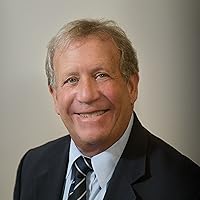
Robert K. Wilcox is a bestselling author, screenwriter, novelist and journalist. He specializes in mysteries and military history. He began his career as religion editor of the Miami News, winning the Supple Memorial Award as the best religion writer in the nation. He went on to write for the Miami Herald, New York Times and other major newspapers and magazines before becoming a television writer and story editor. He has written 10 books and specializes in political articles when not writing books. His next book is Target JFK: The spy who killed Kennedy?, to be published November 2016. He lives in Los Angeles. His website is: www.robertkwilcox.com
I bought this book on the recommendation of Tim Kelly/Our Interesting Times. Prior to hearing about this book, I had independently and spontaneously had the idea/realization that Patton was assassinated (based on learning more about what he had to say about the foundational myth of the 20th century--or at least part of it--and many parties involved therein). Early on in the book, I regretted getting it because it seemed like a lot of fluff, speculation, false information, and worst of all, blue-pilled/kosher language in regards to Pearl Harbor, Nazis, certain players in the United States, etc.
However, after having finished, I think the book is well worth the read, especially for most "normie" readers because of the immense amount of information/red-pills sprinkled throughout, including how:
-the U.S. government was littered with communists and Soviet Spies and even the U.S. military was overly favorable and even obsequious to the Soviets
-Patton was thwarted in his war efforts, wanted to and (I believe) very likely could have taken Berlin and Prague long before the Soviets took those cities were it not for his superiors' caving in and trying to give Montgomery a chance for success in the disastrous "Operation Garden Market"
-Soviet agents had their way in American occupied zones, for example: two Soviet agents were caught by Patton trying to bug wires by Patton's base, arrested, released by the U.S., and caught again doing the same thing
-the U.S. government/military left U.S. troops who were in German POW camps that were overrun by the Soviets to their fate, which for the vast majority included being worked to death, tortured, and/or executed
There are many more I can't remember at the moment. Maybe this book is written the way it's written in part to get past the de facto censors and in part to appeal to a wider audience. I think many people would enjoy reading this book. Also, it's ultimately not entirely clear whether it was the Soviets or the Americans that offed Patton, but the trick is: either way amounts to about the same damn thing.
The enigma Patton persists, because seemingly the question of malfeasance in his death is not about to be solved. This book treats the matter in exhaustive detail, and presents plenty of food for thought, without stretching things to the point of breaking.
Simply put, the chances of solving this question now are remote, but circumstantially there is enough to think about because of the way Patton had run-ins with politics throughout his later career.
He was not understood and the majority of his superiors were both in awe of his accomplishments and afraid of his seeming ferocity and fearlessness. To anyone who has studied Patton's life and his more personal side, it should be clear that he had a spiritual foundation which many if not most others lacked. His battlefield experiences in World War I after he was wounded, and hovered between life and death are the clearest expression of that. To me that was where his inner clarity came from, for like Arjuna on the battlefield of Kurukshetra, Patton came away with a clear notion of his dharma, to such a degree that he had little or no self-doubt. Clearly, World War II would have ended in 1944 if Patton had been allowed to close the Falaise gap, but Eisenhower's political pandering to Montgomery made that impossible, at great cost to the allies and the people of Europe, for that winter of '44/'45 was the worst on record, because the Germans had sucked the occupied territories dry, and people were starving.
To those who lacked the depth of certainty that Patton enjoyed, his behavior would at times seem like recklessness, as it was to Bradley, Marshall, and Eisenhower. No doubt some of them wondered about his sanity, simply because they themselves utterly lacked that kind of conviction, and played politics instead. There is no denying that Patton went overboard at times, but there can be little doubt that he could have ended the war sooner than eventually happened, and he might have prevented the cold war, if he had been permitted to free Eastern Europe, but that was a-politic at the time.
This book gives an extensive summary of all the people and factions who had means, opportunity and motive to eliminate Patton, while the absence of most, if not all, routine reporting must leave the suspicion of a cover-up. By refusing to be more definite than the absence of evidence allows, the book is a valuable exploration of the forces at work, and it does not fall into the trap of pointless and unprovable accusations. It complements the unsatisfactory accounts from various Patton biographers, and historians.
Was one of America's Greatest Heroes in World War II assassinated? If so, who did it and how? That is what historical researcher Robert K. Wilcox explores as he delves into the mysterious death of General George S. Patton. He uncovers mysterious organizations and connections in the world of espionage who all might have come together in a perfect storm to take down the General who was feared greatly not just by the Nazis, but by the Soviets as well. While the evidence is not conclusive, as the author says in the end, "where there is smoke there is fire and there is an awful lot of smoke here."
It was very interesting. I never even knew how Patton died. The author laid out an interesting case for assassination. There were interesting allegations about how deeply communists were imbedded in Washington. It made me paranoid while I was reading it.
I might have gone 3 stars on this book overall, but it lost my interest and I found I was mostly skimming so.... No matter what you put together a book like this needs to hold the interest.
As for the premise of the book, well like any good semi-nebulas conspiracy theory it holds together pretty well. The unspoken part of that is an "as long", as long as the theorist is laying out the evidence. I leave the book in about the same mind as I entered it. It's not beyond the realm of possibility that General Patton was assassinated, but it will never be proved and to some it will never be disproved. It is like a less known Grassy Knoll I suppose.
There is some interesting history here, some strange facts, some interesting reasoning (not all out of left field). There were a lot of political types that were probably very happy to have had General Patton silenced. It was a possibility that he might have run for president against "Ike". The situation with the Soviet Union would quite likely have been radically different if he had lived (the U.S. did go into the post war era at first at least with blinders on about Stalin and the Soviet Union). Did anyone actually "take action" to remove General Patton? Well, as I said there certainly isn't any smoking gun, but there is enough evidence to lay out a decent conspiracy theory. I guess each can make up their own mind.
This book should be named Target Craziness, not because of the ideas that it presents but of the lives that are lived by the people in the story. From being shot too jumping out of plains, and automobiles this book has it all. Along with the start of the Russian, American spy game. For all those that think the Spying and influencing choices between Americans and the Russians started in 2016…surprise it didn’t and this book talks a lot about the lengths taken in the late 1940s to the 1950s. Great book, form a great writer that never seems to be taken to far down the rabbit hole without the correct amount of skepticism.
This book certainly asks relevant questions surrounding the circumstances of the car crash leading to Gen. Patton’s death. This is an impressive book. Well written, meticulously researched and honest in saying that so many questions are unanswered. I agree with the author that Patton deserves better than what history has recorded in terms of his death. The totality of all the issues of the day and how they relate to Patton make it impossible to rule out that he was murdered. By whom and why are even bigger questions. Superb book!!
Patton's death is vaguely reminiscent of Kennedy's in that there are lots of questions. Evidence has dissappeared and there are strong indications of a coverup. Was Patton assasinated? Good question but the book investigates it in a very interesting and thorough. What I found particularly fascinating was his views on Russia and the Military and Political leaderships reaction to his expressing his views. Makes me very eager to read biographies of Roosevelt, Truman and Eisenhower.
If you love a good conspiracy theory, this book is for you. Enough documentation to really get you thinking, with some very intriguing back stories about many of the men and women who were involved. I'm not 100% convinced, but the author posits theories that definitely got me thinking.
Seems as the main and obvious culprit was the Soviet Union. It is unfortunate how many Americans sided with the communists all the way up to Roosevelt who coined the term "Uncle Joe" for Stalin. I was unaware that the allies were trying to kill Patton during the war as well. While he was a flawed man at least he had enough decency to object to the vile abuse perpetrated upon Germany and speak up loudly about it. It is interesting that objecting to rampant rape, murder, abuse, etc carries the term "antisemitic".
Interesting book detailing the strange incidents that occurred around the death of Patton. I don't completely buy into that Patton's death was an "Assassination", rather than just a tragic accident.
But, the sheer amount of strange disappearances of witnesses, files, etc. does lead some credibility to conspiracy theories that have grown up around the unanswered questions surrounding the death of Patton.
Patton did make powerful enemies both foreign and domestic, and this book does make a case that the Administration tried to shelve one of their most successful military generals during the war multiple times for petty reasons of political considerations.
This was an interesting read, and the writing was well done as to never be boring.
"What do I think?"I wrote it so I'll let you guess. It took a lot of research. I have a rule: always go to the source. I try to follow that rule. Sometimes I can't. For instance, Patton was already dead. But I read a lot that he wrote. I talked to many who knew him or had information about his death. It turned into a compelling mystery. If you read it, let me know what you think. My website: www.robertkwilcox.com Look forward to hearing from you - pro or con - RKW
Unlike most of the reviews I found I wasn't so much interested in the conspiracy theories of the author (they are myriad) as I was the immediate chaos and jockeying for position post WWII. The backstory is more interesting than the supposed "hit" on the general. The auto accident and subsequent hospital murder theories are, in my view, a bit of a stretch. However; the background stories make for a compelling read.
Interesting read. The author raises many unusual circumstances regarding the accident, improbable events, and lays out several possibilities as to motive and involvement in Patton's elimination. After reading it I know more about post WWII Germany and the controversy Patton was creating. His death being caused by the NKVD is more than probable, US involvement very possible.
Exceptional read, with great insight/research uncovering what truly happened to Patton, with shocking involvement of our government and news media in covering up the truth about Patton’s death and support of Stalin an enabling him to take control of so many countries and starting the Cold War
If you are a history buff, and especially interested in World War II, I highly recommend this book. Since the movie "Patton" came out, I have been very interested in this incredible General and the impact he made for America in WWII. We were all so lucky to have him leading the Third Army across France. In this book, the author makes a case that Patton may have been murdered by either the Russians or the Americans. As you may know, he was not a fan of the Russians and some of his comments challenged the alliance. I won't give away the case the author makes for the murder of Patton, but I will tell you it is quite plausible. I have a very hard time accepting General Marshall and America's role in this "hit," but it's worth considering. Either way, the world lost one of the great military leaders in history. Certainly, he would have been involved in the Korean War and possibly even Vietnam. Think of General Patton leading men in the Vietnam War. He wouldn't put up with search and destroy missions. He would have attacked the Vietcong and pushed to cross into North Vietnam to win the war, not hold back the enemy. Note: Robert Wilcox is a real historian. I fully support reading the books of real historians, as opposed to media celebrities making money by promoting their image through history books which they don't research or write. They are written by ghost writers quickly, using the celebrity appeal to sell the books. Those "history books" are a joke and I'm sorry some people read them.
When I read books of George Patton's life I never thought about his death. I mean he was hit by a car and then he died. After reading this book I kind of wondered if there was a conspiracy behind his death?
First, let me warn you that if you're looking for any definitive proof of how Patton died you won't find it in this book. Like other books before it, "Target Patton" is loaded with speculation. The author makes a compelling case for why Patton would have been assassinated but too much evidence has been destroyed or is not available to allow one to make the case. The book does, however, provide a pretty good picture of what was going on in WWII, both on the battlefield and in the government here at home. Conflicting testimony, disappearing witnesses, missing official reports, a suspicious Stalin, and a lack of autopsy comprise the greatest unsolved mystery of evidence that the rumors might be true. These rumors are enough evidence to scratch your head and that's what the author had me doing when I read it.
The book held my interest, but I think we still are not getting the true story. It is a very sad ending to a very commendable career and a brave man.
The evidence presented is all circumstantial, but very convincing. The author wisely refrains from concluding Patton was assassinated, but makes clear all of the probable elements that allowed him to come to his own conclusions -- "They did him in." Patton's family wealth came from his father's position as vice president of the Pacific Electric interurban rail transit system in. Los Angeles and Orange county California. If Patton had been able to resign his commission and rin for the senate from California (or anywhere else) he would certainly have very likely been elected. He was a loose cannon, to be sure -- but he was more prescient than his contemporary colleagues about the Soviet menace. There's another spellbinding book awaiting to be written about an examination of the hinted assassination plots suggested in this work. Solidly footnoted and a good bibliography is included "at no additional cost."
Outstanding and well researched work about the final days of the life of General George Patton. There has always been "suspicious circumstances" surrounding the so-called vehicle collision and resulting hospitalization that resulted in the general's death. After I finished reading, I was convinced that Patton had been targeted for assassination prior to the collision and likely was finished off while hospitalized and paralyzed from his injuries. In a letter to his wife from the hospital he indicated that he likely would never make it back home. A shocking expose that adds to our country's long history of assassinations from President Lincoln up to the present day.
interesting stuff but hard to decide how much is real. in line with other sources that indicate "upper management" was more interested in letting the soviets take Berlin and have their way than getting there first and continuing the fight with them. Patton was right that we fought the wrong enemy...
Interesting but hard read. There were so many characters and many had similar names I had trouble keeping them straight also the book got into the backgrounds of these characters so the book seemed to stray from the assassination if Patton.
This is an interesting book about a chaotic time it certainly makes the case that there is a lot of strange events around Pattons death. In the end all the information presented is indirect.
Much more disturbing was the information on soviet penetration of our government.
So it's highly likely that George Patten was killed by Joseph Stalin with the knowledge impossible ais impossible aid of Eisenhower. Communism is evil.
This book and research I've done make one wonder what happened to Gen. George S. Patton. He was correct about the Soviet Union like MacArthur was correct about Korea/China.