

What do you think?
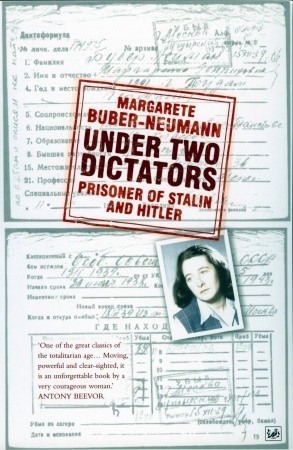
Under two Dictators: Prisoner of Stalin and Hitler
This book is a unique account by a survivor of both the Soviet and Nazi concentration camps: its author, Margarete Buber-Neumann, was a loyal member of the German Communist party. From 1935 she and her second husband, Heinz Neumann, were political refugees in Moscow. In April 1937 Neumann was arrested by the secret police, and executed by the end of the year. She herself was arrested in 1938.
In Under Two Dictators Buber-Neumann describes the two years of suffering she endured in the Soviet prisons and in the huge Central-Asian concentration and slave labour camp of Karaganda; her extradition to the Gestapo in 1940 at the time of the Stalin-Hitler Friendship Pact; and her five years of suffering in the Nazi concentration and death camp for women, Ravensbrück. Her story displays extraordinary powers of observation and of memory as she describes her own fate, as well as those of hundreds of fellow prisoners. She explores the behaviour of the guards, supervisors, police and secret police and compares and contrasts Stalin and Hitler's methods of dictatorship and terror.
First published in Swedish, German and English and subsequently translated and published in a further nine languages, Under Two Dictators is harrowing in its depiction of life under the rule of two of the most brutal regimes the western world has ever seen but also an inspiring story of survival, of ideology and of strength and a clarion call for the protection of democracy.
In Under Two Dictators Buber-Neumann describes the two years of suffering she endured in the Soviet prisons and in the huge Central-Asian concentration and slave labour camp of Karaganda; her extradition to the Gestapo in 1940 at the time of the Stalin-Hitler Friendship Pact; and her five years of suffering in the Nazi concentration and death camp for women, Ravensbrück. Her story displays extraordinary powers of observation and of memory as she describes her own fate, as well as those of hundreds of fellow prisoners. She explores the behaviour of the guards, supervisors, police and secret police and compares and contrasts Stalin and Hitler's methods of dictatorship and terror.
First published in Swedish, German and English and subsequently translated and published in a further nine languages, Under Two Dictators is harrowing in its depiction of life under the rule of two of the most brutal regimes the western world has ever seen but also an inspiring story of survival, of ideology and of strength and a clarion call for the protection of democracy.
400 pages, Paperback
First published January 1, 1949
About the author
Margarete Buber-Neumann
20 books22 followersMargarete Buber-Neumann (21 October 1901 – 6 November 1989), was a member of the Communist Party of Germany during the years of the Weimar Republic. She survived imprisonment in concentration camps during World War II in both the Soviet Union and Nazi Germany. After the war, she wrote a memoir of her time in both of these camps and served as a star witness during the so-called "trial of the century" in the Kravchenko Affair in France
Ratings & Reviews
Friends & Following
Create a free account to discover what your friends think of this book!
Community Reviews
Displaying 1 - 28 of 28 reviews
May 12, 2016
One of the best books I have ever read. If you like history and autobiographical novels is your book: I think is one of the best testimonies about the concentration camps along with Primo Levi and Elie Wiesel.
September 30, 2020
Today I finished the book ‘Under Two Dictators’ by Margarete Buber-Neumann. Margarete (aka Grete) is my great-great Aunt, so reading this book was very personally poignant. Essentially it is a survival story of a woman’s false enslavement as a “Political” under Stalin in Soviet Russia, and then subsequent imprisonment in Ravensbrück concentration camp under Hitler in Germany. She endured unspeakable conditions, and witnessed innumerable crimes against humanity. Somehow, she survived with her sanity and dignity in check, and was able to reiterate her experience in this harrowing account. I only wish I could have met this remarkable woman!
August 20, 2014
This book is as important as The Gulag Archipelago,if you can find it buy it.it's as uplifting as it is depressing. a classic.

July 12, 2009
Grete Buber-Neumann was a young German Communist (and daughter-in-law of Martin Buber) who fled the Nazi take-over to Moscow. There, the Stalinist regime suspected her of disloyalty and sent her to a Soviet concentration camp. With Hitler and Stalin's non-aggression pact of 1939, the Soviets delivered her to Germany, directly into the hands of the Gestapo, which sent her to the Ravensbrueck concentration camp. This memoir, stirringly written, reflects the author's care and compassion in regarding her fellow prisoners -- among the Soviets, suspected dissidents. In Germany, Jews, Roma, and Jehovah's Witnesses. Not easy to find in the U.S. -- but worth the effort.
July 28, 2012
An extrordinary autobiography describing the life of Margarete Buber-Neumann.
This woman was the victim of both the Soviet and Nazi concentration camp systems,
in which she spent seven years of her life in incarceration.
Margarete was a exceptionally brave woman.
This woman was the victim of both the Soviet and Nazi concentration camp systems,
in which she spent seven years of her life in incarceration.
Margarete was a exceptionally brave woman.

June 20, 2023
Spesso i libri sui campi dì concentramento parlano solo della Germania e della condizione psicologica dovuta alla mancanza di ogni forma di libertà.
Questo libro invece è diverso perché in primis parla anche dei gulag russi in Siberia, un mondo assai sconosciuto.
La Neumann approfondisce in modo minuzioso momenti di vita quotidiana come le condizioni delle abitazioni, le mansioni dei lavori forzati e le mille storie di personaggi che incontra.
Tra cimici, mancanza di vestiti e di spazi, cibo scarno e furti tra detenuti, ci sentiamo completamente travolti dalle sue dettagliate descrizioni.
Le riflessioni sull’eticità, i diritti, il senso di umanità invece ampiamente trattati da grandi autori, passano, lasciatemi il termine, “piacevolmente” in secondo piano in questo caso, per dare spazio invece a lati sconosciuti ma altrettanto interessanti della vita nei campi.
Sicuramente ciò è dovuto anche al fatto che la Neumann non era una scrittrice prima di allora ma la sua narrativa super scorrevole e genuina le rendono comunque giustizia.
Questo libro invece è diverso perché in primis parla anche dei gulag russi in Siberia, un mondo assai sconosciuto.
La Neumann approfondisce in modo minuzioso momenti di vita quotidiana come le condizioni delle abitazioni, le mansioni dei lavori forzati e le mille storie di personaggi che incontra.
Tra cimici, mancanza di vestiti e di spazi, cibo scarno e furti tra detenuti, ci sentiamo completamente travolti dalle sue dettagliate descrizioni.
Le riflessioni sull’eticità, i diritti, il senso di umanità invece ampiamente trattati da grandi autori, passano, lasciatemi il termine, “piacevolmente” in secondo piano in questo caso, per dare spazio invece a lati sconosciuti ma altrettanto interessanti della vita nei campi.
Sicuramente ciò è dovuto anche al fatto che la Neumann non era una scrittrice prima di allora ma la sua narrativa super scorrevole e genuina le rendono comunque giustizia.

January 3, 2021
Osobní zkušenost komunistky, která s růžovými brýlemi ztratila i veškeré iluze o komunistické ideologii, jsou unikátní tím, že jako jedna z mála zažila a mohla tak srovnat jak stalinské gulagy, tak nacistické koncentrační tábory. Autorka si nebere servítky v hodnocení obou režimů i jejich mnohdy zaslepených přívrženců včetně těch vězněných režimem druhým.
Pro českého čtenáře je zajímavé líčení ravensbrückého autorčina přátelství se stejně prohlédnuvší Milenou Jesenskou a to vše v kontrastu s taktéž vězněnými stále zapálenými komunistkami v čele s Jožkou Jabůrkovou.
Pro českého čtenáře je zajímavé líčení ravensbrückého autorčina přátelství se stejně prohlédnuvší Milenou Jesenskou a to vše v kontrastu s taktéž vězněnými stále zapálenými komunistkami v čele s Jožkou Jabůrkovou.
October 5, 2020
Lectura recomendada para la juventud de cualquier generación, para que no se olviden los sucesos del siglo XX que nos degradaron como sociedad e individuos, y sacaron lo peor de cada uno. Al borde de la inanición en varias ocasiones, la autora sobrevive para contarnos las crueldades vividas bajo los regímenes dictatoriales del comunismo y el nazismo, para que recordemos las barbaridades que se produjeron en nombre de un bien mayor (valor al que toda juventud aspira, y cuya ignorancia mezclada con su temeridad crean una masa furiosa y sin rumbo). Ya sea por la igualdad o la patria, la revolución mediante las armas siempre degenera y se convierte en aquello contra lo que lucha. Para la autora tanto estalinismo como nazismo son caras de la misma moneda.
Dentro del propio libro la autora cuenta cómo había comunistas que seguían sin creer las crueldades cometidas por Stalin, y cómo tildan de trotskistas a cualquiera que les contase la verdad sobre la Madre Rusia. Siguen queriendo creer en ese bien mayor al que aspiraban, sin reconocer la realidad con la que se encuentran sus ideas al implantarse. Incluso presas por el régimen estalinista le confiesan a la autora que están ahí porque les han tendido una trampa. Son incapaces de darse cuenta de la realidad. Pero las que más pena me dan son las comunistas en campos de concentración Nazis cuya única esperanza es la Madre Rusia; y la autora, que viene de uno incluso peor en Siberia, es tachada de enemiga del régimen y de difundir mentiras. Son mujeres que se aferran a su última razón de vivir, y que si aceptan la realidad el mundo se les cae encima. (Me gustaría saber qué fue de muchas de ellas cuando llegó el frente ruso al campo de concentración).
Sigo sin entender cómo los presos a los que se les concedía ser policía del campo, o enfermeros con autoridad, se volvían igual o incluso peor que los guardias de las SS, y mientras leía no podía dejar de pensar en que yo podría haber sido uno de esos monstruos si me hubiese tocado. Por eso creo que lo mejor es informarse sobre el pasado, y (aunque suene como un tópico), no repetirlo.
Tampoco estoy seguro de si esos monstruos nacieron sádicos, o se fueron creando poco a poco. Me cuesta imaginar tanta maldad en una persona desde el nacimiento, y solo lo puedo achacar al resentimiento y la venganza.
Por cierto, recomiendo leer 1984 antes de este libro. Cómo lo clava Orwell.
Dentro del propio libro la autora cuenta cómo había comunistas que seguían sin creer las crueldades cometidas por Stalin, y cómo tildan de trotskistas a cualquiera que les contase la verdad sobre la Madre Rusia. Siguen queriendo creer en ese bien mayor al que aspiraban, sin reconocer la realidad con la que se encuentran sus ideas al implantarse. Incluso presas por el régimen estalinista le confiesan a la autora que están ahí porque les han tendido una trampa. Son incapaces de darse cuenta de la realidad. Pero las que más pena me dan son las comunistas en campos de concentración Nazis cuya única esperanza es la Madre Rusia; y la autora, que viene de uno incluso peor en Siberia, es tachada de enemiga del régimen y de difundir mentiras. Son mujeres que se aferran a su última razón de vivir, y que si aceptan la realidad el mundo se les cae encima. (Me gustaría saber qué fue de muchas de ellas cuando llegó el frente ruso al campo de concentración).
Sigo sin entender cómo los presos a los que se les concedía ser policía del campo, o enfermeros con autoridad, se volvían igual o incluso peor que los guardias de las SS, y mientras leía no podía dejar de pensar en que yo podría haber sido uno de esos monstruos si me hubiese tocado. Por eso creo que lo mejor es informarse sobre el pasado, y (aunque suene como un tópico), no repetirlo.
Tampoco estoy seguro de si esos monstruos nacieron sádicos, o se fueron creando poco a poco. Me cuesta imaginar tanta maldad en una persona desde el nacimiento, y solo lo puedo achacar al resentimiento y la venganza.
Por cierto, recomiendo leer 1984 antes de este libro. Cómo lo clava Orwell.

August 1, 2014
Margarete Buber Neumann, eşi Heinz Neumann ile birlikte Lenin sonrası Sovyetler Birliği'nde birer Troçkist imiş. Stalin ve Troçki arasında yaşanan düşmanlık dolayısıyla önce eşi Heinz daha sonra da kendisi tutuklanmış. Eşi tutuklandıktan sonra ağır işkencelere maruz kalarak hayatını kaybetmiş. Margarete ise bir süre hapis yattıktan sonra Sibirya toplama kamplarına gönderilmiş.
Sibirya'da yaşadığı zorlukları, elleri ve ayakları kanayıncaya kadar çalıştırılan insanları, sadece çorba ve kuru ekmekten oluşan yemekleri, dayağı ve kolayca verilen cezaları birebir yaşadığı için okurken size de yaşatıyor. Sibirya'da seneler geçirdikten sonra beklenmedik bir anda toplanmalarını söyleyip trene bindiriyorlar Almanları. Herkes tahliye edildiğini düşünüp umutla beklemeye başlıyor. Oysa durum çok başka...
Umutlarını bağlayıp geldikleri sosyalist! devlet anti-nazi olduklarından dolayı kaçmak zorunda kalan Almanları Hitler'e teslim ediyor. Rus toplama kamplarından kurtulan Margarete bu sefer Gestapoların eline düşer ve Ravensbrück toplama kampına gönderilir.
Bazı cümleler beni rahatsız etti. Örneğin Rusların toplama kampını Almanlarınkinden daha kötü göstermesi. Belki uğradığı hayal kırıklığı onu Rus düşmanlığına sevk etmiştir. Yoksa toplama kampları ırk farkı gözetilmeksizin lanetlenmelidir.
Nazi kamplarında da zorlu seneler geçirdikten sonra Hitler'in yenilmesiyle kamplardaki birçok esir kurtulur. Margarete de bunlardan biri. Kitap çok akıcı. Gün Zileli çevirisinin de payı var tabi. Mücadeleci kadınların hayatlarını okumak her daim sevdiğim bir şey. Zorlu hayatlar, yılmaz kadınlar ve diktatörlerin en sonunda çökeceğinin kanıtı hikayeleri, insana umut veriyor.
Sibirya'da yaşadığı zorlukları, elleri ve ayakları kanayıncaya kadar çalıştırılan insanları, sadece çorba ve kuru ekmekten oluşan yemekleri, dayağı ve kolayca verilen cezaları birebir yaşadığı için okurken size de yaşatıyor. Sibirya'da seneler geçirdikten sonra beklenmedik bir anda toplanmalarını söyleyip trene bindiriyorlar Almanları. Herkes tahliye edildiğini düşünüp umutla beklemeye başlıyor. Oysa durum çok başka...
Umutlarını bağlayıp geldikleri sosyalist! devlet anti-nazi olduklarından dolayı kaçmak zorunda kalan Almanları Hitler'e teslim ediyor. Rus toplama kamplarından kurtulan Margarete bu sefer Gestapoların eline düşer ve Ravensbrück toplama kampına gönderilir.
Bazı cümleler beni rahatsız etti. Örneğin Rusların toplama kampını Almanlarınkinden daha kötü göstermesi. Belki uğradığı hayal kırıklığı onu Rus düşmanlığına sevk etmiştir. Yoksa toplama kampları ırk farkı gözetilmeksizin lanetlenmelidir.
Nazi kamplarında da zorlu seneler geçirdikten sonra Hitler'in yenilmesiyle kamplardaki birçok esir kurtulur. Margarete de bunlardan biri. Kitap çok akıcı. Gün Zileli çevirisinin de payı var tabi. Mücadeleci kadınların hayatlarını okumak her daim sevdiğim bir şey. Zorlu hayatlar, yılmaz kadınlar ve diktatörlerin en sonunda çökeceğinin kanıtı hikayeleri, insana umut veriyor.

April 3, 2022
absolutely shocking, exciting, amazing book I've ever read. The best account of struggling, fighting for every bit of life. My great admiration to this author and I'm so sorry her peinful experience. I have been reding this book as though the author was my sister, my mother. My deep consoldence to all humans who had been suffering in this useless war.

February 3, 2014
an inspiring true story of bravery and courage.

June 10, 2025
In both Chaim Grade and Isaac Bashevis Singer's memoirs, they mention Polish communist activists smuggled into Stalin's supposedly utopian worker-peasant realm. And these two Jewish chroniclers agree that many were from Yiddish-speaking backgrounds. Eager to make messianic visions reality.
A spin on "asylum seekers"? They, alongside smitten agitators from around the globe, expected, of course, a hearty welcome. Freed of surveillance, threats of torture, or score-settling from Trotskyists, capitalists, and ever-multiplying rivals among Red factions, these idealists sought fulfillment. Or so they thought. Instead--a harbinger of what millions under German occupation or internment would soon discover if Soviet control returned--they'd endure deportation, internment, or gulag--at "best."
This roused curiosity. Despite reviewing Paul Mendes-Flohr's big biography of Martin Buber not long ago, I must have missed what happened to his ex-daughter-in-law. (Who mentioned neither her first husband nor his famous father…) Her prisoner's tale, not unlike a deceptively titled My Mother's Sabbath Days (whose second half is harrowing) of Grade, testifies to what from my search seems a very short shelf (at least in translation) documenting fates of Marxist sympathizers who dismissed rumors of persecution and insisted on sneaking into a post-Lenin CCCP.
Divorcing Rafael Buber, "Grete" joined the Party, and fled the Reich. She with her "fellow traveller", a suspected Heinz Neumann, in 1935 gambled they'd found a (not-so) safe haven in GPU's Moscow. I needn't divulge details, as the intro by Nikolaus Wachsmann in this expanded (by Grete's daughter) 2009 ed. tells what happened after the Great Purge consumed Heinz. Suffice to say it's a rare account of an inmate of both a USSR carceral archipelago in Kazakhstan and a Ravensbrück Nazi death camp.
"Returned emigrants" as their Gestapo escorts label these once-fervent faithful, whom their quondam allies in 1939 march back over the Brest-Litvosk bridge into fascist-occupied territories. Where soon they're informed that being "cured" of their delusions, they must undergo "preparatory training" before "contributing" to their Fatherland's fortunes. I aver if Grete was Jewish and/or Polish, let alone a combination, she'd have been far less likely to survive "protective custody" for "re-education". She cooly relates her long travails in aborted causes of Labor clearly, with admirable sangfroid and firm, steady gaze. Keeping her wits, she adapts with courage, and refuses to play either martyr or turncoat.
There's a surprising amount of postwar coverage too, as Grete meets refugees, freed "convicts," G.I.s, but luckily, none of the troops from the East. Still, among those on that former front, many dismiss the truth she embodies. Instead, they welcome Uncle Joe. Amazing saga, deserving to be better known.
A spin on "asylum seekers"? They, alongside smitten agitators from around the globe, expected, of course, a hearty welcome. Freed of surveillance, threats of torture, or score-settling from Trotskyists, capitalists, and ever-multiplying rivals among Red factions, these idealists sought fulfillment. Or so they thought. Instead--a harbinger of what millions under German occupation or internment would soon discover if Soviet control returned--they'd endure deportation, internment, or gulag--at "best."
This roused curiosity. Despite reviewing Paul Mendes-Flohr's big biography of Martin Buber not long ago, I must have missed what happened to his ex-daughter-in-law. (Who mentioned neither her first husband nor his famous father…) Her prisoner's tale, not unlike a deceptively titled My Mother's Sabbath Days (whose second half is harrowing) of Grade, testifies to what from my search seems a very short shelf (at least in translation) documenting fates of Marxist sympathizers who dismissed rumors of persecution and insisted on sneaking into a post-Lenin CCCP.
Divorcing Rafael Buber, "Grete" joined the Party, and fled the Reich. She with her "fellow traveller", a suspected Heinz Neumann, in 1935 gambled they'd found a (not-so) safe haven in GPU's Moscow. I needn't divulge details, as the intro by Nikolaus Wachsmann in this expanded (by Grete's daughter) 2009 ed. tells what happened after the Great Purge consumed Heinz. Suffice to say it's a rare account of an inmate of both a USSR carceral archipelago in Kazakhstan and a Ravensbrück Nazi death camp.
"Returned emigrants" as their Gestapo escorts label these once-fervent faithful, whom their quondam allies in 1939 march back over the Brest-Litvosk bridge into fascist-occupied territories. Where soon they're informed that being "cured" of their delusions, they must undergo "preparatory training" before "contributing" to their Fatherland's fortunes. I aver if Grete was Jewish and/or Polish, let alone a combination, she'd have been far less likely to survive "protective custody" for "re-education". She cooly relates her long travails in aborted causes of Labor clearly, with admirable sangfroid and firm, steady gaze. Keeping her wits, she adapts with courage, and refuses to play either martyr or turncoat.
There's a surprising amount of postwar coverage too, as Grete meets refugees, freed "convicts," G.I.s, but luckily, none of the troops from the East. Still, among those on that former front, many dismiss the truth she embodies. Instead, they welcome Uncle Joe. Amazing saga, deserving to be better known.

December 30, 2023
The author of this book was one of those unfortunate enough to have experienced both the Soviet Gulag and the Nazi concentration camps. It opens with her living in Moscow in 1937, but she was born in Potsdam in 1901 and joined the German Communist Party in the early 1920s. After her first marriage broke up she became involved with Heinz Neumann, then one of the most prominent figures in the Party. The couple lived in Moscow as political refugees but Heinz was arrested in April 1937 as the Great Terror got under way. He was shot later that year, although Margarete was not told of his fate. She was arrested in June 1938 and spent 8 months in appalling conditions in the Butirka Prison in Moscow before being sentenced to a 5-year term, being sent to the Karlag camp in Kazakhstan. I say “camp” but this seems to have been a complex of camps and sub-camps spread out over a huge area. In February 1940 Buber-Neumann was extradited to Germany. There, her communist background led to her being sent to the Ravensbrück concentration camp for women prisoners, where she spent the next 5 years.
The day the author was handed over to the Nazis was clearly a bitter one for her. Bear in mind this woman had once revered the Soviet Union. She describes the handover below.
The GPU officials still stood there in a group watching us go. Behind them was Soviet Russia. Bitterly I recalled the Communist litany: Fatherland of the Toilers; Bulwark of Socialism; Haven of the Persecuted..."
One thing that struck me with this account was how much Kafka’s novel The Trial presaged what happened to people like the author. In both systems Buber-Neumann was constantly shunted about from one prison, camp, or job, to another, without ever knowing why or where she was going. Requests for information (including about the fate of her husband) were invariably met with “I can give no information about that”. She comments that one of the hardest things to cope with was that the Nazi system did not prescribe a term of imprisonment. You were in the camp for as long as they decided to keep you.
The author’s account is written in narrative form, and includes plenty about the miseries of the camps. One incident, described below, illustrates the kind of impossible moral choices to be made. In this scene Buber-Neumann is in a transit prison awaiting the move to Ravensbrück.
"On Friday evenings the names of those to go the next day were read out. There was a Jewish doctor named Jacoby with us. She had already served a term of hard labour. One Friday her name was on the list. The lavatory in the cell was screened off from the rest of the room. That night she hanged herself from the water cistern, but she was discovered and cut down in time to save her life....in 1942 she was sent off in a "sick transport" to the gas chamber. We meant well, but was it really humane to have cut her down?"
It’s noticeable that much of the book is actually about the people that she met in the camps, particularly those fellow-prisoners with whom she became friends, and how friends supported each other in the camps.
"Friendship and comradeship in prison and in concentration camp play an even more important role than they do outside in freedom."
Also
"The one wish of these poor unfortunates, forced out of life into this misery, was not to be forgotten, to feel that someone still thought of them with kindness."
This feature of the book gives it a more upbeat feel than most others in this category.
Buber-Neumann was released from Ravensbrück a few weeks before the arrival of the Red Army. She declined the opportunity to renew her acquaintance with the Soviet authorities, and managed to make her way to her grandparents’ home in Bavaria.
It’s sometimes said that you can tell a memoir is honest when the author portrays themself unfavourably. Buber-Neumann generally portrays herself quite favourably and I did wonder whether some less flattering details were left out (not that, in the circumstances, I would be judgmental if they had been). However I did find the book an entirely absorbing, compelling read.
The day the author was handed over to the Nazis was clearly a bitter one for her. Bear in mind this woman had once revered the Soviet Union. She describes the handover below.
The GPU officials still stood there in a group watching us go. Behind them was Soviet Russia. Bitterly I recalled the Communist litany: Fatherland of the Toilers; Bulwark of Socialism; Haven of the Persecuted..."
One thing that struck me with this account was how much Kafka’s novel The Trial presaged what happened to people like the author. In both systems Buber-Neumann was constantly shunted about from one prison, camp, or job, to another, without ever knowing why or where she was going. Requests for information (including about the fate of her husband) were invariably met with “I can give no information about that”. She comments that one of the hardest things to cope with was that the Nazi system did not prescribe a term of imprisonment. You were in the camp for as long as they decided to keep you.
The author’s account is written in narrative form, and includes plenty about the miseries of the camps. One incident, described below, illustrates the kind of impossible moral choices to be made. In this scene Buber-Neumann is in a transit prison awaiting the move to Ravensbrück.
"On Friday evenings the names of those to go the next day were read out. There was a Jewish doctor named Jacoby with us. She had already served a term of hard labour. One Friday her name was on the list. The lavatory in the cell was screened off from the rest of the room. That night she hanged herself from the water cistern, but she was discovered and cut down in time to save her life....in 1942 she was sent off in a "sick transport" to the gas chamber. We meant well, but was it really humane to have cut her down?"
It’s noticeable that much of the book is actually about the people that she met in the camps, particularly those fellow-prisoners with whom she became friends, and how friends supported each other in the camps.
"Friendship and comradeship in prison and in concentration camp play an even more important role than they do outside in freedom."
Also
"The one wish of these poor unfortunates, forced out of life into this misery, was not to be forgotten, to feel that someone still thought of them with kindness."
This feature of the book gives it a more upbeat feel than most others in this category.
Buber-Neumann was released from Ravensbrück a few weeks before the arrival of the Red Army. She declined the opportunity to renew her acquaintance with the Soviet authorities, and managed to make her way to her grandparents’ home in Bavaria.
It’s sometimes said that you can tell a memoir is honest when the author portrays themself unfavourably. Buber-Neumann generally portrays herself quite favourably and I did wonder whether some less flattering details were left out (not that, in the circumstances, I would be judgmental if they had been). However I did find the book an entirely absorbing, compelling read.

March 12, 2025
Quite amazing. Anyone interested in the Soviet Gulag under Stalin or the Nazi concentration camps under Hitler can get the two of the best accounts in one book. Buber-Neumann and her husband, dedicated German Communists, were deported by Nazis to the Soviet Union in 1935 and worked in Moscow as translators.
The husband was arrested in 1937 as part of Stalin's Great Purge, where about a million innocent people were executed and surely more sent into the Gulag, including by the way most of his generals and commanders, playing into Hitler's calculations of whether the German military could conquer a Russia missing most if its top brass. (He may have succeeded but for a lot of rain in 1941 that turned roads to mud, and also the eventual massive assistance to Russia by the United States and by British intelligence, which must have saved hundreds of thousands or millions of Russian lives from starvation and battle and may have decided the war in the east.)
A Soviet arrest of one family member normally meant the immediate or eventual arrest of all, and Buber-Neumann was arrested in 1938 on the usual bogus charges and held initially in Lubianka and Butyrka prisons in Moscow and then for over a year in two different concentration camps in Kazakhstan. She never knew before her death in 1989 that her husband had been executed in 1937.
Following the Molotov–Ribbentrop Pact of 1940 whereby Hitler and Stalin dined on Poland, German prisoners were returned to Germany to be assigned to concentration camps, the survivors of those often sent to death camps. The rest endured forced labor on poor rations and other tortures of many kinds, not far different from the Soviet Gulag. She was released in April of 1945 and made her way west on foot as did many thousands of civilians, so as to avoid the advancing Russian army.
Buber lived in Sweden for three years and then returned to Germany, where she died in Frankfurt in 1989 at age 88. She had come to realize that in practice, Nazism and Communism were the same things.
Her friend Arthur Koestler suggested that she write an account of her years in prison in Russia and in Nazi concentration camps. It is not likely that anyone who did not have this experience could describe it well, and to have this fine account told without self-pity is a precious and singular gift.
The husband was arrested in 1937 as part of Stalin's Great Purge, where about a million innocent people were executed and surely more sent into the Gulag, including by the way most of his generals and commanders, playing into Hitler's calculations of whether the German military could conquer a Russia missing most if its top brass. (He may have succeeded but for a lot of rain in 1941 that turned roads to mud, and also the eventual massive assistance to Russia by the United States and by British intelligence, which must have saved hundreds of thousands or millions of Russian lives from starvation and battle and may have decided the war in the east.)
A Soviet arrest of one family member normally meant the immediate or eventual arrest of all, and Buber-Neumann was arrested in 1938 on the usual bogus charges and held initially in Lubianka and Butyrka prisons in Moscow and then for over a year in two different concentration camps in Kazakhstan. She never knew before her death in 1989 that her husband had been executed in 1937.
Following the Molotov–Ribbentrop Pact of 1940 whereby Hitler and Stalin dined on Poland, German prisoners were returned to Germany to be assigned to concentration camps, the survivors of those often sent to death camps. The rest endured forced labor on poor rations and other tortures of many kinds, not far different from the Soviet Gulag. She was released in April of 1945 and made her way west on foot as did many thousands of civilians, so as to avoid the advancing Russian army.
Buber lived in Sweden for three years and then returned to Germany, where she died in Frankfurt in 1989 at age 88. She had come to realize that in practice, Nazism and Communism were the same things.
Her friend Arthur Koestler suggested that she write an account of her years in prison in Russia and in Nazi concentration camps. It is not likely that anyone who did not have this experience could describe it well, and to have this fine account told without self-pity is a precious and singular gift.

July 16, 2023
It is great book about conditions in prisons and survival.
The story starts with Margarete's experience of wife of the person who was imprisoned by Soviet secret police(GPU) . It is terrible life when most of the friends turn around from you. She was one of millions people who experienced that in Soviet Union. It is almost impossible for her to do anything and she has to sell her stuff to survive.
GPU imprisons her for being a wife of imprisoned person and sent to camp. Later Soviet regime sends her to Germany where she gets to camp again.
Through the book there are hundreds of small stories of people around. And most of them won't survive the camps.
The last few chapters about her getting out and coming back home are bery emotionally draining and make you read until you finish the book.
The translation of first chapters is not great and lots of Russian words have typos which makes it hard to find the original meaning. ie "ndevalnaya" instead of "dnevalnaya". Such words also make it a bit harder to read if you don't know Russian since they are explained only once during their first occurrence in the text.
Also Brzlose means brucellosis.
The story starts with Margarete's experience of wife of the person who was imprisoned by Soviet secret police(GPU) . It is terrible life when most of the friends turn around from you. She was one of millions people who experienced that in Soviet Union. It is almost impossible for her to do anything and she has to sell her stuff to survive.
GPU imprisons her for being a wife of imprisoned person and sent to camp. Later Soviet regime sends her to Germany where she gets to camp again.
Through the book there are hundreds of small stories of people around. And most of them won't survive the camps.
The last few chapters about her getting out and coming back home are bery emotionally draining and make you read until you finish the book.
The translation of first chapters is not great and lots of Russian words have typos which makes it hard to find the original meaning. ie "ndevalnaya" instead of "dnevalnaya". Such words also make it a bit harder to read if you don't know Russian since they are explained only once during their first occurrence in the text.
Also Brzlose means brucellosis.

October 18, 2022
Mahkům, kaderin darbelerine karşı olağandışı bir biçimde tepki gösterirdi. Bunun nedeni onun ardı arkası kesilmeyen baskılar altında kalmış olmasıdır. Onu ölesiye dövmüşlerdir, keder ve göz yaşı ayrılmaz parçası olmuştur. Fakat şaşırtıcı bir biçimde hızla iyileşme sürecine girer. Uzun süre derin hayal kırıklığı içinde kalma kapasitesini kaybetmiştir. Olaylara karşı tepkisi, her türlü hayal kırıklığını mümkün olduğu kadar çabuk bir şekilde bir kenara iteklemek şeklinde tecelli eder.
This entire review has been hidden because of spoilers.
April 8, 2021
Beautiful book
So much courage was required by this woman to achieve what she did to survive.An example for younger generation and a significant part of the dark history of nazism and the Holocaust.
So much courage was required by this woman to achieve what she did to survive.An example for younger generation and a significant part of the dark history of nazism and the Holocaust.

September 29, 2023
At the end of the book I was so emptied and worn out. Even if the events of MBN’s life took place just a little over 80 years ago, you, nevertheless, get to question the sanity of the world we live in for one has to be rather oblivious to imagine human nature has changed and would have learned anything from the past. We have been the same since ever, only now we have books and documented memories to give us detailed description of human's endless capacity for unnecessary evil and complete imbecile lunaticity.
I deeply admire Margarete Buber-Neumann's inner and physical strength to survive her experiences and willingly stay alive after, as well as her kind and brave heart. I wish there were a book where she talks about how she overcome her traumatic experiences and, hopefully, found true joy and excitement of being alive.
One would love to believe to be a brave-heart being exposed to the same circumstances, however, scientists say it is a small chance for most of the people not to be among the cowards and sadist should they ever would arrive in the same situation. Rather chilling perspective.
I deeply admire Margarete Buber-Neumann's inner and physical strength to survive her experiences and willingly stay alive after, as well as her kind and brave heart. I wish there were a book where she talks about how she overcome her traumatic experiences and, hopefully, found true joy and excitement of being alive.
One would love to believe to be a brave-heart being exposed to the same circumstances, however, scientists say it is a small chance for most of the people not to be among the cowards and sadist should they ever would arrive in the same situation. Rather chilling perspective.
October 8, 2018
Very informative and factual accounts. It will keep you interested and wanting more.
to-buy
August 2, 20205books.com

March 23, 2021
Extraordinary tale told by an extraordinary woman and survivor. Inspirational! When you think things are tough, have a read of this.

November 28, 2021
Oba režimy jsou příšerné. Jejich vyznavači zrůdy.
January 13, 2023
Fascinating. Absolutely required reading.

February 7, 2026
Margarete’s testimony is powerful and I am glad to have read her story.

December 22, 2012
İmge yayınlarında çıkan, Margarete Buber-Neumann'ın "İki Diktatörlük Altında" adlı kitabını az önce bitirdim; ve gerçekten çok etkilendim. Önce sovyet rusyası, hemen peşine de nazi almanyası esir kamplarında geçirdiği esaret yıllarını anlatan yazar, insan doğasının vahşet yaratma potansiyelini, satır aralarında okuyucuya enjekte ediyor, ve sizi vicdanınızla başbaşa bırakıyor.
Alman toplama kampı Ravensbruck'ta, Franz Kafka'nin sevgilisi Milena Jesenska ile de karşılaşıyor yazar; Milena'nın savaşın sonunu görememesine çok üzülüyor, ama Milena ile ilgili kısımlara az yer vermiş. Sanırım beraber geçirdikleri günleri, "Milena" adlı başka bir kitabında kaleme almış. Bu kitabı da mutlaka okumak gerek :).
Basit ve yalın bir anlatımı var kitabın, anlatılan acı olayları yaşamış ve hayatta kalmayı başarabilmiş bir kadının duru anlatımı; en etkileyici olan kısmı da bu bence.
Alman toplama kampı Ravensbruck'ta, Franz Kafka'nin sevgilisi Milena Jesenska ile de karşılaşıyor yazar; Milena'nın savaşın sonunu görememesine çok üzülüyor, ama Milena ile ilgili kısımlara az yer vermiş. Sanırım beraber geçirdikleri günleri, "Milena" adlı başka bir kitabında kaleme almış. Bu kitabı da mutlaka okumak gerek :).
Basit ve yalın bir anlatımı var kitabın, anlatılan acı olayları yaşamış ve hayatta kalmayı başarabilmiş bir kadının duru anlatımı; en etkileyici olan kısmı da bu bence.

June 21, 2024
Sehr beeindruckendes Buch, sehr überzeugende Persönlicheit. Ich habe viel daraus gelernt, was die Lagererfahrung betrifft. Was ist mit einem Menschen macht, auf diese Weise, so viele Jahre, dem Tod nahe zu sein. Dem eigenen, und dem der anderen. Und dabei empathisch zu bleiben und die eigene Zuversicht nicht zu verlieren.
Es zeigt die Abgründe der Menschenverachtung und tödlichen Ideologien des 20.Jahrhunderts. Hoffentlich wird das 21.Jahrhundert besser.
Es zeigt die Abgründe der Menschenverachtung und tödlichen Ideologien des 20.Jahrhunderts. Hoffentlich wird das 21.Jahrhundert besser.

May 3, 2013
Jan Valtin'in Karanlığın Ötesinde'si kadar sürükleyici değil. Ama onun kadar gerçek. Anafora Doğru ve Anaforun İçinde'den farkı Nazi kampındaki hatıraları değil bence. Asıl fark, stalinistlerle arasında geçen tartışmalar. Bu dört kitap da o günlerin dehşetini anlamak isteyenlere birebir. Soljenitsin'i geçmek gerek bir kalemde.
Displaying 1 - 28 of 28 reviews