

What do you think?
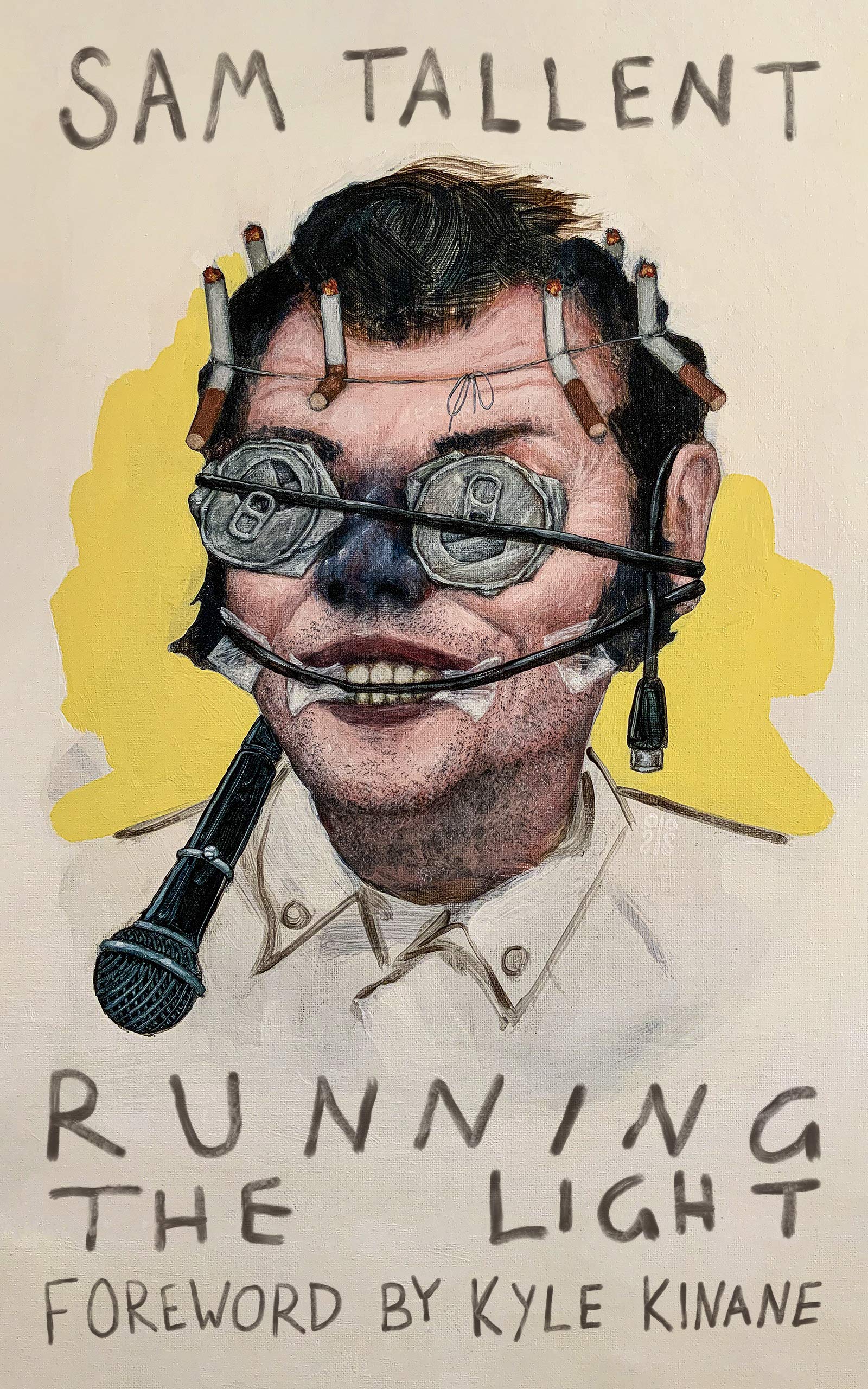
Running the Light
Debauched, divorced and courting death, Billy Ray Schafer is a comedian who has forgotten how to laugh. Over the course of seven spun-out days across the American Southwest, he travels from from hell gig to hell gig in search of a reason to keep living in this bleak and violent glimpse into the psyche of a thoroughly ruined man. Ex-inmate, ex-husband, ex-father - comedian is the only title Schafer has left. Trapped in the wreckage of his wasted career, Billy Ray knows the answer to the what happens when the opportunity doesn’t come - or worse - it comes and goes?
292 pages, Kindle Edition
First published February 26, 2020
About the author
Sam Tallent
3 books225 followersKnown for whip-quick wit and rollicking improvisations, Sam Tallent is one of the sharpest, most original rising talents in comedy today. For the last 10 years, he has performed at least 45 weekends annually across America, Canada and France. Called "the absurd voice of a surreal generation" by the Denver Post, Sam is beloved by fans of contemporary comedy. He was a New Face at the 2019 Just for Laughs Montreal Comedy Festival, he won his battle on Comedy Central's Roast Battle, hosted the Denver episode of VICELAND's Flophouse and appeared on the Chris Gerhard Show to impress a girl. His critically acclaimed debut novel Running the Light - heralded as the “definitive novel about stand up comedy” (Marc Maron, WTF) - was published by Too Big to Fail Press in 2020 and his short fiction has been published on VICE.com and in BIRDY magazine. He lives in Colorado with his wife and his dog.
Ratings & Reviews
Friends & Following
Create a free account to discover what your friends think of this book!
Community Reviews
Displaying 1 - 30 of 544 reviews

October 27, 2020
'Running the Light," far as I know, is the first novel ever written by a working comedian about the grim realities of life on the road as a working comedian. I do not know much about Sam Tallent as a comedian, but as a writer he has written a damned good first novel that I first learned about on the Doug Stanhope subreddit. Tallent's book is being lauded by his peers as a true-to-life depiction of the ups and downs of life on the road as a working comic.
Tallent describes it as a "cautionary tale" that he wrote partially as a reminder to himself that he didn't want to end up like the comedian in "Running the Light."
The book is about one week in the life of road comic Billy Ray Schafer. Schafer is a man in his early 50's who discovered his comic talents during an incarceration in Oklahoma's maximum security state prison--McAlester, otherwise known as "The Big Mac."
Shafer has had a roller coaster ride of a career and has achieved near-greatness in the past, with 12 appearances on "The Johnny Carson Show" and one appearance on Letterman. (appearing on the "Late Night with David Letterman show) was a notice that one had "made it." Shafer also has done one HBO special, also a signal indicator of comedic success.
But those appearances were years ago, and since the start of once was a promising career, Shafer has, to quote the Oscar Levant quip on my profile, "stepped on many toes on his way down."
When we encounter him in the novel, Schafer is now a working road comic playing the small comedy clubs that dot the country in cities like Boise, Amarillo, Spokane, Peoria and Ft. Wayne--second and third-tier cities where comedians often start out and where the ones who haven't "made it" will finish. During his rise and fall, Schafer has become a serious alcoholic and cocaine abuser with a failed marriage and estrangement from his two sons, whom he supports financially but has had almost no contact with since his wife booted him out of their lives. Schafer's substance abuse and serial philandering pretty much caused his divorce, and his lack of contact with his family is made worse since to support them he needs to be on the road working at least 200 nights per year.
Billy Ray lives in a small apartment in LA's Korea town, though he is seldom at home. What is surprising is that he is still a great comedian, capable of "crushing" an audience, which is comic-speak for being funny as hell while maintaining complete control over the crowd. Despite this, Bill Ray is well-aware that he is on his way down and his one remaining career hope is to get his agent to book him on various cruise ships, where the pay is good and the liquor flows freely. His agent, however, is never reachable and Billy Ray's phone is broken, which doesn't help matters.
There are many ironies in Tallent's cautionary tale. Billy Ray's job is to connect with his audience in a real way. Unfortunately, he no longer has any passion for performing and, as a result, he is forced to "fake" it, to create a connection he doesn't really feel with audiences he dislikes. On rare occasions he feels that special magic a comic gets from having fully connected but this feeling is as fleeting and meaningless as the various sexual encounters he has with comic groupies after his shows.
What makes it worse is that Schafer does have some introspection and realizes he is responsible for ruining his marriage and career and failing to be a good father to his sons. He can temporarily suppress his anguish with heavy drinking and loads of cocaine and gratuitous sex, but the anguish always wins the day and causes Billy Ray to make a lot of bad decisions that make his pathetic life even worse.
This is not an uplifting book, as you can see, and you may be wondering why I recommend it? I recommend it because it tells the truth, and truth really needs no reason to explain why it's told.
Tallent describes it as a "cautionary tale" that he wrote partially as a reminder to himself that he didn't want to end up like the comedian in "Running the Light."
The book is about one week in the life of road comic Billy Ray Schafer. Schafer is a man in his early 50's who discovered his comic talents during an incarceration in Oklahoma's maximum security state prison--McAlester, otherwise known as "The Big Mac."
Shafer has had a roller coaster ride of a career and has achieved near-greatness in the past, with 12 appearances on "The Johnny Carson Show" and one appearance on Letterman. (appearing on the "Late Night with David Letterman show) was a notice that one had "made it." Shafer also has done one HBO special, also a signal indicator of comedic success.
But those appearances were years ago, and since the start of once was a promising career, Shafer has, to quote the Oscar Levant quip on my profile, "stepped on many toes on his way down."
When we encounter him in the novel, Schafer is now a working road comic playing the small comedy clubs that dot the country in cities like Boise, Amarillo, Spokane, Peoria and Ft. Wayne--second and third-tier cities where comedians often start out and where the ones who haven't "made it" will finish. During his rise and fall, Schafer has become a serious alcoholic and cocaine abuser with a failed marriage and estrangement from his two sons, whom he supports financially but has had almost no contact with since his wife booted him out of their lives. Schafer's substance abuse and serial philandering pretty much caused his divorce, and his lack of contact with his family is made worse since to support them he needs to be on the road working at least 200 nights per year.
Billy Ray lives in a small apartment in LA's Korea town, though he is seldom at home. What is surprising is that he is still a great comedian, capable of "crushing" an audience, which is comic-speak for being funny as hell while maintaining complete control over the crowd. Despite this, Bill Ray is well-aware that he is on his way down and his one remaining career hope is to get his agent to book him on various cruise ships, where the pay is good and the liquor flows freely. His agent, however, is never reachable and Billy Ray's phone is broken, which doesn't help matters.
There are many ironies in Tallent's cautionary tale. Billy Ray's job is to connect with his audience in a real way. Unfortunately, he no longer has any passion for performing and, as a result, he is forced to "fake" it, to create a connection he doesn't really feel with audiences he dislikes. On rare occasions he feels that special magic a comic gets from having fully connected but this feeling is as fleeting and meaningless as the various sexual encounters he has with comic groupies after his shows.
What makes it worse is that Schafer does have some introspection and realizes he is responsible for ruining his marriage and career and failing to be a good father to his sons. He can temporarily suppress his anguish with heavy drinking and loads of cocaine and gratuitous sex, but the anguish always wins the day and causes Billy Ray to make a lot of bad decisions that make his pathetic life even worse.
This is not an uplifting book, as you can see, and you may be wondering why I recommend it? I recommend it because it tells the truth, and truth really needs no reason to explain why it's told.
This entire review has been hidden because of spoilers.
July 5, 2020
Sam Tallent is a Stand Up Comedian. A lot of comedians write (or “write”) books of humorist essays or freewheeling road stories but these are typically side projects, efforts to expand into another market, sell more tickets. They are secondary to what they do on stage and ultimately, from the quality, you can usually tell. This book is different. This is a novel. Not a joke novel. Like a traditional piece of straight-faced fiction. Yes it is funny, as you would expect from Sam. Yes it is set in the world of comedy, but it is NOT a comedy. This story is bleak. It’s a book about addiction and regret, passion and obsolescence, self-destruction and redemption. It’s a thoroughly modern, punk rock western about the f@%ked up and displaced.
I’m generally not a huge fan of fictionalized depictions of stand up in movies or tv. Most of them are about some up-and-comer for whom things come too easily and the conflict mostly boils down to cloying, whiny “will I get the big break?” speed bumps on the character’s meteoric rise to fame. The rest of them are about wildly successful comics who got everything they wanted and are still sad. Boo hoo. It’s wish-fulfillment fantasy or nostalgic suburban impotence. However, for every household name in comedy, there are masses of veteran comedians who are on the road ten months out of the year just trying to get by. You may never have heard of them but they are professionals. They make their living performing night after night, they work damn hard and are tremendously skilled at their craft but the dream never happened. Maybe they screwed up. Maybe their window of opportunity opened and closed. They were too difficult or psychotic or ugly or self-sabotaging. They just never hit but now it’s all they have and all they can do. These are the types that Tallent is concerned with in Running The Light. The leftovers, the outcasts that other domesticated comics tell dangerous legends of in green rooms and back bars. The protagonist, Schafer, is one of these forgotten outlaws, prone to misanthropy and violence, unfit to stay any one place for too long lest he burn it to the ground. Over the course of a week, nearing the end of a long tour that has taken most of what’s left of him, Schafer chemically stretches himself to his limits in pursuit of a false dream of rest and reclamation of a long-ruined past. The comedy world setting may be the hook and dressing but the foundation is a deeply human character study of degenerates and dying breeds. The stakes here are real. Schafer comes across as an unholy Job, completely deserving of every trial and punishment he endures. The scenes in which Schafer is on stage performing are absolute highlights. They’re rendered like primal, abstract dreams, in a way I don’t think would be possible by someone without the intimate familiarity with the stage and road that Tallent has. The addiction passages are truly visceral and make your blood itch. The week-long structure is relentlessly propulsive and leaves no room for filler. It’s brutal and tragic and reading it, you get the sense that you are peering into Tallent’s personal nightmare of a future. As a comic, it scares the hell out of me. The dedication reads: “This book is dedicated to comedians, but only the funny ones” and what initially reads like an insular joke gradually takes on the shadow of a warning: you damn well better be funny because even being the best is not a safeguard against the menacing, merciless jaws of entertainment.
I’m generally not a huge fan of fictionalized depictions of stand up in movies or tv. Most of them are about some up-and-comer for whom things come too easily and the conflict mostly boils down to cloying, whiny “will I get the big break?” speed bumps on the character’s meteoric rise to fame. The rest of them are about wildly successful comics who got everything they wanted and are still sad. Boo hoo. It’s wish-fulfillment fantasy or nostalgic suburban impotence. However, for every household name in comedy, there are masses of veteran comedians who are on the road ten months out of the year just trying to get by. You may never have heard of them but they are professionals. They make their living performing night after night, they work damn hard and are tremendously skilled at their craft but the dream never happened. Maybe they screwed up. Maybe their window of opportunity opened and closed. They were too difficult or psychotic or ugly or self-sabotaging. They just never hit but now it’s all they have and all they can do. These are the types that Tallent is concerned with in Running The Light. The leftovers, the outcasts that other domesticated comics tell dangerous legends of in green rooms and back bars. The protagonist, Schafer, is one of these forgotten outlaws, prone to misanthropy and violence, unfit to stay any one place for too long lest he burn it to the ground. Over the course of a week, nearing the end of a long tour that has taken most of what’s left of him, Schafer chemically stretches himself to his limits in pursuit of a false dream of rest and reclamation of a long-ruined past. The comedy world setting may be the hook and dressing but the foundation is a deeply human character study of degenerates and dying breeds. The stakes here are real. Schafer comes across as an unholy Job, completely deserving of every trial and punishment he endures. The scenes in which Schafer is on stage performing are absolute highlights. They’re rendered like primal, abstract dreams, in a way I don’t think would be possible by someone without the intimate familiarity with the stage and road that Tallent has. The addiction passages are truly visceral and make your blood itch. The week-long structure is relentlessly propulsive and leaves no room for filler. It’s brutal and tragic and reading it, you get the sense that you are peering into Tallent’s personal nightmare of a future. As a comic, it scares the hell out of me. The dedication reads: “This book is dedicated to comedians, but only the funny ones” and what initially reads like an insular joke gradually takes on the shadow of a warning: you damn well better be funny because even being the best is not a safeguard against the menacing, merciless jaws of entertainment.

January 16, 2021
The good vs. the bad.
The bad first: It’s not that I mind reading about an antihero who goes into a death spiral, but I completely check out of caring about any character when he sexually assaults women. That’s it. I’m done. Punching random bar patrons and doing a ridiculous amount of drugs is fine, but in the world of post-Louis CK and other male comics being outed as sexual assaulters (not to mention all the other powerful Hollywood men who’ve been proven to be rapists), don’t ask me to to care about a man who exposes himself, sleeps with an underage girl, and gropes a woman in a crowd. Don’t ask me to care about his relationship with his ex-wife after that, or whether he lives or dies. It completely cuts me off. He’s clearly drawn as a narcissistic addict, and that’s cool and all, but there are limits to my empathy. He repents of his selfishness late in the game, trying to fight his monstrosity, but never his treatment of women, which makes me unequivocally hate him. How monstrous a character are we expected to care about? Three quarters of the way through the book I just wanted to finish so I could stop being in his head.
The good: a lot of the writing is lyrical and insightful, but it tends to layer itself too deeply, which makes it crawl. The inside world of on-the-road comedy is great, and why I picked up the book. There are some rich, well-observed miniature portraits drawn of side characters. Some funny jokes. And a cameo by Norm MacDonald, which I was not expecting.
The bad first: It’s not that I mind reading about an antihero who goes into a death spiral, but I completely check out of caring about any character when he sexually assaults women. That’s it. I’m done. Punching random bar patrons and doing a ridiculous amount of drugs is fine, but in the world of post-Louis CK and other male comics being outed as sexual assaulters (not to mention all the other powerful Hollywood men who’ve been proven to be rapists), don’t ask me to to care about a man who exposes himself, sleeps with an underage girl, and gropes a woman in a crowd. Don’t ask me to care about his relationship with his ex-wife after that, or whether he lives or dies. It completely cuts me off. He’s clearly drawn as a narcissistic addict, and that’s cool and all, but there are limits to my empathy. He repents of his selfishness late in the game, trying to fight his monstrosity, but never his treatment of women, which makes me unequivocally hate him. How monstrous a character are we expected to care about? Three quarters of the way through the book I just wanted to finish so I could stop being in his head.
The good: a lot of the writing is lyrical and insightful, but it tends to layer itself too deeply, which makes it crawl. The inside world of on-the-road comedy is great, and why I picked up the book. There are some rich, well-observed miniature portraits drawn of side characters. Some funny jokes. And a cameo by Norm MacDonald, which I was not expecting.

May 29, 2021
Tallent can write. This is, as far as I can tell, his first book, but certainly "novelist" calls on many of the same skills as "comedian." Do not think this is comedy put into book form, this is a gritty, messy bear of a book that owes its soul more to Denis Johnson and Charles Bukowski than Woody Allen and Shelley Berman. Actually, in terms of source material, I found myself thinking a bit of Odysseus as I read this. He too found some justification for his peripatetic life, leaving devoted Penelope to pine chastely while he boozed it up and dipped his wick as he chose with the repeated claims that it was all for a higher purpose. And both Billy Ray and Odysseus were clearly looking for entry into the underworld.
This is not an easy read. Our antihero, Billy Ray Schafer, is a vile man. He is also an endlessly interesting one, and a funny one when he is on-stage. Billy Ray was raised wrong, became a low-level hoodlum, went to prison, and discovered while in the system that he had a natural gift for comedy. He is discovered and becomes the darling of the comedy circuit. He is legitimately good at his job, provided he makes it to where he is supposed to be. He puts together a good career, meets a good woman with whom he builds a life (while screwing every available girl and woman on the side and taking no real role as a husband and father) and blows up every gift the universe has given him. There are many causes for his fall, but the most proximate cause is an action that is simply unforgivable. When we meet him he is an addict-alcoholic, practically broke, divorced and estranged from his children, and mostly playing Elk's lodges and bars in towns that barely appear on maps. Through the book you come to understand Billy Ray, and even though he deserves every single bad thing that he brings on himself and a lot more Tallent made me sympathize, even occasionally empathize with him. But sympathy notwithstanding, I am pretty sure no one is going to like him. I thought this was going to be a 5-star, but the last 20% of this was inconsistent with the first 80%. I like the thought that Norm MacDonald might be the one to bring Odysseus home (and I loved loved loved the Norm MacDonald section) but I don't think Billy's actions following that part, the good and the bad actions, made sense for the character. This was unsatisfying for me and I suspect the issue was that Tallent loved Billy too much to deny any shred of redemption. I could see several ways it could have gone that made sense, and would have honored the rest of the story. Still totally a great read.
If you are person who needs to like a character to enjoy a book (something I will never understand, but GR has taught me this is a thing), steer clear of this one because it will not work for you at all.
This is not an easy read. Our antihero, Billy Ray Schafer, is a vile man. He is also an endlessly interesting one, and a funny one when he is on-stage. Billy Ray was raised wrong, became a low-level hoodlum, went to prison, and discovered while in the system that he had a natural gift for comedy. He is discovered and becomes the darling of the comedy circuit. He is legitimately good at his job, provided he makes it to where he is supposed to be. He puts together a good career, meets a good woman with whom he builds a life (while screwing every available girl and woman on the side and taking no real role as a husband and father) and blows up every gift the universe has given him. There are many causes for his fall, but the most proximate cause is an action that is simply unforgivable. When we meet him he is an addict-alcoholic, practically broke, divorced and estranged from his children, and mostly playing Elk's lodges and bars in towns that barely appear on maps. Through the book you come to understand Billy Ray, and even though he deserves every single bad thing that he brings on himself and a lot more Tallent made me sympathize, even occasionally empathize with him. But sympathy notwithstanding, I am pretty sure no one is going to like him. I thought this was going to be a 5-star, but the last 20% of this was inconsistent with the first 80%. I like the thought that Norm MacDonald might be the one to bring Odysseus home (and I loved loved loved the Norm MacDonald section) but I don't think Billy's actions following that part, the good and the bad actions, made sense for the character. This was unsatisfying for me and I suspect the issue was that Tallent loved Billy too much to deny any shred of redemption. I could see several ways it could have gone that made sense, and would have honored the rest of the story. Still totally a great read.
If you are person who needs to like a character to enjoy a book (something I will never understand, but GR has taught me this is a thing), steer clear of this one because it will not work for you at all.
December 27, 2020
In the interests of full disclosure, I am a standup comedian, I know Sam Tallent personally, and I have worked with him. He's one of my favorite people in the business, and he's also the best comic I've ever seen at just riffing off-the-cuff. He's a lightning-fast force of nature on stage who is totally in the moment. Craft-wise, he's the kind of guy who writes on stage and feels out his material as he goes.
I am most certainly NOT that guy. Quite the opposite. I write my material at home. I meticulously edit. I rehearse in my studio before I ever go on stage with it. Half the time, I debut new material at booked shows because I've already put the work in and I know it'll work. I only really bother with open mic when I'm working on a particularly difficult bit. I may riff perhaps five minutes in a booked show. Writing is my strength.
Well, with this novel, I have discovered that Sam blows me just as thoroughly out of the water as a writer as he does as an improviser. It's absurd that Sam can be so good at both things. I had an inkling after reading an article he wrote for Vice, but this novel is the result of a sustained effort and honed craft that has me absolutely floored.
They say you write what you know, and Sam knows the world of standup comedy. Bear in mind, that doesn't mean that this book is a comedy. In his debut novel, Sam has created both a character and setting with a degree of verisimilitude that can only be achieved by someone who has lived the life of an entertainer on the road. (And Sam definitely has; he is the most tireless man I know in comedy, spending well more than 75% of his time on the road, most years.)
That doesn't mean the novel is autobiographical. Some of the situations and shows described are definitely rooted in reality, even when they sound too absurd or over-the-top to be possible. But the character bears little resemblance to Sam as a person, thank Christ. Running the Light is the story of Billy Ray Shafer, a narcissistic has-been comedian whose meteoric rise to fame was matched only by his crash and disgrace. He still has the chops that made him famous, and works the bar and cut-rate club circuit [the same kind of shows I do, if we're being honest here] because they're the only places that will still have him. He is the cautionary tale and the urban legend that other comics talk about-- the drunken, coked-up maniac who was so focused on destroying the crowd on stage that the destruction overflowed to his family and himself.
"Running the light" is an industry term. In standup, they flash a light at you from the back of the room to signal that your time is almost up and you need to wrap up your set. Running the light means you are ignoring that signal and going over your allotted time, and it is considered very bad form-- the kind of thing that will get you banned from the good rooms. Billy Ray is a man running the light on his career, which by all reason should have ended years ago, but Billy Ray's only talent outside of comedy is hurting people and breaking things, and he's gotten too old to do those professionally.
I don't think anyone who has worked in this business for any amount of time hasn't met a Billy Ray Shafer. He is a man with an undeniable talent for comedy and a massive deficiency in every other aspect of his life, a creature covered in self-inflicted wounds for which he blames everyone else around him. He is a man with a soul full of demons who can only find sustenance on stage in the adulation of strangers. His life is spent chasing anything to match that high, but like any drug, the luster wears off the longer you do it, and Billy Ray is having trouble finding anything to make him care anymore.
Expertly woven into the narrative is real-life comedian Norm MacDonald, who provides a quaintly endearing spiritual center to the novel. Several other real life comedians make an appearance either in the narrative or in fictional interviews that place Billy Ray authentically in the era of the comedy boom during his up-and-coming years. The effect comes off as absolutely genuine to anyone who has lived as a touring comedian or worked with them.
Make no mistake, this story is not a comedy. Is it genuinely funny at times? Absolutely. But if Tragedy + Time = Comedy, this book is about the tragedy of the moment-- the unvarnished parts of the comedian's life as it happens, raw and unprocessed by the defense mechanisms that will eventually make it palatable, the lump of coal yet to be processed into diamond. These are the pitch-black times that force us to turn to comedy to keep us from falling apart. It is raw and human and bleak and full of pain and blunders and excess, because that is how many of us arrive at a life of stand-up comedy in the first place. I'm not saying no one in comedy is well-adjusted, but most of the good ones developed their humor as a defense mechanism of some sort or another.
If this book hadn't been self-published, I'm confident it would have been on best-seller lists by now. As it stands, I think it's destined to find its way there. Sam appeared on WTF with Marc Maron this week to talk about his stand-up career and the book, which will certainly give it a boost. The audiobook is in the works, featuring a ton of top-flight comedians reading chapters, and that is bound to be a major seller when it drops. On top of that, Sam had just finished filming a special when the pandemic hit, so that should hopefully be coming soon to a Netflix near you. And then there's the word of mouth, because this book is generating buzz throughout the standup community, and it's worth ever bit of it.
I swear to you, I write this review without a shred of bias. Sam has written a piece of contemporary literature that hurts my heart in all the right ways. His prose crackles. If I had never heard his name before in my life, my opinion would be the same. If you have any interest at all in standup comedy-- or just in humanity-- you should buy this book, and do it from https://www.samtallent.com/ rather than Amazon, because he gets a much larger cut of the proceeds for anything purchased directly through his site, and as a standup comedian sidelined during the pandemic, his novel couldn't have come at a better time for him, financially.
So what are you waiting for? Go buy the book! You can get an autographed copy for $25 at his website.
I am most certainly NOT that guy. Quite the opposite. I write my material at home. I meticulously edit. I rehearse in my studio before I ever go on stage with it. Half the time, I debut new material at booked shows because I've already put the work in and I know it'll work. I only really bother with open mic when I'm working on a particularly difficult bit. I may riff perhaps five minutes in a booked show. Writing is my strength.
Well, with this novel, I have discovered that Sam blows me just as thoroughly out of the water as a writer as he does as an improviser. It's absurd that Sam can be so good at both things. I had an inkling after reading an article he wrote for Vice, but this novel is the result of a sustained effort and honed craft that has me absolutely floored.
They say you write what you know, and Sam knows the world of standup comedy. Bear in mind, that doesn't mean that this book is a comedy. In his debut novel, Sam has created both a character and setting with a degree of verisimilitude that can only be achieved by someone who has lived the life of an entertainer on the road. (And Sam definitely has; he is the most tireless man I know in comedy, spending well more than 75% of his time on the road, most years.)
That doesn't mean the novel is autobiographical. Some of the situations and shows described are definitely rooted in reality, even when they sound too absurd or over-the-top to be possible. But the character bears little resemblance to Sam as a person, thank Christ. Running the Light is the story of Billy Ray Shafer, a narcissistic has-been comedian whose meteoric rise to fame was matched only by his crash and disgrace. He still has the chops that made him famous, and works the bar and cut-rate club circuit [the same kind of shows I do, if we're being honest here] because they're the only places that will still have him. He is the cautionary tale and the urban legend that other comics talk about-- the drunken, coked-up maniac who was so focused on destroying the crowd on stage that the destruction overflowed to his family and himself.
"Running the light" is an industry term. In standup, they flash a light at you from the back of the room to signal that your time is almost up and you need to wrap up your set. Running the light means you are ignoring that signal and going over your allotted time, and it is considered very bad form-- the kind of thing that will get you banned from the good rooms. Billy Ray is a man running the light on his career, which by all reason should have ended years ago, but Billy Ray's only talent outside of comedy is hurting people and breaking things, and he's gotten too old to do those professionally.
I don't think anyone who has worked in this business for any amount of time hasn't met a Billy Ray Shafer. He is a man with an undeniable talent for comedy and a massive deficiency in every other aspect of his life, a creature covered in self-inflicted wounds for which he blames everyone else around him. He is a man with a soul full of demons who can only find sustenance on stage in the adulation of strangers. His life is spent chasing anything to match that high, but like any drug, the luster wears off the longer you do it, and Billy Ray is having trouble finding anything to make him care anymore.
Expertly woven into the narrative is real-life comedian Norm MacDonald, who provides a quaintly endearing spiritual center to the novel. Several other real life comedians make an appearance either in the narrative or in fictional interviews that place Billy Ray authentically in the era of the comedy boom during his up-and-coming years. The effect comes off as absolutely genuine to anyone who has lived as a touring comedian or worked with them.
Make no mistake, this story is not a comedy. Is it genuinely funny at times? Absolutely. But if Tragedy + Time = Comedy, this book is about the tragedy of the moment-- the unvarnished parts of the comedian's life as it happens, raw and unprocessed by the defense mechanisms that will eventually make it palatable, the lump of coal yet to be processed into diamond. These are the pitch-black times that force us to turn to comedy to keep us from falling apart. It is raw and human and bleak and full of pain and blunders and excess, because that is how many of us arrive at a life of stand-up comedy in the first place. I'm not saying no one in comedy is well-adjusted, but most of the good ones developed their humor as a defense mechanism of some sort or another.
If this book hadn't been self-published, I'm confident it would have been on best-seller lists by now. As it stands, I think it's destined to find its way there. Sam appeared on WTF with Marc Maron this week to talk about his stand-up career and the book, which will certainly give it a boost. The audiobook is in the works, featuring a ton of top-flight comedians reading chapters, and that is bound to be a major seller when it drops. On top of that, Sam had just finished filming a special when the pandemic hit, so that should hopefully be coming soon to a Netflix near you. And then there's the word of mouth, because this book is generating buzz throughout the standup community, and it's worth ever bit of it.
I swear to you, I write this review without a shred of bias. Sam has written a piece of contemporary literature that hurts my heart in all the right ways. His prose crackles. If I had never heard his name before in my life, my opinion would be the same. If you have any interest at all in standup comedy-- or just in humanity-- you should buy this book, and do it from https://www.samtallent.com/ rather than Amazon, because he gets a much larger cut of the proceeds for anything purchased directly through his site, and as a standup comedian sidelined during the pandemic, his novel couldn't have come at a better time for him, financially.
So what are you waiting for? Go buy the book! You can get an autographed copy for $25 at his website.

June 16, 2021
You know how this book is going to go pretty much from page one, but it still manages to surprise and delight in the details. Tallent's an excellent writer, but his real stroke of genius here is making his aging comedian also a violent ex-con... without that, and the sense of impending mayhem it brings to every interaction in the book, this would be a pretty miserable one-note affair... with it, it's still pretty miserable, but at least you're in fear too, most of the time
April 10, 2021
Hell of a read
One of those books it’s hard to put down. Simply put I loved every page. A mesmerizing journey from start to finish.
One of those books it’s hard to put down. Simply put I loved every page. A mesmerizing journey from start to finish.

May 12, 2021
If Denis Johnson, Jim Thompson, and Terry Southern sat down with a bottle of whiskey and a case of cold beer to riff on the reflective, semi repentant, hangover chapter of a Hunter S Thompson book, and then slugged out 287 brutal pages, you might have something like ‘Running the Light’. The book is dark, and it is funny, but it is dark. Sam Tallent flexes his comedy bona fides, the differing climates of each bleak bar scene are their own, creating a sense that the author knows the minutia and individuality of the grime in each one of these places.
The book is riotously funny when it intends to be, but more often its sorrowful and haunting. Billy Ray Schafer, intimidating yet charming from afar, is more purely a tortured hell beast when you join him to sit inside his head. We stay with him for one week, during which he lives on a razor edge between redemption and pure unadulterated nihilism. I spent much of the book wondering if I had met him for a pivotal turning point, or if this was just any old week from the last bitter and careening 20-30 years.
Sometimes this book made me want to break windows and bellow into the night, and sometimes it made me brush my teeth and take a shower. It is a good book; difficult, immediate, and captivating.
The book is riotously funny when it intends to be, but more often its sorrowful and haunting. Billy Ray Schafer, intimidating yet charming from afar, is more purely a tortured hell beast when you join him to sit inside his head. We stay with him for one week, during which he lives on a razor edge between redemption and pure unadulterated nihilism. I spent much of the book wondering if I had met him for a pivotal turning point, or if this was just any old week from the last bitter and careening 20-30 years.
Sometimes this book made me want to break windows and bellow into the night, and sometimes it made me brush my teeth and take a shower. It is a good book; difficult, immediate, and captivating.
June 24, 2020
Brilliant, heartbreaking and scarily all to familiar in places. Like if Cormac McCarthy encapsulated every thought and feeling on chasing fame through the lens of standup. I loved this book. I sure hope Sam Tallent writes another book. I’d love to read it.
September 20, 2020
A book that has something for everyone.
I went into this book knowing nothing about it or it's author other than he was a comedian. It is on kindle unlimited so I figured I would give it a shot with little expectations and boy was I blindsided by brilliance. This book made me think of so many great novels and characters from my past reading. The prose reminds me of great writers from the Pacific northwest such as Jess Walters and Sherman Alexis but mostly Denis Johnston. He really puts you in the mind of an addict the way Johnston does. But the protagonist reminds me more of Henry Chinaski and his journey feels similar to Ignatius Riley. The story itself feels like a southern gothic story in the league of Flannery O'conner. At times he has perfect prose that is on par with Cormac McCarthy and the touch of americana like Don Dellilo and the Comedic Chops of Kurt Vonnegut. Basically this guy can write. He had several perfectly crafted paragraphs that left me in awe. He understands the human condition the way Phillip Roth did. And somehow it feels like a loose biography on Doug Stanhop. Norm Mcdonald is probably the second main character in the book, which should be enough to make you want to read it. Honestly you deserve to read something this great. I had so many ideas for this review but I can't do this book justice. Kudos to him for self publishing, I feel like editors would have ruined his vision, but I know he could of had his choice in publishers and this book would be nominated for some awards. Seriously if you only read one book this year, make running the light your choice.
I went into this book knowing nothing about it or it's author other than he was a comedian. It is on kindle unlimited so I figured I would give it a shot with little expectations and boy was I blindsided by brilliance. This book made me think of so many great novels and characters from my past reading. The prose reminds me of great writers from the Pacific northwest such as Jess Walters and Sherman Alexis but mostly Denis Johnston. He really puts you in the mind of an addict the way Johnston does. But the protagonist reminds me more of Henry Chinaski and his journey feels similar to Ignatius Riley. The story itself feels like a southern gothic story in the league of Flannery O'conner. At times he has perfect prose that is on par with Cormac McCarthy and the touch of americana like Don Dellilo and the Comedic Chops of Kurt Vonnegut. Basically this guy can write. He had several perfectly crafted paragraphs that left me in awe. He understands the human condition the way Phillip Roth did. And somehow it feels like a loose biography on Doug Stanhop. Norm Mcdonald is probably the second main character in the book, which should be enough to make you want to read it. Honestly you deserve to read something this great. I had so many ideas for this review but I can't do this book justice. Kudos to him for self publishing, I feel like editors would have ruined his vision, but I know he could of had his choice in publishers and this book would be nominated for some awards. Seriously if you only read one book this year, make running the light your choice.

October 15, 2024
This book is as much about gender as is anything else I read - Running the Light follows stand up comedian Billy Ray Schafer after his career has already peaked and he is very much on the decline. We watch him try to rekindle his relationship with his sons and his ex-wife as he tries to put more weight on his flailing stand up career in order to find some self-worth. He protects his masculinity with fisticuffs and his coke addiction, but ultimately is in a period of reflection trying to determine which of his choices led his life astray. That's not to say he shows emotional maturity, but we get a little slice of his growth.
The story is well-written and Tallent, himself a comedian, does a solid job in portraying life on the road and giving the character a realistic amount of depth. While I'm not the target audience, I did enjoy this.
The story is well-written and Tallent, himself a comedian, does a solid job in portraying life on the road and giving the character a realistic amount of depth. While I'm not the target audience, I did enjoy this.

April 30, 2021
Remember that trend a couple years ago when they took classic books and added zombies and vampires? They need to do that again but with Norm MacDonald. This book was great but started to feel long and then boom! Norm MacDonald. And it's really good Norm MacDonald. Like, better than the Norm MacDonald in Norm McDonald's book, which is how I knew this author was just somebody I've never heard of and not Norm MacDonald trying to do a Richard Bachman thing. Anyway, I hope Sam Tallent can find something else to write about. Like maybe "Norm MacDonald: The Man Who Killed an Innocent Sasquatch." Don't forget to interview the family of the Sasquatch.
June 21, 2020
This debut novel by standup comedian Sam Tallent is funny and gritty and so worth the read. It’s a look into the world behind the comedy club curtain, and you hope for the sake of the comedians you enjoy that it’s more dramatic than spot-on realistic, but I suspect there’s more truth in it than you would hope there is. Running the Light is well written, and it gained a momentum as the pages turned that made it hard to put down. Well done.
June 6, 2025
A beautifully written masterpiece, reminiscent of a Coen brothers film. It reads like a poem, painting every scene so vividly, it puts you right there in scene. As a comedy fan, I especially appreciated the added touch of having the audiobook read by different comedians. Sam Tallent really killed it with this one.
November 14, 2025
Incredible prose.

December 3, 2024
Some books hit so close to home they’re almost impossible to review. It’s not just that the storyline has so much personal resonance that you almost don’t trust your own judgment. No: it’s that you don’t know if anyone can enjoy the book if they don’t have a specific perspective or set of life experiences.
Billy Ray Schafer is a deeply flawed character. He’s a road dog – one of those standup comics who’s either on the way up or the way down, traveling from city to city to tell jokes in clubs of varying prestige. In Billy Ray’s case, he used to be a big deal. But years of drinking and drugging – and one high-profile sex scandal – have relegated him to second-tier status. Now in his 50s, he’s got an ex-wife and two sons who hate him and a career that’s sputtering as he tours the Southwest.
Readers would be right to find him repellent.
He’s a narcissist, a sexist, an addict hooked on booze and drugs and sex and laughter who has little to no interest in reining in his worst impulses.
And to author Sam Tallent’s credit, he never really asks us to side with Billy Ray. Even though Running the Light details the comic’s efforts to claw his way back into both the limelight and his family’s lives, this isn’t a redemption story or a victory narrative.
A profound example of one man’s inability to get out of his own way, it’s consistently sad and occasionally bleak.
You’re probably thinking this book won’t be for you.
But you might be wrong.
Because here’s the thing: I deeply empathized with a facet of Billy Ray’s character that emerges intermittently.
See, he wants to be better.
He knows he’s spent his life fucking up. He also knows he’s probably beyond forgiveness. But that doesn’t stop him from trying.
And as someone who’s deeply into anxiety and beating the shit out of himself, I GOT Billy Ray. I saw him in a way that not everyone will be able to, even though I don’t really share any of his specific problems. But this isn’t just middle-aged white guy stuff. We’ve all made mistakes, been callous, been unkind, hurt people we care about. And in some of Billy Ray’s ruminations, I can see myself just like looking into a mirror.
Something Tallent does supremely well – probably because he’s a standup comic himself and surely knows these characters in his bones – is etch Billy Ray’s regret in some startlingly beautiful prose rich with the little details that matter. Here’s Billy Ray thinking about his ex-wife Olivia:
“More memories, more glimpses: how her nose wrinkled when she was nervous, how her blue eyes went gray-lavender in the early light of dawn, how she draped her leg across his stomach when she slept, how she picked the olives off her pizza and saved them for last, how she carried their sons cocked up on one hip, how they looked at her like a god, how she begged him to become sober, how small she was when she cried, all the words he said and all the words he didn’t and the divide between them too big to scream across.”
This is what makes Billy Ray such a compelling character: the glints of light that threaten to puncture the overwhelming dark.
To bring it back to my statement at the top, this is the very definition of a book that won’t be for everyone. You wouldn’t be wrong if you find yourself unable to get past Billy Ray’s many transgressions. But I suspect there will be readers who, for better or worse, find Billy Ray almost too relatable.
But also, if you’re a fan of standup comedy, you’ll absolutely want to read this book. We follow Billy Ray from city to city and club to club, and the late, great Norm Macdonald plays a substantial supporting role. But anyone who appreciates a complex, morally ambiguous protagonist will also find a lot to like here.
Running the Light is the funniest bummer of a book I think I’ve ever read. I loved it, even as it made me squirm in self-recognition.
Billy Ray Schafer is a deeply flawed character. He’s a road dog – one of those standup comics who’s either on the way up or the way down, traveling from city to city to tell jokes in clubs of varying prestige. In Billy Ray’s case, he used to be a big deal. But years of drinking and drugging – and one high-profile sex scandal – have relegated him to second-tier status. Now in his 50s, he’s got an ex-wife and two sons who hate him and a career that’s sputtering as he tours the Southwest.
Readers would be right to find him repellent.
He’s a narcissist, a sexist, an addict hooked on booze and drugs and sex and laughter who has little to no interest in reining in his worst impulses.
And to author Sam Tallent’s credit, he never really asks us to side with Billy Ray. Even though Running the Light details the comic’s efforts to claw his way back into both the limelight and his family’s lives, this isn’t a redemption story or a victory narrative.
A profound example of one man’s inability to get out of his own way, it’s consistently sad and occasionally bleak.
You’re probably thinking this book won’t be for you.
But you might be wrong.
Because here’s the thing: I deeply empathized with a facet of Billy Ray’s character that emerges intermittently.
See, he wants to be better.
He knows he’s spent his life fucking up. He also knows he’s probably beyond forgiveness. But that doesn’t stop him from trying.
And as someone who’s deeply into anxiety and beating the shit out of himself, I GOT Billy Ray. I saw him in a way that not everyone will be able to, even though I don’t really share any of his specific problems. But this isn’t just middle-aged white guy stuff. We’ve all made mistakes, been callous, been unkind, hurt people we care about. And in some of Billy Ray’s ruminations, I can see myself just like looking into a mirror.
Something Tallent does supremely well – probably because he’s a standup comic himself and surely knows these characters in his bones – is etch Billy Ray’s regret in some startlingly beautiful prose rich with the little details that matter. Here’s Billy Ray thinking about his ex-wife Olivia:
“More memories, more glimpses: how her nose wrinkled when she was nervous, how her blue eyes went gray-lavender in the early light of dawn, how she draped her leg across his stomach when she slept, how she picked the olives off her pizza and saved them for last, how she carried their sons cocked up on one hip, how they looked at her like a god, how she begged him to become sober, how small she was when she cried, all the words he said and all the words he didn’t and the divide between them too big to scream across.”
This is what makes Billy Ray such a compelling character: the glints of light that threaten to puncture the overwhelming dark.
To bring it back to my statement at the top, this is the very definition of a book that won’t be for everyone. You wouldn’t be wrong if you find yourself unable to get past Billy Ray’s many transgressions. But I suspect there will be readers who, for better or worse, find Billy Ray almost too relatable.
But also, if you’re a fan of standup comedy, you’ll absolutely want to read this book. We follow Billy Ray from city to city and club to club, and the late, great Norm Macdonald plays a substantial supporting role. But anyone who appreciates a complex, morally ambiguous protagonist will also find a lot to like here.
Running the Light is the funniest bummer of a book I think I’ve ever read. I loved it, even as it made me squirm in self-recognition.
January 9, 2026
I went into this one with very little context and was pleasantly surprised by how depraved this story was. I’d gladly read more of his fiction and look forward to getting familiar with his standup.
Also don’t listen to the audiobook the quality was terrible.
Also don’t listen to the audiobook the quality was terrible.

December 21, 2025
This sucked shit.
Picture On the Road inspired by the Joe Rogan goon comedy scene.
The prose was incredibly overwrought, like he was trying to prove a point rather to just write. The vocabulary felt like the first essay I wrote in middle school after discovering Thesaurus.com.
I found all of the comedy autofellatio unbelievably tedious. The semi-fictional (?) Norm MacDonald scenes were utterly bizarre.
A note on the audiobook -
Each chapter was narrated by a different one of Sam Tallent’s comedian friends. This was a very strange decision. They’re comedians, not narrators. They were really bad at the actual reading which isn’t necessarily their fault. I doubt reading is something Bert Kreischer has ever done before. The stressing of words within sentences was often misplaced and they just rolled with it. It sounded like some of them didn’t have proper recording equipment, leading to each chapter having different audio quality with some sounding very muddy. They also didn’t appear to give a shit. Numerous times they would mess up the reading and just plow on through anyway. Though, to be fair, I can’t blame them for wanting to be done reading it ASAP.
Overall, way off the mark in pretty much every department.
Picture On the Road inspired by the Joe Rogan goon comedy scene.
The prose was incredibly overwrought, like he was trying to prove a point rather to just write. The vocabulary felt like the first essay I wrote in middle school after discovering Thesaurus.com.
I found all of the comedy autofellatio unbelievably tedious. The semi-fictional (?) Norm MacDonald scenes were utterly bizarre.
A note on the audiobook -
Each chapter was narrated by a different one of Sam Tallent’s comedian friends. This was a very strange decision. They’re comedians, not narrators. They were really bad at the actual reading which isn’t necessarily their fault. I doubt reading is something Bert Kreischer has ever done before. The stressing of words within sentences was often misplaced and they just rolled with it. It sounded like some of them didn’t have proper recording equipment, leading to each chapter having different audio quality with some sounding very muddy. They also didn’t appear to give a shit. Numerous times they would mess up the reading and just plow on through anyway. Though, to be fair, I can’t blame them for wanting to be done reading it ASAP.
Overall, way off the mark in pretty much every department.
This entire review has been hidden because of spoilers.
August 16, 2020
This debut novel brings you to the ultimate highs of dominating the stage as a seasoned stand up comedian and the poisonous lows of the exact same career.
Sam Tallent has made me tear up in two ways now. Catching my breath between laughter while watching him dominate the stage as a revered stand up comedian in his comedy birthplace of Denver, CO and, now, after finishing the small glimpse, a week exactly, into Billy Ray Schafer’s life in Running the Light.
Sam Tallent has made me tear up in two ways now. Catching my breath between laughter while watching him dominate the stage as a revered stand up comedian in his comedy birthplace of Denver, CO and, now, after finishing the small glimpse, a week exactly, into Billy Ray Schafer’s life in Running the Light.
October 8, 2020
Fans of comedy will like this book.
Fans of Stand-up will love this book.
Fans of the Stand-up & Beat Generation style writing will absolutely adore this book.
Fans that don’t fit any of the above - but like a good story with clever prose - will enjoy this book.
This is a great book.
For some.
It’s not The Waltons. It’s raw and dirty and uncensored and tragic and beautiful.
And if you’re Norm Macdonald? You must read this book.
Fans of Stand-up will love this book.
Fans of the Stand-up & Beat Generation style writing will absolutely adore this book.
Fans that don’t fit any of the above - but like a good story with clever prose - will enjoy this book.
This is a great book.
For some.
It’s not The Waltons. It’s raw and dirty and uncensored and tragic and beautiful.
And if you’re Norm Macdonald? You must read this book.
July 7, 2024
Even as someone who’s deeply passionate about the art of stand-up, the build was so painfully slow that it was hard to pack this back up and power through to the end.
I’m grateful for the insight into the dark side of being a road comic but I really didn’t learn anything that I wasn’t already taught by dating open-micers…
I’m grateful for the insight into the dark side of being a road comic but I really didn’t learn anything that I wasn’t already taught by dating open-micers…
December 2, 2020
This was the best book I read in 2020. It goes into details about stand-up comedy, addiction, and cities along I-25 better than anything I've read before. The read was truly compelling and the imagery and humor along the way make it a hell of a ride.
January 14, 2026
Wild from start to finish! It’s like watching a train wreck, you want to look away and know you should but you physically cannot. The writing is also really good and I think Billy Ray Schafer is a very well written character (even if every decision he’s ever made has pissed me off)
January 13, 2026
I absolutely hated this book. I think it’s utterly pathetic how self congratulating comics can be. At the end of the day you’re just a guy standing in a joke room telling jokes. You’re not saving lives or taking lives like a marine in Iraq. You’re a fucking clown. Not an ER doctor.
Also the fictional protagonist’s last good comic friend is Norm Fucking Macdonald? Who takes on a benevolent father figure role. Is the author playing out a fantasy where like Norm Macdonald is his dad? I fucking cringed!
I’m just glad Billy Ray dies in a car wreck instead of reviving his dead career by shouting the “N” word on Kill Tony and going on JRE to bitch about the woke left.
I have nothing but bad things to say about this book. It stunk to high heaven!
PS the comedian name dropping was one of the lamest things I’ve ever experienced in a book.
Also the fictional protagonist’s last good comic friend is Norm Fucking Macdonald? Who takes on a benevolent father figure role. Is the author playing out a fantasy where like Norm Macdonald is his dad? I fucking cringed!
I’m just glad Billy Ray dies in a car wreck instead of reviving his dead career by shouting the “N” word on Kill Tony and going on JRE to bitch about the woke left.
I have nothing but bad things to say about this book. It stunk to high heaven!
PS the comedian name dropping was one of the lamest things I’ve ever experienced in a book.
This entire review has been hidden because of spoilers.
August 10, 2023
An absolute miserable book with no good and all bad. Usually when I read a book with a prolonged bender I kind of itch for that life, to live in the shoes of an absolute mad man, but this one was different. I started off enjoying the shenanigans (kind of reads like Fear and Loathing in Las Vegas) but as Billy Ray's week goes on I started to feel miserable and came to realize the kind of monster our main character is. I appreciate Mr. Tallent not following the conventional story / redemption arc and instead keeping it as real as real gets. The writing style is fast paced and keeps you entertained and the descriptions are super vivid (for better or for worse). As a bonus there are also a bunch of one liners that'll definitely land in your day to day life.
December 18, 2024
Raw, raunchy, and gut-wrenching at times, this is easily one of my all-time favorites. On the surface this is a weeklong road trip of a washed-up comedian, but Tallent's beautifully descriptive prose renders it some of the best commentary I've ever consumed on modern life. The wide cast of characters that anti-hero protagonist Billy Ray meets on his odyssey and the vivid world Tallent conveys make it hard to turn away from the train wreck. 10/10 highly recommend
March 19, 2026
This book is absolutely phenomenal and should be well known and well read. The audiobook version doesn’t do it any favors… but the brilliance of the writing shines through even the sh_ttiest of the chapter reads by the unqualified comics who read it (save for Marc Maron, Chris Gethard, and a couple others who are quite good). Tallent should keep writing. Sign me up.
January 29, 2026
what a ride

July 9, 2021
Doug Stanhope called this the greatest portrayal of road comedy he's ever seen. No shocker there. Sam Tallent is a stand-up comic. I'd echo Kyle Kinane's foreword. It's not fair that Sam Tallent is great at two things: stand-up comedy and writing literary fiction.
Running the Light is the story of stand-up comedian Billy Ray Schafer. Schafer is a member of a dying breed of road dogs struggling to keep wick alight before the light of his career dies out. Drifting from shit gig to shit gig--a VFW where a shitting duck makes more money than he does seems especially degrading--he endures the consequences for decades of hard living. We follow a week in his life on the road enduring his punishment for past hubris and betrayals. Driving toward the next show as he reflects on how he's driven away a wife, children, and friends. As the star falls, so does the man.
Booze, coke, sex, comedy. Billy Ray Schafer is an addict kept alive only by the promise of the next gig, the next fix. While there are funny parts of the novel, places where I laughed out loud, this is not a funny book. Rather, this is a crucible. A reckoning. This is a dark night of the soul by way of stand-up comedy. This is a grim, violent epic that beats a man down and doesn't let him up.
Isolated within a week, the narrative structure works damn near perfect. Each chapter is a different day. Though if I had wants for anything here, it would have been more breaks. Too often I'd be gripped in the middle of a long chapter, Billy Ray in the manic throes of a hangover seeking out coke before a show, and I'd have to clock into work or some mundane domestic chore. For a book that sinks its hooks into you, it's difficult reading a long chapter knowing you can't fully commit to the finish right away.
Of course, like any classic fiction, Running the Light is full of heavy religious allusions. Norm MacDonald appears as a soothsayer. A homeless trash picker is a shepherd.
On the Otherppl podcast with Brad Listi, Tallent discusses his fruitless efforts to pitch Running the Light to publishers. He recounts their asking who the book is for. "How about fans of stand up comedy?" Tallent says. I'm not so sure that's entirely accurate. Running the Light is not only impressive for the narrative. One gets the feeling Sam Tallent has a thesaurus living in his skull. On the same podcast, he says people have told him the book feels like something out of Hunter Thompson or Bukowski. I can see how they'd arrive there. It's a novel of chemical self-destruction and more more more. But if I had to make a comparison, it's closer to Don Carpenter's Hard Rain Falling than any of the big counterculture drug writers. All that said, Tallent's got his own thing here. He's tied the world of self-destruction and crises of faith back to the thing he knows: comedy. Performance. While I'm shocked any publisher would passed on this, it's no surprise Running the Light has sold 15K copies. This is a book I would recommend to both fans of stand up who'd never touch a novel and the most snobbish of the literati.
Running the Light is the story of stand-up comedian Billy Ray Schafer. Schafer is a member of a dying breed of road dogs struggling to keep wick alight before the light of his career dies out. Drifting from shit gig to shit gig--a VFW where a shitting duck makes more money than he does seems especially degrading--he endures the consequences for decades of hard living. We follow a week in his life on the road enduring his punishment for past hubris and betrayals. Driving toward the next show as he reflects on how he's driven away a wife, children, and friends. As the star falls, so does the man.
Booze, coke, sex, comedy. Billy Ray Schafer is an addict kept alive only by the promise of the next gig, the next fix. While there are funny parts of the novel, places where I laughed out loud, this is not a funny book. Rather, this is a crucible. A reckoning. This is a dark night of the soul by way of stand-up comedy. This is a grim, violent epic that beats a man down and doesn't let him up.
Isolated within a week, the narrative structure works damn near perfect. Each chapter is a different day. Though if I had wants for anything here, it would have been more breaks. Too often I'd be gripped in the middle of a long chapter, Billy Ray in the manic throes of a hangover seeking out coke before a show, and I'd have to clock into work or some mundane domestic chore. For a book that sinks its hooks into you, it's difficult reading a long chapter knowing you can't fully commit to the finish right away.
Of course, like any classic fiction, Running the Light is full of heavy religious allusions. Norm MacDonald appears as a soothsayer. A homeless trash picker is a shepherd.
On the Otherppl podcast with Brad Listi, Tallent discusses his fruitless efforts to pitch Running the Light to publishers. He recounts their asking who the book is for. "How about fans of stand up comedy?" Tallent says. I'm not so sure that's entirely accurate. Running the Light is not only impressive for the narrative. One gets the feeling Sam Tallent has a thesaurus living in his skull. On the same podcast, he says people have told him the book feels like something out of Hunter Thompson or Bukowski. I can see how they'd arrive there. It's a novel of chemical self-destruction and more more more. But if I had to make a comparison, it's closer to Don Carpenter's Hard Rain Falling than any of the big counterculture drug writers. All that said, Tallent's got his own thing here. He's tied the world of self-destruction and crises of faith back to the thing he knows: comedy. Performance. While I'm shocked any publisher would passed on this, it's no surprise Running the Light has sold 15K copies. This is a book I would recommend to both fans of stand up who'd never touch a novel and the most snobbish of the literati.
January 20, 2026
“All I wanted was a taste”
Displaying 1 - 30 of 544 reviews