

What do you think?
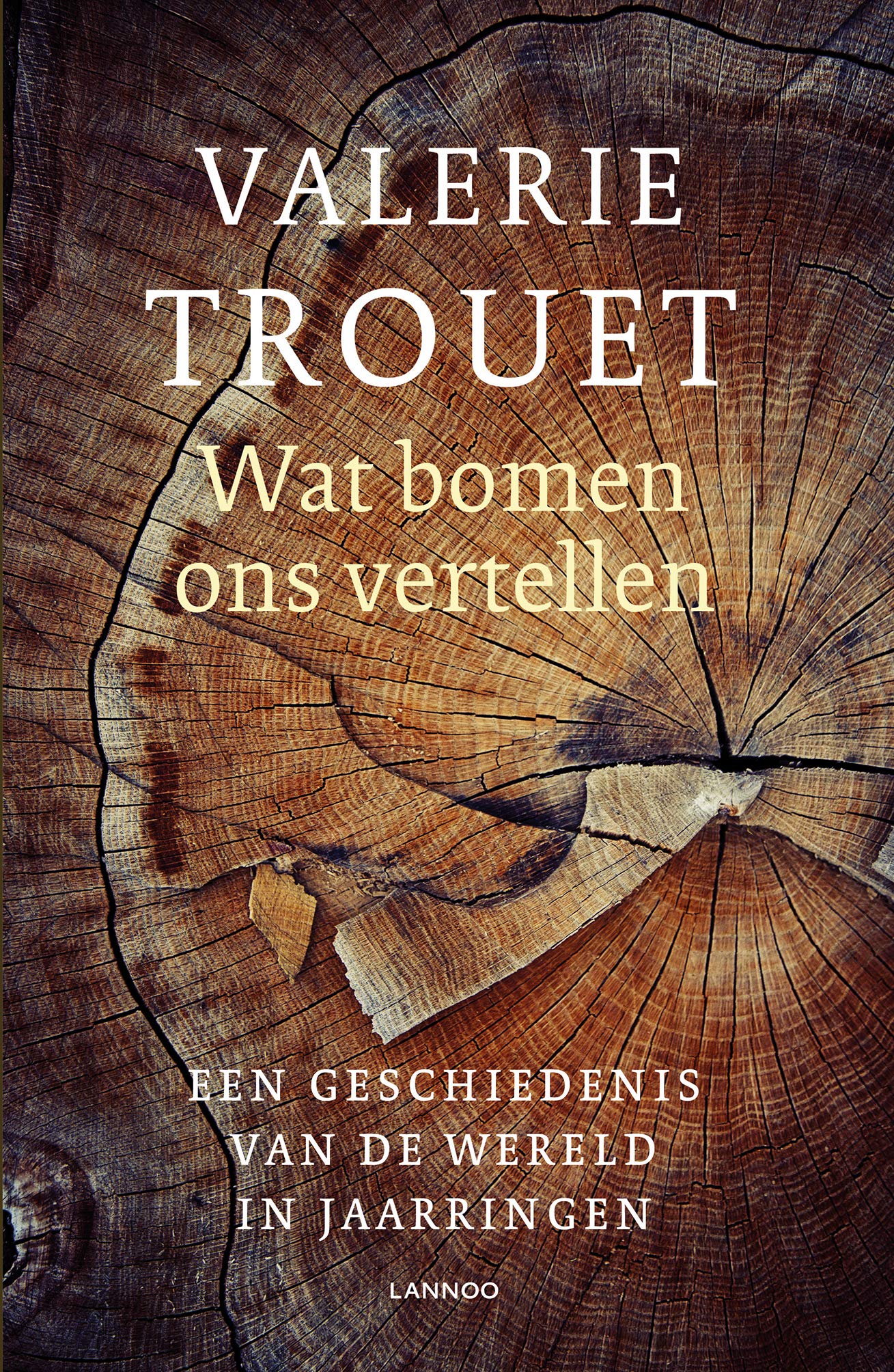
Wat bomen ons vertellen: Een geschiedenis van de wereld geschreven in ringen
Children around the world know that to tell how old a tree is, you count its rings. Few people, however, know that research into tree rings has also made amazing contributions to our understanding of Earth's climate history and its influences on human civilization over the past 2,000 years. In her captivating new book, Tree Story, Valerie Trouet shows readers how the seemingly simple and relatively familiar concept of counting tree rings has inspired far-reaching scientific breakthroughs that illuminate the complex interactions between nature and people.
Trouet, a leading tree-ring scientist, takes us out into the field, from remote African villages to radioactive Russian forests, offering readers an insider's look at tree-ring research, a discipline formally known as dendrochronology. Tracing her own professional journey while exploring dendrochronology's history and applications, Trouet describes the basics of how tell-tale tree cores are collected and dated with ring-by-ring precision, explaining the unexpected and momentous insights we've gained from the resulting samples.
Blending popular science, travelogue, and cultural history, Tree Story highlights exciting findings of tree-ring research, including the locations of drowned pirate treasure, successful strategies for surviving California wildfire, the secret to Genghis Khan's victories, the connection between Egyptian pharaohs and volcanoes, and even the role of olives in the fall of Rome. These fascinating tales are deftly woven together to show us how dendrochronology sheds light on global climate dynamics and reveals the clear links between humans and our leafy neighbors. Trouet captivates us with her dedication to the tangible appeal of studying trees, a discipline that has taken her to the most austere and beautiful landscapes around the globe and has enabled scientists to solve long-pondered mysteries of the earth and her human inhabitants.
Trouet, a leading tree-ring scientist, takes us out into the field, from remote African villages to radioactive Russian forests, offering readers an insider's look at tree-ring research, a discipline formally known as dendrochronology. Tracing her own professional journey while exploring dendrochronology's history and applications, Trouet describes the basics of how tell-tale tree cores are collected and dated with ring-by-ring precision, explaining the unexpected and momentous insights we've gained from the resulting samples.
Blending popular science, travelogue, and cultural history, Tree Story highlights exciting findings of tree-ring research, including the locations of drowned pirate treasure, successful strategies for surviving California wildfire, the secret to Genghis Khan's victories, the connection between Egyptian pharaohs and volcanoes, and even the role of olives in the fall of Rome. These fascinating tales are deftly woven together to show us how dendrochronology sheds light on global climate dynamics and reveals the clear links between humans and our leafy neighbors. Trouet captivates us with her dedication to the tangible appeal of studying trees, a discipline that has taken her to the most austere and beautiful landscapes around the globe and has enabled scientists to solve long-pondered mysteries of the earth and her human inhabitants.
384 pages, Kindle Edition
Published May 12, 2020
About the author
Valerie Trouet
6 books19 followersProf. dr. Valerie Trouet bestudeert al meer dan twintig jaar de klimaatverandering aan de hand van jaarringen van bomen. Wereldwijd wordt ze erkend als een van de topexperts op het vlak van dendrochronologie. Ze is verbonden aan het Laboratory of Tree-Ring Research van de University of Arizona (VS) en publiceerde eerder onder meer in Nature en Science.
Ratings & Reviews
Friends & Following
Create a free account to discover what your friends think of this book!
Community Reviews
Displaying 1 - 30 of 179 reviews

July 26, 2021
I'm kind of a tree nerd having gained an interest in them after years of use because of turning. When I got a lathe, I was too cheap to practice on store bought wood, so I raided the firewood pile & found a treasure trove of gorgeous wood. That led me to stopping at houses with a downed tree to beg for wood to turn & raiding other firewood piles. I found that I didn't know what the wood was half the time, so I tried to cure my ignorance which led into studying trees for the past couple of decades.
This book seemed right up my alley & she really got my attention in the second chapter when she declared that all the wood in a tree is dead save for the cambium layer just inside the bark which other sources dispute. Most agree that the heartwood is dead even though a tree in good shape has a solid heart. There is a good deal of debate on the transition from sapwood to heartwood & some think the sapwood isn't really dead, but more in a state of very slow growth, almost dormancy. They say that if it wasn't alive, it would decay & couldn't turn into heartwood, much of which is distinctly different in color from sapwood due to collecting minerals since the sapwood is the area through which the majority of the sap rises in the tree. It makes me wonder if we have a good definition of 'dead'.
Using trees to figure out climate history is fascinating & she describes both its upsides & limitations. It's not straight forward & there are some big gaps, but also some surprisingly detailed records that are used to calibrate other methods such as carbon dating. She briefly touches on ice & stalagmite sampling, both of which are similar to tree ring samples. This gets her into wood microscopy a little & the book has some pictures. It's a fascinating field & she discusses it to the correct depth for this book. (R. Bruce Hoadley is tops in the field & I've worked through 2 of his books with my cheap microscope.) Towards the end of the book her theme really embraces our current climate change & she has a lot of interesting facts to support it, but she also gets rather strident & repetitive, both a real turn off to me.
Throughout the book, she describes field trips briefly. Most sound pretty horrific. Humping core samples is tough, but wedges to study fires is awful especially in the numbers required. Just getting to many of the sites could make an entire adventure book since the sites need to be far from civilization in order to find the oldest trees. Just how many hours these scientists have spent collecting samples to stitch together fantastically long & accurate climate data is incredible.
Comparisons of climate in various areas to historical events was really interesting. Most history books I've read completely missed just how much influence climate has had on politics. Genghis Khan's expansion took place during a series of wet years when there was plenty of fodder for the horses & many countries failed due to droughts that resulted in their people rebelling. Fascinating stuff that I don't recall reading about in most histories. Perhaps they didn't know. More secrets revealed by trees.
Well narrated & full of interesting facts, I feel as if I should have enjoyed this more than I did. The last quarter of the book really brought its score down for me. It was just too much. Still, it's definitely a worthwhile read.
This book seemed right up my alley & she really got my attention in the second chapter when she declared that all the wood in a tree is dead save for the cambium layer just inside the bark which other sources dispute. Most agree that the heartwood is dead even though a tree in good shape has a solid heart. There is a good deal of debate on the transition from sapwood to heartwood & some think the sapwood isn't really dead, but more in a state of very slow growth, almost dormancy. They say that if it wasn't alive, it would decay & couldn't turn into heartwood, much of which is distinctly different in color from sapwood due to collecting minerals since the sapwood is the area through which the majority of the sap rises in the tree. It makes me wonder if we have a good definition of 'dead'.
Using trees to figure out climate history is fascinating & she describes both its upsides & limitations. It's not straight forward & there are some big gaps, but also some surprisingly detailed records that are used to calibrate other methods such as carbon dating. She briefly touches on ice & stalagmite sampling, both of which are similar to tree ring samples. This gets her into wood microscopy a little & the book has some pictures. It's a fascinating field & she discusses it to the correct depth for this book. (R. Bruce Hoadley is tops in the field & I've worked through 2 of his books with my cheap microscope.) Towards the end of the book her theme really embraces our current climate change & she has a lot of interesting facts to support it, but she also gets rather strident & repetitive, both a real turn off to me.
Throughout the book, she describes field trips briefly. Most sound pretty horrific. Humping core samples is tough, but wedges to study fires is awful especially in the numbers required. Just getting to many of the sites could make an entire adventure book since the sites need to be far from civilization in order to find the oldest trees. Just how many hours these scientists have spent collecting samples to stitch together fantastically long & accurate climate data is incredible.
Comparisons of climate in various areas to historical events was really interesting. Most history books I've read completely missed just how much influence climate has had on politics. Genghis Khan's expansion took place during a series of wet years when there was plenty of fodder for the horses & many countries failed due to droughts that resulted in their people rebelling. Fascinating stuff that I don't recall reading about in most histories. Perhaps they didn't know. More secrets revealed by trees.
Well narrated & full of interesting facts, I feel as if I should have enjoyed this more than I did. The last quarter of the book really brought its score down for me. It was just too much. Still, it's definitely a worthwhile read.

April 20, 2023
Free for Audible-Plus members in the UK and US!!!!!!!!
The author of this book is a dendrochronologist. Dendrochronologists are scientists who study the rings that appear each year in tree trunks. The tree rings are used as means of calculating the dates when other events occur, for example the eruption of volcanoes, the destruction by hurricanes and earthquakes, the fall of meteorites. The bubonic plague, Angkor Wat, the Aztec and Mayan civilizations are studied and redated using dendrochronology. Dendrochronology’s been used by archeologists for nearly a century. The method pinpoints dates more accurately than carbon dating!
Dendrochronology has taught us how climate changes have impacted past societies. The author goes on to speak out against deforestation, the burning of fossil fuels, greenhouse gas emissions and global warming. One can scarcely state this to be new, but nevertheless she adds her voice to those speaking out against man’s impact on the environment. She adamantly supports the urgent need for change.
The book gives clear definition of words and scientific methodology. There is a huge quantity of cultural history interwoven into the scientific studies cited. Studies carried out all over the world are spoken of. Belgium, Russia, Germany, England, Tanzania, the US, Mongolia, Russia, Japan, Cambodia, Mexico, Peru—I’m naming but a few! The book’s content, as a whole, is very interesting.
I have two complaints. Many words are defined, but only once and there are many, many words that mean something very specific. The reader is less familiar with the terminology than the author, and she forgets this. Many words can be used in a general sense This causes confusion. Complaint number two—the author goes on and on from one subject to another. The information should have been better organized. I would have preferred more structure to the information presented. On closing the book, I feel I’ve been told a huge quantity of interesting information, but I have difficulty summing up and organizing what has been said.
The audiobook is narrated by Coleen Mario. She speaks clearly but way too fast. I had to turn the speed down to 80%--and then it sounds distorted. There is a lot of information to absorb. A reader needs time to think about that which they are told if it is going to be remembered! Had she spoken slower, I would have given four stars to the narration but have instead settled on three.
I’m rating the book with three stars. It’s good. I’m glad I read it. The book contains lots of interesting information, but I would have preferred the content to be more structured.
Look at the title and particularly the subtitle. The subtitle tells you exactly what the book is about!
Thank you, Eileen, for recommending this to me!
The author of this book is a dendrochronologist. Dendrochronologists are scientists who study the rings that appear each year in tree trunks. The tree rings are used as means of calculating the dates when other events occur, for example the eruption of volcanoes, the destruction by hurricanes and earthquakes, the fall of meteorites. The bubonic plague, Angkor Wat, the Aztec and Mayan civilizations are studied and redated using dendrochronology. Dendrochronology’s been used by archeologists for nearly a century. The method pinpoints dates more accurately than carbon dating!
Dendrochronology has taught us how climate changes have impacted past societies. The author goes on to speak out against deforestation, the burning of fossil fuels, greenhouse gas emissions and global warming. One can scarcely state this to be new, but nevertheless she adds her voice to those speaking out against man’s impact on the environment. She adamantly supports the urgent need for change.
The book gives clear definition of words and scientific methodology. There is a huge quantity of cultural history interwoven into the scientific studies cited. Studies carried out all over the world are spoken of. Belgium, Russia, Germany, England, Tanzania, the US, Mongolia, Russia, Japan, Cambodia, Mexico, Peru—I’m naming but a few! The book’s content, as a whole, is very interesting.
I have two complaints. Many words are defined, but only once and there are many, many words that mean something very specific. The reader is less familiar with the terminology than the author, and she forgets this. Many words can be used in a general sense This causes confusion. Complaint number two—the author goes on and on from one subject to another. The information should have been better organized. I would have preferred more structure to the information presented. On closing the book, I feel I’ve been told a huge quantity of interesting information, but I have difficulty summing up and organizing what has been said.
The audiobook is narrated by Coleen Mario. She speaks clearly but way too fast. I had to turn the speed down to 80%--and then it sounds distorted. There is a lot of information to absorb. A reader needs time to think about that which they are told if it is going to be remembered! Had she spoken slower, I would have given four stars to the narration but have instead settled on three.
I’m rating the book with three stars. It’s good. I’m glad I read it. The book contains lots of interesting information, but I would have preferred the content to be more structured.
Look at the title and particularly the subtitle. The subtitle tells you exactly what the book is about!
Thank you, Eileen, for recommending this to me!
June 1, 2020
The Inquisitive Biologist gave this one a rave review, and I recommend reading that first:
https://inquisitivebiologist.com/2020...
I took a few notes (which I'll get to), but I didn't like the book quite as much as he did, in part because I was already well-familiar with dendrochronology. And the ebook I read didn't have some of the illustrations he mentions (plus some wonky formatting). You might do better with a paper copy.
But I learned a lot of stuff. Trouet writes well and doesn't take herself too seriously. This is my favorite kind of popular science book: a working scientist describing her specialty, and doing a first-rate job of it. She was aiming the book at non-specialists and succeeded. The descriptions of her fieldwork were one of the real highlights. Highly recommended.
From my notes: I found her least-successful chapter to be the one on the "Hockey stick" graph, the one that shows average global temperatures for the past thousand years. Her explanation of this is unclear, and she doesn't mention any of the weaknesses in that work. Mind, I'm not suggesting that the climate hasn't warmed, and is continuing to do so. But that study compares reconstructed temperatures in the past to instrumental data from thermometers for the past century or so. Which is comparing apples to oranges.
And one of the coolest discoveries she reports was well-made spears at a coal mine in eastern Germany that date back to perhaps 320,000 years ago -- which might even be before the Neanderthals (the date is uncertain). This was at a big horse-butchering site. Her point being that sophisticated woodworking predates Homo sapiens!
Author's website: https://www.valerietrouet.com/about-m...
https://inquisitivebiologist.com/2020...
I took a few notes (which I'll get to), but I didn't like the book quite as much as he did, in part because I was already well-familiar with dendrochronology. And the ebook I read didn't have some of the illustrations he mentions (plus some wonky formatting). You might do better with a paper copy.
But I learned a lot of stuff. Trouet writes well and doesn't take herself too seriously. This is my favorite kind of popular science book: a working scientist describing her specialty, and doing a first-rate job of it. She was aiming the book at non-specialists and succeeded. The descriptions of her fieldwork were one of the real highlights. Highly recommended.
From my notes: I found her least-successful chapter to be the one on the "Hockey stick" graph, the one that shows average global temperatures for the past thousand years. Her explanation of this is unclear, and she doesn't mention any of the weaknesses in that work. Mind, I'm not suggesting that the climate hasn't warmed, and is continuing to do so. But that study compares reconstructed temperatures in the past to instrumental data from thermometers for the past century or so. Which is comparing apples to oranges.
And one of the coolest discoveries she reports was well-made spears at a coal mine in eastern Germany that date back to perhaps 320,000 years ago -- which might even be before the Neanderthals (the date is uncertain). This was at a big horse-butchering site. Her point being that sophisticated woodworking predates Homo sapiens!
Author's website: https://www.valerietrouet.com/about-m...

August 10, 2021
When a tree grows, it puts on a ring. A tree ring that is. Using these tree rings allows scientists (dendrochronologists) to provide historically-accurate dates for everything ranging from Stradivarius violins to archeological ruins by dating the wood used in construction. Dendrochronologists have created a worldwide database which allows them to immediately identify the date which the tree was cut.
Trouet has written a fascinating book - not only about how it all works - but also a peek into the life of a dendrochronologist. Perhaps contrary to popular belief, these scientists not just work in labaratoria, but actually go out into the woods, dating trees. Which, I discovered, does not mean they have to cut the tree down, but drill into a tree, which leaves the tree alive and allows them to get a sample. Trouet has worked in wide-ranging places such as Tanzania, Greece, the United States and Siberia. In lava fields, mountain ranges, and tropical jungles.
What I also found absolutely fascinating, was the way dendrochronologists allow us to see and identify differences in climate in the past. Therefore, it makes this book absolutely fascinating for everyone interested in climatology.
Trouet has written a fascinating book - not only about how it all works - but also a peek into the life of a dendrochronologist. Perhaps contrary to popular belief, these scientists not just work in labaratoria, but actually go out into the woods, dating trees. Which, I discovered, does not mean they have to cut the tree down, but drill into a tree, which leaves the tree alive and allows them to get a sample. Trouet has worked in wide-ranging places such as Tanzania, Greece, the United States and Siberia. In lava fields, mountain ranges, and tropical jungles.
What I also found absolutely fascinating, was the way dendrochronologists allow us to see and identify differences in climate in the past. Therefore, it makes this book absolutely fascinating for everyone interested in climatology.

September 23, 2020
The study of tree rings and their use in dating the age of the trees themselves, or
The items made from wood, is called dendrochronology. Dendrochronology has been used to date archeological finds, like the Ancient Puebloan sites in the Four Corners region in the southwestern US. I particularly enjoyed how tree-ring patterns confirmed that years w/ more hurricanes had more shipwrecks. That seems so common-sensical as not needing studied...!
I really did like all the climate-change studies using tree-rings compared to known weather data in a region and learned a lot about oceanic water-current patterns and their relationship to wet/cold years vs dry/warm ones. This includes the North-and South-Atlantic Oscillations affecting European weather and the El Niño/La Niña Pacific patterns. There was also a great chapter on western US wildfires and our current forest-protection practices. We need to go back to surface fired; they don’t burn as hotly and don’t destroy forests.
Science can be so cool and so interesting in the hands of the right author. I enjoyed learning about this subject and only marked it down to four stars b/c sometimes the subject matter and charts were just too detailed and got a little dry.
Two things were confirmed for me by reading this book: a) I absolutely ADORE trees and cringed when reading about their large-scale destruction; and b) Climate change is in the process of killing us all. It’s almost too late to change its affect on human life.
The items made from wood, is called dendrochronology. Dendrochronology has been used to date archeological finds, like the Ancient Puebloan sites in the Four Corners region in the southwestern US. I particularly enjoyed how tree-ring patterns confirmed that years w/ more hurricanes had more shipwrecks. That seems so common-sensical as not needing studied...!
I really did like all the climate-change studies using tree-rings compared to known weather data in a region and learned a lot about oceanic water-current patterns and their relationship to wet/cold years vs dry/warm ones. This includes the North-and South-Atlantic Oscillations affecting European weather and the El Niño/La Niña Pacific patterns. There was also a great chapter on western US wildfires and our current forest-protection practices. We need to go back to surface fired; they don’t burn as hotly and don’t destroy forests.
Science can be so cool and so interesting in the hands of the right author. I enjoyed learning about this subject and only marked it down to four stars b/c sometimes the subject matter and charts were just too detailed and got a little dry.
Two things were confirmed for me by reading this book: a) I absolutely ADORE trees and cringed when reading about their large-scale destruction; and b) Climate change is in the process of killing us all. It’s almost too late to change its affect on human life.

October 1, 2020
The beginning of this book was very pedantic, I almost put it down as a DNF. But I decided to scan a few reviews before I did, as a result I stuck with it and I’m very glad I did. It is overall a fascinating book. Very informative about climate history, interesting insights of being a woman in science, an author with a good sense of humor. And now I know what dendrochronology is and what a dendroclimatologist does!

April 18, 2024
Very very cool book with fascinating historical and current information about everything tree ring related (smash). Just a bit redundant at times (especially parts of the first and last few chapters), but I guess that isn’t rare for a book trying to explain complex science to a general audience. Alas. I love trees.
July 17, 2020
Well-written overview of the power of tree-ring research. Provides an interesting selection of several historical evolutions, caused by and/or accelerated by climate variables, by telling the story of how the processes have been discovered.
Good read 😉
Good read 😉

July 13, 2020
Slechts één zin: Lees dit boek!
Read this book.
Read this book.

September 27, 2024
Truly one of the most interesting nonfiction books I’ve probably ever read. Trees are so cool!
December 12, 2020
Every schoolchild knows you can determine a tree's age from the number of rings in its wood. At least, we think we do. But that's only the starting point in dendrochronologist Valerie Trouet's exploration of what trees and their rings can tell us in her slim but well-packed volume, Tree Story: The History of the World Written in Rings. Using the data in tree rings dendrochronologists can provide historically-accurate dates for everything from Stradivarius violins to archeological ruins to volcanic eruptions -- and perhaps glimpses into the future climate of our planet. Trouet details this with wonder and a sense of adventure spawned by her motto: "I'll try anything once." Although she admits she may have to apply these words more carefully after, among other travails, a grueling tree-sampling trek through Siberia, they've also been a guide for like-minded scientists while searching for the oldest living things on Earth, through lava fields, mountain ranges, and tropical jungles. Come for the storytelling, stay for the data and insights. Readers who want more about trees and their place in our world will also enjoy Trouet's bibliography and recommended reading lists, as well as the sometimes hilarious playlists that helped inspire her.

July 23, 2023
Wat een boek!
Boeiende materie: jaarringen en wat daar allemaal uit afgeleid kan worden, maar vooral ook: hoe divers dat is en dat jaarringonderzoek in combinatie met andere wetenschappelijke disciplines zo veel verheldering kan scheppen als het gaat om het bestuderen en voorspellen van klimaatvariaties, en hoe die in het verleden duidelijk samenhingen met ingrijpende gebeurtenissen in de menselijke geschiedenis.
Eerst legt Valerie Trouet haarfijn en heel helder uit hoe ze zelf in de dendrochronologie gerold is. Na haar studie bio-ingenieur in Gent was het een kwestie van kansen zien en ze dankbaar grijpen, van opportuniteiten die zich op het juiste moment aandienen en ook heel hard werken.
Vervolgens krijg je een duidelijk beeld van het studiedomein van de dendrochronologie; het is meer dan ringen tellen, zeg maar. Ook waarom het eerste dendrochronologische onderzoeksinstituut in de woestijn in Noord-Amerika is opgericht. Dat doet ze bij alles: ze ziet, ondanks het feit dat ze zelf al haar hele carrière zowat jaarringen ademt, toch nog heel helder wat er voor de leek mogelijk verrassend is of domweg niet evident. Ze gaat daar allemaal op in, zonder het te vereenvoudigen, maar ook, en dat maakt het boek echt af wat mij betreft: het is zo goed geschreven. Ze kan verhalen boeiend vertellen, ze schrijft domweg mooi, mooie zinnen, rake formuleringen én met een heerlijk gevoel voor humor, zonder dus ook maar op enig moment de lezende leek te onderschatten. Geen eenvoudige lectuur soms - sommige wetenschappelijke finesses ontgingen me -, maar ongelooflijk boeiend en leerrijk.
Het verband dat ze schetst tussen de natuurlijke klimaatvariaties en de menselijke geschiedenis is verbijsterend. Zo gaat ze in op de val van het West-Romeinse Rijk, maar ook de Khmer, de Maya, de Azteken, de oude puebloculturen in Noord-Amerika, enz. Nooit pretendeert ze dat het klimaat de enige factor is, wel dat je telkens opnieuw ziet dat die grote rupturen in de menselijke geschiedenis elke keer samengaan met ingrijpende klimatologische variaties (bv. droogtes die decennia duren en waartegenover de droogtes die we nu meemaken een peulschil zijn). Als culturen en maatschappijen dergelijke klimaatvariaties goed doorstaan, is dat omdat ze flexibel waren, niet op één paard wedden, omdat er snel en doortastende aanpassingen werden doorgevoerd, en dat alles voldoende gedragen door de maatschappij. Meestal zie je echter politieke instabiliteit, opstanden, hongersnoden, gebieden die verlaten worden. Dat laatste kon nog makkelijk in een dunner bevolkte wereld, maar is nu allesbehalve evident. Helemaal vrolijk word je er niet van, maar het goede is dat ze de verbanden uitlegt, wel eens formuleert wat er nodig zou zijn om de huidige klimaatverandering aan te pakken, maar nooit pamflettistisch wordt.
Heel mooi ook hoe ze alle collega's met wie ze samenwerkt ook met naam en toenaam noemt, hun werk en verdiensten net zo goed voor het voetlicht brengt, zo tonend dat je als wetenschapper nooit een alleen opererend genie bent, maar alleen maar bereikt wat je bereikt samen met en door anderen.
Boeiende materie: jaarringen en wat daar allemaal uit afgeleid kan worden, maar vooral ook: hoe divers dat is en dat jaarringonderzoek in combinatie met andere wetenschappelijke disciplines zo veel verheldering kan scheppen als het gaat om het bestuderen en voorspellen van klimaatvariaties, en hoe die in het verleden duidelijk samenhingen met ingrijpende gebeurtenissen in de menselijke geschiedenis.
Eerst legt Valerie Trouet haarfijn en heel helder uit hoe ze zelf in de dendrochronologie gerold is. Na haar studie bio-ingenieur in Gent was het een kwestie van kansen zien en ze dankbaar grijpen, van opportuniteiten die zich op het juiste moment aandienen en ook heel hard werken.
Vervolgens krijg je een duidelijk beeld van het studiedomein van de dendrochronologie; het is meer dan ringen tellen, zeg maar. Ook waarom het eerste dendrochronologische onderzoeksinstituut in de woestijn in Noord-Amerika is opgericht. Dat doet ze bij alles: ze ziet, ondanks het feit dat ze zelf al haar hele carrière zowat jaarringen ademt, toch nog heel helder wat er voor de leek mogelijk verrassend is of domweg niet evident. Ze gaat daar allemaal op in, zonder het te vereenvoudigen, maar ook, en dat maakt het boek echt af wat mij betreft: het is zo goed geschreven. Ze kan verhalen boeiend vertellen, ze schrijft domweg mooi, mooie zinnen, rake formuleringen én met een heerlijk gevoel voor humor, zonder dus ook maar op enig moment de lezende leek te onderschatten. Geen eenvoudige lectuur soms - sommige wetenschappelijke finesses ontgingen me -, maar ongelooflijk boeiend en leerrijk.
Het verband dat ze schetst tussen de natuurlijke klimaatvariaties en de menselijke geschiedenis is verbijsterend. Zo gaat ze in op de val van het West-Romeinse Rijk, maar ook de Khmer, de Maya, de Azteken, de oude puebloculturen in Noord-Amerika, enz. Nooit pretendeert ze dat het klimaat de enige factor is, wel dat je telkens opnieuw ziet dat die grote rupturen in de menselijke geschiedenis elke keer samengaan met ingrijpende klimatologische variaties (bv. droogtes die decennia duren en waartegenover de droogtes die we nu meemaken een peulschil zijn). Als culturen en maatschappijen dergelijke klimaatvariaties goed doorstaan, is dat omdat ze flexibel waren, niet op één paard wedden, omdat er snel en doortastende aanpassingen werden doorgevoerd, en dat alles voldoende gedragen door de maatschappij. Meestal zie je echter politieke instabiliteit, opstanden, hongersnoden, gebieden die verlaten worden. Dat laatste kon nog makkelijk in een dunner bevolkte wereld, maar is nu allesbehalve evident. Helemaal vrolijk word je er niet van, maar het goede is dat ze de verbanden uitlegt, wel eens formuleert wat er nodig zou zijn om de huidige klimaatverandering aan te pakken, maar nooit pamflettistisch wordt.
Heel mooi ook hoe ze alle collega's met wie ze samenwerkt ook met naam en toenaam noemt, hun werk en verdiensten net zo goed voor het voetlicht brengt, zo tonend dat je als wetenschapper nooit een alleen opererend genie bent, maar alleen maar bereikt wat je bereikt samen met en door anderen.

January 21, 2022
My first-ever audiobook experience! This was super cool and interesting- I had no idea tree rings could tell us so much. I loved reading this at the same time that I was teaching climate change to my students. I learned so many cool facts about tree ring data, past climates, and even history that I got to share in my classes.

February 10, 2026
3,5 ⭐️ Na een aarzelend begin met naar mijn gevoel te veel niet echt ter zake doende informatie ben ik diagonaal beginnen lezen. Voorbij de eerste helft werd het verhaal boeiender en was mijn interesse definitief gewekt. Uiteindelijk met veel plezier uitgelezen.

March 1, 2025
Super interessant, intelligent, grappig en verrijkend, maar vooral: actueel!
Verteerbaar wetenschappelijk onderzoek naar natuurcycli, -fenomenen en bijgevolg een vatbare beschrijving van ons globale klimaat, vroeger en nu.
Verteerbaar wetenschappelijk onderzoek naar natuurcycli, -fenomenen en bijgevolg een vatbare beschrijving van ons globale klimaat, vroeger en nu.
January 30, 2023
Fascinerende verzameling anekdotes en wetenschappelijke theoriën. Soms voelt het een beetje als "jumping to conclusions", hoewel de overkoepelende thema's meer dan relevant zijn voor de aan extreme klimaatverandering onderhevige wereld waar wij leven.

April 11, 2021
Jaarringen onthullen ons de leeftijd van de bomen, én van de voorwerpen die uit die bomen werden gemaakt. Jaarringen leren ook het bewijs dat de aarde opwarmt door de uitstoot van CO2. En dus door menselijke activiteit. Dat schrijft Valerie Trouet in “Wat bomen ons vertellen”. Ze is professor dendrochronologie (‘boomtijdkunde’) aan de universiteit van Arizona. Ze is echt een autoriteit op dat vlak. Haar boek heb ik de voorbije weken in verteerbare stukjes gelezen. Wat voor mij een echter openbaring was, is dat haar bomenonderzoek bijdraagt tot het verklaren van de wisselende werking van de Noord-Atlantische windmachine. De wijze waarop de twee luchtdrukcentra - het Azoren-hoog en de IJsland-laag - fungeren als tandraderen van deze windmachine en de wijze waarop ze droger of natter weer in onze streken teweegbrengen. Allemaal gevolg van ons verstoord klimaatsysteem. Trouet is dendroklimatoloog bij uitstek.
November 22, 2020
Dendrochronologie is een fantastisch onderwerp en vakgebied en dit boek komt met mooie voorbeelden. Toch ben ik kritisch. Ik heb de Nederlandse vertaling gelezen en dat was toch wel een beetje pijnlijk. De vertaling was namelijk ronduit slecht en op iedere pagina zijn minstens vier anglicismes te vinden. Daarnaast was er geen, of te weinig, moeite gedaan om de zinsopbouw aan te passen naar het Nederlands. Ook de schrijfstijl kon ik niet waarderen, maar dat is een kwestie van smaak.
Inhoudelijk is er duidelijk geprobeerd om dit toch wat academische onderwerp toegankelijk te maken. Dat is goed gelukt, maar ik denk dat er wel meer uit gehaald kon worden. Een ander inhoudelijk punt van kritiek is dat er toch behoorlijk deterministisch met de gegevens wordt omgegaan. Trouet zegt enerzijds dat er natuurlijk nooit direct bewijs is dat droogte X de oorzaak is voor de ondergang van wereldrijk Z, maar legt anderzijds wel erg vaak de relatie tussen de twee. Tegelijkertijd meldt ze dan dat er allerlei andere factoren zijn die ook een rol kunnen spelen bij de ondergang van wereldrijk Z, waardoor je eigenlijk je eigen argument onderuit haalt. Causaliteit, oorzaak en aanleiding, worden niet helder uit elkaar gehaald en dat vind ik niet sterk voor iemand die daar beroepsmatig dagelijks mee bezig is.
Ik wil het positief afsluiten door te zeggen dat het onderwerp fantastisch is en dat er ook mooie verhalen en voorbeelden worden opgediend. Het had beter geschreven kunnen worden, maar is het lezen waard.
Inhoudelijk is er duidelijk geprobeerd om dit toch wat academische onderwerp toegankelijk te maken. Dat is goed gelukt, maar ik denk dat er wel meer uit gehaald kon worden. Een ander inhoudelijk punt van kritiek is dat er toch behoorlijk deterministisch met de gegevens wordt omgegaan. Trouet zegt enerzijds dat er natuurlijk nooit direct bewijs is dat droogte X de oorzaak is voor de ondergang van wereldrijk Z, maar legt anderzijds wel erg vaak de relatie tussen de twee. Tegelijkertijd meldt ze dan dat er allerlei andere factoren zijn die ook een rol kunnen spelen bij de ondergang van wereldrijk Z, waardoor je eigenlijk je eigen argument onderuit haalt. Causaliteit, oorzaak en aanleiding, worden niet helder uit elkaar gehaald en dat vind ik niet sterk voor iemand die daar beroepsmatig dagelijks mee bezig is.
Ik wil het positief afsluiten door te zeggen dat het onderwerp fantastisch is en dat er ook mooie verhalen en voorbeelden worden opgediend. Het had beter geschreven kunnen worden, maar is het lezen waard.

February 23, 2021
What a wonderful book.
Of course, I cannot comment on the accuracy of the science, but given Prof Trouet's CV, there's no reason to doubt the contents.
This is really popularizing science at its best: 1. It teaches us about a highly relevant topic most of us have never heard off (how tree rings can be used as a data source for environmental and social history) 2. It is very accessible and clearly written 3. It teaches a lot about the scientific process: how to develop hypotheses, how to develop ways to test them, how to deal with data gaps, how to connect the dots between seemingly unrelated topics (and, of course, on the importance of obtaining funds) 4. It is a lively story of someone who almost stumbled into the topic she would devote her live to. At times, it really reads as an adventure story that Indiana Jones would have been jealous of.
Seriously, if I had read this book as a thirteen years old, I may have chosen a completely different career path. Well, of course, maybe I am now romanticizing what is really very hard work, but this combination of doing physically demanding field work in the most crazy places, followed by months of statistical work back home, should appeal to any adventurous nerd.
Of course, I cannot comment on the accuracy of the science, but given Prof Trouet's CV, there's no reason to doubt the contents.
This is really popularizing science at its best: 1. It teaches us about a highly relevant topic most of us have never heard off (how tree rings can be used as a data source for environmental and social history) 2. It is very accessible and clearly written 3. It teaches a lot about the scientific process: how to develop hypotheses, how to develop ways to test them, how to deal with data gaps, how to connect the dots between seemingly unrelated topics (and, of course, on the importance of obtaining funds) 4. It is a lively story of someone who almost stumbled into the topic she would devote her live to. At times, it really reads as an adventure story that Indiana Jones would have been jealous of.
Seriously, if I had read this book as a thirteen years old, I may have chosen a completely different career path. Well, of course, maybe I am now romanticizing what is really very hard work, but this combination of doing physically demanding field work in the most crazy places, followed by months of statistical work back home, should appeal to any adventurous nerd.

August 29, 2021
Este libro es excepcional, se mire como se mire. Resulta que los anillos de los árboles nos explican su vida, y de su vida podemos deducir qué ha podido suceder. Cuando a un árbol le faltan nutrientes, sus anillos son muy pequeños. Es lo que los dendrocronólogos llaman "factor limitante". Ahora bien, la causa puede ser porque ha habido un año seco, le han arrrancado todas las hojas, ha sufrido incendios, nevadas, etc.
De ese modo podemos saber qué sucedió en el pasado. La autora lo explica maravillosamente bien, aparte de ser un tema absolutamente fascinante.
Recomendado para todos los públicos.
De ese modo podemos saber qué sucedió en el pasado. La autora lo explica maravillosamente bien, aparte de ser un tema absolutamente fascinante.
Recomendado para todos los públicos.

June 19, 2020
A dendrochronological delight, the beautifully written and illustrated Tree Story reveals the utterly fascinating world of tree-ring research and how it matters to archaeology, palaeoclimatology, and environmental history. See my full review at https://inquisitivebiologist.com/2020...

May 10, 2020
Dendrochronology and what it can tell us about the history of mankind, climate change, and just about anything else... Fascinating, in places funny, not too heavy while still learned, and timely, timely, timely, with our current anthropogenically caused climate crisis.

September 13, 2020
It's alright, but for some reason I expected more, something different, something slightly more entailing.
More than a general history this reads like a few blurbs that are personally related to the author, a format I usually don't prefer.
More than a general history this reads like a few blurbs that are personally related to the author, a format I usually don't prefer.
January 22, 2021
Really fascinating material, written by someone who´s clearly an expert. Learned a ton about dendrochronology. Occasionally it was too dense and too much detail for my taste (unless you are REALLY into dendrochronology).
January 17, 2022
I got so much more out of this book than I expected! Trees can tell you about how Empires fell, about the climate in the 1400s and why, because of the Little Ice Age some violins sound better than others. There is so much to learn packed into this book. Incredibly informative and entertaining.
June 6, 2022
Heerlijk om alle linkjes te zien verschijnen in het grote web van klimaat, cultuur en geschiedenis!
October 14, 2022
Valerie Trouet, het toekomstige hoofd van het op te richten Belgische klimaatexpertisecentrum, werkte tot nog toe als dendrochronoloog aan de Universiteit van de Arizona. Dendrochronologen zijn wetenschappers die in de eerste plaats hout kunnen dateren aan de hand van een serie jaarringen. Naargelang de temperatuur in een bepaald jaar staan jaarringen dichter of verder van elkaar af, en over de jaren heen vormt een serie jaarringen een uniek patroon, die voor een boomsoort in een bepaalde streek typisch zijn. Aan de hand van de patronen kan men dan zien uit welke periode dat patroon is.
Uit de jaarringen kan heel wat meer afgeleid worden, want de dikte van elke jaarring, de samenstelling van vroeg- en laathoutcellen en de aanwezige koolstof14-isotopen in elke jaarring zegt ook wat over de temperatuur en de neerslag van dat jaar. Zo kan de een gemiddelde temperatuur en neerslag van eeuwen terug gereconstrueerd worden.
Trouet vertelt in de eerste hoofdstukken van haar boek vooral over haar vakgebied, de toepassingen ervan en de onderzoeksmethoden. Dat vond ik persoonlijk heel interessant, ook omdat ik naar een nieuwe carrière op zoek ben, en dat de dendrologie me wel kan boeien. In de andere hoofdstukken verbindt ze de bevindingen van haar en haar collega’s met geschiedkundige feiten (zoals de bloeiperiode van de oude pueblo-volkeren in Noord-Amerika en de val van het West-Romeinse Rijk), en dat kon me na een tijd veel minder boeien, omdat het wat veel opsommingen zijn.
Was het boek beperkt gebleven tot haar vijf eerste hoofdstukken, met daarnaast een stuk over hoe ons klimaat mogelijk verder evolueert, dan had ik haar boek vijf sterren gegeven. De ellenlange opsommingen van vindplaatsen van bomen met bijzondere jaarrringkenmerken en wat men daaruit kan afleiden, voor afgelegen plekken waar weinig mensen ooit iets van hoorden, kost het boek in mijn ogen twee sterren.
Uit de jaarringen kan heel wat meer afgeleid worden, want de dikte van elke jaarring, de samenstelling van vroeg- en laathoutcellen en de aanwezige koolstof14-isotopen in elke jaarring zegt ook wat over de temperatuur en de neerslag van dat jaar. Zo kan de een gemiddelde temperatuur en neerslag van eeuwen terug gereconstrueerd worden.
Trouet vertelt in de eerste hoofdstukken van haar boek vooral over haar vakgebied, de toepassingen ervan en de onderzoeksmethoden. Dat vond ik persoonlijk heel interessant, ook omdat ik naar een nieuwe carrière op zoek ben, en dat de dendrologie me wel kan boeien. In de andere hoofdstukken verbindt ze de bevindingen van haar en haar collega’s met geschiedkundige feiten (zoals de bloeiperiode van de oude pueblo-volkeren in Noord-Amerika en de val van het West-Romeinse Rijk), en dat kon me na een tijd veel minder boeien, omdat het wat veel opsommingen zijn.
Was het boek beperkt gebleven tot haar vijf eerste hoofdstukken, met daarnaast een stuk over hoe ons klimaat mogelijk verder evolueert, dan had ik haar boek vijf sterren gegeven. De ellenlange opsommingen van vindplaatsen van bomen met bijzondere jaarrringkenmerken en wat men daaruit kan afleiden, voor afgelegen plekken waar weinig mensen ooit iets van hoorden, kost het boek in mijn ogen twee sterren.

September 25, 2022
Klimaatveranderingen zijn van alle tijden, of beter gezegd natuurlijke klimaatveranderingen. Dit weten we o.a. dankzij de dendrochronologie, de studie van jaarringen van zowel levende bomen als dood hout en gefossiliseerd hout. Hiermee kunnen haarfijne chronologieën opgesteld worden tot duizenden jaren terug in de tijd, die ons heel veel leren over klimaatgebeurtenissen en welke impact deze hadden op de geschiedenis en de mens. Aanhoudende droogteperioden hebben bvb. meteen een impact op de landbouw en voedselvoorziening, wat kan leiden tot hongersnoden, economische crisis, politieke oproer, opstanden, oorlogen, epidemieën, pandemieën, enz. Zo zal klimaatverandering geen onbelangrijke rol gespeeld hebben in de ondergang van o.a. de Romeinen en de Maya's.
Wat echter nog belangrijker is, is dat de dendrochronologie onomstotelijk bewijs levert van de huidige exponentiële klimaatverandering, en dat deze geen natuurlijke maar menselijke oorzaak heeft (de hockeystick grafiek). Door het verleden weten we dat zich in de toekomst ook klimaatveranderingen van natuurlijke oorsprong zullen voordoen - deze zullen dan echter nog bovenop dit menselijk debacle komen. Weer een extra reden om alles op alles te zetten en het tij te keren.
Een boek dat geschiedenis, wetenschap en klimaatverandering op sublieme wijze verweeft, en dat alle beleidsmakers zouden moeten lezen, alsook klimaatontkenners als deze er nog moesten zijn. Ontkennen heeft geen zin meer, stop met onze wetenschappers hun tijd en energie te verdoen door te debatteren en hun bevindingen in twijfel te trekken, en begin met de juiste beslissingen te nemen voor een betere toekomst. Misschien wel het beste wat ik al over klimaat heb gelezen.
Wat echter nog belangrijker is, is dat de dendrochronologie onomstotelijk bewijs levert van de huidige exponentiële klimaatverandering, en dat deze geen natuurlijke maar menselijke oorzaak heeft (de hockeystick grafiek). Door het verleden weten we dat zich in de toekomst ook klimaatveranderingen van natuurlijke oorsprong zullen voordoen - deze zullen dan echter nog bovenop dit menselijk debacle komen. Weer een extra reden om alles op alles te zetten en het tij te keren.
Een boek dat geschiedenis, wetenschap en klimaatverandering op sublieme wijze verweeft, en dat alle beleidsmakers zouden moeten lezen, alsook klimaatontkenners als deze er nog moesten zijn. Ontkennen heeft geen zin meer, stop met onze wetenschappers hun tijd en energie te verdoen door te debatteren en hun bevindingen in twijfel te trekken, en begin met de juiste beslissingen te nemen voor een betere toekomst. Misschien wel het beste wat ik al over klimaat heb gelezen.
February 14, 2021
Wat een inspirerend avontuur!
Valerie neemt ons mee in haar onderzoeksdomein van de dendrochronologie, ofwel de studie en het dateren van de jaarringen van bomen.
Een schat van informatie zo blijkt, die jaarringen, over de leeftijd van houten voorwerpen, maar ook over de opkomst en val van oude beschavingen (niet alleen de Romeinen passeren de revue, maar ook Dzjengis Khan en de pueblo volkeren), over de natuurlijke variatie in klimaatsystemen zoals de El Nino en de straalstroom, over de oorzaak van bosbranden, over de huidige klimaatsopwarming en zelfs over piraterij in de Caraïben. Of dacht je dat het aantal Spaanse scheepswrakken niets te maken heeft met de jaarringen van de bomen op de omliggende eilanden?!
Ik ben fan!
Valerie neemt ons mee in haar onderzoeksdomein van de dendrochronologie, ofwel de studie en het dateren van de jaarringen van bomen.
Een schat van informatie zo blijkt, die jaarringen, over de leeftijd van houten voorwerpen, maar ook over de opkomst en val van oude beschavingen (niet alleen de Romeinen passeren de revue, maar ook Dzjengis Khan en de pueblo volkeren), over de natuurlijke variatie in klimaatsystemen zoals de El Nino en de straalstroom, over de oorzaak van bosbranden, over de huidige klimaatsopwarming en zelfs over piraterij in de Caraïben. Of dacht je dat het aantal Spaanse scheepswrakken niets te maken heeft met de jaarringen van de bomen op de omliggende eilanden?!
Ik ben fan!
February 12, 2023
3.5 Such a fascinating series of climate-related stories and histories discussed in relation to dating using dendrochronology (studying tree rings) and other dating chronologies. Everything from stalagmites, molluscs and 14C to hurricanes, shipwrecks, piracy, earthquakes, meteorites, the bubonic plague, malaria, sun flares, the fall of the Roman Empire and the N American gold rush! Anyone interested in understanding how climate fluctuations in the past has influenced floods droughts and fires and hence events in history will enjoy this book. The last section on carbon emissions and climate change and carbon sequestration felt rather self indulgent and not well related to the theme of dendrochronology.
Displaying 1 - 30 of 179 reviews