Called "such a sad, tough story, but finally so life-affirming, filled with spirit and love" by Anne Lamott, this is a raw and intensely affecting memoir by a young priest about loss of a child, its grief and its aftermath, and the hard-won joy that can follow.Liz Tichenor has taken her newborn son, five weeks old, to the doctor, from a cabin on the shores of Lake Tahoe. She is sent home to her husband and two-year-old daughter with the baby, who is pronounced "fine" by an urgent care physician. Six hours later, the baby dies in their bed. Less than a year and a half before, Tichenor's mother jumped from a building and killed herself after a long struggle with alcoholism. As a very young Episcopal priest, Tichenor has to "preach the Good News," to find faith where there is no hope, but she realizes these terrible parts of her own life will join her in the pulpit. The Night Lake is the story of finding a way forward through tragedies that seem like they might be beyond surviving and of carving out space for the slow labor of learning to live again, in grief.
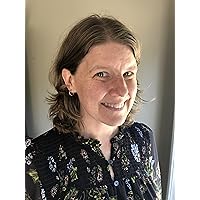
Liz Tichenor has put down roots in the Bay Area but is originally from New Hampshire and the Midwest. An Episcopal priest, she serves as rector at the Episcopal Church of the Resurrection, Pleasant Hill, California. Tichenor and her husband, Jesse, are raising two young children and continuing to explore the adventure of living, parenting, and leading in the community.
*This would be an excellent book to start on Ash Wednesday and end on Easter morning. To me, it represents the topography of lent as well as grief.
This book was honest and brave. Liz Tichenor laid out her grief for all to see and there is most certainly vulnerability in doing this.
Grief is something that can really mess a person up for a lifetime if that person isn’t ready or able to walk through it. I hope this book gives someone, anyone, everyone the wisdom and courage to map their own grief; to set themselves free.
I had to carefully remember that I don’t think this book was meant to be a memoir as it most certainly read like one at times. When I fell into that thinking the book no longer worked for me. Why? First because a memoir is written too soon if it contains anger. There is anger in it’s pages and Tichenor is not shy to call out well-meaning people that did not speak the grief language, the most awkward language known to man, correctly for her. It made me uncomfortable to read the calling out and it felt a little bully pulpit to me in her role as an Episcopalian priest.
Liz Tichenor's memoir of loss, love, grief, and hope is a gift that shimmers and aches. Her storytelling weaves poetically through years and communities, revealing the surprising strength she discovers as she traces her experience of living through and on this side of her newborn son's death and her mother's death.
This book may be hard reading for those who have experienced the loss of someone they love. The author doesn't "pretty-up" the rawness of her grief and anger. But Tichenor isn't permanently buried by her sadness. In her Christian faith, in its rituals and beliefs, the Episcopal priest is companioned by hope and sustained as much by mystical visions as she is by delicious meals with friends and her running life. It's a hopeful story, a story of new life springing out of and alongside death.
This is an autobiography where the author tells of her own personal journey through the "shadows" of grief. . Whatever your experience is with grief and/or faith, [The Night Lake] will manage to surprise you. That it's not easy reading is an understatement. Liz finds her month old son is in an ambulance racing to the hospital and barely clinging to life with a previously undiagnosed medical condition. A month earlier her mother had died. She finds that even the strength of her husband and her daughter are not enough and as a priest she feels aghast that for the first time in her life she questions the existence of a God of any kind. If you are still reading this and not running to save your sanity...you will find yourself wanting to just sit with Liz and hold her hand. What i wasn't sure I wanted to do was read one more sentence in this book...but I did. I realized that in the depth of this young mother/daughters/wife's almost unbearable grief, was a lesson in how to not only simply "be there", but that a friend's mere presence...not their often useless words, helps to convey compassion and the will to go on to those mired in grief and overcome with tragedy. I gave the book 3.5 stars for the author's ability to even write this. Not a good book to end the year with.
Perhaps it was design that I read this book during Lent and finished today, on Easter Sunday. It is, in fact, a book about eastering. I knew. before I started it would not be an easy read. I knew the baby died. The author, however, even in her deepest grief was able to choose the exact words to say what she was feeling. Still a mystery to me how she kept on breathing. The tory of her mother's alcoholism, suicide and undying love, is also intertwined throughout. Tichenor's grief, is agonizing, yet it would be a mistake to stop reading. Everyone grieves when bad things happen. No one grieves in quite the same way. I find, reading about resilience in the face of heart-wrenching pain makes it easier for me to experience my own pain and know that even to the darkest of nights, the light will return As an Episcopalian I was familiar with the churchy parts of the book. I learned learned things like an "ambo" - bigger than a lecture but smaller than a lecture - is a place for both receiving and responding the word of God. And I learned that even when we thin we are alone, there is a community of family, friends and saints that stand with us and hold us up when we think we can't go it alone. Its hard to say a book like this is a good read, but it is beautifully written and I'm glad I read it.
Searing honesty about grief and loss--and not only loss of death--is the best part of the book. Not a feel good story, this takes you to the bottom of a bleeding heart that doesn't know how to live. This story shows the slow regeneration that comes from community, love, and faith. I picked up the book because the beautiful cover and subtitle caught my eye. I finished it because I wanted to know how Liz found her way.
If you need to read something that will rip your heart out and then tear it to pieces, well, this is the book for you. The author goes through the excruciating details of her emotions after the tragic loss of her son. It's an incredibly tough read, but only because the author is so raw and vulnerable that it feels too close to home and too real. We've all lost someone, but I think so few of us are in touch with what really happened, like we're almost afraid to talk about it. This book is so incredible and even though it hurt my heart, it was definitely something I needed to read.
Many thanks to NetGalley and Counterpoint Press for gifting me a digital ARC of this memoir by Liz Tichenor - 5 stars for a devastatingly beautiful glimpse into the personal loss of Tichenor's 40-day-old baby boy.
Liz and Jesse Tichenor were settling into their life in Lake Tahoe, with Jesse running a religious camp and Liz an Episcopalian priest, dividing her duties between the camp and a church in Reno. Liz's mother's death by suicide after long-time alcoholism issues was still a gaping hole that she was dealing with. They were parents of 2-year-old Alice and newborn Fritz. When Fritz inexplicably died in the middle of the night, their world collapsed. This is the story of how Liz found her way through her grief with her faith, her friends and family, and running.
This book is raw and real. I'm not sure I've ever read such a intimate look into someone's grief and how she dealt with it on a daily basis. Liz had to not only deal with her and her husband's grief but had to explain to Alice what happened to Fritz. And how could she stand in front of her congregation and speak of hope and positivity when her world had caved in? There were so many touching moments in this book - Liz is remarkably blessed with a community of friends who were there for her in such a close and personal way. I loved the baby shower idea with the handwritten notes and how friends opened their hearts and homes for Liz and Jesse and helped them process their grief together. I loved the spirituality in this book and the visions Liz had that helped her move forward. Ultimately, this is a story of hope in moving forward into a new normal. This is a difficult read but it's also beautifully written - I couldn't put it down.
This is a raw, treacherous, and beautiful story that Liz shares with us. As another person who has lost someone far, far too soon, being invited into Tichenor’s story and her grief is a real comfort. This is not an easy read but it is an important one. I’m so thankful for Tichenor’s bravery-by-vulnerability in sharing her story. What a gift she offers.
A moving and inspiring heartfelt story of incredible loss and love that led the author, Liz Tichenor, to a deeper understanding of her role as an Episcopal pastor who attempts to find faith where there is no hope, and who draws from her own tragic experiences to provide solace to others who desperately need a word of light. Poignantly sad at times, in the end the story is one of redeeming love. It is written from the genuineness that can only come from true life experiences of profound loss, and reconciliation, along with ultimate acceptance.
I found Tichenor's writing out of grief and in grief to be right on the money for someone who has had a child die, especially unexpectedly...and she was already immersed in a life that was full of grief, parental divorce, alcoholism...it is a brave, revealing story that will not come to any satisfying and permanent end, but grief as lived each and every day.
A really well written story that resonates in this moment. Much to be learned about faith and life! I know the author and value her work as both a priest and a writer.
A beautiful and raw story filled with honest vulnerability. This book is an extraordinary companion to grief. I’m so grateful to Tichenor’s invitation into her story.
Tichenor, an Episcopal priest, writes about losing her infant son, not two years after her mother’s suicide. A theological memoir that is not afraid to parse deep pain and suffering, and also full of ordinary details of how life goes on.
When I saw the subtitle, "A Young Priest Maps the Topography of Grief," and cover, I knew I had to read this book! There were so many parts of this book that were beyond beautiful. I was touched by the whole tradition of people writing little notes of well-wishes and intentions and love that could be read later. I loved how the author opens up and shares a painful yet inspiring story of survival through the depths of despair, all while keeping the faith. It was a beautiful book that was upsetting, meaningful, and memorable.
I wasn't sure I was going to be able to handle reading The Night Lake. It called to me as soon as I became aware of this book, and carefully steeled myself for its contents. I'm very glad I had the courage. If there is one thing grieving people can do to help one another, it is walk together.
A very tough read-- so raw, real, and beautiful. I don't see priests as perfect paragons of faith. I really appreciate Liz Tichenor's naked honesty about her experiences and feelings grieving the sudden death of her young son and her mother's death by suicide. The author is a model for me in terms of how to live as a very real and human person who is also a priest, someone who truly lives their faith. A priest who has the right to her feelings, unsanitized for public consumption. The reality of death is unsanitized and healing is unsanitized. It's not polite or perfect, it is human, real, and normal. For me personally, this is even more of a reason to need faith, whatever that may be for someone. Being Christian is not neat and tidy. It's about bringing your messy life to God and holding tight to that love.
I love how brutally well the author captures the precise feelings, thoughts, and unbidden visions deep grief can bring. I love how these dark moments are later bookended by moments of her later healing. I found pieces of my own long grief journey in her story, and it was a comfort to walk with her as she told it. It has been a comfort and an example to me of how I can be my complicated self, and still deeply contemplate the potential of a religious calling.
This book was not quite what I'd expected: I had thought that the priest writing the book would use her personal loss to show and teach the reader how to negotiate the rough terrain of pain and loss. Instead, the author writes of the loss of her new-born son Fritz and how she came to terms with her grief to become better enabled to move forward in her life. Despite my expectations going in, I did not find this book in any way to be a disappointment. The Rev. Tichenor does not flinch from showing us the pain and heartache of mourning in all its colors, dark and (surprisingly) light. (Yes, there were some passages that made me laugh aloud, which was totally unexpected.) -- Many years ago, at a church conference, I attended a seminar in which the speaker shared his life story, then encouraged us to see that, although the details of our personal stories may vary from his (perhaps even radically), there are nevertheless points of comparison and correspondence that invite us to reflect upon our own autobiographies. Obviously, I cannot identify with a young married couple who lose an infant; nevertheless, seeing another soul's path through heartache and brokenness does indeed shine the light of insight on one's own.
This was a heart wrenching book. But, it was also so beautiful. I can't imagine the losses that Liz went through, but I loved how she found the beauty in God, in the Bible, and in the rhythm of the church year to help anchor her grief.
I had really had high expectations for this and somehow it didn’t live up to them and I’m not sure why. Her story is tragic and the beginning/first half of the book had me, but it unravelled as it went on and my interest faded.
2.5 Liz Tichenor has taken her newborn son, five weeks old, to the doctor, from a cabin on the shores of Lake Tahoe. She is sent home to her husband and two-year-old daughter with the baby, who is pronounced "fine" by an urgent care physician. Six hours later, the baby dies in their bed. Less than a year and a half before, Tichenor's mother jumped from a building and killed herself after a long struggle with alcoholism. As a very young Episcopal priest, Tichenor has to "preach the Good News," to find faith where there is no hope, but she realizes these terrible parts of her own life will join her in the pulpit. The Night Lake is the story of finding a way forward through tragedies that seem like they might be beyond surviving and of carving out space for the slow labor of learning to live again, in grief. [Amazon synopsis]
For a priest there is a lot of obsessive behavior going on. "..a cabin on the shores of Lake tahoe" make it sound like far nicer than it was - people living in a crude shack with minimal amenities. IMHO it was irresponsible of them. Took me longer than usual to read this book as I put it down 2 or 3 times out of boredom.
This book is a study in contrasts, with the lyrical language of grief and recovery, contrasted with a rector who has mouth like a sailor. The pain of losing both her mother and her child is searing, and it seems a miracle she didn't crumble beneath the weight. Using both religion and running to pull herself back with the support of friends and her husband, it didn't seem a surprise she didn't want to stay in the parish where this happened; but if I was a member there I would have been incredibly hurt by the way she described the well-meaning (but sometimes clueless) congregation. It's her grief, she feels it how she feels it and I'm glad she was able to reconcile the loss and come to peace.
I feel badly giving a book by a grieving mother a lower than stellar rating, but I have to be honest. I am impressed that the author was able to put her grief out there in such an true and raw way, but I had some issues with the writing style. What bothered me the most was that she was so critical of others who may have put their foot in their mouth, but were well-meaning. She also called out the church she was serving as well as another pastor. Did she really need to name or describe people, so they were recognizable?
At times, this book was chronologically hard to follow - sort of jumped around. I'd also really view this as a memoir/I didn't feel it ultimately was a mapping of grief but rather her sharing a very vulnerable/personal story about losing her mother and child. The cover seemed a bit different/to imply something else. Her writing was great. I didn't understand all of the religious references but appreciated the raw honesty in her writing. A great read for someone struggling to understand the ups and downs of loss and continuing to live.
Poetic and stunningly beautiful , The Night Lake pulls you deep into Liz’s journey with grief. The rawness and vulnerability she weaves throughout is so brave. I found myself at times wanting to read chapter after chapter, and at other times needing to stop mid-paragraph to take it all in. Contemplating life and death is complex, and Liz walks that path openly, showing us that we are not alone in our confusion.
A brave, soul-baring, heart-wrenching book that I couldn't put down. The prose is elegantly simple, reflecting Liz Tichenor's unflinching experience of grief. She deftly weaves the story of her mother's alcoholism and eventual death into the story of the death of her son Fritz, and then takes us with her as she begins the faith-filled journey of healing. Her strong faith and vivid prayer life are inspiring. I am grateful she has shared this story with the world.
The author loses her baby boy at 5 weeks old. The depth of her grief is unimaginable and people don't always know the best things to say to her. She has not fully recovered from the death of her mother, several months before. Wrestling with what this all means, how to go on, the good days and bad nights are honestly revealed. But the writing style put me off; I wish I felt more invested in the story.
This is a beautiful, hard, raw testimony to the depths of grief and power of God expressed through community to bring us back to life. The author doesn’t sugar coat any aspect of her pain and suffering, nor does she offer any hollow platitudes. Rather, she gives voice to the abyss and to the rising out of it. Five stars for sure.
I had heard a good review of this book. Took me awhile to dive into the book. The writing is descriptive and poetic. Liz Tichenor captures the depths of the loss of an infant as well as being a priest with amazing grace. I lost a set of twins at about the same time in life as she did while I was in about year 2 of ministry. Beautifully tragic story of grief, addiction, and ministry well.
While I think it is healthy and good for the author to write and work through her feelings on grief, I didn't feel like I had much takeaway from this book. I wouldn't recommend it to most of my friends due to the profanity (mostly F word). I understand that the author wrote this book for herself and that's okay. Just know that going into it.