Para contener los libros de historia menos academicos y mas divulgativos nacio en 1997 esta coleccion que ha ido creciendo con extraordinaria rapidez, ya que en cinco anos se han publicado titulos que han alcanzado, en general, una extraordinaria difusion. Entre ellos, las tres famosas « eras de Hobsbawm: La era de la revolucion; La era del capital y La era del imperio, pero tambien libros tan destacados como Pensar historicamente, de Pierre Vilar, Sobre la historia, del propio Hobsbawm, Carlos V y su tiempo, de John Lynch, Historia economica de la Europa contemporanea, de Vera Zamagni, La historia de los hombres, de Josep Fontana o Espana en su cenit, de Jordi Nadal. Este libro reune una serie de estudios de Eric J. Hobsbawm sobre el concepto y la practica de la revolucion como instrumento de cambio social, con la evocacion de todos los matices del espectro revolucionario: el movimiento obrero y el marxismo, los partidos comunistas, el anarquismo, la guerra de guerrillas en Vietnam, el mayo de 1968, el sexo y la revolucion, las insurrecciones urbanas o los intelectuales y la lucha de clases.
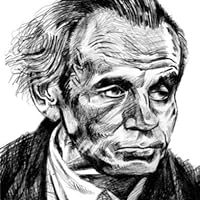
Eric John Ernest Hobsbawm was a British historian of the rise of industrial capitalism, socialism and nationalism. His best-known works include his tetralogy about what he called the "long 19th century" (The Age of Revolution: Europe 1789–1848, The Age of Capital: 1848–1875 and The Age of Empire: 1875–1914) and the "short 20th century" (The Age of Extremes), and an edited volume that introduced the influential idea of "invented traditions". A life-long Marxist, his socio-political convictions influenced the character of his work. Hobsbawm was born in Alexandria, Egypt, and spent his childhood mainly in Vienna and Berlin. Following the death of his parents and the rise to power of Adolf Hitler, Hobsbawm moved to London with his adoptive family. After serving in the Second World War, he obtained his PhD in history at the University of Cambridge. In 1998, he was appointed to the Order of the Companions of Honour. He was president of Birkbeck, University of London, from 2002 until his death. In 2003, he received the Balzan Prize for European History since 1900, "for his brilliant analysis of the troubled history of 20th century Europe and for his ability to combine in-depth historical research with great literary talent."
Una colección de ensayos de los años 60-70 del gran historiador Eric Hobsbawm sobre temas bastante dispares; siendo muchos de ellos reseñas sobre otras obras. No leía nada suyo desde que me leí en primero de carrera Historia del siglo XX, y la verdad que me ha molado bastante (si bien alguno que otro ha quedado desfasado y con otros, especialmente con el análisis del anarquismo español, es más bien superficial).
a collection of reviews and essays by Marxist historian Eric Hobsbawm written through the 1960s. I have read most of these before, but not much since Henry has been around.
There’s no doubt that Hobsbawm's style is among the most accessible and lively of historians, and Revolutionaries covers all sorts of topics related revolution, high politics and (or course) socialism. As with any such collection, the quality varies a bit, but it is generally high. Obviously the content is somewhat dated (the world has changed a little since 1968), but there remain some really pertinent points.
For example, the essay on Vietnam – first published in 1965 just as the United States was escalating its commitment of troops – succinctly and presciently maps out the reasons why the victory of the Vietnamese Communists was inevitable. In many respects, *some* of this logic can be extended to the Afghanistan situation today.
So, if you are into that sort of thing, this should be well worth picking up and giving a go.
“Escandalitzar la burgesia, malauradament, és més fàcil que fer-la caure”
xulo, xulo, xuloo he après bastantes coses, això sí, els apartats del comunisme i del marxisme se’m van encallar una mica amb tantes sigles enumeracions i dades. el de l’anarquisme i revolució més divertits de llegir. suposo que ja tocava llegir hobsbawm!
Bu kitabı ilk çıktığı dönemde okumuştum, yıllar sonra tekrar bir kere daha detaylıca gözden geçirdim. Dünya Solu'nun tarihi, gelişimi ve sorunları konularında orta seviyede ilgi ve merakı olan okurların ilgisini çekebilecek, 1960'lar ve 70'lerin başında kaleme alınmış kitap tanıtımları ve makalelerden derlenmiş bir çalışma.
Hobsbawm 20. Yüzyıl'ın en önemli tarihçilerinden biri ve bence ilk kez okuyacakların başlayacakları kitap bu değil. Ben üstadın her satırını okumaya çalışan bir fani olarak devam edeceğim 😊
I first read this collection about 25 years ago and felt the need to revisit it in its revised form (which is a bit of a misnomer – there are two new essays and some minor adjustments to others). What really impresses me is that although the vast majority of these papers were written in between 1964 and 1974, most have retained their freshness and relevance, and of the 25 of that age no more than five have aged badly. Hobsbawm's pithiness is in places marvellous – I really liked the idea in his discussion of sex & revolution that the bourgeoisie is more easily offended than overthrown. There are a couple of papers that didn't connect – his essay on Karl Korsch for instance reflects a debate from 40 years ago that seems to have gone away now, which is probably a sign of political Marxism's weakness. Several of these papers however remain the classic statements on the historical issue (Marx & the British Labour Movement, Lenin and the Aristocracy of Labour) others such as his discussion of hope are inspiring, while his attack on the revisionist (especially Francois Furet) denigration of importance of revolution (one of the new essays) made me want to cheer loudly. Hobsbawm is one of Europe's great historians – these essays show why.
Hobsbawm probably knows his french, and for the thoroughly initiated this book probably has a generous share of gems and dimonds. But alas, for me, it's mostly just words and sand and dust. I've noticed this before when reading Hobsbawm that his prose is thougher than most. Not due to an exceptionell use of hard words etc. but rather due to a lack of sense of rythm and comprehensiveness that quickly induces headache and dubble-sightedness. I almost get the feeling that Hobsbawm only writes half of what's in his head thereby leaving essentials outside of the text.
This book is no exception. Though having read it I am hard pressed to explain what the book is about. There are no memorable chapters. It is a collection of essays on revolution and what it is to be revolutionary. Marxist in scope it focuses on movements and collective struggle, from the october revolution and onward. The lack of individual protagonists might be a part of the problem for me, although I am the first to admit that this, in it self, is no lack in the author or the analysis, but only in me. It's kind of like a case of "whatever floats your boat" and in my case this sinks.
Offers a pretty straightforward analysis of revolutions and how/why they tend to fail in 20th century. Good stuff thus far. Hobsbawn is an admittedly Marxist dude, but is able to present a rather unbias account of Marxism and Communism in a realistic sense rather than ranting on about how great Communism is or is not. Good honest historic writer and simple language to understand! He tells of the difference between Marxism and Communism, interesting points on anarchism and Lenin too. Not that anyone cares, too think of it, does anyone even think about revolutions as a real possibility nowadays; or is it just a full blown delusion at this point??? Isn't it just easier to buy a "Che" t shirt, an Ipod, and label yourself a revolutionary against the system in your close knit of "politically conscious" friends?? Don't you get way more "street cred" and increase your chances of getting laid because you "care about things"??? Meh whatever..I hate everything....I need a drink...
I got bored and stopped reading it 75% through. Whatever, didnt keep my attention much...you finish it
A series of essays on the principle of hope, Vietnam, and revolutionary fervor amongst student bodies. Parts of this are so lucid and clear you want to shake the author's hand - the sections on guerrilla warfare and the aristocracy of labour are absolutely fantastic - parts of it are so bogged down in acronyms and Marxist theory it becomes a minefield for the uninitiated. A real eye opener nonetheless.
El llibre Revolucionaris d’Eric Hobsbawm es va publicar originàriament en 1973, seguit d’una edició revisada en 2007. Al gener d’enguany ha arribat la versió en català d’aquest clàssic de la historiografia. Hobsbawm, un dels grans historiadors del s. XX, aborda aquí l’anàlisi dels partits comunistes, de l’anarquisme i d’alguna de les seves pràctiques polítiques d’ambdós corrents polítics. El llibre és, de fet, una selecció de diversos articles que aborden totes aquestes temàtiques. Llegir els seus articles avui exigeix situar-se en el moment en el que van ser escrits i això té, d’una banda un gran poder evocador i de l’altra permet veure que l’historiador era un analista profund i sagaç.
En l’interessant article “Els intel·lectuals i el comunisme”, reflexiona sobre l’esforç de contenció [estar-se de criticar les purgues estalinistes o les faltes dels republicans espanyols] d’aquells en favor de la lluita contra el feixisme. Referint-se a això, l’autor diu: “Fins i tot aquesta generació brechtiana, que va entrenar-se a consciència per acceptar les decisions més dures en la guerra per l’alliberament humà, va arribar a un punt en què -com Brecht mateix- va qüestionar-se no tant els sacrificis en si com la utilitat i la justificació d’aquests sacrificis (pàg. 40).
En el capítol “Història i miratge”, escrit en 1996, l’autor aborda l’anàlisi dels autors que, després de la caiguda del mur de Berlín i l’esfondrament de l’URSS diuen haver-se sentit enganyats. Hobsbawm desmunta aquesta visió i situa aquest tema en el terme just. En realitat, la força del comunisme va ser certa en un període curt de temps -Hobsbawm ho situa entre 1943 i principis de la dècada dels 50 [afegeix que s’hauria de partir d’aquesta premissa per poder debatre sobre la història de la influència comunista a Occident] - però la seva influència i la por que exercia entre els seus enemics era “superior al que la força real dels moviments comunistes podia justificar” (pàg. 83)
La guerra civil espanyola és molt present en els diversos articles del llibre, per exemple en “Els anys foscos del comunisme italià” explica la importància que van tenir la participació d’italians a la guerra civil en rols de molta importància. En aquest context, l’autor cita a Lussu (Giustizia e Liberta, 28 d’agost de 1936) que diu “Necessitem anar a Espanya més del que la República espanyola ens necessita a nosaltres. L’antifeixisme italià no té glòries revolucionàries (pàg. 48).
En un dels articles dedicats a l’anarquisme, analitza aquest moviment a Espanya [“El context espanyol”]. En aquestes pàgines, Hobsbawm diu que Espanya té, en essència, els mateixos problemes que en el s. XVIII. No és que la societat i l’economia no hagin evolucionat en el s. XIX és que els problemes de fons continuen sense solució. Pel que fa a la guerra i al seu període revolucionari, explica que, a banda de l’ajuda determinant dels feixismes, la guerra també es va perdre “per les febleses colossals -i, en última instància, fatals- de la revolució. I la responsabilitat d’això recau, sobretot en els anarquistes, no tant perquè els partidaris de Bakunin va saber penetrar a Espanya millor que els de Marx, sinó perquè va “agrupar sota un mateix estendard els hàbits polítics tradicionals dels revolucionaris espanyols (...) L’anarquisme va ser un desastre perquè no va mirar de canviar l’estil de revolta primitiva propi del país: al contrari, va fer per reforçar-lo” (pàg. 110). Els comunistes tenien una alternativa pragmàtica, però al seu entendre, van arribar massa tard. El capítol acaba amb una sentència contundent sobre aquella guerra que va ser: “com un somni meravellós del que podria haver estat, una èpica heroica, la Ilíada dels que érem joves als anys trenta. Però llevat que entenguem les revolucions com una mera sèrie de somnis i relats mítics, el temps de l’anàlisi ha de reemplaçar el dels records llegendaris” (pàg. 116).
Acabo amb una reflexió, que tanca el capítol “La revolució i el sexe”, que em sembla reveladora a la llum de l’imaginari cultural actual de l’esquerra: “Quan els francesos van sortir als carrers en la vaga general del Maig del 68, les representacions del Théâtre de l’Odéon i les magnífiques pintades a les parets (“Prohibit prohibir”, “Com més faig la revolució, més ganes tinc de fer l’amor, etcètera) podien entendre’s com a expressions dramàtiques i literàries menors, anecdòtiques al costat dels fets principals. Com més prominents són aquests fenòmens, més segurs podem estar que no hi ha cap transformació decisiva en marxa. Escandalitzar la burgesia, malauradament, és més fàcil que fer-la caure”. (pàg. 289)
In this 300-odd-page collection of papers, Hobsbawm wrestled with marxist history and thought. I was brought to think about thinking and fighting, and came to realise how they thought influenced how they fought, and how they fought guided how they thought. History wasn't made by one particular group of marxists waking up one day and deciding to incite a revolution; history is formed and moulded by students, workers, politicians, housewives, the poor, intellectuals etc. finding their way to make their dreams a reality. Whether looking at the alienation of the working class, or the adolescent hope of the student movement, or the cultural revolution of sex and society, or the peculiarities of guerrilla warfare, Hobsbawm maintained his own charisma and erudition in his writing of these weighty historical subjects. By analysing past communist movements (mostly revolutions) this great Marxist historian weaved together a coherent fabric of the global communist situation of the fifties and sixties. An ongoing debate persists, of whether individuals or environment make history. This book settles it gracefully - neither, but both.
always been a fan of Hobsbawm! this volume contains a lot of different sorts of essay that will be appealing to different sorts of people. It is /not/ a practical guide to revolutionary activity, the threads that unite these essays are pretty weak imo.
I have no interest in Althusser, and have to be in a certain mood to enjoy his interventions in earlier Marxist intellectual history. The short essays and talks in here (like "Revisionism") usually still have an insight or two. There's a "Revolution and Sex" essay /against/ associating sexual liberation and revolution, a perspective that I think is pretty much gone these days, and one which I largely agree with tho with caveats that are more obvious now then they were then (I imagine this essay is one of many sources of the idea that he's got big blind spots). This also has 3 essays on Anarchism that are pretty clearly anti-anarchist and sort of lay out a case against anarchism, which is an interesting read, can't say he's all wrong lol.
Colección de 25 ensayos escritos por Hobsbawm en los años 60-70.
Aborda múltiples y diversos ámbitos de la teoría y práctica revolucionaria contemporánea, desde aspectos ideológicos (reflexiones sobre comunismo o anarquismo, relación entre intelectuales y lucha de clases o entre sexo y revolución) hasta logísticos (golpes de estado, insurrecciones urbanas) y casos más concretos (Vietnam, mayo del 68).
Alguno se me ha hecho un poco más pesado, otros quizá se quedan cortos, pero en general es una pasada la capacidad de Hobsbawm para analizar y sintentizar procesos históricos complejos, yendo de lo concreto a lo general para darle significado y acompañándolo de las reflexiones e impresiones propias de quien ha vivido muchos de los sucesos analizados.
Cada aspecto del término "revolución" y su proyección a lo largo de la historia contemporánea como herramienta recurrente de cambio tiene cabida en este libro.
No es un libro de divulgación o iniciación al acto revolucionario y sus matices, desde luego. Al ser una recopilación de antiguos ensayos, reseñas de otras obras y autorxs, no se procura una contextualización meditada, sino reflexiones sobre recovecos concretos del "revolucionario" y sus formas.
Hobsbawm parte de un nivel de teoría marxista (e histórica, en general) bastante elevado. Me parece que esto lo hace, más bien, un libro de consulta
It feels a bit harsh giving this book 2 stars but it just wasn't what I was expecting at all. Quite a few parts of the book were critiques of other books or essays which requires you to have already read them or have at least some knowledge of them. The book also expects you to have some knowledge on the inner workings of the communist party during the 20th century. I think this book was maybe aimed at historians but it is just too inaccessible for me and unfortunatelty didn't finish, but I feel I learnt a little bit about revolutions.
Hobsbawm profiles key revolutionary figures and movements that shaped the modern world, from Marx and Engels to Lenin and Mao. He investigates their impact on the political landscapes of their time and reflects on the success and failures of their revolutionary ideals. This book offers an essential understanding of revolutionary history and its continuing influence.
Serie de ensayos, críticas y conferencias en torno al tema de las revoluciones. Casi todos son de finales de los 60s y principios de los 70s, por lo que varios de ellos se sienten fuera de tiempo. Muy erudito, muy intelectual, por momentos difícil. Aporta muchos datos interesantes sobre el marxismo, el anarquismo y el comunismo. Agunos de los ensayos son de plano aburridos, pero al final es una lectura útil.
A collection of Hobsbawm's writing, mostly book reviews, from the 1960s (a couple of more recent ones as well). Commentary on Marxism, anarchism, revolution. The best bits are the last two longer pieces about France in 1968 and the role of intellectuals in revolution.