Black ecopoet observes the changing world from a high-rise window
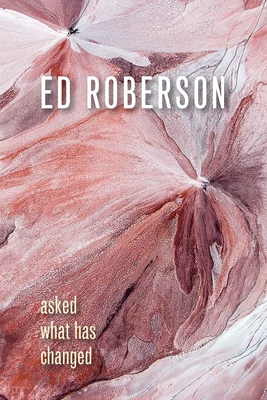
Award-winning poet Ed Roberson confronts the realities of an era in which the fate of humanity and the very survival of our planet are uncertain. Departing from the traditional nature poem, Roberson's work reclaims a much older tradition, drawing into poetry's orbit what the physical and human sciences reveal about the state of a changing world. These poems test how far the lyric can go as an answer to our crisis, even calling into question poetic form itself. Reflections on the natural world and moments of personal interiority are interwoven with images of urbanscapes, environmental crises, and political instabilities. These poems speak life and truth to modernity in all its complexity. Throughout, Roberson takes up the ancient spiritual concern―the ephemerality of life―and gives us a new language to process the feeling of living in a century on the brink.
Morello's Venice
startled to hear the doctor say this would be the last time he would see it, a person used to keeping things alive talking terminus ― even more
startled when he returned to hear him say it wasn't there there were terrible rains bookings cancelled.
when late he arrived, everything was gone. his wife had a cold.
they bundled together in blankets. he refilled my prescription to restore my soul.
Charles Edwin (Ed) Roberson is a distinguished American poet, celebrated for his unique diction and intricacy in exploring the natural and cultural worlds. His poetic voice is informed by a background in science and visual art, coupled with his identity as an African American. Roberson has been an active poet since the early 1960s and has authored eight collections, including "Atmosphere Conditions" (1999) and "City Eclogue" (2006). Among his many honors are the Lila Wallace-Reader's Digest Writers' Award (1998) and the Poetry Society of America's Shelley Memorial Award (2008).
Ed Roberson has written some of the most inventive and reconstructive poetry collections I have ever read. To See the Earth Before the End of the World will always be one of my favorite books. Those poems were unmistakably a master not honing but reinventing and then reordering his craft. A Roberson poem can be so many things. Disorienting and familiar. Personal reflection, repeating the world back to us but out of order or maybe just shown the way we've neglected to see it. Here he does it again. Reinventing and deconstructing his own style at the same time. A free association of memory and locales is matched with an almost engineer like sensitivity to the steel and concrete urban world around him.
I read this book in one sitting and I know that I will have to come back to it for years. These could be understood as instructions. Maybe on how to write a poem or maybe on just how to see the world and try to understand yourself in it. It's separate at the same time too though. That is what has always been genius to me about Roberson's writing. It is never any one thing. Instead it shifts and reinvents itself often a couple times in the course of one poem. It is local, but it is recognizable in so far as the natural world is recognizable. The lake that he is peering into happens to be Lake Michigan but these poems often transcend time and place and ask bigger questions. "What in these placeless points figures what we show up at-/whether it's visionary evolution,/ or an extinction." In lines like these he forgoes a landmark and instead asks questions that needed to be asked and that no one else could. All while maintaining a deep resonance and familiarity. For another poet this could become muddled. Instead though reading his poems almost trains you to be waiting for that next movement. Even if you are though you wont be able to guess until it's already past. After you'll know you've seen it before but you're not sure where.
I am always eager for a new Ed Roberson book. Long before the average poet was calling this kind of work ecopoetry, Ed Roberson was thinking critically and carefully about the ways human behavior was shaping the planet and the ways the planet works to sustain itself. Consider the title of his 2000 collection, Atmosphere Conditions, or of the collection he published in 2010, To See the Earth Before the End of the World. A limnologist by training (meaning a person who studies bodies of fresh water), Roberson has had his eye on our planet’s disappearing glaciers and compromised lake and river systems his whole life. While his poems are not always directly informed by such science, environmental concerns are always in their veins. I recently had the pleasure of speaking with Roberson about his newest collection, Asked What Has Changed (Wesleyan University Press), and when I asked how music informs his lyrical, syncopated lines, he said his favorite music came from Cuba, or Mali, or is what he called the “stoney lonely,” music played in the hollers around the Pittsburgh portion of the Appalachian Mountains where he grew up. Roberson said that 5/4 music is “music with a limp.” When I laughed (I often find myself laughing at Roberson’s surprising insights), he said, “Think about it,” (I also often find myself drawn up short and reminded that the thing about which I have just laughed is actually intensely serious) “those deserts are vast, the camels must get tired,” and all of a sudden something clicked that I hadn’t been able to explain about what I love in Roberson’s work. The tempo of his lines, but also their ideation, reveals the exhaustion and tenacity of someone who has walked and walked and walked this terrain always watching and looking and thinking about the damage we are doing and the fleeting beauty that is all around us.
Most of us said “there was definitely a lot I missed”.. I think classmates and I had somewhat similar experiences but maybe this is where Ed Roberson’s power lies; he creates a sort of tension for the reader between clarity of language and ambiguity of meaning. Each line is extremely rich with imagery or technique, especially those about nature, but without saying anything in particular sometimes.. the book eternally shifts between big and small, like in the poems “The insect ephemera” & “The universal ephemeral”— His use of ecopoetry does not seem to be a tool to elevate humans nor to strip them of moral ego; instead, it alienates the reader, giving them a sort of god’s eye view–or perhaps high-rise window view–of existence.
I’ve never read any form of writing like Ed Roberson’s that reflects so well, and so interestingly, the modern world and the collective sentiments surrounding changes like overconsumption / environmental disaster. His writing evokes a sense of alienation so submerged and detached all at once.