

What do you think?

The Boy, the Mole, the Fox, the Horse and the Storm
The Boy, The Mole, The Fox and The Horse
Discover the very special book that has captured the hearts of millions of readers all over the world.
'Feeling a little blue? Meet the new Winnie the Pooh.' The Daily Mail
'A wonderful work of art and a wonderful window into the human heart' Richard Curtis
A book of hope for uncertain times.
Enter the world of Charlie's four unlikely friends, discover their story and their most important life lessons.
The boy, the mole, the fox and the horse have been shared millions of times online - perhaps you've seen them? They've also been recreated by children in schools and hung on hospital walls. They sometimes even appear on lamp posts and on cafe and bookshop windows. Perhaps you saw the boy and mole on the Comic Relief T-shirt, Love Wins?
Here, you will find them together in this book of Charlie's most-loved drawings, adventuring into The Wild and exploring the universal thoughts and feelings that unite us all.
'Feeling a little blue? Meet the new Winnie the Pooh.' The Daily Mail
'A wonderful work of art and a wonderful window into the human heart' Richard Curtis
A book of hope for uncertain times.
Enter the world of Charlie's four unlikely friends, discover their story and their most important life lessons.
The boy, the mole, the fox and the horse have been shared millions of times online - perhaps you've seen them? They've also been recreated by children in schools and hung on hospital walls. They sometimes even appear on lamp posts and on cafe and bookshop windows. Perhaps you saw the boy and mole on the Comic Relief T-shirt, Love Wins?
Here, you will find them together in this book of Charlie's most-loved drawings, adventuring into The Wild and exploring the universal thoughts and feelings that unite us all.
128 pages, Hardcover
First published December 6, 2019
About the author
Charlie Mackesy
42 books2,058 followersCharlie Macksey was born during a snowy winter in Northumberland. He has been a cartoonist for The Spectator and a book illustrator for Oxford University Press. He has collaborated with Richard Curtis for Comic Relief, and Nelson Mandela on a lithograph project, 'The Unity Series.' Collectors of Mackesy's works include Elizabeth Gilbert, Whoopi Goldberg, Roger Waters, Richard Curtis, The Murdoch Freuds, Tim Bevan, M. Night Shyamalan, Bear Grylls, Howard Goodall, Harry Enfield, and Sting. He has lived and painted in South Africa, Southern Africa, and New Orleans. He co-runs a social enterprise, Mama Buci, in the Zambian copperbelt, which helps families of low and no income to become beekeepers.
Ratings & Reviews
Friends & Following
Create a free account to discover what your friends think of this book!
Community Reviews
Displaying 1 - 30 of 33,448 reviews

January 10, 2020
It is impossible not to like this book. It’s entirely made up of charming illustrations and great handwriting and beautiful sentences and jokes about cake. It gives you zero chance to dislike it.
I wish I could dislike it, because I have a very cold and mean soul and it would be very on brand for me to hate something that Chris Evans, Captain America himself, called the most beautiful book/Christmas gift possible and the marketing copy calls “hope in uncertain times.”
But alas. I had no chance.
This is the kind of book that you read in 20 minutes and then immediately hand to someone else, who then wants to lend your copy to someone but can’t because they aren’t a monster and instead buys 10 copies to keep on hand as gifts that seem personal but really aren’t.
This giftiness is both the best thing about this and the worst.
At some points this feels more like a collection of quotes than anything else, which is sad because I liked other things about this - the boy, the mole, the fox, and the horse, namely. And I could get inspirational feel-good quotes anywhere (including on this site, by the thousands).
Still, though - this wasn’t perfect, but it came pretty close.
Bottom line: Captain America was right about this one.
------------------
pre-review
"I got you a delicious cake," said the mole.
"Did you?"
"Yes."
"Where is it?"
"I ate it," said the mole.
"Oh."
"But I got you another."
"Did you? Where is that one?"
"The same thing seems to have happened."
needless to say i loved this so much it broke me in half.
review to come / 4 stars
------------------
currently-reading updates
i don't know anything about this book but it looks like it's going to make me cry
I wish I could dislike it, because I have a very cold and mean soul and it would be very on brand for me to hate something that Chris Evans, Captain America himself, called the most beautiful book/Christmas gift possible and the marketing copy calls “hope in uncertain times.”
But alas. I had no chance.
This is the kind of book that you read in 20 minutes and then immediately hand to someone else, who then wants to lend your copy to someone but can’t because they aren’t a monster and instead buys 10 copies to keep on hand as gifts that seem personal but really aren’t.
This giftiness is both the best thing about this and the worst.
At some points this feels more like a collection of quotes than anything else, which is sad because I liked other things about this - the boy, the mole, the fox, and the horse, namely. And I could get inspirational feel-good quotes anywhere (including on this site, by the thousands).
Still, though - this wasn’t perfect, but it came pretty close.
Bottom line: Captain America was right about this one.
------------------
pre-review
"I got you a delicious cake," said the mole.
"Did you?"
"Yes."
"Where is it?"
"I ate it," said the mole.
"Oh."
"But I got you another."
"Did you? Where is that one?"
"The same thing seems to have happened."
needless to say i loved this so much it broke me in half.
review to come / 4 stars
------------------
currently-reading updates
i don't know anything about this book but it looks like it's going to make me cry

January 1, 2020

when i first saw this title and cover, i said AWWWWW! and then, over the holiday season, so many people were praising this book in print and in person, i knew i needed to get a copy for myself. OR, to get a copy for greg because - fox - and read it before gifting it to him. because i am a monster.
for me it's a mixed bag. on the one hand, the artwork is gorgeous

on the other hand, this

which just, no. like capital-letter NO with all of my being.
again, i am a monster. this is known.
show me a cute animal, and i melt like an ice cap, but human children inspire nothing outta me but low-level panic, gracelessly suppressed. i'm just...not interested, which makes me feel guilty as a human person and plays its part in my nightly insomniac personal reckoning/shame spiral. also keeping me from sleep is my cynical inability to be charmed by the well-intentioned but facile insights this book offers up to readers. because people are getting genuine comfort from this book and i feel like a dick for rolling my eyes and imagining these words carved on a block of wood and sold for like twenty dollars.
does this book have messages this girl needs to hear? hell yes.


but then this happens

and it's like that olde aesop's fable about the signal and the noise.
i am a monster. my dreams aren't coming true, my ship's not coming in, 'at least i have my health' doesn't apply, i'm growing old and bitter, and platitudes really only work for people with vanilla froyo problems.

if i treat it like a book written in a foreign language, it's great - i can enjoy the pictures, and i can recognize the individual words even though the messages mean nothing to me.

i am a monster. like the mole, i will eat all your cake.

also, i miss calvin and hobbes.

THE END
 come to my blog!
March 17, 2020
Written in a hard to read font, I found this disjointed effort quite disappointing. There are some nice quotes but no connecting thread or continuous flow as it lacks a narrative. Both the story and the artwork seemed unfinished and I am left feeling incomplete in my understanding of the popularity of this book.

December 10, 2019
This unforgettable book with the memorable title is a book about friendship, kindness, and self-esteem told in the most special of ways.
First there is a boy. He is alone. He comes upon a mole, whom it seems loves cake more than anything else. The mole becomes the boy’s friend and companion, his coach and confidante. The boy shares his fears, the mole shares advice and his love of cake.
When they meet the fox, it is caught in a snare. Instinctively both the fox and the mole know if the mole frees the fox, the fox should then kill it, but if the mole leaves the fox in the snare, it will die. Sometimes you can override your instincts, and the fox becomes a (mostly silent) companion on their wanderings. Then they meet the horse, who has hidden some of its special abilities for far too long.
The Boy, the Mole, the Fox, and the Horse isn’t as much a story as it is a book of advice, encouragement, and lessons accompanied by whimsical hand-drawn illustrations. The advice and lessons are beautiful and meaningful, and the entire book is a genuinely heartfelt experience.
"What do you think is the biggest waste of time?"
"Comparing yourself to others," said the mole.
The book is written in a handwriting-type font so it’s a little difficult for even older eyes to read, so this is definitely a book that should be read together and shared. Almost every page has something special on it.
I really think this will be the perfect gift for those you want to share a message of encouragement or love with. It’s similar to Winnie the Pooh in its content but not so much in narrative or illustration. This will be one you won't be able to forget.
See all of my reviews at itseithersadnessoreuphoria.blogspot.com.
You can follow me on Instagram at https://www.instagram.com/the.bookishworld.of.yrralh/.
First there is a boy. He is alone. He comes upon a mole, whom it seems loves cake more than anything else. The mole becomes the boy’s friend and companion, his coach and confidante. The boy shares his fears, the mole shares advice and his love of cake.
When they meet the fox, it is caught in a snare. Instinctively both the fox and the mole know if the mole frees the fox, the fox should then kill it, but if the mole leaves the fox in the snare, it will die. Sometimes you can override your instincts, and the fox becomes a (mostly silent) companion on their wanderings. Then they meet the horse, who has hidden some of its special abilities for far too long.
The Boy, the Mole, the Fox, and the Horse isn’t as much a story as it is a book of advice, encouragement, and lessons accompanied by whimsical hand-drawn illustrations. The advice and lessons are beautiful and meaningful, and the entire book is a genuinely heartfelt experience.
"What do you think is the biggest waste of time?"
"Comparing yourself to others," said the mole.
The book is written in a handwriting-type font so it’s a little difficult for even older eyes to read, so this is definitely a book that should be read together and shared. Almost every page has something special on it.
I really think this will be the perfect gift for those you want to share a message of encouragement or love with. It’s similar to Winnie the Pooh in its content but not so much in narrative or illustration. This will be one you won't be able to forget.
See all of my reviews at itseithersadnessoreuphoria.blogspot.com.
You can follow me on Instagram at https://www.instagram.com/the.bookishworld.of.yrralh/.

December 29, 2022
5 stunning, powerful, meaningful, and heart-warming stars for my first so called audio book, with a difference, and from a different narrator but a most treasured one. Yes, my 8-year-old Goddaughter / niece narrated this magical little book whilst I sat back and savoured every word and delighted in the look of enjoyment on her face.
I bought this for my little darling's birthday in July, and she tells me at the grand old age of 8, it is her “..favourite book in the world ever”. My brother then informs me that this precious little one brought the book to school so she could read to the class as part of the Christmas treat's they were allowed. Not to miss out on this moment I asked her to read to me too over the Christmas holidays, and this fabulous experience goes down as one of my most special moments in the “world - ever”.
The story is so simple, beautiful, and adorned with such gorgeous phraseology and meaningful words that will blow your mind for its simplicity and beauty. The wonderful illustrations are a feast for the eyes and match the dialogue between these 4 adorable characters - perfectly. Best to list some of my favourite quotes that add so much to the meaning of life. I'm sure you will have a list too....
"What is the bravest thing you've ever said? asked the boy. 'Help,' said the horse. 'Asking for help isn't giving up,' said the horse. 'It's refusing to give up"
"What do you think is the biggest waste of time?" "Comparing yourself to others", said the mole.
“Is your glass half empty or half full?" asked the mole. "I think I'm grateful to have a glass," said the boy.
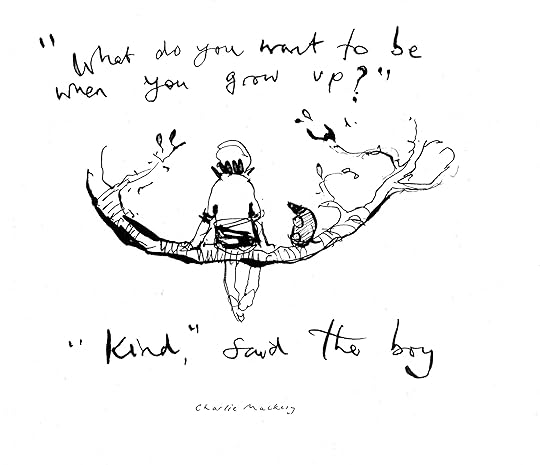
What do you want to be when you grow up?" "Kind", said the boy.
I turned to my little darling and asked her what she wanted to be when she grew up, and she said “... like you – kind”. I still have tears streaming down my face right now.
My reason for sharing this personal and touching moment is this. I want to share a book with you that just blew me away, not just the personal experience. So please buy this book and if you have a child in your family circle, then read it with them or let them read it to you. Equally, you will not be disappointed if you decide to read on your own - whatever age you are. It is so beautiful and magical and is now one of my favourite books of all time – and it’s a children’s, adults and everyone book. However, I do agree with the views on the font. This will make it harder for younger children to read.
The author wrote this book to lift the mood of the readers and share those parts of life that are important; love, friendship, self belief, tolerance and loyalty. Mackesy is so devoted to its cause and so generous in spirit he signs the book and leaves in places like bus stops and shops, hoping the person who picks it up will understand the importance of the story. He wants this simple but impactful story to bring a smile to the face of the people who find this little treasure - even for a while. How gorgeous is that!!!
Treasure it. Share it. Love it.
Enjoy and be kind !!!! Happy New Year 💞💞
I bought this for my little darling's birthday in July, and she tells me at the grand old age of 8, it is her “..favourite book in the world ever”. My brother then informs me that this precious little one brought the book to school so she could read to the class as part of the Christmas treat's they were allowed. Not to miss out on this moment I asked her to read to me too over the Christmas holidays, and this fabulous experience goes down as one of my most special moments in the “world - ever”.
The story is so simple, beautiful, and adorned with such gorgeous phraseology and meaningful words that will blow your mind for its simplicity and beauty. The wonderful illustrations are a feast for the eyes and match the dialogue between these 4 adorable characters - perfectly. Best to list some of my favourite quotes that add so much to the meaning of life. I'm sure you will have a list too....
"What is the bravest thing you've ever said? asked the boy. 'Help,' said the horse. 'Asking for help isn't giving up,' said the horse. 'It's refusing to give up"
"What do you think is the biggest waste of time?" "Comparing yourself to others", said the mole.
“Is your glass half empty or half full?" asked the mole. "I think I'm grateful to have a glass," said the boy.
What do you want to be when you grow up?" "Kind", said the boy.
I turned to my little darling and asked her what she wanted to be when she grew up, and she said “... like you – kind”. I still have tears streaming down my face right now.
My reason for sharing this personal and touching moment is this. I want to share a book with you that just blew me away, not just the personal experience. So please buy this book and if you have a child in your family circle, then read it with them or let them read it to you. Equally, you will not be disappointed if you decide to read on your own - whatever age you are. It is so beautiful and magical and is now one of my favourite books of all time – and it’s a children’s, adults and everyone book. However, I do agree with the views on the font. This will make it harder for younger children to read.
The author wrote this book to lift the mood of the readers and share those parts of life that are important; love, friendship, self belief, tolerance and loyalty. Mackesy is so devoted to its cause and so generous in spirit he signs the book and leaves in places like bus stops and shops, hoping the person who picks it up will understand the importance of the story. He wants this simple but impactful story to bring a smile to the face of the people who find this little treasure - even for a while. How gorgeous is that!!!
Treasure it. Share it. Love it.
Enjoy and be kind !!!! Happy New Year 💞💞

November 3, 2019
Lovely illustrations but the words are cringe-worthy. It reads like a shit celebrity's enigmatic Twitter posts. All faux-wisdom that isn't even close to being as deep as it thinks it is.

January 18, 2021
I listened to the audio of this, narrated beautifully by Charlie Mackesy in a meditative style that is sublime and just begs to be listened to again and again, whenever you feel the need for it. This is the perfect read and listen in our turbulent crisis hit times, helping to knit back together our battered bodies and souls. I would certainly recommend it for the simplicity of its pearls of wisdom for those suffering from certain mental health issues, such as depression. Needless to say, I am not surprised that this is loved by so many. If you have not read or heard this, I strongly urge you to give it a try. Pure gold.

December 15, 2019
"Sometimes I feel lost," said the boy. "Me too, said the mole, "but we love you, and love brings you home." - The Boy, the Mole, the Fox and the Horse by @charliemackesy 🌟
This book is so many adjectives: powerful, impactful, lovely, heart warming, comforting, beautifully crafted, brilliant, simply amazing, are just a few that come to mind! 🦊
As an artist and aspiring book illustrator myself, Charlie Mackesy's stunning artwork is incredibly inspiring! 🖋️
I love how loose his line work is, and the way he changes his media. Paired with his use of certain colors, this is a gorgeous work of art!
This book should be a world wide required read!
I feel that the simplicity of the phrasing emphasizes how, in life it is very "easy" to give up or feel unimportant, but it is just as "easy" to ask for help and to simply tell someone you love them. This book and it's author/illustrator is an inspiration to all! 🐎
This book is so many adjectives: powerful, impactful, lovely, heart warming, comforting, beautifully crafted, brilliant, simply amazing, are just a few that come to mind! 🦊
As an artist and aspiring book illustrator myself, Charlie Mackesy's stunning artwork is incredibly inspiring! 🖋️
I love how loose his line work is, and the way he changes his media. Paired with his use of certain colors, this is a gorgeous work of art!
This book should be a world wide required read!
I feel that the simplicity of the phrasing emphasizes how, in life it is very "easy" to give up or feel unimportant, but it is just as "easy" to ask for help and to simply tell someone you love them. This book and it's author/illustrator is an inspiration to all! 🐎
December 26, 2022
Getting an optimistic overkill while overstraining one's eyes
Because this book simply kind of wants to make the world a better place
It tries to give important, profound lessons about good and bad, struggling with emotional problems, self reflection, and many other topics in a minimalistic way. With some rudimentary drawings and many Buddha zen Yoda wise master style dialogues, scenes, and conclusions, it condenses essential philosophical, ethical, and psychological questions, issues, and problems to a level easy to understand for younger audiences.
Who let the fox out horsing around with a mole?
An extremely clever character, or more precise personality and temperament, constellation to give the boy the overkill of deep insights. This might have been the trickiest thing in writing the graphic novel, finding the 3 perfect wise or silent companions to create the best allegories, pictures, riddles, and metaphors thinkable. That´s especially complex because there are 2 philosophy prodigies with different, credible perspectives that reflect different schools of thought. At least I got it that way, although I´m not sure.
An extreme example of how readers' cognitive biases influence their rating of positive psychology
I, for instance, am as dark as it´s possible and that´s no swagger pimp stuff, just how I roll. But I still believe that a kind of seemingly naive and unrealistic approach, of making kids better future adults, creates a profound difference to somewhen build utopias. Of course, critics can say that the idealized version of reality will let kids hit the ground even harder, but I think that
It doesn´t downplay serious topics or has any moralizing dramedy soap opera trigger like other genre examples
Instead, it´s a perfect balance of profundity and easy to understand concepts. And I also do believe that every adult, who really wants to, can grow back to the idealistic kid she/he once was.
A wiki walk can be as refreshing to the mind as a walk through nature in this completely overrated real life outside books:
https://en.wikipedia.org/wiki/The_Boy...
Because this book simply kind of wants to make the world a better place
It tries to give important, profound lessons about good and bad, struggling with emotional problems, self reflection, and many other topics in a minimalistic way. With some rudimentary drawings and many Buddha zen Yoda wise master style dialogues, scenes, and conclusions, it condenses essential philosophical, ethical, and psychological questions, issues, and problems to a level easy to understand for younger audiences.
Who let the fox out horsing around with a mole?
An extremely clever character, or more precise personality and temperament, constellation to give the boy the overkill of deep insights. This might have been the trickiest thing in writing the graphic novel, finding the 3 perfect wise or silent companions to create the best allegories, pictures, riddles, and metaphors thinkable. That´s especially complex because there are 2 philosophy prodigies with different, credible perspectives that reflect different schools of thought. At least I got it that way, although I´m not sure.
An extreme example of how readers' cognitive biases influence their rating of positive psychology
I, for instance, am as dark as it´s possible and that´s no swagger pimp stuff, just how I roll. But I still believe that a kind of seemingly naive and unrealistic approach, of making kids better future adults, creates a profound difference to somewhen build utopias. Of course, critics can say that the idealized version of reality will let kids hit the ground even harder, but I think that
It doesn´t downplay serious topics or has any moralizing dramedy soap opera trigger like other genre examples
Instead, it´s a perfect balance of profundity and easy to understand concepts. And I also do believe that every adult, who really wants to, can grow back to the idealistic kid she/he once was.
A wiki walk can be as refreshing to the mind as a walk through nature in this completely overrated real life outside books:
https://en.wikipedia.org/wiki/The_Boy...

March 25, 2021
I have a Booktube channel now! Subscribe here: https://www.youtube.com/petrikleo
Well, isn’t this just incredibly wholesome and hopeful.
The Boy, the Mole, the Fox, and the Horse by Charlie Mackesy was a book that I spotted several times on many best-sellers list. However, I was never interested in it; I never expected or planned to read this book. This was a book gifted to me by my co-blogger, TS; she insisted her co-bloggers receive this wonderful gift, and I’m really thankful for her generous gesture. Why? Because I surprisingly loved it. It arrived at my doorstep earlier today; I took a peek and ended up being charmed thoroughly to the end.

I’ll keep this brief. The lovely art plus the text was a great combination that captured the feeling of loneliness, kindness, love, and gratitude that the characters felt. There isn’t a narrative per se; it’s designed like a collection of self-help/inspirational quotes you can usually find on Instagram. But Mackesy’s artwork made the text more “alive” to me. The importance of existing, doing our best, and not be ashamed of asking for help were all delivered. I felt like capturing every page because they’re precious. It’s a short read; try to observe the art and let the text on each page seeps in; don’t rush through reading it. Stay with your new four friends for a while.
The Boy, the Mole, the Fox, and the Horse is a hopeful book suitable for both young and adult readers. Growing up, my parents always taught me the importance of virtue, hope, love, and friendship; as an adult, constantly faced with growing responsibilities and crushing hardships just seem to make it difficult to remember those messages sometimes. This book made me remember those lessons again; it felt like I was taking a break from the harshness of life for a while. It’s not even the type of book I usually read, but I know I will be reading this to my kid in the future one day. We always want kids and young adults to grow up with kindness and hope in their hearts; bring positive change to the world. But we can’t leave it all to them. We, as an adult, also has a role to play in this. Be the right individual to impart the light of virtue to them. Be grateful, be hopeful, be kind.

You can order the book from: Book Depository (Free shipping) | Bookshop (Support Local Bookstores!)
You can find this and the rest of my reviews at Novel Notions
Special thanks to my Patrons on Patreon for giving me extra support towards my passion for reading and reviewing!
My Patrons: Alfred, Alya, Annabeth, Ben, Blaise, Devin, Diana, Edward, Ellen, Gary, Hamad, Helen, Jimmy Nutts, Joie, Lufi, Melinda, Mike, Miracle, Nicholas, Sarah, Seth, Shaad, Summer, Zoe.
Well, isn’t this just incredibly wholesome and hopeful.
The Boy, the Mole, the Fox, and the Horse by Charlie Mackesy was a book that I spotted several times on many best-sellers list. However, I was never interested in it; I never expected or planned to read this book. This was a book gifted to me by my co-blogger, TS; she insisted her co-bloggers receive this wonderful gift, and I’m really thankful for her generous gesture. Why? Because I surprisingly loved it. It arrived at my doorstep earlier today; I took a peek and ended up being charmed thoroughly to the end.
I’ll keep this brief. The lovely art plus the text was a great combination that captured the feeling of loneliness, kindness, love, and gratitude that the characters felt. There isn’t a narrative per se; it’s designed like a collection of self-help/inspirational quotes you can usually find on Instagram. But Mackesy’s artwork made the text more “alive” to me. The importance of existing, doing our best, and not be ashamed of asking for help were all delivered. I felt like capturing every page because they’re precious. It’s a short read; try to observe the art and let the text on each page seeps in; don’t rush through reading it. Stay with your new four friends for a while.
The Boy, the Mole, the Fox, and the Horse is a hopeful book suitable for both young and adult readers. Growing up, my parents always taught me the importance of virtue, hope, love, and friendship; as an adult, constantly faced with growing responsibilities and crushing hardships just seem to make it difficult to remember those messages sometimes. This book made me remember those lessons again; it felt like I was taking a break from the harshness of life for a while. It’s not even the type of book I usually read, but I know I will be reading this to my kid in the future one day. We always want kids and young adults to grow up with kindness and hope in their hearts; bring positive change to the world. But we can’t leave it all to them. We, as an adult, also has a role to play in this. Be the right individual to impart the light of virtue to them. Be grateful, be hopeful, be kind.
You can order the book from: Book Depository (Free shipping) | Bookshop (Support Local Bookstores!)
You can find this and the rest of my reviews at Novel Notions
Special thanks to my Patrons on Patreon for giving me extra support towards my passion for reading and reviewing!
My Patrons: Alfred, Alya, Annabeth, Ben, Blaise, Devin, Diana, Edward, Ellen, Gary, Hamad, Helen, Jimmy Nutts, Joie, Lufi, Melinda, Mike, Miracle, Nicholas, Sarah, Seth, Shaad, Summer, Zoe.

October 23, 2021
a quiet, meaningful collection of comforting thoughts and lovely art.
full of important and gentle reminders, nonetheless.
↠ 4 stars
not exactly the most profound of sentiments, but i feel like, if read at the right moment, it really could be quite impactful.
full of important and gentle reminders, nonetheless.
↠ 4 stars

June 5, 2020
A beautiful book with handwritten gems of wisdom about life, love, friendship along with lovely drawings. It was the perfect book to read right now. It takes about ten minutes, but it took me longer because I read it again as soon as I finished it. A real treasure to hold on to or pass on to someone you love, which is what I’m going to do. A perfect book for an uncertain time. It did my heart good . It reminded me in some ways of The Little Prince or The Velveteen Rabbit in the way it touched me.

May 24, 2022
This is a three-star book that I'm awarding four stars because it encourages the sort of kindness and positivity the world needs at a time when everything seems to be going to shit.

August 31, 2020
Ten things I HATE about The Boy, the Mole, the Fox and the Horse:
1: NO NARRATIVE THREAD
It's difficult to write a proper review of this novel/graphic novel/compendium/children's reference book because it has no narrative thread whatsoever. It's normal with these kind of experiments, yes, but the meagre paragraphs within are very disjointed and seemingly random. This is especially frustrating when the book's introduction, penned by the author himself, talks about the characters of the horse or the fox or the personality of the boy. What character and personality? If his creations had any personality, they are still in the author's head. There's no narrative thread or character within these pages whatsoever.
2: POP WISDOM FOR THE PRIVILEGED AND UNINSPIRED
The saccharine faux wisdom in this book is heavily uninspired. Phrases like "if at first you don't succeed, have some cake" or "Life is difficult but you are loved" or "The greatest illusion is that life should be perfect" are very superficial. They fly in the face of real hardship and suffering. It's the kind of quickly-glanced-over quotes on social media accompanied by a sunset pic.
3: NOT ORIGINAL
One would at least expect that the faux wisdom within is new or quirky or has some character of its own. But The Boy, the Mole, the Fox and the Horse does not even offer that. The wise quotes are platitudes and clichés that we've been hearing since time immemorial. "Often the hardest person to forgive is yourself" (a quote literally copied from another author); "Success is to love" (stolen from a famous American poem called 'Success'). The abstract clichés are so uninspired and repetitive that it's impossible to take them seriously. If they were in the slightest bit original, it might have saved this train wreck. Also, how is he not getting sued for practically plagiarising every word he put down? Oh, that's right. Because the quotes are so often repeated that they have become trite idioms. They belong to everyone, like "walking on sunshine" or "raining cats and dogs."
4: ULTIMATELY PREPOSTEROUS
Really, a child of six or seven would not speak about love and kindness as if he were the Dalai Lama. To the question of what he wants to be when he grows up, the boy replies, "Kind." The book completely forgets about feelings that boys that age ought to feel besides the apparent spiritual enlightenment of a Buddha. Charlie Mackesy has forgotten what a boy that age should essentially be: innocent. With some indignance thrown in, some worry about the current state of the world. And what about some imagination?
5: MONEY
Make no mistake, this book has been published for no other reason besides money. It's the result of what happens when an Instagram/Twitter artist garners a number of followers and publishers and talent-scouts see an opportunity to rake in old, hard cash. It's what happened with Rupi Kaur and other eye-roll inducing Instapoets. Anyone with a love for literature and art would understand that Mackesy's doodles do not belong in a book that sells itself as a children's story. They belong on another medium. But anyone with a business brain would understand that printing the doodles, binding them and presenting them as a book... well, the rest is history: a New York Times bestseller that sells for £16.99.
6: HYPE
When the author has friends like Bear Grylls and Richard Curtis, it's obvious that the hype train is going to reach you eventually. These two (and others) have carved wonderful blurbs at the back of this book, describing it as "a wonderful work of art." Miranda Hart, the comedy actress from the BBC series Miranda tells us that "the world needs Charlie's work right now." We don't need overpriced pseudo-profound flimflam to tell us that "love brings you home", Miranda. I think the clichés found in this book could have just as easily been carved in some cave during the Upper Paleolithic period. But the hype is what it is and I bought it too.
7: EVANGELIST NONSENSE
This isn't directly related to the book itself but the author is a self-proclaimed Evangelist who has recently found Jesus Christ after being an atheist all his life. He has been speaking publicly about this before he published his book and has been previously described as the most famous evangelist in the UK. It does tie in with the very abstract clichés found in the book itself. I'm cynical about writers who talk about love and kindness and righteousness from the perspective of religion. We should not be teaching children that love and kindness stem from an omniscient being who made us in his image but simply because it's the right thing to do for the greater good, for a better, richer, greener planet.
8: MISSED OPPORTUNITY
Several recent studies have found that people who enjoy pseudo-profound quotations, such as the ones you're likely to see on Facebook or other social media platforms (or this book), are not very smart and tend to make bad decisions. Ultimately, the studies say, the people do not even follow the quotes they themselves like but use them as a kind of ego boost or to convince themselves they're better than others. This is quickly proved when people who criticise this book online are harassed and described as 'heartless,' 'evil,' and a slew of other nonsensical titles. This means that the book's pandering to its social media audience is a missed opportunity at a good story the book could have been had Charlie Mackesy not banked on his followers buying his book no matter what.
9: STORIES TEACH MORALITY
The introduction to this book claims that this "story" could appeal to eight-year-olds and eighty-year-olds alike. But the feel-good factor you're likely to get from this book is akin to looking at an inspiring poster at your dentist's office. You smile and you move on. And you forget less than half an hour later when the dentist is done with filling your molars. Clichés and quotes about kindness and goodness will not have a lasting impact without a good context. It is stories that teach morality. A long time ago, we seem to have understood this. Aesop wrote fables sometime between 620BC and 564BC. Jean de La Fontaine was a 17th Century French fabulist. They both understood back then that morality can be taught with a good story, a good twist, a great plot, some memorable characters. It seems that in 2020 we have regressed and are now applauding Instapoets and social media artists who copy and paste phrases from Brainyquote.
10: PANDERING / MARKETING
I dislike Charlie Mackesy's book for the reasons above and for one overarching reason. This book represents how the publishing industry can trick buyers into purchasing books that are ultimately disappointing. The hype, the social media following, the blurbs, the author's introduction, the marketing all promise one thing but provide another. The world is desperate for original stories but it seems that some publishers are so concerned with making money that they are now banking on an author's social media popularity rather than his actual skill in telling a story, knowing that the book will sell no matter what. I believe that the reason this 'book' has so many positive reviews is because the ones leaving them have come to appreciate the harmless, feel-good, benign shell it represents in a world that is becoming more and more vile, forgetting that the business behind turning it into a money-making machine is similar to Bear Grylls pretending to survive on scraps in dangerous environments in 'Man vs. Wild' but really was just a few feet away from a service road the whole time. It's a bit of scam. Not a very vile one, not especially harmful and not scandalous as such, but it's scammy nonetheless.
1: NO NARRATIVE THREAD
It's difficult to write a proper review of this novel/graphic novel/compendium/children's reference book because it has no narrative thread whatsoever. It's normal with these kind of experiments, yes, but the meagre paragraphs within are very disjointed and seemingly random. This is especially frustrating when the book's introduction, penned by the author himself, talks about the characters of the horse or the fox or the personality of the boy. What character and personality? If his creations had any personality, they are still in the author's head. There's no narrative thread or character within these pages whatsoever.
2: POP WISDOM FOR THE PRIVILEGED AND UNINSPIRED
The saccharine faux wisdom in this book is heavily uninspired. Phrases like "if at first you don't succeed, have some cake" or "Life is difficult but you are loved" or "The greatest illusion is that life should be perfect" are very superficial. They fly in the face of real hardship and suffering. It's the kind of quickly-glanced-over quotes on social media accompanied by a sunset pic.
3: NOT ORIGINAL
One would at least expect that the faux wisdom within is new or quirky or has some character of its own. But The Boy, the Mole, the Fox and the Horse does not even offer that. The wise quotes are platitudes and clichés that we've been hearing since time immemorial. "Often the hardest person to forgive is yourself" (a quote literally copied from another author); "Success is to love" (stolen from a famous American poem called 'Success'). The abstract clichés are so uninspired and repetitive that it's impossible to take them seriously. If they were in the slightest bit original, it might have saved this train wreck. Also, how is he not getting sued for practically plagiarising every word he put down? Oh, that's right. Because the quotes are so often repeated that they have become trite idioms. They belong to everyone, like "walking on sunshine" or "raining cats and dogs."
4: ULTIMATELY PREPOSTEROUS
Really, a child of six or seven would not speak about love and kindness as if he were the Dalai Lama. To the question of what he wants to be when he grows up, the boy replies, "Kind." The book completely forgets about feelings that boys that age ought to feel besides the apparent spiritual enlightenment of a Buddha. Charlie Mackesy has forgotten what a boy that age should essentially be: innocent. With some indignance thrown in, some worry about the current state of the world. And what about some imagination?
5: MONEY
Make no mistake, this book has been published for no other reason besides money. It's the result of what happens when an Instagram/Twitter artist garners a number of followers and publishers and talent-scouts see an opportunity to rake in old, hard cash. It's what happened with Rupi Kaur and other eye-roll inducing Instapoets. Anyone with a love for literature and art would understand that Mackesy's doodles do not belong in a book that sells itself as a children's story. They belong on another medium. But anyone with a business brain would understand that printing the doodles, binding them and presenting them as a book... well, the rest is history: a New York Times bestseller that sells for £16.99.
6: HYPE
When the author has friends like Bear Grylls and Richard Curtis, it's obvious that the hype train is going to reach you eventually. These two (and others) have carved wonderful blurbs at the back of this book, describing it as "a wonderful work of art." Miranda Hart, the comedy actress from the BBC series Miranda tells us that "the world needs Charlie's work right now." We don't need overpriced pseudo-profound flimflam to tell us that "love brings you home", Miranda. I think the clichés found in this book could have just as easily been carved in some cave during the Upper Paleolithic period. But the hype is what it is and I bought it too.
7: EVANGELIST NONSENSE
This isn't directly related to the book itself but the author is a self-proclaimed Evangelist who has recently found Jesus Christ after being an atheist all his life. He has been speaking publicly about this before he published his book and has been previously described as the most famous evangelist in the UK. It does tie in with the very abstract clichés found in the book itself. I'm cynical about writers who talk about love and kindness and righteousness from the perspective of religion. We should not be teaching children that love and kindness stem from an omniscient being who made us in his image but simply because it's the right thing to do for the greater good, for a better, richer, greener planet.
8: MISSED OPPORTUNITY
Several recent studies have found that people who enjoy pseudo-profound quotations, such as the ones you're likely to see on Facebook or other social media platforms (or this book), are not very smart and tend to make bad decisions. Ultimately, the studies say, the people do not even follow the quotes they themselves like but use them as a kind of ego boost or to convince themselves they're better than others. This is quickly proved when people who criticise this book online are harassed and described as 'heartless,' 'evil,' and a slew of other nonsensical titles. This means that the book's pandering to its social media audience is a missed opportunity at a good story the book could have been had Charlie Mackesy not banked on his followers buying his book no matter what.
9: STORIES TEACH MORALITY
The introduction to this book claims that this "story" could appeal to eight-year-olds and eighty-year-olds alike. But the feel-good factor you're likely to get from this book is akin to looking at an inspiring poster at your dentist's office. You smile and you move on. And you forget less than half an hour later when the dentist is done with filling your molars. Clichés and quotes about kindness and goodness will not have a lasting impact without a good context. It is stories that teach morality. A long time ago, we seem to have understood this. Aesop wrote fables sometime between 620BC and 564BC. Jean de La Fontaine was a 17th Century French fabulist. They both understood back then that morality can be taught with a good story, a good twist, a great plot, some memorable characters. It seems that in 2020 we have regressed and are now applauding Instapoets and social media artists who copy and paste phrases from Brainyquote.
10: PANDERING / MARKETING
I dislike Charlie Mackesy's book for the reasons above and for one overarching reason. This book represents how the publishing industry can trick buyers into purchasing books that are ultimately disappointing. The hype, the social media following, the blurbs, the author's introduction, the marketing all promise one thing but provide another. The world is desperate for original stories but it seems that some publishers are so concerned with making money that they are now banking on an author's social media popularity rather than his actual skill in telling a story, knowing that the book will sell no matter what. I believe that the reason this 'book' has so many positive reviews is because the ones leaving them have come to appreciate the harmless, feel-good, benign shell it represents in a world that is becoming more and more vile, forgetting that the business behind turning it into a money-making machine is similar to Bear Grylls pretending to survive on scraps in dangerous environments in 'Man vs. Wild' but really was just a few feet away from a service road the whole time. It's a bit of scam. Not a very vile one, not especially harmful and not scandalous as such, but it's scammy nonetheless.

January 6, 2022
“This is a book for everyone, eighty or eight-”
I agree wholeheartedly!
Reading “The Boy, the Mole, the Fox and the Horse” written and beautifully illustrated by Charlie Mackesy is a moving, inspiring and comforting experience . Expressed through short and sweet conversations between four unlikely friends - the boy, the mole, the fox and the horse, the author touches upon themes of kindness, friendship, self–acceptance and life in general. The handwritten and hand-illustrated format gives this book a personal and intimate feel reminiscent of some of the fables and stories we read as children (and still love and enjoy!). This is a very short read and I reread this book a few times before I finally put it down.
After reading and rereading the book, I took the time to listen to the audiobook and I am so happy that I did! Even if you are not a fan of audiobooks, I would suggest pairing your reading with the audio narration. The author’s narration is calm, soothing and simply brilliant. With the backdrop of soulful music and real wildlife sounds, this was a magical immersive experience I shall definitely revisit.
Simply put, this is a special book that you would want to share with your near and dear ones. I certainly will!
I agree wholeheartedly!
Reading “The Boy, the Mole, the Fox and the Horse” written and beautifully illustrated by Charlie Mackesy is a moving, inspiring and comforting experience . Expressed through short and sweet conversations between four unlikely friends - the boy, the mole, the fox and the horse, the author touches upon themes of kindness, friendship, self–acceptance and life in general. The handwritten and hand-illustrated format gives this book a personal and intimate feel reminiscent of some of the fables and stories we read as children (and still love and enjoy!). This is a very short read and I reread this book a few times before I finally put it down.
After reading and rereading the book, I took the time to listen to the audiobook and I am so happy that I did! Even if you are not a fan of audiobooks, I would suggest pairing your reading with the audio narration. The author’s narration is calm, soothing and simply brilliant. With the backdrop of soulful music and real wildlife sounds, this was a magical immersive experience I shall definitely revisit.
Simply put, this is a special book that you would want to share with your near and dear ones. I certainly will!

January 1, 2023
A charming little feel good story of life and the wisdom that comes with it, the love & friendship of family who come in all shapes and sizes . Hand drawn illustrations. Geared for any age, as the author states, "from 80-8" 🙂

January 25, 2020
A particularly maudlin boy, a Yoda-like mole who likes cake, a quiet fox, and a wise horse roam a generic countryside setting saying inspirational Instagram platitudes to one another:
“Nothing beats kindness” said the horse. “It sits quietly beyond all things.”
“Often the hardest person to forgive is yourself”
“What do you think success is?” asked the boy.
“To love” said the mole.
“Is your glass half empty or half full?” asked the mole.
“I think I’m grateful to have a glass” said the boy.
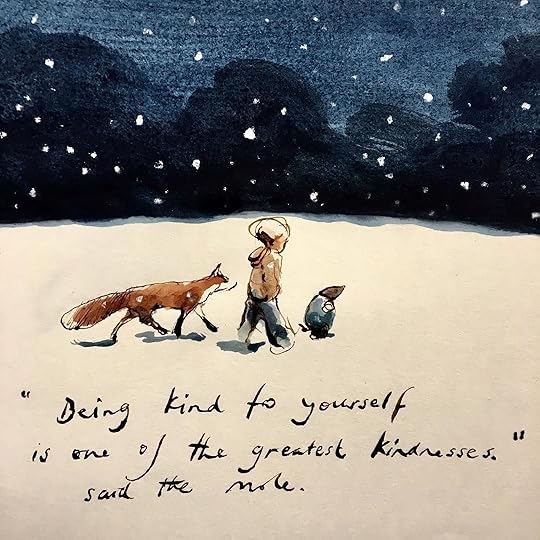
“Being kind to yourself is one of the greatest kindnesses” said the mole.
That’s just an idea of what you can expect with this book and, if your eyes haven’t rolled out of your head, you might get something out of Charles Mackesy’s The Boy, The Mole, The Fox and The Horse!
Obviously it’s just a dressed-up version of random feel-good messages – there’s no “story” and it’s only superficially a fable. It’s also the kind of book that’s easy to mock because it’s so earnest. But I actually agree with a lot of what’s in the book and think anything this positive and encouraging, particularly to those of us with doubt or low self-esteem, which most of us battle with at one point or another, is worth filling your head with. It just gets a bit repetitive after a while – kindness is good, etc. – and less impressive the more it goes on.
Mackesy’s artwork is quite skilful though I found some of the pictures too sketchy at times – too many lines making the page seem busier than it should. Some of the art is quite beautiful though like the watercolour pages and the Pegasus sequence.
The Boy, The Mole, The Fox and The Horse is a modern-day combo of Winnie the Pooh and The Alchemist which isn’t half bad – gentle and sweet, with a good message and full of heart, it’s just a bit cloying at times.
“Nothing beats kindness” said the horse. “It sits quietly beyond all things.”
“Often the hardest person to forgive is yourself”
“What do you think success is?” asked the boy.
“To love” said the mole.
“Is your glass half empty or half full?” asked the mole.
“I think I’m grateful to have a glass” said the boy.
“Being kind to yourself is one of the greatest kindnesses” said the mole.
That’s just an idea of what you can expect with this book and, if your eyes haven’t rolled out of your head, you might get something out of Charles Mackesy’s The Boy, The Mole, The Fox and The Horse!
Obviously it’s just a dressed-up version of random feel-good messages – there’s no “story” and it’s only superficially a fable. It’s also the kind of book that’s easy to mock because it’s so earnest. But I actually agree with a lot of what’s in the book and think anything this positive and encouraging, particularly to those of us with doubt or low self-esteem, which most of us battle with at one point or another, is worth filling your head with. It just gets a bit repetitive after a while – kindness is good, etc. – and less impressive the more it goes on.
Mackesy’s artwork is quite skilful though I found some of the pictures too sketchy at times – too many lines making the page seem busier than it should. Some of the art is quite beautiful though like the watercolour pages and the Pegasus sequence.
The Boy, The Mole, The Fox and The Horse is a modern-day combo of Winnie the Pooh and The Alchemist which isn’t half bad – gentle and sweet, with a good message and full of heart, it’s just a bit cloying at times.

April 25, 2020
Just to let people know, I have a problem with any recently published books that I reviewed and have rated with 1 star either disappear or have been hidden. This one disappeared and I have added it again.
My previous rating and review disappeared.
I found this nauseatingly awful. Sickly sweet wisdoms spoken from a Christopher Robbin like toddler talking to animals. This reads like a poor copy of Winnie the Pooh without any of the good parts. Even the illustrations and situations are copied from Winnie the Pooh. This takes around two minutes to read, many pages blank for no apparent reason, the worst book I have read in a long time.
My previous rating and review disappeared.
I found this nauseatingly awful. Sickly sweet wisdoms spoken from a Christopher Robbin like toddler talking to animals. This reads like a poor copy of Winnie the Pooh without any of the good parts. Even the illustrations and situations are copied from Winnie the Pooh. This takes around two minutes to read, many pages blank for no apparent reason, the worst book I have read in a long time.

November 20, 2021
Omg!! I’ve heard about this book forever!! I didn’t believe it!! I got it free in a sale! It’s on my favorites list! It’s so simple yet profound!

You are loved…
Mel 🖤🐶🐺🐾
You are loved…
Mel 🖤🐶🐺🐾

March 21, 2020
It's hard to find the words for this one. Other people have though.
I am not a Pooh fan.
(Could those of you throwing stuff at me please stop? I'm just not. Sorry to pooh pooh Pooh...
...but it's just too twee for me.)
This to me is not twee. Okay, occasionally, but in the same way as The Beatles "All You Need is Love" is. Mmmm, that comparison feels so cozy.
(There's real music in here too, sheet music which I wish I could read. I haven't seen it addressed anywhere and if anyone reads this and can give a sense of the tunes I'd love to know.)
It's all very special, the only book I've ever read where the copyright page comes last. I thought mine was missing it but no and what a great choice because it seems like the publisher is silently saying: we didn't want to interrupt.
The words. Spare sentences that are sometimes profound and surprising.
They're at the edge of the water looking at a pair of swans swimming in perfect unison.
"How do they look so together and perfect?" asked the boy.
"There's a lot of frantic paddling going on beneath," said the horse.
I LOVE THAT!
And on a gorgeous full-color page they're sitting looking at the sky, at a shooting star (sounds a lot more romantic than meteor) and the mole says: "So much beauty we need to look after."
Charlie Mackesy's mixed-medium artwork is always beautiful with some small surprises tucked in. The lettering is lovely. There are black & white ink drawings, ones with small or large washes of color, ones with even more color and a few full paintings. Some pages have no words. There are two I would love to buy and hang as prints.
A simple book with sweet and sober sentiments. Kids will like the characters and relate to some of it. For most adults who aren't able to hug everyone we love right now, I think this is the perfect time to read and send this love letter from Charlie Mackesy to the world.
I am not a Pooh fan.
(Could those of you throwing stuff at me please stop? I'm just not. Sorry to pooh pooh Pooh...
...but it's just too twee for me.)
This to me is not twee. Okay, occasionally, but in the same way as The Beatles "All You Need is Love" is. Mmmm, that comparison feels so cozy.
(There's real music in here too, sheet music which I wish I could read. I haven't seen it addressed anywhere and if anyone reads this and can give a sense of the tunes I'd love to know.)
It's all very special, the only book I've ever read where the copyright page comes last. I thought mine was missing it but no and what a great choice because it seems like the publisher is silently saying: we didn't want to interrupt.
The words. Spare sentences that are sometimes profound and surprising.
They're at the edge of the water looking at a pair of swans swimming in perfect unison.
"How do they look so together and perfect?" asked the boy.
"There's a lot of frantic paddling going on beneath," said the horse.
I LOVE THAT!
And on a gorgeous full-color page they're sitting looking at the sky, at a shooting star (sounds a lot more romantic than meteor) and the mole says: "So much beauty we need to look after."
Charlie Mackesy's mixed-medium artwork is always beautiful with some small surprises tucked in. The lettering is lovely. There are black & white ink drawings, ones with small or large washes of color, ones with even more color and a few full paintings. Some pages have no words. There are two I would love to buy and hang as prints.
A simple book with sweet and sober sentiments. Kids will like the characters and relate to some of it. For most adults who aren't able to hug everyone we love right now, I think this is the perfect time to read and send this love letter from Charlie Mackesy to the world.

August 6, 2022
What an absolutely beautiful book. Absolutely beautiful.
The cursive lettering instead of the traditional block font adds to the aesthetic of this feel good story. The illustrations are exquisite watercolor over sketch pencil.
I deeply enjoyed reading this story as much as my children enjoyed listening to it and looking at the pictures. The moral of the story is heartfelt, teaching love and acceptance. It highlights feelings of loneliness and sadness but that we don’t have to stay there, we have happiness in those we surround ourself with.
Young or old, this book is wonderful. The moral can either be taught to younger readers, or remind us older readers to find the beauty in ourselves in others.
The cursive lettering instead of the traditional block font adds to the aesthetic of this feel good story. The illustrations are exquisite watercolor over sketch pencil.
I deeply enjoyed reading this story as much as my children enjoyed listening to it and looking at the pictures. The moral of the story is heartfelt, teaching love and acceptance. It highlights feelings of loneliness and sadness but that we don’t have to stay there, we have happiness in those we surround ourself with.
Young or old, this book is wonderful. The moral can either be taught to younger readers, or remind us older readers to find the beauty in ourselves in others.

January 16, 2020
'What is the bravest thing you ever said?' asked the boy...'Help' said the horse.
Gorgeous beautiful black/wite brown/white colour drawings, really beautiful.
For me though it is not a 5 star which is the average rating I think at Goodreads, why, because it is a bit a bit of supersweet cuteness and morality overkill. 😊 This is probably because I’m used to read dark books…. So maybe I am not the target group for this book? 😉
But, definitely a book to leaf through, read the wisdom, be in awe of the beautiful drawings,revisit so keep it close on your table, and be captured by the cute friendship between the boy, the mole (personally I liked the mole best, because of the humor in its statements), the fox and the horse in the beautiful drawings. Okay, 3.6 for me.
'Do you have a favorite saying', asked the boy. 'Yes', said the mole. 'What is it?' 'If at first you don't succeed, have some cake'. 'I see, does it work?' 'Every time'.
This is what Waterstones says: “Waterstones Book of the Year 2019, The Boy, the Mole, the Fox and the Horse was an instant favourite with our booksellers. A book to bring people together, Charlie Mackesy’s inspirational paintings and delicate calligraphic text are a celebration of kindness, compassion and understanding, conveying an essential message for our time. Soothing balm for the soul in these turbulent, polarised times. ‘This delicately illustrated tale shows that love towards yourself and others is the only thing that truly matters in our hectic world’ – Nia at Cardiff - ‘A poignantly human, refreshingly pure and beautifully curated book’ – Izzy at Piccadilly."
Gorgeous beautiful black/wite brown/white colour drawings, really beautiful.
For me though it is not a 5 star which is the average rating I think at Goodreads, why, because it is a bit a bit of supersweet cuteness and morality overkill. 😊 This is probably because I’m used to read dark books…. So maybe I am not the target group for this book? 😉
But, definitely a book to leaf through, read the wisdom, be in awe of the beautiful drawings,revisit so keep it close on your table, and be captured by the cute friendship between the boy, the mole (personally I liked the mole best, because of the humor in its statements), the fox and the horse in the beautiful drawings. Okay, 3.6 for me.
'Do you have a favorite saying', asked the boy. 'Yes', said the mole. 'What is it?' 'If at first you don't succeed, have some cake'. 'I see, does it work?' 'Every time'.
This is what Waterstones says: “Waterstones Book of the Year 2019, The Boy, the Mole, the Fox and the Horse was an instant favourite with our booksellers. A book to bring people together, Charlie Mackesy’s inspirational paintings and delicate calligraphic text are a celebration of kindness, compassion and understanding, conveying an essential message for our time. Soothing balm for the soul in these turbulent, polarised times. ‘This delicately illustrated tale shows that love towards yourself and others is the only thing that truly matters in our hectic world’ – Nia at Cardiff - ‘A poignantly human, refreshingly pure and beautifully curated book’ – Izzy at Piccadilly."

November 20, 2019
This book is so beautiful it almost makes you want to weep. If you are looking for a thoughtful and stunning book as a present for Christmas then look no further - it’s GORGEOUS! This is a wonderful story of unlikely friendships and love which has some fantastic illustrations some of which a a bit reminiscent of E H Shepard’s Winnie the Pooh drawings.
The boy first meets the mole and he is adorable - which is something I never thought I’d say about a mole since ‘the little gentlemen in black velvet’ wreak annual havoc with my lawn! He is an optimist and feels that most things are better for cake. Absolutely. Totally with him. I love all the illustrations but there are some of the horse that are simply amazing and moving. I love the sentiments of the book and it’s one I’ll go back to time and time again. What is so clever is its simplicity which actually makes it very powerful.
Just wonderful and I’d give it five million stars if I could!!!!
The boy first meets the mole and he is adorable - which is something I never thought I’d say about a mole since ‘the little gentlemen in black velvet’ wreak annual havoc with my lawn! He is an optimist and feels that most things are better for cake. Absolutely. Totally with him. I love all the illustrations but there are some of the horse that are simply amazing and moving. I love the sentiments of the book and it’s one I’ll go back to time and time again. What is so clever is its simplicity which actually makes it very powerful.
Just wonderful and I’d give it five million stars if I could!!!!

September 13, 2020
کتابی برای اینستاگرام شما!ا
کتابی که مشاهده میفرمایید حقیقتا نوبره! نویسنده عزیزمون زحمت کشیده و 50، 60 شعار همهپسند رو با محوریت "مهربان باشیم" کنار هم آورده و اونقدر لابهلاش نقاشی چپونده که بشه 130 صفحه 😐ا
از نظر من نویسنده بسیار تحت تاثیر کتاب "شازده کوچولو" بوده و سعی کرده شبیه اون لطیف و گوگولی باشه. راجع به اینکه توفیق داشته یا نداشته، راستش نمیتونم نظری بدم چون از "شازده کوچولو" هم خیلی خوشم نیومد. اما اصل مطلب اینه که با خوندن همین یک کتاب میتونید تا 2 ماه، یککله هر روز تو اینستاگرام و توییتر و ... چشم همه رو در بیارید و حسابی از خودتون حس روشنفکری در کنید!ا
پ.ن: اگر احیانا بپرسید که "تو اصلا انگیزت از خوندن این کتاب چی بود؟!" چارهای ندارم جز اینکه سرم رو پایین بندازم و اعتراف کنم که کتاب رو یک روز توی طاقچه رایگان گرفتم و توی مسیر یک ساعت و نیمه از محل کار تا منزل، چون خوابم نمیبرد و استثنائا کتاب دیگهای هم نداشتم، از روی غریزه "مفت باشه، کوفت باشه" تا تهش خوندم. 😟 و از همین بابت، همینجا از کل جامعه کتابخوان و اهالی معرفت عذرخواهی میکنم. باشد تا همهمان رستگار شویم
کتابی که مشاهده میفرمایید حقیقتا نوبره! نویسنده عزیزمون زحمت کشیده و 50، 60 شعار همهپسند رو با محوریت "مهربان باشیم" کنار هم آورده و اونقدر لابهلاش نقاشی چپونده که بشه 130 صفحه 😐ا
از نظر من نویسنده بسیار تحت تاثیر کتاب "شازده کوچولو" بوده و سعی کرده شبیه اون لطیف و گوگولی باشه. راجع به اینکه توفیق داشته یا نداشته، راستش نمیتونم نظری بدم چون از "شازده کوچولو" هم خیلی خوشم نیومد. اما اصل مطلب اینه که با خوندن همین یک کتاب میتونید تا 2 ماه، یککله هر روز تو اینستاگرام و توییتر و ... چشم همه رو در بیارید و حسابی از خودتون حس روشنفکری در کنید!ا
پ.ن: اگر احیانا بپرسید که "تو اصلا انگیزت از خوندن این کتاب چی بود؟!" چارهای ندارم جز اینکه سرم رو پایین بندازم و اعتراف کنم که کتاب رو یک روز توی طاقچه رایگان گرفتم و توی مسیر یک ساعت و نیمه از محل کار تا منزل، چون خوابم نمیبرد و استثنائا کتاب دیگهای هم نداشتم، از روی غریزه "مفت باشه، کوفت باشه" تا تهش خوندم. 😟 و از همین بابت، همینجا از کل جامعه کتابخوان و اهالی معرفت عذرخواهی میکنم. باشد تا همهمان رستگار شویم

January 3, 2021
What a beautiful and inspirational book to start 2021 with. A simple and thought provoking read, where the reader is reminded of the fundamental of goodness and kindness we were all born with.
Beautifully illustrated and you cant help but love the characters as they plod along their merry way, a book that old and young can find joy in and I can imagine a mother reading this with her child. I loved the simple little messages that I think we all need reminding of now more so than ever in order to get through the tough times.
The book is beautifully illustrated in black calligraphy and watercolour.
My favourite quote from the book.
Is your glass half empty or half full asked the mole. "I think I am grateful to have a glass" said the boy.
In my opinion a good book is a gift that keeps on giving. This is a lovely book that will bring a smile to the hardened of hearts.
Beautifully illustrated and you cant help but love the characters as they plod along their merry way, a book that old and young can find joy in and I can imagine a mother reading this with her child. I loved the simple little messages that I think we all need reminding of now more so than ever in order to get through the tough times.
The book is beautifully illustrated in black calligraphy and watercolour.
My favourite quote from the book.
Is your glass half empty or half full asked the mole. "I think I am grateful to have a glass" said the boy.
In my opinion a good book is a gift that keeps on giving. This is a lovely book that will bring a smile to the hardened of hearts.

June 16, 2021
My sister bought this book for my daughter, who is a bit of a reluctant reader. My daughter has a processing disorder so reading is a lot of hard work. When the book is so good it outweighs the difficulty of the task of reading, I know the book is a winner. As she was reading, she kept running out of her room to tell me about a cute, sweet or touching part of the book. When she finished it, she handed it to me and said, “Your turn!”
It’s a beautiful children’s book. It reminds me of The Little Prince or even a little like Winnie-the-Pooh. A boy meets a mole, who loves eating cake and giving sage advice. They later meet a fox, who is a little scary but only because he has been hurt in the past. The three meet a horse who stopped flying because it made other horses jealous. Each character has beautiful and poignant advice to give or insightful questions to ask the others. I found that many were things I had said, felt or heard at one point in my life. While there isn’t a full narrative going on, it doesn’t matter. The interactions between the characters add up to a friendship that lasts longer than the pages in the book. The Boy, the Mole, the Fox and the Horse is a lovely little stroll through life lessons, kind words, smart advice and keys to a happy and successful life. Such a sweet little book!
It’s a beautiful children’s book. It reminds me of The Little Prince or even a little like Winnie-the-Pooh. A boy meets a mole, who loves eating cake and giving sage advice. They later meet a fox, who is a little scary but only because he has been hurt in the past. The three meet a horse who stopped flying because it made other horses jealous. Each character has beautiful and poignant advice to give or insightful questions to ask the others. I found that many were things I had said, felt or heard at one point in my life. While there isn’t a full narrative going on, it doesn’t matter. The interactions between the characters add up to a friendship that lasts longer than the pages in the book. The Boy, the Mole, the Fox and the Horse is a lovely little stroll through life lessons, kind words, smart advice and keys to a happy and successful life. Such a sweet little book!

October 21, 2021
I spent a sunny Autumnal morning reading this book and honestly it could not have been more perfect.
“What do we do when our hearts hurt?” Asked the boy. “We wrap them with friendship, shared tears and time, till they wake hopeful and happy again.”
This book spoke to me. From the beautiful words and gorgeous illustrations, it was a peaceful and heart warming experience.
“Don’t measure how valuable you are by the way you are treated.”
I’d quote the whole book if I could. Last one.
“What do you think is the biggest waste of time?”
“Comparing yourself to others.”
❤️🩹
“What do we do when our hearts hurt?” Asked the boy. “We wrap them with friendship, shared tears and time, till they wake hopeful and happy again.”
This book spoke to me. From the beautiful words and gorgeous illustrations, it was a peaceful and heart warming experience.
“Don’t measure how valuable you are by the way you are treated.”
I’d quote the whole book if I could. Last one.
“What do you think is the biggest waste of time?”
“Comparing yourself to others.”
❤️🩹

July 1, 2020
" بعضی وقتا تنها چیزی که میشنوی تنفره، ولی تو دنیا بیشتر از اونی که فکر کنی عشق و دوست داشتن وجود داره."
از خوندن این کتاب حس خیلی خوبی داشتم!
کتابی ساده و کوتاه که خوندنش کمتر از یک ربع وقتم رو گرفت اما تا چندساعت بعد تو دلم از سادگی و پاکی پسربچه و دوستانش لبخند میزدم.
این کتاب محدود بهگروهسنی خاصی نیست و مناسب برای ۹ تا ۹۹ ساله، دقیقا مثل شازده کوچولو، پایهایترین سوالها رو میپرسه و بهمون عشق، دوستی، امید و شجاعت رو یادآوری میکنه و هرکسی میتونه یک مفهوم ازش برداشت کنه.
عکسهای کتاب هم بسی جذاب بود.
میشه روی این کتاب کوتاه، کلی بحث کرد و هر شخصیت و جملهها رو تحلیل کرد اما من دوستدارم کتاب رو ساده و شاید کودکانه ببینم، شاید بهتر باشه همهی چیزها و کتابا رو وارد دنیای بزرگترها نکرد.
قطعا پیشنهادش میکنم و قطعا دوباره خواهم خواند.
پ.ن: من کتاب رو با ترجمه آقای گازر از کولهپشتی خوندم که خیلی خوب بود، ولی تمام تصاویر سیاه و سفید بود. گویا یکسری تصاویر تو کتاب چاپشده از نشر میلکان رنگیه.
از خوندن این کتاب حس خیلی خوبی داشتم!
کتابی ساده و کوتاه که خوندنش کمتر از یک ربع وقتم رو گرفت اما تا چندساعت بعد تو دلم از سادگی و پاکی پسربچه و دوستانش لبخند میزدم.
این کتاب محدود بهگروهسنی خاصی نیست و مناسب برای ۹ تا ۹۹ ساله، دقیقا مثل شازده کوچولو، پایهایترین سوالها رو میپرسه و بهمون عشق، دوستی، امید و شجاعت رو یادآوری میکنه و هرکسی میتونه یک مفهوم ازش برداشت کنه.
عکسهای کتاب هم بسی جذاب بود.
میشه روی این کتاب کوتاه، کلی بحث کرد و هر شخصیت و جملهها رو تحلیل کرد اما من دوستدارم کتاب رو ساده و شاید کودکانه ببینم، شاید بهتر باشه همهی چیزها و کتابا رو وارد دنیای بزرگترها نکرد.
قطعا پیشنهادش میکنم و قطعا دوباره خواهم خواند.
پ.ن: من کتاب رو با ترجمه آقای گازر از کولهپشتی خوندم که خیلی خوب بود، ولی تمام تصاویر سیاه و سفید بود. گویا یکسری تصاویر تو کتاب چاپشده از نشر میلکان رنگیه.

February 19, 2020
This book is a series of super saccharine, unconnected platitudes that are utterly meaningless. The stars are for the illustrations which would be lovelier if they weren’t total ripoffs of “Winnie the Pooh.”
Listen the reason things like The House at Pooh Corner and The Alchemist have resonance and make an impact on people is because they were simple stories that held deeper truths that you, as the reader, unlocked and discovered over time.
I don't think A.A. Milne was trying to impart Taoist wisdom to the world but the idea of Pooh, a character who lives entirely in the present and takes things as they come without anxiety or fear, as a sort of mascot for mindfulness came much, much later. Milne was trying to help a whole lot of people recover from the utter horror of World War I through gentle, sweet story telling. For most people Pooh was just an adorable bear getting into mischief, an escape from a much harsher reality. And while Santiago's journey in The Alchemist is clearly intended to be allegorical its also a beautiful, magical story with great characters, romance, and an actual plot. We get to know him, we care about him and the things he's learning as he goes through the world. The things he experiences might be stand in's for greater, more spiritual truth's but they're grounded in a reality we recognize and relate to.
This book has all the trappings of a deep, meaningful journey to enlightenment. Its a slightly unusual shape so it stands out from other standard looking books. The cover has beautiful, hand written looking gold writing and unfinished, gentle water colors of a little boy and adorable animals. Its printed on lovely thick paper and there are never more than like twenty words on a page. And of course its stuffed with earth shattering insights that will change the world if we only adopt them all into our daily lives. Every drop of wisdom is written in delicate, short, declarative sentences with the simplest possible language.
The characters are also perfect for a primer on mindfully living in the now. There's the innocent, wise little boy, a big horse, a fox that doesn't say much, and a mole who provides cute little comic moments because it constantly wants to eat cake. They do adorable, innocent looking things like sitting on tree branches and hills and the horse and staring at the beautifully painted night sky.
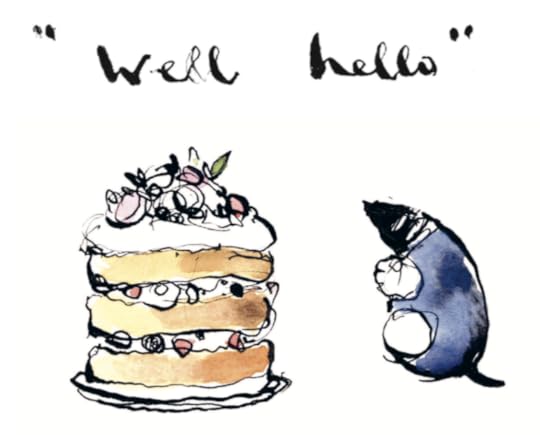
sometimes they stare at and/or eat cake.
but mostly they impart the kind of wisdom usually restricted to inspirational posters found in your guidance counselors office. The kind where an adorable angora cat is dangling from a tree branch with the word "hang in there" under it.
None of the "truths" Mackesy espouses in this book mean a damn thing. There's no story, no journey, no nothing just a series of pretty versions of someone else's art work and an endless repetition of the same sugary sweet sentiments over and over and over again.
Like this:
"When have you been at your strongest?" asked the boy.
"When I have dared to show my weakness."
Or this one:
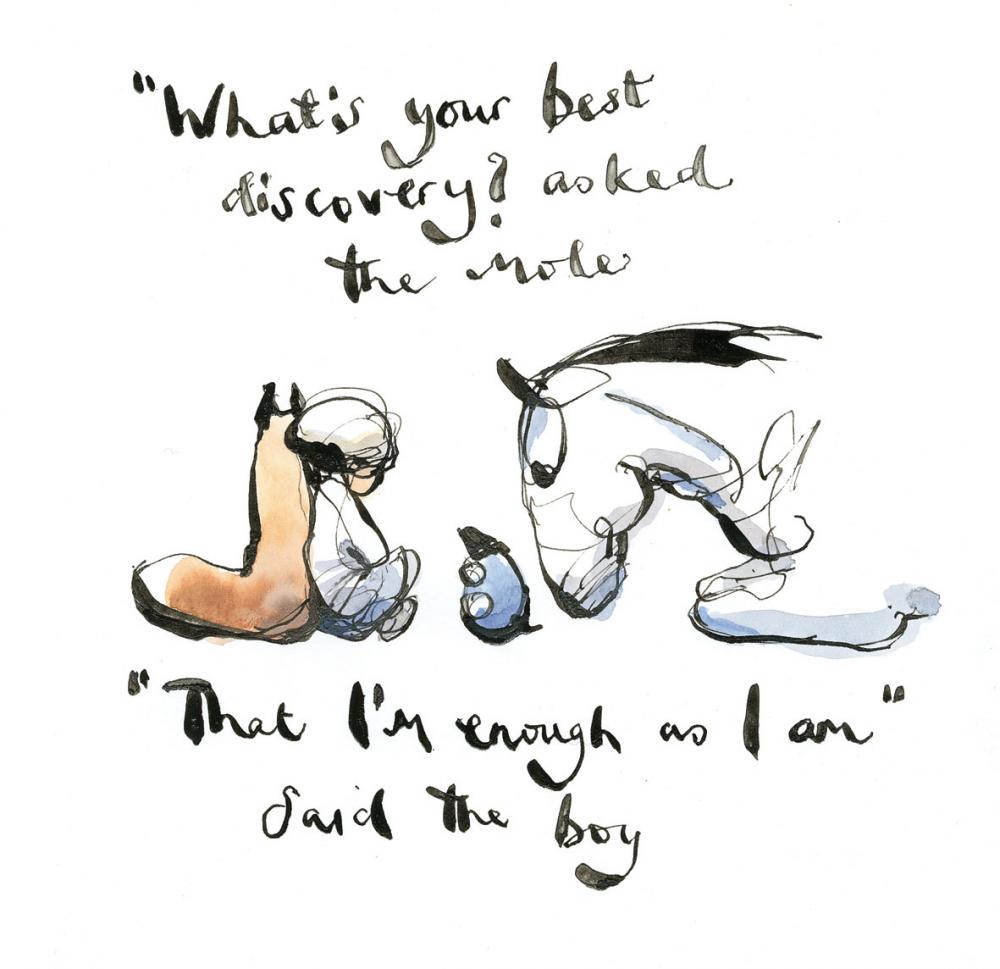
"What's your best discovery?" asked the mole.
"That I'm enough as I am." said the boy.
and my personal favorite:
"Is your glass half empty or half full?" asked the mole.
"I think I'm grateful to have a glass." said the boy.
WHAT. DOES. THAT. EVEN. MEAN!?!?!?!!?! You're grateful to have a glass? Why!? The glass isn't the damn point of the stupid saying!!!! The whole point is what is or isn't IN the goddamn glass! No one is grateful just to have a glass! GAAAAHHHHHHH!!!!
This isn't wisdom for the ages or a movement to reclaim humanity. Its a cash grab. The right Instagram posts at the right time, the right people connecting, the right marketing and boom a lot of money for everyone involved.
Like many, many other things I think its a case of, as my brilliant spouse put it, the emperor's new clothes. Barnes and Noble publishes a beautiful gift edition of this perfect for holiday gift giving! Elizabeth Gilbert espouses its wonders! I mean christ Bear Grylls loves it! So OF COURSE it must be a life changing work of art! And we all just ignore that in fact, the emperor is totally naked.
It looks right, it uses the right kinds of words and on the surface it seems like its deep and meaningful and something to treasure. But its just not.
Listen the reason things like The House at Pooh Corner and The Alchemist have resonance and make an impact on people is because they were simple stories that held deeper truths that you, as the reader, unlocked and discovered over time.
I don't think A.A. Milne was trying to impart Taoist wisdom to the world but the idea of Pooh, a character who lives entirely in the present and takes things as they come without anxiety or fear, as a sort of mascot for mindfulness came much, much later. Milne was trying to help a whole lot of people recover from the utter horror of World War I through gentle, sweet story telling. For most people Pooh was just an adorable bear getting into mischief, an escape from a much harsher reality. And while Santiago's journey in The Alchemist is clearly intended to be allegorical its also a beautiful, magical story with great characters, romance, and an actual plot. We get to know him, we care about him and the things he's learning as he goes through the world. The things he experiences might be stand in's for greater, more spiritual truth's but they're grounded in a reality we recognize and relate to.
This book has all the trappings of a deep, meaningful journey to enlightenment. Its a slightly unusual shape so it stands out from other standard looking books. The cover has beautiful, hand written looking gold writing and unfinished, gentle water colors of a little boy and adorable animals. Its printed on lovely thick paper and there are never more than like twenty words on a page. And of course its stuffed with earth shattering insights that will change the world if we only adopt them all into our daily lives. Every drop of wisdom is written in delicate, short, declarative sentences with the simplest possible language.
The characters are also perfect for a primer on mindfully living in the now. There's the innocent, wise little boy, a big horse, a fox that doesn't say much, and a mole who provides cute little comic moments because it constantly wants to eat cake. They do adorable, innocent looking things like sitting on tree branches and hills and the horse and staring at the beautifully painted night sky.
sometimes they stare at and/or eat cake.
but mostly they impart the kind of wisdom usually restricted to inspirational posters found in your guidance counselors office. The kind where an adorable angora cat is dangling from a tree branch with the word "hang in there" under it.
None of the "truths" Mackesy espouses in this book mean a damn thing. There's no story, no journey, no nothing just a series of pretty versions of someone else's art work and an endless repetition of the same sugary sweet sentiments over and over and over again.
Like this:
"When have you been at your strongest?" asked the boy.
"When I have dared to show my weakness."
Or this one:
"What's your best discovery?" asked the mole.
"That I'm enough as I am." said the boy.
and my personal favorite:
"Is your glass half empty or half full?" asked the mole.
"I think I'm grateful to have a glass." said the boy.
WHAT. DOES. THAT. EVEN. MEAN!?!?!?!!?! You're grateful to have a glass? Why!? The glass isn't the damn point of the stupid saying!!!! The whole point is what is or isn't IN the goddamn glass! No one is grateful just to have a glass! GAAAAHHHHHHH!!!!
This isn't wisdom for the ages or a movement to reclaim humanity. Its a cash grab. The right Instagram posts at the right time, the right people connecting, the right marketing and boom a lot of money for everyone involved.
Like many, many other things I think its a case of, as my brilliant spouse put it, the emperor's new clothes. Barnes and Noble publishes a beautiful gift edition of this perfect for holiday gift giving! Elizabeth Gilbert espouses its wonders! I mean christ Bear Grylls loves it! So OF COURSE it must be a life changing work of art! And we all just ignore that in fact, the emperor is totally naked.
It looks right, it uses the right kinds of words and on the surface it seems like its deep and meaningful and something to treasure. But its just not.

November 7, 2020
The characters are just like talking inside your head trying to be honest yet positive and kind.
I have been looking for a book to read since yesterday to give me the feeling of a long, warm hug. I thought I needed a sad book. But that didn't work. My fever got worse and I just couldn't focus.
Well, if you're having a tough time being sick and miserable, and nothing works but want to have a short book next to you, pick this one.
It's so freaking comforting. It's really short but each word will make you feel so good and loved.
I love the illustrations. They are quite soothing.
It is like a collection of life quotes but also a reassurance that you matter and that's all it matters.
I am feeling so much better. Thanks to this book.
I have been looking for a book to read since yesterday to give me the feeling of a long, warm hug. I thought I needed a sad book. But that didn't work. My fever got worse and I just couldn't focus.
Well, if you're having a tough time being sick and miserable, and nothing works but want to have a short book next to you, pick this one.
It's so freaking comforting. It's really short but each word will make you feel so good and loved.
I love the illustrations. They are quite soothing.
It is like a collection of life quotes but also a reassurance that you matter and that's all it matters.
I am feeling so much better. Thanks to this book.
Displaying 1 - 30 of 33,448 reviews