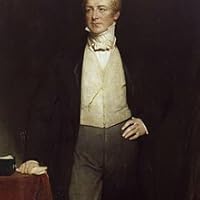
Catullus (Gaius Valerius, 84–54 BCE), of Verona, went early to Rome, where he associated not only with other literary men from Cisalpine Gaul but also with Cicero and Hortensius. His surviving poems consist of nearly sixty short lyrics, eight longer poems in various metres, and almost fifty epigrams. All exemplify a strict technique of studied composition inherited from early Greek lyric and the poets of Alexandria. In his work we can trace his unhappy love for a woman he calls Lesbia; the death of his brother; his visits to Bithynia; and his emotional friendships and enmities at Rome. For consummate poetic artistry coupled with intensity of feeling Catullus's poems have no rival in Latin literature. Tibullus (Albius, ca. 54–19 BCE), of equestrian rank and a friend of Horace, enjoyed the patronage of Marcus Valerius Messalla Corvinus, whom he several times apostrophizes. Three books of elegies have come down to us under his name, of which only the first two are authentic. Book 1 mostly proclaims his love for 'Delia', Book 2 his passion for 'Nemesis'. The third book consists of a miscellany of poems from the archives of Messalla; it is very doubtful whether any come from the pen of Tibullus himself. But a special interest attaches to a group of them which concern a girl called Sulpicia: some of the poems are written by her lover Cerinthus, while others purport to be her own composition.
The Pervigilium Veneris, a poem of not quite a hundred lines celebrating a spring festival in honour of the goddess of love, is remarkable both for its beauty and as the first clear note of romanticism which transformed classical into medieval literature. The manuscripts give no clue to its author, but recent scholarship has made a strong case for attributing it to the early fourth-century poet Tiberianus.
Gaius Valerius Catullus (ca. 84 BC – ca. 54 BC) was a Roman poet of the 1st century BC. His surviving works are still read widely, and continue to influence poetry and other forms of art. Catullus invented the "angry love poem."
I've quoted Catullus's Latin to my community college freshmen, especially: Odi et amo: quare requiris. Nescio./ Sed fieri sentio, Et Excrucior." "I hate and love. Why, you ask. Dunno. / But I feel it to be; I'm excruciated [on a cross]." They take Psyche 101, but love-hate was discovered a couple thousand years ago. I also recite his most famous of all, in Ben Jonson's version as well, "Come my Celia, let us prove/ While we may the fruits of love./ Time will not be ours forever..." Vivamus mea Lesbia atque amemus/ Rumoresque senum severiorum/ Aestimemus assis....Da mi basia mille, deinde centum.." "Give me a thousand kisses, then a hundred,/ Then a second hundred and a thousand...till we can't count." That one's in his favorite poetic form, hendecasyllables (eleven-syllables)--which Dante adapted to rhyme in his Divine Comedy. "Nel mezzo del cammin' del nostra vita/ Mi ritrovai...." For Catullus, hendecasyllables carry three strong beats, huge initial momentum, then two short quick (in an anapaest), then lilting iambs except a falling, "feminine" last foot. Here's his famous "Hail and Farewell" elegy to his brother, Salvatque vale. Catullus CI
Many miles across, and many seas I've come to these sad rites, my brother, doing what I can by you, remembering mumbling to your mute remains in vain, since some mere chance divided us, as if by right, took you from me. But while I'm here, I read you this old-fashioned epitaph, as for our father's fathers: Excuse my useless tears, Brother, so-- "Goodbye" I greet you, who elude Hello.
Please excuse my technicalities, but Catullus almost requires them, some way of showing the lilt and flow, the energy of his casual and immediate tone that carries him through intimate relations and even obscenity--like a tablemate. My excellent Latin professor in graduate school, Peter Bodunrin from Nigeria (?) by way of Oxford, used to recite hundreds of lines of Catullus--as well as Ovid and the elgiaic poets. All from memory, as he combined the African and classical memory traditions. I often feel that one problem with modern American poetry is: Poets should be required to recite their poems from memory. A lot of rubbish would be dropped.
Catullus, writing in the Rome of Julius Caesar and Cicero, is probably one of the most accessible of classical poets: his searing, emotionally raw and haunting Lesbia poems, especially, seem to inscribe the very nature of sexual obsession on the page.
But he is worth reading for the 'long' poems too, the extraordinary Attis poem (carmen 63) and the Marriage of Peleus and Thetis (carmen 64) which has such an impact on the Renaissance erotic epyllion.
In line with the other Loebs, this translates the poems into plain text, but it is impossible to convey the spiky texture of Catullus' original Latin.
If you have any Latin it's worth investing in this Loeb edition (Catullus' Latin in the love lyrics is pretty easy, probably about 'A' level standard, but the longer poems (c.63 and c.64) are difficult). But if not or you want a taster without the high price then I would recommend The Complete Poems translated by Guy Lee which is much better than the Penguin looser translation The Poems
An enjoyable read. I'd probably give Catullus a 4. I didn't enjoy Tibullus as much, and would give him an overall 3, but I'd award a 5 for his excellent piece against war (I.x). Finally, I'd give about a 3.5 for the Pervigilium Veneris. Part of my overall 4-star rating for this volume is that I loved being able to look at the original Latin text along with the English translation. Latin is so concise and sharp, I simply love it. Geeky Classics fun!
While I enjoyed many of Catullus's poems, a few made me make a little note here and there. Poem 45 is very nice on true love. I enjoyed #64, on the wedding of Peleus and Thetis, a little mini-epic that stands out among his mostly shorter pieces. Item 69 is quite interesting, concerning body odor! Of course, you have poem 101 with its classic "ave atque vale" ending. In addition to I.x in Tibullus, I also liked his Eulogy of Messalla (III.vii)
Catullus XLVIII: "Your honeyed eyes, Juventius, if one should let me go on kissing still, I would kiss them three hundred thousand times, nor would I think I should ever have enough, no, not if the harvest of our kissing were thicker than the ripe ears of corn."
Catulus XCIX: "I stole a kiss from you, honey-sweet Juventius, while you were playing, a kiss sweater than sweet ambrosia. But not unpunished; for I remember how for more than an hour I hung impaled on the top of the gallows trees, while I was excusing myself to you, yet could not with all my tears take away ever so little from your anger; for no sooner was it done, than you washed your lips clean with plenty of water, and wiped them with your dainty fingers, that no contagion from my mouth might remain, as though it were the foul spit of some filthy whore. Besides that, you made haste to deliver your unhappy lover to angry love, and to torture him in every manner, so that that kiss, changed from ambrosia, was now more bitter than bitter hellebore. Since then you impose this penalty on my unlucky love, henceforth I will never steal any kisses."
I put this at 4 stars for Catullus even though I would have put it at 2 for Tibullus. Unfortunately, I found Tibullus' elegies to be quite dry and uninteresting as he delves into nature without being quite as interesting in that endeavour as Virgil in his bucolic poems.
REVISED TO FIVE STARS: Having reread (in January 2020) this and having become more acquainted with the full range of Roman elegy I rate Tibullus much higher than before. Still, I think he is not quite as good as Propertius, who I think best, and Ovid. Catullus is as good as ever. I also enjoyed rereading Previgilium Veneris, which I forgot about to be honest, and it was a charming little poem. It reminds me of Catullus 61 and 62, the epithalamia, a little.
My favorite Latin author to read with high school students. It's a shame the AP canned the Catullus Ovid syllabus a few years back in favor of Vergil and Caesar but at least I get to introduce my IB students to Catullus. I am a big fan of the bilingual Loeb editions which have the advantage of fitting into one's pockets.
Catullus was considered one of the great Roman poets. I cannot believe it. He doesn't come close to Virgil or Horace. In fact, he shows off poorly by comparison and is far worse than even a poor Athenian poet. Unless you appreciate gross Roman insults, don't bother.