Researching Lived Experience introduces an approach to qualitative research methodology in education and related fields that is distinct from traditional approaches derived from the behavioral or natural sciences―an approach rooted in the “everyday lived experience” of human beings in educational situations. Rather than relying on abstract generalizations and theories, van Manen offers an alternative that taps the unique nature of each human situation.The book offers detailed methodological explications and practical examples of hermeneutic-phenomenological inquiry. It shows how to orient oneself to human experience in education and how to construct a textual question which evokes a fundamental sense of wonder, and it provides a broad and systematic set of approaches for gaining experiential material that forms the basis for textual reflections.Van Manen also discusses the part played by language in educational research, and the importance of pursuing human science research critically as a semiotic writing practice. He focuses on the methodological function of anecdotal narrative in human science research, and offers methods for structuring the research text in relation to the particular kinds of questions being studied. Finally, van Manen argues that the choice of research method is itself a pedagogic commitment and that it shows how one stands in life as an educator.
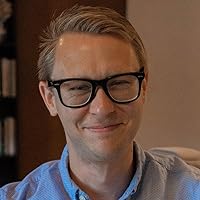
At present Max van Manen is involved is a post-retirement teaching program at the University of Alberta where he has been teaching the doctoral research seminar Phenomenological Research and Writing. In addition Max van Manen is working of several books on phenomenological methodology and pedagogy as an ethical practice. http://www.maxvanmanen.com/
A great guide to auto-ethnography phenomenology! A year ago I had not heard of either of those terms and thanks to this book, I finally have a better understanding of how understanding can be understood! It's a book about this type of methodology by which to conduct this type of qualitative research. The writing of this book 'feels' Dutch, and brings out the reflective/empathetic side of European sense-making which is about thoughtfulness and collective insight.
Van Manen points out the four elements for carrying out phenemonology as: “lived space (spatiality), lived body (corporeality), lived time (temporality), and lived human relation (relationality or communality) (Van Manen, 1990, p. 101). The space we are in, he demonstrates, not only affects how we feel, but generally speaking, he attests that “we may say we become the space we are in” (p. 102). The observation of space is therefore the lived experience in a particular time, place, and body through human interaction.
Van Manen's book has been most helpful in finding ways to examine, interpret and make sense of a particular human experience.
I've had a love-hate relationship with Van Manen; after an initial awestruck fascination stage I passed through disgust, apathy, and more recently, acceptance stages.
If one wants to do phenomenological education research, this is certainly the "how to"/reference guide. My qualms have been about a perceived lack of rigor (for Van Manen is very easy to read and understand, almost "too easy" for grad school, it seemed at first...), however over time I have come to appreciate that dense verbiage does not equate rigor, and Van Manen's research is grounded in a solid foundation of post-Husserlian phenomenology from mainly Heideggerian & Gadamer-iam perspectives (with a touch of Derrida and Merleau-Pont). - However Van Manen's bibliography is not exhaustive by any means, it's only 8 pages, and it doesn't touch on many important writers such as most women phenomenologists, i.e. De Beauvoir or Arendt) - i.e. this work is not critical in the sense that it does not even acknowledge feminist, race-based, justice-based perspective, or ethics (per Levinas). It does tangentially mention ethics (as a consideration of the research process), but does not attend to ethics as *part of* the structure of lived experience (for example, of lived relation to the other).
Good basic foundation/overview of phenomenological education research methods, but not very critical or in-depth.
[Re-read and edited review for the hundredth time in Oct. 2014]
This is a wonderful example of how to conduct a phenomenological study with concrete examples in the experiences of parenting/teaching/notions of pedagogy. This book not only serves me in my own thoughts around researching phenomenologically, but I think it has even made me a more aware educator and parent through its examples. I'm so sold on phenomenology right now, it occupies so much of my thinking and desire to move forward in my own research.
I remember asking a senior scholar in my department about how his work over the years transformed him and what kind of idols he had to smash along the way. His answer was considered and slow in coming and yet in the end his estimation was that, "Transformation happens a lot less than you think." Perhaps I'm "young" in the scholarly sense, naive, and enthusiastic - I'm still desirous of a work that is timely but also self-work. I want to be transformed by the material and embrace its discomfort (mostly).
How happy, then, I was to read in van Manen's book: "Phenomenology projects and their methods often have transformative effect on the researcher himself or herself. Indeed, phenomenological research is often itself a form of deep learning, leading to a transformation of consciousness, heightened perceptiveness, increased thoughtfulness." (163)
I really appreciate this guys outlook on research as pedagogy and vice versa. Not so sure about the whole pedagogical or language based side of things (id be interested in a conversation between him and Derrida, I think it would be very productive and interesting) but also completely agree with almost everything he says... will come in very handy as I am trying to make sense of why I am writing ANYTHING ever!
Van Manen is working here in two veins that sometimes combine well in his text and other times seem to compete. He wants to talk about phenomenological methods and about pedagogy, though the book only really shines through when he talks about pedagogy. Other times his phenomenological examinations are a bit too strenuously logical and vacillate between high-minded philosophical language and practical advice so that the text seems like a muddled look at both. The real core of the book is its concern with pedagogy, and those are the passages where Van Manen's reflections and ideas really shine. I've read other of his works and he's usually a much clearer writer - this was an unusually messy look into the worlds of both phenomenology and pedagogy. I'm glad I read it, but wonder what it could really do to help those unfamiliar with either world.
Good basic overview of phenomenological research...the example of Pedagogy of parenting and teaching was often overthought, but ultimately the text is still helpful