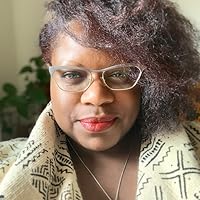
Lucille Clifton is one of the most distinguished American poets writing today. In The Terrible Stories, her tenth collection of verse, Clifton covers new terrain—cancer and mastectomy, the life of King David, encounters with a vixen fox who is both shaman and muse. Brilliantly honed language, stunning images and sharp rhythms addresses the whole of human birth, death, children, family, sexuality and spirituality, and community in antebellum and contemporary American culture. Hers is a poetry passionate and wise, not afraid to rage or whisper.
Lucille Clifton was an American poet, writer, and educator from New York. Common topics in her poetry include the celebration of her African American heritage, and feminist themes, with particular emphasis on the female body.
She was the first person in her family to finish high school and attend college. She started Howard University on scholarship as a drama major but lost the scholarship two years later.
Thus began her writing career.
Good Times, her first book of poems, was published in 1969. She has since been nominated twice for the Pulitzer Prize for Poetry and has been honored as Maryland's Poet Laureate.
Ms. Clifton's foray into writing for children began with Some of the Days of Everett Anderson, published in 1970.
In 1976, Generations: A Memoir was published. In 2000, she won the National Book Award for Poetry, for her work "Poems Seven".
From 1985 to 1989, Clifton was a professor of literature and creative writing at the University of California, Santa Cruz. She was Distinguished Professor of Humanities at St. Mary's College of Maryland. From 1995 to 1999, she was a visiting professor at Columbia University. In 2006, she was a fellow at Dartmouth College.
Clifton received the Robert Frost Medal for lifetime achievement posthumously, from the Poetry Society of America.
4.5 // ending a collection with the image of a harp...legend.
fave poems: "rust" (this might be my favorite clifton poem ever) "amazons" "1994" "hag riding" "shadows" "entering the south" (😭) "[evening and my dead once husband]"
This particular Clifton book of poems was very emotional and I remember getting a sense that she was dealing with violent experiences through writing. The book had great subtlety, but there was something about it that felt a little too inaccessible, a little too distant. I didn't feel let in enough. She did translate some strong emotions, but their was a vague opacity to the whole thing. Maybe the idea of something latent was part of what she wanted to communicate.
Poetry. I bought this volume for the fox poems, specifically "telling our stories," which is my favorite. I've always liked Clifton's spare style and simple language, the sense of rhythm that makes her poems sound so good out loud, but a lot of these just didn't gel for me. I failed completely at the last section; it was way too Biblical and I lacked the references to complete the metaphor.
Some favorites: telling our stories, leaving fox, hag riding, from the cadaver, the mississippi river empties into the gulf, blake.
Three stars, because even though a lot of these poems didn't work for me, it's still Lucille Clifton.
Pulled this book off the library shelf yesterday when a wave of poetry longing passed over me. Lucille Clifton doesn't disappoint. Her voice is clear, direct, and goes straight to the heart. When I read her poetry, I feel the beauty of her stark presence in my head, her "terrible" or (better) awesome power to infuse a simple, unadorned address with the fire of emotional truth. After putting her collection down, I am left with the impression of her down-to-earth witness. It's as if I've spent an hour in her kitchen and she's given me a sense of melancholy joy to take home with me.
and the gulf enters the sea and so forth, none of them emptying anything, all of them carrying yesterday forever on their white tipped backs, all of them dragging forward tomorrow. it is the great circulation of the earth's body, like the blood of the gods, this river in which the past is always flowing. every water is the same water coming round. everyday someone is standing on the edge of this river, staring into time, whispering mistakenly: only here. only now."
I read a larger book of the collected poetry of Lucille Clifton earlier this year and enjoyed it. I picked up this book because it was thin and would help me make progress on my reading goal and I didn't make the connection to the other book until I started to read. Some of the poems from the other book (Blessing the Boats) which I found the most impactful were also in this book and they were just as powerful this time. Again, this is poetry by an African American woman who has encapsulated experiences I can only guess at, but there are points of connection. The job of poetry (to the extent that it has a job) is to offer points of connection between two souls and thereby hold the universe together.
A couple excerpts
from 1994
you know that the saddest lies are the ones we tell ourselves you know how dangerous that is
******
an untitled poem
the son of medgar will son be older than medgar
he came he says to show in this courtroom medgar's face
the old man sits turned toward his old wife then turns away
he is sick the old wife sighs he is only a sick old man
Some highlights of this collection include the fox poems at the very beginning, a few of the David poems at the very end, and the poem about Blake. I've read now almost everything Clifton has written, and if I'm honest, her lack of development and diversity over her long career has led me to some fatigue with her work. I think if one were to take the top 10% of her poems, and put them in a "best of," you might have one really strong collection, and a few poems here would make it into such a book. A lot of her work blends together over time and isn't too memorable, so that I too often find myself mindlessly reading through at times and I need to refocus and reread just to get a sense of her intentions. Not a bad collection, but not a memorable one either.
What are the stories we avoid? What are the stories (lies) we tell ourselves? What are the stories (lies) we tell others? What’s a lie and what is truth? Can a story hold both at the same time? What do we wrestle with? What do we choose to let go? What stories are familial? What stories are personal? Which stories are global? These questions and many others were raised while reading this collection from Clifton. Some poems were so powerful that I would finish the final word and be brought to tears or left with chills. As always, grateful for the prophetic voice of Clifton. The questions she raised aren’t necessarily answered in this collection, but that’s not the point. In my opinion, asking good questions is most certainly the job of a poet.
As Lucille Clifton faced multiple diagnoses, treatment, sickness, and loss, she continued to write. In fact, she published four of her collections of poetry between 1995 and 2008. Her poetry grew out of the totality of her life experiences, the obstacles she faced, her perceptions, and her understanding of evolving human conditions. Her poems about cancer were written amid her other poetry, as part of the tapestry of her creative life.
saw them glittering in the trees, their quills erect among the leaves, angels everywhere. we need new words for what this is, this hunger entering our loneliness like birds, stunning our eyes into rays of hope. we need the flutter that can save us, something that will swirl across the face of what we have become and bring us grace. back north, i sit again in my own home dreaming of blake, searching the branches for just one poem.
This one hits different if you've ever felt like you were the only one who didn't get the memo. The Terrible Stories is awkward, funny, and a little painful in the right way. Lucille Clifton doesn't hold your hand, and some readers will hate that. Perfect for folks who like their stories a bit rough around the edges.
Reading The Terrible Stories this morning made me see the cohesion of this collection, along with the powerful, confident, unapologetic voice of Lucille Clifton. I will definitely be seeking out more of her work.
I find myself being drawn especially to Clifton’s take on religious figures. Her characterizations especially are so succinct and poignant - and sometimes only in 8 lines or less. “From the book of David” specifically spoke to me. I can’t wait to explore Clifton’s work further.
I loved these poems. The magic and lyricism of her words, the power of her insights keep washing over me. It is remarkable what she does with a few lines. Struggle, struggle, struggle - for me to find the way to such power through a few words. But this book is an inspiration.
“slaveships” and “sorrow song” are a couple favorites that I’ve used in my English classes over the years. There are other great ones in this collection, but I had to return the book before I could write them down.
This one hits different if you've ever felt like the only person who missed the memo. The Terrible Stories is awkward, funny, and a little painful in the right way, and Clifton, Lucille doesn't hold your hand once. Some readers will hate that. Perfect for folks who like their stories rough around the edges, a tough sell for anyone who wants comfort.
I usually like Clifton's poetry, but many of these left me cold or in the dark. I suspect the fault may be mine in that we come from different backgrounds, different traditions.
Such a great collection. I'm reading Clifton's poetry while reading The Body Keeps Score by Bessel, and it's such a great pairing. Clifton's poetry is nourishment for the spirit.