

What do you think?

The Secret Life of the Savoy: and the D'Oyly Carte family
THE STORY OF THE SAVOY HOTEL'S FOUNDERS, THROUGH A CENTURY OF LUXURY."For The Gondoliers-themed birthday dinner, the hotel obligingly flooded the courtyard to conjure the Grand Canal of Venice. Dinner was served on a silk-lined floating gondola, real swans were swimming in the water, and as a final flourish, a baby elephant borrowed from London Zoo pulled a five-foot high birthday cake."In three generations, the D'Oyly Carte family pioneered the luxury hotel and the modern theatre, propelled Gilbert and Sullivan to lasting stardom, made Oscar Wilde a transatlantic celebrity, inspired a P. G. Wodehouse series, and popularised early jazz, electric lights and Art Deco. Following the history of the iconic Savoy Hotel through three generations of the D'Oyly Carte family, The Secret Life of the Savoy revives an extroardinary cultural legacy. 'A real triumph, beautifully written, with many wonderful stories of the Savoy.' - Lady Anne Glenconner, author of Lady in Waiting'An elegantly crafted, yet spritely and sparkling book, perfectly befitting its subject. Williams uses group biography to beautifully illuminate some of London's greatest hotel and theatre landmarks.' Ophelia Field, author of The Favourite'A thoroughly entertaining account of some of London's most treasured history, with its beloved The Savoy at the heart of a fascinating and delightful plot. Bravo to Olivia Williams and her fantastically colourful cast of characters.' - Lady Kinvara Balfour, director and producer 'A cracking good read and a fascinating story that - amazingly - has not been told before.' Fiona Duncan, the Telegraph'This is a fascinating story, and it could not be better told. Elegant, great fun, and with a finely-judged personal much like the Savoy hotel itself.' - Laura Thompson, bestselling author of Agatha Christie and The Mitford Sisters
382 pages, Kindle Edition
Published September 3, 2020
Ratings & Reviews
Friends & Following
Create a free account to discover what your friends think of this book!
Community Reviews
Displaying 1 - 30 of 109 reviews
April 24, 2025
The Savoy, and the Family Who Made It Legendary!
Funny thing is, I’ve read so many books where The Savoy was featured—mostly as a glamorous backdrop—without any real explanations offered. I mean, everyone knows THE SAVOY, right? Or at least pretends to. So, in a way I knew that I had known very little about it. But only after finishing this book did I realize the extent of my non-knowledge (I'll flatter myself that it is simply a higher class of ignorance, now that I've been treated to all the glamour 🤭).
This is the kind of non-fiction that feels like you have been given a VIP backstage pass to high society, showbusiness, and the legacy of an institution that is synonymous with opulence, style and glamour. The book follows three generations of the D’Oyly Carte family—Richard, Rupert, and Bridget— that gave London and the world the Savoy Theatre and the Savoy Hotel.
It is part biography, part social history, part tribute and also a little bit of a gossip column. It is a good combination of a West End musical and an interesting documentary.
The narrative starts around Richard’s birth (1844) and ends in 1985 with Bridget’s death.
And in-between: so many things happened. We learn
- how an historic place, but an empty property became the epicentre of frenzied activities, fizz and glamour,
- how Richard turned from aspiring theatrical talent agent into a famous impresario and owner of a hotel empire,
- how his son Rupert -building on his father’s legacy- revitalised the opera company and expanded the hotel empire, refreshing the images of the Claridges and Berkeley hotels as well,
- how, after her brother’s death, shy and reluctant Bridget grew in the role first as assistant to her father and then major shareholder of the businesses, stopping several hostile takeover attempts before her death.
There are so many rich and interesting details from architecture to decor and interior design, from food and drinks to dress etiquette, from staff to guests that honestly I’m at a loss to give even the barest list of highlights. Nevertheless I’m sharing a few that I found special-special. For the rest, I encourage you to read the book.
🧐 P.G. Wodehouse modelled Psmith on Richard’s older son, Lucas (who, BTW, was a good friend, and most probably a lover of Lord Alfred -Bosie- Douglas before Bosie became Oscar Wilde’s lover).
🎭 Oscar Wilde and the scandal that proved to be his undoing was closely connected with the Savoy. In the libel case against the Marquess of Queensberry (Bosie’s father), 2 of the Savoy’s staff were brought as witnesses against him.
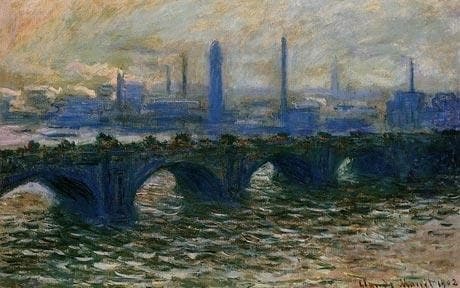
🖼️ Claude Monet depicting the Thames with Waterloo and Charing Cross bridges from his room/balcony in the hotel.
🎹 One of the first radio broadcast from the Savoy was Gershwin playing the piano.
📻 During the Blitz, the BBC and CBS broadcasted a series of programmes called "London After Dark" live that took listeners (this was aimed mostly at US audience) on “sound-seeing” tours. The Savoy also featured in the programme, the tour started from the kitchen including an interview with the then-chef Francois Latry and ended in the ballroom.
🎙️Noel Coward singing to the guests one night in 1941. His diary entry reads: "Had a few drinks. Pretty bad blitz, but not as bad as Wednesday. A couple of bombs fell very near during dinner. Wall bulged a bit and door blew in. Orchestra went on playing, no one stopped eating or talking. Blitz continued. Carroll Gibbons played the piano, I sang, so did Judy Campbell and a couple of drunken Scots Canadians. On the whole a strange and very amusing evening. People's behaviour absolutely magnificent. Much better than gallant. Wish the whole of America could really see and understand it. Thankful to God that I came back. Would not have missed this experience for anything."
🎭 It was Rupert who gave the play, Journey’s End by R.C. Sheriff and starring a young Laurence Olivier its first chance when theatres turned it down.
🍸 Ada Coleman, the Savoy’s first female bartender, shaking up her iconic Hanky-Panky cocktail.
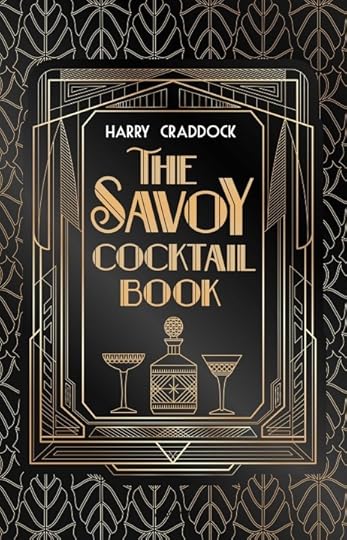
📕The Savoy was the first hotel to publish its own cocktail recipe book in 1930 which is still in print today.
And let’s not forget about intrigue
💼Ceasre Ritz and August Escoffier -after personally persuaded and invited by Richard to work in the Savoy- while undoubtedly bringing more fame during their 7-year tenure, were found guilty of misconduct and fraud and quietly shown the door. The details were revealed publicly decades later only.
The -1 star is because I really missed at least a short summary about what happened with the Savoy after Bridget's death and felt just a bit shortchanged. Nevertheless I absolutely recommend this book.

June 21, 2021
My thanks to Headline and NetGalley for a review copy of this book.
This absolutely fascinating and engrossing read is the story of the Savoy (theatre and hotel) but more so (as other reviews also mention) of the D’Oyly Carte family, three generations of which ran the two for over a century, each with their individual flair and tastes, but all with a business sense that was very different from the conventional. Their focus was their guests’ (never customers) enjoyment and comfort, and their own satisfaction rather than making money.
The book starts with the story of Richard Cart, father of Richard D’Oyly Carte, a poor but talented flautist who through his work and talent joined and became partner in a musical instrument business, Rudall, Carte and Co, giving his children a good start in life. Young Richard D’Oyly Carte, always interested in performing, joined his father’s business but his heart lay in theatre and he ran a casting company alongside (from a backroom) before moving on to it full time. After a wobbly start, and ups and downs (Oscar Wilde as a 26-year-old was also a client, with a lecture series in America organized for him by D’Oyly Carte), D’Oyly Carte saw success with Gilbert and Sullivan, a partnership that he pretty much brought together (or at least kept together). Able to achieve his dream of setting up the Savoy Theatre which was different from any other, both in its ambience (plush and opulent, ensuring every comfort that a guest would desire, with no hidden costs) to its offerings (light British Opera with lavish costumes and sets, the details of which were always carefully attended to), he worked with (and sometimes had to face animosity from) Gilbert and Sullivan to make his venture a success.
D’Oyly Carte’s experiences travelling abroad with his operas and other performers highlighted to him to dearth of quality hotels in his own country, and filling that gap soon also became a dream—one which he fulfilled by giving London the Savoy Hotel. Like for the theatre company, in setting up the hotel, D’Oyly Carte spared no expense, his philosophy of doing things to his satisfaction and things which customers would appreciate and be comfortable in taking precedence over profit. If this meant stocking the wine-cellars above paying dividends, then so be it. This was the philosophy that D’Oyly Carte’s son, Rupert (younger for Rupert’s older brother Lucas who trained as a barrister, died of consumption), and later his granddaughter Bridget (her brother too died young, in an accident in which he was not at fault) followed through their lives. The family had their share of tragedy, and the hotel (which expanded eventually to four hotels including Claridge’s) and theatre businesses saw their ups and downs and faced problems (legal wrangles were a constant), but things were always done the best, with attention to detail and no expense spared.
The D’Oyly Cartes may have been unconventional, even somewhat eccentric but they and their ventures gave us much—from Gilbert and Sullivan operas to ‘fairy lights’ (the term coming from the little bulbs used in fairy costumes in Iolanthe, the first public building to be fully lit by electricity to dishes like Peaches Melba and Melba toast created in honour of the singer Nellie Melba (one for when she was on a diet and the other when not), and much more. P.G. Wodehouse’s Psmith, his only character based on a real person, was most likely inspired by Lucas (although there is some confusion whether it was Rupert or Lucas that was the inspiration), and the inspiration for ‘007’ (the number and partly the character) also came from a guest at the Savoy.
The Savoy Hotel was marked by luxury and innovation; from having baths with running hot and cold water (something unheard of when it started); its own systems for generation of electricity and drawing water; innovative menus and food intended to entice people into dining out; to successful in-house bands and performances by George Gershwin, Frank Sinatra and Noel Coward (with live and recorded broadcasts accessible to all) among others. Its Laundry (a separate facility set up by Rupert) once again was equipped with the most modern facilities at the time (with an English country garden in its courtyard), and everything from mattresses to crests was made/embroidered in-house, while crockery and cutlery were made for them (including sets with motifs from Gilbert and Sullivan). Staff were well treated through the generations, loyalty to the family remaining high throughout, and turnover was fairly low.
The hotels (not just the Savoy but also the D’Oyly Carte’s other hotels, particularly Claridge’s) had the choicest guests from royalty to Hollywood stars (Edward VII to Queen Elizabeth II; Laurel and Hardy to Marilyn Monroe), politicians (Churchill among them), artists (like Monet and Whistler) and literary giants (like F. Scott Fitzgerald), for many of whom they served as a second home. Churchill conducted many of his meetings at the Savoy even during the war, while Claridge’s became his home after he lost power. (Williams’ mention of the combination of guests and pricing systems that D’Oyly Carte worked out reminded me a little of Agatha Christie’s Bertram’s Hotel; Christie herself was a guest at and hosted parties for her plays at the Savoy, but whether it was an inspiration I don’t really know).
The Secret Life of the Savoy is a really captivating account of the family and their ventures. Packed with anecdotes—events and happenings at the hotel (from the innocuous to the scandalous—Oscar Wilde’s case to a possible murder), we are taken through the lives of the three D’Oyly Cartes who ran the hotel and theatre company, looking at both the businesses and developments in their own lives (not without their trials either).
I especially loved Williams’ vivid descriptions in the book, whether it was of the lovely houses that different members of the family built for themselves—the one on D’Oyly Carte island in the Thames (where they even had a pet crocodile, and for which if I remember correctly the artist Whistler mixed up special colours) built by Richard D’Oyly Carte or Rupert’s hideway home in Pudcombe Cove between Brixam and Dartmouth (I wouldn’t have minded living in either house), with its gorgeous gardens—or the lavish parties thrown at the Savoy, among them a Gondolier-themed birthday party with the cake pulled in by a baby elephant or a winter-themed party with silver-tissue icebergs and fake snow.
This was an excellent read which kept me completely absorbed from cover to cover. Five stars to this one!
This absolutely fascinating and engrossing read is the story of the Savoy (theatre and hotel) but more so (as other reviews also mention) of the D’Oyly Carte family, three generations of which ran the two for over a century, each with their individual flair and tastes, but all with a business sense that was very different from the conventional. Their focus was their guests’ (never customers) enjoyment and comfort, and their own satisfaction rather than making money.
The book starts with the story of Richard Cart, father of Richard D’Oyly Carte, a poor but talented flautist who through his work and talent joined and became partner in a musical instrument business, Rudall, Carte and Co, giving his children a good start in life. Young Richard D’Oyly Carte, always interested in performing, joined his father’s business but his heart lay in theatre and he ran a casting company alongside (from a backroom) before moving on to it full time. After a wobbly start, and ups and downs (Oscar Wilde as a 26-year-old was also a client, with a lecture series in America organized for him by D’Oyly Carte), D’Oyly Carte saw success with Gilbert and Sullivan, a partnership that he pretty much brought together (or at least kept together). Able to achieve his dream of setting up the Savoy Theatre which was different from any other, both in its ambience (plush and opulent, ensuring every comfort that a guest would desire, with no hidden costs) to its offerings (light British Opera with lavish costumes and sets, the details of which were always carefully attended to), he worked with (and sometimes had to face animosity from) Gilbert and Sullivan to make his venture a success.
D’Oyly Carte’s experiences travelling abroad with his operas and other performers highlighted to him to dearth of quality hotels in his own country, and filling that gap soon also became a dream—one which he fulfilled by giving London the Savoy Hotel. Like for the theatre company, in setting up the hotel, D’Oyly Carte spared no expense, his philosophy of doing things to his satisfaction and things which customers would appreciate and be comfortable in taking precedence over profit. If this meant stocking the wine-cellars above paying dividends, then so be it. This was the philosophy that D’Oyly Carte’s son, Rupert (younger for Rupert’s older brother Lucas who trained as a barrister, died of consumption), and later his granddaughter Bridget (her brother too died young, in an accident in which he was not at fault) followed through their lives. The family had their share of tragedy, and the hotel (which expanded eventually to four hotels including Claridge’s) and theatre businesses saw their ups and downs and faced problems (legal wrangles were a constant), but things were always done the best, with attention to detail and no expense spared.
The D’Oyly Cartes may have been unconventional, even somewhat eccentric but they and their ventures gave us much—from Gilbert and Sullivan operas to ‘fairy lights’ (the term coming from the little bulbs used in fairy costumes in Iolanthe, the first public building to be fully lit by electricity to dishes like Peaches Melba and Melba toast created in honour of the singer Nellie Melba (one for when she was on a diet and the other when not), and much more. P.G. Wodehouse’s Psmith, his only character based on a real person, was most likely inspired by Lucas (although there is some confusion whether it was Rupert or Lucas that was the inspiration), and the inspiration for ‘007’ (the number and partly the character) also came from a guest at the Savoy.
The Savoy Hotel was marked by luxury and innovation; from having baths with running hot and cold water (something unheard of when it started); its own systems for generation of electricity and drawing water; innovative menus and food intended to entice people into dining out; to successful in-house bands and performances by George Gershwin, Frank Sinatra and Noel Coward (with live and recorded broadcasts accessible to all) among others. Its Laundry (a separate facility set up by Rupert) once again was equipped with the most modern facilities at the time (with an English country garden in its courtyard), and everything from mattresses to crests was made/embroidered in-house, while crockery and cutlery were made for them (including sets with motifs from Gilbert and Sullivan). Staff were well treated through the generations, loyalty to the family remaining high throughout, and turnover was fairly low.
The hotels (not just the Savoy but also the D’Oyly Carte’s other hotels, particularly Claridge’s) had the choicest guests from royalty to Hollywood stars (Edward VII to Queen Elizabeth II; Laurel and Hardy to Marilyn Monroe), politicians (Churchill among them), artists (like Monet and Whistler) and literary giants (like F. Scott Fitzgerald), for many of whom they served as a second home. Churchill conducted many of his meetings at the Savoy even during the war, while Claridge’s became his home after he lost power. (Williams’ mention of the combination of guests and pricing systems that D’Oyly Carte worked out reminded me a little of Agatha Christie’s Bertram’s Hotel; Christie herself was a guest at and hosted parties for her plays at the Savoy, but whether it was an inspiration I don’t really know).
The Secret Life of the Savoy is a really captivating account of the family and their ventures. Packed with anecdotes—events and happenings at the hotel (from the innocuous to the scandalous—Oscar Wilde’s case to a possible murder), we are taken through the lives of the three D’Oyly Cartes who ran the hotel and theatre company, looking at both the businesses and developments in their own lives (not without their trials either).
I especially loved Williams’ vivid descriptions in the book, whether it was of the lovely houses that different members of the family built for themselves—the one on D’Oyly Carte island in the Thames (where they even had a pet crocodile, and for which if I remember correctly the artist Whistler mixed up special colours) built by Richard D’Oyly Carte or Rupert’s hideway home in Pudcombe Cove between Brixam and Dartmouth (I wouldn’t have minded living in either house), with its gorgeous gardens—or the lavish parties thrown at the Savoy, among them a Gondolier-themed birthday party with the cake pulled in by a baby elephant or a winter-themed party with silver-tissue icebergs and fake snow.
This was an excellent read which kept me completely absorbed from cover to cover. Five stars to this one!

May 17, 2021
This should be called ‘ The D’Oyly Carte family and the Secret Life Of The Savoy’ and not the other way around
If you have interest in the D’Oyly Carte family and want every last detail about them then this is the book for you
If you want an expose of the Savoy and all that went on over the years then it could be for you but be aware that a good percentage of the book deals with the family and it’s theatre/opera business
There is no doubting it is a fascinating read but by the end I had had enough of the family and wanted more on the Savoy
The parts on the Savoy are however wonderful, the excess, the detail and the planning to make it London’s top hotel beggar belief and the tales of the staff and guests when featured are amazing and wonderfully told, I just wanted it to carry on though and was surprised by the abrupt end to these stories around the late 60’s as the families influence became less and less and there is pretty much nothing about the hotel from the 70’s onwards, in fact the book just finishes and I did check to make sure some wasn’t missing
It did make me yearn to have seen it though back in the early days and also to experience London then, of course a very one sided view of London
It’s detailed and informative and you will learn much about the family that created it, if that is your interest
7/10
3.5 Stars
If you have interest in the D’Oyly Carte family and want every last detail about them then this is the book for you
If you want an expose of the Savoy and all that went on over the years then it could be for you but be aware that a good percentage of the book deals with the family and it’s theatre/opera business
There is no doubting it is a fascinating read but by the end I had had enough of the family and wanted more on the Savoy
The parts on the Savoy are however wonderful, the excess, the detail and the planning to make it London’s top hotel beggar belief and the tales of the staff and guests when featured are amazing and wonderfully told, I just wanted it to carry on though and was surprised by the abrupt end to these stories around the late 60’s as the families influence became less and less and there is pretty much nothing about the hotel from the 70’s onwards, in fact the book just finishes and I did check to make sure some wasn’t missing
It did make me yearn to have seen it though back in the early days and also to experience London then, of course a very one sided view of London
It’s detailed and informative and you will learn much about the family that created it, if that is your interest
7/10
3.5 Stars

Read
October 26, 2020A vastly enjoyable history of the Savoy hotel and the three generations of D'Oyly Cartes who established and ran it, along with the Gilbert and Sullivan light opera empire. Very well written, with a lively but not poppy style, and a great eye for character, plus a satisfying willingnesss to go off piste for a good story, of which there are many. My favourite fact is that the Subterranean Homesick Blues video was filmed round the back of the Savoy when Dylan was staying there. How countercultural.
Obviously it's all about obscene wealth and privilege but the D'Oyly Cartes actually come across surprisingly sympathetically as dedicated, passionate, decent non-arsehole people (we bitterly regret the loss of Richard D's elder son, who was the model for PG Wodehouse's Psmith). Particularly interesting if you've read Imperial Palace which is strongly based on the operations of the Savoy.
Obviously it's all about obscene wealth and privilege but the D'Oyly Cartes actually come across surprisingly sympathetically as dedicated, passionate, decent non-arsehole people (we bitterly regret the loss of Richard D's elder son, who was the model for PG Wodehouse's Psmith). Particularly interesting if you've read Imperial Palace which is strongly based on the operations of the Savoy.

Read
October 6, 2020I'm not normally one for the whole Hotel Babylon bit, but as per a recurring theme here, the Savoy is different, right down to the pub quiz standby about the road outside being the only place in Britain where one legally drives on the other side. There's the Gilbert & Sullivan link, of course; the being the birth of the modern electric world, as per that wonderful exchange in Stoppard's Invention Of Love. More than that, though, the name suggests a nexus of late 19th to 20th century glamour and luxury, a place where everyone who was anyone would pop up sooner or later, generally doing something ridiculously fancy or vaguely scandalous. And so it proves; here are JM Barrie and Conan Doyle collaborating on a flop light opera after the demise of Gilbert & Sullivan (whose own sad story also features extensively – though there's a satisfaction to knowing how wrong Gilbert was when he insisted "Posterity wil know as little of me as I shall know of posterity"); Churchill refusing to quit his favourite, glass-fronted dining room despite the Blitz; the death which inspired Poor Little Girl by another habitué, Noel Coward. A concert at the Savoy was the first trans-Atlantic broadcast; Paul Robeson and Dionne Warwick would also perform. It's full of fascinating tit-bits about these celebrated guests, but also about the establishment itself through the years, from the attempt to sell the English on frogs' legs by rebranding them as 'nymphs at dawn', to the dedicated maid tasked specifically with tidying up the beads from flappers' dresses between dances, and the various members of staff whose reputations would sometimes rival those of the guests.
Behind them all, though, and forming the spine of the book, are the presiding D'Oyly Carte family themselves. Their founder, rising from humble beginnings to become "a Monopoly player in full flow" as he expands his hotel empire. He makes it through being horribly ripped off by his trusted lieutenants Escoffier and Ritz (the latter angling to set up his own business on D'Oyly Carte's money), but ultimately dies in his fifties, at once an enormous success and a broken man. Following him, the second generation of Rupert (supposed model for Wodehouse's Psmith) and Lucas (Williams convincingly argues the actual model – plus, Wilde's rival for Bosie's affections, and of course there are extra angles to the scandalous revelations at the trial when it's happening in your dad's gaff. But isn't that already a wonderful crossover, even before you consider the further links to one of the models for James Bond?). After Rupert, and much to everyone's surprise, his daughter Bridget – and here the life does go out of the book a little, both because she's a rather sadder figure, her faith in herself shattered by an overbearing mother and an unhappy marriage, and because more people with a personal stake are still alive. So that the book does things like admit Bridget was a long-term mistress to someone, but not say who, which feels much fairer on the subject and the sources than the reader. Still, even through that, and the fug of Bridget's 80-a-day habit, there are characters like Onassis and his rival shipping tycoons, of whom I was only dimly aware beforehand but who come across as a wonderfully schlocky prestige TV drama waiting to happen.
This progression would have made for a somewhat melancholy read anyway, with the book inevitably ending on the extinction of the line, the demise of the money-bleeding Opera Company, the shy Bridget spending her last years fighting a series of takeover attempts by the grisly capitalists of a later generation who saw only that the Savoy could be made more profitable, not that doing so would necessarily be to make it less fabulous. But the sensation is far more acute for the book coming out now. Williams is interested in the Savoy not only for its own sake, but as the ground zero of the modern world, of a London full of fine cuisine, glamorous nightlife, theatre where the audience pay full attention to the stage – the cultural capital of the world. And she writes as though that were still the present, rather than a past which now feels as distant and irretrievable as any Gilbert & Sullivan premiere. There is one horrible presentiment when she mentions the establishment's insistence that waiters should always keep two yards apart, but even in the Second World War, the government's indefinite closure of theatres is countermanded after only a week. The flu pandemics of the 20th century, all of them far deadlier than COVID, don't even merit a mention (unless it was in one of the spots where my Netgalley ARC had lost chunks of sentences – something that disrupts the flow of reading less than you might think, even if I'm sure I missed a few zingers). Hell, even aside from London culture's utter crumbling, it would be depressing enough to read the summary of D'Oyly that "He was so deft in bringing together his mishmash of influences that his theatre and hotel were soon thought of as quintessentially British and timeless, when in fact they were cosmopolitan and new" and be reminded that even the Victorians weren't really anything like so closed-off and disdainful of the world as their modern admirers have made contemporary Britain.
Behind them all, though, and forming the spine of the book, are the presiding D'Oyly Carte family themselves. Their founder, rising from humble beginnings to become "a Monopoly player in full flow" as he expands his hotel empire. He makes it through being horribly ripped off by his trusted lieutenants Escoffier and Ritz (the latter angling to set up his own business on D'Oyly Carte's money), but ultimately dies in his fifties, at once an enormous success and a broken man. Following him, the second generation of Rupert (supposed model for Wodehouse's Psmith) and Lucas (Williams convincingly argues the actual model – plus, Wilde's rival for Bosie's affections, and of course there are extra angles to the scandalous revelations at the trial when it's happening in your dad's gaff. But isn't that already a wonderful crossover, even before you consider the further links to one of the models for James Bond?). After Rupert, and much to everyone's surprise, his daughter Bridget – and here the life does go out of the book a little, both because she's a rather sadder figure, her faith in herself shattered by an overbearing mother and an unhappy marriage, and because more people with a personal stake are still alive. So that the book does things like admit Bridget was a long-term mistress to someone, but not say who, which feels much fairer on the subject and the sources than the reader. Still, even through that, and the fug of Bridget's 80-a-day habit, there are characters like Onassis and his rival shipping tycoons, of whom I was only dimly aware beforehand but who come across as a wonderfully schlocky prestige TV drama waiting to happen.
This progression would have made for a somewhat melancholy read anyway, with the book inevitably ending on the extinction of the line, the demise of the money-bleeding Opera Company, the shy Bridget spending her last years fighting a series of takeover attempts by the grisly capitalists of a later generation who saw only that the Savoy could be made more profitable, not that doing so would necessarily be to make it less fabulous. But the sensation is far more acute for the book coming out now. Williams is interested in the Savoy not only for its own sake, but as the ground zero of the modern world, of a London full of fine cuisine, glamorous nightlife, theatre where the audience pay full attention to the stage – the cultural capital of the world. And she writes as though that were still the present, rather than a past which now feels as distant and irretrievable as any Gilbert & Sullivan premiere. There is one horrible presentiment when she mentions the establishment's insistence that waiters should always keep two yards apart, but even in the Second World War, the government's indefinite closure of theatres is countermanded after only a week. The flu pandemics of the 20th century, all of them far deadlier than COVID, don't even merit a mention (unless it was in one of the spots where my Netgalley ARC had lost chunks of sentences – something that disrupts the flow of reading less than you might think, even if I'm sure I missed a few zingers). Hell, even aside from London culture's utter crumbling, it would be depressing enough to read the summary of D'Oyly that "He was so deft in bringing together his mishmash of influences that his theatre and hotel were soon thought of as quintessentially British and timeless, when in fact they were cosmopolitan and new" and be reminded that even the Victorians weren't really anything like so closed-off and disdainful of the world as their modern admirers have made contemporary Britain.

April 27, 2021
Like so many adult non-fictions I've read in the past few years, this starts out well, but begins to lose energy along the way. It doesn't go too far off the main topic, which is admirable,and we get all the details about the luxurious lifestyle the hotel (hotels really) provided their guests. But perhaps Bridget D'Oyly Carte DID burn any questionable documents about her family. Whatever "secret life" her family had,it's certainly not on display here.

May 5, 2022
Not sure what I wanted… but this wasn’t it? It felt like there was more but the author didn’t dig? Not sure if there was more but I was underwhelmed.

September 3, 2020
The Secret Life Of The Savoy is a fine example of the kind of non-fiction book I like best, as it manages to be completely fascinating, incredibly informative and full of the most salacious tales all at the same time!
This magnificent book takes us through the life and times of the three D'Oyly Cartes who pioneered both the luxury hotel and the modern theatre - from the unstoppable theatre impressario and founder of the feast, Richard; to his son Rupert, who developed and made his own mark on the empire left to him by his father; and finally, to Richard's daughter Bridget, the last of the line of an amazingly talented and tenacious family, who held the fort until her own untimely death in 1985. This was a family blessed with ambition on a scale rarely seen, with both the foresight and vision the bring about a hospitality and entertainment empire not found before on these shores - but their personal lives were also touched with terrible tragedy, and the fast pace of their lives did seem to wear them out rather quickly.
The wealth of historic detail, the number of amazing facts and the liberal sprinkling of famous names in these pages is astonishing, and all credit must go to the author Olivia Williams for the considerable amount of research she must have done to bring us this book in all its glittering glory. It's the kind of book that draws you in and leaves you open mouthed as you consume the text, and would certainly have been a very quick read for me - if it were not for the fact that I found myself stopping on almost every page to say out loud to anyone nearby "Did you know that....?"!
For instance, did you know that: Richard D'Oyly Carte launched the careers of Gilbert and Sullivan with his D'Oyly Carte Opera Company in the 1870s and it ran continuously in his family's care for over a century; or that, on the opening of the Savoy Theatre, D'Oyly Carte brought the world the first public building to be wholly lit by electricity, and from his own power station no less? The revelations simply roll of the page as you progress through the book, some of which may tickle the back of your mind as something that you may have heard somewhere or other, but cannot quite remember the details of - although for the most part that they are simply jaw-droppingly staggering.
The Savoy was Britain's first luxury hotel, uniting country house interiors, American comforts and French fine dining, which attracted famous actors, writers, aristocrats, politicians and royalty - and all the shady goings on that follow in their wake. The hotel had its fair share of controversy as a result, including connections with Oscar Wilde's famous gross indecency trial, the death of a young starlet by a cocaine overdose in 1918, and the murder of an Egptian prince by his wife in 1923.
But the magic of the Savoy lived on, and if anything the scandals increased the cachet and mystique of the hotel. The music carried on playing, the 24 hour room service was unstoppable, and the traditions remained in place whatever was going on in the outside world - including through two world wars.
I find it incredibly sad that the dominion of the D'Oyly Carte family ended with Bridget, as the Savoy and her sister hotels and theatres were ostensibly the kind of empire that thrived under the guardianship of a family at the helm. It is clear from everything I have read in this book that everyone connected with the businesses, except possibly for one or two most outrageous examples, thought of themselves as part of a family firm. It was the end of an era when Bridget passed away.
In these modern times, it is interesting to speculate on what will happen to the grande dames of the luxury hotel sector. Perhaps you see no place for venues on this ilk and would like to see them consigned to the pages of the history book. However, I think this would be a mistake. The contribution of the D'Oyly Carte family to our British cultural heritage was considerable and their legacy is definitely worth preserving. I also have a soft spot for the old girl and her deliciously seductive reputation for sticking two fingers up to whatever was going on around her in the real world - we all need a little respite from the hard times after all.
This magnificent book takes us through the life and times of the three D'Oyly Cartes who pioneered both the luxury hotel and the modern theatre - from the unstoppable theatre impressario and founder of the feast, Richard; to his son Rupert, who developed and made his own mark on the empire left to him by his father; and finally, to Richard's daughter Bridget, the last of the line of an amazingly talented and tenacious family, who held the fort until her own untimely death in 1985. This was a family blessed with ambition on a scale rarely seen, with both the foresight and vision the bring about a hospitality and entertainment empire not found before on these shores - but their personal lives were also touched with terrible tragedy, and the fast pace of their lives did seem to wear them out rather quickly.
The wealth of historic detail, the number of amazing facts and the liberal sprinkling of famous names in these pages is astonishing, and all credit must go to the author Olivia Williams for the considerable amount of research she must have done to bring us this book in all its glittering glory. It's the kind of book that draws you in and leaves you open mouthed as you consume the text, and would certainly have been a very quick read for me - if it were not for the fact that I found myself stopping on almost every page to say out loud to anyone nearby "Did you know that....?"!
For instance, did you know that: Richard D'Oyly Carte launched the careers of Gilbert and Sullivan with his D'Oyly Carte Opera Company in the 1870s and it ran continuously in his family's care for over a century; or that, on the opening of the Savoy Theatre, D'Oyly Carte brought the world the first public building to be wholly lit by electricity, and from his own power station no less? The revelations simply roll of the page as you progress through the book, some of which may tickle the back of your mind as something that you may have heard somewhere or other, but cannot quite remember the details of - although for the most part that they are simply jaw-droppingly staggering.
The Savoy was Britain's first luxury hotel, uniting country house interiors, American comforts and French fine dining, which attracted famous actors, writers, aristocrats, politicians and royalty - and all the shady goings on that follow in their wake. The hotel had its fair share of controversy as a result, including connections with Oscar Wilde's famous gross indecency trial, the death of a young starlet by a cocaine overdose in 1918, and the murder of an Egptian prince by his wife in 1923.
But the magic of the Savoy lived on, and if anything the scandals increased the cachet and mystique of the hotel. The music carried on playing, the 24 hour room service was unstoppable, and the traditions remained in place whatever was going on in the outside world - including through two world wars.
I find it incredibly sad that the dominion of the D'Oyly Carte family ended with Bridget, as the Savoy and her sister hotels and theatres were ostensibly the kind of empire that thrived under the guardianship of a family at the helm. It is clear from everything I have read in this book that everyone connected with the businesses, except possibly for one or two most outrageous examples, thought of themselves as part of a family firm. It was the end of an era when Bridget passed away.
In these modern times, it is interesting to speculate on what will happen to the grande dames of the luxury hotel sector. Perhaps you see no place for venues on this ilk and would like to see them consigned to the pages of the history book. However, I think this would be a mistake. The contribution of the D'Oyly Carte family to our British cultural heritage was considerable and their legacy is definitely worth preserving. I also have a soft spot for the old girl and her deliciously seductive reputation for sticking two fingers up to whatever was going on around her in the real world - we all need a little respite from the hard times after all.

October 11, 2020
In The Secret Life of the Savoy and the D'Oyly Carte Family we are given a privileged look into the complex history of this grand old institution. We go from Victorian London, and the humble origins of the original entrepreneur, Richard D'Oyly Carte, and share in his enlightened vision of what a grand hotel should look like. We get to know his interesting collaboration with the popular operatic duo, Gilbert and Sullivan, and the formation of the D'Oyly Carte Opera Company. We also get to stay with the family, right the way through to the last owner, Bridget D'Oyly Carte, and her death in 1985, when the hotel slipped out of the family's hands after three generations.
It's been a fascinating glimpse into a bygone era when the rich and famous rubbed shoulders with all echelons of society, from the glamorous stars of the silent movies in the early part of the twentieth century, to the socialites and royalty in the 1960s, there has never been a moment when the hotel didn't leave its mark on London's high society. The shenanigans and machinations of those who wined and dined there and all the fascinating guests who made the Savoy Hotel their home give an interesting and often decadent look at the how the super rich spent their money.
However, its not just about the rich and famous, this is an intimate look at three generations of a family who lived their hectic lives, not without their own personal tragedy, but always with an opportunistic eye on the main chance, using everything that was available at the time to their own advantage, and that, I think, is what makes this such a fascinating and informative read.
It's been a fascinating glimpse into a bygone era when the rich and famous rubbed shoulders with all echelons of society, from the glamorous stars of the silent movies in the early part of the twentieth century, to the socialites and royalty in the 1960s, there has never been a moment when the hotel didn't leave its mark on London's high society. The shenanigans and machinations of those who wined and dined there and all the fascinating guests who made the Savoy Hotel their home give an interesting and often decadent look at the how the super rich spent their money.
However, its not just about the rich and famous, this is an intimate look at three generations of a family who lived their hectic lives, not without their own personal tragedy, but always with an opportunistic eye on the main chance, using everything that was available at the time to their own advantage, and that, I think, is what makes this such a fascinating and informative read.

October 6, 2020
The Secret Life of the Savoy – and the D’Oyly Carte Family by Olivia Williams was published September 3rd with Headline. History fascinates and intrigues me and it always will. I look back at The Golden Ages with rose-tinted glasses as my imagination goes into overdrive as to what it would have been like. The glamour, the drama, the passion, the scandals. These were the days before the internet, before social media recalled every single moment of the lives of the rich and famous. Reading Olivia Williams scintillating book is like entering a time capsule. The attention to detail is exceptional as she recounts the trials and tribulations of the D’Oyly Carte Family through three generations.
Richard D’Oyly Carte was the founder of The Savoy Hotel but before he built this historical and luxurious accommodation, he was known for his theatrical success with his establishment of the D’Oyly Carte Opera Company
‘The premise was to pioneer an original form of entertainment , the English light opera – which became the staging post between highbrow Continental opera and the twentieth-century musical. He did not want opera to be monopolised by a fashionable aristocracy any longer, but opened up to Victorian Britain’s burgeoning and increasingly sophisticated, wealthier middle classes – in other words, people like him’
With the assistance of William Gilbert and Arthur Sullivan, he brought to the world the now renowned light operas HMS Pinafore and The Sorcerer, the first two of many. Their popularity and success was to lead Richard D’Oyly Carte to establishing his next dream, his own theatre. And it is from this acorn, grew an empire. Richard D’Oyly Carte was a man way ahead of his time. Over his years at the helm of both his opera company at The Savoy Theatre (1881) and The Savoy Hotel (1889), Richard D’Oyly Carte introduced inspiring new ideas. The Savoy Theatre led the way as one of the first public buildings to use electric lighting. He was the mastermind behind such ingenious ideas that we all take for granted today as the simple queuing system. His introduced the notion of variable sitting in a theatre, with the sloping floor which brought a huge change to the design of theatres. His multiple achievements were really phenomenal as he constantly pushed the boundaries to be the best. When he built The Savoy Hotel, he did so with a dream to create ‘the Hotel de Luxe of the World’ Developed over five years, D’Oyly Carte brought a Continental flavour to London, the likes of which had never been seen before. He created what was called an ‘immersive experience’ with the guest first and foremost at all times from the moment they arrived outside the hotel’s iconic entrance. Having travelled across the continent, he knew exactly what he wanted and was willing to pay whatever was necessary to get the top staff working for him. He poached top chefs, maitre d’s and many more, all in the hope of achieving and maintaining that sense of five-star luxury that is now synonymous with The Savoy Hotel.
Following his death in 1901, Richard D’Oyly Carte’s wife Helen continued to fulfill his dreams but in 1913, following Helen’s passing, the reins were handed over to the next generation, his and Helen’s son, Rupert. Rupert was to face huge challenges with two world wars, including The Blitz in London in 1940. Keeping the hotel open was paramount and it was a testament to his ability that he succeeded in this during such trying years. The years following the end of WW1 saw many an aristocrat up sticks and sell their palatial mansions and move in permanently to the hotel. It became a magnet for The Bright Young Things, whose parties were notoriously wild at the time.
Through all these, at times, very challenging years the standards were maintained, with investors being persuaded to hold tough. This was The Savoy Hotel. They would see these fluctuating days through and they did.
Olivia Williams takes the reader on the most incredibly in-depth journey from when the idea was but a seed in the mind of a theatrical agent who believed in himself and his ability to succeed. Following Rupert’s death in 1948, the managing of the hotel and theatre was passed to Bridget, his daughter and the last surviving member of the D’Oyly Carte family. Michael, her brother, had been killed in a very tragic road accident in 1932, which left it’s own permanent mark on the family.
Bridget was never comfortable in her new role but she fought off buy-outs and other foe in her own indomitable way. She succeeded in keeping the company afloat through very demanding times when society was going through huge transitions. Her passion was very much for the opera and she did her best to keep the theatre afloat but eventually, due to increasing costs, The Savoy Theatre closed it’s doors in 1982, three years before the death of Bridget D’Oyly Carte. (it did reopen in 1988 under new management)
Throughout the book, Olivia Williams gives us an almost fly-on-the-wall insight into the history of The Savoy. The ostentatious behaviour of some guests, the excessive displays of wealth, the glamorous lives of the rich and famous are insightfully described leaving the reader wanting more, much more. On every single page of this book there are read-out-loud moments, shocking moments and drama, plenty of drama. The eccentric partying, that is quite unfathomable today, is a wonder to read about:
‘For The Gondoliers-themed birthday dinner, the hotel obligingly flooded the courtyard to conjure the Grand Canal of Venice. They painted frescoes in front of its walls, strung fairy lights up to illuminate the night sky and dinner was served on a gilded, silk-lined floating gondola. Real swans were swimming in the water, and as a final flourish, a baby elephant borrowed from London Zoo pulled a five-foot high birthday cake.’
The Savoy Hotel and the D’Oyly Carte Family are magnificently depicted by Olivia Williams in this triumphant biography, with The Secret Life of the Savoy – and the D’Oyly Carte Family being the first of its kind ever published. The amount of research is staggering and is a credit to Olivia Williams. Richard D’Oyly Carte, agent, theatre impressario, luxuary hotel owner, a man with a clear vision, a clear goal, was a visionary, an entrepreneur, unafraid to take risks with a determination to make his dreams a reality. The Savoy Hotel is now no longer under the ownership of the D’Oyly Carte Family but their memory remains.
“In three generations the D’Oyly Cartes had pioneered the luxury hotel and the modern theatre, propelled Gilbert and Sullivan to lasting stardom, made Oscar Wilde a transatlantic celebrity, inspired a P.G. Wodehouse series, and popularised early jazz, electric lights and Art Deco.
Their accomplishments and happiness, however, rarely matched up. They had still found themselves in emotional turmoil in the beautiful surroundings that they made for themselves.
Thirteen original Gilbert and Sullivan operas, five luxury hotels, at least three affairs, and three untimely deaths later, with Bridget the last one standing, their line, and their century of success, ended…”– Olivia Williams
The Secret Life of the Savoy – and the D’Oyly Carte Family is a truly spectacular piece of writing. Fascinating insights bring history alive for the reader, exploring the hidden world behind the doors of this iconic hotel and the family who established it.
Glittering. Extraordinary. Astute.
Richard D’Oyly Carte was the founder of The Savoy Hotel but before he built this historical and luxurious accommodation, he was known for his theatrical success with his establishment of the D’Oyly Carte Opera Company
‘The premise was to pioneer an original form of entertainment , the English light opera – which became the staging post between highbrow Continental opera and the twentieth-century musical. He did not want opera to be monopolised by a fashionable aristocracy any longer, but opened up to Victorian Britain’s burgeoning and increasingly sophisticated, wealthier middle classes – in other words, people like him’
With the assistance of William Gilbert and Arthur Sullivan, he brought to the world the now renowned light operas HMS Pinafore and The Sorcerer, the first two of many. Their popularity and success was to lead Richard D’Oyly Carte to establishing his next dream, his own theatre. And it is from this acorn, grew an empire. Richard D’Oyly Carte was a man way ahead of his time. Over his years at the helm of both his opera company at The Savoy Theatre (1881) and The Savoy Hotel (1889), Richard D’Oyly Carte introduced inspiring new ideas. The Savoy Theatre led the way as one of the first public buildings to use electric lighting. He was the mastermind behind such ingenious ideas that we all take for granted today as the simple queuing system. His introduced the notion of variable sitting in a theatre, with the sloping floor which brought a huge change to the design of theatres. His multiple achievements were really phenomenal as he constantly pushed the boundaries to be the best. When he built The Savoy Hotel, he did so with a dream to create ‘the Hotel de Luxe of the World’ Developed over five years, D’Oyly Carte brought a Continental flavour to London, the likes of which had never been seen before. He created what was called an ‘immersive experience’ with the guest first and foremost at all times from the moment they arrived outside the hotel’s iconic entrance. Having travelled across the continent, he knew exactly what he wanted and was willing to pay whatever was necessary to get the top staff working for him. He poached top chefs, maitre d’s and many more, all in the hope of achieving and maintaining that sense of five-star luxury that is now synonymous with The Savoy Hotel.
Following his death in 1901, Richard D’Oyly Carte’s wife Helen continued to fulfill his dreams but in 1913, following Helen’s passing, the reins were handed over to the next generation, his and Helen’s son, Rupert. Rupert was to face huge challenges with two world wars, including The Blitz in London in 1940. Keeping the hotel open was paramount and it was a testament to his ability that he succeeded in this during such trying years. The years following the end of WW1 saw many an aristocrat up sticks and sell their palatial mansions and move in permanently to the hotel. It became a magnet for The Bright Young Things, whose parties were notoriously wild at the time.
Through all these, at times, very challenging years the standards were maintained, with investors being persuaded to hold tough. This was The Savoy Hotel. They would see these fluctuating days through and they did.
Olivia Williams takes the reader on the most incredibly in-depth journey from when the idea was but a seed in the mind of a theatrical agent who believed in himself and his ability to succeed. Following Rupert’s death in 1948, the managing of the hotel and theatre was passed to Bridget, his daughter and the last surviving member of the D’Oyly Carte family. Michael, her brother, had been killed in a very tragic road accident in 1932, which left it’s own permanent mark on the family.
Bridget was never comfortable in her new role but she fought off buy-outs and other foe in her own indomitable way. She succeeded in keeping the company afloat through very demanding times when society was going through huge transitions. Her passion was very much for the opera and she did her best to keep the theatre afloat but eventually, due to increasing costs, The Savoy Theatre closed it’s doors in 1982, three years before the death of Bridget D’Oyly Carte. (it did reopen in 1988 under new management)
Throughout the book, Olivia Williams gives us an almost fly-on-the-wall insight into the history of The Savoy. The ostentatious behaviour of some guests, the excessive displays of wealth, the glamorous lives of the rich and famous are insightfully described leaving the reader wanting more, much more. On every single page of this book there are read-out-loud moments, shocking moments and drama, plenty of drama. The eccentric partying, that is quite unfathomable today, is a wonder to read about:
‘For The Gondoliers-themed birthday dinner, the hotel obligingly flooded the courtyard to conjure the Grand Canal of Venice. They painted frescoes in front of its walls, strung fairy lights up to illuminate the night sky and dinner was served on a gilded, silk-lined floating gondola. Real swans were swimming in the water, and as a final flourish, a baby elephant borrowed from London Zoo pulled a five-foot high birthday cake.’
The Savoy Hotel and the D’Oyly Carte Family are magnificently depicted by Olivia Williams in this triumphant biography, with The Secret Life of the Savoy – and the D’Oyly Carte Family being the first of its kind ever published. The amount of research is staggering and is a credit to Olivia Williams. Richard D’Oyly Carte, agent, theatre impressario, luxuary hotel owner, a man with a clear vision, a clear goal, was a visionary, an entrepreneur, unafraid to take risks with a determination to make his dreams a reality. The Savoy Hotel is now no longer under the ownership of the D’Oyly Carte Family but their memory remains.
“In three generations the D’Oyly Cartes had pioneered the luxury hotel and the modern theatre, propelled Gilbert and Sullivan to lasting stardom, made Oscar Wilde a transatlantic celebrity, inspired a P.G. Wodehouse series, and popularised early jazz, electric lights and Art Deco.
Their accomplishments and happiness, however, rarely matched up. They had still found themselves in emotional turmoil in the beautiful surroundings that they made for themselves.
Thirteen original Gilbert and Sullivan operas, five luxury hotels, at least three affairs, and three untimely deaths later, with Bridget the last one standing, their line, and their century of success, ended…”– Olivia Williams
The Secret Life of the Savoy – and the D’Oyly Carte Family is a truly spectacular piece of writing. Fascinating insights bring history alive for the reader, exploring the hidden world behind the doors of this iconic hotel and the family who established it.
Glittering. Extraordinary. Astute.

November 22, 2025
Non-fiction mixed with "glamour and intrigue" sounded like a go for me.
The book divides into three "acts", successively devoting attention to the each of the three D'Oyly Carte family members who were responsible for the massive success and fame of the Savoy Hotel and Savoy Theater in London.
It covers the time period between 1878 through 1985. The D'Oyly Carte family was by no means an old money family, but began in the slums in the West End area near the Thames River. With extraordinary talent, drive, business acumen, imagination, and resilience, Richard D'Oyly Carte, a fledgling impresario, put together musical stage acts on an impossible budget. Harnessing the talents of Gilbert & Sullivan, this triumvirate gained the loyalty of the upper classes and royalty, eventually
leading to the building of Richard's beloved theater and his ultra sophisticated hotel.
The next two generations, Richard's son Rupert, and Rupert's daughter Bridget, oversaw the theater
and hotel during tumultuous times such as two world wars and the 1929 market crash, which altered
society in some ways permanently; however, they maintained the same business principal of
providing supreme excellence and service over profit
One of the most fraught times for the hotel in particular was in the 1970's when ruthless business
takeovers became common. Through manipulation of stock-buying, they continued to hold on,
although eventually the theater had to close its doors.
This account included interesting stories of the family's private lives, as well as scandals and
interesting tidbits of famous clients. The financial details of business transactions became a bit much
for me, though.
Media attention always focuses on the elites of society, whether they be entertainers, political leaders,
billionaire entrepreneurs, sports figures, etc., but I appreciate the story of the Savoy Hotel as a
wonderful example of talented but untitled people achieving great things and contributing to the culture of a society.
The book divides into three "acts", successively devoting attention to the each of the three D'Oyly Carte family members who were responsible for the massive success and fame of the Savoy Hotel and Savoy Theater in London.
It covers the time period between 1878 through 1985. The D'Oyly Carte family was by no means an old money family, but began in the slums in the West End area near the Thames River. With extraordinary talent, drive, business acumen, imagination, and resilience, Richard D'Oyly Carte, a fledgling impresario, put together musical stage acts on an impossible budget. Harnessing the talents of Gilbert & Sullivan, this triumvirate gained the loyalty of the upper classes and royalty, eventually
leading to the building of Richard's beloved theater and his ultra sophisticated hotel.
The next two generations, Richard's son Rupert, and Rupert's daughter Bridget, oversaw the theater
and hotel during tumultuous times such as two world wars and the 1929 market crash, which altered
society in some ways permanently; however, they maintained the same business principal of
providing supreme excellence and service over profit
One of the most fraught times for the hotel in particular was in the 1970's when ruthless business
takeovers became common. Through manipulation of stock-buying, they continued to hold on,
although eventually the theater had to close its doors.
This account included interesting stories of the family's private lives, as well as scandals and
interesting tidbits of famous clients. The financial details of business transactions became a bit much
for me, though.
Media attention always focuses on the elites of society, whether they be entertainers, political leaders,
billionaire entrepreneurs, sports figures, etc., but I appreciate the story of the Savoy Hotel as a
wonderful example of talented but untitled people achieving great things and contributing to the culture of a society.

January 21, 2026
This started out extremely technical and opera heavy, but by the end I was hooked on the Carte family legacy. 100 years of history told through the lens of one of the most luxurious and opulent hotels in the world

June 24, 2026
Very interesting and well- researched. However, the title and opening chapters are slightly deceptive, the book is a very factual history rather than an exploration of mysteries and scandals that you might expect it to be.

August 15, 2021
In my previous life between 1968 and 1974, I worked at the Savoy, it's sister hotel, Claridge's, as well as at its restaurants, Simpson's in the Strand and Stone's Chop House. As such, I got to know many of the characters mentioned in the author's book including Sir Hugh Wontner and Bridget D'Oyly Carte. From my experience of working in many departments of this luxury hotel company, I have many stories to tell - both of people working at different levels in the organisation and of its illustrious clientele. I was even a shareholder of some of the coveted 'B' shares. I too felt the disdain of a possible takeover of the company by a lesser company run by Charles Forte and the ensuing fall into mediocrity, because then the Savoy wouldn't be, well, the Savoy.
Though salaries were not exactly generous, there was something very special about working for a hotel company that had helped set the standard for excellence. It would be almost impossible to list all the fascinating stories emanating from a hotel now more than 130 years old. I remember years ago reading "Meet Me at the Savoy" by Jean Nichol and "The Savoy: the Romance of a Great Hotel" by Stanley Jackson. These supplied me with some of the colourful anecdotes of working in contact with the ultra-rich.
Now there is Olivia William's new book which helps fill in some of the gaps in my knowledge. Previously I had known very little about the D'Oyly Carte family and their history with the opera company that presented the works of Gilbert and Sullivan. I knew nothing about the family dynamics, the conflicts between Gilbert and Sullivan and the D'Oyly Carte's or any personal details of these people. I knew nothing about the connection of the Savoy with the trial and downfall of Oscar Wilde. From her book, I get more of a sense of why there was an attitude that the concept of corporate profit was a dirty word counter to the more important idea of seamless but impeccable service.
Williams has gone into great detail, some of it a bit mechanical and dry, with her painstaking research into the history of the Savoy. This must have been difficult because she is writing about an era before she was born. The company press office along with its massive archives, which might have assisted with her project, was no longer present in its original form because the hotel company has been taken over and is now part of Fairmont Hotels and Resorts.
On that subject, although the book takes one only to 1985, there is an important part of the story missing. With the death of Bridget, the last surviving member of the D'Oyly Carte family, I would have liked to know how it was possible for a takeover to occur given the precautions through voting and non-voting shares that were in place to prevent unwilling takeovers. As Bridget was the major shareholder, to whom did she leave the bulk of her estate?
I enjoyed this addition to what has been written about the Savoy
Though salaries were not exactly generous, there was something very special about working for a hotel company that had helped set the standard for excellence. It would be almost impossible to list all the fascinating stories emanating from a hotel now more than 130 years old. I remember years ago reading "Meet Me at the Savoy" by Jean Nichol and "The Savoy: the Romance of a Great Hotel" by Stanley Jackson. These supplied me with some of the colourful anecdotes of working in contact with the ultra-rich.
Now there is Olivia William's new book which helps fill in some of the gaps in my knowledge. Previously I had known very little about the D'Oyly Carte family and their history with the opera company that presented the works of Gilbert and Sullivan. I knew nothing about the family dynamics, the conflicts between Gilbert and Sullivan and the D'Oyly Carte's or any personal details of these people. I knew nothing about the connection of the Savoy with the trial and downfall of Oscar Wilde. From her book, I get more of a sense of why there was an attitude that the concept of corporate profit was a dirty word counter to the more important idea of seamless but impeccable service.
Williams has gone into great detail, some of it a bit mechanical and dry, with her painstaking research into the history of the Savoy. This must have been difficult because she is writing about an era before she was born. The company press office along with its massive archives, which might have assisted with her project, was no longer present in its original form because the hotel company has been taken over and is now part of Fairmont Hotels and Resorts.
On that subject, although the book takes one only to 1985, there is an important part of the story missing. With the death of Bridget, the last surviving member of the D'Oyly Carte family, I would have liked to know how it was possible for a takeover to occur given the precautions through voting and non-voting shares that were in place to prevent unwilling takeovers. As Bridget was the major shareholder, to whom did she leave the bulk of her estate?
I enjoyed this addition to what has been written about the Savoy

September 16, 2020
A behind the scenes look into the glamorous world of The Savoy Hotel in London, and in particular the family who started it all.
This was a fascinating look into the D’Oyly Carte family. Given that we start in the 1870’s it was truly amazing to read just how pioneering the D’Oyly Cartes were all those years ago as we follow three generations of this inspiring family.
Whether a fan of the theatre and the opera or not, I think most people have heard of Gilbert and Sullivan yet I had no idea that Richard D’Oyly Carte with so much passion for the stage was the mastermind behind this duo, setting up the D’Oyly Carte Opera Company which would survive for well over a century.
Spending a great deal of time travelling with his theatre productions, Richard felt London lacking in glitz and glamour and so came his passion to build “The Hotel de Luxe of the World”. The Savoy encapsulated everything that money could buy. The most prestigious of furnishings, the finest cuisine, with anything and everything a guest could want. Service was their number one priority, no matter what the cost. With such names as Vivien Leigh and Laurence Olivier to Sophia Loren and the Beatles, the Savoy was filled with a who’s who right from the very start.
Rupert took the helm of The Savoy in 1901 after the passing of his father and he was in turn succeeded by his daughter Bridget in 1948. The author delves into the lives of the family, each with their own heartache and heartbreak behind the scenes, which given how incredibly private the family were, I can’t imagine would have been an easy task.
It was clear the D’Oyly Carte family were beloved by their staff, many of whom worked for them long into their twilight years, so with Bridget’s death in 1985 I found it so sad there was no future generation of the family left to take the helm.
Whilst I enjoyed the book overall, I found a lot of the times the story got dragged down into too much detail. There were times I felt like I was reading an encyclopaedia and whilst I understand the need for accuracy in a non-fiction book, I just wish there could have been a few more stories and gossip included to lighten the read a little. The Savoy certainly would have seen a lot over the years, but again, given how the hotel was renowned for maintaining the privacy of its guests, I can also understand if that is why the author didn’t want to go down this track.
Thank you to Hachette Australia for the opportunity to read and review this fascinating part of history.
This was a fascinating look into the D’Oyly Carte family. Given that we start in the 1870’s it was truly amazing to read just how pioneering the D’Oyly Cartes were all those years ago as we follow three generations of this inspiring family.
Whether a fan of the theatre and the opera or not, I think most people have heard of Gilbert and Sullivan yet I had no idea that Richard D’Oyly Carte with so much passion for the stage was the mastermind behind this duo, setting up the D’Oyly Carte Opera Company which would survive for well over a century.
Spending a great deal of time travelling with his theatre productions, Richard felt London lacking in glitz and glamour and so came his passion to build “The Hotel de Luxe of the World”. The Savoy encapsulated everything that money could buy. The most prestigious of furnishings, the finest cuisine, with anything and everything a guest could want. Service was their number one priority, no matter what the cost. With such names as Vivien Leigh and Laurence Olivier to Sophia Loren and the Beatles, the Savoy was filled with a who’s who right from the very start.
Rupert took the helm of The Savoy in 1901 after the passing of his father and he was in turn succeeded by his daughter Bridget in 1948. The author delves into the lives of the family, each with their own heartache and heartbreak behind the scenes, which given how incredibly private the family were, I can’t imagine would have been an easy task.
It was clear the D’Oyly Carte family were beloved by their staff, many of whom worked for them long into their twilight years, so with Bridget’s death in 1985 I found it so sad there was no future generation of the family left to take the helm.
Whilst I enjoyed the book overall, I found a lot of the times the story got dragged down into too much detail. There were times I felt like I was reading an encyclopaedia and whilst I understand the need for accuracy in a non-fiction book, I just wish there could have been a few more stories and gossip included to lighten the read a little. The Savoy certainly would have seen a lot over the years, but again, given how the hotel was renowned for maintaining the privacy of its guests, I can also understand if that is why the author didn’t want to go down this track.
Thank you to Hachette Australia for the opportunity to read and review this fascinating part of history.
September 29, 2021
Actually 3.5, wish Goodreads would adapt a slightly looser approach to the ratings so it wasn’t so black and white.
Anyway, I interrupted my reading of another nonfiction book to slip this one in since it was due to be returned to the library and had holds so I couldn’t renew it. I really liked the first half of the book, which dealt with Richard D’Oyly Carte and his determination to surmount the relative poverty of his upbringing, his attraction to entertainment values, and desire to build the first real luxury hotel. So the story of the Savoy is also the story of three generations in a family to build the dream, expand the dream, hold the dream. Add in the origins of Gilbert & Sullivan’s iconic light opera, and it gets pretty fascinating.
The second part about his son Rupert was still interesting, but I sort of felt by the last section dealing with his granddaughter Bridget the book got too intwined with dry facts and lost steam. I did wish the author had included a bit at the end concerning what happened to the Savoy and other hotels after Bridget’s death in 1985. But, in general an interesting book.
Anyway, I interrupted my reading of another nonfiction book to slip this one in since it was due to be returned to the library and had holds so I couldn’t renew it. I really liked the first half of the book, which dealt with Richard D’Oyly Carte and his determination to surmount the relative poverty of his upbringing, his attraction to entertainment values, and desire to build the first real luxury hotel. So the story of the Savoy is also the story of three generations in a family to build the dream, expand the dream, hold the dream. Add in the origins of Gilbert & Sullivan’s iconic light opera, and it gets pretty fascinating.
The second part about his son Rupert was still interesting, but I sort of felt by the last section dealing with his granddaughter Bridget the book got too intwined with dry facts and lost steam. I did wish the author had included a bit at the end concerning what happened to the Savoy and other hotels after Bridget’s death in 1985. But, in general an interesting book.
July 19, 2021
An enjoyable read that captured the history of the Savoy and the family that started it all. I enjoyed learning more about the theatre and opera company but thought overall the book skimmed the surface of pretty much everything. While it was entertaining, I don't understand all the 5-stars. In my opinion it doesn't raise to that level by any stretch of the imagination. A solid summer read, nothing more.

January 4, 2021
While the history of the savoy was touched on a lot of the book kept diverting to discuss the history of the guests which isn't why I bought the book. I would have loved to see more pictures of the inside of the Savoy in it's prime but the majority of the pictures were again of the guests. Nevertheless it had some interesting facts just unfortunately not much about the Savoy.
December 26, 2020
A very gossipy read. Was hoping for more information about the D'Oyly Carte family themselves. Sadly this book glossed over everything. While it hinted at some of the scandals and rich and famous who have passed through their doors very little info was given. A bit of a dull read.

January 3, 2022
Listened to the audiobook and really enjoyed the research and detail that was put into this book. An interesting look at the prestigious Savoy.

August 27, 2022
This was a lovely book. I’d never heard of the family before, and I’ve never stayed at the Savoy but I’d like to now. Just wish I could have stayed there in the Edwardian party era.

April 2, 2024
Not as much Savoy as I thought there would be.

December 10, 2024
The secret sharer
This is the latest set text from our book club, describing the history of the D'Oyly Carte family - specifically, Richard (1844-1901), his second son Rupert (1876-1948), and Rupert's daughter Bridget (1908-1985). It describes how the impresario Richard established an English school of comic opera, working with Gilbert and Sullivan from the beginning of (the most successful part of) their partnership. Richard built the Savoy Theatre in 1881 to host the performance of their operas; a state-of-the-art establishment which was the first public building in the world to be lit entirely by electricity.
Having opened the theatre, Richard built the Savoy Hotel next door for the attendees at his theatre and other well-heeled visitors to London. This too was pioneering: the first British hotel lit by electric light and with electric lifts. From this account, Richard sounds like an imaginative, pioneering visionary (somewhat - to my mind - like Walt Disney) who thought carefully about what his customers would want (en suite bathrooms with hot and cold running water) and provided it, regardless of technical difficulties or expense.
His work was carried on by Rupert - who revitalised the D'Oyly Carte Opera Company following the Great War - and, to a lesser extent, by Bridget. Rupert was also interested in technology and supervised the early gramophone recording of the operas, beginning in 1918. Marconi also broadcast to the US from the hotel's Lancaster ballroom - although to say on p169 that this, in 1923, was the "first wireless broadcast" to that country looks unlikely, since this seems to have taken place about twenty years earlier. It was Rupert who built Coleton Fishacre in Devon as a country home; this delightful property is now owned by the National Trust, and we've visited it several times.
I thought this was an interesting read, owing to such nuggets as the apparent origin [p xv] of the term "fairy lights" (coming from the tiny electric bulbs embedded in the fairy costumes for the production of "Iolanthe"), the fact that the herring's abundance is reflected in its name, "derived from an Anglo-Saxon word meaning 'army'" [p158] and Savoy Court, the road leading to the hotel entrance, is "the only road in Britain where vehicles, by law, drive on the right" [p134].
A few details seem to have been missed - for example, it's not mentioned that George Grossmith, the first actor to play the lead in "The Sorcerer" [p 32] was also the author, with his brother Weedon, of the classic comic novel "The Diary Of A Nobody". In addition, two of the 'secrets' which are not revealed are (a) the origin of Savoy (it's mentioned that the theatre was built on the site of the Savoy Palace, but not where the name came from) and (b) the identities of the couple on the cover of the book. It turns out they are Marilyn Monroe and Laurence Olivier, at a 1956 publicity event held at the Savoy for "The Prince And The Showgirl" - a detail which might have enhanced the book had it been included.
Originally reviewed 19 September 2024
This is the latest set text from our book club, describing the history of the D'Oyly Carte family - specifically, Richard (1844-1901), his second son Rupert (1876-1948), and Rupert's daughter Bridget (1908-1985). It describes how the impresario Richard established an English school of comic opera, working with Gilbert and Sullivan from the beginning of (the most successful part of) their partnership. Richard built the Savoy Theatre in 1881 to host the performance of their operas; a state-of-the-art establishment which was the first public building in the world to be lit entirely by electricity.
Having opened the theatre, Richard built the Savoy Hotel next door for the attendees at his theatre and other well-heeled visitors to London. This too was pioneering: the first British hotel lit by electric light and with electric lifts. From this account, Richard sounds like an imaginative, pioneering visionary (somewhat - to my mind - like Walt Disney) who thought carefully about what his customers would want (en suite bathrooms with hot and cold running water) and provided it, regardless of technical difficulties or expense.
His work was carried on by Rupert - who revitalised the D'Oyly Carte Opera Company following the Great War - and, to a lesser extent, by Bridget. Rupert was also interested in technology and supervised the early gramophone recording of the operas, beginning in 1918. Marconi also broadcast to the US from the hotel's Lancaster ballroom - although to say on p169 that this, in 1923, was the "first wireless broadcast" to that country looks unlikely, since this seems to have taken place about twenty years earlier. It was Rupert who built Coleton Fishacre in Devon as a country home; this delightful property is now owned by the National Trust, and we've visited it several times.
I thought this was an interesting read, owing to such nuggets as the apparent origin [p xv] of the term "fairy lights" (coming from the tiny electric bulbs embedded in the fairy costumes for the production of "Iolanthe"), the fact that the herring's abundance is reflected in its name, "derived from an Anglo-Saxon word meaning 'army'" [p158] and Savoy Court, the road leading to the hotel entrance, is "the only road in Britain where vehicles, by law, drive on the right" [p134].
A few details seem to have been missed - for example, it's not mentioned that George Grossmith, the first actor to play the lead in "The Sorcerer" [p 32] was also the author, with his brother Weedon, of the classic comic novel "The Diary Of A Nobody". In addition, two of the 'secrets' which are not revealed are (a) the origin of Savoy (it's mentioned that the theatre was built on the site of the Savoy Palace, but not where the name came from) and (b) the identities of the couple on the cover of the book. It turns out they are Marilyn Monroe and Laurence Olivier, at a 1956 publicity event held at the Savoy for "The Prince And The Showgirl" - a detail which might have enhanced the book had it been included.
Originally reviewed 19 September 2024

January 20, 2025
I had heard the name D'Oyly Carte at some point in my life without comprehending anything about it. This book addresses that situation, as there's a heavy emphasis on the people in the family. There seems to be less emphasis on the hotel itself. Readers also learn about Claridges Hotel, opened afterwards to compete with outsiders, and about the Savoy Opera Company, which seems to be linked with the hotels.
The original Richard D'Oyly Carte partnered with Gilbert and Sullivan to present operas, to attract wealthy people who would stay at the hotel. The opera company was not always profitable, and was eventually closed after 100 years. Full houses don't guarantee profitability if costs are not controlled.
At the hotel, he employed famous names such as Auguste Escoffier and Cesar Ritz, but apparently they were "diverting" funds for themselves, and were eventually let go. The Savoy developed a reputation for the highest quality service to attract the wealthy from all over the world. This book drops various famous names, but mostly just in passing. Perhaps there were too many names and not enough depth.
It was interesting to learn that PG Wodehouse's character Bertie Wooster was apparently modelled on one of the family.
A book like this deserved a lot more photos than the one small section included, and this was a heavy markdown. My interest rather petered out towards the end of the book. The story ended in the mid-eighties when Bridget D'Oyly Carte died without leaving an heir.
Rating 3.0.
The original Richard D'Oyly Carte partnered with Gilbert and Sullivan to present operas, to attract wealthy people who would stay at the hotel. The opera company was not always profitable, and was eventually closed after 100 years. Full houses don't guarantee profitability if costs are not controlled.
At the hotel, he employed famous names such as Auguste Escoffier and Cesar Ritz, but apparently they were "diverting" funds for themselves, and were eventually let go. The Savoy developed a reputation for the highest quality service to attract the wealthy from all over the world. This book drops various famous names, but mostly just in passing. Perhaps there were too many names and not enough depth.
It was interesting to learn that PG Wodehouse's character Bertie Wooster was apparently modelled on one of the family.
A book like this deserved a lot more photos than the one small section included, and this was a heavy markdown. My interest rather petered out towards the end of the book. The story ended in the mid-eighties when Bridget D'Oyly Carte died without leaving an heir.
Rating 3.0.
July 19, 2025
An absolutely engaging book. The length of time it took me to ready this book is no reflection on the book itself. I was kept busy with reading books necessary for work.
The title may be a bit misleading as it seems to indicate a tell-all about the many celebrities that frequented The Savoy over the years. If anything, it can be called a love story in that it documents the passion the D'Oyly Carte family had for The Savoy and its sister hotels, with just enough Gilbert and Sullivan thrown in to complete the story.
I was particularly fascinated by the ingenuity of the D'Oyly Carte's -- everything from chicken farms to power stations (the power station is still in use today). The addition of pictures was nice although I would have preferred to see more pictures of the family and of the hotel itself.
The title may be a bit misleading as it seems to indicate a tell-all about the many celebrities that frequented The Savoy over the years. If anything, it can be called a love story in that it documents the passion the D'Oyly Carte family had for The Savoy and its sister hotels, with just enough Gilbert and Sullivan thrown in to complete the story.
I was particularly fascinated by the ingenuity of the D'Oyly Carte's -- everything from chicken farms to power stations (the power station is still in use today). The addition of pictures was nice although I would have preferred to see more pictures of the family and of the hotel itself.

Did Not Finish
June 29, 2025DNF @ p. 53
I watched a special on the Savoy on PBS which I enjoyed very much and found that I wanted to know more about its history. But Williams' 'The Secret Life' didn't quite match the same enjoyment as that PBS special.
As I got further into 'The Secret Life,' I found my reading became more of a task and labor to just GET THROUGH IT (and resist the urge to skip to the "good" parts) ... I'm sure Williams' work is enjoyed by many, but it wasn't for me.
I watched a special on the Savoy on PBS which I enjoyed very much and found that I wanted to know more about its history. But Williams' 'The Secret Life' didn't quite match the same enjoyment as that PBS special.
As I got further into 'The Secret Life,' I found my reading became more of a task and labor to just GET THROUGH IT (and resist the urge to skip to the "good" parts) ... I'm sure Williams' work is enjoyed by many, but it wasn't for me.

June 10, 2025
I wanted to like this book more than I did. It seems to explore parts of the family history at tangents. We would spend a while learning about one element, only for it to never be mentioned again. At the end, what happened to the Savoy after the D’Oyly Cartes isn’t mentioned. The story is fascinating and I am glad to have read this, it just felt slightly unresolved as a book
November 17, 2024
This one started pretty good, the early years are interesting but feels like the author either ran out of steam or material and just wants to get to the end. No digging deep and gets kind of watery towards the end.
February 21, 2025
An interesting read of a venerable institution. The D'Oyly Carte family valued top of the line service above all else and introduced the world to jazz, electric lights and Art Deco. Many of the hotel touches we take for granted now were pioneered at the Savoy.
April 13, 2025
Interesting story. Didn't know the role of the D'Oyly Carte family in creating the Gilbert & Sulivan operas (or the whole genre of comedic British operetta), the popularity of Oscar Wilde or establishing the Savoy (and Claridges) hotels. Bit of a dry, journalistic style.
Displaying 1 - 30 of 109 reviews