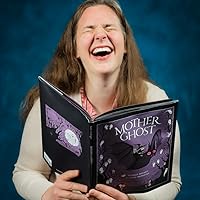
Carroll has written what also could have been titled Me and My Journey with the Church, for it is a semi-autobiographical work of which its central theme is his changing understanding of, and relationship with, the Church, primarily that of its clerical and hierarchical authority-structure.
He is the same age as me and my life-long friend Ken, whom I mentioned because over the years we have discussed our own complex feelings about the Catholic Church and, although we have not journeyed precisely alike, most everything Carroll writes resonates with our own similar experiences.
In this work, he frequently contrasts what “the Church” is with whom Jesus was and with the way he behaved and taught.
To clarify, his book is hardly at all negative about the entire Church, nor about all of its history. Much good has been done by the Church over the centuries, and occasionally even its leaders – including some of its popes – have been saintly figures. Moreover, while he strongly criticizes the current pope for failing to resolve the problem of predator priests as well as shying away from addressing in a positive way the role of women in the Church – both, clearly, “biggies” – he also writes admiringly about how Pope Francis has so often exemplified the simple love and humility that so attracted people to Jesus of Nazareth. When Francis behaves as a pastor in such ways, Carroll lauds him for showing the world what Christians should be. He also notes how hungry “the world” is for this kind of figure.
True pastors are not concerned with “power,” since power always puts some people over others, and that is not Jesus’ way.
He devotes several pages to showing how beautifully Francis has behaved and why he has raised so many hopes among Catholics and non-Catholics alike, even if some of them are now dashed in Carroll’s heart. He writes sympathetically about the severe challenges Francis has had– and continues to encounter – because of the entrenched conservatives within the curia and among the cardinals and bishops, almost all of whom were appointed by the previous very conservative popes.
His primary argument, however, is about the nature of clericalism itself. He shifts back and forth in time, explaining how certain key elements underlying clericalism originated while also illustrating how he has encountered them in his own lifetime.
He argues that what became “the Church” – especially in the centuries after the Emperor Constantine made Christianity the official religion of the Roman Empire – basically “put on” the trappings of empire and monarchy, forgetting in the process that such power/authority roles inevitably subvert humility and servant-service, which is what Jesus called us all to do.
Although women were very prominent in the early decades following Jesus’ death – as both the Gospels and the letters of Paul demonstrate – the all-male hierarchy quickly put in place mechanisms to ensure that they would not become part of the governing structure of the Church.
In fact, many of the teachings of St. Augustine about the essential depravity of human nature and of the subordinate place and nature of women were used to both exclude women from the priesthood and portray them as the weaker sex whose presence was a permanent temptation to sin to men. (Carroll points out that as we know from Augustine’s Confessions that he was doing some projecting from his own experience in which he clearly was the “weaker” one.)
Carroll then shows – again by intermingling the historical past with present reality – how over the centuries the Church moved away from what the 16th century Reformers called the “priesthood of all believers” – a body of equals who shared in the ministry of Jesus’ word and way – to an institution of special people who alone were the key intermediaries between the divine and the rest of humankind.
The fact that priests – and candidates for the priesthood – were told they were special, and that they alone possessed the magical powers to transform bread and wine into the flesh and blood of Jesus, understandably led to an all-male group whose self-interest and self-preservation came to be more important that an open and transparent leadership.
The decision to exclude married men over 1,000 years ago further distanced the leadership as now both laity and women were seen as unworthy to perform this central function. And with the exaltation of the papacy that became especially noticeable in the Middle Ages, the Church hierarchy increasingly found itself arguing with – and even moving against – the secular world and mass culture.
He repeatedly shows that it did not have to turn out this way and, in fact, there have been many opportunities throughout the Church’s 2,000-year history when reformers succeeded – at least for a while. The most recent of these was Vatican II of the 1960s when good ol’ Pope John XXIII (whom Carroll met personally as a young boy) “threw open the doors and windows” of the Church to let in some fresh air. Unfortunately, John’s stomach cancer not only prevented him from living to the end of the Council but from being in a position to begin to implement its major reforms.
For a very brief time fresh air did enter: The Church finally apologized to the Jewish people for centuries of wrong, the liturgy was reformed in many ways to make it closer to and more understandable by the laity, and a hopeful dialogue with the Reform churches begun. But with successive far more conservative popes, the doors and windows were again slammed shut: Pope Paul VI ignored the advice of the special commission established by Pope John to examine the issue of birth control, the broad umbrella of social justice reform was narrowed to, for all practical purposes, the sole issue of abortion, and with the Church’s refusal to consider the role of women and the refusal to see homosexuals as equal members of humanity, the decidedly more progressive major Reform churches moved ahead both theologically and culturally.
Much like Pope Pius IX and his successors in the 19th century, the Church was once again standing against the evolving and more compassionate trends of the lay culture all around it, including on such issues as homosexuality and transgender folks. Pope Benedict, in fact, at one time even talked about the “advantages” of a much smaller Church of “true believers.”
Carroll notes that as one of the consequences of all of this, the number of Catholics – especially young people – is declining, as are the number of priests and nuns. His response has been to impose a period of fasting and abstinence from the Church as a form of penance for the sins of the Church, and he acknowledges that at his age this is likely to remain for the rest of his life. He has not left “the Church of Jesus” but, rather, the Church that men have made.
In this, too, we are alike, although I made a similar decision several years ago.
When the Church teaches what Jesus said and did, I listen and follow. When it enforces and defends what it has made of itself, I refuse.
Christianity will survive in some form because the beauty and truth of what Jesus said and did is compelling. But as to how and through what mechanism(s) this will be done I have no real idea. If Francis cannot change “the Church” – the hierarchical dominance of men – than I cannot imagine what heroic figure can.
NOTE: I have for many years cautioned that when the evangelist “John” writes about the Jews it is important to note that this is his term for the religious leadership of Jesus’ day, and not the Jewish people. Similarly, when I write about “the Church” critically it is not about the people who are Jesus followers but, rather, the all-male hierarchy.