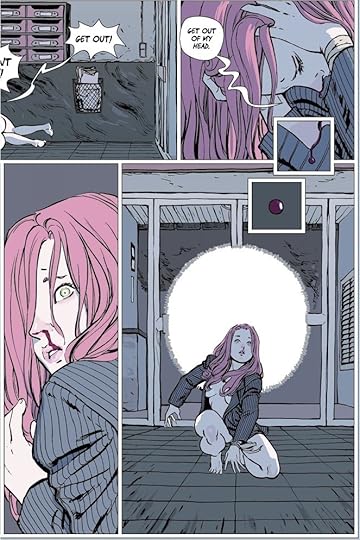
This is a graphic novel about death and suicide… but not in the way you think. It’s about death that can be reversable, when and if the right angels are looking. The dead person here is Catalina, a self-absorbed student who kills herself out of heartbreak. The angel is Karmen, an angel of the facetious, unusual sort. Her capacity for empathy is so great that she leads “her” dead on a journey toward redemption and, believe it or not, back to life! Full of surprises, metaphysics, and beautiful women, this graphic novel is tender and not devoid of humor.
I was first drawn to Karmen because of the artwork. I’m really into this style of comic and graphic novel illustration—it’s beautifully done and immediately caught my eye.
The story itself is multi-layered. The main plot follows an individual whom Karmen is helping, but there’s also a strong subtext involving Karmen and her associates. They all do the same job, but their methods and philosophies differ widely. That tension—who’s right, and who’s been doing it right all along—becomes an important part of the story.
Overall, the graphic novel is a study in morality and the consequences of our actions. It’s speculative in nature, and if you enjoy speculative fiction, you’ll likely find a lot to appreciate here.
That said, it’s also quite graphic in several ways. I wouldn’t recommend going into it blindly—there are some potentially heavy triggers, especially for readers who have experienced trauma. I’d definitely consider this an adults-only read. Some might find it suitable for older teens, but personally, I think it’s better left to mature readers.
Despite the dark and intense elements, I really enjoyed reading Karmen. It’s thought-provoking, visually stunning, and left me reflecting long after I finished.
A strange journey into reincarnation and judgement with a hint of romantic entanglement (that never really get resolved). I thought the first book was interesting in that Karmen is kind of mean to the selfish, suicidal spirit of Cata. This book turns away from the mean-spiritedness and goes in a new direction. It looks at Cata trying to better herself through understanding and seeing memories of other people. It's a sort of ghost, stalker situation that is more than a little awkward.
It ends alright with her using her near-death, spiritual memories to help Maria + Enrique, but the build up to that felt really invasive for the others involved.
There is also a strange subplot that this one is nested into focused on the morality of judgement and spiritual work. Is it the conduit's job to judge and help the newly separated soul or is it simply their job to push them toward the light of reincarnation? That sub-plot frankly feels like a weak way to explain the peculiar abilities of Karmen and what is happening behind the scenes. It felt pretty unnecessary and had no added value for the story.
Una obra con un apartado visual precioso, muy entretenido, fácil de leer, ligero. Y que aborda temas grandísimos como lo son la muerte, el karma, la reencarnación, y las decisiones que tomamos en la vida de una forma bastante amena.