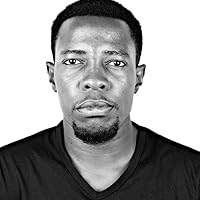
Kwame Nkrumah (21 septembre 1909 à Nkroful, Ghana - 27 avril 1972 à Bucarest, Roumanie)
Il fait ses études en Angleterre et aux États-Unis. En 1945, il participe à l'organisation du Congrès panafricain. Il retourne en Côte-de-l'Or en 1947 et devient secrétaire général du parti indépendantiste, l'UGCC (United Gold Coast Convention), qu'il quitte pour fonder un autre parti : la Convention People's Party (CPP).
Souhaitant l'indépendance, Nkrumah appelle au boycott et à la désobéissance civile, ce qui lui vaut d'être emprisonné par les autorités britanniques jusqu'en 1951.
Cette même année, les autorités britanniques organisent des élections législatives qui sont remportées par le CPP1. Nkrumah, libéré, est alors nommé Premier ministre et collabore étroitement avec les autorités britanniques. Se basant sur la politique d’« Africanisation de l’administration, de panafricanisme et d’anticommunisme », il décide de développer les infrastructures de son pays grâce aux excédents de l’Office de commercialisation du cacao. Ainsi, le domaine de l’éducation et celui de la santé enregistrent de véritables progrès.Après les élections législatives de 1956, le CPP remporte les trois quarts des sièges. Nkrumah, fort de son succès, oblige alors le Royaume-Uni à concéder l’indépendance, qui est proclamée le 6 mars 1957. La Côte-de-l'Or devient ainsi la première colonie à obtenir son indépendance après le Soudan (1956). Ils se marie fin 1957 avec Fathia Rizk, une copte égyptienne. Le jour même de l’indépendance, Nkrumah décide d’abandonner le nom colonial du pays au profit de l'actuel, en hommage à l'Empire du Ghana. Tout en demeurant dans le Commonwealth, le Ghana de Nkrumah devient, le 1er juillet 1960, une république.
Ami personnel du père du panafricanisme, le caribéen George Padmore, Nkrumah organise avec lui les 6e et 7e conférences panafricaines en 1953 à Kumasi et 1958 à Accra, qui est également la première conférence des États Indépendants d'Afrique5.
En plus de revendiquer l’indépendance immédiate de l’Afrique, il prône la formation d’une identité supranationale : les « États-Unis d’Afrique » qui permettrait au continent de devenir l’une des plus grandes forces du monde. Dans ce but, il s’engage en 1958, à poursuivre avec ses homologues africains, « une politique africaine commune ».
En 1958, il est le premier à apporter son soutien à la Guinée indépendante de Ahmed Sékou Touré, en lui accordant un prêt de dix millions de livres sterling. Il tente un premier pas vers une réalisation concrète du panafricanisme en formant le 1er mai 1959 une union avec la Guinée, rejoint le 24 décembre 1960 par le Mali. Mais si cette union n’est jamais dissoute, elle n’est que purement symbolique.
En mars 1963, il participe activement à la rédaction de la charte de l’Organisation de l’unité africaine, même si son idée de créer un gouvernement central africain n’est pas retenue.
L’indépendance du pays n’apporte pas de changement radical au système hérité de l’ancien colonisateur. Si, certes, les infrastructures connaissent un développement, comme la réalisation à Tema d’un grand port en eau profonde relié à la capitale par une autoroute, aucun projet d’industrialisation n’est clairement défini.
De plus, cette modernisation du pays entraîne une détérioration de la situation économique : le déficit public et celui de la balance des paiements s’accroissent et, bien qu’ayant adopté une économie d’inspiration libérale, les investissements étrangers sont quasi-nuls. Et, si jusque-là l’inflation est contenue, en revanche les salaires des planteurs de cacao ne font que régresser depuis 1954, accentuant ainsi la crise. Cet échec économique, imputé à Nkrumah, se transforme en crise politique
Déjà en 1959, Nkrumah restreint la démocratie en emprisonnant certains membres de l’opposition, ou bien en les forçant à l’exil, comme le chef de l’opposition unie Kofi Busia. Mais ce n’est qu’à partir d’octobre 1961, après une tournée de deux mois (juillet-août) dans les pays du bloc de l'Est, que Nkrumah oriente réellement le Ghana vers une dictature.
En effet, en septembre sont organisées des grèves qui, tout en revendiquant des hausses de salaires, manifestent également leur opposition au régime. Nkrumah les réprime impitoyablement, et décide d’arrêter les principaux leaders syndicalistes.
Puis, peu de temps après, il arrête tous les membres parlementaires de l’opposition et censure la presse.
Tandis que la répression sur la droite s’accentue et que les relations avec les pays occidentaux se dégradent1, Nkrumah rejoint, officieusement, le camp socialiste (bien que se déclarant non-aligné), en juillet 1962, en optant pour le marxisme lors de la XIe conférence du CPP. Sous la doctrine du « consciencisme » (ou « nkrumahisme »), une économie planifiée est mise en place, qui va être marquée par un gaspillage des ressources naturelles, un accroissement de la corruption9, une montée du chômage et la faillite économique du ...
Kwame Nkrumah PC was a Ghanaian politician and revolutionary. He was the first prime minister and president of Ghana, having led it to independence from Britain in 1957. An influential advocate of Pan-Africanism, Nkrumah was a founding member of the Organization of African Unity and winner of the Lenin Peace Prize in 1962.
This book along with The Autobiography of Malcolm X are making me rethink my understanding of autobiographies. Both books are very much about activism and had less about the lives of the men than I had anticipated. But maybe when you're in as deep as they were, your activism cannot be separated from your person. I don't know...
Kwame Nkrumah, leader of the Ghana independence movement, endured a life of hardship in his quest for African liberation. In “The Autobiography of Kwame Nkrumah” a personal account of his life is given chronologically, beginning with his birth in 1909 and finishing with the year of Ghana’s independence, 1957. Essentially the book serves as a platform for Nkrumah to explain how he went about achieving independence for the Gold Coast. Repeatedly Nkrumah stresses that people are only truly free when they have the ability to control their own lives. The book is important in that it allows the reader to experience firsthand the struggle against colonialism by reliving Nkrumah’s fascinating life. Indeed, by the end of the book the reader wholeheartedly supports Nkrumah and his fight for freedom. The book begins with Nkrumah’s birth and several chapters are spent describing his happy childhood. He takes care in describing the culture he grew up in and the people he encountered along the way. He soon takes an interest in academics and becomes a scholar and teacher in Achimota. His life then becomes more intense when he travels to the United States to study at Lincoln University. He works hard, lives on little money, becomes an excellent student and later the “most outstanding professor of the year”. He eventually moves to London to pursue further education but becomes entangled with politics and decides to return home in order to fight for freedom in the Gold Coast. His beliefs are related to many other leaders in Africa as he argues, “Unless territorial freedom was ultimately linked up with the Pan African movement for the liberation of the whole African continent, there would be no hope of freedom and equality for the African and for the people of African descent in any part of the world.” (Page 36) The second half of the book is spent on his political struggles in the Gold Coast. He rallies the people together and in 1949 forms his own political party, “The Convention People’s Party”. He summarizes his Party’s beliefs, “No race, no people, no nation, can exist freely and be respected at home and abroad without political freedom.” (page vii) Nkrumah naturally encounters resistance to these ideas, both from the British and from people within the Gold Coast. He is imprisoned by this opposition but eventually the will of the people prevails and he is released to serve as Prime Minister. The autobiography comes to a conclusion when he finally secures an independence date for Ghana; March 6, 1957. Throughout the book, Nkrumah is unfailing in his belief in himself and the people he fights for, “Kwame Nkrumah would never fail them.” (page 63) He writes his autobiography with the intention of inspiring other likeminded Africans to join in the struggle against imperialism. As he describes in the introduction, “If any way it helps the cause of freedom it will have served its purpose.” His unfailing resolution that his country and Africa must be liberated is courageous sentiment and goes a long way in securing the support of the reader. The style of the autobiography is important in the overall message as Nkrumah’s writing varies from chapter to chapter. At times, particularly in the beginning, it is written in a simplistic memoir format. Yet later chapters include detailed writings and ideas expressed by the author. Still even more interesting is near the end several chapters are speeches that Nkrumah gave. By varying the style and format of his life story, the author not only keeps the reader’s attention but illustrates the transformation that he underwent; changing from a simple village boy into one of Africa’s greatest leaders. The language at times can be complex but for the most part is easily understood. This makes his autobiography accessible to a much greater number of Africans, Nkrumah’s clear target audience. The organization of the book is also important as he structures it chronologically which makes it easy to understand. Even those who have no background knowledge of Ghanaian independence or Nkrumah can follow the text and feel connected to him. In this way, the author has clearly achieved his main goal of relating to the “people” and inspiring ideas of freedom and independence. However, an autobiography is intrinsically biased as the reader is only privileged to information that the author is willing to divulge. In fact, Nkrumah can, at times, take on a defensive tone. Early on in the book he says, “Unfortunately, the fact that I enjoy women’s company has led to a great deal of misunderstanding from those who look at my life from outside.” (page 34) Later on he is even more self-protective, “In fact, one of my numerous so-called crimes, according to my political opponents, is that I have introduced the party system into the country.” (page 57) The reader cannot help but wonder what the opponents would say in response to these comments. While Nkrumah is a likeable character, he is also one that cannot be completely trusted as his motivations for writing the book are clearly to gain more support. This also brings us to a question of accuracy. Nkrumah appears to have an astonishing memory, citing conversations and ideas he had when he was just a child. At times this accuracy is unnerving and frankly unbelievable. Closer to the end of his writings, he appears paranoid. “I was quite convinced that the affair was a calculated attempt to bring my government into disrepute by suggesting that bribery and corruption were rife among those in power.” (Page 214) Later on he admits that corruption did occur with some representatives but he glosses over this fact in favour of accusing the opposition of conspiring against him. This paranoia provides clues into what occurred after independence. While he still stands for the same values of freeing Africa from colonialism, he emerges as a self-important ruler who knows what is best for all people. This attitude thus makes it easier for the reader to connect the amazing Nkrumah in the autobiography with the “dictator” often described in history books. Overall this book is a must read for anyone studying African liberation movements and the leaders of said movements. It is informative, interesting, and easy to read. Depth and insight is provided into the historical factors that led to Ghana’s independence as well as the interesting figure, Kwame Nkrumah. Although parts of the book must be questioned for validity and truth, generally the book can be used as a manifesto for those on the same quest as Nkrumah, “Freedom, however, had never been handed over to any colonial country on a silver platter, it had been won only after bitter and vigorous struggles.” (page 92) It is this struggle which connects the reader to Nkrumah and despite misgivings, one cannot help but cheer Nkrumah on as he announces the newly independent state of Ghana on March 6, 1957.
This entire review has been hidden because of spoilers.
What fine hopes for the future of Ghana and Africa in this early postcolonial autobiography of Ghana's first prime minister and president. And what a disaster was to follow, with Nkrumah sharing much of the blame. The title itself forewarns the reader of the tragedy to come: Nkrumah identifies himself with Ghana. |That was the crux of the problem.
Kwame Nkrumah's autobiography is far from the boring book I had expected it to be. It was one of my university text books. I am no Pan African-ist but the book certainly makes you find Nkrumah intriguing. It even warns you that in no way can you know the man by reading his autobiography.
Čítal som kvalitný český preklad tejto fascinujúcej autobiografie s názvom "Boj o zlaté pobřeží", ktorá vyšla v roku 1958. Fantastický storytelling významného Pan-Afrikanistu a prvého prezidenta Ghany, bojovníka za oslobodenie Zlatého pobrežia od vlády britského impéria. Kwame Nkrumah nás prevádza svojim životom od detstva, cez študentské časy, jeho politické pôsobenie s cieľom oslobodiť Ghanu, cez väznenie až po slávnostné momenty vyhlásenia nezávislosti, pričom veľmi cennými časťami sú napríklad aj tie, ako trávi dovolenku na holandskej nákladnej lodi, či ako odcestoval do Ameriky, aby mu bol udelený čestný doktorát z Lincolnovej univerzity, kde pred tým študoval.
Celé je to dobovo mimoriadne zaujímavé, a dokonca aj nudné pasáže o zostavovaní vlády sú napísané tak, že to človeka proste baví.
I was reminded of reading Salvador Allende's "Chile's Road to Socialism" with this. It's a lot less "manifesto" and more about the tedious actions of how to successfully run a government once you gain power. Nkrumah tried to diplomatically gain independence for Ghana from the U.K., and the shocking thing is; it worked. Even while he was in prison, he had enough public support in order to be elected due in part to his level approach and insistence of a non-violent revolution. This is an encouraging book in the sense that we see that change is possible, and that it can be done through resolutions and self-government. But it's also depressing to think about how Nkrumah's reign was upended by a U.S. powered coup, when the country had so much hope when treated equally under their own governance.
Amazing, (I forgot to log this in so writing my review as of now) Kwame Nkrumah is a national forefather of African history and his autobiography is nothing short of the brilliance of a man striving to improve the country he loves so dearly. From the intricacies of moving abroad for education and returning, to going to jail and facing so much opposition from his own people and the British empire. To still being triumphant in leading the Ghanaian people to its independence, is truly an inspiring and incredible story. This is hands down the best autobiography i have read and it is a blessing to read the man he revitalised the african people.
A great book for all Africans, especially youths...it tells a story of our humble beginnings as a nation to where we are now, and offers an inside look on the struggles that made Nkrumah a formidable leader.. It is a must read for all
This work and its author are referenced extensively in MLK’s “The Birth of a Nation Speech,” in which he says “Ghana tells us that the forces of the universe are on the side of justice.”
Nkrumah learning who the friends of the Ghanaian people are, and who are their enemies, in real time. Fascinating to see what made this great African son the revolutionary he was. Forward, ever.
This story was inspiring! I'm happy to have read it with such a brilliant group of PanAfricanist. May we all live to see our people's get free and our lands liberation.