Jump to ratings and reviews
Rate this book

The Hero's Way: Walking with Garibaldi from Rome to Ravenna

Rate this book
In the summer of 1849, Giuseppe Garibaldi, Italy’s legendary revolutionary, was finally forced to abandon his defense of Rome. He and his men had held the besieged city for four long months, but now it was clear that only surrender would prevent slaughter and destruction at the hands of a huge French army.

Against all odds, Garibaldi was determined to turn defeat into moral victory. On the evening of July 2, riding alongside his pregnant wife, Anita, he led 4,000 hastily assembled men to continue the struggle for national independence elsewhere. Hounded by both French and Austrian armies, the garibaldini marched hundreds of miles across the Appenines, Italy’s mountainous spine, and after two months of skirmishes and adventures arrived in Ravenna with just 250 survivors.

Best-selling author Tim Parks, together with his partner Eleonora, set out in the blazing summer of 2019 to follow Garibaldi and Anita’s arduous journey through the heart of Italy. In The Hero’s Way he delivers a superb travelogue that captures Garibaldi’s determination, creativity, reckless courage, and profound belief. And he provides a fascinating portrait of Italy then and now, filled with unforgettable observations of Italian life and landscape, politics, and people.

384 pages, Hardcover

First published January 1, 2021

80 people are currently reading
2074 people want to read

About the author

Tim Parks

121 books583 followers


Born in Manchester in 1954, Tim Parks grew up in London and studied at Cambridge and Harvard. In 1981 he moved to Italy where he has lived ever since, raising a family of three children. He has written fourteen novels including Europa (shortlisted for the Booker prize), Destiny, Cleaver, and most recently In Extremis.
During the nineties he wrote two, personal and highly popular accounts of his life in northern Italy, Italian Neighbours and An Italian Education. These were complemented in 2002 by A Season with Verona, a grand overview of Italian life as seen through the passion of football. Other non-fiction works include a history of the Medici bank in 15th century Florence, Medici Money and a memoir on health, illness and meditation, Teach Us to Sit Still. In 2013 Tim published his most recent non-fiction work on Italy, Italian Ways, on and off the rails from Milan to Palermo.
Aside from his own writing, Tim has translated works by Moravia, Calvino, Calasso, Machiavelli and Leopardi; his critical book, Translating Style is considered a classic in its field. He is presently working on a translation of Cesare Pavese's masterpiece, The Moon and the Bonfires.
A regular contributor to the New York Review of Books and the London Review of Books, his many essays are collected in Hell and Back, The Fighter, A Literary Tour of Italy, and Life and Work.
Over the last five years he has been publishing a series of blogs on writing, reading, translation and the like in the New York Review online. These have recently been collected in Where I am Reading From and Pen in Hand.

Ratings & Reviews

What do you think?
Rate this book

Friends & Following

Create a free account to discover what your friends think of this book!

Community Reviews

5 stars
100 (18%)
4 stars
231 (43%)
3 stars
150 (28%)
2 stars
43 (8%)
1 star
6 (1%)
Displaying 1 - 30 of 89 reviews
Profile Image for TBV (on hiatus).
307 reviews70 followers
August 7, 2021
“He had forty-eight hours to prepare for the journey. We’ve been thinking about it for a year and more. Four thousand infantry had to be organized. Eight hundred cavalry. Mules, carts, munitions, food, medical services. A cannon. He was disappointed, having hoped for 10,000. We always knew it would be just us two, with our backpacks.”

At the age of 64 and upon retirement from a university in Milan, Tim Parks and his partner Eleonora undertake an adventurous project, namely to walk from Rome to Ravenna following the route taken by Giuseppe Garibaldi in the middle of the nineteenth century. Garibaldi’s Brazilian wife Anita* who was heavily pregnant at the time insisted on being with Garibaldi, following him on horseback, right up to her death. This is what Garibaldi said to a crowd in St Peter’s Square prior to leaving Rome:
“‘The fortune that has abandoned us today will smile on us tomorrow. I am going out from Rome. Anyone wishing to fight on against the foreigner should come with me. I offer neither pay, nor quarters, nor food; I offer hunger, thirst, forced marches and all the perils of war. Let him who loves his country in his heart and not just with his lips, follow me.’”


Parks explains why Garibaldi was there, and why he and his followers were leaving Rome. As he and Eleonora travel, Parks enthusiastically recounts where, when and why Garibaldi and his garibaldini did what. The wily Garibaldi was very adept at misleading and evading his enemies.

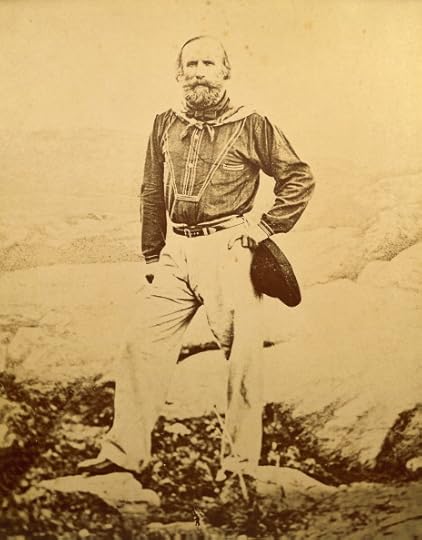
Giuseppe Garibaldi on Caprera....jpg

From the outset Parks advises the reader to make use of Google Maps in order to get the most out of this book, as he only provides one simple map. Taking his sound advice, I followed them on their more than 600 kilometre walk. On my various trips to Italy I spent time in several but by no means all of the towns and villages visited by Parks and Eleonora. I enjoyed ‘revisiting’ these places and learning about their relevance to Garibaldi. I zoomed in on places, looked at photos on the internet and gazed at my own photos.

As Tim and Eleonora travel from place to place, Parks compares the accounts of various contemporaries of Garibaldi, questions some of the contradictions, and attempts to solve any mysteries. The book is full of interesting anecdotes and facts. Parks is passionate about the history that he tells. These modern day travellers also share their own travel experience, and provide local colour. For safety sake they don’t walk along busy roads and motorways, but use footpaths where possible, and if those aren’t available they create their own paths to reach their destinations. At times they are misled by their apps and have to retrace their footsteps and rethink their route. On a couple of occasions they clamber over fences to get to where they want to be. Fortunately they stop for some good meals. They also chat to locals and encounter several people who believe, contrary to all evidence, that this history is but a myth. Their month long journey takes place during July and August, the hottest time of the year, in order to follow as closely as possible in Garibaldi’s footsteps.

As Parks writes the final pages of this book, they are in COVID19 lockdown in Milan, reflecting on their freedom during their long, long walk…

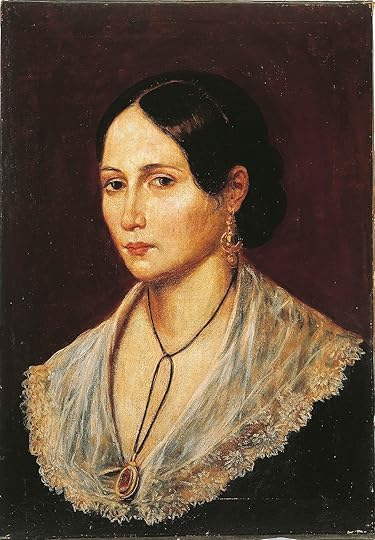
* Anita Ribeira dé Silva di Merinos
Anita Garibaldi - 1839.jpg

###
This book kept my attention to the very last page. There is much to quote, but I’ll refrain from doing so. Happy reading!
Profile Image for Boudewijn.
848 reviews206 followers
May 11, 2022
What is it with the English that makes them write such good travel stories? I knew Bill Bryson (although technically an American, I know) with his The Road to Little Dribbling and Raynor Winn's The Salt Path and now there is Tim Parks's The Hero's Way in which Tim, as an Italian Englishman, follows in the footsteps of Garibaldi.

The hike is not entirely without danger - there is simply no extensive hiking network in Italy. In Italy the pavements stop as soon as you leave the city and what follows are exciting journeys through tunnels as one truck after the other thunders past. Fortunately, Tim soon moves into the mountains, with its wonderful nature and babbling brooks. There they find peace and there is an infectious story about mountain paths, thornbushes and small rivers, with at the end of the day a description of a lovely Italian mountain village with its inevitable Piazza di Garibaldi and Italian espresso ... so as an Englishman Tim apparently has been fully integrated in the Italian lifestyle.

Soon Tim and his Italian wife reveal themselves as real Garibaldi's and after the first blisters have been pierced, the momentum picks up. By quoting from some of the diaries of Garibaldi and his companions, we get a good picture of the hardships of Garibaldi, chased by the Austrians. Garibaldi manages to stay out of their hands through trickery and deceit.

As a reader you get a good idea of ​​the region through which Tim and his wife are walking - nature but also the depopulation of the various mountain villages where the empty houses are quickly bought up by foreigners. All in all, it is a catchy travelogue and - if you ever decide to go on holiday in Italy - definitely recommended to read in preparation for your trip.

Read in Dutch
Profile Image for Becky.
1,368 reviews57 followers
June 21, 2021
So I will make no bones about it, I am missing Italy like crazy right now. This is the longest I have gone without visiting in about a decade and the country of art, of sunshine, of gelato and gondole is calling to me. I was always going to love this book because of this.
Parks' style is probably not for everyone; as a long time immigrant to Italy he has both an outsider's and local's perspective allowing him to recognise but understand some of the eccentricities of his adopted nation and its people. His books are always personal, in that they make no bones about being his opinion and his understanding of a place and of events. He doesn't claim to be presenting an unbiased definitive guide either to Garibaldi or to the countryside that formed the backdrop to the 1849 retreat. What you get is a glimpse into the events that would form a good starting point for anyone wanting to investigate further, a sort-of travel guide for anyone wanting to visit the areas discussed, and a brief, and often witty look at the author and his relationship with his partner and his adopted home.
I highly recommend reading this with a glass of prosecco or a negroni in hand, ideally in the sunshine.
Profile Image for Jon.
216 reviews1 follower
March 24, 2021
I hate to provide a poor review when this one is one of the first posted for this book, but I did not enjoy this book, despite it being one of my favorite genres, travel/history writing. The best part of this book is that the author does a good job researching and proving details about Garibaldi's Italian campaigns, I feel like I only came with tidbits about Garibaldi and not a greater understanding of his motivations. Despite this lack of overall history, I feel like I know very little about the couple walking the trail of Garbaldi and the people they come across. Stories that aren't funny or enlightening are given the same weight as the much more plentiful mundane. The author also states at the beginning that since maps and pictures are expensive, to look up your own maps for each chapter, and while I understand the drive towards thrift, a travel/adventure book without pictures and maps is hard to support.
Profile Image for Ellen.
1,207 reviews7 followers
October 10, 2022
Really enjoyed this! I knew very little about Garibaldi. I know a lot more now! Easy way to learn history.
36 reviews1 follower
February 11, 2022
Probably 3.5 stars if Goodreads allowed that. I learned a lot about Garibaldi and the Risorgimento. There are so many books on ancient Rome, the popes, the Borgias, the Renaissance. So it's great to have the opportunity to learn about the history of the last 200 years when Italy actually became a country.

That said, the last third of the book dragged for me and seemed repetitive. As the actual walk that Parks did was reaching the end, I feel he realized that the details of the hike itself were becoming repetitive and so countered with more details of the historical march. And my interest in knowing exactly which ridge the army occupied or the detailed whereabouts of enemy troops waned.

One error in the overall construction of the book may have been the decision to try and do the hike in the same number of days as Garibaldi took to do his famous retreat. There are some interesting people and places that Parks encounters along the way but it would have been nice to explore those a bit more. There are some big topics just hinted at like the resentment to outsiders/immigrants, the mixed feelings about the fascist past, the smothering of Italian culture in some areas by tourists and wealthy outsiders, etc that would be great to have more light shone on them.
Profile Image for Steve Eaton.
Author 2 books1 follower
April 2, 2022
A marvelous read. The novelist, translator and essayist Tim Parks and his partner retrace on foot the grueling, fighting retreat conducted against all odds in 1849 by Giuseppe Garibaldi along with his pregnant wife Anita, from Rome to Ravenna, after Garibaldi's forces were overwhelmed and defeated in their attempt to sustain the young Roman republic. This is no lake-district ramble for Parks and Eleonora. Though there are stretches of sublime beauty, the "way" of the title also consists of muddy, thorny gullies, terrifying highway shoulders, abandoned (possibly) military proving grounds and the like. Along the way Parks describes Garibaldi's progress, including miraculous (or ingenious) escapes from entrapment by French, Austrian and Bourbon armies, and the support and resistance he met along the way. His wife Anita is a fascinating figure, as well as the priest Ugo Bassi and many others. Parks also tells us about the towns they stay in along the way, and how the memory of Garibaldi's passage has become exaggerated, neglected, or distorted over time. The combination of scholarship and personal memoir is what makes this book a treat.
Profile Image for Saadia.
68 reviews1 follower
March 29, 2021
I read this book with a lot of anticipation. I love Italy, I love hiking, trails and history. The premise of the book seemed very promising: the author and his wife tracing the footsteps of Garibadli and his men.

It’s a fascinating subject if you’re into that particular topic. Turned out that my interest in Italy or hiking or history wasn’t enough to keep me interested in this book.

I do wish there were more visuals though I got the cheekiness of the author suggesting we open up Google maps.

I think if you don’t have an interest in Garibaldi and the Italian unification to begin with, this book will do little to lift your enthusiasm on the subject. However, if said topics are out your alley, then this book will be also!
Profile Image for Sharon Lee.
326 reviews5 followers
August 12, 2021
A brilliant and intriguing concept for a book. I thoroughly enjoyed on and off the railways. Sadly this book oscillates between a boring recount of Garibaldis trek to the author’s moaning and groaning about traffic; tourists; sore feet etc.
I felt like I was being shown a friend’s excruciating slideshow of their holiday.
Profile Image for Tim Martin.
873 reviews50 followers
April 30, 2025
Vividly written and well researched travelogue and historical account. The historical account is about the Retreat from Rome, the story of how in July and August 1849 Guiseppe Garibaldi and his band of 4,000 men, the garibaldini, having failed to defend the short-lived Roman Republic from the French, instead of surrendering, sought instead to march across 400 miles of enemy-occupied lands to Venice, marching across Umbria, Tuscany, over the Apennines, through San Marino, along the way dealing with first French, then Austrian forces, both superior in numbers and equipment, Italian spies and traitors, the challenges of finding food, water, shelter, trying to evade capture and betrayal, fighting where they could, a struggle made all the more awful for Garibaldi as his beloved Anita, his wife, mother of his children, and a fellow revolutionary herself, was declining rapidly in health. The travelogue portion is author Tim Parks and his partner Eleonora retracing this path across the Italian countryside on foot 170 years later, trying where possible to walk where the garibaldini marched, stay where they stayed, see the sights they saw, all over the course of 28 days in July and August 2019, covering 630 kilometers (391 miles), though there are a few days at the very end of the book where the two are no longer walking and following up on Garibaldi’s and Anita’s story after the Retreat.

Both aspects, which take place side by side, are vividly written, the author putting the reader both in the shoes of Garibaldi and the garibaldini but also the trekking shoes of himself and Elenora in 2019, giving the reader a great feel of the terrain, the climate, the heat, the flora, a view of the various borgo ( fortified medieval town or village, generally on a hilltop) both as the desperate garibaldini encountered them, needing food, water, forage for the mounts, worried about spies for the Austrians, and as Tim and Eleonora encountered them, needing a place to rest, eat, and hoping to find the connection the place had with Garibaldi. I enjoyed the adventurous, you-are-there aspects of both, whether it is Garibaldi being worried about being caught by French or Austrian forces, finding enough food for his force, whether or not the borgo up ahead is a home to patriots or will shut their gates to them and tell the Austrians everything, or Tim and Eleonora worried about being misdirected by a map app or finding a safe place to walk from speeding cars or injuries or whether or not they could even get their water bottles filled at various points along the journey.

The reader gets enough to understand the importance of Garibaldi if one isn’t already familiar with him, though the focus is largely on the retreat, which is extremely thoroughly never dryly covered. Garibaldi is the star, though others shine through a lot, such as Anita, aide-de-camp, Bavarian-born Gustav von Hoffstetter, and priest and poet Ugo Bassi. The author discussed along the way how various Italians view the Retreat and Garibaldi in general, including later historical revisionism and even conspiracy theories and with a scholar’s skill discussed the differing accounts of the Retreat and why those accounts differed.

Even if the reader is less interested in this very specific event in Italian history, it is an enjoyable hiking travelogue of Italy, vividly describing the countryside, terrain, the places the author and Eleonora stayed, historic sites they visited, food they had, and challenges they faced on their journey including weather, steep terrain, traffic, dogs, and lack of water.
Profile Image for Gerbrand.
435 reviews16 followers
January 15, 2023
Gevreesd door zijn vijanden, bewonderd door het volk, bleef Garibaldi hier met zijn moedige manschappen uitrusten op 3 juli 1849.

Dit soort gedenkstenen kom je regelmatig tegen op de route van Rome naar Cesenatico ten noorden van Rimini. In 28 dagen legde Giuseppe Garibaldi met zo’n 4000 manschappen (de Garibaldini) ruim 600 kilometer af. Een vlucht vanuit Rome waar de Fransen de Kerkelijke Staat verdedigden en de revolutionairen onder leiding van Garibaldi hadden verslagen.

Tim Parks met zijn partner Eleonora hebben elke dag hetzelfde stuk gelopen. Overigens kwamen ze niet alleen gedenkstenen tegen die aan Garibaldi herinneren. In elke stad en dorp kom je een Via Garibaldi of Piazza Garibaldi tegen!

Parks vermengd het verslag van zijn wandeltocht met historische feiten. Vaak puttend uit boeken van Hoffstetter en Ruggeri, 2 officieren die meeliepen tijdens die tocht in 1849. Maar ook wordt er geciteerd uit de memoires van Garibaldi zelf en verslagen van Oostenrijkse bevelhebbers. Want in het noorden op weg naar Venetië werden ze achtervolgd door de Oostenrijkers. Wat volgt is een spannende ontknoping.

De schrijver adviseert aan het begin om via Google hem te volgen. Een aanvullende website met foto’s zou beter zijn geweest.
Profile Image for Phillip Lloyd.
94 reviews3 followers
November 26, 2023
This book isn't just the best I've read this Year, its the best I've read in Years, with possibly one or two exceptions.

I simply didn't want this book/journey to end. It is a superb concept for a book and brings to attention part of the life of Giuseppe Garilbaldi.

I have read one of Tim Parks books previously (A Season with Verona) many years ago and was impressed.

The Heros Way is beautifully written, has humour and sadness but its always packed with history and thought provoking statements.

It does justice to the story of the retreat of Garibaldi and his followers. It has many different themes and is interlaced with Parks and his partners own journey to retrace their steps. Its also the creation of a new walk.

There are so many interesting characters, that have been well described and brought back to live not just Garilbaldi, there is Anita, Hoffsetter, Ruggeri, Bassi and Leggero and more. Each with they own interesting story.

If you have an interest in Italy, History, Politics, National Identity, Travelogues then you will likely enjoy this.
In Parks own words, This story will run and run.
216 reviews7 followers
December 31, 2021
Het idee van Tim Parks om de historische trip van Guiseppe Garibaldi en trawanten (Rome - Cesenatico van 2 juli 1849 - 1 augustus 1849) over te doen met zijn vrouw Eleonora (25 juli - 20 augustus 2019) over te doen is een beloftevol concept. Omgezet in een boek levert het een fraaie mix op van geschiedenis en reisdagboek. Om één of andere reden bekoort het eindresultaat me toch minder dan verwacht. Ik kan niet verklaren waarom, al heb ik er op momenten van genoten en ook wel van geleerd.
Profile Image for Eric Magielse.
25 reviews
July 27, 2023
Delightful travel writing, as the steps of Garibaldi are retraced during the Retreat from Rome, across the Apennines, in 1849, interspersed with reflections on today's Italy.
Profile Image for Kellie.
26 reviews2 followers
November 28, 2022
I’ve loved other books by this author. In this book I just didn’t find him likable at all and I wasn’t interested in reading more.
Profile Image for Ajk.
305 reviews20 followers
December 26, 2021
I'm not sure if this was just not very well-edited or what. It's definitely what it says on the package: an Englishman in Italy, doing a travelogue of Garibaldi's Retreat from Rome.

I think what bugged me the most was how incurious the book was. For a couple walking through rural Italy, he only glances on issues both contemporary (immigration, the rise/transformation of Salvini's Lega, post-industrial urban life) and Garibaldi (keeping 2,000 dudes together through defeat, the pros and cons of nationalism). So we get these glancing thoughts about "The EU" or "North Africans" without any actual context. Why is Tuscany a tourism hub and the other provinces aren't? What makes Italy unique? These are not questions answered in the book.

I'm going to choose to believe that Parks is thoughtful but trying hard not to make his book political. But instead it just often comes off as glib. The EU is wasteful spending to keep the provinces connected, and an awful lot like the Austrian Empire. Salvini is gauche, but whew, those immigrants... So instead of a travelogue that really gets into what makes these places and Garibaldi unique, it's just, walking through some pretty places while reading about history.

I realize this comes off salty, which is a bummer because I did learn a lot. I knew very little about Garibaldi coming into the book, and I really came away with an appreciation of how complex he was and the uneasy allies made through the course of the 19th century. The book does give a glimpse of some rocky terrain without really getting into it.

Which, hey, fair enough. Not everything needs to be a treatise. I think I was just offended and at times bored by the sameness with which all these borgi are treated. I could've stood to learn more about why some were completely empty and some were bustling. Why factories were here and tourists were there. There's a really interesting story, I think, of Garibaldi's unification, Mussolini's Italy, and Salvini's xenophobia that can be done without being teleological about Garibaldi's belief system while still showing how good intentions can lead to some real world-historic bummers. But this book doesn't go there. Still, you can't help but wonder whether Garibaldi's unification wasn't net-good for a lot of these little towns. Especially when San Marino is held up as this glorious place of refuge.

This isn't to be skeptical of Garibaldi, or Parks, or even the entire message of the book. Just that I think it ended up reading a bit more like a mystery book than a travelogue because of its incuriousity. Parks mentions that it was published during Covid and I wonder if it wasn't rushed before another round of deep editing could have made it super-interesting. Instead it's just kind of a breezy read.
100 reviews
February 18, 2022
The Hero’s Way, Walking With Garibaldi From Rome To Ravenna
Tim Parks, 2021
Many people don’t realize that the country of Italy is a fairly recent development. Prior to 1860 What now comprises the country of Italy was a conglomeration of what was called the Papal States, which stretched to Bologna and east to Ancona on the Adriatic, the Bourbon Kingdom of Naples, Sicily, Piedmont in the north, numerous city states and the northern most regions ruled by the Hapsburg Austrian Hungry empire. In 1848 there was change in the air. A Roman Republic was declared that encompassed the former Papal States and the Pope was expelled from Rome. The Pope pleads to France, the Kingdom of Naples and the Hapsburgs to help reinstate him in his former position. In Rome the new president of the Roman Republic, Giuseppe Mazzini, enlists the help of a recently returned to Italy, South American revolutionary, Guiseppe Garibaldi, and his rag tag recently recruited army of 4000 troops and 800 cavalries to defend the city. For 4 months Garibaldi’s army, stationed on Janiculum hill, on the west bank of the Tiber, fight a desperate battle to repel 30,000 French troops. At the end of June, the situation reaches a desperate stage, and it becomes clear if Garibaldi’s army is to survive it must escape the city and move to the countryside. Garibaldi leaves the city on July 3, 1849, with the goal of crossing the Italian peninsula and of reinforcing the defense of Venice which is under attack by Austrian forces. This book is the story of Garibaldi’s month-long journey across Italy while under constant threat and pursuit by three armies.
How to tell this story? Tim Parks and his wife decide to follow, on foot, the same path Garibaldi took 170 years ago, to discover the hardships Garibaldi and his army faced during the same sweltering month of July and to discover something of the character of this charismatic figure who played such a pivotal role in the creation of modern Italy. Fortunately, there exists a detailed 500-page daily journal kept by one of his top commanders, a Swiss general Hofstadter. As it turns out this is an extremely arduous path as Tim Parks and his wife will find out and describe, first, because most of the peninsula’s interior is bisected by a rocky and rugged mountain range, the Apennines. Secondly, Garibaldi could not follow the more gently sloped river valleys because of the possibility of attack by pursuing hostile forces and had to mostly confine his path to the mountains and to bivouac in more easily defended ancient hilltop towns. Thirdly, Garibaldi could not follow a straight path because he was constantly trying to confuse his pursuers. He would tell villagers he was going in a certain direction, leave town in that direction and then make a diversion or double back in a different direction and simultaneously he would send out cavalry in multiple directions to further confuse. A 250-mile trek across Italy is instead turned into an almost 400-mile trek. This is an arduous trip for two people who have the luxury of staying at Inns and Band Bs, eating at tavernes and ristorante. Garibaldi had an army of 4800 men and 800 horses to provision and keep motivated. He had to live off the land and the rural population who luckily for him were mostly sympathetic to his cause. He was accompanied by his wife Anita who was 6 months pregnant. He had no money to pay his troops, the only incentive he had was to instill in his troops, the cause, to be a party in the pursuit of Italian independence and freedom.
This is a travel book about a part of Italy that most Tourists will never see. They might stop in some of the famous hilltop towns such as Orvieto, Arezzo, Montepulciano or San Marino but never in the small, forgotten and ancient hilltop towns such as Ficule, Foiano Della Chianna or Citerna, to name a few. Many of these are dying towns, the young people having left for opportunity elsewhere, the only remaining residents, the elderly. But these towns do remember Garibaldi. Almost each one has a Via de Garibaldi, signs such as Garibaldi slept here, Garibaldi ate here or heroic statues in the town squares with Garibaldi boldly strutting forth on his steed. What engenders this type of hero worship maybe akin to George Washington in this country? I believe Parks in his journey has come across some of the reasons. There is the romantic, dashing image of Garibaldi with his yellow South American poncho, the quail feather in his black cap and red sash, his troops with their red shirts and yellow sashes. There is the sheer unrelenting tenacity of the man to follow his vision undeterred by the most daunting obstacles and hardships. There is the ability of the man to instill such loyalty, dedication and admiration, to follow him regardless of danger or hardship, not only among his staff and troops but across the populous both rural and urban. I guess in Garibaldi there is a timeless example of what is required to upend an entrenched status quo, then and now. The Pope and the Vatican had quite a sweet deal in being able to access the wealth of a large part of the Italian countryside and cities. The Bourbon Kings and the Aristocracy in Naples and Sicily, the Austrian supported Grand Dukes of Florence and Milan all were protecting entrenched wealth and power and were willing to fight and kill for it. They saw Garibaldi as an existential threat and were willing to go to extreme lengths to eliminate him.
Garibaldi did not give up. Even after his disastrous retreat across Italy in 1849, after ten years of exile on the Sardinian Isle of Catra, he recruited a new plebian army, fought with King Victor Emanuel of Piedmont to defeat the Austrian Army in northern Italy, then took a small 1000-man army to Sicily, defeated the Bourbon army there and freed the population from their aristocratic domination. Together he with Cavour, the foreign minister of Piedmont, in 1861, reached an agreement to add Piedmont to the country of Italy and create a constitutional monarchy with Victor Emmanuel as titular leader. The question arises: would the Italy of today have been possible without Garibaldi? Possibly not.
In a sense this book is an ode to slow travel. When one travels on the autostrada or the Frecciarossa, fast train, the Italian countryside one experiences is a blur. When one travels by foot across the same terrain, despite the discomforts, one experiences the earth, the vistas, the smells, the people, the feeling of being in a unique place. As the author relates about his experience: “For the garibaldini it had been a month of disappointments, a dream defeated, a terrible reckoning; for us we both agreed, despite the discomforts and fatigue, the most exhilarating time of our seven years together. But we could not have experienced this without them. Our happiness drew nourishment from their struggles. Behind both adventures albeit in quite different measures, lay the thrill of freedom. There is no suggestion in the comments of the survivors that they regretted their choices. They had been themselves, fearlessly. We discovered new selves, following them.”
If you love travel, if you love the country of Italy, go for it, go back to Italy. JACK
Profile Image for Ang.
1,841 reviews53 followers
November 16, 2021
This was more a history of Garibaldi's...journey than a book about Italy.
4 reviews
July 15, 2021
Today i completed Tim parks ''The hero's way- walking with Garibaldi from Rome to Ravenna', a non fiction book that recalls jenny diski's ''Skating to antarctica'', as a blend of travelogue, memoir, reflections and observation . Embarking on a walking journey tracing garibaldi's footsteps across 27 days the book superimposes past and present by examining overlaps and divergences. Pre unification italy, caught in the interstices of religio political control and foreign power, chiefly austria and france, with modern italy, part of the EU, aswarm with tourists or immigrants who largely do menial jobs and an overlay of technology and urban modernity beneath which historical, cultural traces remain inscribed .

This arduous , painstaking journey undergone by Tim parks and his partner Eleonora , albeit with all the appurtenances of modern technology- apps and google maps , with plentiful food and nourishment, contrasts with garibaldi's valour and fighting spirit. Traversing Tivoli , vacone, todi, tuscany , cetona , citerna , san marino and various other landmarks navigated by Garibaldi's indomitable spirit and love of freedom the journey of tim parks carries its own concomitant discomforts of tendinitis, sore feet, heat and sometimes inclement weather. The effect is not of dovetailing the two temporal points but to compare and contrast past and present.
What also materializes in a dual vantage point into which adjacent histories of time past are compressed. Italy prior to unification, divided, factionalized, with immense popular sentiment for sovereignty and a coddled privileged class happy to let foreign rule exercise its jurisdiction and the italy of today, with observable differences of rural/urban, country/city, with areas prettified for tourist revenues, with people left behind, or the youth migrating due to absence of job opportunities. Garibaldi's undeviating purpose to fight for sovereignty disquietingly followed by salvini in the present making of globalization an opportunity for political advancement, abutted by the fascisti's appropriation of garibaldi's love of freedom for their own nefarious purposes. The imperative to struggle and fight for freedom counterpoints the sobering culminating chapter written in the midst of lockdown in the present.

Though sticking to garibaldi's quest and escape , the book also leaves suggestive feelers around the nature of modern democracy and the nation state , the transition from religiosity to secularism, from a freedom in potentia to yet another form of relinquishment of the tribulations of self governance and self accountability. Freedom for and freedom from and freedom to sites becoming pointers as to the nature, degree, value and consequences of what the implications were and what the possibilities are contemporaneously, how far has freedom been complacently coexisted with and apathetically abdicated and what its goals might have been. Garibaldi's historical urgency thus becomes a trajectory over the last 170 plus years encompassing what the nation state is, what patriotism is and how is it to be negotiated in a minefield of competing discourses and iniquities. None of this is spelt out doctrinaire but explored in the journey following on garibaldi's footsteps. Misapprehensions and retrospective judgements about garibaldi are also addressed - his commitment to nationalism but not in a narrow , isolationist way , with an ethical core of not taking away other's freedoms. And his compatriots in the group of patriots, fighters he gathers together- among them polish, british and german comrades .

In Europa the narrator, part of a delegation of outsiders going to the european commission to petition for the rights of teachers from outside italy being given their rights finds himself distinctly at odds about the role he has agreed to perform, finding the late 20th century, post ww2 , global landscape (emblematized in his italian sojourn) he peregrinates full of irresolvable contradictions and moral ambivalence. ''Italian life'' looks at academia and concentrically widens to interrogate issues of funding, a self serving faux nationalism contrasted to a smug internationalism in a larger landscape of italy still contending with the north/south divide and its place as a sovereign nation within Europe . This book by Tim parks provides yet another prism, historical blended with the modern to highlight the tangled ways history impinges on and presents unaddressed challenges to the here and now. Garibaldi is very much center stage here but the larger ramifications his self willed determination embodied persists.
Profile Image for Lisa.
3,785 reviews491 followers
May 3, 2022
This very interesting book is a travel journal with a difference. Tim Parks and his Italian partner Eleonora set off to retrace the march of Garibaldi's volunteer army, following the historic route as much as they can.  It isn't always possible to know exactly where the route went, but it was always off the beaten track to evade pursuit by the Austrian and French armies.  Garibaldi sent out decoys and doubled back on his own tracks in order to confuse his pursuers, and this strategy of systematic disinformation meant he was always the only one who knew where they were going.  Well, the hazards a couple of hikers face are of course not comparable with the perils of a covert retreat, but now there are different dangers.  Since people rarely walk long distances these days, tracks are overgrown; there are few water fountains, wells, taverns and hostelries; and roads with no pavements are choked with hostile traffic while freeways and other developments block the route. Parks muses that in modern life the connection to place which motivated the loyalty of the volunteers no longer exists.  The sense of identity that galvanised and justified liberal nationalism is now fast becoming undone.  

Yours truly would never, I hasten to add, have undertaken the kind of travel recounted in this book.  While I also don't like what Parks disparages as conveyor-belt tourism, with crowds and queues, as independent travellers we like to visit cities and towns by rail, stopping occasionally for R&R in a village off the beaten track. Hiking is not for me, and that's why I enjoyed this book at a time when international travel is still so difficult.  I would never want the blisters and sunburn; the hornets, wasps and menacing dogs; nor the uncertainty about getting a meal or a bed for the night.  This is not a travel book that made me hanker for travel!

Parks is 'on a mission' to deal with two issues: firstly the revisionist theory that people did not really embrace Italian unity, which he says is disproven by the way people supported the volunteers.  Yes, there were traitors and deserters, and Tuscany was not the friendly place he expected, but he won hearts and minds everywhere he went.  He was the charismatic leader that Italy needed.

The second issue that Parks contests is that, contrary to popular mythmaking, Garibaldi was militarily and politically strategic.  In Arezzo, Parks muses on Garibaldi's dilemma, how to end the retreat and their patriotic resistance into something that could lead to their goal of unification, and at the same time appeal to men to men who wanted to fight rather than endure the hard slog of forced marches.
Time and again historians criticise Garibaldi for his naivety and recklessness. 'His eternal instinct' ironizes David Gilmour, 'was "When in doubt, charge with the bayonet."' 'He fought by intuition', says David Kertzer in his excellent book on the Roman Republic, 'guided in no small part by emotion'. Of gentle disparagement by wise scholars there is no end.  The man is made a force of nature rather than a thinking protagonist.


Why people feel the need to knock heroes off their pillars, I don't know...

To read the rest of my review please visit https://anzlitlovers.com/2022/05/03/t...
Profile Image for Dan.
22 reviews1 follower
October 8, 2025
Tim Parks’ The Hero’s Way is an undeniably well-researched and passionately written account of Italy’s turbulent 19th-century history. Blending travel writing with historical narrative, Parks retraces Giuseppe Garibaldi’s epic 1849 escape through the Italian countryside, offering readers both a history lesson and a reflection on modern Italy.

There’s a clear admiration for Garibaldi’s courage and for the landscape that shaped him. Parks’ descriptive powers shine when he turns his gaze to the Italian hills and rural vistas and it’s easy to imagine the sun-soaked fields, the dust of the paths, and the layered beauty of the countryside. Yet his portrayal of contemporary Italy is far less romantic. Parks observes with quiet dismay the small acts of prejudice and opportunism, such as locals overcharging those who appear “foreign.” These glimpses into modern-day interactions contrast sharply with the heroic myth of Garibaldi’s Italy, adding an unexpected sociological layer to the narrative.

However, for all its insight and care, The Hero’s Way struggles to fully captivate. The historical detail, while impressive, can be dense, and the storytelling doesn’t quite deliver the drama that Garibaldi’s journey deserves. Unless you already have a strong interest in Italian unification or 19th-century European history, much of the book may feel slow or overly meticulous. It’s not that Parks writes poorly, but the pacing and tone lack the vitality needed to keep the casual reader engaged.

Ultimately, The Hero’s Way is a book for those who share Parks’ enthusiasm for Italian history and landscape. It offers depth, reflection, and a palpable sense of place, but not necessarily excitement. Admirers of Parks’ previous, more personal works may find this one harder to connect with. For the general reader, it risks feeling, however unfairly, a little dull.
Profile Image for Peter Anderson.
160 reviews6 followers
October 26, 2022
History and travel combined! How good is that?

Previously, I have read all of Tim Parks books on life in Italy (and I recommend them if you haven't read them). "The Hero's Way" is something quite different. It's a history of what was known as the retreat from Rome - 30 days in 1949 when Giuseppe Garibaldi led an army of three thousand men (and at least one woman) from Rome (which was under siege by a French army through central Italy in a bid for freedom from the French, Austrian and Spanish occupiers supporting Pope Pius IX who had been driven from Rome by a republican army.

I'm not going to tell you the outcome of Garibaldi's march, for that you will have to read Tim's excellent book.

The book is about Garibaldi's 30 day march but its also about the "march" Tim Parks and his partner Eleanora took to follow in Garibaldi's footsteps in late 2019. Each chapter is a mix of what Garibaldi did on a particular day and on the adventures of Tim and Eleanora on their corresponding day. I found this a really interesting way to travel through central Italy.

So why am I, an Australian living on the south coast of New South Wales, interested in Garibaldi? Well I have a love of history and a love of Italy and things Italian. Twice, my wife and I have holidays in Florence, both times we stayed in the village of Fiesole on the hills above Florence. Fiesole's piazza has a striking monument that has both Garibaldi and King Vittorio Emanuel II on horseback greeting each other. These two are responsible for the final unification of Italy. And so I developed an interest in Garibaldi!

This is a really good read and is highly recommended.

Regards,
Peter
Profile Image for Christopher Whalen.
171 reviews3 followers
May 3, 2023
This is a travel and history book by one of my favourite non-fiction authors, Tim Parks. It doesn’t reach the heights of “Italian Neighbours”, “An Italian Education” or “Italian Ways” but I learned a lot about Garibaldi and the Risorgimento (Italy’s 19th-century fight for unification). Parks and his much younger partner, Eleonora (gone is his wife, Rita, from the earlier books), follow the trail of Garibaldi and his men in their retreat from Rome to Ravenna, winding their way on foot through the hills, mountains, valleys and plains. Parks does a good job of weaving his 2019 travel narrative with the 1849 accounts of the rebels’ improbable escape from Austrian and French armies. The journey takes 30 days and the walking is hard (around 20 miles a day) and relentless, with steep climbs ending most days in the sweltering heat of August. The route goes through Umbria, Tuscany, across the Appenines and ends on the Adriatic coast. Italian unification didn’t come until 1861, but Garibaldi’s popularity is starting to grow. He sounds charismatic, but the small-scale and amateurishness of the battles and marches reminds me of Orwell’s “Homage to Catalonia”. He is nevertheless a beloved and shrewd leader of men, able to outwit the armies in his pursuit. As ever, Parks is at his best when describing the local Italians he encounters on his way. It works well as an audiobook and the narrator, Roger May, conveys Parks’s tone of voice really well. There are photos and place names on Parks’s website. I now want to trace out the route he took on Google Maps.
231 reviews5 followers
June 29, 2023
Tim Parks' The Hero's Way is a good-enough read. It's part travelogue and part memoir.

Parks and his wife Eleonara decide to tread the arduous journey that 19th century Italian hero Guiessepe Garibaldi tredded in 1849, from Rome to Ravenna, in attempt to unite Italy. While Garibaldi's fight began with 4000 men and ended with 250, Parks', thankfully, started with and remained at two.

I quite enjoyed the contrasts between his journey and that of Garibaldi's that the author made through the book, especially using everyday stuff, such as the clothes the duo was wearing in currents times versus what the Italian hero and his gang of merry revolutionaries wore, communication with the rest of the world and access to food and toilets, etc.

Not knowing much about Garibaldi, I found it especially thought provoking - how did he create this rag-tag multinational army fighting for Italian nationhood? What brings men together? An inspiring leader, an ideal, a thought? Maybe a combination of all?

It is inspiring story to read about historical figures and what they were willing to do for their beliefs; it is also equally inspiring to read what people are still will to do for passion, adventure and a sense of homage.

I can't say this book held my interest throughout, but it was enjoyable and light.
83 reviews1 follower
January 16, 2024
Englishman in Milan, Tim Parks’ 2019 account of following Giuseppe Garibaldi’s 1849 route from Rome to Ravenna, in the Italian patriot’s attempt to evade his Austrian and French combatants (invaders) is highly entertaining and educational to boot. For anyone familiar with Parks’ superb (frequently hilarious) evocation of Italian life (habits, foibles, superstitions, etc.) in books like An Italian Education and Italian Neighbours there are some (if fewer) amusing observations here, but the guts of The Hero’s Way is a quite brilliant interweaving of Parks’ (and wife Leonora) month-long trek across the 400 miles in sweltering summer heat (mid-30s C) with his ‘hero’s’ arduous journey (with around 2,000 men in tow) from 170 years ago. Perhaps most astonishing is the amount of research that Parks clearly did to recreate (albeit with varying degrees of uncertainty and accuracy) Garibaldi’s account via the diaries of the hero’s followers (which included an Austrian and Englishman in senior positions) and the upper echelons of the Austrian occupiers. Ironically, perhaps, it is actually the level of detail that Parks go to, plus the book’s length at 360 pages, that works slightly against its level of engagement. That said, The Hero’s Way remains an intriguing and educational read for anyone with interest in all things Italian (such as myself).
Profile Image for Chris.
89 reviews1 follower
October 31, 2021
Het ligt wat moeilijk om heel enthousiast te zijn over dit boek alhoewel ik er erg van heb genoten. De auteur en zijn vrouw doen de trip van Garibaldi van Rome naar Ravenna na. Leuk is om het verschil te merken tussen reizen toen en nu. Worstelt Garibaldi met de Oostenrijkers voor wie hij op de vlucht is en heeft hij speciale systemen om te ontdekken waar de vijand zich schuil houdt, dan worstelt Tim Parks met wandelapps en Googlemaps die niet de goede weg tonen en moet hij van zijn pad afwijken om drukke autowegen te vermijden. Het is dus altijd wel iets. Doorheen het lezen krijgen we flink wat informatie over het ontstaan van Italië en Europa, rond 1850. Een boeiende tijd die tijdens mijn schoolperiode (ook) nauwelijks werd toegelicht. Wat mij tegenhoudt om heel lovend te zijn, is dat Parks te hard zijn best doet. Hijzelf probeert nauwgezet de paden van Garibaldi te volgen, aan de hand van talrijke beschrijvingen. Dit probeert hij op zijn lezers over te zetten, vermoed ik, door heel gedetailleerd te beschrijven welk pad hij neemt en hoe het er uit ziet. Maar dat hoeft voor mij als lezer niet, ik ben niet van plan om dit avontuur over te doen. Maar voor de rest prima boek!!
Profile Image for Lorraine Tosiello.
Author 5 books17 followers
May 5, 2025
A wonderful book which finds the author trekking thru central Italy, over mountains, across rivers, through mosquito infested terrain to recreate the march of Garibaldi and his 4,000 Garibaldini as they retreated from Rome after defeat at the hands of the French who were protecting the Papal States, thus ending the First Italian Republic in 1849.

It is a fascinating read putting you right into the struggles of the tattered, unsupported army of rebels who dared to elude the French, the Austrians and the Spanish. The wear and tear on horses and the spirits of the men, the search for food and shelter, the risks of assessing loyalty among the communities they traversed were all portrayed. Reading this you know the footsteps the rebels took, the daring of their leader and the ultimately heart wrenching end to the trek.

You will not gain political or psychological insights reading this, but will be thrown step by step into the journey. I found it fascinating.
10 reviews
August 8, 2021
I really wanted to love this book. I’ve read several of this author’s other books and enjoyed them. But this homage to Garibaldi ( who by the way is NOT considered a hero by the southern Italians ) is a blow-by-blow description of Garibaldi’s ill-fated escape from Rome to Ravenna a decade before his campaign to unify the country under the Savoy King Vittorio Emmanuele II. Garibaldi’s motivation is not explained and, honestly, it was quite tedious plowing through the intricate minutiae of every footstep taken by the “volunteer “ army. The author’s attempt to follow in the footsteps of Garibaldi by literally following on foot (with his partner, Eleonora) sounded intriguing but I really wanted more of their experience on this trek rather than boring details of every single step taken by Garibaldi.
61 reviews
September 7, 2022
I was looking for a book that would give me some of the history of Italy, a little insight into the culture in the present day, and a bit of travel info. This book hit the bullseye. Somewhere in my past studies I had learned about Cavour, Mazzini, and Garibaldi, but I only remember the barest of outlines. Parks brought the history alive as he retraced the steps of Garibaldi's retreating army as they escaped the siege of Rome. He artfully weaves the tale of the retreat in with his trek and the contemporary condition of the places that figured prominently in the history. If you don't know the history you will be drawn into the story and compelled to keep reading to find out how it all ends. If you are curious about present day Italy you will find Parks trek and account of visiting the towns fascinating revelations of the culture.
Profile Image for Trevor Newman.
7 reviews
February 15, 2023
I thoroughly enjoyed reading this book. Combine my love affair with Italy, an interest in Garibaldi and Italy's Risorgimento movement, plus an enjoyment of reading Tim Parks writing and naturally I was drawn to this book. Not only does Mr Parks and partner follow in Garibaldi's footsteps across Italy, but he also captures the spirit of the many moments of the adventure in factual retelling of the events and vivid descriptions of places and people. This is part history book, part travelogue, part tourist diary; all magnificently captured on every page. The challenging walk, during the heat of summer, was in itself a huge accomplishment. I wholeheartedly recommend this book for anyone interested in travelling across regional Italy and of Italy's unification movement. Or just for a good read.
Displaying 1 - 30 of 89 reviews

Can't find what you're looking for?

Get help and learn more about the design.