

What do you think?

Who They Was
An astonishing, visceral autobiographical novel about a young man straddling two cultures: the university where he is studying English Literature and the disregarded world of London gang warfare.
The unforgettable narrator of this compelling, thought-provoking debut goes by two names in his two worlds. At the university he attends, he’s Gabriel, a seemingly ordinary, partying student learning about morality at a distance. But in his life outside the classroom, he’s Snoopz, a hard living member of London’s gangs, well-acquainted with drugs, guns, stabbings, and robbery. Navigating these sides of himself, dealing with loving parents at the same time as treacherous, endangering friends and the looming threat of prison, he is forced to come to terms with who he really is and the life he's chosen for himself.
In a distinct, lyrical urban slang all his own, author Gabriel Krauze brings to vivid life the underworld of his city and the destructive impact of toxic masculinity. Who They Was is a disturbing yet tender and perspective-altering account of the thrill of violence and the trauma it leaves behind. It is the story of inner cities everywhere, and of the lost boys who must find themselves in their tower blocks.
The unforgettable narrator of this compelling, thought-provoking debut goes by two names in his two worlds. At the university he attends, he’s Gabriel, a seemingly ordinary, partying student learning about morality at a distance. But in his life outside the classroom, he’s Snoopz, a hard living member of London’s gangs, well-acquainted with drugs, guns, stabbings, and robbery. Navigating these sides of himself, dealing with loving parents at the same time as treacherous, endangering friends and the looming threat of prison, he is forced to come to terms with who he really is and the life he's chosen for himself.
In a distinct, lyrical urban slang all his own, author Gabriel Krauze brings to vivid life the underworld of his city and the destructive impact of toxic masculinity. Who They Was is a disturbing yet tender and perspective-altering account of the thrill of violence and the trauma it leaves behind. It is the story of inner cities everywhere, and of the lost boys who must find themselves in their tower blocks.
336 pages, Hardcover
First published September 3, 2020
About the author
Gabriel Krauze
2 books159 followersGabriel Krauze grew up in London in a Polish family and was drawn to a life of crime and gangs from an early age. Now in his thirties he has left that world behind and is recapturing his life through writing. He has published short stories in Vice. Who They Was is his first novel.
Ratings & Reviews
Friends & Following
Create a free account to discover what your friends think of this book!
Community Reviews
Displaying 1 - 30 of 630 reviews

July 30, 2020
It’s mad how you can live in a city and never see any of this. Or you just see faint smudges of it every now and again around the edges of your existence but even then you don’t fully believe in it, because even though we live in the same city, where I’m from and where you’re from could be two totally separate worlds. Like say you hear about a shooting on a street you walk down every day on your way to work; it’s a shocking one-off occasion, a rarity, something to talk about, and every single violent incident that you hear of or read about becomes a one-off, or at least a surprise or a shock. But to others these incidents are just the punctuation of their reality.
I read this book due to its longlisting for the 2020 Booker Prize – a varied, brave and innovative longlist, which in particular features a range of really diverse debuts.
This is one of that group of debuts – written by Gabriel Krauze who has christened his writing as establishing a new "estate noir" genre.
The Booker website sets out his biography: Gabriel Krauze came of age among the high rises and back streets of South Kilburn. He was not an observer on the periphery of violence. He was – personally - heavily involved in gangs, drugs, guns, stabbing and robbery - all while completing an English degree at Queen Mary’s University.
And in the Author’s Note at the back the author tells us why this background is so relevant to the book – “Often the truth is disturbing and ugly everything in this book, in this story, was experienced in one way or another - otherwise I wouldn’t be able to tell it“ - because this book it seems is more fictionalized memoir than pure fiction, with a first party narrator, around 18-19 at the book’s opening around 2007 in South Kilburn; a narrator known to his friends as Snoopz but to his parents as Gabriel and to the probation service as Mr Krauze.
It’s a story which describes London – the City where I work – but a very different London to the one that I or almost anyone I know would recognise, as the opening quote (and a number of other quotes in the book) acknowledges (see the end of my review also).
The story opens with a burst of adrenaline – as Snoopz jumps out the whip, face covered in a bally to clamp a rich woman while Gotti does the eat, and tries to pop her Rolex (worth some serious p’s, likely even a number of bags), before they return to Big D who drives ahead in a posher car scoping the belly.
We then return to his moving to South Kilburn at age 17 after finally leaving his Polish family (father, artistic mother and aspiring violinist twin brother) and moves in with the father of two boys he met at a grime Battle and from there we get the story of his increasingly deep involvement in drug taking, drug dealing, violence and theft (he goes much further than many of his peers in his willingness to take things to the next level without hesitation when either circumstances or pride requires it) and the penal system; while at the same time staying on the fringes of the postcode related gang culture (his Polish background and only temporary status in South Kilburn allowing him to stay one step removed) studying English literature at University and forging deep friendships and rather shallower sexual relationships.
This lengthy quote I think gives a sense of the book much greater than I can otherwise convey.
The next day is Monday so I have to go uni for a lecture and two seminars. Mazey and Gotti are still ko’d when I leave. When I get on campus, I buck Capo and we talk about how that Daniel yout got duppied and then later I’m in a seminar with people who know nothing about South Killy, nothing about their neighbours getting murdered and all that madness, and the class is talking about The Birth of Tragedy. Butterfly knife in my pocket. All I wanna talk about is how a man got slumped in the middle of a rave and how his killers are probably gonna get away with it, as if talking about it here, in uni, in the classroom, might make it normal, because since I touched uni, being around everyone catching jokes and studying and whatever has made me start to doubt that it’s normal. But in the end I don’t say anything because really and truly it feels abnormal that no one at uni talks about things like that when it’s going on in other blocks, in other ends like Pecknarm and Bricky and Hackney, and I barely take part in the seminar which is unusual for me, but all I wanna do is go back to SK and jam with the mandem. In the last ten minutes I snap back into the discussion – hand up – yes Gabriel? and I start breaking down the concept of the Dionysian and the Apolline, art as a beautiful end product that hides the dark and disturbing origins of its inspiration.Our seminar leader Dr Jerry Brotton says that’s good that’s good, says did everyone write down what Gabriel said? I say if anyone wants private tuition come holla at me. Everyone laughs and one girl says Sara would like some private tuition with you and the Iranian girl sitting next to her blushes deep pink burn and holds her book up in front of her face..
The book is scattered throughout with London road talk – a road mix of course of Jamacian Patios and US rap culture, with a strong London overlay, one which I found fairly easy to follow (with occasional use of Urban Dictionary) and one which I regretted thinking jarred with his white Polish background
I’ve been getting this .. from white people for as long as I’ve been on the roads; I must be mixed race, I must be half black, feds saying are you half Jamaican? Mocking the way that I chat whenever I get arrested. All just a reflection of their instinctive prejudice towards anything in which they don’t recognise themselves, their way of doing, being, thinking.
But it is also shot through with some memorable imagery – for example on being lockdown in prison:
Always time to kill. Nothingness is long. Turns the day long. Makes it drip, but as it drips down, it doesn’t separate from its source, like honey or golden syrup, a long sticky string, and you’re waiting for the thinnest part of the drip to finally break and separate so the drop can hit the floor. But it doesn’t.
The other thing that comes out very strongly in this book is authenticity. Every time a journey, an estate, an incident (a police raid, an accidental killing of a bystander) and so in is mentioned - you can check it on Google and see that it is real. But of course the greatest authenticity comes from Krauze's own experience.
And I was impressed with the way that the book takes a different arc towards the end - forwarding further into Krauze's life as he starts to walk away from what his friends ultimately convince him is the ultimate destination he is facing. The author himself has talked about the transformative power of literature and how encapsulating this period of his life in the novel has finally allowed him to move on from it.
An obvious (especially with the opening quote) but interesting comparison is with another Booker longlistee (from 2018) "In Our Mad and Furious City" - which was rather inexplicably not shortlisted but went on to gain lots of deserved recognition. That book had (I would say) greater artistry (the kaleidoscope of characters and voices, the compressed timescale, the strong narrative) but much lower authenticity (an anachronistic combination of football/music/politics, the misJudged character of Caroline, the movie style climax).
If there was an issue with IoMaFC - it was the ability to dismiss it as fiction and so effectively walk away from its message - that option does not exist here.
Ultimately it would be easy to dismiss this book as glamorising violence or romanticizing gang culture. I realised when reading this that, perhaps oddly, I find violence/sex in literature more acceptable when they are authentic/actually happened to the author as here, rather than when they are manufactured for literary purposes (in this case I would draw a contrast to "A Brief History of Seven Killings").
Nevertheless enjoying this book does bring a level of moral complexity/ambiguity.
But in summary I found this very powerful and extremely memorable read.
Ultimately literature is around experiencing different lives and worlds. And what this book shows is that one does not have to travel far (or read translated literature) to see a different world. For the main period of the book I was working less than 10 miles away and commonly travelling on similar tube routes) and about empathy.
One question the book poses is whether empathy is possible across that 10 mile divide and in those tube carriages.
I put the paper down and look around the carriage thinking how mad it is that although we’re all human beings sharing the same space, we know nothing about each other and we never will. We’re just bodies, just muscle and blood, same way the blocks are just concrete and windows, and yet what we can’t see is all the life, all the things that are going on, within. And when we look at another human whose life is unconnected to our own, we sense nothing of the soul inside them at all. Like these people sitting next to me; they’ll never know how I used to eat people, shank people, do all this craziness, how I love listening to trap music and Chopin piano waltzes and I shot coke and write love letters to this girl I met calling her my whirlwind. For a moment I catch myself wishing I could put on the bally and gloves and get the strap and go and do some eats and feel my heart between my teeth beating so hard that I have to bite into it so I can swallow. But there’s no one to do it with now and I force the feeling back down like when you’re on the verge of throwing up, but with all your body focused into the strain of the effort, you manage to force the vomit down, while no one notices.
But I think this book goes some way towards bridging that gap.
My thanks to 4th Estate and William Collins for an ARC via NetGalley.

August 2, 2020
Who They Was, currently one of the Booker Longlist nominees for 2020, is one of the most perfect amalgamations of gritty subject matter and affecting prose I have read in a long time. This is autobiographical literary fiction in which Gabriel "Snoopz" Krauze reflects on his past as part of London's gang culture and tells a raw and powerfully moving tale of the rampant adversity, abject poverty and sheer desperation that often drives people into the arms of organised crime. The burgeoning gap between the rich and the poor, societal inequalities, the far-reaching and devastating consequences of the chronic underfunding of youth services as well as mental health services, the existential crises and complete disillusionment of young men and women regarding the hand they've been dealt, and many other problems, together create the perfect storm which leads to less-than-exemplary behaviour and gang involvement.
Everything that happens throughout the story was experienced by Krauze in real life and begins in 2007 in his native South Kilburn. It is a mind-blowing and profoundly authentic read and one I had to devour long into the night to see exactly how things would turn out. Many people believe those involved in the innumerable crimes he fearlessly admits to, having served time for a lot of them in notorious Feltham prison, and moving in the circles in which he moved to be ”societies wasters”; those who refuse to work 9-5 jobs or too lazy to study but Krauze was reading English Literature at Queen Mary University in London rebutting this assumption completely.
Being heavily involved in gang life, drugs, guns, stabbings and robbery does not exclude you from intellectual pursuits but people like to demonise and dehumanise those involved in these activities purely because people often fear what they don't understand and that goes for both other humans as well as alternative, or criminal, lifestyles. But people should show compassion and at least try to understand because unless that happens, nothing will change. Don't get me wrong, the incidents described throughout the book are harrowing, disturbing and clearly very wrong and what comes across quite strongly is that Gabriel was seemingly more inclined to jump right in and take things a step further than many of his cohorts perhaps would have, yet he refused to get caught up in gang warfare and postcode rivalries/turf wars. Authority figures seem to have an issue believing that he is a white male despite hailing from Poland and being exactly that. In their minds, it appears that all gangsters must be people of colour, which, of course, is ludicrous; it would be more helpful if people could perceive this as a class crisis that it is rather than stooping to racial and criminal stereotyping.
I can certainly see this being a polarising and divisive book and some may criticise it for glamorising violent crime, however, regarding a story of this nature you either go all out and write about everything, rather than merely select parts, or you just don't bother at all. Towards the end of it, we see a redemptive arc come into play whereby friends encourage him to leave that life behind for good before he ends up incarcerated for life or worse. This is a wholly unique read in that there are many sentences punctuated with London slang and I found the deeper into it you ventured the more the unadulterated honesty on Krauze's part made him relatable, despite the fact that he and I have led vastly different lives. Shifting between poetic beauty and London slang starts off a little jarring but as you become accustomed to it you realise it perfectly illustrates the juxtaposition between the two completely separate ”lives" he's living. There's no doubt in my mind that the author is extremely talented, and I am overjoyed that he left the dangerous lifestyle behind him to write. Unforgettable from start to finish. Many thanks to 4th Estate for an ARC.
Everything that happens throughout the story was experienced by Krauze in real life and begins in 2007 in his native South Kilburn. It is a mind-blowing and profoundly authentic read and one I had to devour long into the night to see exactly how things would turn out. Many people believe those involved in the innumerable crimes he fearlessly admits to, having served time for a lot of them in notorious Feltham prison, and moving in the circles in which he moved to be ”societies wasters”; those who refuse to work 9-5 jobs or too lazy to study but Krauze was reading English Literature at Queen Mary University in London rebutting this assumption completely.
Being heavily involved in gang life, drugs, guns, stabbings and robbery does not exclude you from intellectual pursuits but people like to demonise and dehumanise those involved in these activities purely because people often fear what they don't understand and that goes for both other humans as well as alternative, or criminal, lifestyles. But people should show compassion and at least try to understand because unless that happens, nothing will change. Don't get me wrong, the incidents described throughout the book are harrowing, disturbing and clearly very wrong and what comes across quite strongly is that Gabriel was seemingly more inclined to jump right in and take things a step further than many of his cohorts perhaps would have, yet he refused to get caught up in gang warfare and postcode rivalries/turf wars. Authority figures seem to have an issue believing that he is a white male despite hailing from Poland and being exactly that. In their minds, it appears that all gangsters must be people of colour, which, of course, is ludicrous; it would be more helpful if people could perceive this as a class crisis that it is rather than stooping to racial and criminal stereotyping.
I can certainly see this being a polarising and divisive book and some may criticise it for glamorising violent crime, however, regarding a story of this nature you either go all out and write about everything, rather than merely select parts, or you just don't bother at all. Towards the end of it, we see a redemptive arc come into play whereby friends encourage him to leave that life behind for good before he ends up incarcerated for life or worse. This is a wholly unique read in that there are many sentences punctuated with London slang and I found the deeper into it you ventured the more the unadulterated honesty on Krauze's part made him relatable, despite the fact that he and I have led vastly different lives. Shifting between poetic beauty and London slang starts off a little jarring but as you become accustomed to it you realise it perfectly illustrates the juxtaposition between the two completely separate ”lives" he's living. There's no doubt in my mind that the author is extremely talented, and I am overjoyed that he left the dangerous lifestyle behind him to write. Unforgettable from start to finish. Many thanks to 4th Estate for an ARC.

July 31, 2020
Longlisted for the Booker Prize 2020
In this semi-autobiographical novel, debut author Gabriel Krauze works with his own experiences coming of age as the son of Polish immigrants in the brutalist public housing estate of South Kilburn, London, and making money as a drug dealer and criminal - while also completing a degree in English literature. Our protagonist - also named Gabriel, but called Snoopz by his peers - is terrified of the idea of having to work a nine-to-five job and uses every chance to point out how easy it was for him to get the degree despite his poor work ethic because, hey, he is so smart - and it's ironic that at the same time, the book makes his life as a criminal living on the edge in gritty London seem not only bleak, but most of all dull. There are robberies and gangs and drugs and sex, there is love and friendship and betrayal and alliances - and most of all, it's dull. How the hell is that possible?
It is of course commendable that Krauze paints an authentic picture of South Kilburn that illuminates the difficult situation many people who live there are in - many of the residents are immigrants without many resources who live in a dangerous environment, as the concrete blocks have been plagued by crime, drugs, shootings, stabbings and gang wars (Krauze refers to some real incidents in the novel). By centering on these issues, Krauze points out many social problems he himself was a part of, and he employs the specific dialect spoken in the milieu. Unfortunately though, his text is highly descriptive and sometimes even feels enumerative, like a set of very common bleak scenes rhythmically interrupted by people smoking cigarettes (I swear, the repetition of the "I have to smoke a cigarette now" motif was driving me up the walls - not because I mind my fictional characters smoking, but because it is in there ca. 63384353 times).
And there are of course great novels about the relentless side of postmodern London, like GRM: Brainfuck and - the obvious comparison - In Our Mad and Furious City, Guy Gunaratne's epic masterpiece set in the decrepit housing blocks in the north of the city. Gunaratne was nominated for the Booker 2018 and went on grabbing the International Dylan Thomas Prize and the Jhalak Prize instead. His book is full of music and lyrical perfection, he conveys emotional intensity and offers a captivating plot - not one dull second here. Even though Krauze is marketed as an authentic voice (and with the made-up label of "estate noir" which, let's face it, is a very clumsy attempt at trying to frame a text), it's Gunaratne's story that finds the words to open up these realities to readers.
This is not a bad book at all, but it's also not a great book - it's just not enough to say "I've been there, I've seen it", an author also has to be able to turn the descriptions of reality into art. And while I have to admit that going up against Gunaratne is a tough call, it's also true that Krauze's book can't compete with this stellar entry from 2018. But would I read whatever Krauze comes up with next? Definitely.
In this semi-autobiographical novel, debut author Gabriel Krauze works with his own experiences coming of age as the son of Polish immigrants in the brutalist public housing estate of South Kilburn, London, and making money as a drug dealer and criminal - while also completing a degree in English literature. Our protagonist - also named Gabriel, but called Snoopz by his peers - is terrified of the idea of having to work a nine-to-five job and uses every chance to point out how easy it was for him to get the degree despite his poor work ethic because, hey, he is so smart - and it's ironic that at the same time, the book makes his life as a criminal living on the edge in gritty London seem not only bleak, but most of all dull. There are robberies and gangs and drugs and sex, there is love and friendship and betrayal and alliances - and most of all, it's dull. How the hell is that possible?
It is of course commendable that Krauze paints an authentic picture of South Kilburn that illuminates the difficult situation many people who live there are in - many of the residents are immigrants without many resources who live in a dangerous environment, as the concrete blocks have been plagued by crime, drugs, shootings, stabbings and gang wars (Krauze refers to some real incidents in the novel). By centering on these issues, Krauze points out many social problems he himself was a part of, and he employs the specific dialect spoken in the milieu. Unfortunately though, his text is highly descriptive and sometimes even feels enumerative, like a set of very common bleak scenes rhythmically interrupted by people smoking cigarettes (I swear, the repetition of the "I have to smoke a cigarette now" motif was driving me up the walls - not because I mind my fictional characters smoking, but because it is in there ca. 63384353 times).
And there are of course great novels about the relentless side of postmodern London, like GRM: Brainfuck and - the obvious comparison - In Our Mad and Furious City, Guy Gunaratne's epic masterpiece set in the decrepit housing blocks in the north of the city. Gunaratne was nominated for the Booker 2018 and went on grabbing the International Dylan Thomas Prize and the Jhalak Prize instead. His book is full of music and lyrical perfection, he conveys emotional intensity and offers a captivating plot - not one dull second here. Even though Krauze is marketed as an authentic voice (and with the made-up label of "estate noir" which, let's face it, is a very clumsy attempt at trying to frame a text), it's Gunaratne's story that finds the words to open up these realities to readers.
This is not a bad book at all, but it's also not a great book - it's just not enough to say "I've been there, I've seen it", an author also has to be able to turn the descriptions of reality into art. And while I have to admit that going up against Gunaratne is a tough call, it's also true that Krauze's book can't compete with this stellar entry from 2018. But would I read whatever Krauze comes up with next? Definitely.

August 4, 2020
Gabriel Krauze's Who They Was opens with the first person narrator, also called Gabriel Krauze, together with his friend Gotti, violently assaulting a woman, on her doorstep, in front of her son, to steal her Rolex and diamond ring.
And we’re still tryna tear the watch off and suddenly Gotti turns round and bangs the woman’s son in the face onetime and the boy drops and Gotti slams the door shut and we’re alone with her again. And I clock she’s got a big diamond ring on her wedding finger and I try to pull it off but it’s not moving, the skin all bunches up and it hurts her and I can’t twist it off because she has a wedding band on the same finger in front of the diamond ring, basically blocking it. So I snap her finger back, it folds straight over so the tip touches her wrist in one go and it’s strange because I always thought that if you break someone’s finger you’ll actually feel the bones break, hear it even, but I don’t feel anything at all, it’s like folding paper, as if the finger was naturally supposed to bend back like that and she’s screaming to me take it just take it.
The narrator then tells us:
And this is the thing, there’s no remorse, I don’t feel any remorse, Gotti doesn’t feel any remorse, and it’s not because we’re evil or any basic moral bullshit like that. The thing is I don’t actually feel anything about it at all. She defo doesn’t spend a second thinking about individuals like me, about what it’s like to be me. She doesn’t care about me and I don’t care about her.
The novel puts us in the mind of an amoral (although I actually think evil would be justified) protagonist, perhaps an estate version of American Psycho, which makes for an interesting character study but a very unpleasant read and a not terribly literary one.
The narrator comes from a white Polish background, and a seemingly relatively respectable family, but has consciously opted into a life of drugs, crime and gang violence on the Soutk Kilburn estate, although one that he lives in parallel with studying English at university.
The bulk of rest of the book consists of repetitive chapters which each run along following lines.
- open with literary quote (Nietzche a favourite);
- go to university lectures on literature, mainly to eye up the female students, but intervening to make a remark that shows how much cleverer he is than the other students;
- sleep with one of the female student, who is amazed at how well endowed he is;
- go back to the estate and stab someone;
- take some drugs;
- sleep with another girl, who is also extremely impressed by his virility;
- violently assault a law-abiding woman in the street to steal her watch/ring, ideally breaking some bones;
- justify above by reference to Nietzche/Machivelli etc
- rinse and repeat, almost to the point of self-satire.
I’m getting ready to bill a zoot and I clock that Gotti must have been bunning bare cro since there’s only about six zeds left of the nine that we got when we done the move on that shotter in Willesden Green. I ain’t even had time to smoke that much since I’ve had bare essays to do for uni. My p’s are starting to run low as well coz I’m always getting takeaways and buying fresh pairs of creps. I’m gonna have to shot that cro soon and since Gotti’s bunned most of it, he better not try gwan like we’re splitting it fifty-fifty. I bill a zoot and try not to think.
One of the book's key themes seems to be how little this world is understood by most of those who live in London, and that (somehow) this justifies violently intruding on their lives:
It’s mad how you can live in a city and never see any of this. Or you just see faint smudges of it every now and again around the edges of your existence but even then you don’t fully believe in it, because even though we live in the same city, where I’m from and where you’re from could be two totally separate worlds. Like say you hear about a shooting on a street you walk down every day on your way to work; it’s a shocking one-off occasion, a rarity, something to talk about, and every single violent incident that you hear of or read about becomes a one-off, or at least a surprise or a shock. But to others these incidents are just the punctuation of their reality.
As a fictional character study this could be, as mentioned, be perhaps an interesting, if very unpleasant read. But this actually seems closer to memoir than fiction, the author telling us in the afterword "everything in this book, in this story, was experienced in one way or another - otherwise I wouldn’t be able to tell it", and the biography on the Booker website explaining the author "was – personally - heavily involved in gangs, drugs, guns, stabbing and robbery - all while completing an English degree at Queen Mary’s University".
Which leaves me with both an unpleasant feeling reading his work, but also exacerbates one of the book's biggest weaknesses, in that it makes no real attempt to explain why the protagonist made the bad choices that he did - in the afterword the author can only explain this is the life I chose. Maybe I was looking for a sense of family and identity that I couldn’t find at home. I can see that it was cathartic for the author to write it, but I am less clear what I gained from reading it.
Overall, I must admit to suffering a complete empathy failure with this one - for more generous reviews read those by my brother Gumble's Yard (https://www.goodreads.com/review/show...) and my GR friend Neil (https://www.goodreads.com/review/show...) - but for me a book I found extremely unpleasant, one that even made my angry, and not a book I feel the Booker judges should have recognised.
1.5 stars rounded up to 2 as clearly others have seen something else in this book.
Thanks to the publisher via Netgalley for the ARC.
And we’re still tryna tear the watch off and suddenly Gotti turns round and bangs the woman’s son in the face onetime and the boy drops and Gotti slams the door shut and we’re alone with her again. And I clock she’s got a big diamond ring on her wedding finger and I try to pull it off but it’s not moving, the skin all bunches up and it hurts her and I can’t twist it off because she has a wedding band on the same finger in front of the diamond ring, basically blocking it. So I snap her finger back, it folds straight over so the tip touches her wrist in one go and it’s strange because I always thought that if you break someone’s finger you’ll actually feel the bones break, hear it even, but I don’t feel anything at all, it’s like folding paper, as if the finger was naturally supposed to bend back like that and she’s screaming to me take it just take it.
The narrator then tells us:
And this is the thing, there’s no remorse, I don’t feel any remorse, Gotti doesn’t feel any remorse, and it’s not because we’re evil or any basic moral bullshit like that. The thing is I don’t actually feel anything about it at all. She defo doesn’t spend a second thinking about individuals like me, about what it’s like to be me. She doesn’t care about me and I don’t care about her.
The novel puts us in the mind of an amoral (although I actually think evil would be justified) protagonist, perhaps an estate version of American Psycho, which makes for an interesting character study but a very unpleasant read and a not terribly literary one.
The narrator comes from a white Polish background, and a seemingly relatively respectable family, but has consciously opted into a life of drugs, crime and gang violence on the Soutk Kilburn estate, although one that he lives in parallel with studying English at university.
The bulk of rest of the book consists of repetitive chapters which each run along following lines.
- open with literary quote (Nietzche a favourite);
- go to university lectures on literature, mainly to eye up the female students, but intervening to make a remark that shows how much cleverer he is than the other students;
- sleep with one of the female student, who is amazed at how well endowed he is;
- go back to the estate and stab someone;
- take some drugs;
- sleep with another girl, who is also extremely impressed by his virility;
- violently assault a law-abiding woman in the street to steal her watch/ring, ideally breaking some bones;
- justify above by reference to Nietzche/Machivelli etc
- rinse and repeat, almost to the point of self-satire.
I’m getting ready to bill a zoot and I clock that Gotti must have been bunning bare cro since there’s only about six zeds left of the nine that we got when we done the move on that shotter in Willesden Green. I ain’t even had time to smoke that much since I’ve had bare essays to do for uni. My p’s are starting to run low as well coz I’m always getting takeaways and buying fresh pairs of creps. I’m gonna have to shot that cro soon and since Gotti’s bunned most of it, he better not try gwan like we’re splitting it fifty-fifty. I bill a zoot and try not to think.
One of the book's key themes seems to be how little this world is understood by most of those who live in London, and that (somehow) this justifies violently intruding on their lives:
It’s mad how you can live in a city and never see any of this. Or you just see faint smudges of it every now and again around the edges of your existence but even then you don’t fully believe in it, because even though we live in the same city, where I’m from and where you’re from could be two totally separate worlds. Like say you hear about a shooting on a street you walk down every day on your way to work; it’s a shocking one-off occasion, a rarity, something to talk about, and every single violent incident that you hear of or read about becomes a one-off, or at least a surprise or a shock. But to others these incidents are just the punctuation of their reality.
As a fictional character study this could be, as mentioned, be perhaps an interesting, if very unpleasant read. But this actually seems closer to memoir than fiction, the author telling us in the afterword "everything in this book, in this story, was experienced in one way or another - otherwise I wouldn’t be able to tell it", and the biography on the Booker website explaining the author "was – personally - heavily involved in gangs, drugs, guns, stabbing and robbery - all while completing an English degree at Queen Mary’s University".
Which leaves me with both an unpleasant feeling reading his work, but also exacerbates one of the book's biggest weaknesses, in that it makes no real attempt to explain why the protagonist made the bad choices that he did - in the afterword the author can only explain this is the life I chose. Maybe I was looking for a sense of family and identity that I couldn’t find at home. I can see that it was cathartic for the author to write it, but I am less clear what I gained from reading it.
Overall, I must admit to suffering a complete empathy failure with this one - for more generous reviews read those by my brother Gumble's Yard (https://www.goodreads.com/review/show...) and my GR friend Neil (https://www.goodreads.com/review/show...) - but for me a book I found extremely unpleasant, one that even made my angry, and not a book I feel the Booker judges should have recognised.
1.5 stars rounded up to 2 as clearly others have seen something else in this book.
Thanks to the publisher via Netgalley for the ARC.

November 27, 2025
This book falls in with The Young Team and Londonstani. It was contemporary with The Young Team but followed Londonstani by 14 years.
Like these it is written in a combination of dialect and slang, some of the slang took a while to adjust to, being largely Jamaican patois, mixed with lax pronunciation into a written form. I suspect I understood 95% of it, but there were a few instances where I wasn't fully following, but the context usually makes it clear enough.
This book is considered autofiction - meaning basically it is autobiography with fictionalised elements - something I generally dislike because as a reader I quickly lose trust on what is real and what is embellished, as clearly there is no way to tell. The narrative flicks between how appalling the lifestyle is to fully glamorises the lifestyle of these criminal scumbags, and in most cases makes it hard for he reader (or at least me) to sympathise with the characters, because they make so little effort to improve their lot. Other reviewers point to a social underclass, a governmental failing, social inequities, lack of services or support, but this is distant to me, so I can't comment beyond my own perception of what it written in this book.
To achieve income, they deal drugs and carry out robberies, generally mugging people on the street taking cash, jewellery and catches. Victims are chosen by how much bling the put on show as they walk the streets, so again hard to sympathise with people who insist on wearing watches worth a months income.
Fast money is spent fast, usually buying fashion and, yes more watches, diamond grillz or gold/silver teeth overlays with diamonds or other stones set into them. Real good investments... not. Also there are running arguments between the gangs of thugs, with beatings, stabbings and regular murders carried out with arguments over territory, or just where they live, real or perceived injustices.
Even within their own groups there are betrayals and fallings out. Krause, known as Snoopz in the narrative runs through best mates as they cycle in and out of prison or remand, or just disappear from the scene. I won't spoil key events for other people, but Krause is somewhat different in that he is at University studying for an English degree, so he also juggles a sort of double life in that respect. Women earn little respect, are treated as commodities or worse. The legal and prison systems are ineffective or corrupted. He appears to be a continual disappointment or burden on his parents, although I would mention he does isolate them from his criminal life as much as possible for their own protection (in that he doesn't let anyone know where they live).
It is a pretty grim read. In terms of narrative it is non-linear in that it jumps around, but it it narrated jumping, not left for the reader to determine, and towards skips forward a few years. Krause, or Snoops doesn't explain fully at the end whether he fully separates his from this life, but obviously he writes this book. From the author bio it appears he may have moved on from his South Kilburn life.
I enjoyed this book, but as mentioned above found any form of sympathy hard, and really disliked most of the people involved.
4 stars.
Like these it is written in a combination of dialect and slang, some of the slang took a while to adjust to, being largely Jamaican patois, mixed with lax pronunciation into a written form. I suspect I understood 95% of it, but there were a few instances where I wasn't fully following, but the context usually makes it clear enough.
This book is considered autofiction - meaning basically it is autobiography with fictionalised elements - something I generally dislike because as a reader I quickly lose trust on what is real and what is embellished, as clearly there is no way to tell. The narrative flicks between how appalling the lifestyle is to fully glamorises the lifestyle of these criminal scumbags, and in most cases makes it hard for he reader (or at least me) to sympathise with the characters, because they make so little effort to improve their lot. Other reviewers point to a social underclass, a governmental failing, social inequities, lack of services or support, but this is distant to me, so I can't comment beyond my own perception of what it written in this book.
To achieve income, they deal drugs and carry out robberies, generally mugging people on the street taking cash, jewellery and catches. Victims are chosen by how much bling the put on show as they walk the streets, so again hard to sympathise with people who insist on wearing watches worth a months income.
Fast money is spent fast, usually buying fashion and, yes more watches, diamond grillz or gold/silver teeth overlays with diamonds or other stones set into them. Real good investments... not. Also there are running arguments between the gangs of thugs, with beatings, stabbings and regular murders carried out with arguments over territory, or just where they live, real or perceived injustices.
Even within their own groups there are betrayals and fallings out. Krause, known as Snoopz in the narrative runs through best mates as they cycle in and out of prison or remand, or just disappear from the scene. I won't spoil key events for other people, but Krause is somewhat different in that he is at University studying for an English degree, so he also juggles a sort of double life in that respect. Women earn little respect, are treated as commodities or worse. The legal and prison systems are ineffective or corrupted. He appears to be a continual disappointment or burden on his parents, although I would mention he does isolate them from his criminal life as much as possible for their own protection (in that he doesn't let anyone know where they live).
It is a pretty grim read. In terms of narrative it is non-linear in that it jumps around, but it it narrated jumping, not left for the reader to determine, and towards skips forward a few years. Krause, or Snoops doesn't explain fully at the end whether he fully separates his from this life, but obviously he writes this book. From the author bio it appears he may have moved on from his South Kilburn life.
I enjoyed this book, but as mentioned above found any form of sympathy hard, and really disliked most of the people involved.
4 stars.

September 7, 2020
Longlisted for the Booker Prize 2020
The stories behind this book, and particularly what the author has claimed about everything in it being based on personal experience, make it impossible for me to judge it purely by literary criteria.
Krauze's account of his young adult days, when his time was divided between working for his university degree and being an active member of a violent gang in South Kilburn, is dramatic and readable if never comfortable. We know what to expect right from the start, where a violent robbery of a woman whose only crime was flaunting her affluence is described in detail.
I would have had more sympathy if this lifestyle had not been a matter of choice rather than being dictated by personal circumstances - Krauze's own background was middle class and comfortable, and I couldn't shake the feeling that by writing the book in this way he is profiting further from the same crimes. For these reasons, I can't go any higher than 3 stars.
The stories behind this book, and particularly what the author has claimed about everything in it being based on personal experience, make it impossible for me to judge it purely by literary criteria.
Krauze's account of his young adult days, when his time was divided between working for his university degree and being an active member of a violent gang in South Kilburn, is dramatic and readable if never comfortable. We know what to expect right from the start, where a violent robbery of a woman whose only crime was flaunting her affluence is described in detail.
I would have had more sympathy if this lifestyle had not been a matter of choice rather than being dictated by personal circumstances - Krauze's own background was middle class and comfortable, and I couldn't shake the feeling that by writing the book in this way he is profiting further from the same crimes. For these reasons, I can't go any higher than 3 stars.

August 11, 2020
BOOKER PRIZE 2020 LONGLISTED
Vivid and immersive, Who They Was is a lightly fictionalised account of the author’s involvement in petty (and not so petty) crime, gangs and drugs while also studying an English Literature degree at a London university. It is ‘the echo, trapped on the page before it fades’ of the denizens of South Kilburn’s brutalist housing estates.
Rendered mainly in street slang and committed to authenticity in its depiction of a subculture, the novel is both gritty and loose, sometimes blistering and other times mundane, and completely unapologetic. Krauze knows his readers aren’t from ‘this world’ and he doesn’t pander. The protagonist (also called Gabriel Krauze aka Snoopz) actively chooses this life, he’s not forced into it through disadvantage, he shows no remorse. He practically brags about his violent exploits. There’s not much to endear Snoopz to the reader and you won’t get some kind of redemptive arc. He doesn’t reject the ‘road life’ so much as gradually grow out of it, as if it might be any youthful pastime, like clubbing.
The purpose seems to simply say: Look. This is how it is. This novel depicts young men turning to crime for all sorts of reasons: to make a name, a reputation, to seek a thrill, to avoid becoming a target, out of disaffection, to say ‘why shouldn’t I take what I want?’ Finding ways to obtain the symbols of status and power they crave, through the limited methods available. This is all presented without judgment, even when characters do become disillusioned, losing faith in the emptiness of the constant grind and need to watch one’s own back.
There are eight debut novels on this year’s Booker longlist, and of those, the three authored by men are all semi-autobiographical to some degree. Who They Was appears to be the most closely based in fact—and this is both its main strength and main weakness. Discomfiting realism is its fuel and lifeblood, but the novel sags with repetitive scenes, where Snoopz and Co sit around, ’bun a zoot’, play video games etc. It ambles, the way life does, without a clear narrative structure and the many characters blur together without much to differentiate them. Some pruning and shaping would have gone a long way to sharpen its impact.
What Who They Was lacks in polish though, it makes up for in energy and a distinctive voice. A highly memorable debut. 4 stars.
Vivid and immersive, Who They Was is a lightly fictionalised account of the author’s involvement in petty (and not so petty) crime, gangs and drugs while also studying an English Literature degree at a London university. It is ‘the echo, trapped on the page before it fades’ of the denizens of South Kilburn’s brutalist housing estates.
Rendered mainly in street slang and committed to authenticity in its depiction of a subculture, the novel is both gritty and loose, sometimes blistering and other times mundane, and completely unapologetic. Krauze knows his readers aren’t from ‘this world’ and he doesn’t pander. The protagonist (also called Gabriel Krauze aka Snoopz) actively chooses this life, he’s not forced into it through disadvantage, he shows no remorse. He practically brags about his violent exploits. There’s not much to endear Snoopz to the reader and you won’t get some kind of redemptive arc. He doesn’t reject the ‘road life’ so much as gradually grow out of it, as if it might be any youthful pastime, like clubbing.
The purpose seems to simply say: Look. This is how it is. This novel depicts young men turning to crime for all sorts of reasons: to make a name, a reputation, to seek a thrill, to avoid becoming a target, out of disaffection, to say ‘why shouldn’t I take what I want?’ Finding ways to obtain the symbols of status and power they crave, through the limited methods available. This is all presented without judgment, even when characters do become disillusioned, losing faith in the emptiness of the constant grind and need to watch one’s own back.
There are eight debut novels on this year’s Booker longlist, and of those, the three authored by men are all semi-autobiographical to some degree. Who They Was appears to be the most closely based in fact—and this is both its main strength and main weakness. Discomfiting realism is its fuel and lifeblood, but the novel sags with repetitive scenes, where Snoopz and Co sit around, ’bun a zoot’, play video games etc. It ambles, the way life does, without a clear narrative structure and the many characters blur together without much to differentiate them. Some pruning and shaping would have gone a long way to sharpen its impact.
What Who They Was lacks in polish though, it makes up for in energy and a distinctive voice. A highly memorable debut. 4 stars.

August 3, 2020
Eyebrows were raised at the number of debuts on this year's Booker longlist, but Gabriel Krauze's scintillating Who They Was is surely a worthy contender. It has been referred to as 'literary non-fiction', as the shocking events it describes were all experienced by the author in his younger days.
Krauze grew up in a disadvantaged part of London and was attracted to a life of crime from an early age. The gangs that ruled South Kilburn, along with the power and money involved in their illegal enterprises seemed like a logical path to success. He went by the name Snoopz and took part in various shady dealings, from drug-dealing to robbery and worse. His family were dismayed at the life he chose to lead but their pleading fell on deaf ears. However, Krauze possessed an intelligence and a will to better himself that was lacking in his peers. He studied English at university, while he was living the gang life, and you read on hoping that this is his way out.
The story is told in London slang, and though it's a little jarring at first, it settles into an easy rhythm. It also adds to the authenticity of Krauze's account. You begin to wonder how somebody with his intellect could have been lured into such a dangerous existence, but he explains its thrills quite eloquently in his own way:
It's quite a violent story and Snoopz commits many horrific, despicable acts. But in a strange way, I rooted for him. He is better than this, and he has the means to escape if he can only realise it. There are moments of poetic insight in his account that offer a glimpse at his true potential:
And though he acts like a tough man on the street, fleeting moments show that there is a heart underneath that hardened exterior:
At times I felt ashamed for how exciting I found the descriptions of the crimes that Snoopz commits. But I don't think that the book glorifies violence. It describes how a person can become addicted to this lifestyle; how easy it is to fall in with a gang when you grow up with it on your doorstep. And it sadly reveals the consequences of gang life - Krauze is one of the lucky few who got out. I was hugely impressed by Who They Was - it is a powerful, startling story, showing me a life that I had only caught a glimpse of in statistics and newspaper reports.
Krauze grew up in a disadvantaged part of London and was attracted to a life of crime from an early age. The gangs that ruled South Kilburn, along with the power and money involved in their illegal enterprises seemed like a logical path to success. He went by the name Snoopz and took part in various shady dealings, from drug-dealing to robbery and worse. His family were dismayed at the life he chose to lead but their pleading fell on deaf ears. However, Krauze possessed an intelligence and a will to better himself that was lacking in his peers. He studied English at university, while he was living the gang life, and you read on hoping that this is his way out.
The story is told in London slang, and though it's a little jarring at first, it settles into an easy rhythm. It also adds to the authenticity of Krauze's account. You begin to wonder how somebody with his intellect could have been lured into such a dangerous existence, but he explains its thrills quite eloquently in his own way:
"I’m tapping the zoot to pack the weed and baccy down tap tap tap so it’s nice and tight, and it hits me how I don’t want an easy and boring life. I want to run from the law and feel my heartbeat making me sick. I want to fuck gyal like it could be my last night on Earth. I want to see fear in people’s eyes and eat my own fear. I want to live dangerously, on the edge of existence."
"Now that I’ve committed to it there’s no backing out. Better to take risks, better to plunge into the fire and feel alive, if only for a moment, than not to have really lived at all. Some people spend their lives dying. Fuck dat."
It's quite a violent story and Snoopz commits many horrific, despicable acts. But in a strange way, I rooted for him. He is better than this, and he has the means to escape if he can only realise it. There are moments of poetic insight in his account that offer a glimpse at his true potential:
"Warm yellow lights keep secrets behind curtained windows in the three-storey blocks that sit in the precinct. Street lights fight with shadows and lose. Nightfall. In the distance, rectangles of yellow float in unshakeable loneliness: windows in the concrete towers of South Kilburn."
And though he acts like a tough man on the street, fleeting moments show that there is a heart underneath that hardened exterior:
"As I leave the flat I start crying silently, tightening up my face with my eyes all blurry, but I can’t work out if I’m sad or if it’s just the way I’d clocked my father’s love for me has no limits, even while it pushes against something terrible."
At times I felt ashamed for how exciting I found the descriptions of the crimes that Snoopz commits. But I don't think that the book glorifies violence. It describes how a person can become addicted to this lifestyle; how easy it is to fall in with a gang when you grow up with it on your doorstep. And it sadly reveals the consequences of gang life - Krauze is one of the lucky few who got out. I was hugely impressed by Who They Was - it is a powerful, startling story, showing me a life that I had only caught a glimpse of in statistics and newspaper reports.

August 1, 2020
Cult classic status assured -- a one-of-a-kind, brilliantly conceived, fully realized, deeply affecting and entirely convincing first-person slang-swinging barnstormer. Deserves and demands a Booker Prize shortlist spot.
Thank you to NetGalley for an advance reading copy of this book, given in exchange for an honest review.
Thank you to NetGalley for an advance reading copy of this book, given in exchange for an honest review.

August 5, 2020
Longlisted for the Booker Prize 2020
4.5 stars
Wow, this is a pure adrenaline shot of urban violence and brutality wrapped up and articulated in street language which is fresh and vibrant and sometimes incomprehensible but hell, it just carries us along in its flow anyway.
The book opens as it means to go on with a horrific mugging that left me breathless - and horribly implicated in the event... because however much we abhor the fate of the female victim and her family, we're also caught up in the excitement of the narrator whose writing puts us there alongside him. And it's this teetering ambiguity which makes this such a challenging read and one worthy of its place on the Booker longlist - this isn't about 'mindless' violence; it's about violence perpetrated by a boy-man who is intelligent and articulate and who played the piano and went to private school (at least, till he was expelled), who reads Nietzsche and Shakespeare and who works hard because he wants to get a first in his English BA and nearly does...
Krauze hits the stereotypes of gang violence head-on: in terms of racial profiling (he's white, his parents are Polish immigrants), in terms of education and ambition. He shows how the overwhelming concern with 'saving face' is little different from that of many men, and that the pursuit of status symbols, especially high-brand watches (Tag Hauer, Cartier) and designer clothes parallels that of wider London society. Indeed, one of the scary things about this book is how close this terrifying underworld is to the streets we know and on which we, mostly, feel safe to go about our usual business.
This does make important points about social policies and policing (how the murder of Chicken on a run-down Kilburn estate never even makes the papers let alone warrants a police investigation, for example) but none of that is really news, however much it needs saying. What makes this book is its literary status: it's harsh and scary and electrifying and pulsing with life and energy. The dynamism of the prose sweeps us up and keeps us there, alongside Snoopz: '... and I grab Stefano's neck from behind, pull out my shank, flicking the blade out in the same moment and just jook jook jook jook jook five times in his back and I never feel the knife go in but I see it slip right in, so smooth'
And in between all the drug-selling, the fights, the crime and the violence, our narrator struggles with the usual adolescent problems: fights with his parents, sex and expectations, a fluctuating sense of identity as he switches from street warrior to A-grade university student. His contributions to seminars are startling: he knows more about the internecine violence of Romeo and Juliet that I ever will (and, amusingly, I did some teaching in the English department of Queen Mary, University of London, where he's an undergraduate), and I was dying to read his dissertation on murder in Hamlet. But these insights never wipe out the knowledge that he's carrying not just a knife but a gun even on campus.
There's an authenticity about this whole book, its story, its language which I loved and Krauze doesn't fall into easy tropes of moral regret or redemption at the end. It reminded me, in some ways, of Kerouac's On the Road with its casual misogyny, its easy criminality, its counter-cultural stance, its striving for a language in which to articulate an experience that has no mainstream social and cultural purchase - though the extremity of C21st violence marks a chasm of difference from Kerouac's 1940s-50s. Krauze depicts a terrifying world but he does it with intelligence, literary sensitivity, and a rare and controversial exhilaration.
A stunner of a debut and a writer to watch.
Many thanks to 4th Estate for an ARC via NetGalley.
4.5 stars
... and I started to break down the concept of the Dionysian and the Apolline, art as a beautiful end product that hides the dark and disturbing origins of its inspiration
Wow, this is a pure adrenaline shot of urban violence and brutality wrapped up and articulated in street language which is fresh and vibrant and sometimes incomprehensible but hell, it just carries us along in its flow anyway.
The book opens as it means to go on with a horrific mugging that left me breathless - and horribly implicated in the event... because however much we abhor the fate of the female victim and her family, we're also caught up in the excitement of the narrator whose writing puts us there alongside him. And it's this teetering ambiguity which makes this such a challenging read and one worthy of its place on the Booker longlist - this isn't about 'mindless' violence; it's about violence perpetrated by a boy-man who is intelligent and articulate and who played the piano and went to private school (at least, till he was expelled), who reads Nietzsche and Shakespeare and who works hard because he wants to get a first in his English BA and nearly does...
Krauze hits the stereotypes of gang violence head-on: in terms of racial profiling (he's white, his parents are Polish immigrants), in terms of education and ambition. He shows how the overwhelming concern with 'saving face' is little different from that of many men, and that the pursuit of status symbols, especially high-brand watches (Tag Hauer, Cartier) and designer clothes parallels that of wider London society. Indeed, one of the scary things about this book is how close this terrifying underworld is to the streets we know and on which we, mostly, feel safe to go about our usual business.
This does make important points about social policies and policing (how the murder of Chicken on a run-down Kilburn estate never even makes the papers let alone warrants a police investigation, for example) but none of that is really news, however much it needs saying. What makes this book is its literary status: it's harsh and scary and electrifying and pulsing with life and energy. The dynamism of the prose sweeps us up and keeps us there, alongside Snoopz: '... and I grab Stefano's neck from behind, pull out my shank, flicking the blade out in the same moment and just jook jook jook jook jook five times in his back and I never feel the knife go in but I see it slip right in, so smooth'
And in between all the drug-selling, the fights, the crime and the violence, our narrator struggles with the usual adolescent problems: fights with his parents, sex and expectations, a fluctuating sense of identity as he switches from street warrior to A-grade university student. His contributions to seminars are startling: he knows more about the internecine violence of Romeo and Juliet that I ever will (and, amusingly, I did some teaching in the English department of Queen Mary, University of London, where he's an undergraduate), and I was dying to read his dissertation on murder in Hamlet. But these insights never wipe out the knowledge that he's carrying not just a knife but a gun even on campus.
There's an authenticity about this whole book, its story, its language which I loved and Krauze doesn't fall into easy tropes of moral regret or redemption at the end. It reminded me, in some ways, of Kerouac's On the Road with its casual misogyny, its easy criminality, its counter-cultural stance, its striving for a language in which to articulate an experience that has no mainstream social and cultural purchase - though the extremity of C21st violence marks a chasm of difference from Kerouac's 1940s-50s. Krauze depicts a terrifying world but he does it with intelligence, literary sensitivity, and a rare and controversial exhilaration.
A stunner of a debut and a writer to watch.
Many thanks to 4th Estate for an ARC via NetGalley.

August 15, 2020
Who They Was is stunning. From the book’s visceral opening scene, the reader is plunged into the heart of London street life where aggression, death, drug dealing, and violent crimes, are a feature of everyday life. It’s not for the feint hearted. The whole experience feels tense and authentic. If I could have, I would have read it in one go. It’s hard to put down.
It’s all written in the vernacular of London’s South Kilburn which gives it a lyricism and authenticity. It must be largely autobiographical. Author Gabriel "Snoopz" Krauze has clearly lived "dat life": mugging people for their designer wallets and watches, dealing drugs, and smoking industrial quantities of Cro, and loving it, whilst, surprisingly, also managing to be a top performing student at Uni studying for his English degree. He completes the degree despite a couple of short spells in prison.
Although Snoopz feelings about his life choices are somewhat ambiguous he gradually becomes drawn back to his Polish family and makes telling observations about himself and his friends and associates who embrace unapologetic and ruthless violence to get what they want. Who They Was is a lot more nuanced than it first appears.
It’s a masterpiece and I hope it gets the audience it deserves.
5/5

Who They Was is an electrifying autobiographical British novel: a debut that truly breaks new ground and shines a light on lives that run on parallel, but wildly different tracks.
This life is like being in an ocean. Some people keep swimming towards the bottom. Some people touch the bottom with one foot, or even both, and then push themselves off it to get back up to the top, where you can breathe. Others get to the bottom and decide they want to stay there. I don’t want to get to the bottom because I’m already drowning.
This is a story of a London you won’t find in any guidebooks.
This is a story about what it’s like to exist in the moment, about boys too eager to become men, growing up in the hidden war zones of big cities – and the girls trying to make it their own way.
This is a story of reputations made and lost, of violence and vengeance – and never counting the cost.
This is a story of concrete towers and blank eyed windows, of endless nights in police stations and prison cells, of brotherhood and betrayal.
This is about the boredom, the rush, the despair, the fear and the hope.
This is about what’s left behind.
It’s all written in the vernacular of London’s South Kilburn which gives it a lyricism and authenticity. It must be largely autobiographical. Author Gabriel "Snoopz" Krauze has clearly lived "dat life": mugging people for their designer wallets and watches, dealing drugs, and smoking industrial quantities of Cro, and loving it, whilst, surprisingly, also managing to be a top performing student at Uni studying for his English degree. He completes the degree despite a couple of short spells in prison.
Although Snoopz feelings about his life choices are somewhat ambiguous he gradually becomes drawn back to his Polish family and makes telling observations about himself and his friends and associates who embrace unapologetic and ruthless violence to get what they want. Who They Was is a lot more nuanced than it first appears.
It’s a masterpiece and I hope it gets the audience it deserves.
5/5
Who They Was is an electrifying autobiographical British novel: a debut that truly breaks new ground and shines a light on lives that run on parallel, but wildly different tracks.
This life is like being in an ocean. Some people keep swimming towards the bottom. Some people touch the bottom with one foot, or even both, and then push themselves off it to get back up to the top, where you can breathe. Others get to the bottom and decide they want to stay there. I don’t want to get to the bottom because I’m already drowning.
This is a story of a London you won’t find in any guidebooks.
This is a story about what it’s like to exist in the moment, about boys too eager to become men, growing up in the hidden war zones of big cities – and the girls trying to make it their own way.
This is a story of reputations made and lost, of violence and vengeance – and never counting the cost.
This is a story of concrete towers and blank eyed windows, of endless nights in police stations and prison cells, of brotherhood and betrayal.
This is about the boredom, the rush, the despair, the fear and the hope.
This is about what’s left behind.

April 1, 2020
From jounwin.co.uk
"Gabriel Krauze grew up in London in a Polish family and was drawn to a life of crime and gangs from an early age. Now in his thirties he has left that world behind and is recapturing his life through writing. He has published short stories in Vice. Who They Was is his first novel."
Then from Vice as a preface to one of those short stories:
"Gabriel Krauze is a writer from South Kilburn, London, who has pioneered his own 'estate noir' genre – literary non-fiction, real events told in his own inimitable style."
Then from the Author’s Note at the end of the book:
"Who They Was is based on a specific period in my life. It’s about a world many people can only imagine from what they see in the news and on TV. It’s a world full of untold stories. This one has never been told because it is my story."
Told almost entirely in London slang and set in a very real London (you can follow the characters around on Google maps, if you want), this is a book that exposes a culture and lifestyle of which I know next to nothing. Or, in fact, nothing. I have lived my life in the English countryside, only occasionally visiting a city and just sometimes that city is London. Here, Krauze relates a period in his life lived in North London. As he says later in the author’s note, "everything in this book, in this story, was experienced in one way or another - otherwise I wouldn’t be able to tell it"
It’s hard to write about this book because there is a constant awareness that you are not discussing a fictional character: anything you say is making reference to a real person who experienced the events described in the book. It is a book that lives on the edge and often strays across a boundary into violence. There’s a sense of tension in the narrator’s life: he is very intelligent, working towards a university degree and highly regarded by his tutors, but it takes very little to provoke him and cause him to lose control. Through a lot of the story there is a sense of two different destinies pulling at Krauze, one calling him “up” to education and all that offers, and one calling him “down” to crime and drugs.
"It’s mad how I know this world of wickedness and doing mad tings that earn respect, and that same time I know a world of going to uni and trying to write a 3000-word essay on The Birth of Tragedy, and I also know the world that’s all about get up, go to work, go on holiday, buy this, buy that, tick this box, tick that box, box, tick, box tick, box tick. But the people in that uni world and in the box-ticking world, don’t know this one I’m in right now."
The further you get into the book, the more you begin to somehow relate to Krauze: you simultaneously understand what makes him react how he does and hope that he can fulfil his potential and somehow "save" himself. And that surprised me, because the life he describes is so completely different from the life I have lived.
The language in the book takes some getting used to. I learned a lot of new words as I read. The good news is that you can work out what most of the London slang words mean from their context. There are also lots of webpages you can turn to that will help you if you get stuck, although most of these tend to skip over the words that describe drugs, violence and sex and so are not a lot of help. But Krauze is also a poet at heart and there are beautiful sentences that suddenly leap out of page, especially when taken in the context of the gang culture that is being described.
So, you might read:
"Taz was one of them brers that when you walk through the ends with him he’d constantly be stopping to say wagwan to someone, olders hailing him up, next man on the block calling out yo Taz wa’um, and he’d raise a fist as he passed by and shout yes g mi deya."
And then suddenly
"Grey clouds like heavy sponges tug on the sky’s skin"
Or
"Black like a bee’s tongue with eyes like some far corner of space where even stars get lost."
Or
"… for the first time that night I can see stars stinging the petrol black sky"
All this makes for a very powerful reading experience that shows a whole new world that very few readers, I imagine, will have experienced for themselves. As the narrator says:
"It’s mad how you can live in a city and never see any of this. Or you just see faint smudges of it every now and again around the edges of your existence but even then you don’t fully believe in it, because even though we live in the same city, where I’m from and where you’re from could be two totally separate worlds."
My thanks to 4th Estate for an ARC via NetGalley.
"Gabriel Krauze grew up in London in a Polish family and was drawn to a life of crime and gangs from an early age. Now in his thirties he has left that world behind and is recapturing his life through writing. He has published short stories in Vice. Who They Was is his first novel."
Then from Vice as a preface to one of those short stories:
"Gabriel Krauze is a writer from South Kilburn, London, who has pioneered his own 'estate noir' genre – literary non-fiction, real events told in his own inimitable style."
Then from the Author’s Note at the end of the book:
"Who They Was is based on a specific period in my life. It’s about a world many people can only imagine from what they see in the news and on TV. It’s a world full of untold stories. This one has never been told because it is my story."
Told almost entirely in London slang and set in a very real London (you can follow the characters around on Google maps, if you want), this is a book that exposes a culture and lifestyle of which I know next to nothing. Or, in fact, nothing. I have lived my life in the English countryside, only occasionally visiting a city and just sometimes that city is London. Here, Krauze relates a period in his life lived in North London. As he says later in the author’s note, "everything in this book, in this story, was experienced in one way or another - otherwise I wouldn’t be able to tell it"
It’s hard to write about this book because there is a constant awareness that you are not discussing a fictional character: anything you say is making reference to a real person who experienced the events described in the book. It is a book that lives on the edge and often strays across a boundary into violence. There’s a sense of tension in the narrator’s life: he is very intelligent, working towards a university degree and highly regarded by his tutors, but it takes very little to provoke him and cause him to lose control. Through a lot of the story there is a sense of two different destinies pulling at Krauze, one calling him “up” to education and all that offers, and one calling him “down” to crime and drugs.
"It’s mad how I know this world of wickedness and doing mad tings that earn respect, and that same time I know a world of going to uni and trying to write a 3000-word essay on The Birth of Tragedy, and I also know the world that’s all about get up, go to work, go on holiday, buy this, buy that, tick this box, tick that box, box, tick, box tick, box tick. But the people in that uni world and in the box-ticking world, don’t know this one I’m in right now."
The further you get into the book, the more you begin to somehow relate to Krauze: you simultaneously understand what makes him react how he does and hope that he can fulfil his potential and somehow "save" himself. And that surprised me, because the life he describes is so completely different from the life I have lived.
The language in the book takes some getting used to. I learned a lot of new words as I read. The good news is that you can work out what most of the London slang words mean from their context. There are also lots of webpages you can turn to that will help you if you get stuck, although most of these tend to skip over the words that describe drugs, violence and sex and so are not a lot of help. But Krauze is also a poet at heart and there are beautiful sentences that suddenly leap out of page, especially when taken in the context of the gang culture that is being described.
So, you might read:
"Taz was one of them brers that when you walk through the ends with him he’d constantly be stopping to say wagwan to someone, olders hailing him up, next man on the block calling out yo Taz wa’um, and he’d raise a fist as he passed by and shout yes g mi deya."
And then suddenly
"Grey clouds like heavy sponges tug on the sky’s skin"
Or
"Black like a bee’s tongue with eyes like some far corner of space where even stars get lost."
Or
"… for the first time that night I can see stars stinging the petrol black sky"
All this makes for a very powerful reading experience that shows a whole new world that very few readers, I imagine, will have experienced for themselves. As the narrator says:
"It’s mad how you can live in a city and never see any of this. Or you just see faint smudges of it every now and again around the edges of your existence but even then you don’t fully believe in it, because even though we live in the same city, where I’m from and where you’re from could be two totally separate worlds."
My thanks to 4th Estate for an ARC via NetGalley.

September 17, 2020
Thug Lit? Autofiction? Embellished Memoir? Drug Dealer Apologia? I'm still not sure, but this was undeniably gripping at times and stretched me as a reader.
Huge wins for voice, atmosphere, and the use of language. Big minuses for repetition and spinning in the same lazy, egocentric circle for too many of its 330 pages. (The number of times Snoopz/Gabriel bills a zoot or sparks a draw or buns some cro is in the hundreds.) If you want to get to the core of this nuclear reactor without having to enter the pressure vessel yourself, here it is:
We are basically all products of each moment in our lives, sometimes becoming things we never knew we could be. When I go to pen I'm gonna have to fold up all these other parts of myself and stash them away in the caves of my being. Then again people say there are so many parts to you, all these different sides to a person - the side that plays the piano, the side that writes and wants to write more, the side that thinks about ancient aliens creating the human race, the side that wants to shank man up and rob the rich and do this gang ting - but it's not really different sides or parts or pieces. It's all just part of a whole. One thing. It's like imagine a gigantic column; you can't ever see all the way around it in one go, so people only ever get to see the side that's in their immediate view.
This is true but hardly revelatory. Like many people, Krauze shows the world one particular surface of his column most of the time. It's tough, willful, self-serving, criminally violent, and tends to struggle with even basic levels of personal responsibility. It's also smart, talented, determined, poetic, and bad-boy sexy. Fortunately for his readers, we get to walk around the column and even peer into its center. He's a Stanley Kowalski for the new millennium.
I've encountered nothing quite like Who They Was before. I cannot decide whether I need to again. Krauze has announced plans for his next book which will explore the topic of transgenerational trauma. If he can put down the doobie and direct his gaze outward for that one, it could be really good.
Huge wins for voice, atmosphere, and the use of language. Big minuses for repetition and spinning in the same lazy, egocentric circle for too many of its 330 pages. (The number of times Snoopz/Gabriel bills a zoot or sparks a draw or buns some cro is in the hundreds.) If you want to get to the core of this nuclear reactor without having to enter the pressure vessel yourself, here it is:
We are basically all products of each moment in our lives, sometimes becoming things we never knew we could be. When I go to pen I'm gonna have to fold up all these other parts of myself and stash them away in the caves of my being. Then again people say there are so many parts to you, all these different sides to a person - the side that plays the piano, the side that writes and wants to write more, the side that thinks about ancient aliens creating the human race, the side that wants to shank man up and rob the rich and do this gang ting - but it's not really different sides or parts or pieces. It's all just part of a whole. One thing. It's like imagine a gigantic column; you can't ever see all the way around it in one go, so people only ever get to see the side that's in their immediate view.
This is true but hardly revelatory. Like many people, Krauze shows the world one particular surface of his column most of the time. It's tough, willful, self-serving, criminally violent, and tends to struggle with even basic levels of personal responsibility. It's also smart, talented, determined, poetic, and bad-boy sexy. Fortunately for his readers, we get to walk around the column and even peer into its center. He's a Stanley Kowalski for the new millennium.
I've encountered nothing quite like Who They Was before. I cannot decide whether I need to again. Krauze has announced plans for his next book which will explore the topic of transgenerational trauma. If he can put down the doobie and direct his gaze outward for that one, it could be really good.

Did Not Finish
July 16, 2021DNF @ 45%.
This started strong. I really like the writing style and how it reflects the character's vernacular. But story-wise, I could not care less. Especially after almost half of the book, there's no major plotline to keep me interested. It was engaging for a little while but now it just feels repetitive and like I've got the gist of what this book is about.
This started strong. I really like the writing style and how it reflects the character's vernacular. But story-wise, I could not care less. Especially after almost half of the book, there's no major plotline to keep me interested. It was engaging for a little while but now it just feels repetitive and like I've got the gist of what this book is about.
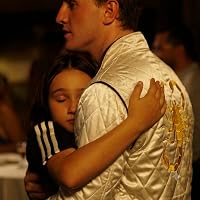
August 1, 2021
Пацанская проза, которую мы действительно заслужили.
Братишка жил в трущобах Лондона, промышлял разбоем и в перерывах читал книжки, чтобы потом живо описать нам свои адреналиновые будни, уродливую сторону употребления запрещенных веществ и удушающую безысходность застрявшего в бетонных джунглях человека. Книга тычет фак под нос всем: журналистам под прикрытием, белым представителям среднего класса, современной системе и полиции. Никто не хочет вникать в суть и масштаб проблем, а просто предпочитает их спрятать подальше от центра города. Краузе окунает нас в реальный мир уличных банд и сломанных судеб, чтобы мы наконец-то перестали избегать "неудобных людей" и услышали их голос.
Братишка жил в трущобах Лондона, промышлял разбоем и в перерывах читал книжки, чтобы потом живо описать нам свои адреналиновые будни, уродливую сторону употребления запрещенных веществ и удушающую безысходность застрявшего в бетонных джунглях человека. Книга тычет фак под нос всем: журналистам под прикрытием, белым представителям среднего класса, современной системе и полиции. Никто не хочет вникать в суть и масштаб проблем, а просто предпочитает их спрятать подальше от центра города. Краузе окунает нас в реальный мир уличных банд и сломанных судеб, чтобы мы наконец-то перестали избегать "неудобных людей" и услышали их голос.

November 4, 2020
My final read for the 2020 Booker longlist, and my GR friends' ratings have run the gamut from 5 to 1 stars. My opinion fell pretty much in the middle, although through the first half I was wishing I could DNF it (which, as a Booker completist for the past 7 years, I wouldn't allow myself to do). But I wasn't enjoying it much - it reminded me a lot of Booker winner A Brief History of Seven Killings, another book I found dispiriting, and which likewise suffered from being written in an oft incomprehensible patois/argot that irked me.
Many phrases eventually became clear via context ('bunning a zoot', which is used on virtually every page, means smoking a joint); although there remained many that eclipsed my ken - I only deciphered 'wagwan' 2/3s of the way through, when I stopped seeing it as 'wag-wan' and figured out it means 'what's going on'.
It suffered from two other major defects, in my estimation. Other than the protagonist, who is nicknamed Snoopz, but in other contexts is revealed to be 'Gabriel Krauze', so this is obviously a bit of auto-fiction - and one or two others (Uncle T, Yinka), most all of the other characters are undifferentiated and fairly one-dimensional - nothing sets Gotti aside from Rex, from Capo, from Bugz Bunny, etc. They are all interchangeable, which means one never cares about ANY of them.
The other thing is that this is not only a milieu I don't know much about - I don't really WANT to know about it - to be blunt, such low life scum holds no fascination for me and their dreary lives are just unending misery; the details of getting high, committing crimes, going to prison, rinse and repeat, becomes mind numbing after a bit. Although the final two chapters seem to want to reveal Gabriel coming to some sort of epiphany about life (he at least cleans up his act a bit), there is nothing much resembling regret or remorse for any of his victims.
The 'good' thing is that Krauze does have an energetic, propulsive and idiosyncratic prose style, which meant it read quickly, but one worries that he has more or less shot his entire wad on this one book - whatever would he find to write about as an encore?
I also find it interesting that at least 7 of the 13 Booker noms this year are either straight out auto-fiction, or contain scarcely disguised autobiographical elements ... but am glad this one didn't make the cut for the shortlist, as two of those others - Shuggie Bain and Real Life - are much more to my liking, and I ranked # 1 and 2 respectively.
Many phrases eventually became clear via context ('bunning a zoot', which is used on virtually every page, means smoking a joint); although there remained many that eclipsed my ken - I only deciphered 'wagwan' 2/3s of the way through, when I stopped seeing it as 'wag-wan' and figured out it means 'what's going on'.
It suffered from two other major defects, in my estimation. Other than the protagonist, who is nicknamed Snoopz, but in other contexts is revealed to be 'Gabriel Krauze', so this is obviously a bit of auto-fiction - and one or two others (Uncle T, Yinka), most all of the other characters are undifferentiated and fairly one-dimensional - nothing sets Gotti aside from Rex, from Capo, from Bugz Bunny, etc. They are all interchangeable, which means one never cares about ANY of them.
The other thing is that this is not only a milieu I don't know much about - I don't really WANT to know about it - to be blunt, such low life scum holds no fascination for me and their dreary lives are just unending misery; the details of getting high, committing crimes, going to prison, rinse and repeat, becomes mind numbing after a bit. Although the final two chapters seem to want to reveal Gabriel coming to some sort of epiphany about life (he at least cleans up his act a bit), there is nothing much resembling regret or remorse for any of his victims.
The 'good' thing is that Krauze does have an energetic, propulsive and idiosyncratic prose style, which meant it read quickly, but one worries that he has more or less shot his entire wad on this one book - whatever would he find to write about as an encore?
I also find it interesting that at least 7 of the 13 Booker noms this year are either straight out auto-fiction, or contain scarcely disguised autobiographical elements ... but am glad this one didn't make the cut for the shortlist, as two of those others - Shuggie Bain and Real Life - are much more to my liking, and I ranked # 1 and 2 respectively.
August 5, 2020
Briefly - So lyrical and poetic but it normalises violence and drugs...
In full
Fiction or non-fiction this is Snoopz's story. This is the name that Gabriel uses in his life on the streets and in the gangs in London. That life consists of crime, drugs, friends, girls and, slightly surprisingly, his time at uni doing his English degree. It's violent and at times unpleasant - knives are normal, guns sometimes. The police, courts and prison make appearances. It is not a "pretty" story, it's visceral and edgy.
As an old person it took me a little while to get into the language being used here. There were a lot of words I didn't know (or in some cases didn't make sense in the way they were used). "Food" means something very different to me than it does to Snoopz and the gangs culture of South Kilburn! This is so far from the world that is usual to me... If you do find you can get the language you are in for an interesting journey.
I guess I'm conflicted here. This story effectively glorifies violence, crime and drugs - "things" are simply something to be taken from others whatever it costs. It certainly shows young men seeing women as objects. So far so bad... However the writing and the power of the stories are remarkable. The tension between rivals - gangs or people - is tangible and quite scary. The sheer drive to rob, use women, get possessions and in this case to get an English degree come over so strongly. Living - and the obvious but usually ignored possibility of dying - makes for something that is very vivid.
For me the star aspect of this is the writing. Once you get into it (if you can) it is stunning for me. Most of it has a real lyricism. Parts of it are wonderfully poetic. I found myself wishing I had thought of some of the lines in it. It makes for a convincing but troubling read. I'm left with the feeling that Gabriel was probably a good boy - Snoopz is definitely not. However, good or bad, it comes over as something very real indeed. I certainly have no regrets about reading this.
Note - I received an advance digital copy of this book from the publisher in exchange for a fair review
In full
Fiction or non-fiction this is Snoopz's story. This is the name that Gabriel uses in his life on the streets and in the gangs in London. That life consists of crime, drugs, friends, girls and, slightly surprisingly, his time at uni doing his English degree. It's violent and at times unpleasant - knives are normal, guns sometimes. The police, courts and prison make appearances. It is not a "pretty" story, it's visceral and edgy.
As an old person it took me a little while to get into the language being used here. There were a lot of words I didn't know (or in some cases didn't make sense in the way they were used). "Food" means something very different to me than it does to Snoopz and the gangs culture of South Kilburn! This is so far from the world that is usual to me... If you do find you can get the language you are in for an interesting journey.
I guess I'm conflicted here. This story effectively glorifies violence, crime and drugs - "things" are simply something to be taken from others whatever it costs. It certainly shows young men seeing women as objects. So far so bad... However the writing and the power of the stories are remarkable. The tension between rivals - gangs or people - is tangible and quite scary. The sheer drive to rob, use women, get possessions and in this case to get an English degree come over so strongly. Living - and the obvious but usually ignored possibility of dying - makes for something that is very vivid.
For me the star aspect of this is the writing. Once you get into it (if you can) it is stunning for me. Most of it has a real lyricism. Parts of it are wonderfully poetic. I found myself wishing I had thought of some of the lines in it. It makes for a convincing but troubling read. I'm left with the feeling that Gabriel was probably a good boy - Snoopz is definitely not. However, good or bad, it comes over as something very real indeed. I certainly have no regrets about reading this.
Note - I received an advance digital copy of this book from the publisher in exchange for a fair review

September 13, 2020
FINAL REVIEW: It’s not an exaggeration when I say that Chapter 1 is one of the most intense scenes I’ve read in a book. Page 3 made me flinch. It grabs you by the throat and it's relentless. A hell of a way to open a novel.
If you're someone who can't handle hyper-violence in your novels (I'm talking Marlon James type violence), stay far away from this book. You’re either in or you’re out. Right from the start, you’re thrown into a hardcore depiction of a life of crime, and Krauze isn’t interested in throwing you a life jacket. The pacing is breakneck speed and makes it feel like it’s hard to breathe, and that’s because the writing has a sort of claustrophobic edge to it. That’s what makes this novel so effective.
One thing you’ll notice is the cavalier attitude to violence and crime, meaning you won’t find characters who feel remorse for their actions. Violence is their life; it’s in their blood; it’s what shapes them as men. Speaking of men, you’ll also notice the book’s hyper-masculine tone; lots of machismo, bravado, and problematic attitudes/behaviors towards women and the idea of manhood. Understandably, this tone may bother some readers. Personally, it didn’t phase me because it truly fits into the characteristics of who these individuals are. If those elements were absent from the novel, it would have felt cheapened somehow, even inauthentic. With that said, don’t expect to fall in love with these characters. This is not that kind of novel. What you’ll find here is an unnerving, bold, and honest character study on the violent behaviors of men.
Lastly, there is a lot of slang (mandem, brer, zoot) mixed in with run-on sentences, both of which makes the book have a frenetic and hypnotizing rhythm. I think that’s the best way to describe this novel: it puts you in a trance. Whether it’s a good or bad trip will depend on your sensibility on the subject. Good or bad: it’s enrapturing.
What a pressure cooker of a novel. I’m still processing.
https://www.instagram.com/p/CFFaEFQAM...
If you're someone who can't handle hyper-violence in your novels (I'm talking Marlon James type violence), stay far away from this book. You’re either in or you’re out. Right from the start, you’re thrown into a hardcore depiction of a life of crime, and Krauze isn’t interested in throwing you a life jacket. The pacing is breakneck speed and makes it feel like it’s hard to breathe, and that’s because the writing has a sort of claustrophobic edge to it. That’s what makes this novel so effective.
One thing you’ll notice is the cavalier attitude to violence and crime, meaning you won’t find characters who feel remorse for their actions. Violence is their life; it’s in their blood; it’s what shapes them as men. Speaking of men, you’ll also notice the book’s hyper-masculine tone; lots of machismo, bravado, and problematic attitudes/behaviors towards women and the idea of manhood. Understandably, this tone may bother some readers. Personally, it didn’t phase me because it truly fits into the characteristics of who these individuals are. If those elements were absent from the novel, it would have felt cheapened somehow, even inauthentic. With that said, don’t expect to fall in love with these characters. This is not that kind of novel. What you’ll find here is an unnerving, bold, and honest character study on the violent behaviors of men.
Lastly, there is a lot of slang (mandem, brer, zoot) mixed in with run-on sentences, both of which makes the book have a frenetic and hypnotizing rhythm. I think that’s the best way to describe this novel: it puts you in a trance. Whether it’s a good or bad trip will depend on your sensibility on the subject. Good or bad: it’s enrapturing.
What a pressure cooker of a novel. I’m still processing.
https://www.instagram.com/p/CFFaEFQAM...

September 8, 2020
I'm clearly an outlier with my views on this one - this has been universally raved about by many people whose opinions I respect and all over the media - but I found this to be a slog. It felt like various violent, inconsequential events one after another, with little link between chapters. The book opens with a violent scene which was memorable, but soon after I began to feel inured to the violence, and there felt like there was nothing propelling the story forward.
Not for me, but I'm glad others have found something to enjoy in this cool and edgy debut.
Thank you Netgalley and 4th Estate for the advance copy, which was provided in exchange for an honest review.
Not for me, but I'm glad others have found something to enjoy in this cool and edgy debut.
Thank you Netgalley and 4th Estate for the advance copy, which was provided in exchange for an honest review.

September 14, 2020
3.5 rounded up
A very challenging read, steeped in a street gang vernacular that is at times though to follow but one's patience is rewarded. It's felt a bit long and drags out at times, but still is quite the accomplishment.
A very challenging read, steeped in a street gang vernacular that is at times though to follow but one's patience is rewarded. It's felt a bit long and drags out at times, but still is quite the accomplishment.
February 9, 2025
Ukoliko ne znate šta da očekujete, ovaj roman ukratko:
Nekad se probudim u gluvo doba noći i znam da čekam neku s kojom sam oduvek bio povezan, ali koju još nisam upoznao, a činjenica da ne uspevam da je nađem ispunjava me tugom koja me uvek iznenadi. Taj osećaj prođe kada izvarim džoint i vratim se da spavam, i onda se ujutru budim sa dignutim kurcem, razmišljajući o pljački. Elem.
Kad se belac naloži da je crnac... Ne znam šta zaista da mislim o autoru nakon njegove autofiktivne ispovesti. Mislim da ovde ipak ima dosta romantizovanja nasilja i geto života, ali i surovih činjenica da taj milje prosto tako funkcioniše. Moraš da se ložiš na to. Krauze je ulični gangster i student književnosti koji sirovim, uličnim jezikom opisuje okruženje u kojem se priča odvija. Južni Kilbern, soliteri, neki drugi London koji ne možemo da vidimo na filmu ili tokom turističkih poseta.
Jedna od ključnih tema je pitanje identiteta i (ne)mogućnosti izlaska iz začaranog kruga nasilja. Krauze istražuje kako sistemske nepravde i društvena hijerarhija guraju mlade u kriminal, ali istovremeno odbija da se predstavi kao žrtva tih okolnosti.
Brutalno jeste, meni na momente postalo malo repetitivno, kao tebra shvatila sam da imaš utoku, diluješ gandžu i čekaš akciju.
Prevod odličan, ne stiče se utisak krindža usled prilagođavanja žargona srpskom jeziku, čak ni kad kažu "brat moj."
Ocena 3.5 ⭐️
Nekad se probudim u gluvo doba noći i znam da čekam neku s kojom sam oduvek bio povezan, ali koju još nisam upoznao, a činjenica da ne uspevam da je nađem ispunjava me tugom koja me uvek iznenadi. Taj osećaj prođe kada izvarim džoint i vratim se da spavam, i onda se ujutru budim sa dignutim kurcem, razmišljajući o pljački. Elem.
Kad se belac naloži da je crnac... Ne znam šta zaista da mislim o autoru nakon njegove autofiktivne ispovesti. Mislim da ovde ipak ima dosta romantizovanja nasilja i geto života, ali i surovih činjenica da taj milje prosto tako funkcioniše. Moraš da se ložiš na to. Krauze je ulični gangster i student književnosti koji sirovim, uličnim jezikom opisuje okruženje u kojem se priča odvija. Južni Kilbern, soliteri, neki drugi London koji ne možemo da vidimo na filmu ili tokom turističkih poseta.
Jedna od ključnih tema je pitanje identiteta i (ne)mogućnosti izlaska iz začaranog kruga nasilja. Krauze istražuje kako sistemske nepravde i društvena hijerarhija guraju mlade u kriminal, ali istovremeno odbija da se predstavi kao žrtva tih okolnosti.
Brutalno jeste, meni na momente postalo malo repetitivno, kao tebra shvatila sam da imaš utoku, diluješ gandžu i čekaš akciju.
Prevod odličan, ne stiče se utisak krindža usled prilagođavanja žargona srpskom jeziku, čak ni kad kažu "brat moj."
Ocena 3.5 ⭐️

October 22, 2020
3.5
Krauze's Who They Was is the final novel in my Booker 2020 read through, it's longlisted but didn't make the shortlist.
A fascinating first person account of brutal ganglife on the streets and South Kilburn public housing tower blocks of London. It has a gritty authenticity with the street dialects, the speech rhythms and the matter of fact accounts of violent crime, including knifings and robberies with assault. The novel is filled with mostly young men including the narrator Gabriel (Snoopz) and his partners in crime Gotti, Capo, Dario, Rex and others as they seek to make a name for themselves and earn respect as violent gang members. They steal and deal drugs, spend time in prison, get out and repeat, fight to assert their street cred and so on. There's passsages that describe Gabriel's relationship with his long suffering family, especially his mother and father. His family background is not one of abject poverty and Krauze, interestingly, does not use Gabriel's background to justify his taste for this gang life.
The book's strength is its resolute refusal to moralise this life by the narrator reaching ethical insight about the pain his crime sprees inflict. Instead Snoopz very much stares down readers' desire for such insight or resolution and offers up an account of this life as outside the norms of mainstream society and that has its own rules: rules for survival and rules for maintaining credibility. It's very much a novel about young masculinised street gang cultures and written from within that culture with no apologies or excuses. While I admire this, it's supported by excellent writing and voice, I'm not entirely convinced.
"I'm tapping the zoot to pack the weed and baccy down tap tap tap so it's nice and tight, and it hits me how I don't want an easy and boring life. I want to run from the law and feel my hearbeat making me sick. I want to fuck gyal like it could be my last night on earth. I want to see fear in people's eyes and eat my own fear. I want to live dangeoursly, on the edge of existence."
It's all about celebrating the extreme experience of the adrenaline fueled moment. While out considering the next crime: "... I notice how detached this whole moment is from ordinary life, as if time don't exist for us right now, cars full of ordinary people leading ordinary lives passing us, oblivious to the fact that we're about to change the rhythm of someone's existence. We're in a computer game. Fuck it, we're in GTA. Nothing is true. Everything is permitted."
In the midst of this bravado that comes through in the writely voice I have a sense that while Krauze lived this (most certainly auto fiction), he's 'slumming it' to some extent. He is well educated and in the novel completing a degree in English Literature. Gabriel attends classes and lectures. He rather naively (as many male arts undergrads do) goes through his Nietzsche adoration phase. There are a few rinse and repeat passages in which Gabriel reflects on Nietzsche's morality as a way of framing or understanding the gang life and its moral codes. Again I'm not convinced. These passages felt a little lazy and trite. It's like celebrating the violence and amorality of ganglife as a way of rubbing mainstream society's face in it: 'This is us and fuck you'. Thing is that kid would not have read just Nietzche, and all those other aspects of his education that would perhaps ethically question his violent choices are given no room in this book. There's no grappling with how his education might rub against or question his gang life. There's almost a wilful refusal in the book to have that encounter, although the stage is set for it.
While I admire the book's brash assertion of this culture and almost narrative refusal to back down in terms of ethical accountability for its central character's violent choices, it also doesn't entirely convince me. At its best Who They Was provides a gritty, well-written account of ganglife from deep within that consciousness and sub-cultural experience. Nevertheless, I'm not convinced by this narrator's refusal to question the ethics of it. There is a sense at moments he's about to, especially in the closing sections when Gabriel realises that all this is a dead end, there is no winning at this life. But for me that just squibs any coming to terms with the costs and accountability for the choices he has made and for me this is also a narrative choice that has ethical implications.
Krauze's Who They Was is the final novel in my Booker 2020 read through, it's longlisted but didn't make the shortlist.
A fascinating first person account of brutal ganglife on the streets and South Kilburn public housing tower blocks of London. It has a gritty authenticity with the street dialects, the speech rhythms and the matter of fact accounts of violent crime, including knifings and robberies with assault. The novel is filled with mostly young men including the narrator Gabriel (Snoopz) and his partners in crime Gotti, Capo, Dario, Rex and others as they seek to make a name for themselves and earn respect as violent gang members. They steal and deal drugs, spend time in prison, get out and repeat, fight to assert their street cred and so on. There's passsages that describe Gabriel's relationship with his long suffering family, especially his mother and father. His family background is not one of abject poverty and Krauze, interestingly, does not use Gabriel's background to justify his taste for this gang life.
The book's strength is its resolute refusal to moralise this life by the narrator reaching ethical insight about the pain his crime sprees inflict. Instead Snoopz very much stares down readers' desire for such insight or resolution and offers up an account of this life as outside the norms of mainstream society and that has its own rules: rules for survival and rules for maintaining credibility. It's very much a novel about young masculinised street gang cultures and written from within that culture with no apologies or excuses. While I admire this, it's supported by excellent writing and voice, I'm not entirely convinced.
"I'm tapping the zoot to pack the weed and baccy down tap tap tap so it's nice and tight, and it hits me how I don't want an easy and boring life. I want to run from the law and feel my hearbeat making me sick. I want to fuck gyal like it could be my last night on earth. I want to see fear in people's eyes and eat my own fear. I want to live dangeoursly, on the edge of existence."
It's all about celebrating the extreme experience of the adrenaline fueled moment. While out considering the next crime: "... I notice how detached this whole moment is from ordinary life, as if time don't exist for us right now, cars full of ordinary people leading ordinary lives passing us, oblivious to the fact that we're about to change the rhythm of someone's existence. We're in a computer game. Fuck it, we're in GTA. Nothing is true. Everything is permitted."
In the midst of this bravado that comes through in the writely voice I have a sense that while Krauze lived this (most certainly auto fiction), he's 'slumming it' to some extent. He is well educated and in the novel completing a degree in English Literature. Gabriel attends classes and lectures. He rather naively (as many male arts undergrads do) goes through his Nietzsche adoration phase. There are a few rinse and repeat passages in which Gabriel reflects on Nietzsche's morality as a way of framing or understanding the gang life and its moral codes. Again I'm not convinced. These passages felt a little lazy and trite. It's like celebrating the violence and amorality of ganglife as a way of rubbing mainstream society's face in it: 'This is us and fuck you'. Thing is that kid would not have read just Nietzche, and all those other aspects of his education that would perhaps ethically question his violent choices are given no room in this book. There's no grappling with how his education might rub against or question his gang life. There's almost a wilful refusal in the book to have that encounter, although the stage is set for it.
While I admire the book's brash assertion of this culture and almost narrative refusal to back down in terms of ethical accountability for its central character's violent choices, it also doesn't entirely convince me. At its best Who They Was provides a gritty, well-written account of ganglife from deep within that consciousness and sub-cultural experience. Nevertheless, I'm not convinced by this narrator's refusal to question the ethics of it. There is a sense at moments he's about to, especially in the closing sections when Gabriel realises that all this is a dead end, there is no winning at this life. But for me that just squibs any coming to terms with the costs and accountability for the choices he has made and for me this is also a narrative choice that has ethical implications.
September 26, 2020
3.5, rounded down

August 1, 2021
Белый братан из бедного района рассказывает правдивую историю жизни, как срывает башню во время ходок, как опускается забрало и ревет адреналин в момент, когда вот-вот и снимешь с чужой руки котлы с брюликами, как жить на большаке, как ценится верность братана и окрыляет любовь девчонки. Это истории про места, где выстрелы по утрам и вечерам — обыденность, где полицейским нечего ловить, потому что свидетели будут молчать, даже когда молодому парню несколько раз стреляют в голову на глазах целого дома. Про то, как ты чувствуешь себя бессмертным, когда в руках перо или волына, как в один вечер можно пять раз вогнать лезвие ножа торчку в спину, а на следующий день пойти на лекции и рассуждать о морали убийства в «Гамлете». Как можно сесть в тюрьму за беспредел и оставаться человеком при помощи книг и любви к чтению. Как можно быть совершенно неприятным человеком, но переживать от того, что ты обещал, не сделал и снова выставил себя плохим сыном. Как можно быть обычным лондонским гопником — материться, разбивать чужакам лица в кровь, читать рэпчик под самодельный бит с телефона, грабить дома богатых, пояснять за шмот и цацки, торговать наркотой, накуриваться до обморочного состояния и любить ГТА Сан-Андреас. При этом тонко чувствовать и подмечать безжизненную тьму в глазах друзей, как июль в жару обдирает небо до пронзительной синевы, а высотки подпирают облака, не давая им упасть на землю. Да, прямо как в «Бесконечных днях» Себастьяна Барри.

January 5, 2022
Prvo poglavlje ove knjige počinje jednom adrenalinskom injekcijom, u epizodu kada Snups i Goti pljačkaju jednu bogatu ženu ispred kuće. Pokušavaju da joj otkinu sat sa ruke, međutim to ne ide onako kako su zamislili. Žena uspeva da pusti urlik, njen suprug otvara ulazna vrata. Snups i Goti je ne puštaju, a ne mogu da ukradu sat. Snups vidi prsten na njenom prstu koji ne može da svuče jer je preko njega burma, pa joj on lomi prst kako bi mogao da ga ukrade. Muž uvlači ženu u kuću, šutirajući Snupsa i Gotija, koji jedva uspevaju da pobegnu i ulete u kola bande koja su već polako počela da se odmiču dok se policijske sirene čuju u pozadini.
Ovo je ujedno i ta atmosfera koja vas u ovoj knjizi čeka do samog kraja. Ovo nije roman, ovo su piščevi memoari koji opisuju period od 2007. u kom je on bio član jedne opasne bande dok je živeo u jednom siromašnom i opasnom kraju Londona. I nije samo pljačka žena i lomljava prstiju ono što ćete o njima pročitati. Gabrijel je sa svojim pajtosima dilovao, krao, napadao nožem ljude koji ga slučajno udare ramenom na ulici, bio u zatvoru, ali u isto vreme išao na fakultet pokušavajući da sebi možda obezbedi neku lepšu budućnost malo kasnije.
''Ko su oni bili'' je uvid u opasne krajeve Londona, kojih ima na pregršt. Svaka scena iz ove knjige se zaista desila, a neke čak možete i izguglati, kao što je i ubistvo Mohane Abdu ispred jedne zgrade u tom upitnom delu Londona. Zapravo, može se lako reći da je ovo dokumentarni prikaz jednog života koji je na fiktivan način predstavljen u ''Paklenoj pomorandži'', ''Trejnsporingu'' (sa malo manje heroina a više trave) ili ''Piki Blajndersima'' (samo na dosta moderniji način). Prevod u knjizi je takođe za apsolutno svaku pohvalu - možda jedan od boljih na koje sam naišao.
Ovo je ujedno i ta atmosfera koja vas u ovoj knjizi čeka do samog kraja. Ovo nije roman, ovo su piščevi memoari koji opisuju period od 2007. u kom je on bio član jedne opasne bande dok je živeo u jednom siromašnom i opasnom kraju Londona. I nije samo pljačka žena i lomljava prstiju ono što ćete o njima pročitati. Gabrijel je sa svojim pajtosima dilovao, krao, napadao nožem ljude koji ga slučajno udare ramenom na ulici, bio u zatvoru, ali u isto vreme išao na fakultet pokušavajući da sebi možda obezbedi neku lepšu budućnost malo kasnije.
''Ko su oni bili'' je uvid u opasne krajeve Londona, kojih ima na pregršt. Svaka scena iz ove knjige se zaista desila, a neke čak možete i izguglati, kao što je i ubistvo Mohane Abdu ispred jedne zgrade u tom upitnom delu Londona. Zapravo, može se lako reći da je ovo dokumentarni prikaz jednog života koji je na fiktivan način predstavljen u ''Paklenoj pomorandži'', ''Trejnsporingu'' (sa malo manje heroina a više trave) ili ''Piki Blajndersima'' (samo na dosta moderniji način). Prevod u knjizi je takođe za apsolutno svaku pohvalu - možda jedan od boljih na koje sam naišao.

September 10, 2020
There’s a lot to admire about Krauze’s debut; the opening chapter is one of the most immersive pieces of writing I’ve ever read. The prose is at times searing, brutal, and has an authenticity to it that reminded me of A Brief History of Seven Killings. And then there’s Krauze’s personal story; how does a man go from the life he describes to a Booker Prize nominee? It’s an impressive transformation. And yet in the end Who They Was was an uneven and frustrating read for me.
After the explosive introduction I felt a little let down during passages that seemed to drag, were overly descriptive, repetitive (how many times was the smoking of a joint mentioned?) and somehow detached given the subject matter. I’ve since read an interview with Krauze and my interpretation is that the detachment was intentional. He meant to convey that it was just his day to day life, business as usual, nothing to get het up about. I respect that decision and yet it led me to feeling disconnected from his character.
An added difficulty for a person who doesn’t often warm to non-fiction was that it read quite like a memoir. For some that will be a selling point, but for me it made for a dulling experience. Still, there were flashes of brilliance amidst the tedium, and I’m looking forward to what Krauze writes next.
After the explosive introduction I felt a little let down during passages that seemed to drag, were overly descriptive, repetitive (how many times was the smoking of a joint mentioned?) and somehow detached given the subject matter. I’ve since read an interview with Krauze and my interpretation is that the detachment was intentional. He meant to convey that it was just his day to day life, business as usual, nothing to get het up about. I respect that decision and yet it led me to feeling disconnected from his character.
An added difficulty for a person who doesn’t often warm to non-fiction was that it read quite like a memoir. For some that will be a selling point, but for me it made for a dulling experience. Still, there were flashes of brilliance amidst the tedium, and I’m looking forward to what Krauze writes next.

September 15, 2020
Gabriel Krauze’s use of vernacular constitutes the centerpiece and organizing scheme for Who They Was. Krauze left me sometimes puzzled, guessing at dialectical meanings and wondering at their sounds. Oh, for an audiobook! But unlike some other contemporary novelists who incorporate dialect, patois, and foreign phrases, Krauze provides fewer contextual clues, making Who They Was occasionally frustrating. Krauze’s use of ‘lect lacked the rhythm and musicality to sustain me throughout.
Whether intentionally or unintentionally, Krauze exposes the inherent boredom of everyday life for his eponymous protagonist: fear, threat, substance use, theft, and violence don’t always add up to interesting lives or interesting reading. Who They Was proved interesting to me only insofar as Snoopz’ exterior and interior lives proved interesting: his exterior life interesting only in a few spots, and his interior life interesting only in the final pages. Krauze’s words rather than his plot or characters kept me turning the pages.
Whether intentionally or unintentionally, Krauze exposes the inherent boredom of everyday life for his eponymous protagonist: fear, threat, substance use, theft, and violence don’t always add up to interesting lives or interesting reading. Who They Was proved interesting to me only insofar as Snoopz’ exterior and interior lives proved interesting: his exterior life interesting only in a few spots, and his interior life interesting only in the final pages. Krauze’s words rather than his plot or characters kept me turning the pages.
January 30, 2022
"Vidite, ma šta srali o tome da je prošlost prošlost i tako to, ne možete da popravite nekoga ko je već sjeban."
Na samom početku moram da pohvalim prevodioca, zbog toga što je odlično skinuo ulični žargon koji je neophodan da bismo se bolje povezali sa pripovedačem i stvorili lepšu sliku o njemu. Gabrijel je reper iz geta koji učestvuje u rep betlovima, pa je upotreba uličnog žargona prilikom obraćanja potpuno razumljiva. Pored toga što je reper, takođe obožava džoint i nasilje, a poštovanje ozbiljnijih krimosa stiče zbog tvrdog fristajla koji baca, ali i zbog petlje da se pobije i opljačka neku osobu usred bela dana.
Upravo zbog njegove potrebe da zapodene tuču iz čista mira, ili da krene u pljačku o čijem ishodu nekad i ne razmišlja, jer mu je važnije da se nahrani adrenalinom koji mu često donosi nezgode, nemoguće je zadržati ravnodušnost prema njemu do kraja. Gotivićete ga ili ćete ga mnogo hejtovati zbog njegove lude glave, ali prosto je nemoguće ostati hladan prema ovakvom drkadžiji, koji ne tripuje kriminal poput nekih naših gengsta repera, već zaista živi spiku koju fura u svojim pesmama. Mojne da pomisliš čitaoče da ćeš uživati čitajući poglavlja ove knjige, jer ćeš se često osećati neprijatno zbog mračnog okruženja u kome caruje kriminal, narkomani se drogiraju na usranim stepenicama i moraš da paziš da ne uputiš čudan pogled pogrešnoj osobi u prolazu, kako te ne bi overili utokom. Ne piše bezveze na koricama knjige da je ovo Paklena pomorandža dvadeset i prvog veka. Dodao bih samo da je ovo njena krvavija verzija i to bez preterivanja. Nema ovde kajanja. Nema pozitivaca, ima samo sumnjivih tipova, toliko zajebanih da se ni policija ne šeta po tim blokovima bez nekog ozbiljnijeg razloga. Ako se neko zapije sa ortacima i zaluta tamo, a usput i slučajno očeša nekog člana ekipe iz kraja ramenom u prolazu, videćete u jednom poglavlju šta će mu se desiti.
Mnogo gotivna čapri, brate moj! Ako pak imate slab želudac, preskočite ovu rstva. Nije za svakoga definitivno.
Na samom početku moram da pohvalim prevodioca, zbog toga što je odlično skinuo ulični žargon koji je neophodan da bismo se bolje povezali sa pripovedačem i stvorili lepšu sliku o njemu. Gabrijel je reper iz geta koji učestvuje u rep betlovima, pa je upotreba uličnog žargona prilikom obraćanja potpuno razumljiva. Pored toga što je reper, takođe obožava džoint i nasilje, a poštovanje ozbiljnijih krimosa stiče zbog tvrdog fristajla koji baca, ali i zbog petlje da se pobije i opljačka neku osobu usred bela dana.
Upravo zbog njegove potrebe da zapodene tuču iz čista mira, ili da krene u pljačku o čijem ishodu nekad i ne razmišlja, jer mu je važnije da se nahrani adrenalinom koji mu često donosi nezgode, nemoguće je zadržati ravnodušnost prema njemu do kraja. Gotivićete ga ili ćete ga mnogo hejtovati zbog njegove lude glave, ali prosto je nemoguće ostati hladan prema ovakvom drkadžiji, koji ne tripuje kriminal poput nekih naših gengsta repera, već zaista živi spiku koju fura u svojim pesmama. Mojne da pomisliš čitaoče da ćeš uživati čitajući poglavlja ove knjige, jer ćeš se često osećati neprijatno zbog mračnog okruženja u kome caruje kriminal, narkomani se drogiraju na usranim stepenicama i moraš da paziš da ne uputiš čudan pogled pogrešnoj osobi u prolazu, kako te ne bi overili utokom. Ne piše bezveze na koricama knjige da je ovo Paklena pomorandža dvadeset i prvog veka. Dodao bih samo da je ovo njena krvavija verzija i to bez preterivanja. Nema ovde kajanja. Nema pozitivaca, ima samo sumnjivih tipova, toliko zajebanih da se ni policija ne šeta po tim blokovima bez nekog ozbiljnijeg razloga. Ako se neko zapije sa ortacima i zaluta tamo, a usput i slučajno očeša nekog člana ekipe iz kraja ramenom u prolazu, videćete u jednom poglavlju šta će mu se desiti.
Mnogo gotivna čapri, brate moj! Ako pak imate slab želudac, preskočite ovu rstva. Nije za svakoga definitivno.

September 25, 2020
Themes
Its a struggle to come up with coherent themes and to do so makes the book seem deeper than it is.
Krauze himself says “Just trying to write about prison feels dead, like I’m giving it something it doesn’t deserve.” (257)
There's no indication of remorse, and the narrator seems to indicate that the meanness of the South Kilburn estates is inevitable.
“He didn’t give a fuck what anyone thought” (225)
“We know nothing about each other and never will” (313)
“Do they still not realise there was nothing anyone could do to stop all of this” (318)
Synopsis
The author recounts his young adult life on the streets and estates of South Kilburn, North West London. Krauze makes a virtue out of the fact that the various stories and anecdotes told are true accounts of his own experiences. The book is sold and promoted as fiction, and has appeared on the worlds top fiction prize longlist (the Booker). The “truth” gives it the authenticity it seems; the “fiction” packaging has meant it has made its way into a much larger number of reader hands than would have been the case had it been released as a memoir.
There is no story, and there are no formed characters. A succession of individuals with cheesy nicknames enter and depart the fray; each one barely distinguishable from the others. Each ‘character’ speaks in a street slang patois, some of which is well known (to any viewer of Ali G spoof comedies, or Guy Ritchie gangster movies).
Street robbery, score settling, shotguns, drug deal betrayals. It’s not revelatory. It doesn’t prove anything- it just shows that supposed glamour leads to maiming, physical assault, loneliness, fear and death. This bleakness is what summarises this book, but not in a new or a reflective way. The Mario Puzo Godfather series is referenced (no surprise there) and at one point Krauze seems to be talking about New York gangsters when he writes “Brandzino got popped in the barber’s “ (219)
Krauze himself is a university student (at Queen Mary’s College, London). This can be corroborated online, on Twitter, where his tutor basks in the glory of the Booker prize notoriety. The juxtaposition of urban hooligan, and cerebral, academically intelligent student is a key differentiator (and a clever, and deliberate one) in Krauze’s work. Its not unique, and the obvious comparison is Anthony Burgess’s “ A Clockwork Orange ” That was written fifty years ago in 1971. Alex’s routine violence, to the accompaniment of Beethoven, is mirrored by Krauze’s occasional recourse to Rachmaninov and Chopin.
A number of the chapters preface with a selected quote from a philosopher or writer. (James Baldwin, Shakespeare’s Cymbeline, Bob Dylan, The Dead Sea Scrolls, Aime Cesaire, Machiavelli)
Its a good idea, but why do I suspect either Krauze’s course tutor and/or the publishing house pointed him in that direction to give the body of the work some faux deeper meaning? As Krauze says “I’ve got bare Nietzsche quotes lined up” (273)
• How much more is there to come from Gabriel Krauze?
I imagine he is a one trick pony who has now used up his repertoire of stories
• How is this account of life best accessed?
Its much better on line. ('Rough Emeralds';’Young Offender’; 'When the Sky Fell Down'). Its less unremitting, in short, self contained bursts. There are pictures accompanying the Krauze short stories on Vice.
• How true is this representation of North West London?
I was particularly struck by another Goodreads review of Who They Was:
“Strange in my opinion as I genuinely grew up in poverty on a North London housing estate but have never committed a crime or even so much as dropped a piece of litter. I only ever wanted to better myself and have a better life as an adult. As Oscar Wilde said 'we are all in the gutter but some of us are looking at the stars'.”
Zadie Smith is an esteemed writer whose accounts of the same parts of north west London (including the novel NW doesn’t sugar coat the toughness and sometime injustice of inner London. There is humour and dignity and an absence of the feral selfishness typical of Krauze’s account.
• How true are the events told (a key underpin)?
At Christmas,a year after graduation, towards the end of the events narrated, on a visit home, Krauze apparently admits to his parents that he is a drug dealer?? They had not realised??
On arrival at Feltham Krauze make a very convenient discovery In my cell that night I find the broken handle of a plastic toothbrush. (141) Really?
Questions and Gripes
A strength of the Booker Prize over many years has been the fluidity of the judging panel. Different judges each year go to great lengths to ensure that the whole gamut of modern fiction is heard. Almost two hundred books are submitted. The last few years have seen a politicising of the selections and consensus has been hard to achieve, resulting in the 2019 debacle- a case study in how to muck up committee discussions. The 2020 selection has been no less agenda driven, as the selection of eight debut novels (out of thirteen) at the long list stage attests. It’ only my personal opinion, one in the context of the Prize, but I believe that selecting What They Was diminishes the Booker foundation.
Author background & Reviews
Gabriel Krauze, aka Snoopz has written a number of short (illustrated) stories for Vice magazine. This is his debut novel. He must be doing a whole lot right for this to be picked up by 4th Estate- the very same publisher that gives the Booker Prize Dame Hilary Mantel’s The Mirror and the Light in 2020. Krauze is (white) and Polish, and both in his nuclear, loving family, and in his ethnicity, Krauze is far removed from the native born South Kilburn estate residents. As the author himself of his upbringing: ”It was a private school, I was only there thanks to financial assistance based on my academic and musical abilities, as well as the sacrifices of my parents” (304)
Recommend
No!
The one insight I did like was that the various wings at Feltham Young Offenders Institution are named after birdlife- so “doing bird” makes sense to me now.
Its a struggle to come up with coherent themes and to do so makes the book seem deeper than it is.
Krauze himself says “Just trying to write about prison feels dead, like I’m giving it something it doesn’t deserve.” (257)
There's no indication of remorse, and the narrator seems to indicate that the meanness of the South Kilburn estates is inevitable.
“He didn’t give a fuck what anyone thought” (225)
“We know nothing about each other and never will” (313)
“Do they still not realise there was nothing anyone could do to stop all of this” (318)
Synopsis
The author recounts his young adult life on the streets and estates of South Kilburn, North West London. Krauze makes a virtue out of the fact that the various stories and anecdotes told are true accounts of his own experiences. The book is sold and promoted as fiction, and has appeared on the worlds top fiction prize longlist (the Booker). The “truth” gives it the authenticity it seems; the “fiction” packaging has meant it has made its way into a much larger number of reader hands than would have been the case had it been released as a memoir.
There is no story, and there are no formed characters. A succession of individuals with cheesy nicknames enter and depart the fray; each one barely distinguishable from the others. Each ‘character’ speaks in a street slang patois, some of which is well known (to any viewer of Ali G spoof comedies, or Guy Ritchie gangster movies).
Street robbery, score settling, shotguns, drug deal betrayals. It’s not revelatory. It doesn’t prove anything- it just shows that supposed glamour leads to maiming, physical assault, loneliness, fear and death. This bleakness is what summarises this book, but not in a new or a reflective way. The Mario Puzo Godfather series is referenced (no surprise there) and at one point Krauze seems to be talking about New York gangsters when he writes “Brandzino got popped in the barber’s “ (219)
Krauze himself is a university student (at Queen Mary’s College, London). This can be corroborated online, on Twitter, where his tutor basks in the glory of the Booker prize notoriety. The juxtaposition of urban hooligan, and cerebral, academically intelligent student is a key differentiator (and a clever, and deliberate one) in Krauze’s work. Its not unique, and the obvious comparison is Anthony Burgess’s “ A Clockwork Orange ” That was written fifty years ago in 1971. Alex’s routine violence, to the accompaniment of Beethoven, is mirrored by Krauze’s occasional recourse to Rachmaninov and Chopin.
A number of the chapters preface with a selected quote from a philosopher or writer. (James Baldwin, Shakespeare’s Cymbeline, Bob Dylan, The Dead Sea Scrolls, Aime Cesaire, Machiavelli)
Its a good idea, but why do I suspect either Krauze’s course tutor and/or the publishing house pointed him in that direction to give the body of the work some faux deeper meaning? As Krauze says “I’ve got bare Nietzsche quotes lined up” (273)
• How much more is there to come from Gabriel Krauze?
I imagine he is a one trick pony who has now used up his repertoire of stories
• How is this account of life best accessed?
Its much better on line. ('Rough Emeralds';’Young Offender’; 'When the Sky Fell Down'). Its less unremitting, in short, self contained bursts. There are pictures accompanying the Krauze short stories on Vice.
• How true is this representation of North West London?
I was particularly struck by another Goodreads review of Who They Was:
“Strange in my opinion as I genuinely grew up in poverty on a North London housing estate but have never committed a crime or even so much as dropped a piece of litter. I only ever wanted to better myself and have a better life as an adult. As Oscar Wilde said 'we are all in the gutter but some of us are looking at the stars'.”
Zadie Smith is an esteemed writer whose accounts of the same parts of north west London (including the novel NW doesn’t sugar coat the toughness and sometime injustice of inner London. There is humour and dignity and an absence of the feral selfishness typical of Krauze’s account.
• How true are the events told (a key underpin)?
At Christmas,a year after graduation, towards the end of the events narrated, on a visit home, Krauze apparently admits to his parents that he is a drug dealer?? They had not realised??
On arrival at Feltham Krauze make a very convenient discovery In my cell that night I find the broken handle of a plastic toothbrush. (141) Really?
Questions and Gripes
A strength of the Booker Prize over many years has been the fluidity of the judging panel. Different judges each year go to great lengths to ensure that the whole gamut of modern fiction is heard. Almost two hundred books are submitted. The last few years have seen a politicising of the selections and consensus has been hard to achieve, resulting in the 2019 debacle- a case study in how to muck up committee discussions. The 2020 selection has been no less agenda driven, as the selection of eight debut novels (out of thirteen) at the long list stage attests. It’ only my personal opinion, one in the context of the Prize, but I believe that selecting What They Was diminishes the Booker foundation.
Author background & Reviews
Gabriel Krauze, aka Snoopz has written a number of short (illustrated) stories for Vice magazine. This is his debut novel. He must be doing a whole lot right for this to be picked up by 4th Estate- the very same publisher that gives the Booker Prize Dame Hilary Mantel’s The Mirror and the Light in 2020. Krauze is (white) and Polish, and both in his nuclear, loving family, and in his ethnicity, Krauze is far removed from the native born South Kilburn estate residents. As the author himself of his upbringing: ”It was a private school, I was only there thanks to financial assistance based on my academic and musical abilities, as well as the sacrifices of my parents” (304)
Recommend
No!
The one insight I did like was that the various wings at Feltham Young Offenders Institution are named after birdlife- so “doing bird” makes sense to me now.

July 19, 2021
This came out on the Booker longlist over a year ago, but there aren't any reviews on LT yet. I found it, for some reason, the most clouded in mystery of all the books on that list, and had no idea what to expect until I listened to the audible sample and started looking this up. Krauze (he pronounces the last 'e' something like 'eh') is a child of Polish immigrants to England who grew up in London's impoverished South Kilburn, got involved in a very violent criminal life as a teenager and kept at it while attending a university. The novel is heavily autobiographical.
I was immediately taken in by the narrative, read by Krauze himself in his north London accent, influenced by Jamaican English. "Wagwan" is a curiously used greeting. It's a Jamaican version of "what's going on?", but in London has a gang-life implication. In this accent Krauze takes us straight into his criminal life, at a point where he worked with a small team of scouters, a getaway car and partner as ruthless as he his. He basically jumps carefully selected victims, violently takes anything of value from them, and runs off leaving a battered, bruised and possibly partially broken victim whom he doesn't give one thought to. He's not interested in that, because there is too much going on in his quasi-gang life where compromise is a kind of suicide. Any and every perceived challenge is met with violence, knives bloodied, and his main concern afterwards is whether he hurt the other guys enough. In between he goes to classes on literary theory.
This stuff is constant and some readers find it repulsively repetitive and dull. I never did. I was fascinated by him. And a bit shocked when I began to pick up the nature of his own involvement. He was not really like the other people he was doing crimes with because he didn't come from a broken home, with an abusive or absent father, but from a loving, if financially strapped, family, including a twin brother who excelled at playing violin. That is, he was doing all this criminal stuff not because he was desperate but by choice, for some cash and because he loved it. And mostly he got away with it. He does cover spending time in a couple lock-ups, but notes that he was never caught for his worst crimes. And, he doesn't expressively say it, but he really dodged the gangs. This was bad when he would find himself isolated, his partners locked up or on the run, but eventually a blessing because he was free of the warfare and could walk away without anyone looking for him. He's clearly not a typical story.
It leaves me in an ethical conundrum. I really enjoyed this book. It's fascinating, seems authentic and is well written. It‘s also by a guy who really hurt people for no legitimate reason, and is now, later, out of that life, mining those experiences to put into his book. Mind you, I read plenty of authors with terrible personal ethics. And this book certainly has value as a look into this mindset. The reader realizes no corrective policy could have stopped him from doing what he did, and that's maybe instructive in some way. Not sure. Not sure how I judge this one overall.
-----------------------------------------------
32. Who They Was by Gabriel Krauze
reader: the author
published: 2020
format: 9:29 audible audiobook (336 pages in hardcover)
acquired: June 28
listened : Jun 29 – Jul 14
rating: 4
locations: London
about the author: 34-yr-old London native of Polish parents.
Displaying 1 - 30 of 630 reviews