
What do you think?
Rate this book

317 pages, Paperback
First published June 1, 2021


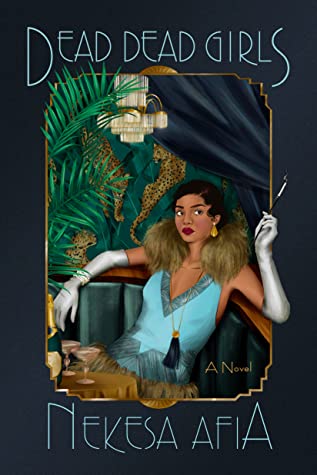
At the age of 15, Louise Lloyd became “Harlem’s Hero” when she managed to escape from a kidnapper/murderer and bring three other girls with her. Now, at 26, she just wants to be anonymous, spending her days working at a cafe and her nights dancing and drinking with her girlfriend.I was eagerly looking forward to this book. Look at that cover! And the idea of a queer Black woman solving mysteries in flapper Harlem? Five stars! I was so in.
But then a dead girl is left in front of the cafe. And the detective assigned to the case pulls Louise in to help track down a serial killer.
"Secrets were made and kept at the Zodiac. It was a place where men could dance with men, and women could dance with women."Instantly gripping with a sense of unease creeping from the narrative, I was transported to Jazz Age New York City. Let's set the scene for Dead Dead Girls with some Jazz ! I loved how the reader is introduced to Louise in the "present time" of 1926 on the dance floor of a Prohibition era club: the freedom and excitement of expressing herself dances on the page. The Zodiac is where she can be herself and dance with her partner Rosa.
"On nights like tonight, everything fell into place, and 'good' wasn't even the best word to describe it. 'Magical,' maybe. The way the room vibrated with anticipation as the band struck up, and she was whirled onto the dance floor -- it always elicited the same feeling."Diminutive in stature but not in personality, Louise is a main character you can't help but root for. A survivor of kidnapping ten years prior, she lives a happy and 'simple' life as a waitress and tries to move past her notoriety. But when Black girls turn up dead, the police "ask" (aka force) Louise to help them solve the crimes because she can go where the white cops can't. This is the last thing she wants, but she feels a responsibility to her community to do what she can... and it's quickly obvious that the police haven't been doing much in their investigation. She fights for Black girls who the system seems to not care about and I like how she challenges white apathy.
"Summers were time for them to get together as a community. But no one trusted anyone anymore. There was doubt seeping in through the cracks of a community that used to be so close."Expertly plotted, I love how the clues and hints all tie into the greater mystery rather than having obvious and poorly contrived red herrings. Every chapter ends with a quip that only someone recalling with 20/20 perspective would say, and that not only kept me on my toes but kept me reading. I had to know what would happen next, and I was on pins and needles trying to figure out who the killer is and who the killer will attack next. It's a fast read and one I struggled to put down.
"It was strange to see how her story wasn't a story until it was. There was no mention of missing girls, no mention of her being snatched from the sidewalk blocks from her home, no mention of this utterly life-changing event, until there was a fifteen-year-old Louise looking shellshocked and dirty, accompanied by three other girls."There's a parallel spanning ten years in Louise's life: when she was abducted in the past and her trying to solve the murders in the present. How no one beyond the community seemed to care about the missing girls until Louise escape; how no one cared about the murdered girls until bodies were left out in the open. It's a critique on not only the news cycle and sensationalism of media but also how crimes against Black people often go unreported and under-investigated. Lingo and slang of the era helps to solidify the era, as sadly the trials and tribulations of Louise and other Black girls of Harlem could have been set in modern times with little difference.
Blog | Twitter | Pinterest


