

What do you think?

阿尔伯特·卡恩的理想国:黑白时代的彩色世界史
20世纪初叶,世界各国间纷争不断,人类被“一战”的阴霾笼罩。
1908年,法国富豪、银行家、慈善家阿尔伯特·卡恩(Albert Kahn)开始了一项雄心勃勃的计划:以彩色照片为手段,为全球各地的人们留下一份影像档案,做一个独特的世界史资料馆。
卡恩是理想主义者,有强烈的国际主义情怀。他相信,运用当时玻璃干板彩色正片的新工艺——这一世界上最早的、使用便利而又能呈现真实色彩的摄影技术——他能借助图像来记录黑白时代的一段彩色的世界史,进而促进不同民族之间的相互理解,跨越文化差异,和平共处。
为了实现自己的梦想,卡恩利用自己的巨额财富,将他邀请的那些无所畏惧的摄影师派往全球50多个国家。这些国家当年还往往处于其历史上的关键转折时刻;古老文化的根基遭到动摇,战争与正在到来的20世纪的全球化进程将它们推向彻底改变的边缘。书中的照片以真实的色彩记录了奥匈帝国的解体与奥斯曼帝国的崩溃,爱尔兰最后的凯尔特人传统村庄在拆毁前仅数年时的风貌,还有第一次世界大战中的士兵——他们要么是在战壕中,要么是在前沿阵地后方烹制餐食或浆洗军服。这些已知的最老彩色照片拍摄于分布范围极广的不同国家中,有越南也有巴西,有中国也有挪威,有日本也有美国。
卡恩收藏的彩色照片数量巨大,多达72000幅;但直到近年,相对来说,这些作品仍处于默默无闻的状态,知者甚少,其中的绝大部分也从未公开出版过。现在,距离卡恩发起“星球档案”项目已经过去了一个世纪,这本书以及与之相伴随的BBC(英国广播公司)电视系列节目一起,将卡恩那令人目眩神迷的图像宝库第一次介绍给广大的读者与观众,而这些照片,也给我们习惯于认为是纯然单色的那个旧时代,赋予了其应有的色彩。
1940年,卡恩辞世。如今,他的这些遗产被认为是世界上最重要的早期彩色照片作品。
特别要提及的,卡恩和他的团队在1909和1912年两次来到中国,拍摄了中国历史上最早的彩色照片。
1908年,法国富豪、银行家、慈善家阿尔伯特·卡恩(Albert Kahn)开始了一项雄心勃勃的计划:以彩色照片为手段,为全球各地的人们留下一份影像档案,做一个独特的世界史资料馆。
卡恩是理想主义者,有强烈的国际主义情怀。他相信,运用当时玻璃干板彩色正片的新工艺——这一世界上最早的、使用便利而又能呈现真实色彩的摄影技术——他能借助图像来记录黑白时代的一段彩色的世界史,进而促进不同民族之间的相互理解,跨越文化差异,和平共处。
为了实现自己的梦想,卡恩利用自己的巨额财富,将他邀请的那些无所畏惧的摄影师派往全球50多个国家。这些国家当年还往往处于其历史上的关键转折时刻;古老文化的根基遭到动摇,战争与正在到来的20世纪的全球化进程将它们推向彻底改变的边缘。书中的照片以真实的色彩记录了奥匈帝国的解体与奥斯曼帝国的崩溃,爱尔兰最后的凯尔特人传统村庄在拆毁前仅数年时的风貌,还有第一次世界大战中的士兵——他们要么是在战壕中,要么是在前沿阵地后方烹制餐食或浆洗军服。这些已知的最老彩色照片拍摄于分布范围极广的不同国家中,有越南也有巴西,有中国也有挪威,有日本也有美国。
卡恩收藏的彩色照片数量巨大,多达72000幅;但直到近年,相对来说,这些作品仍处于默默无闻的状态,知者甚少,其中的绝大部分也从未公开出版过。现在,距离卡恩发起“星球档案”项目已经过去了一个世纪,这本书以及与之相伴随的BBC(英国广播公司)电视系列节目一起,将卡恩那令人目眩神迷的图像宝库第一次介绍给广大的读者与观众,而这些照片,也给我们习惯于认为是纯然单色的那个旧时代,赋予了其应有的色彩。
1940年,卡恩辞世。如今,他的这些遗产被认为是世界上最重要的早期彩色照片作品。
特别要提及的,卡恩和他的团队在1909和1912年两次来到中国,拍摄了中国历史上最早的彩色照片。
356 pages, Hardcover
First published January 1, 2008
Ratings & Reviews
Friends & Following
Create a free account to discover what your friends think of this book!
Community Reviews
Displaying 1 - 19 of 19 reviews

January 8, 2015
Autochrome plates, patented by the Lumière brothers in 1903, were one of the first successful forms of color photography. That is, the first form that was sufficiently easy or affordable that it saw widespread use; it combined on a single plate what had taken earlier color photographers such as John Joly multiple plates and steps. The Lumière technology employed relatively inexpensive ingredients: colored potato starches were dusted onto a plate coated with a mixture of gelatine and glycerine, fixed in place by a fine black powder (possibly powdered charcoal or soot) and then coats of first waterproof lacquer and then a gelatine and silver-bromide emulsion were applied. But this was all done in production so that the plates were, in effect, ready to use on the spot. The exposure time was significantly longer than contemporary monochrome silver-halide plates for black-and-white photography, but relatively reliable as long as the subject was stationary.
In 1909 French banker and philanthropist Albert Kahn began an enormous project to create a color photographic record of all the peoples of the world. In addition to wishing to document the traditional ways of life that were fast disappearing, Kahn hoped to promote peace and international understanding. One of the richest men in Europe until the Wall Street Crash of 1930, Kahn employed numerous photographers and sent them to over 50 countries.
The styles of the different men varied quite a bit, with some taking more workman-like, documentary images, and others (most famously Leon Busy) trying for more artistic and painterly effects.
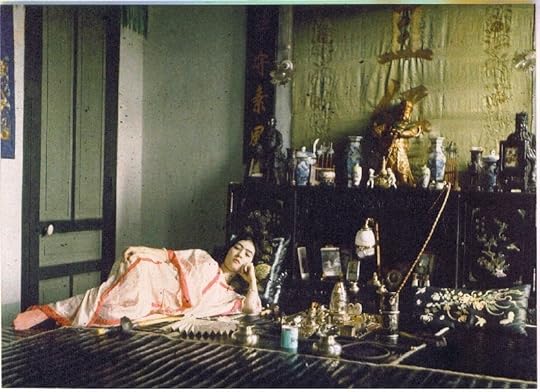
They captured significant events and important individuals, but also everyday life in the areas they visited.
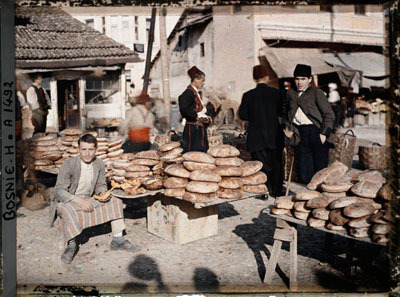
The project documented traditional regional clothing and practices
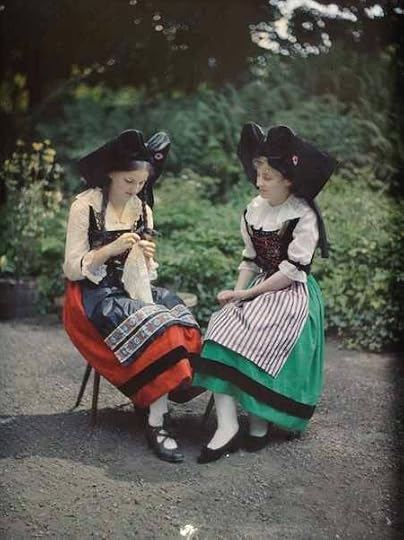
Mesdemoiselles Helene and Denise Lauth of Massevaux in Alsace, France, on 6 July 1918
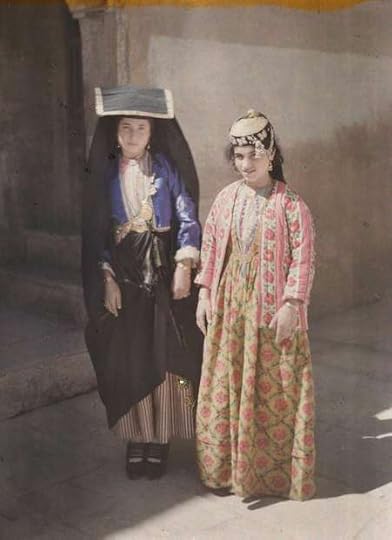
Christian women in Iraq, 1927
and methods of farming, textile production, etc
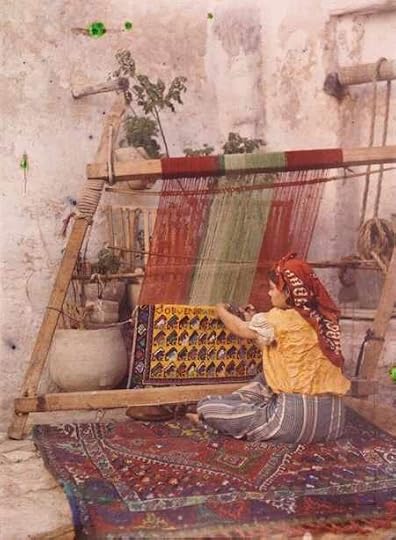
Algeria, 1909 (Note the word in the carpet!)
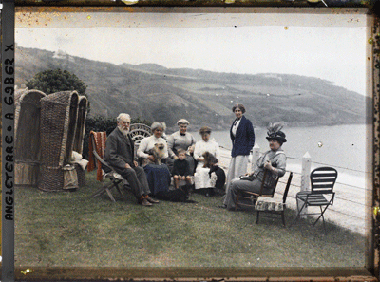
Kahn was also a keen photographer himself, although he did not like having his picture taken, and took portraits of the numerous and varied array of people who visited his homes. Here are some guests of his in Cornwall in 1913:
In addition to the historical and aesthetic interest of the images, I found the text here excellent. Some of Kahn's photographers made interesting notes, and Okuefuna has done a great job researching the images and their context. Many of the autochromes are available online, but I highly recommend reading the book as well. There is also a BBC publication The Wonderful World of Albert Kahn: Colour Photographs from a Lost Age in Books that I haven't read yet; the sample pages looked as if there was not as much text.
For those lucky enough to find themselves in the Paris area, his home in the Boulogne-Billancourt suburb is now a museum.
In 1909 French banker and philanthropist Albert Kahn began an enormous project to create a color photographic record of all the peoples of the world. In addition to wishing to document the traditional ways of life that were fast disappearing, Kahn hoped to promote peace and international understanding. One of the richest men in Europe until the Wall Street Crash of 1930, Kahn employed numerous photographers and sent them to over 50 countries.
The styles of the different men varied quite a bit, with some taking more workman-like, documentary images, and others (most famously Leon Busy) trying for more artistic and painterly effects.
They captured significant events and important individuals, but also everyday life in the areas they visited.
The project documented traditional regional clothing and practices
Mesdemoiselles Helene and Denise Lauth of Massevaux in Alsace, France, on 6 July 1918
Christian women in Iraq, 1927
and methods of farming, textile production, etc
Algeria, 1909 (Note the word in the carpet!)
Kahn was also a keen photographer himself, although he did not like having his picture taken, and took portraits of the numerous and varied array of people who visited his homes. Here are some guests of his in Cornwall in 1913:
In addition to the historical and aesthetic interest of the images, I found the text here excellent. Some of Kahn's photographers made interesting notes, and Okuefuna has done a great job researching the images and their context. Many of the autochromes are available online, but I highly recommend reading the book as well. There is also a BBC publication The Wonderful World of Albert Kahn: Colour Photographs from a Lost Age in Books that I haven't read yet; the sample pages looked as if there was not as much text.
For those lucky enough to find themselves in the Paris area, his home in the Boulogne-Billancourt suburb is now a museum.
February 28, 2015
Wonderful photographs (autochromes) of the first 3 decades of 20th century - rich history. I thought it would be easy to glace through the book pretty fast. I am wrong. Some of the pictures were thought provoking - especially those depicting the punishments in Mongolia. I tried to compare the places in the photographs with Google maps/street views and map-photos. It is interesting to think about - how the inhabited landscape changes. Also happy to notice some of the old structures that exists still. Great job by Albert Kahn and the group of people who preserve the resources.

January 27, 2015
In the summer of 1907 Auguste and Louis Lumiere demonstrated a startling new technology, the autochrome--a way of making true color images on glass. One of those struck by the potential of the new autochrome technology was a banker and philanthropist, Albert Kahn. On a trip around the world in 1909 he devised his plan to create what he called his Archives of the Planet--a photographic record of human life on earth. He would devote the next 22 years of his life and his fortune to the project, sending photographers and equipment to Asia, Africa, the Americas, Europe and the Levant.
There is poignancy to these photographs--these compelling, almost hypnotic images of times lost, cultures and ways of life that have vanished forever.
Some of the photographs, like this one from 1912 of a young woman in Bayreuth, Germany, use color and framing so masterfully that they are true works of art.
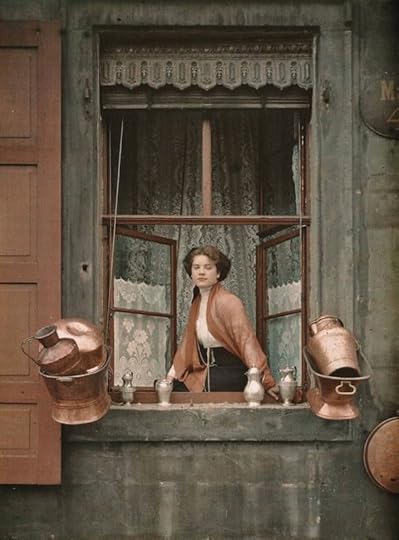
Many of the images were both lyrical and exquisite, yet mysterious, filled with unknowable secrets…
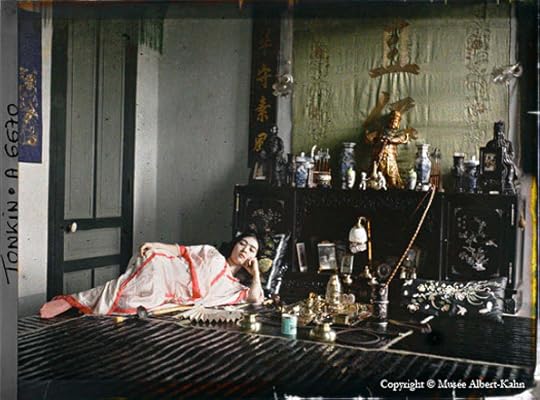
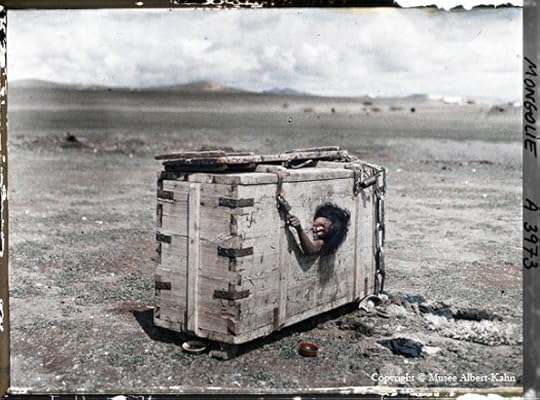
Others are shocking. This one of an imprisoned Mongol woman will haunt me always.
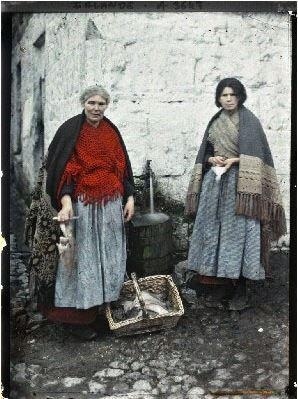
They document poverty and proud struggles for survival…
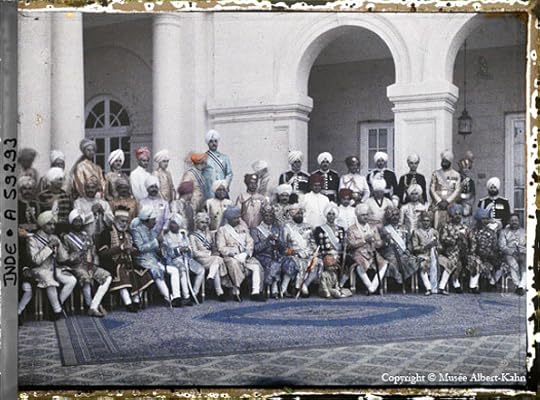
…but also great wealth and privilege—much of which would prove ephemeral.
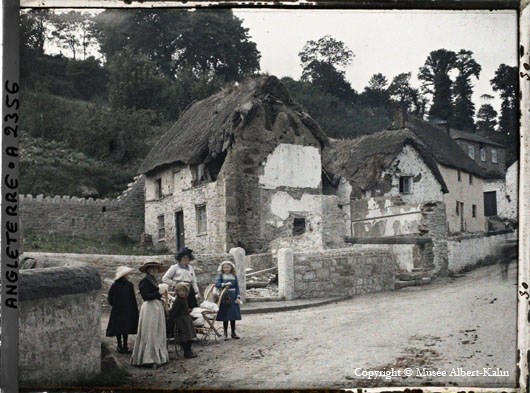
There are scenes of rural life…
…and bustling industry.
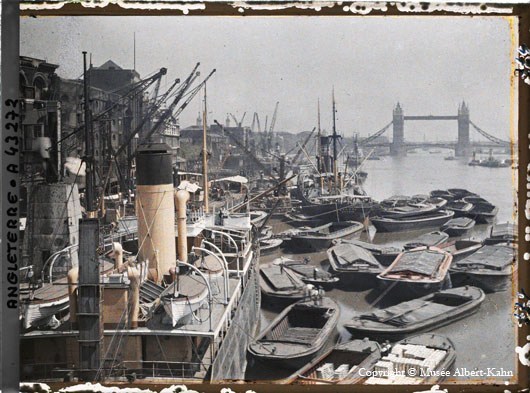
The images show us people who would soon face revolution, war or exile...
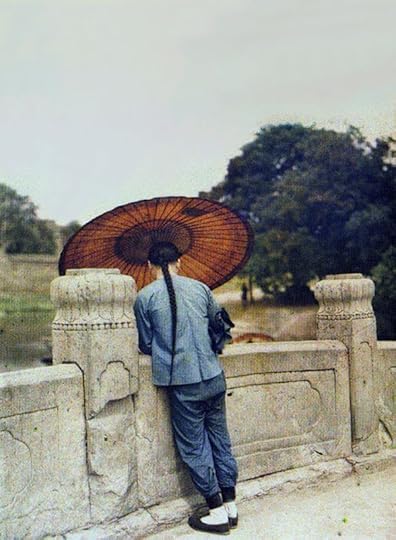
And document folkways that could never really survive the glittering, hopeful lure of city life.
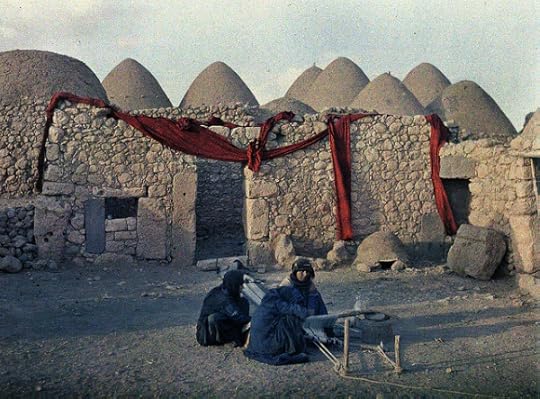
Each photograph holds a little world. The commentary gives us some clues about the people who fill these pages, but I found myself making up stories to go with each one, imagining their lives and futures. Somehow, looking back from the twenty-first century, many of the images seemed shadowed, not by the flaws in the autochrome plates, but by my knowledge of horrors that would sweep these worlds in the decades to come.
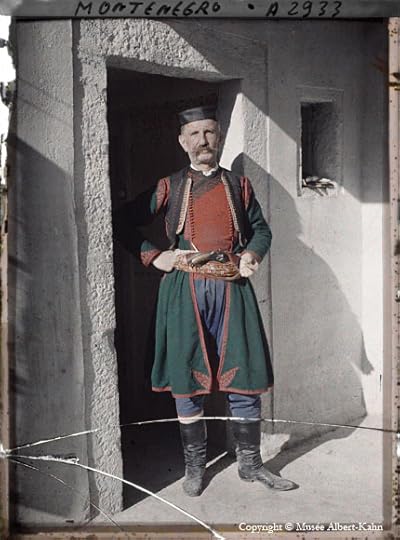
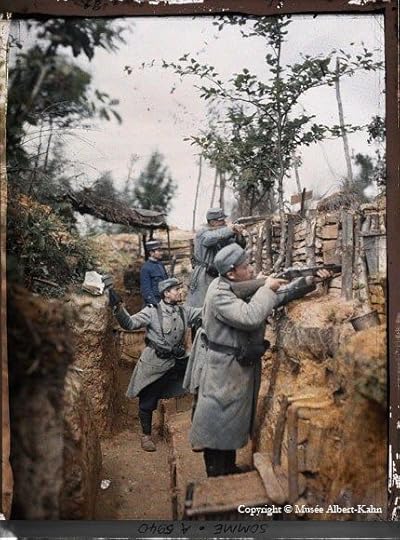
Albert Kahn was a devout pacifist who longed to open our eyes and hearts to the humanity of the world’s many peoples. But, sadly, some of the archives most striking images are those shot at the front lines during World War I.
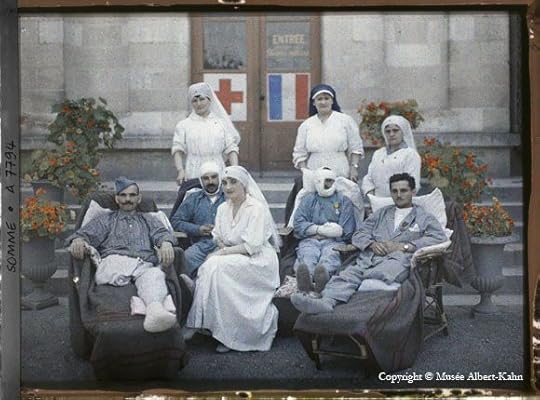
…or in the hospitals with their thousands of wounded young men
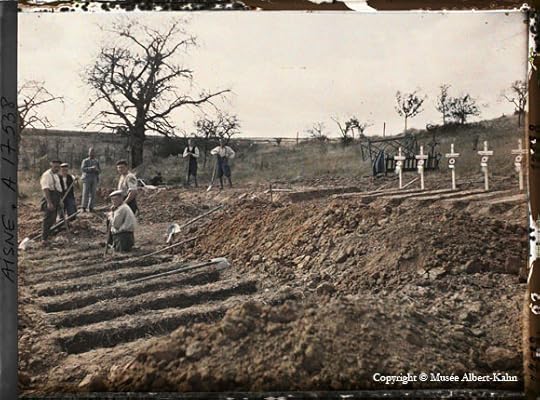
… or in the aftermath as millions of bodies were buried.
A selection of the 72,000 images taken by Kahn and his photographic team are now available online: http://albert-kahn.hauts-de-seine.net...
Others can be seen at periodic exhibits and at the Musee Albert Kahn in Boulogne-Billancout. It’s just west of Paris and you can get their by Metro line 10. But if you can’t visit Paris, you won’t regret buying this book—it’s a beautiful treasure and a thought-provoking journey to another time--a recherche du temps perdu.
There is poignancy to these photographs--these compelling, almost hypnotic images of times lost, cultures and ways of life that have vanished forever.
Some of the photographs, like this one from 1912 of a young woman in Bayreuth, Germany, use color and framing so masterfully that they are true works of art.
Many of the images were both lyrical and exquisite, yet mysterious, filled with unknowable secrets…
Others are shocking. This one of an imprisoned Mongol woman will haunt me always.
They document poverty and proud struggles for survival…
…but also great wealth and privilege—much of which would prove ephemeral.
There are scenes of rural life…
…and bustling industry.
The images show us people who would soon face revolution, war or exile...
And document folkways that could never really survive the glittering, hopeful lure of city life.
Each photograph holds a little world. The commentary gives us some clues about the people who fill these pages, but I found myself making up stories to go with each one, imagining their lives and futures. Somehow, looking back from the twenty-first century, many of the images seemed shadowed, not by the flaws in the autochrome plates, but by my knowledge of horrors that would sweep these worlds in the decades to come.
Albert Kahn was a devout pacifist who longed to open our eyes and hearts to the humanity of the world’s many peoples. But, sadly, some of the archives most striking images are those shot at the front lines during World War I.
…or in the hospitals with their thousands of wounded young men
… or in the aftermath as millions of bodies were buried.
A selection of the 72,000 images taken by Kahn and his photographic team are now available online: http://albert-kahn.hauts-de-seine.net...
Others can be seen at periodic exhibits and at the Musee Albert Kahn in Boulogne-Billancout. It’s just west of Paris and you can get their by Metro line 10. But if you can’t visit Paris, you won’t regret buying this book—it’s a beautiful treasure and a thought-provoking journey to another time--a recherche du temps perdu.
March 18, 2009
In the early 20th Century, the French philanthropist Albert Kahn sent a flock of photographers to all corners of the world to document the everyday lives of average people. What these photos capture is a lost world of local cultures: cooks, beggars, nuns, grape pickers and mussel harvesters throughout Asia, Africa, the Middle East, Europe and the Americas. Their rare or extinct ways of life are captured in beautifully-composed, vivid color (developed under Kahn's watch by the Lumière brothers).
We miss something when we limit our learning to words. I'm trying to stretch my brain by learning from visual and aural cues: "The Dawn of the Color Photograph" is a good example of visual history. Each of the hundreds of images in this book contains a seed of insight into human life.
Albert Kahn the color-photography supporter is not to be confused with Albert Kahn, the German-born but American-bred Jewish architect who built the best of Detroit. One of his gems: the Fisher building on Detroit's north side.
We miss something when we limit our learning to words. I'm trying to stretch my brain by learning from visual and aural cues: "The Dawn of the Color Photograph" is a good example of visual history. Each of the hundreds of images in this book contains a seed of insight into human life.
Albert Kahn the color-photography supporter is not to be confused with Albert Kahn, the German-born but American-bred Jewish architect who built the best of Detroit. One of his gems: the Fisher building on Detroit's north side.

November 3, 2012
If you are interested in Photography or History or the history of photography then this eloquent book is a must read. Times long gone forever are reanimated in incredible colour.

February 26, 2016
Fabulous book. Love the photos of course, but the whole idea behind Albert Kahn's grand idea is terrific. And successful. David Okuefuna's text gives readers an insight into world events at the time these photos were taken and some insight, where possible, into the photographers and Kahn themselves. Excellent book to dip in and out of.

February 24, 2016
I absolutely adored all the photograph in here and I loved the concept behind it. The historical explanations at the beginning of each section was a bit dry and hard to get through. Overall, definitely worth the look!

February 24, 2013
really fantastic record of so many places from the early 20th century. Khan's project left us with a great survey of a world in the midst of incredible change.

November 19, 2017
Apart from the precious autochrome photos taken in the 1906 to 1927 covering different continents including places in Europe, Americas, Far East, Middle East and Africa ... one can find many are the earliest know color photographs eg Taj Mahal, Pyramid of Khufu. Other than just photos, the book is rich in text describing the places and people which the pictures contain. I enjoy poking around the book for photos of places unknown to me, then with the help of Google search and Wiki to look up more information of such so as to enrich my knowledge on those countries history and culture.

February 19, 2022
Color photographs of a more varied time before we amalgamated into one world culture. Amazing!

June 21, 2021
I really wish I owned this if only for just the quality of the photos displayed.

February 25, 2015
One hundred years ago, the French banker and philanthropist Albert Kahn began funding a project called the Archives of the World to photograph different peoples from around the world in order to understand and document the many unique cultures that were on the cusp of being forever changed by globalization as well as to foster world peace among them. This was done through an early form of color photography known as autochrome and thus presents an unusual opportunity for us today a unique and radiant view into this world. Despite his hopes for peace, the project was interrupted by World War One and this collection therefore contains many color war photos of the effect of that event on France and Europe as well. I recommend this book to anyone with an interest in these subjects. In addition, I recently visited the Albert Kahn museum outside Paris which is on the site of his former home as well as his gardens of plants from around the world which also continue to be maintained.

September 17, 2020
百年前的彩色相片弥足珍贵,更可贵的则是Albert Khan的和平主义信念和为“星球档案”投入的巨资和毕生经历。淀粉颗粒形成的彩点凝固住美非亚三大洲的和平与战争年代,自带朦胧悠远的气质,甚至极为凄惨的画面都仿佛被慈悲之手拂过。人物在静止的建筑物前有时因为曝光时间不足而形如幻影,让人感慨生命转瞬即逝,何况在那个剧烈动荡的半个世界里,建筑乃至地貌都今非昔比。虽然作者谴责有些摄影师的色情暗示和为殖民统治贴金,但摄影本来就是摄影师的思想表达,从他们的缺憾上我们更能了解不同个体的欲望和他们的世界观,他们也是他们记录的那个世界的一部分。本来只想更好地了解TE所生活的年代,现在觉得下次去巴黎一定要拜访一下卡恩的博物馆。印刷和翻译都挺到位的中文版里章节间的跨页照片没有说明真是个败笔。
January 27, 2015
This book (with its companion documentary), The Sixth Extinction, and Walkable City are my three most eye-opening reads of the past year. The ten part documentary: The Wonderful World of Albert Kahn.


April 8, 2013
we stellen ons het verleden vaak voor in zwart-wit, wat een ontdekking om de wereld te zien zoals die er echt uitzag, in kleur. Prachtig boek.

April 22, 2014
A large book with photos from days gone by. Descriptions.

June 7, 2014
You will find many things about the past from this book.
July 17, 2015
Wow. What a cool window into a lost world. Albert Kahn was a special human. We could use some more like him.
Displaying 1 - 19 of 19 reviews