WINNER of the French Voices Grand Prize, Prix Ahmadou Kourouma, and Grand Prix du Roman M�tis
Mohamed Mbougar Sarr's searing and thought-provoking debut novel, Brotherhood takes place in the imaginary town of Kalep, where a fundamentalist Islamist government has spread its brutal authority.
Under the regime of the so-called Brotherhood, two young people are publicly executed for having loved each other. In response, their mothers begin a secret correspondence, their only outlet for the grief they share and each woman's personal reckoning with a leadership that would take her beloved child's life.
At the same time, spurred on by their indignation at what seems to be an escalation of The Brotherhood's brutality, a band of intellectuals and free-thinkers seeks to awaken the conscience of the cowed populace and foment rebellion by publishing an underground newspaper. While they grapple with the implications of what they have done, the regime's brutal leader begins a personal crusade to find the responsible parties, and bring them to his own sense of justice.
In this brilliant analysis of tyranny and brutality, Mbougar Sarr explores the ways in which resistance and heroism can often give way to cowardice, all while giving voice to the moral ambiguities and personal struggles involved in each of his characters' search to impose the values they hold most dear.
Mohamed Mbougar Sarr was born in Dakar in 1990. He studied literature and philosophy at the École des Hautes Études en Sciences Sociales in Paris. Terre ceinte (Brotherhood), his first novel, won the Grand Prix du Roman Métis, the Prix Ahmadou Kourouma, and the French Voices Grand Prize. The president of Senegal named him a Chevalier of the National Order of Merit. La plus secrète mémoire des hommes (The Most Secret Memory of Men) won the 2021 Goncourt Prize.
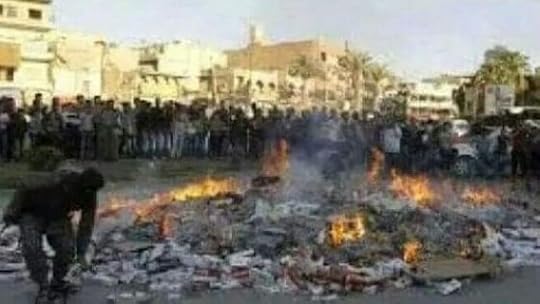
Scene di ordinaria follia: soldati dell’ISIS bruciano libri e antichi manoscritti a Mosul, l'antica Ninive.
Questo scrittore ventinovenne senegalese ha pubblicato una novella, La cale, e ha subito vinto un premio letterario. Poi, questo romanzo, che è il suo esordio nella narrazione lunga, uscito quando aveva venticinque anni, e col quale ha vinto un altro premio letterario, il Prix Ahmadou Kourouma (ma del grande scrittore della Costa d’Avorio, a Sarr, almeno in questo inizio, manca del tutto la massacrante ironia). Sei anni dopo questo - nel frattempo altri due titoli - è esploso (per così dire) con il romanzo che ha vinto il premio Goncourt nel 2021, La più recondita memoria degli uomini. Esploso per così dire per ché qui da noi, nonostante una generale buona accoglienza, le copie vendute restano nell'ordine di qualche migliaio: poca cosa rispetto all'apprezzamento.
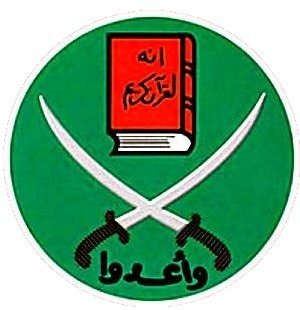
Fratellanza musulmana
E questa è per me la nota dolente, l’assenza di humour: la bimba che dice di essere troppo piccola parla già come un’adulta, e tutti gli adulti parlano molto compresi di se stessi, dimenticandosi qualsiasi alleggerimento e tono ironico. Il narratore sceglie parole che spesso grondano patos, il ricorso al tono drammatico è eccessivo.
Ma è un romanzo d’esordio, e sono dispostissimo a perdonare Sarr perché mi racconta una storia preziosa di un mondo di doloroso interesse.
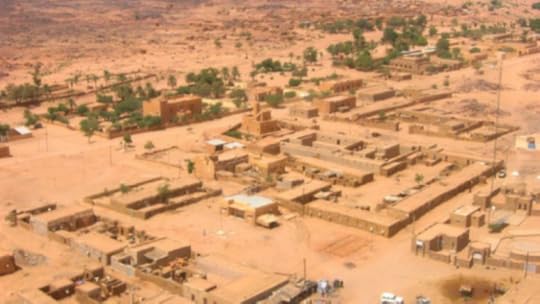
La città di Kidal nel Mali che è servita da modello per la Kalep della finzione letteraria.
Siamo in un luogo non precisato, Sarr inventa nomi, ma sembra corrispondere al Mali, una qualche città del Sahel (probabilmente Kidal), porta del deserto. La Fratellanza Musulmana ha preso in mano la zona e la governa secondo le rigide regole della sua religione. Questa religione non corrisponde a quello che si suole chiamare islamismo moderato, ma piuttosto a quello che si definisce Islam radicale (integralista, fanatico). Regna la jihad, vige la shari’a. La Fratellanza Musulmana qui raccontata evoca ovviamente l’ISIS, o Daesh, e Boko Haram. E quindi, oltre che al Mali si pensa alla Nigeria, alla Siria e altrove. Sarr confessa che per documentazione e ispirazione ha letto romanzi dedicati all’occupazione nazista in Francia.
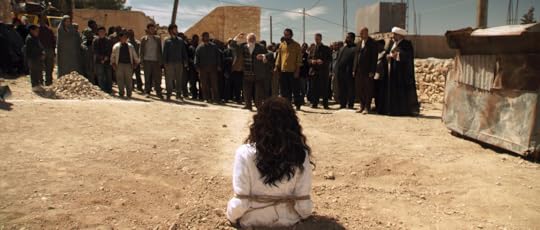
Lapidazione
È ferreo e rigoroso attaccamento a dogmi religiosi o è terrorismo? Si può chiamare terrorismo se a pagare sono per primi i fratelli di sangue e fede, non gli occidentali? È dio e sangue, Allah e morte. È sicuramente violenza, prevaricazione, spietatezza, privazione della libertà, dittatura.
E anche qui la lingua scardina: le parole vengono proibite, pensiero ed espressione controllati e repressi, il linguaggio è espressione del pensiero e, quindi, come sempre un regime totalitario (politico e/o religioso) vuole controllare imponendo il suo vocabolario (Orwell docet). Pertanto, rogo di libri, le fiamme consumano le pagine per distruggere e cancellare le parole. Ma anche per avviare un inizio di opposizione e lotta si ricorre proprio alla parola: chi combatte la Fratellanza pubblica un giornale clandestino col quale contestare quell’interpretazione del Corano.
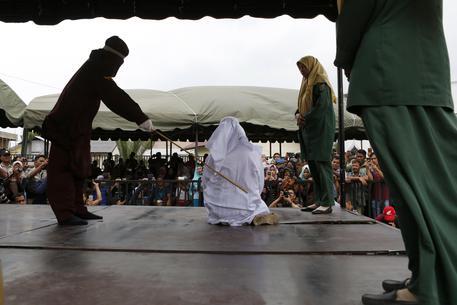
Per educare con la punizione, frustate in pubblico.
La donna, il corpo stesso della donna, è il maggior paradosso di questo abominio religioso-politico: lo si vuole coprire, nascondere, controllare, ma come prima cosa lo si desidera in modo smisurato. La paura di ciò che attrae. L’attrazione per ciò che si vuole reprimere. Anche qui, come sempre, la donna paga più di ogni altro essere umano. Verrebbe da dire anche più delle bestie se non fosse che l’Alleanza uccide e brucia i cani in quanto animali domestici ritenuti impuri.
Mali
Sarr potrebbe essere più leggero, ma sa costruire una storia presa dalla cronaca con attori anonimi ai quali sa regalare volto e psicologia, rendendoli personaggi protagonisti, i fatti si incrociano con avventura e suspense, la realtà è potenziata dal dono della letteratura.
Là dove si bruciano i libri si finisce per bruciare anche gli uomini. Heinrich Heine (1791 – 1856)
https://www.youtube.com/watch?v=9oxO6... In Senegal il Niani è un canto di resistenza all’occupazione coloniale composto a metà Ottocento. Sulla copertina del disco si vede lo xalam, tipico strumento a 4 o 5 corde, con cassa di risonanza ovale in legno coperta di pelle di bue o capra, e un manico: si tratta di un liuto dell’Africa Occidentale suonato dalla maggior parte dei griot.
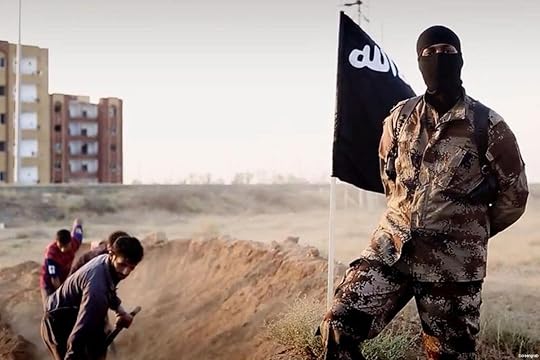
Miliziano dell’ISIS sorveglia condannati che stanno scavando la propria tomba.
When I read reviews of this book, they tended to use words like "harrowing" and "searing", so it with some surprise that I find myself wanting to use words like lovely, delicate and beautiful to describe this short, fable-like novel from Senegalese writer Mohamed Mbougo Sarr - which I can unhesitatingly recommend. Brotherhood is about tough things, yes. It starts with the brutal public execution of two young lovers, humiliated and disavowed by their parents before they are shot. Sarr is not interested in the brutality, though, and the scene is dispassionately rendered, with the focus quickly moving to what he is interested in, the responses of those living under the regime. We are shown this in two ways - the inclusion of letters between the mothers of the lovers, struggling to identify what power they do and don't have - and the story of a group of six rebels who meet to print a journal to expose the regime. The latter is introduced as archetypes - the heart, the brain, etc of the group. And their actions and arguments provide an exploration of your options against tyranny: to defy even when it will mean your neighbours suffer or to acquiesce. To hide or to stand tall. To fight or to run. Each choice is respected and depicted with integrity. What makes the novel such a pleasure is Sar's tenderness for all these manifestations of humanity - even the Islamists. The book is outlined in simple brush lines - this is elegant and spare not richly detailed - but Sarr avoids polemic or simplification. A kind of melancholy lies over their choices, but the love and respect they show each other, even in disagreement, models a different kind of discourse. Somehow manages to be quite cynical, or at least wry, while retaining hope. The depiction of a book burning both captures the anguish of cultural loss and highlights the hypocrisy of Western values for books recording ideas over the people who dream them up. I might not have liked this book so much if I hadn't just finished a couple of books about Syria's horrific war, which started from a movement with optimism and hope and ended well, badly. Brotherhood makes some sense of humanity under persecution, choosing to celebrate the process of making impossible choices and the fact that people try at all.
An absolutely visceral and heartbreakingly intense novel about a fictional town which falls under the control of a fundamentalist Islamic government. The book opens with a really terrifying scene of two young lovers being executed for having sex without being married, and the emotional toll this takes on the two mothers of the lovers who were forced to watch their children die.
I liked how this book spoke about the power of words and ideology, and how using them to fight back can be the most powerful forms of action and resistance against a regime much bigger than you. It is a really disturbing book which feels frightening at times due to its claustrophobia and constant creeping sense that there is a danger that can pop out at you any moment. The end was truly shocking and I couldn’t put it down - it was such a violent moment followed by a really dry and haunting conclusion.
Sarr is such a talented writer and although this is very different to The Secret Memory of Men, and I didn’t quite think it was as much of a masterpiece, this book almost feels more powerful in some ways in how it explores the bonds of family and rebellious spirit.
To jest ciekawa książka z punktu widzenia polskiej literatury okupacyjnej. Można powiedzieć, ze mamy tu islamskie Kamienie na Szaniec. Oczywiście są tez współczesne smaczki, zwłaszcza w epilogu ale paralele są bardzo widoczne. Warto przeczytać by obudzić w sobie trochę empatii i poszerzyć horyzonty. Cytując klasyka „przyjemne” 5/5
„Bractwo” Mohamed Mbougar Sarr (tł. Jacek Giszczak) to historia fikcyjnego miasta Kalep, znajdującego się pod okupacją. Rządy w mieście prowadzą brutalni członkowie Bractwa. Książkę rozpoczyna publiczna egzekucja zakochanych nastolatków. Ich matki zaczynają ze sobą korespondować, bo tylko one potrafią wzajemnie zrozumieć swoje emocje. Tymczasem zbiera się grupa, która zamierza wydać podziemną gazetę, aby zwiększyć świadomość mieszkańców i nakłonić ich do buntu.
Ale to była świetna i ważna lektura! Nie spodziewałam się, że tak do mnie trafi, bo jednak jest spoza mojej strefy komfortu. Obawiałam się, że będzie trudna czy niezrozumiała, ale moje obawy okazały się nieuzasadnione.
Bardzo do mnie trafiły zawarte tu przemyślenia i dyskusje na temat mechanizmów działania fundamentalistycznego reżimu, zachowań tłumu na które składają się losy i moralność pojedynczych ludzi. To studium ludzkiej psychiki i zachowań w obliczu trudnych sytuacji, tchórzostwa biorącego górę nad chęcią stawienia oporu, czy zmieniającej się atmosferze wraz z pojawieniem się w mieście radykalnych islamistów. „Bractwo” to bardzo interesująca lektura, która snuje rozważania, pokazuje mechanizmy, ale nie daje jednoznacznych odpowiedzi.
Świetna rzecz. Świetny debiut!
✨✨✨
"Ludzie są tchórzami, gdy jest im wygodnie w niewoli. (...) W owym czasie żadne słowo żadne zdanie, żadna gazeta nie skłoniłyby mnie do buntu. Po co ryzykować utratę życia, przeciwstawiając się organizacji, która zapewnia mi spokój, o ile tylko jestem jej posłuszna? który nie ma osobistych trosk, łatwo jest być posłusznym. Skłonić go do tego, by okazał nieposłuszeństwo tylko dlatego, że sytuacja ogólna wszystkich ludzi jest godna pożałowania, jest rzeczą nie- możliwą. Ludzie są wiecznymi egoistami, nie przejmują się sytuacją ogólną; nie troszczą się o los innych i myślą tylko o własnej wygodzie, nawet jeśli ten komfort jest trucizną."
"Patrzy na mieszkańców Kalep. Są zajęci swoimi sprawami, zmagają się z trudnościami, by się uwolnić od trosk, lęków, próbują się oswoić ze śmiercią. Przybiera to różne formy: jedni kolaborują, inni milczą, niektórzy stawiają opór. Wszyscy starają się przeżyć. Przeżycie jest czymś najtrudniejszym. Uważa, że to trudniejsze niż wykazanie odwagi, trudniejsze niż bunt, być może trudniejsze nawet niż miłość. Przeżycie jest czymś więcej, bo właśnie po to, żeby przeżyć, ludzie wykazywali odwagę, buntowali się, kochali; przeżycie bliskich i własne, przetrwanie tego, w co wierzymy, szczęśliwego świata, który znaliśmy kiedyś i nie chcemy, by zniknął, przeżycie tych, których darzymy uczuciem. Przeżycie mimo wszystko. I zdaniem Madjigueen Ngoné tym ludziom właśnie na tym zależy: za wszelką cenę chcą przeżyć w martwym świecie."
Sopravvivere la dolore non significa batterlo, ma solo rimandarlo, rimandarlo a lungo.
Avevo voglia di allontanarmi dalla cronaca, dai massacri, dai fanatismi, dal Medioriente all'Ucraina. Così ho pensato a uno scrittore senegalese. Garanzia il fatto che nel '21 abbia vinto il premio Goncourt, che ha sempre il mio rispetto, al contrario dei Premi addomesticati di casa nostra. Niente di più errato. “Era un fanatico intelligente, sempre che sia possibile associare i due termini, un fanatico in grado di sostenere le sue idee con argomenti chiari, granitico nelle sue convinzioni come tutti i fanatici. Una storia ambientata in una terra conquistata da un Islam fanatico pronta ad ammazzare tutti coloro che possano risultare pericolosi, anche il suo stesso popolo, poiché niente quanto un popolo imprevedibile lo può essere. Un po' didascalico a tratti, mentre le pagine più belle restano quelle dello scambio di lettere tra due madri di giustiziati colpevoli solo di amarsi. Mi sa che vado a cercare anche quel premio Goncourt che mi sono lasciata scappare.
P O T Ę Ż N Y Senegalczyk potężnie debiutuje. Świetne studium radykalizmu, oporu, jego braku opisane zaskakująco (a może nie, bo to przecież Sarr) poetycko. Wciąga tak, że nie idzie się od niej oderwać, choć wiadomo, że happy endu tu nie będzie, bo być nie może.
Jesteśmy w fikcyjnym mieście w fikcyjnym afrykańskim kraju okupowanym przez radykalne islamskie Bracatwo, ale wiadomo, że chodzi o północne Mali pod rządami Ansar Dine. Egzekucje, okaleczenia, spiski, krwawe zamieszki i sroga krytyka wszelkich radykalizmów.
Styl opowiadania historii, który zupełnie mi nie podpasował. Bardziej przypominało to patetyczny manifest polityczny niż prawdziwą powieść, a najbardziej kłującym w oczy tego przejawem były dialogi, które brzmiały jak wytwór sztucznej inteligencji.
„Chcemy być herosami, nie mając ku temu środków. Chcemy być tragicznymi bohaterami, nie dorastając do wielkości tragedii.”
„Prawdziwy fanatyzm znajduje swój najdoskonalszy i najniebezpieczniejszy wyraz w elitach, które go ucieleśniają: w tych ludziach wykształconych po części w zachodnich szkołach, którzy opanowali retorykę, znają jej subtelności, rozumieją jej język i zręcznie się nim posługują.”
„Po co ryzykować utratę życia, przeciwstawiając się organizacji, która zapewnia mi spokój, o ile tylko jestem jej posłuszna? Człowiekowi, który nie ma osobistych trosk, łatwo jest być posłusznym. Skłonić go do tego, by okazał nieposłuszeństwo tylko dlatego, że sytuacja ogólna wszystkich ludzi jest godna pożałowania, jest rzeczą niemożliwą.”
Impressionante maturité que celle révélée par l'auteur (le livre est de 2014, l'auteur est né en 1990, faites le calcul) au cours de ce puissant roman qui traite de la folie de l'intégrisme qui pervertit la foi, du courage, de la lâcheté, de la peur, de la résistance à l'oppression...
Tant de concepts et d'idées brillamment couchés sur le papier en somme toute peu de pages... Mais quelle richesse et quelle maîtrise.
Le style est beau, riche, empreint il me semble d'une grande tristesse. J'ai l'impression que la situation décrite par Mohamed Mbougar Sarr le touche profondément, le blesse et que ce livre est pour lui une forme de catharsis.
Les personnages sont magnifiques, tres bien decrits; même le chef de la police islamiste dépasse l'idée d'un simple fou furieux éructant des imprécations haineuses et, à defaut de pouvoir le comprendre, j'ai apprehendé sous un autre angle sa vision de la foi.
Un tout petit bémol: si j'ai sincèrement apprecié la maîtrise stylistique de l'ouvrage, certains dialogues et la correspondance entre les 2 mères m'ont semblé parfois un peu trop littéraires. Défaut mineur pour un excellent roman.
Brotherhood by Mohamed Mbougar Sarr surprised me. I thought perhaps I was reading a novel about contemporary West African experience and radical Islamism, but Brotherhood digs a lot deeper. Sarr’s blend of philosophical pauses and thrilling story felt, at times, to be allegorical and reminiscent of such classics as the Plague, but that may be an inappropriate comparison. Sarr’s writing feels literary and thoughtful, intentional, overtly intentional, its surprisingly transparent goals were disruptive to the narrative but helpful in inviting me to think more deeply about the story. As I said, unexpected.
A clear and lucid exploration of what happens when a vibrant multifaceted community comes under extremist ideology and all nuance and grey is extinguished. This novel explores the most complex of human conundrums in very beautiful yet matter of fact language. Can't wait for his next novel to be translated into English. A huge talent to have on one's radar going forward.
3.5 Ciekawe przedstawienie całego wachlarza reakcji na terror, totalitaryzm i przemoc. Krótkie rozdziały pomagały sobie poradzić z dość brutalną treścią. Ale zabrakło mi więcej dynamizmu w tej historii, niektóre fragmenty się dłużyły.
LOOOOOOOOOOOOOOOOOOOOOOOKO DEMAIS! CIDADE CONTROLADA POR MILÍCIA DE ARROMBADOS FAZ UMA GALERA SE UNIR PARA CRIAR JORNAL DE RESISTÊNCIA. TEM DECAPITAÇÃO, FILOSOFIA HUMANA, FUNDAMENTALISMO RELIGIOSO E RESTAURANTE.
I read Brotherhood earlier this year, and my initial thoughts on the book was stunning. Sarr was only 24 (!) when this debut novel was published in its original French. To be that young and to write with such power and depth is remarkable. The story unfolds through two interwoven narratives: the secret correspondence of two grieving mothers whose children were executed by an Islamic fundamentalist regime and the efforts of a group of intellectuals who publish an underground newspaper to resist the regime’s oppression. Sarr masterfully explores themes of freedom, resistance, and grief to depict the personal and collective struggles under tyranny. I thought his meditation on language and memory as forms of resistance was brilliantly done, and it's easy to see parallels in the resurgence of authoritarianism globally.
I went over the book again recently, and i fell a little out of love with it. Sarr spent a lot of energy painting the brutality of the regime, showing how its leader twists Islam into a tool of control. I felt let down by the lack of detail on the counterarguments represented in the underground newspaper. Sarr sets up this rebellion, yet he doesn’t dive into the meat of what they’re actually saying in the newspaper, which i thought was a missed opportunity. We get the “why” of their fight—freedom, humanity, resistance—but the “what” of their Islamic critique or vision remained vague. It left me feeling unsatisfied when the regime’s ideology was so fleshed out in comparison. It’s as if the novel prioritizes showing the evil of the fundamentalists over exploring the substance of the protagonists’ alternative.
Also, the footnotes. Sigh. There were footnotes translating Wolof proverbs and Islamic phrases, resistance songs and descriptions of musical instruments, even tea and cereals. I treated their intrusion with mild annoyance, but the moment that took me out completely was when one character quotes Victor Hugo. Not only does Sarr feel the need to include a footnote for this (fair enough, i suppose), but then the character immediately follows up with, “It’s Victor Hugo.” The redundancy would've been comical if it wasn’t such an overkill, and it pulled me out of the story a bit. For a novel so vibrant and alive, this heavy hand-holding felt jarring and unnecessary.
That slow rethink dulled my first impressions. Since it’s his debut, maybe these are just first-timer hiccups, maybe he was aiming for a certain audience 🤷🏽♀️ Overall, strong debut (written at 24, whaattt!) with some weak spots. Will read more by Sarr.
In quest’ottimo romanzo d’esordio, pubblicato quando l’autore aveva solo 25 anni, Mbougar Sarr racconta la storia di un paese fittizio in West Africa - ma chiaramente rimanda al Mali moderno - in parte occupato da un gruppo di estremisti islamici noti come la Fratellanza.
Il libro si apre con un episodio efferato: la fucilazione di due giovani ventenni, accusati di ‘adulterio’. Di fronte ad una piazza piena di gente venuta ad assistere all’esecuzione, il capo della polizia islamica Abdel Karim convoca i genitori dei due accusati, chiedendo loro di ripudiare i propri figli peccatori. Solo una delle due madri é presente: l’altra è costretta dal marito a rimanere a casa. Mentre i padri sono lesti a ripudiare i propri figli, non così per le due madri, il cui carteggio - avviato dopo l’esecuzione da Aissata, la madre della ragazza in uno sforzo volto a comprendere come l’altra avesse potuto rimanere a casa nel giorno della morte di suo figlio - costituisce uno dei traits d’union del libro. É proprio in una di queste lettere che troviamo uno dei punti più profondi del romanzo: una riflessione sul potere del popolo di ribellarsi ai soprusi imposti dalla Fratellanza. “Quando la schiavitù é comoda, gli uomini diventano vigliacchi” - una affermazione la cui portata va al di là dei confini della storia narrata in queste pagine.
L’autore è molto bravo a delineare i personaggi centrali di questa storia, particolarmente i membri principali della famiglia del dottor Malamine, che avrà un ruolo fondamentale nella ‘resistenza’ alla Fratellanza polarizzata attorno alla creazione di un piccolo giornale sovversivo. Tuttavia, altri personaggi sono molto meno caratterizzati: promettentissimo sarebbe il figlio maggiore di Malamine, Ismaila, la cui storia é però introdotta troppo vicino alla fine del romanzo per darne completo dispiego.
Similmente, l’episodio del rogo dei libri é introdotto quasi quanto una appendice, laddove invece avrebbe potuto avere molto più impatto se dispiegato nel corso dell’intero arco narrativo.
Infine, una parola sui luoghi. Molti sono nominati: Kalep, Bamika, etc.; nessuno é però descritto in alcun dettaglio. Magari questo sarà anche stato voluto, ma a me é parsa un’occasione persa di meglio caratterizzare la storia.
In generale un libro consigliatissimo, che si legge velocemente e contiene spunti profondi sulla natura umana.
Set in the fictional North African city of Kalep, Mbougar Sarr's blistering novel tells the story of an Islamic fundamentalist group, known as the Brotherhood that takes over and begins to dole out cruel and inhuman 'justice' on the once free citizens. Soon a resistance group of intellectuals and free-thinkers forms and publishes an underground newspapers to spur the people to react. Tense, engaging, and insightful Mbougar Sarr's brilliant debut explores resistance, heroism and how the two can disintegrate into something just as frightening. Alexia Trigo's translation is strong and confident.
J’ai lu De Purs Hommes et la Plus secrète mémoire des hommes avant de lire Terre Ceinte. Bien qu’on ne puisse nier la progression du style de l’auteur au travers de ses œuvres, on reconnaît le style de Mohammed Mbougar Sarr dès le début du livre; une scène choquante et barbare décrite en détails, des fragments de lettres insérées entre les chapitres. Au delà de l’histoire qui se veut dénonciatrice d’une régime autoritaire (et c’est l’aspect du livre que j’ai préféré), on devine en arrière plan le fameux débat philosophique et sociologique de la structure vs l’agence (l’individus vivant en société possède t’il un libre arbitre ou ses décisions sont-elles déterminées par les structures sociales? Jusqu’où vont les conséquences des actions collectives sur les actes des individus? La société est-elle composée d’individus qui agissent comme agents libres ou bien est-elle une masse uniforme et hétérogène)? En sommes, un livre politique, sociologique, philosophique et très bien écrit.
Set in the fictional city of Kalep this books aims to give insight to the workings of the Islamist extremist movements that do more harm than good in the name of God and religion. Under the Brotherhood the city of Kalep is ruled by a man with an iron fist who is the leader of the Islamic police. the book starts of brutally when two young people are executed publicly and this leads to the rise of a few people who want to fight back against the regime. All in all its a great premise, the characterization no so much. the constant shift in points of view is more jarring than it is helping flesh out how bad the regime is I forgot a lot of the characters and what their motivations were. There is the constant telling of things which reduced the impact of the emotions I was required to feel. I liked the correspondence between the two women whose children had been killed I felt that those were the strongest viewpoints because their losses directly impacted the story. Often times some of the situations felt contrived so that we can be preached to such as the burning of the library which happened so that the author could tell us how fascism works in a long paragraph. Its a good book for what its trying to put across
Ah, I was disappointed by this! I found it a bit more polemical than effective as a novel, and I could never overcome my feeling that of course this would be acclaimed in France, because it feeds into the secular, anti-Islamic strains of culture and politics there. I wish I knew more about the author's background growing up in Senegal--it was in the center of sufiism in Senegal, I know, and so surrounded by Islam, but not in a fundamentalist way to my knowledge, so I'm unclear on what personal experiences influenced this depiction, or whether to some degree it's been calculated to appeal to French readers? His latest book sounds very much more fascinating though still rather political and theoretical perhaps. I could sense bits of The Plague in this, and the many literary/artistic history references do seem calculated to assert 'I too belong here, this too is my culture', but nothing ever quite came alive for me. Perhaps it's partly the fault of the translation, perhaps it's unfair of me to ascribe the fundamentalism focus to catering to the French eye; in any case this doesn't do anything to enlighten me as to what motivates those movements, and the discussions around opposition to them felt more debate club than literature to me.
This is a very powerful book. Some passages read like poetry others are terrifying. Survival is demonstrated by courage. This is an extremely well written novel about tyranny and brutality. People can be suppressed, and killed in the name of God, or on the interpretation of what God may want. In the end, the human spirit and the quest for freedom prevails. Searching for freedom cannot be stopped.
Niesamowita dyskusja w formie powieści: na temat ideologii, postaw moralnych ludzi wobec reżimu, potrzeby i konieczności "działania" i konsekwencji tego działania, relacji międzyludzkich w trudnych czasach. Niejednoznaczna, stawiająca pytania, pokazująca wiele odcieni tego samego zagadnienia. Takiej literatury szukam.
trafiłam na tę książkę całkiem przypadkiem i mimo ciekawego tyłu nie spodziewałam się wiele. oh boy jak bardzo się myliłam. subtelne a jednocześnie intensywne opisy tej okropnej rzeczywistości, forma niby prosta, a jednak ukazująca historię z wielu perspektyw (bez jednoczesnego przesytu), gdzie każda była inna, lecz równie angażująca i miażdżąca. to niedługa książka, ale każda strona była przemyślana, ważna i absolutnie w punkt, nie było momentów przestoju czy nudy. styl pisania był śliczny, a opisy sprawiły że czułam się jakbym realnie znała tych ludzi i widziała przed sobą miasto. jest to książka niepodobna to niczego co czytałam wcześniej. zdałam sobie sprawę że jestem bardzo zmęczona czytaniem o opresji opisanej zawsze w taki sam sposób. ta powieść nie jest dobra przez swój temat, który oczywiście jest bardzo wstrząsający, a przez genialne wykonanie i kunszt pisarski. podczas czytania nie mogłam się oderwać i czułam całą sobą, że dzięki takim pozycjom kocham czytać.
Uma obra sobre agressão e resistência. Em meio à invasão da Irmandade fundametalista, uma pequena cidade do norte do Senegal é palco dessa (semi)ficção que busca representar personagens diversas nessa situação de enorme tensão. As personagens são humanas, no sentido em que se guiam tanto pela razão quanto pela emoção se atendo ao realismo; a família principal ganha o protagonismo, mas as demais não deixam de ter seu desenvolvimento. Uma das principais personagens do livro é o próprio povo, o que é semanticamente questionado dentro das discussões políticas da Resistência, e assim procura-se demonstrar a atuação das massas como complexa e mesmo contraditória. O mais frustrante é o final da história, mas trata-se de uma frustração contemporânea. Não há final satisfatório para um problema tão atual quanto o fundamentalismo religioso, seguimos buscando uma solução...
Primo libro di un autore scoperto per caso l'anno scorso, che quest'anno ho l'opportunità di approfondire in un seminario. La caratterizzazione dei personaggi è sempre ben riuscita, e il romanzo epistolare parallelo al romanzo vero e proprio crea una voce esterna agli eventi che però aiuta il lettore a comprenderli meglio. Leggere la scena della fustigazione dopo settembre 2022, con la morte di Masha Amini, acquista ulteriori significati, e lo stesso vale per la riflessione sul ruolo del silenzio, della parola e della resistenza in riferimento alla guerra Israele-Palestina. Ma anche per quanto riguarda il sovraffollamento degli ospedali. "Si l'amour est coupable, rien n'a plus du sens"
This book is a powerful novel that explores violence, freedom, and resistance in the face of extremism. Terre Ceinte takes us to the fictional city of Kalep, where a jihadist group holds power, and fear dictates everyday life. And, at the heart of this oppression, writing becomes an act of resistance and survival.
⭐️5. może i trochę za długo się rozwija, może i jest miejscami sztampowa oraz łopatologiczna. ale to wszystko nieważne, bo jak już mnie chwyciła za gardło, to nie puszczała aż do końca, a dawno żadnej książce się to ze mną nie udało. powieść o tym, jak ważne jest słowo i akt jego stwarzania. jako polonistka z wyboru oraz samozwańcza językoznawczyni kupuję to i nic mnie więcej nie obchodzi. a, no i bardzo kocham wydawnictwo artrage.