

What do you think?

Late Sonata
With his wife suffering from Alzheimer’s, Stephen reluctantly edits her final book, a study of Beethoven’s sonatas, even as he still grieves the loss of their son.
Each day he escapes into his own work: a novel about an experimental treatment that reverses ageing. But when he discovers in his wife’s papers a clue to an unwelcome secret, Stephen is forced to confront his past and reconsider the truths about his family.
Bryan Walpert’s novella is an intimate portrait of marriage, infidelity and the legacies of memory.
Joint winner of the 2020 Seizure Viva La Novella Prize
Each day he escapes into his own work: a novel about an experimental treatment that reverses ageing. But when he discovers in his wife’s papers a clue to an unwelcome secret, Stephen is forced to confront his past and reconsider the truths about his family.
Bryan Walpert’s novella is an intimate portrait of marriage, infidelity and the legacies of memory.
Joint winner of the 2020 Seizure Viva La Novella Prize
157 pages, Paperback
First published September 1, 2020
Ratings & Reviews
Friends & Following
Create a free account to discover what your friends think of this book!
Community Reviews
Displaying 1 - 12 of 12 reviews

September 23, 2020
Beautifully-crafted, thoughtful, and elegiac, this gorgeous novella has big and profound things to say about ageing, creativity and the nature of love through time that greatly belies its brevity. Another Viva La Novella prize triumph.

November 2, 2020
A really interesting short book that circles around ideas about memory, ageing, marriage and mortality. Its structured to mirror a sonata in a way that could have felt a bit too clever, but somehow worked beautifully for me. The story-within-a-story was the least interesting part for me, but it helped to draw out some of the bigger themes that Walpert was interested in.

October 16, 2020
Late Sonata is an interesting novella, framed around the structure of a sonata. And not just any old sonata, it's Beethoven's No 30 in e Major, Op 109. (Yes, it has its very own Wikipedia page.) You do not need to know anything about sonatas to enjoy the book, but it enhances the pleasure if you know that this sonata consists of three movements, corresponding to the three parts of the book; and that the sonata has six variations in the third movement, which corresponds to six versions of reality that the central character considers in the last part of the book.
I did take the narrator's advice at the beginning of Part One:
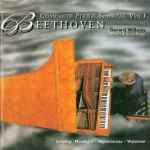 #Digression1: The recording I chose was played by Gerard Willems, on the Australian designed and manufactured Stuart & Sons piano. (I have, BTW, on the TBR a copy of Brendan Ward's The Beethoven Obsession which tells the remarkable story of how Willems came to record all 32 of Beethoven's sonatas on the Stuart piano. You can read a review of that book here.) But you can also listen to Daniel Barenboim's recording here.
#BackToTheBook: As we know from the first paragraph, Stephen exhorts us to listen with a loved one while they are still capable of sharing it because his wife Talia has Alzheimer's and she has slipped further into total dependence since the death of their son Michael. Stephen is a flawed character, but his devotion to caring for Talia at this time of her life when he is grieving for a son she can't remember, makes him a good man. He's not just alert for any sound in the night that tells him she's gone wandering, he's also reluctantly editing her last book. Talia was a musicologist and this last book is a study of Beethoven's sonatas.
At the same time, Stephen escapes into his own writing, which Talia had described as his redemption fantasies. Again, the sonata structure that underlies the novella makes an appearance: in the first movement, the exposition, a sonata begins in the tonic key, and moves into the dominant key. It's supposed to resolve in the tonic, and it doesn't sound 'right' if it doesn't. So Late Sonata features two stories:
the one that Stephen is narrating about his real life, about his memories, and about his struggles to confront his past, to resolve his concerns about marital fidelity, and to face the truth about his family; and
the other, the story that Stephen is writing, about Orville who is involved in an experimental treatment to reverse ageing, a kind of Benjamin Button experience that presents an older man adjusting to life as a young man again.
To read the rest of my review please visit https://anzlitlovers.com/2020/10/16/l...
I did take the narrator's advice at the beginning of Part One:
Listen to Beethoven's Sonata No 30 in E Major, Op. 109. Really listen to it. Not while you're cooking or ironing or reading or paying the bills. Listen with your eyes closed. Lie down on the rug. If you can, listen beside someone you love, while they are still capable of sharing it. Give your attention to every note, every silence. (p.1-2)
#Digression1: The recording I chose was played by Gerard Willems, on the Australian designed and manufactured Stuart & Sons piano. (I have, BTW, on the TBR a copy of Brendan Ward's The Beethoven Obsession which tells the remarkable story of how Willems came to record all 32 of Beethoven's sonatas on the Stuart piano. You can read a review of that book here.) But you can also listen to Daniel Barenboim's recording here.#BackToTheBook: As we know from the first paragraph, Stephen exhorts us to listen with a loved one while they are still capable of sharing it because his wife Talia has Alzheimer's and she has slipped further into total dependence since the death of their son Michael. Stephen is a flawed character, but his devotion to caring for Talia at this time of her life when he is grieving for a son she can't remember, makes him a good man. He's not just alert for any sound in the night that tells him she's gone wandering, he's also reluctantly editing her last book. Talia was a musicologist and this last book is a study of Beethoven's sonatas.
At the same time, Stephen escapes into his own writing, which Talia had described as his redemption fantasies. Again, the sonata structure that underlies the novella makes an appearance: in the first movement, the exposition, a sonata begins in the tonic key, and moves into the dominant key. It's supposed to resolve in the tonic, and it doesn't sound 'right' if it doesn't. So Late Sonata features two stories:
the one that Stephen is narrating about his real life, about his memories, and about his struggles to confront his past, to resolve his concerns about marital fidelity, and to face the truth about his family; and
the other, the story that Stephen is writing, about Orville who is involved in an experimental treatment to reverse ageing, a kind of Benjamin Button experience that presents an older man adjusting to life as a young man again.
To read the rest of my review please visit https://anzlitlovers.com/2020/10/16/l...

February 7, 2021
A short story about love and music and tragedy and hope and how memory is a fragile and curious thing. A beautiful and gentle perspective on how your worldview changes as you have more experiences.

December 4, 2020
Late Sonata (Brio Books 2020) is the winner of the 2020 Seizure Viva La Novella Prize, by author Bryan Walpert. While Walpert has published short stories, scholarly works, science writing and poetry, this is his first novel-length (or novella-length) work.
Late Sonata is a beautiful rendering of two distinct story lines related to ageing. The main thread relates to married couple Stephen and Talia. Stephen, a writer, is rather reluctantly editing his wife’s last book, an academic study of Beethoven’s sonatas, while coping with her rapid deterioration from Alzheimer’s, and while they both deal with the loss of their son. As Stephen trawls through Talia’s meticulous notes and research, he discovers a secret that forces him to reconsider the truth about his family, at a time when he cannot confront his wife about it because her mind is too far gone to reason with her.
The secondary thread is Stephen’s own work of fiction about an experimental treatment for ageing. The narrative slips seamlessly between these two storylines, so that they almost appear as simultaneous, until we remind ourselves that one is the fiction Stephen is writing, and one is the fiction written by the actual author Walpert. The effect is a metaphysical sort of mental challenge.
The couple are long-term friends with Geoff and Anna, and their complex relationship dynamics gain increasing tension as the book proceeds, with the resolution being surprising and shocking and yet somehow full-circle serendipitous. With its focus on aging, memory and the power of forgetting, truth and deceit, marriage, infidelity and the legacy of long-term commitment, this slim book is a compelling portrait of the intimate lives of two people.
Late Sonata is a beautiful rendering of two distinct story lines related to ageing. The main thread relates to married couple Stephen and Talia. Stephen, a writer, is rather reluctantly editing his wife’s last book, an academic study of Beethoven’s sonatas, while coping with her rapid deterioration from Alzheimer’s, and while they both deal with the loss of their son. As Stephen trawls through Talia’s meticulous notes and research, he discovers a secret that forces him to reconsider the truth about his family, at a time when he cannot confront his wife about it because her mind is too far gone to reason with her.
The secondary thread is Stephen’s own work of fiction about an experimental treatment for ageing. The narrative slips seamlessly between these two storylines, so that they almost appear as simultaneous, until we remind ourselves that one is the fiction Stephen is writing, and one is the fiction written by the actual author Walpert. The effect is a metaphysical sort of mental challenge.
The couple are long-term friends with Geoff and Anna, and their complex relationship dynamics gain increasing tension as the book proceeds, with the resolution being surprising and shocking and yet somehow full-circle serendipitous. With its focus on aging, memory and the power of forgetting, truth and deceit, marriage, infidelity and the legacy of long-term commitment, this slim book is a compelling portrait of the intimate lives of two people.
April 14, 2022
I've read a few books that touch on Alzheimer's and the gradual loss of a relationship before its time, and I always find them to be pretty affecting. This short novel has probably been the most impactful, partly due to similarities to my Nana who was also a talented pianist who had Alzheimer's.
But the story itself is a really good one - I'm not familiar with Beethoven's sonatas, but I gather that the author has used the structure of the novel to mimic the movements of the piece of music the narrator's wife was writing about. I guess the interweaving of the main narrative with extracts from the narrator's novel he was writing represent the contrast and resolution between the tonic and the dominant key within a sonata form.
Novels that experiment with structure in this way (contributing to the narrative itself) can sometimes get in the way of the storytelling, but in this case I found it really compelling. The meta-narrative was clear throughout, and the themes explored of ageing, memory, history and regret were really nicely explored from multiple perspectives. This one will sit with me for a while.
But the story itself is a really good one - I'm not familiar with Beethoven's sonatas, but I gather that the author has used the structure of the novel to mimic the movements of the piece of music the narrator's wife was writing about. I guess the interweaving of the main narrative with extracts from the narrator's novel he was writing represent the contrast and resolution between the tonic and the dominant key within a sonata form.
Novels that experiment with structure in this way (contributing to the narrative itself) can sometimes get in the way of the storytelling, but in this case I found it really compelling. The meta-narrative was clear throughout, and the themes explored of ageing, memory, history and regret were really nicely explored from multiple perspectives. This one will sit with me for a while.

October 23, 2022
✍️ This is the story of Stephen who's Wife Talia is suffering from Alzheimers Disease and who is also grieving the death of his son Michael. When he edits her final book, the study of Beethoven's Sonata's he uncovers secrets she's been hiding for decades which in turn makes him rethink everything he has known.
I love a good Novella and this one was simply exceptional. A beautiful masterpiece it is no surprise that this was the winner of the 2020 Seizure Viva La Novella Prize. The writing style was thoroughly majestic and poetic along with portraying heartfelt emotions and beautiful attention to detail.
I was absorbed from start to finish. I found the consecution of the story to be meticulous and well arranged. A heartrending and reverential story about marriage, infidelity, family and memory.
Highly recommend!
I love a good Novella and this one was simply exceptional. A beautiful masterpiece it is no surprise that this was the winner of the 2020 Seizure Viva La Novella Prize. The writing style was thoroughly majestic and poetic along with portraying heartfelt emotions and beautiful attention to detail.
I was absorbed from start to finish. I found the consecution of the story to be meticulous and well arranged. A heartrending and reverential story about marriage, infidelity, family and memory.
Highly recommend!

November 13, 2020
A beautifully written book. A beautifully sad and loving story structured by weaving memories in and around each other. It’s one of those books that leaves me with a pit in my stomach and a feeling of loss because it’s over.
May 3, 2021
An interesting enough story and in parts well written. Two parallel stories- I didn't think that the second story about Orville added anything to the overall story, or the author falied to make to connection between the two for me
January 20, 2025
I liked the novel within a novel and the depiction of the characters. Anyone with an appreciation of Beethoven would find much to enjoy as would anyone with an interest in ornithology! Many strands to this book.
October 12, 2020
A poets novel. This mini masterpiece is beautifully structured and crafted. I was moved and impressed in equal measure.

February 24, 2025
Not bad, just not my thing. The Orville story line wasn't my favourite but the other part was and I understand the parallel, just wasn't my favourite :p
Displaying 1 - 12 of 12 reviews