Thank You for Voting: The Maddening, Enlightening, Inspiring Truth About Voting in America – An Essential Primer on Your Ballot Rights and Civic Participation
“If you want to celebrate your essential right as a citizen and encourage others to do the same, Thank You for Voting provides an engaging and concise tutorial of what it means to cast your ballot—past, present, and future. Read this book! (And be sure to vote.)” —Ann Patchett A concise, lively look at voting in America, including insights into why so few Americans today vote and innovative ways to educate and motivate them—updated with a new epilogue analyzing the 2020 election. Voting is a prized American right. The 2018 midterm elections saw record turnout—more than 110 million Americans cast ballots. Yet about half of those eligible did not participate. Why isn’t voter turnout higher, and what can we do about it? The problem, Erin Geiger Smith contends, is a lack of understanding about how our electoral system works and too little appreciation for the power of voting. To inspire action, she looks at the voting process from the Framers’ perspective through the Voting Rights Act to the present, examining the difficult and inspiring stories of how different groups got the right to vote, state prohibitions against felons voting, charges of fraud and suppression, and new methods to increase voter registration. She explains topics that confuse even the most informed polling, news literacy, gerrymandering, and the Electoral College. And she explores how age, race, and socioeconomic factors influence turnout. Most important, Geiger Smith outlines simple actions everyone should take to increase civic participation in elections, and reveals how innovative get-out-the-vote movements energize first-time voters. Informative and empowering—and with a new epilogue analyzing the 2020 election— Thank You for Voting is an essential call to the polls.
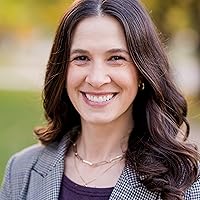
Erin Geiger Smith grew up in tiny Liberty, Texas and is now a journalist living in New York City. Her coverage has ranged from the Supreme Court to stationery, as well as the silence that results from choosing a bad book for book club, and A-listers selling socks in podcast ads. Her work has appeared in The New York Times and The Wall Street Journal, among other leading publications. Previously, she was a legal reporter at Reuters. After the 2016 election, she had a lot of questions. Her search for answers eventually became a research project for the author Ann Patchett, and that research became the foundation of her book, Thank You for Voting, and the young readers' edition of the same title. Erin graduated from the University of Texas, the University of Texas School of Law, and Columbia University's Graduate School of Journalism. She is married and has a six-year-old son.
I have decided to embark on a mission to read a number of books on subjects that will be of great importance to the upcoming 2020 US Presidential Election. Many of these will focus on actors intricately involved in the process, in hopes that I can understand them better and, perhaps, educate others with the power to cast a ballot. I am, as always, open to serious recommendations from anyone who has a book I might like to include in the process.
This is Book #7 in my 2020 US Election Preparation Challenge.
The most important part of election is the vote. It’s what it all boils down to, no matter what anyone else tells you. Erin Geiger Smith uses this as her premise in this interesting primer about voting in the United States. Smith looks at three areas of voting that will likely be of the greatest interest to the reader: the history of voting in America, populating the electorate, and the politics of voting. Each of these are broken down to better analyse and synthesise the significance in the overall scheme of voting.
Smith’s exploration of the history of voting is more to explore the suffrage moment in all its forms that discussing why America votes the way they do (form of elections, not trends in choices). She spends a great deal of time looking at disenfranchisement, which is key to understanding the importance of voting and how it was not always available. Highlighting some of the best-known disparities (those of Blacks and women) take up much of this section, though there are some wonderful tidbits about other groups (Native Americans and Asians) who received the vote later than their Caucasian counterparts. Smith seeks to educate the reader on the long fights needed to lessen the gap between groups, though she does not blindly presume that all is well, even into 2020. There is some key discussions about the Voters Rights Act (1965), which was the central piece of legislation meant to pull down the barriers erected by many. The reader will do well to understand this background information, which serves as a useful springboard in the coming sections.
Smith’s second area of analysis is getting out the vote, including getting people onto the electoral list. How does America (federally and at the state level) get people onto the list of voters and then out to the polls to have their voices heard? She explores the most underrepresented groups, most especially the young, and discusses ideas about how to get them on the lists and out to the polls. Many of these are not new, though the emergence of social media has helped to make communication faster and interest higher. Further discussions in the section discuss getting on the voter’s list and how some states have placed some burdens for people to stay on the list, as well as thresholds to register. It is in this section that Smith admits, perhaps mistakenly, that the US Supreme Court has weighed in and helped to block voters from being able to vote with ease, by gutting the Voters Rights Act (1965) in some recent rulings. I’ll let the reader check this out, but it seems that this is one of the only times that Smith’s attempts to be non-partisan is less effective. I would argue that bringing this up is both important and needed, so it all balances out.
The final section of the book discusses the politics of voting, which seems both straightforward and an oxymoron. Exploring voting districts and how they are formed by elected officials to benefit them proves to be an interesting way to open the discussion. Smith discusses such buzzwords as ‘gerrymandering’ and ‘partisan decision-making’ to educate the reader as to how some continue to play fast with a people’s right to express themselves (and we’re not even delving into Russian bot farms here!). She seeks to close her book by helping the reader to understand political discussions and polling, both of which are highly persuasive and likely the first line of influence the voter will encounter in the months leading up to an election. While it has to be some of the basic nuances, Smith does well to lay out the facts as neutrally as she can, steering clear of offering Fox News as anything fact-based. It seems helpful for those who are not entirely clear about what they see on television or are bombarded with whenever social media comes into play. And then there’s the Electoral College, that beast that messes simply voting up. I’ll leave it to Smith to handle (though it has always been a favourite area of mine to examine!).
For a primer, this is an excellent depiction of the voting system in the United States. Erin Geiger Smith is able to clearly define major topics that are important to the reader without getting dragged into anything too murky. Her examples are clear and the pace of the discussion is constant. There are not only some reminders for the reader throughout the discussion, but a great checklist for reference before heading to the polls. Chapters are laid out well and keep the reader engaged, not permitting them to lose interest, with quick topic changes and poignant examples from as recently as Spring 2020. As an editorial aside, reading this as a Canadian, I was intrigued with the amount of politicisation surrounding voting. While there are surely some partisan aspects to the voting process in Canada, it is minimal when compared with our southern neighbours. Yet another reason to be happy I’m here and away from the headaches. A great book for those who are curious about the voting system in America, as well as the reader who, admittedly, wants to get up to speed before November 2020. However you lean politically, I think the author and I can agree... you need to vote!
Kudos, Madam Smith, for an informative piece that I thoroughly enjoyed. Likely the least biased piece I will read during this challenge, but nice to see that people can turn to something for some facts not marred in spin!
In the acknowledgements section at the end, Smith says that this book started as a research project, which explains a lot. It reads like a research project, in that Smith recaps a lot of other people's research and also tells personal stories of some of the research she did herself, but she doesn't go the extra step of synthesizing her research into her own narrative with a central thesis. The end result is an interesting and relatively comprehensive survey of voting in America that covers a lot of ground, from the history of voting rights to why we have an electoral college, but meanders its way there. There's information about which get-out-the-vote tactics work better than others, how companies have gotten involved with encouraging their employees to vote, and how voter suppression and gerrymandering looks in today's world. Smith's approach was somewhat reminiscent of Mary Roach — pick a topic and dig up research on every possible angle — but the problem is that the topic isn't intrinsically fascinating the way that death or sex is, and Smith doesn't have Roach's humor. On the whole, it was mildly interesting, but I wanted more from it.
This is a must read book for every citizen. I agree with Ann Patchett's sentiments that this book should be put into the hands of every 16 or 17-year-old who’s getting ready to become a voter. I like the way the book was structured by first talking through the history of how different people secured their right to vote because newsflash, it didn’t happen all at once when we became a country. Women, African-Americans, Native Americans, Asian Americans, and many other marginalized groups have struggled to be able to exercise their right to vote and claim it for themselves.
The second part of the book was so instructive because it focused on how to get people to vote and basically how to combat the current infuriating attempts at voter suppression. The third part was instructional to just explain some of the core elements that are important when it comes to being a voter. Learning about gerrymandering, responsible news consumption, polling and the electoral college was all really helpful.
I particularly enjoyed that this book did not have clear partisan leanings. The author took great care to let you know if she was discussing a particular nonprofit group- she would share whether it was a non-partisan group or affiliated with a party. I think this book would resonate with anyone who values democracy along our political spectrum as long as they value representation. I am grateful that I am a voter.
Booklist Review, https://www.booklistonline.com/Thank-... Excerpt: Author "Smith posits that the only voting problem we have in America is that not enough people do it. It’s an important topic, as her research shows that each generation votes at rates lower than the one before it ... As the author says, “Figuring out the best way to achieve the largest turnout should have nothing to do with one side or the other and everything to do with supporting democracy. This book is non-partisan, but it is staunchly pro-voting.”
Voter turnout is low in the US (over 40% of the people who were eligible to vote in 2016 didn't) and both sides look at how to influence the outcome of the elections by influencing voting participation. Smith has created a fairly bi-partisan look at voting in America. Her book is divided into 3 sections: How We Got the Vote, How to Get People to Vote, and What to Know Before you Vote. The first section is mostly history, the second section digs into why people do or don't vote and how to influence more people to vote, the third section gets into information about how districts are drawn, understanding polls (the big takeaway there was don't let how your favorite candidate is doing in the polls keep you from voting), and assessing if the news you are reading is real. This was a great overview on the voting process in the US and there are checklists to help, whether you are new to voting or if you are looking to influence more people to vote and make their voice heard. In particular, the chapter "Knowing the news is real" should be required reading for anyone who has a social media account (or who relies on someone with a social media account for their knowledge about politics or current events). In this chapter, she calls out both sides for misleading or false reports - and focuses on how to analyze what you are seeing to assess the factuality of the article. Smith's book is organized in easy to read sections and I highly recommend. As a bonus -- there is also a young reader version. If you like your reading broken down at a more straightforward level or if you are working with your children or with students to understand our democratic processes and civic duties, this would be an excellent resource.
My book club picked this for October. I would never have selected this on my own- reason #1 why I love book club- but I found it to be really accessible. The writing style was engaging and informative. I think the author did a great job of making this book very neutral in its approach, which means that anyone with any political background could pick it up and find infuriating and inspiring pieces in it.
Final message is VOTE! (Now you don't have to read the book. Just vote.)
Remember when the mechanics of voting used to be so boring that no one cared? The electoral college?! Get out of here.
But in the post-Trump era, we all have to understand the inner workings. When one of our two political parties is sympathetic toward fascistic ideology, Democracy is on the line now.
Thank You For Voting is especially interesting being written before the election.
Adding this to my TBR list because it was just used as punishment in the sentencing of a Michigan woman who perpetrated voter fraud! Plus: I love voting. Can't help but get a bit misty-eyed about exercising a right that so many women fought for.
This book has some interesting case studies, but not a lot of cohesion overall. A lot of it is very surface level information, and then there will be a section that is incredibly detailed. I was hoping for more useful information about how to get out the vote. What she provides on that front is more geared towards businesses and not grassroots movements. Overall, I just didn’t find it very helpful.
This book is so important, and I strongly believe it should be required reading in every school!! This book goes in depth about suffrage history for many different groups of people, and how those struggles’ effects are still felt today. Smith explains topics like voter suppression, discrimination, voting fraud, gerrymandering, and the electoral college adeptly, in an informative but easy to understand way.
The fun facts in this book were my favorite parts. While discussing complex topics, Smith included tidbits of obscure voting knowledge, which I found absolutely enthralling. (Kentucky voted by VOICE until 1891; who knew?!)
This book is so important, especially right now. As we continue to fight for equity in voting across the board, it’s important to know our roots and to have hope for the future.
Thank You for Voting was informative and interesting, but it lacked a strong central theme or purpose. It read like a series of essays.
I would have preferred a book on the history of voting rights OR a how-to book on modern voting instead of this book, which tries to do both and does so incompletely.
My favorite part was Geiger-Smith's discussion of voting language. I enjoyed the encouragement that people are more likely to vote when voting is a part of their identity as opposed to an act in which they participate. I am a voter!
If this were more of a deep dive about the history and machinations around voting then it would be a really solid book. It does some of that around historic voter suppression, gerrymandering, and Supreme Court cases but not enough.
A lot of space is devoted to how recent organizations go about working up voter aggregation, how social media is used by various players, and even how a documentary film about voting came to be at the Tribeca FF.
It does provide factoids, but do I need a checklist? I was looking for history and substance, and that’s not the primary focus here. I guess I didn’t read the book synopsis closely enough.
I did appreciate the nonpartisan approach!
This book maybe best for first time voters, or completists amassing a shelf devoted to books about voting.
Most engaged voters don’t need guidance on how to distinguish viable news sources or how to figure out how to sort out voting.
I loved the Electoral College chapter. One whole star for that alone.
Props for being so topical that it manages to include a mention of how Covid-19 might potentially impact voting. Great book for a novice voter. An OK book.
Just in time for November, this is a basic but thorough primer on multiple aspects of voting. Meant for a general audience without in-depth knowledge, this would be a great text for a high school or community college civics class, if we still had such a thing. Geiger Smith notes this lack in discussing a non-profit organization, Project Vote, that teaches high school kids the mechanics of registering and voting, and why it's so important to do so. Geiger Smith spends some time discussing the struggle for voting rights, particularly women's suffrage..She also touches on contemporary vote suppression tactics, ways to increase voter participation, gerrymandering, polling, and the electoral college system, along with other topics.
Maintaining a neutral stance, but always a cheerleader for voter participation, Geiger Smith offers a voter education guide that is highly readable and touches all the bases. This is a sure bet purchase for public and high school libraries.
I wanted to read this book as I understood I would learn a lot about the different state laws when it came to voting. While it touches on that some, I felt it was vague. Another problem I have is supposedly this book is bipartisan. Which I didn’t see. Chapter 8: Knowing the News is Real especially shows which side the author is on. Saying CNN is the most neutral of the cable channels is a joke. Also mentioning Politico as a great resource for fair political information is false. I felt this chapter should have been left out. In part two: How to Get People to Vote many times those mention have strong ties to the Democratic Party. Such as Stacey Abrams & Yara Shahidi, So you know they are pushing a party agenda when getting an individual to register to vote. While I appreciate their hard work, I felt there wasn’t a Republican side shown in a positive light. The bright side of the book is the history of voting, explanation of gerrymandering, & electoral college.
A "maddening" surface level overview of US History and Civics that left me confused on who its target audience is. I picked it up, thinking that it would be a fairly detailed analysis of the various supreme court reforms and current fights over various voting minutia. Instead, the book straddles the line between quotes with celebrities on get out the vote campaigns, to very briefly summarized research articles on the effects of gerrymandering.
Perhaps this is a bit harsh - the style and tone of the book does fit Smith's background as a journalist. But ultimately, this is not a book worth reading if you already care a fair bit about politics, and for the newly-interested, it likely will lose you partway through.
This is a good, comprehensive guide and inspirational book for voting. I thoroughly enjoyed the history and the suggestions on how to influence other people to vote. To the youth, vote for your future. It is important to get your voice heard today.
The dates of voting rights victories can sound like ancient history, but the 1965 Voting Rights Act gave many people alive today their first opportunity to vote, and other groundbreaking voting laws benefited the parents and grandparents of today's Americans. A white woman born in 1900 would have been among the first able to vote nationwide as soon as she turned twenty-one. Many immigrants of Asian descent born that same year wouldn't have their citizenship approved until the year they turned fifty-two.
An African American born at the turn of the twentieth century and living in the South may not have cast a ballot on Election Day until she was sixty-five years old.
It took the United States a very long time to get to an era in which men and women of all ethnicities, races, religions, and income levels were able to vote in all elections. Those of us lucky enough to cast a ballot today with relative ease and no disturbance often forget what it took to get here. Those of us for whom voting remains a struggle likely still feel the weight of history.
This was a decent book about voting that includes the history of voting, optimizing voter education and turnout, and contemporary (and historical) voting issues such as gerrymandering and the Electoral College.
The benefits of the book are that it was short and readable. Generally, Smith does a good job of providing a well-rounded discussion of voting without getting too much in the weeds on any one aspect. There were a few parts that did become pretty specific (such as how to be a smarter consumer of news), but they seemed to be in an effort to equip the reader with practical strategies. One notable weakness in the book was the absence of additional voter reform strategies such as open primaries and ranked choice voting.
Much of the information was not new to me, but it provided a nice review. For someone wanting a better understanding of voting, this book provides a cursory examination of the history of voting and some key issues.
Ok, so if I was still teaching AP Government, this would be the summer reading assignment for my students. It is a solid primer on not only some important voting rights history, but on a potpourri of other issues that influence voter behavior and election outcomes.
That being said, I do not feel that I needed this book as much as some others might. Specifically, those who are hesitant about voting, or those who may have never registered to vote, along with volunteers/activists trying to get out the vote. I’m not trying to sound superior, far from it. This book truly is geared towards those who are on the front lines of voting trying to increase turnout.
So, if you sometimes wonder why we bother, pick up this book. It may reinvigorate your passion for democracy in a bitterly divided nation.
Published in 2020 bt Harper Audio. Read by Lisa Cordileone. Duration: 6 hours, 3 minutes. Unabridged.
As the title says, his book is intended to be a primer on the history of elections in America and how elections work now in different states. It was thorough enough without drowning the listener in details.
The book does a solid job with both of those major topics without feeling partisan. Those topics comprise the first and last two hours of this audiobook. The middle two hours just felt like padding. There was an extended discussion of how to raise the voter participation rate that just dragged with discussions of how businesses can encourage employees to vote, ad campaigns from local government, and so on.
I would rate the first two sections 4 stars out of 5, but the middle section is a 2 out of 5 at best. That makes a final score of 3 out of 5.
This was a very good overview of the subject of voting along with being a motivational tool to encourage you to vote. It provides a very readable history of voting in the U.S., including addressing populations who were intentionally excluded from voting during much of our history. The book address the women’s suffrage movement and topics like the gerrymandering, the electoral college, polling, and the importance of getting information from multiple reliable news sources. I was impressed by how informative it was without being overly politically leaning in either direction. This would be a great read for anyone wanting to begin their journey to better understand the election process and voting.
As someone who has voted in every election since I was eligible, the very title of this book felt affirming and an expression of gratitude for my efforts (small as they may be). It's also a high-level look at our electoral system and the continued fight for voting equality. Not to mention a peek into why so few Americans vote today. Do I think you'll learn something from this book? Absolutely. That said, it's 2020 and an election is just around the corner. Make your plan to vote, research local officials up for election, and do what you need to in order to have the title of this book be applicable to you too. In advance, thank YOU for voting.
Pros: Smith does an excellent job at explaining the importance of voting, especially at the local level, and provides a great history 101 lesson on voting in America. I also appreciate how she provides helpful suggestions and resources for how someone could begin to get involved in voting. It is the perfect guide for anyone who wants to become a more active member of democracy. Cons: Nothing really. It was exactly what I expected. Would I Recommend: If you want to become more active in elections, yes, especially since this is as nonpartisan as can be. If you're already heavily active, you won't learn much from this, which is to be expected.
This book should be required reading, especially in high school. This was a very digestible look into voting history and issues in the United States. It also talks about ways to help people get out and vote, what hasn’t worked in the past, how the electoral college works, and the pros and cons of our voting system. She even talks about news sources and explaining how polls work. If you want to learn more about the relationship of our government and voting system, this is a great book. I appreciate that the author tried to stay nonpartisan, but I do feel it could have been a little more balanced. Overall, it was very good.
⭐️⭐️⭐️⭐️ Thank Your For Voting Audiobook Narrator: Lisa Cordileone
Another must-read for those interested in American politics and political history. I walked away and picked this up a few times due to the current political climate requiring escapism and this was a history lesson. I had to put this down a few times- it was getting too real.
Geiger Smith dives into hot topics such as voter identification, fraud, and turnout. I would read an updated version of this book with newer statistics. There is a YA version of this collection that also seems like an interesting read to get teens into civics.
2.5 stars. It’s a fine book and good for someone not very well-versed in politics. But that isn’t me. So I just don’t really get it. A book about voting is going to be read by people who are interested in politics and voting. But this book was so basic on the topics it covered that I didn’t feel like there was all that much to glean from it. I wish the author had chosen a few select voting topics (increasing turnout) and really gone deep on the topic. That would have made it more interesting to me personally.
A lightweight primer that’s really a reference book without its own central thesis. It’s a great summary of recent cases and legislation and would make a great gift for a high school grad. Learned some stuff. Googled a lot of organizations. Took away some ideas for my own life.
But I also felt like some topics were covered disproportionately. I wish it included the steps it takes for a candidate to get on a ballot and discussed more about local elections and their importance. A mixed bag overall.
This a fantastic, jammed packed little book all about voting. As a recovering poli sci major I often find this type of book to be dull and repetitive. Not this gem! It covers a lot of territory: rank choice voting, gerrymandering, history of minority groups voting and fun facts. Example: a US citizen will vote more in 10 years then a Japanese person will get in their life time. Amazon had it for a limited $3.99 Kindle special. One of the best Kindle books in my library that I will use to drop election trivia for the rest of my life. A big win! Now, make sure you vote.
I was gifted this book by my Grandma, who signed her note on the front page with "hope for the US". This book reminded me why I'm such a political science nerd: I loved how Erin explored alternative voting structures in the US, the most effective voter outreach campaigns, and the impact of systems such as the modern polling process and the electoral college. If you're equally passionate about and interested in the American voting process: read this! It's starting to be a bit outdated, but it's an easy-to-follow book that is quick to flip through.