

What do you think?

World of Art
Movements in Art Since 1945: Second Edition
Revised and redesigned for the first time since 2001, this standard introduction to visual art in the postwar era examines the movements, trends, and artists from abstract expressionism to the present day.
Writing with exceptional clarity and a strong sense of narrative, Edward Lucie- Smith demystifies the work of dozens of artists and reveals how the art world has interacted with social, political, and environmental concerns. This book includes detailed coverage of major developments within the artistic community, such as pop art, conceptual and performance work, neo-expressionism, and minimalist art across the globe, including Asia, Africa, and Latin America. A new chapter on art since 2000 includes discussions of work by Banksy and Ai Weiwei, as well as recent trends in art from Russia and Eastern Europe.
Featuring nearly 300 images of key artworks that range from graffiti from 1980s New York to contemporary painting from China, this updated edition of Movements in Art Since 1945 is as global in its reach as art has become in the twenty-first century.
Writing with exceptional clarity and a strong sense of narrative, Edward Lucie- Smith demystifies the work of dozens of artists and reveals how the art world has interacted with social, political, and environmental concerns. This book includes detailed coverage of major developments within the artistic community, such as pop art, conceptual and performance work, neo-expressionism, and minimalist art across the globe, including Asia, Africa, and Latin America. A new chapter on art since 2000 includes discussions of work by Banksy and Ai Weiwei, as well as recent trends in art from Russia and Eastern Europe.
Featuring nearly 300 images of key artworks that range from graffiti from 1980s New York to contemporary painting from China, this updated edition of Movements in Art Since 1945 is as global in its reach as art has become in the twenty-first century.
336 pages, ebook
First published January 1, 1969
About the author
Edward Lucie-Smith
461 books32 followersJohn Edward McKenzie Lucie-Smith, known as Edward Lucie-Smith, was an English writer, poet, art critic, curator and broadcaster.
Lucie-Smith was born in Kingston, Jamaica, moving to the United Kingdom in 1946. He was educated at The King's School, Canterbury, and, after a little time in Paris, he read History at Merton College, Oxford from 1951 to 1954.
After serving in the Royal Air Force as an Education Officer and working as a copywriter, he became a full-time writer (as well as anthologist and photographer). He succeeded Philip Hobsbaum in organising The Group, a London-centred poets' group.
At the beginning of the 1980s he conducted several series of interviews, Conversations with Artists, for BBC Radio 3. He is also a regular contributor to The London Magazine, in which he writes art reviews. A prolific writer, he has written more than one hundred books in total on a variety of subjects, chiefly art history as well as biographies and poetry.
In addition he has curated a number of art exhibitions, including three Peter Moores projects at the Walker Art Gallery in Liverpool; the New British Painting (1988–90) and two retrospectives at the New Orleans Museum of Art. He was a curator of the Bermondsey Project Space.
Edward Lucie-Smith died in July 2026, at the age of 93.
Information about Lucie-Smith's death from Wikipedia
Lucie-Smith was born in Kingston, Jamaica, moving to the United Kingdom in 1946. He was educated at The King's School, Canterbury, and, after a little time in Paris, he read History at Merton College, Oxford from 1951 to 1954.
After serving in the Royal Air Force as an Education Officer and working as a copywriter, he became a full-time writer (as well as anthologist and photographer). He succeeded Philip Hobsbaum in organising The Group, a London-centred poets' group.
At the beginning of the 1980s he conducted several series of interviews, Conversations with Artists, for BBC Radio 3. He is also a regular contributor to The London Magazine, in which he writes art reviews. A prolific writer, he has written more than one hundred books in total on a variety of subjects, chiefly art history as well as biographies and poetry.
In addition he has curated a number of art exhibitions, including three Peter Moores projects at the Walker Art Gallery in Liverpool; the New British Painting (1988–90) and two retrospectives at the New Orleans Museum of Art. He was a curator of the Bermondsey Project Space.
Edward Lucie-Smith died in July 2026, at the age of 93.
Information about Lucie-Smith's death from Wikipedia
Ratings & Reviews
Friends & Following
Create a free account to discover what your friends think of this book!
Community Reviews
Displaying 1 - 29 of 29 reviews

March 14, 2020
به نظرم کتاب خیلی خوبی بود برای آشنایی با هنر قرن اخیر
تصاویرش کم نبود.
با این حال باز هم نیاز هست که برای فهم بیشتر همیشه کامپیوتر جلوتون باشه که اسمها رو سرچ بزنید و کار هنرمندها رو نگاه کنید.
میشه گفت نسبت به زیباییشانسی خاصی تعصب نداشت و روایت مستندی از تاریخ هنر انجام داده بود.
شاید سه سال پیش شروع کردم به خوندناش و حالا دو فصل انتهایی رو خوندم و کتاب تموم شد و نکتهی مهمی رو متوجه شدم.
الان که این کتاب رو میخوندم، حس کردم ترجمهش ممکنه مشکل داشته باشه. ترکیبات طولانیای از کلمات میدیدم که به نظرم خوب معنا نمیدادن. برای همین رفتم دنبال تطبیق دادن با نسخه اصلیش. اخرین نسخه این کتاب -که کتاب فارسی هم از روی اون ترجمه شده- مال دهه ۹۰ هست. ولی نسخهای که من تونستم از کتاب به زبون انگلیسی پیدا کنم مربوط به ۱۹۸۵ بود.
برای همین فصلهای انتهای کتاب عوض شده بود، همینطور که تاریخ جلو رفته بود، و من نمیتونستم درباره اونها نظر بدم.
ولی وقتی فصلهای قدیمیتر که مربوط به هنر اواسط قرن ۲۰ هست رو تطبیق دادم متوجه شدم که ترجمه تقریبا مناسب نیست. خیلی نگشتم، ولی حتا مواردی رو پیدا کردم که اشتباه ترجمه شده بود. مواردی بود که مترجم از خودش چیزهایی اضافه کرده بود. و مواردی هم بود که مترجم با اطناب ترجمه کرده بود و با پیچیدهکردنِ بیش از حد، امکان فهم مطلب رو از خواننده گرفته بود.
اینجا مثالی رو اوردم که مقایسه کنید و ببینید که چه اتفاقی توی ترجمه افتاده.
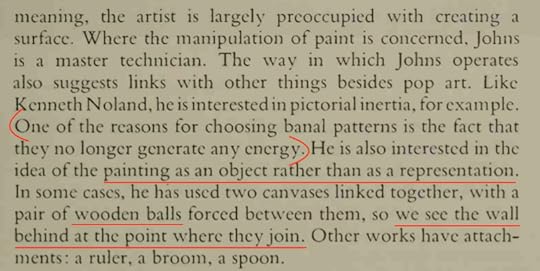
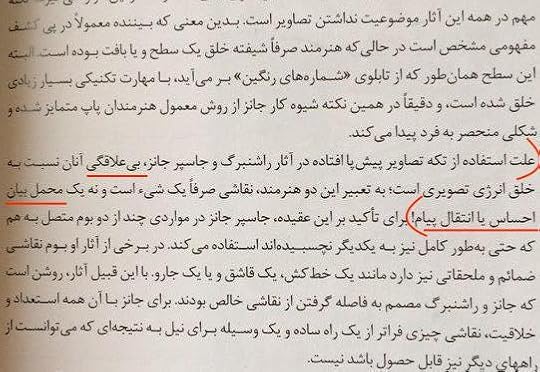
در نهایت میشه گفت مشکلات ترجمه فاحش نیست، اما بهترین ترجمه دنیا هم نیست.
اگر نسخهی انگلیسی و به روز تر سراغ دارید، به من هم بدید.
(اگر خوندن کتاب رو دو روز دیگه هم طول میدادم، خوندنش دقیقا چهار سال طول میکشید :)) )
تصاویرش کم نبود.
با این حال باز هم نیاز هست که برای فهم بیشتر همیشه کامپیوتر جلوتون باشه که اسمها رو سرچ بزنید و کار هنرمندها رو نگاه کنید.
میشه گفت نسبت به زیباییشانسی خاصی تعصب نداشت و روایت مستندی از تاریخ هنر انجام داده بود.
شاید سه سال پیش شروع کردم به خوندناش و حالا دو فصل انتهایی رو خوندم و کتاب تموم شد و نکتهی مهمی رو متوجه شدم.
الان که این کتاب رو میخوندم، حس کردم ترجمهش ممکنه مشکل داشته باشه. ترکیبات طولانیای از کلمات میدیدم که به نظرم خوب معنا نمیدادن. برای همین رفتم دنبال تطبیق دادن با نسخه اصلیش. اخرین نسخه این کتاب -که کتاب فارسی هم از روی اون ترجمه شده- مال دهه ۹۰ هست. ولی نسخهای که من تونستم از کتاب به زبون انگلیسی پیدا کنم مربوط به ۱۹۸۵ بود.
برای همین فصلهای انتهای کتاب عوض شده بود، همینطور که تاریخ جلو رفته بود، و من نمیتونستم درباره اونها نظر بدم.
ولی وقتی فصلهای قدیمیتر که مربوط به هنر اواسط قرن ۲۰ هست رو تطبیق دادم متوجه شدم که ترجمه تقریبا مناسب نیست. خیلی نگشتم، ولی حتا مواردی رو پیدا کردم که اشتباه ترجمه شده بود. مواردی بود که مترجم از خودش چیزهایی اضافه کرده بود. و مواردی هم بود که مترجم با اطناب ترجمه کرده بود و با پیچیدهکردنِ بیش از حد، امکان فهم مطلب رو از خواننده گرفته بود.
اینجا مثالی رو اوردم که مقایسه کنید و ببینید که چه اتفاقی توی ترجمه افتاده.
در نهایت میشه گفت مشکلات ترجمه فاحش نیست، اما بهترین ترجمه دنیا هم نیست.
اگر نسخهی انگلیسی و به روز تر سراغ دارید، به من هم بدید.
(اگر خوندن کتاب رو دو روز دیگه هم طول میدادم، خوندنش دقیقا چهار سال طول میکشید :)) )

August 27, 2011
Many non-fiction genres sometimes find it difficult to navigate between two audiences: the rank neophytes who need a basic grounding in the topic at hand, and those who already have a thorough knowledge of those fundamentals. It is those of us who are in the middle who sometimes have difficulty finding the right book for them. Edward Lucie-Smith provides some of those big, overarching ideas that are essential for those building on the basics, but the sheer number of painters and sculptors that he throws at the reader is a little disorienting, especially when you’re still trying to discern what ties Morris Louis, Frank Stella, and Helen Frankenthaler all under the category of “post-painterly abstraction.” Maybe it’s just my compulsion to over-categorize and draw connections between all the artists that detracted from the book.
The introduction to the book was really promising, and draws a lot of lines of continuity between the art of pre- and post-World War II. Lucie-Smith argues, for example, that whereas it is often thought that Modernism came to some sort of end not long after this time, the techniques, aesthetics, and materials used to make the art never changed, and therefore this art remained, in many ways, Modernist. The first few pages of each chapter also give some great intellectual background to each of the major movements, i.e., abstract expressionism, post-painterly abstraction, p/op art, and photorealism. But after this, the reader is met with page after page of artists who appear quickly and just as quickly disappear never to be heard from or seen again, with usually just one painting or sculpture to represent an entire artist’s oeuvre. Well-known artists like Henry Moore and Frank Stella get two photographic plates, and no one gets more than that. Quickly afterward, I got lost in a welter of names with which I was barely familiar or not familiar at all. What I appreciated most about this book is that I was introduced to many new names that I didn’t know before, and now know to keep an eye out for them.
The introduction to the book was really promising, and draws a lot of lines of continuity between the art of pre- and post-World War II. Lucie-Smith argues, for example, that whereas it is often thought that Modernism came to some sort of end not long after this time, the techniques, aesthetics, and materials used to make the art never changed, and therefore this art remained, in many ways, Modernist. The first few pages of each chapter also give some great intellectual background to each of the major movements, i.e., abstract expressionism, post-painterly abstraction, p/op art, and photorealism. But after this, the reader is met with page after page of artists who appear quickly and just as quickly disappear never to be heard from or seen again, with usually just one painting or sculpture to represent an entire artist’s oeuvre. Well-known artists like Henry Moore and Frank Stella get two photographic plates, and no one gets more than that. Quickly afterward, I got lost in a welter of names with which I was barely familiar or not familiar at all. What I appreciated most about this book is that I was introduced to many new names that I didn’t know before, and now know to keep an eye out for them.

January 24, 2016
مطابق گفته مترجم در پيشگفتار، نويسنده تا حد ممكن بدون موضع باقي مي ماند و اين نقطه ضعف كتاب است نه نقطه قوت آن. تنها موضع گيري لوسي-اسميت در انتخاب هنرمنداني است كه قصد دارد يك پاراگراف در موردشان بنويسد و شايد تصويري از اثر هنري شان را نيز در كتاب قرار دهد.
معدود مواردي پيش مي آيد كه كتاب از اشاره سطحي به عمق مي رود و به عنوان مثال هنر مينيمال يا انتزاع پسانقاشانه را مي كاود و خواندني مي شود. غير از آن تنها تاريخي ست گزيده و سطحي از هنر بعد از جنگ جهاني دوم در اروپا و آمريكا.
معدود مواردي پيش مي آيد كه كتاب از اشاره سطحي به عمق مي رود و به عنوان مثال هنر مينيمال يا انتزاع پسانقاشانه را مي كاود و خواندني مي شود. غير از آن تنها تاريخي ست گزيده و سطحي از هنر بعد از جنگ جهاني دوم در اروپا و آمريكا.

August 13, 2014
کتاب بسیار خوبی هست اما بیشتر تاریخ هنر هست و به خاطر گستردگی سبک های مختلفی که توضیح می دهد زیاد عمیق نمی شود و البته توالی تاریخی فصل ها ممکن است موازی یا حتی وارونه باشد ، به هر حال کتاب خوبیست که باید خواند

July 7, 2022
I find myself rather disappointed in this book. The first chapters are extremely US- and Euro-centred and mostly feature men, with some women artists mentioned as an afterthought and usually without great relevance. For a more global context one has to read about half the book, and some of the non-Western art is grouped under "globalisation" - which in some cases might be relevant, but not the greatest contextualisation.
Moreover, the author takes too much time ranking artists against each other, elevating some as the most important artist of the movement while dismissing others as irrelevant. This is, again, not the most helpful contextualisation. The author's personal opinion takes a lot of space in this book, which is a pity, because it could have been a really good book otherwise, since the author is clearly very knowledgeable.
Moreover, the author takes too much time ranking artists against each other, elevating some as the most important artist of the movement while dismissing others as irrelevant. This is, again, not the most helpful contextualisation. The author's personal opinion takes a lot of space in this book, which is a pity, because it could have been a really good book otherwise, since the author is clearly very knowledgeable.

July 30, 2014
شاید برای همان هشتاد سال پیش کتاب خوبی بوده و شاید ادیشنهای بعدی هم قدری بهروز شده باشد و حتماً وقتی سال ۱۳۸۷ کتاب را اولینبار دیدم فکر کردم تحفهی مخصوصیست ولی دو-سه سال نکشید که وقتی قدری بیشتر خوانم و یهذره هم به انگلیسی چیز خواندم و یکذره هم دربارهی هنر بیشتر خواندم و هنر معاصر و مدرن و اینها دیدم کتاب اتفاقاً صرفاً به درد نگاه «موزه»ای و «حراجی»بازی میخورد و هنر معاصر را هایپراستاری از فشنهای روزبهروز... بگذریم، کتاب به نظرم ارزش وقت تلف کردن ندارد. امروز که اصلاً.

December 8, 2016
کتاب بسیار خوبی که تمرکز اصلیش بر بیان جنبههای تئوریک هنر قرن بیستم هست و حتما باید در کنار کتاب شورشیان هنر قرن بیستم خونده بشه.
تنها اشکالش به نظرم مثالهای بصری کمی بود که از نقاشان در کتاب آورده شده بود. صرفنظر از این حتما توصیه میکنم بخونیدش.
تنها اشکالش به نظرم مثالهای بصری کمی بود که از نقاشان در کتاب آورده شده بود. صرفنظر از این حتما توصیه میکنم بخونیدش.

September 26, 2013
قرنی پر از خلاقیت.

December 2, 2019
کتاب «آخرین جنبشهای هنری قرن بیستم»، در سال ۱۹۴۵ برای نخستین بار به چاپ رسید. اما از آن تاریخ چندین بار بازنویسی شده که آخرین آن، یعنی نسخهی حاضر، پس از افزودن بخشهای جدید، در سال ۱۹۹۷ توسط مؤسسهی انتشاراتی «تیمز وهادسن» چاپ و انتشار یافت.
این کتاب تصویری عمومی از مهمترین جریانهای هنری در عصر حاضر را که به جریان مدرن هنر معروف شده است ارائه میکند.
این کتاب تصویری عمومی از مهمترین جریانهای هنری در عصر حاضر را که به جریان مدرن هنر معروف شده است ارائه میکند.

October 19, 2009
I chose to read this book because simply it was lying around--in fact, it had been lying around since my high school girlfriend left it in my room in 1996--and the book turned out to be as good as my selection criteria. There's not a lot of interesting analysis here, either in terms of historical explanation of trends or more direct critical engagements with the works discussed. In part, this thinness may be a consequence of Lucie-Smith's comprehensiveness: there are an awful lot of artists discussed despite the fairly narrow 30-year focus of the book. That comprehensiveness is helpful for the mostly uninitiated reader, but the breadth really does seem to come at the expense of depth. Lucie-Smith's critical verdicts are almost always conclusory, in that he just tells you what he thinks of a piece or an artist or a movement without really explaining the basis for his judgment. This is a shame, because I found my intuitions in alignment with his--but I want a book of art history and criticism to educate my intuitions, not simply to vindicate them without any explicit warrant.

March 23, 2011
I had to read this as a textbook for my art history class, so right off the bat I didn't like it. Add that to the fact that Lucie-Smith jumps from artist to artist, giving only one or two sentences to describe them. Plus the fact that there aren't many pictures, and the ones that ARE shown don't always represent the main artist he was talking about. Add that all up and you get yourself a solid 2 stars.

June 24, 2012
Movements in art since 1945 is an excellent introduction to the major movements and artists of the second half of the twentieth century. Not only does it cover the time period in detail but it provides reference pictures for many of the artists talked about. Many of the pictures are in color which I think is essential to understanding the art works presented.
December 2, 2007
مفاهیم و رویکردها در آخرین جنبش های هنری قرن بیستم
کتابی از ادوارد لوسی اسمیت و با ترجمه ای از دکتر علیرضا سمیع آذر
کتاب عالی ایه برای دونستن سبکهای هنری و اینکه چطوری شکل گرفتن و با چه هدفی پیش رفتن و پر از تصاویر خوب و عالی از کارهاست که اگه به هنر و به خصوص نقاشی علاقه دارین مطالعه اش کنین!
کتابی از ادوارد لوسی اسمیت و با ترجمه ای از دکتر علیرضا سمیع آذر
کتاب عالی ایه برای دونستن سبکهای هنری و اینکه چطوری شکل گرفتن و با چه هدفی پیش رفتن و پر از تصاویر خوب و عالی از کارهاست که اگه به هنر و به خصوص نقاشی علاقه دارین مطالعه اش کنین!
November 4, 2014
uyuyuyuyu7

April 12, 2025
بخشی از کتاب:
آنچه که به عنوان هنر شناخته میشود، و به عبارت دیگر آنچه را که ما هنر میخوانیمش، مبتنی بر انگیزشی است که نهایتا از قواعد «خوشایندی و حظ بصری» سرچشمه میگیرد. میل به خلق اثر هنری و لذتی که در این کار نهفته است به طور همیشگی از کارکرد زیباییشناسی و رموز جاذبهآفرینی نشات میگیرد. پیروی از اخلاقیات به عنوان یک هدف و فرجام در وفاداری نسبت به محتوای هنر، دست آخر به نوعی خستهکنندگی و خشکی ملالتبار منجر خواهد شد. رویکردهای مبتنی بر تاثیرگذاری تکاندهنده، که قبل از هرچیز درصدد ایجاد شوک، در ذهن و احساس بیننده اثر هستند صرفا پیآمدی واپسگرایانه و احتمالا نوعی رسوایی تحقیرآمیز به بار خواهند آورد. اینها مسائلی هستند که هنرمندان دهههای اول هزاره جدید به طور جدی بدان میاندیشند و مجبور هستند راهی بایسته به سوی هنری ارجمند از میان آن بگشایند. این تلاش مشابه اهتمامی است که مدرنیستهای اولیه برای فرار از محدودیتها و قید و بندهای جریان هنر آکادمیک قرن نوزدهم در پیش گرفتند. به این ترتیب به نظر میرسد هنر مدرن در تکاپوی رهیافتهای جدید، احتمالا با چالشی جدیتر از آنچه که خود در برابر پیش از مدرن ایجاد کرده بود، رویاروی خواهد شد.
آنچه که به عنوان هنر شناخته میشود، و به عبارت دیگر آنچه را که ما هنر میخوانیمش، مبتنی بر انگیزشی است که نهایتا از قواعد «خوشایندی و حظ بصری» سرچشمه میگیرد. میل به خلق اثر هنری و لذتی که در این کار نهفته است به طور همیشگی از کارکرد زیباییشناسی و رموز جاذبهآفرینی نشات میگیرد. پیروی از اخلاقیات به عنوان یک هدف و فرجام در وفاداری نسبت به محتوای هنر، دست آخر به نوعی خستهکنندگی و خشکی ملالتبار منجر خواهد شد. رویکردهای مبتنی بر تاثیرگذاری تکاندهنده، که قبل از هرچیز درصدد ایجاد شوک، در ذهن و احساس بیننده اثر هستند صرفا پیآمدی واپسگرایانه و احتمالا نوعی رسوایی تحقیرآمیز به بار خواهند آورد. اینها مسائلی هستند که هنرمندان دهههای اول هزاره جدید به طور جدی بدان میاندیشند و مجبور هستند راهی بایسته به سوی هنری ارجمند از میان آن بگشایند. این تلاش مشابه اهتمامی است که مدرنیستهای اولیه برای فرار از محدودیتها و قید و بندهای جریان هنر آکادمیک قرن نوزدهم در پیش گرفتند. به این ترتیب به نظر میرسد هنر مدرن در تکاپوی رهیافتهای جدید، احتمالا با چالشی جدیتر از آنچه که خود در برابر پیش از مدرن ایجاد کرده بود، رویاروی خواهد شد.
June 2, 2025
I don't really know what I got out of reading this. A list of names connected to each movement and artworks connected to the movement with little analysis or contextualization on them... The movements were almost never defined or explained, so I found myself lost in whoever Lucie-Smith said was the figurehead of the movement. I like Rothko, like a lot, but knowing who he is and what his art is is much different than knowing what abstract expressionism is. The version I read was from 2002 and read like it. Not a lot of value in the analysis past 1990, the world has changed too fast and Lucie-Smith lacks perspective. Writing was often annoyingly oblique. Little to like and little to recommend here.
I actually bought this for collage work, off the used art books section at Powell's, to cut out the pictures. Probably still will as the book didn't capture me enough to keep it on the shelf.
I actually bought this for collage work, off the used art books section at Powell's, to cut out the pictures. Probably still will as the book didn't capture me enough to keep it on the shelf.
October 2, 2024
I'm not a fan of art theory and this book lays it on pretty well. But, given the subject matter, that may have been unavoidable. Modern art probably could not exist without the theories behind it. In fact, one could argue that the theory behind modern art is more important than the art itself. Otherwise, the book does an OK job describing the post-WWII Western art scene. (I read the "new revised edition," so it only goes up to about 1980.) It does not go real in depth into any subject but that's more of a consequence of its length than anything else. There are lots of illustrations, but most of them are in black and white, which is another pet peeve of mine.
April 8, 2019
Concise overview of movements with their identifiers and prominent works highlighted, well typeset, focusses on Europe, UK and USA only briefly touching on South america and other parts of the world.

June 6, 2024
A good look with a broad brush of post-war art. Originally written in 1969 but with a new 2020 edition. A book you can read cover to cover or dip in. Obviously, covering so much there is little space to go in depth but it is a good introduction.

August 4, 2024
Livro incrível e só não recebe 5 estrelas porque o autor simplifica literalmente no último parágrafo a arte feminista e de minorias reunindo um montão de clichês. Vou colocar esse parágrafo no meu Instagram @arte_365

April 10, 2023
4 1/4 stars
January 24, 2013
Smith-Lucie gives a very competent overview. Two brief comments, one positive and one negative.
1. His work to demystify post-Modernism by taking artists like Balthus and treating them as individual human beings rather than dubious representatives of some convenient master narrative of Style A -> Style B -> Style C. This is, by far, the major strength of this book.
2. On the other hand, too much of the treatment of non-Pop art, especially what came after Pop, is implicitly or explicitly based in comparisons *to* Pop. It's understandable inasmuch as (American) Pop was the overbearing stepfather of the second half of the 20th century, but it'd be more interesting to see Smith-Lucie apply the same sort of nuance that he did to, say Abstract Expressionism, to everything after as well. It's difficult to tell whether this shortcoming arises from an infatuation with Pop, or, on the other hand, a feeling that Pop and what came after were something of a flabby lump of largely indistinguishable quality. I suppose it's to his credit that there isn't a clear positive or negative that emerges from the analysis. There is just the analysis.
1. His work to demystify post-Modernism by taking artists like Balthus and treating them as individual human beings rather than dubious representatives of some convenient master narrative of Style A -> Style B -> Style C. This is, by far, the major strength of this book.
2. On the other hand, too much of the treatment of non-Pop art, especially what came after Pop, is implicitly or explicitly based in comparisons *to* Pop. It's understandable inasmuch as (American) Pop was the overbearing stepfather of the second half of the 20th century, but it'd be more interesting to see Smith-Lucie apply the same sort of nuance that he did to, say Abstract Expressionism, to everything after as well. It's difficult to tell whether this shortcoming arises from an infatuation with Pop, or, on the other hand, a feeling that Pop and what came after were something of a flabby lump of largely indistinguishable quality. I suppose it's to his credit that there isn't a clear positive or negative that emerges from the analysis. There is just the analysis.

July 7, 2013
This book provides an excellent overview of art movements, the key players and what to look for as you observe these. It definitely helped me further my understanding. However, there were a few disappointments. It occasionally reads more as a list of paragraph biographies of an art collective than an analysis of the movement, and sometimes devolves into art criticism without any explanation of the opinions put forth -- which isn't something I wanted from a book I was hoping would prepare me to form my own opinions. I also wish that Lucie-Smith had been a little more critical of responses. Sometimes, critics are cited giving harsh opinions (particularly on minority artists) without any analysis from the author about this criticism. I also had a bittersweet moment when the author discussed the marginalization of women artists.. and all of the images of art accompanying the text were pieces by male artists not discussed. It could use some improvement, but it's definitely worth a read and I'm glad to add it to my shelf.

June 5, 2020
The writers close connection with the artists of this time comes through and in some cases may be stronger in opinion than meant. I liked the connection with the next depth of artists in each movement beyond the more popular names. I did feel his desire for puirism in purpose and application clouded a little the discriptive narative and he had an annoying habit of writing about the second picture on a page before the first picture. But overall glad to have read this as it felt real for the time. It was not a retrospective look at movements it was a contemporary view and as such had an authentisity to its statements.

July 18, 2015
A straight-forward and properly detailed/nuanced exposition. As a condensation of so many different movements, it also manages to appropriately concise. A good book to have on the shelf as reference, or to serve as an intelligent introduction to modern, postmodern, and (until the date of publication) contemporary artistic thought/practice.
July 24, 2014
For all art lovers, a timeless must read.

June 4, 2017
Interesting, but peculiar; and not very far reaching in scope.

May 3, 2010
So far so good. I feel the doors opening...
Displaying 1 - 29 of 29 reviews