Set in an unnamed NZ city in 1953, Fire tells the story of four working class friends, all employed at Dawsons, one of the country's most glamorous and sophisticated department stores. An historical romance based on the Ballantynes Department Store Fire in 1947 that killed 41 people, most of them store employees trapped in controversial circumstances. Set in an unnamed NZ city in 1953, Fire tells the story of four working class friends, all employed at Dawsons, one of the country's most glamorous and sophisticated department stores. The girls are Nancy, a salesgirl in the dress department, Kay who works in lingerie, Louise, a typist in Accounts and Judy, a milliner in the workroom out the back. The story takes place a week before Christmas, in the period leading up to Christmas as the country prepares for a Royal Visit by the young Queen Elizabeth. When the store is full of wealthy shoppers smoke is discovered drifting from the basement lift shaft. While the fire brigade is called, the store owners make a crucial error and decide not to raise a public alarm until it's too late - exits are cut off by the fire and the ground and first floors are ablaze, trapping staff and customers on the upper floors. A powerful and dramatic story from one of our best-selling novelists.
Born in Huntly, she holds a PhD in New Zealand history from the University of Waikato. Challinor has worked as a fulltime writer and historian since 2000.
Primarily known for her historical novels, Deborah Challinor’s first published books were non-fiction history books, including the best-selling Grey Ghosts: New Zealand Vietnam Vets Talk About Their War (Hodder Moa Beckett, 1998).
Her first historical novel, Tamar, was published in 2002 and has been reprinted six times. Tamar is set in Auckland, Hawke’s Bay and South Africa and covers the period from 1879 until the Boer War. The series continues with White Feathers (2003) and Blue Smoke (2004).
Union Belle (2005) tells the love story of a young woman caught up in the 1951 waterfront strike, and Kitty (2006) is set in the Bay of Islands in nineteenth century New Zealand. Both novels have been at the top of the New Zealand fiction bestseller list.
Attention to historical detail is an important part of writing for Challinor. ‘I base my novels on actual historical events, and it’s very important to me to research those events in depth and to present them accurately,’ she says.
Reviewing Union Belle in North and South magazine in April 2005, Warwick Roger commented that: ‘You can smell the beer and cigarette smoke in the public bar of the Huntly Hotel, hear the band at the Saturday night dances at the miner’s hall … it’s a book I kept sneaking back to whenever I had a spare quarter hour, eager to advance the story.’
Fire (HarperCollins, 2007), Challinor's seventh novel, is set in Auckland during the hype leading up to the royal visit of 1953, but is based on the Ballantyne’s department store fire of 1947 in Christchurch. A powerful and dramatic story of passion, ambition and greed, it became a number one bestseller.
Amber, the sequel to Kitty, was published later in 2007 and also became a bestseller. Amber opens in New Zealand in 1945, on the eve of the Northern War in the Bay of Islands, in which Kitty is caught up. Sent to Auckland away from the fighting, Kitty encounters an orphaned part-Maori girl she names Amber. Together they return to the Bay of Islands, where both Kitty must risk her own life to save Amber’s.
Isle of Tears (HarperCollins NZ Ltd, 2009) is a story about 14-year-old Scottish immigrant Isla McKinnon and her younger brothers and sister. When they are orphaned they are adopted by Taranaki Maori and become caught up in the wars in Taranaki, the Waikato and the Bay of Plenty.
A revised edition of Challinor’s Grey Ghosts (HarperCollins NZ) was published in 2009. This edition included a new chapter on how the New Zealand Vietnam veteran community has fared since the book was first published in 1998.
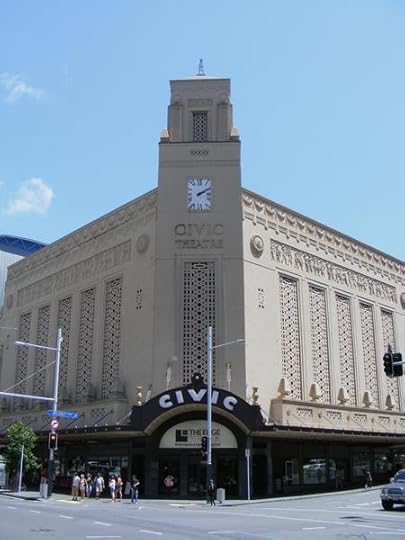
I'm having trouble assigning a rating to this book, as for around the first three quarters of it I had a few problems with Challinor's writing style. This is an adult book, but the use of language & the pacing (but not the subject matter - there is a lot of sex & talk about sex) was like a 1950s YA novel - think Beverly Cleary This did make the start rather a dreary read - even though, as a Kiwi who grew up in Auckland I'm just loving the 'local' touches. The fictitious Dunbar & Jones department St is on Wyndham St, one couple go on their first date to the Civic Theatre. I love the Civic! My favourite New Zealand building.
The inside of the Civic is pure magic.
The book really does improve as it goes on. The Pakeha (European) land grab at Orakei - shameful. I did not know the history of that - & I grew up not far away from there. The book was inspired by the real life fire at Ballantyne's (which was in Christchurch) was edge of the seat stuff, so while writing this review I decided I was going to go with 4★, but be aware particularly if you are not a New Zealander Dear Reader, you may not regard it so high.
Dunbar & Jones was an elite department store which had built up over the years to something glamorous, somewhere that was a pleasure to work. Four young friends, Allie, Louise, Daisy and Irene, all worked in various departments throughout the store, and as it neared Christmas in 1953, they were all busier than ever. Daisy was preparing for her upcoming wedding, Allie starting a fledgling relationship with another young worker, Sonny, while Louise was happy with her husband and small daughter Susan. Irene was also married but bored with her husband Martin. A Royal visit was also soon to take place, with a young Queen Elizabeth visiting their shores.
When tendrils of smoke were detected drifting up from the basement, the delay in calling the fire department would have serious consequences. Shoppers were evacuated floor by floor, but the staff cafeteria was on the top floor – as the fire raged below, stairwells were overcome, and exits cut off. What would happen to those trapped above the raging inferno?
Fire by Aussie/New Zealand author Deborah Challinor was inspired by the Ballantynes department store fire in Christchurch in 1947 where forty-one people lost their lives. Dunbar & Jones is the fictitious store modeled on that one. This story is an emotional one and draws the reader into the lives of the young main characters. I really enjoyed Daisy and Allie; but I loved Ted Horrocks’ character, the kind, polite and gentle door greeter who’d been with the store for decades. Fire is an excellent read, one I have no hesitation in recommending highly.
Because I am a absolute fan of Ken Follett's and Geraldine Brook's historical fiction any other historical fiction often doesn't cut it for me. However I have read Isle of tears and being a New Zealander it made for an interesting read providing me with some knowledgeable background to Maori culture and Maori wars in the North Island. Fire provided me with a very real depiction of what it must have been like for the employees of a big store on fire and I enjoyed the relationship she wove at the beginning of the book so they became real when the fire started. Also Deborah introduced the Orakei area of Auckland and the Maori history surrounding that area and the pain and sorry Maori felt for the loss of their land and home. So I enjoyed this book too. She just has a different way of writing to Ken Follett and I am beginning to like the style.
I'd been meaning to read 'Fire' for such a long time. I found it again on the shelf at the bach and decided this was a chance to get to 'the end'. I'm so glad I took the time to read this NZ author. Deborah did a lovely job and I so enjoyed knowing the places that she talked about in the book. The smatterings of New Zealand history were great as well. I read into the early hours of the morning (joy, no work when I'm on holiday, so I could) and I wasn't disappointed that I missed my 'bedtime' ;-) If you love an insight into recent New Zealand history and the social 'norms' of the 50's, then you'll love this book. This was the first book of Deborah's that I have read and I'll be looking for more.
Before reading this book, I'd never heard of Deborah Challinor. Shame on me! And I call myself a proud New Zealander : )
Ms. Challinor made me a fan for life with this book. The character build-up of each girl was fantastic, with each girl holding their own when gracing the page. The relationships with each other were beautifully and realistically portrayed, with all the ensuing irritations and bitchiness that can happen when women are in close proximity to each other. Over the course of the book, they learn to accept each other for who they are, and their true characteristics shine through eventually when faced with extreme trauma.
In short, I LOVED this book and have devoured many others by Deborah Challinor since.
I've had this book on my shelf for a few years but kept putting it off...mainly because I really dislike this cover. But I'm so glad I finally picked it up. I felt like I was reading a kiwi version of Mr Selfridge but with the primary focus on four young ladies working in the department store. Really well-written, good pacing, and just engrossing story. Need to read more Deborah Challinor - she never disappoints!
Set in an unnamed New Zealand town in 1953,four working class women,Allie Roberts,Louise Taylor,Daisy Farr and Irene Baxter,all work at the prestigious Dunbar & Jones department store. New Zealand has famous department stores such as Ballantynes,Smith & Caughey's, Kirkcaldie & Stains, Arthur Barnett, H & J Smith,Farmers Trading Company,and Milne & Choyce etc. Orakei is a suburb of Auckland city,in the North Island of NZ.It is located on a peninsula to the east of the city centre,on the shore of the Waitemata Harbour,which lies to the north,and Hobson Bay and Orakei Basin.To the east is the suburb of Mission Bay.Takaparawhau/Bastion Point is a coastal piece of land in Orakei.The Orakei block was historically occupied by the Ngati Whatua Orakei,and before the colonisation of NZ it was part of important lands for the hapu,overlooking rich fishing and farming areas.The land was confiscated by the NZ Government for public works and development over the 1840s-1950s. Kayforce was the NZ contingent of the combined UN force during the Korean War. On Tuesday,18 November 1947,a fire engulfed Ballantynes department store in central Christchurch.41 people died;39 employees and 2 auditors,who found themselves trapped by the fire,or were overcome by smoke while evacuating the store complex without a fire alarm or evacuation plan.It remains the deadliest fire in New Zealand history. Ballantynes was a millinery and drapery business,beginning in Cashel Street in 1854.After going through a couple of owners and buildings as it grew,it was purchased by John Ballantyne in 1872.The business was managed as a series of partnerships involving Ballantyne family members until formed as the company J.Ballantyne & Co.in 1920. In 1947,Ballantynes by the time of the fire was widely known as the queen of department stores in the city,catered to the elite.Most of the employees were women.However,the store had become complacent about fire safety after WWII ended.Many staff only knew the layout of their own workrooms and were unaware of alternative egress routes.A civic mass funeral was held on 23 November at Ruru Lawn Cemetery in Bromley.
I picked this book up at a thrift store because I am too cheap to buy books and I was pleasantly surprised. It is a historical fiction, based on the Ballantyne Department store fires in Christchurch in 1947. I usually enjoy period historical fiction most and was a bit dubious about more modern historical fiction, however I was quickly drawn in to the lives of the working class girls and their friendships. The account of the fire was fairly gripping and the account of Maori land loss was interesting as I know little about New Zealand's history. The book is a quick and easy read... good for a rainy Sunday afternoon. I will be looking out for Challinor's historical trilogy Tamar, White Feathers and Blue Smoke.
Set in 1953, this is about four young women who work in a posh Auckland department store, and their lives in the run-up to a fire which kills about 50 staff members. This is fiction but based on a real event in Christchurch. The suspense is not knowing who will survive, and there's a Maori-Pakeha romance thrown in too. The author has crammed as many details about 1950s New Zealand in as she could, from what they wore, ate, drank and did for fun, to the political background of the wharfies strike, women's roles and race relations. This made it more interesting for me, but also meant that several plot-lines were started then went nowhere.
An easy, quick read that I just couldn't put down. I enjoyed all the little stories, but I especially loved the ending. It was so exciting and so sad. I cried and cried. I look forward to reading more books by this Kiwi author
Review published in the Dominion Post, 26 May 2007 "Fiery store tales"
Fire Deborah Challinor (HarperCollins Publishers, $35.99)
Reviewed by Philippa Jamieson
Fire is inspired by the 1947 fire at Ballantyne’s department store in Christchurch, but Challinor’s novel is set a fictional store, Dunbar and Jones, in Auckland’s Queen Street, in December 1953. It’s a snapshot of a particular era: the country is preparing for its first royal visit by the newly crowned Queen Elizabeth. Milk bar cowboys and teddy boys are cruising the streets (artistic licence on the part of the author as this didn’t occur till a year later), the waterfront lockout is a recent memory, and Ngati Whātua have been kicked off what little land they had remaining in Orakei. Various strands of the story are told through the lives of four young women working at Dunbar and Jones. Allie from the ladies’ wear department discovers what life is like for Māori in Orakei when she starts going out with Sonny Manaia from stores; worldly Irene sees just how far she can go with a flirtation with a married man; Louise leaves her daughter with her mother every day so she and her husband can save enough to buy their own home; and sweet Daisy is pregnant to her beloved fiancé. Challinor has a good feel for the period and the book is clearly well researched. Her writing is flowing and easy to read, with natural-sounding dialogue. There are so many plots and sub-plots going on but the author manages to synchronise them well, and corrals them all together for the final showdown in the fire at Dunbar and Jones. Though the reader knows this is coming, it’s still a tense climax, and how it happens is realistic in its unpredictability. The fire serves as different things for different people: an escape, a catalyst to reveal secrets, and a spur to see what is really important in life. Reading this novel, I was reminded of those glass-bottomed boats through which you can view coral reefs. You gaze down into this other world of colour and beauty and myriad species, but skim over the top of it rather than diving deep and getting in amongst it. Fire is like that: full of bright, distracting flashes of lots of people’s lives, which is fun, but I would have liked a more in-depth focus on one aspect of the story. The budding Māori-Pakeha relationship between Sonny and Allie would be my pick for most promising story line. There’s plenty more to explore just in that one story – indeed I wondered whether there could even be a sequel to this novel. Although the author’s net is cast shallow and wide, this approach would translate well into a film, and there is ample scope for great visuals.
The first book in The Restless Years series from the bestselling New Zealand author. This one was first published in 2007 (my copy is the 2016 rerelease version) and the two sequels (out recently and a third in 2021) are supposedly slightly linked (set two years after with two of the characters) I look forward to delving into them in the near future. It’s 1953 and Dunbar & Jones, the country’s most successful department store is getting ready for Christmas and a Royal visit. Allie, Louise, Irene and Daisy are excited employees. With their hectic schedule and busy social life, the girls are living life to the fullest. The store is chaotic and crowded and smoke has been identified coming from the basement lift shaft. As the fire blazes out of control, friendships, families and loved ones are torn apart. Inspired by the Ballantynes department store fire in Christchurch in 1947, Deborah has captured a wonderful tension driven story of the bond of friends and families leading up to and during the disaster. Emotional and character driven this modern historical fiction is suspenseful, intriguing and entirely entertaining. I’ll be ready to blaze into the next books with anticipation and excitement.
Good potential due to the interesting subject but, sadly unremarkable. It included what I consider very lazy writing by including numerous 'full frontal graphic descriptions' of sex scenes. Honestly, I don't need to hear every sweaty detail of male genitalia. A love scene can be beautifully descriptive without being vulgar.
The characters were fairly well developed and the story of the 'fire' in the title -- based on an actual event -- was fairly well developed as well but it contained quite a bit of 'social justice' rhetoric, which was fairly beside the point, added very little to the story, and felt like an excuse to soap box.
Overall, I can only give it a mediocre rating. The reader was good though.
Note from the author: This story was inspired by the fire at Ballantine's department store ... the events in this novel are not intended to reflect or relate what actually happened.... um, thanks?
Best line: By the following year, Isabel was wishing that he would either disappear or quietly die. Edward obliged her one night in 1881 by staggering home from the Hamilton Hotel, falling off the Union bridge and drowning in the Waikato river.
Although enjoyed this book, I found that I had really been expecting it to be more about the fire, rather than about the lives of the four girls, which is really what the books is about, the fire being more of just 'one' of the events, rather than the main theme of the story. There too could have been less explicitness in the sex scenes too, a tad over done in the details. But it was nice to hear about Auckland and the 1950s which my family would have experienced. I had watched a couple of years ago the mini series they made of the Ballyentines' fire in Christchurch and thought that this was going to be a recreation, instead it was set in Auckland, but Deborah states that the story was inspired by the Christchurch event. Although a tad slow to get to the 'main' event, an interesting historical novel, suitable for older readers rather than teens due to the sexual scenes.
I love historical fiction where the author takes an event and weaves a fictional story around the bare facts and Deborah Challinor does this beautifully. I was totally I invested in the characters of the four women, Allie, Irene, Louise and Daisy and found the story riveting. Was surprised at the blurb at the introduction which claimed the fictional department store to be called Dawsons instead of Dunbar and Jones.
I have come to adore Deborah Challinor books. There is just something about how she she makes her characters so interesting and gets you invested in them to make you want to continue along their journey with them.
Half way through this book, I was starting to wonder why it was called Fire... there was no talk of fire... it was just the life of 4 young girls... but then the last 100 pages I read in a few short hours. So heartbreaking.
I thought this was a really well written book. I found it a compelling read that made me reflect on the history I know about the Ballentynes fire that happened in Christchurch which is what this book was inspired by. This book gave a personal view point of a terrible event - even if these particular views are fictional.
Absolutely loved this book. I am so pleased that I have found an author new to me and will definitely be reading more of her books. It does help that I live in Auckland and could absolutely picture all of the places mentioned, it was fun to imagine what it might have looked like in the 1950s.
Brilliant story, very well written, an absolute page turner.
Read this out of order after reading #2 last year, but that didn’t matter. While the book is leading to a tragic event, I loved the memories of Christmas week in Auckland city and visits to the department stores with my mum. Lovely characters, easy to read.
An interesting enough story loosely based on a true event. Unfortunately I felt Poseidon Adventure vibes during the description of trying to escape the fire in the building. I can’t help feeling the author was influenced by this same movie as well.
As always DC draws you in with her wonderful characters and weaving the story together! Details reminded me of stories from my mum of her childhood growing up in NZ. Straight into From the Ashes to read about Allie and Sonny. Highly recommend