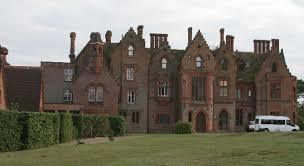
How did a woman holding a pistol in her right hand manage to shoot herself in the left temple? What was the link between a ghost sighting and the disappearance of top secert military plans? How did the bullet that killed Sir Gervase shatter a mirror in another part of the room? And who destroyed the "eternal triangle" of love involving renowned beauty, Valentine Chantry?
Hercule Poirot is faced with four mystifying cases—Murder in the Mews, The Incredible Theft, Dead Man's Mirror and Triangle at Rhodes—each a miniature classic of characterisation, incident, and suspense.
Dame Agatha Mary Clarissa Christie, Lady Mallowan, DBE (née Miller) was an English writer known for her 66 detective novels and 14 short story collections, particularly those revolving around fictional detectives Hercule Poirot and Miss Marple. She also wrote the world's longest-running play, the murder mystery The Mousetrap, which has been performed in the West End of London since 1952. A writer during the "Golden Age of Detective Fiction", Christie has been called the "Queen of Crime". She also wrote six novels under the pseudonym Mary Westmacott. In 1971, she was made a Dame (DBE) by Queen Elizabeth II for her contributions to literature. Guinness World Records lists Christie as the best-selling fiction writer of all time, her novels having sold more than two billion copies.
This best-selling author of all time wrote 66 crime novels and story collections, fourteen plays, and six novels under a pseudonym in romance. Her books sold more than a billion copies in the English language and a billion in translation. According to Index Translationum, people translated her works into 103 languages at least, the most for an individual author. Of the most enduring figures in crime literature, she created Hercule Poirot and Miss Jane Marple. She atuhored The Mousetrap, the longest-running play in the history of modern theater.
Who the heck did Nigel Hawthorne boink in order to get the job of narrator for “Murder in the Mews”?? His Poirot accent is absolutely atrocious. Fortunately, the other three stories in this collection are narrated by the ever-reliable Hugh Fraser, who does a fantastic job. I mean, sweet baby kittens on a cracker, I know Hawthorne is dead and probably won't be recording any new audiobooks, but please consider banning the next seven generations of his descendants from narrating any Poirot novels in his stead, HarperAudio. We can't take the chance of such a travesty happening again.
Anyway, other than the narration, this is a super enjoyable collection of stories featuring the great Hercule Poirot. I generally prefer Christie's novels to her shorter fiction, but I enjoyed each and every one of these. “Triangle at Rhodes” is probably my favorite of the bunch, even if it does get a bit “tell-y instead of show-y” there at the end.
So, yeah. Good stories. Excellent narration by Hugh Fraser. And Nigel Hawthorne? Well, I'm sure he tried his best.
Ok this book comprises four novellas, so its probably fair that I mark them as I read.
Murder in the Mews 4.5 ⭐️ A great short story that commences on Guy Fawkes night amidst the fireworks exploding, so ideal for murder. And who did it and why ? Poirot and Japp go (metaphorically) hand in hand to solve this complex killing.
The Incredible Theft 3.5⭐️ Who was the person seen skulking around the terrace ? How did they know to steal the plans in that short space of time ? Poirot interviews all the people at the dinner that night to ascertain who could possibly have stolen the plans, and why was the femme fatale, Mrs Vanderlyn, really invited for the weekend by Lord Mayfield ?
Dead Man's Mirror 4⭐️ Amazingly I read this short story last year, and yet I still couldn't remember who the murderer was. Now does that mean I am loosing my memory or hopefully that I've read so many books since, that this story has been pushed from my mind. Anyway its an enjoyable story with Poirot at his most enigmatic best as he investigates the suicide or was it murder, of the slightly batty Sir Gervase Chevenix-Gore. Writing a book about his ancestors, and surrounded by his meagre family and staff, Sir Gervase is found dead in his locked study when he doesn't turn up in time for dinner. Poirot, invited down that day, arrives amongst the confusion.
Triangle at Rhodes 4⭐️ So this was, to quote a friend "a Grand story". Poirot, holidaying on a Greek Island (lucky devil) is drawn into an incident involving 2 married couples. He is concerned that something untoward is going to happen and warns one of the wives that she should leave the island. Needless to say she ignores his advice and her husband is then accused of murdering the other wife. Poirot seems to have pre-empted the murder and makes himself available to the Greek police. Truth will come out.
So overall this has to be a 4 ⭐️ star read , 4 great short stories that really demonstrate Poirot's intelligence and versatility.
Poirot and Japp investigate a murder that has been made to look like suicide. Badly made to look like suicide. Poirot has to untangle quite a few knots to unravel a blackmailer's scheme gone wrong. But unravel them he does. Keep your eye on the attache case at the golf course. Or not. Could just be a red herring after all.
The theft of secret bomber plans at a house party means everything needs to be kept hush-hush. Enter Poirot, the only man alive who can untangle the mystery of the politician vs. the spy. Good, but this was my least favorite of the 4 stories.
An extremely eccentric man seemingly commits suicide after summoning Poirot to his home with no explanation. A locked-room mystery with a great cast of characters that keeps you guessing til the end. Mr. Satterthwaite from Three Act Tragedy & The Mysterious Mr. Quin has a small cameo in this one, as well.
A love triangle turns deadly in a way you'll never see coming! Or at least, I didn't see it coming. This was maybe my favorite story.
They were all really good, though. If you're interested in trying Agatha Christie's short stories, this is a great collection to start with.
Highly Recommended!
The audiobook edition I listened to was read by Nigel Hawthorne. Now, I'm used to Hugh Fraser who is excellent, or David Suchet who brings the recognizable tv voice to life. Nigel Hawthorne was like nails on a chalkboard for me. Poirot sounded harsh and guttural, and not at all what I was accustomed to. I'm not saying he did anything wrong, but I will personally avoid his Poirot books from here on out.
A collection that shows its age, culturally speaking.
Dead Man's Mirror 3 stars "The flat was a modern one. The furnishings of the room were modern, too. The armchairs were squarely built, the upright chairs were angular. A modern writing-table was set squarely in front of the window and at it sat a small, elderly man. His head was practically the only thing in the room that was not square. It was egg-shaped."
Clearly written in the days when entrance and exit wounds were not a known Thing by all readers/viewers. Nonetheless, I liked the characterizations. The classic locked-room mystery that seems to be a suicide.
The Incredible Theft 2.5 stars "As the butler handed round the souffle Lord Mayfield leaned confidentially towards his neighbor on the right, Lady Julia Carrington. Known as a perfect host, Lord Mayfield took trouble to live up to his reputation. Although unmarried, he was always charming to women."
I never really grooved much on Christie's attempts at spy stories. It's a strange bygone age, where people apparently take home Top Secret Plans and have Top Secret Meetings at their country estates. Still, Poirot, and it is intriguing as a period piece.
Murder in the Mews 3 stars "'Penny for the guy, sir?' A small boy with a grimy face grinned ingratiatingly. 'Certainly not!' said Chief Inspector Japp. 'And, look here, my lad--' A short homily followed. The dismayed urchin beat a precipitate retreat, remarking briefly and succinctly to his youthful friends: 'Blimy if it ain't a cop all togged up!'" Christie does a nice twist. Inspector Japp and Poirot investigate an apparent suicide, discovered by the woman's roommate. More dialogue, with more feel of polish.
Triangle at Rhodes 2 stars -Don't read this if you are going to read Evil Under the Sun.
Hercule Poirot sat on the white sand and looked out across the sparkling blue water. He was carefully dressed in a dandified fashion in white flannels and a large panama hat protected his head. He belonged to the old-fashioned generation which believed in covering itself carefully from the sun. Miss Pamela Lyall, who sat beside him and talked ceaselessly, represented the modern school of thought in that she was wearing the barest minimum of clothing on her sun-browned person." Christie must have been working out her plot for one of her better known, full-length mysteries. This is quite truncated at a mere 25 pages and loses much of the atmosphere that makes the book so powerful.
Two-and-a-half stars, rounding up, because, Christie. If I rate them lower, it's probably because I'm comparing them to my memories of her at her best.
Edition note: this is the right ISBN number, wrong cover. It's a 1984 reprint by Berkeley Books and features a sihlouette of Poirot on the front.
[3.6⭐] 𝘼𝙨𝙚𝙨𝙞𝙣𝙖𝙩𝙤 𝙚𝙣 𝘽𝙖𝙧𝙙𝙨𝙡𝙚𝙮 𝙈𝙚𝙬𝙨 es una composición de cuatro relatos de Agatha Christie, publicada en 1937. Este libro nos sumerge, una vez más, en el brillante ingenio de Hércules Poirot. Cada historia tiene su propio encanto, pero algunas destacan más que otras, tanto por su desarrollo como por su capacidad para sorprender al lector.
Mi ranking sería el siguiente: 1. 𝙀𝙡 𝙚𝙨𝙥𝙚𝙟𝙤 𝙙𝙚𝙡 𝙢𝙪𝙚𝙧𝙩𝙤. 2. 𝙐𝙣 𝙧𝙤𝙗𝙤 𝙞𝙣𝙘𝙧𝙚𝙞́𝙗𝙡𝙚. 3. 𝘼𝙨𝙚𝙨𝙞𝙣𝙖𝙩𝙤 𝙚𝙣 𝘽𝙖𝙧𝙙𝙨𝙡𝙚𝙮 𝙈𝙚𝙬𝙨. 4. 𝙏𝙧𝙞𝙖́𝙣𝙜𝙪𝙡𝙤 𝙚𝙣 𝙍𝙤𝙙𝙖𝙨.
Mi favorito de los cuatro es, sin duda, 𝙀𝙡 𝙚𝙨𝙥𝙚𝙟𝙤 𝙙𝙚𝙡 𝙢𝙪𝙚𝙧𝙩𝙤. Es el relato mejor desarrollado, con una narrativa envolvente y un final que simplemente no pude prever. Es el más extenso, así que la autora pudo usar todo su ingenio en aquel caso. En cuanto a 𝙐𝙣 𝙧𝙤𝙗𝙤 𝙞𝙣𝙘𝙧𝙚𝙞́𝙗𝙡𝙚, tengo que decir que también me tomó completamente por sorpresa con su giro final. Si no hubiese sido por las últimas dos páginas, no sería el segundo que más me ha gustado. Además, consideré que esa historia era más original.
El relato que da título a la colección, 𝘼𝙨𝙚𝙨𝙞𝙣𝙖𝙩𝙤 𝙚𝙣 𝘽𝙖𝙧𝙙𝙨𝙡𝙚𝙮 𝙈𝙚𝙬𝙨, está posicionado en el tercer lugar, principalmente porque no me sorprendió tanto el asesino, me esperaba más. La construcción del caso es meticulosa y, dejando de lado al asesino, diría que sigue siendo interesante por otro giro que tiene.
El único que me dejó algo indiferente fue 𝙏𝙧𝙞𝙖́𝙣𝙜𝙪𝙡𝙤 𝙚𝙣 𝙍𝙤𝙙𝙖𝙨. Aunque no está mal, lo resolví demasiado rápido, lo que le restó emoción o interés. Pude anticipar tanto el giro como al asesino y, aunque es un caso interesante, no logró sorprenderme como los demás. Se me hizo la historia más débil y evidente.
Finalmente, puedo decir que 𝘼𝙨𝙚𝙨𝙞𝙣𝙖𝙩𝙤 𝙚𝙣 𝘽𝙖𝙧𝙙𝙨𝙡𝙚𝙮 𝙈𝙚𝙬𝙨 es una colección entretenida y variada. Aunque no considero que sea lo mejor de Agatha Christie, es una lectura que los fanáticos de Poirot disfrutarán, especialmente si buscan historias cortas y entretenidas.
Agatha Christie siempre es mi solución ante un bloqueo lector. Ya llevaba algunos días sin poder leer dos o tres páginas de corrido así que me dije, necesito mi dosis de crimen y misterio. Y la respuesta a mis plegarias sin dudas es la reina del crimen.
Si bien esta es una colección de 4 novelas cortas, son unos relatos entretenidos y que cumplen la función de hacerlos leer hasta que llegas al final y se destapa todo el asunto. El problema es que a mí suele dejarme siempre un regusto amargo porque nunca me han convencido sus historias cortas por lo que aquí me vi ante un irremediable empate. Hubieron dos que me gustaron muchísimo pero también hubieron otros dos que los sentí demasiado largos para mi gusto y me llegaron a cansar por lo obvio que resultaban o lo poco que me interesaba el caso. La puntuación real es un 2,5 en toda regla.
🔍Asesinato en Bardleys Mews: muy bien. Para empezar con este quedé abiertamente engañado. Nada es lo que parece en este por muy obvia que sea la respuesta está bien oculta.
🔍Un robo increíble: fue el que se me hizo más largo, aburrido y poco interesante. No me gustó tanto.
🔍El espejo del muerto: ha sido un poco meh y la verdad es que me parece así porque no necesité utilizar tantas células grises para identificar las pistas falsas y al involucrado/a en el crimen.
🔍Triángulo de Rodas: el último es el mejor junto con el primero. Ingenioso, entretenido y adictivo. Además, su extensión la siento perfecta.
That odd, little foreigner with the strange mustache Hercule Poirot is at it again!
In Murder in the Mews, a collection of shorts, Poirot's razor-sharp mind is pitted against such stumpers as a suicide/murder conundrum, a deadly love triangle, and a case of important papers gone missing.
Originally four short stories were published under this title, which was called Dead Man's Mirror here in the States. My version only included three stories: Murder in the Mews, Triangle at Rhodes, and The Incredible Theft.
The title story is the most intriguing and most well developed. The remaining two were quite enjoyable, if a bit quick and just a tad perfunctory…just a tad, mind you.
Poirot, that charming if arrogant sleuth, is clever as ever in unearthing the truth, an absolute pleasure to observe in action. Christie's plotting was relatively tight with an occasionally smart twist or two. Her characters are serviceable as always, though few really stood out as some have in her other stories. All in all, if you're already an Agatha Christie fan, you won't go wrong with Murder in the Mews.
Who am I kidding in writing this review? None (or one?) of my Goodreads friends is going to read this book. 440,000 reviewed And Then There Were None. More than 100K people or more have reviewed Christie’s each most popular Poirot works such as The Murder of Roger Ackroyd, Murder on the Orient Express or Death on the Nile. Murder on the Mews is one of the Little Engines that Could of Christie-lore, reviewed by as few as 8,000. It features four stories, three that might qualify as novellas, published in 1937, maybe perfect length for tv serialization, but nothing much to write home about, my having been there.
One thing to observe about Christie generally is that she makes scant reference to a real world outside of her fictions. In general, she occasionally admits that The Great Depression may have affected her characters. In “Murder in the Mews,” we open on Guy Fawkes Day with some kids begging “Penny for the Guy, sir?” but Chief Inspector Japp brushes him off and there are maybe only a couple other references thereafter about the fact that the need for money might be a motive for the crime. Poirot himself is a little egg-headed dandy; he loves pretty girls and royals. He’s generally respectful to all classes in his investigations, but he and his author don’t much apologize for being pretty escapist, even elitist. In “The Incredible Theft”—which is not all that incredible, Agatha, come on—we have our first mention that England may have to face the challenge of involvement in WW II.
“Murder in the Mews”: The best and most developed story is the title story. Is it a murder disguised as a suicide, or a suicide disguised as a murder? That’s the unique angle here and I htink it is very good. 4 stars.
“The Incredible Theft”: See above, but it’s about a theft (!?) and no one even dies? What’s the good of reading about that, Agatha? At least kill somebody! Though the theft involves plans for a bomber—a war reference—and a (pretty) American former (?) spy, no one would care much about this theft. Not enough development. 2 stars.
“Dead Man’s Mirror”: Features rich and somewhat eccentric Lord Chevenix-Gore, who for some reason seems to have committed suicide, in spite of his massive ego. Who would even buy this premise, and yet most characters seem to accept it (for most of the story). So, yeah, he was murdered, and as Gore gets gored (okay, by a bullet, sorry, couldn't help myself), the mirror in an adjoining room gets shattered. How can this even happen?! But why should we even care? This one is a little notable because it rehearses an idea for getting away with murder that appears in a later book, The Mirror Crack'd. It's a solid story. 3 stars.
“The Triangle at Rhodes”: is mercifully short, the weakest of the four, not included in some editions, involving a love triangle, though you think it is about one set of characters, and. . . that’s the interest in this one, that the triangle you thought was key is not as important as another. Beach scenes! 2 stars, but the summer scene at Rhodes could have been developed more.
These are pretty early and weaker stories from Christie and yet they are still readable, I kept reading, they are pretty well constructed. I read them fast and yet they are good to see her working out some different ideas. If you want to read Christie, though, this would not even be close to the one I would recommend.
I love the adventures of Poirot. He is the best character of Agatha Christie. This was a wonderful story. I couldn't put the book down. Loved it and highly recommend it, personally finished it in two hours.
What makes this collection a good read are the two stories. The first Incredible theft is expanded version of Christie's original story- The Submarine plans. The second story Dead Man's mirror is expanded version of her earlier story- The second Gong. The other two stories in the collection include Murder in the Mews and Triangle at Rhodes. We also get to know that Poirot loves his Sirop de cassis !!!
Perfect Agatha Christie--Hercule Poirot investigates a suspicious death, made to look like suicide. It's a long short-story or a short novella--the prose is simple and direct, and all the fun is in the intellectual challenge to stay ahead, or even, or not too far behind the brilliant detective.
A collection of short stories. I mostly liked Murder in the Mews and Triangle at Rhodes. Dead Man's Mirror was okay. The Incredible Theft had one of those espionage plots I don't enjoy as much, though.
This short story collection is worth 5 stars simply because of the nostalgic feels. One of the first "adult" books I've ever picked up from my mothers bookshelf and I've reread the first story in particular a few times. But the stories are really good ad well but not sure of much of my feelings for this book is based on nostalgia
Three Poirot stories in one collection. As with most of these small short story collections, I personally think you would be better off grabbing a larger volume if you're looking to buy. However, all three of these are good (imho) so knock yourself out if you find this in a yard sale somewhere.
Dead Man's Mirror An extremely eccentric man seemingly commits suicide after summoning Poirot to his home with no explanation. When Poirot arrives at Sir Gervase Chevenix-Gore's home he finds out no one is expecting him, but he is just in time for the discovery of the body.
A locked-room mystery with a great cast of characters that keeps you guessing til the end. Mr. Satterthwaite from Three Act Tragedy & The Mysterious Mr. Quin has a small cameo in this one, as well.
Really enjoyed this one!
On a side note to the Christie nerds, this was expanded from the 1932 short story The Second Gong.
Triangle at Rhodes A love triangle turns deadly in a way I didn't see coming! Poirot and the other guests notice that the resident hotel hottie appears to be quickly stealing a mousy woman's handsome husband, while simultaneously angering her own.
Poirot sees that there is more going on than meets the eye and tries to warn Mrs. Mousy to leave before... Well, before. I liked this one quite a bit!
Murder in the Mews Poirot and Japp investigate a murder that has been made to look like suicide. Badly made to look like suicide. Poirot has to untangle quite a few knots to unravel a blackmailer's scheme gone wrong. But unravel them he does.
Keep your eye on the attache case at the golf course. Or not. Could just be a red herring after all.
1. Murder in the Mews : A woman's dead body is found. Suicide or murder ? The gun was in her right hand and the bullet in the left temple.
2. The Incredible Theft : Top secret military plans disappear and a foreign power could take advantage.
3. Dead Man's Mirror : Sir Gervase Chevenix-Gore is dead.Suicide or murder ? A rich man with a tangled family history and without any heir.An unexpected twist at the end.
4. Triangle at Rhodes : A holiday island and the murder of a beautiful woman.
The third story was particularly good.Overall,a fairly interesting collection.
This was the first Agatha Christie's short histories book I've read and I did not like it very much. It's interesting for passing the time, but I prefer the novels with Hercule Poirot than these short stories. I read in my native language and I consider that this book deserves 3.5 stars.
Agatha Christie was so far ahead of her time. Crisp writing, vivid characters, and a story that is dialogue-driven make this story from the 1930s come alive. That and her clever mystery twists that leave the reader with an intricate but believable solution.
Patru povestiri polițiste numai bune de citit în aceste zile călduroase!
" - Chestia asta întotdeauna complică lucrurile, se lamentă Japp. Unii oameni își țin gura - câteodată din cele mai onorabile motive.". " - Cum aș putea să mă exprim! zise el. Să refuz - da, acesta a fost primul meu impuls. Dar, nu știu, omul are, câteodată, un presentiment. Ceva poate să nu miroasă așa de bine...".
خب من نمیدونستم این کتاب متشکل از ۴ تا داستان کوتاهه و یکی دو سال بود میخواستم برای شب چهارشنبه سوری بخونمش. چاپیشو هیچ جا ندیدم بنابراین دیشب دیدم طاقچه بینهایت دارمش و همون یدونه داستان "جنایت در شب آتش بازی" شو خوندم و بسی کیف کردم🧨( ・ω・) واقعا بانو کریستی واسش فرقی نداره ۳۰۰ صفحه داشته باشه یا ۱۰۰ صفحه، جز نبوغ چیزی نمیبینم. ایدهش جالب و متفاوت بود~ با حضور جناب پوآرو~ و چون کوتاه بود اتفاقا بیشتر چسبید✨️
Hercule Poirot și inspectorul-șef Japp discută despre noaptea de Guy Fawkes ca o noapte perfectă pentru o crimă datorită artificiilor, astfel încât nimeni nu ar auzi o împușcătură, de exemplu. A doua zi dimineața, Poirot primește un telefon de la Japp și află că o văduvă tânără s-a sinucis la Mews, numărul 14. Ajunși acolo, Poirot și Japp bănuiesc că e mai degrabă o crimă: decedata e împușcată în partea stângă a capului și ține pistolul în mâna dreaptă și nu a lăsat nicio scrisoare de adio.
***
Nu erau multe în dulap. Trei umbrele (una stricată), patru bastoane, un set de crose de golf, două rachete de tenis, un covoraș frumos înfășurat și câteva perne de sofa în diferite stadii de uzură. Deasupra acestora se odihnea o mică geantă elegantă. Când Japp întinse mâna spre ea, Jane Plenderleith spuse repede: - E a mea. Eu… am adus-o cu mine azi dimineață. Așa că nu poate fi nimic acolo.
***
Cartea nu a apărut încă la editura Rao, prin urmare nu poate fi cumpărată, dar cu siguranță merită citită. O veți găsi, cel mai probabil la biblioteca din orașul vostru sau la un anticariat.
I gave this collection of Hercule Poirot stories 5 stars. I thought that the stories were interesting although I quibbled about the ending on two of the four stories.
"Murder in the Mews" (4.5 stars)-Japp asks Poirot to assist when a woman, Mrs Barbara Allen, is found dead in an apparent suicide. After arriving on scene, both men are starting to lean towards murder. Mrs. Allen roommate, Miss Plenderleith, seems largely unaffected by the scene she sees, or so it appears. Japp wonders if Miss Plenderleith had something to do with Mrs. Allen's death. Poirot is intrigued by the scene he has found and realizes that something here is amiss.
I thought this was a very good showing of Poriot's little grey cells. I also liked seeing how well Poirot and Japp worked this one together. I do often find the stories that are absent Poirot's side-kick Captain Hastings to not be as fulfilling as a reader, but thought this one was very well done. The solution to this one was interesting especially because I think there's a lot of logical leaps I didn't see straight on. The only reason why I didn't give this one 5 stars is that the ending was not 100 percent satisfying. I did laugh though since there is some dialogue between Japp and Poirot and murder and I started thinking about "Curtain: Poirot's Last Case."
"The Incredible Theft" (4 stars)- At a big country house (I love stories with big country houses are the setting) Lord Mayfield has invited Sir George Carrington, his wife Lady Julia and their son Reggie. There is also a Mrs. Vanderlyn, who is a beautiful brunette American woman (with a very suspicious past/present), Mrs. Macatta, who is a forthright MP. Then we also have Mr. Carlile, Lord Mayfield's assistant and Mrs. Vanderlyn's maid. Christie sets the stage so to speak when we get to follow around the room and see how some of these characters feel about the other ones. Eventually everyone leaves the dining room and Lord Mayfield and Sir George are left alone to discuss the design of the new fighter. Later on that evening they are about to put the plans away when they hear a scream and leave the study. Coming back they find the plans gone.
Poirot is called in and honestly you can tell that right away he knows what happened, but we go through a whole back and forth with him interviewing people. Once again the ending was not that satisfying because we find out who the guilty party is, and the reasoning behind things made me roll my eyes.
"Dead Man's Mirror" (4 stars)-Sir Gervase Chevenix-Gore writes to Hercule Poirot to come to him at once. Poirot of course is not someone who likes to be ordered around. However, after a conversation with someone he knows/trusts about Sir Gervase he decides to go and visit. He arrives and it seems that Sir Gervase has killed himself.
Poirot of course interviews everyone present and it seems there are a lot of warring interests going on between certain people present. Sir Gervase's adopted daughter Ruth was being pressured/bullied by him to marry a distant relation, Hugo Trent. Due to Ruth not wanting to marry Hugo we find out that he intended to rewrite his will disinheriting her. We get led on a merry chase via interviewing suspects, but once again Poirot seems to know almost immediately who the guilty party is and why they did what they did. I just thought it was a little far fetched in places.
"Triangle at Rhodes"(5 stars). We have Poirot on holiday in Rhodes. There's not a lot of people around so he's made friends of sorts with some of the other guests. All of them are agog though at the goings on between two married couples, the Gold's and the Chantry's. The Gold's consists of Douglas and Marjorie. The Chantry's consists of Tony and Valentine. We find out that Valentine has been married 4 or I think maybe even 5 times before she has wed Tony and that the woman seems to have a habit of having men fall in love with her. Tony is possessive of his wife and doesn't like other men coming near her. However, on a beach day, Douglas Chantry lays eyes on Valentine and it appears that is all he cares about during the vacation. Soon the whole place is wondering when Douglas and Valentine will run off. And we have the dreaded "triangle" between a married man, his wife, and mistress. When Valentine dies though everyone wonders who did it and why.
This was my favorite story in the collection and I loved how we are given the solution. It makes you go back and re-read the story you just finished which I always enjoy.
This is a collection of 4 short stories featuring the egg shaped head of Hercule Poirot. I feel fairly meh about this collection. I've read quite a few Poirot short stories at this point, and I have to say I struggled to get through this collection. I think part of the trouble was that two of these short stories had a huge cast of characters, and by the time I'd finally figured out who was who, the story was finished!
Murder in the Mews: ⭐⭐⭐ Featuring the lovely Japp. Poirot investigates the suicide of a young woman on guy fawkes night.
The Incredible Theft: ⭐⭐ Spoiler: the theft is not really that incredible.
Dead Man's Mirror: ⭐⭐⭐ Typical Poirot. He is invited to a very egocentric mans house, but when he arrives the man has seemingly killed himself. Poirot interrogates the houseguests and deduces the truth.
Triangle at Rhodes: ⭐⭐⭐ This one is a bit different from other Poirot stories. Poirot is on vacation. He's trying his best to relax, soak up some sun, and stay away from murder. But his little grey cells are sensing a plot afoot! Despite going to a very quiet beach, he's accosted by chatty women and witnesses the formation of a love triangle that ends in tragic consequences. I thought this was fun but very short. It would have been hilarious to see more of Poirot's beachside hijinks.
This book is a part of my goal to read all the Hercule Poirot stories.
Anticipating a cozy full-length novel, my first reaction was mild dismay – to discover that Murder in the Mews comprises four quick-fire short stories, the first of which provides the eponymous cover title.
However, my disappointment was short-lived – for potted Christie loses little in the telling – and in fact these are arguably novellas, ranging from 10,000 to 30,000 words:
- Murder in the Mews - The Incredible Theft - Dead Man’s Mirror - Triangle at Rhodes
The first three are variations on the ‘closed room’ mystery – and you can imagine Agatha Christie experimenting with these, perfecting her (and Poirot’s) technique.
The fourth is the classic ménage-a-trois (ou quatre, ou cinq, ou six!) – and it surely was the precursor to Evil Under the Sun – her diabolical English seaside mystery, published in 1941.
The plots themselves, though necessarily abridged, are as devious as ever – and even the denouement of Dead Man’s Mirror, when I thought, “Well, that was obvious” – a final twist arrived to kick me in the pants! (Excuse the mixed metaphor.)
An added bonus, as usual – and I never tire of this – a nostalgic insight into the lives and mores of the English upper-middle-classes – set around the mid-1930s.
Very enjoyable. I shall read again in another 10 years.
مجموعهای از سه داستان معمایی به سرپرستی پوآرو. داستان اول واقعا خوب بود، داستان دوم متوسط و داستان سوم کلیشهای بود و من دوستش نداشتم. شخصیتپردازیها نسبتا متوسط و خواننده چندان خودش رو درگیر داستان و درون احساس نمیکنه، چه برسه به همذاتپنداری کردن. + در کل مجموعه داستان جزء کتابهای موردعلاقهم نیست.
This collection had four Hercule Poirot novellas together in one printed book. I liked all of the stories but I did like some better than others. While I do enjoy Hercule Poirot the more I read of him the more I realize I like Miss Marple a little better. My favorite story was Dead Man Mirror. I liked the mystery but also the ending was very satisfying. I really like locked room mysteries which was present in this story but others in this one. There is something about being told a mystery is impossible and then still solving it that is extra satisfying. I will say while these mysteries live up to the test of time there are a few bits that remind you this book was written a long while ago.
3 Stars. Four short stories featuring Poirot. The first three are novelettes, 15,000 to 40,000 words / about 55 to 144 pages: "Murder in the Mews," "The Incredible Theft," and "Dead Man's Mirror." The fourth, "Triangle at Rhodes," is shorter, a novella which is 7,500 to 15,000 words / about 25 to 54 pages. I review each one elsewhere. They were fun, but I prefer longer stories about our detective with the egg-shaped head. I first listened to an audio recording, but noticed that "Mirror" was not part of the show! Back to reading. In a Poirot mystery, the most enjoyable part for me is the dance at the start between the characters, one of whom is destined not to be with us long. "Triangle" met that expectation, and more! But it didn't match my addiction to an excruciating meander to the finish. Poirot works fast and soon announces the resolution. Over too soon. Two others were off quickly, "Mews" and "Mirror." Within minutes a body is found and our friend works through innumerable clues in his inimitable fashion. In fact, "Theft" wasn't a murder at all, but espionage. I enjoyed each of them but I'll go back to a full-length novel for the next one! (November 2018)
Poirot looked round him. A circle of interested faces stared back at him. Everyone was there, he noted, with one exception, and at that very moment the exception swept into the room. [...] “I have asked you all to come here so that you may hear the true facts of Sir Gervase’s suicide.”
I used to read Agatha Christie’s murder mysteries as a teenager, only to abandon the high-society hijinks and the puzzling mind-games of brainiac detectives in favour of the American hard-fisted and sarcastic gumshoes provided by Chandler, Hammett et Co. Dirty slums and femme fatales trumped the British stiff upper lip. This year, I was looking for some easy read for the beaches of Rhodes, which I visited about a week before the fires started, and I came across this collection of four Hercule Poirot stories, the last of which takes place on the beautiful Greek island. The stories included in this collection are from 1937 or earlier, and they are good but probably not the best to come from the pen of the popular and talented Agatha Christie. I think I prefer the novel length stories from her, where the characters and the plot are better developed. That doesn’t mean I didn’t enjoy reading about the deductive processes of the little Belgian detective, especially as they can be finished between two dips in the Aegean. I just struggle now, a couple of months and an extensive tour of European cities later, to remember the particulars of each case.
Murder in the Mews A sort of locked room mystery in the apartment of two young women living in a London ‘mews’ . Poirot is asked to assist by a friend in the Scotland Yard and he quickly spots some inconsistencies in the alleged suicide of one of the women. Since her flatmate has an ironclad alibi for the Guy Fawkes night when the incident took place, the inquest focuses on the two men who visited the mews recently. Since the rules of whodunits require it, a red herring and a final reveal scene are included.
The Incredible Theft The story is a little atypical since it marks the author’s foray into international espionage, but it takes place in the usual posh setting of an English manor, where a set of elegant guests have dinner while secret plans for a wartime bomber are stolen right under their noses. Once again Hercule Poirot is summoned to the scene and he quickly deduces the secrets each of the guests are hiding.
Dead Man’s Mirror This is the longest novella and my favourite here, another locked room mystery in an elegant castle, where the Lord of the house invites Poirot for dinner only to miss his entrance, due to being found dead in his study just as his guests gather at the sound of the gong.
“The dead man’s mirror. Every new fact we come across shows us some different angle of the dead man. He is reflected from every conceivable point of view. We shall have soon a complete picture ...”
Extensive interviews with the guests and family help Poirot in arranging the classic final scene of gathering everybody in one room for a brilliant expose of his cleverness.
Triangle at Rhodes This is the story that I read first on the beach, because of the setting, but in all honesty, I learned little about the island from it and a lot about human nature – not a bad trade-off in the end. The author also has a valid tipoff for eventual visitors to the island: Avoid the high season! It’s too hot and too crowded.
In late October, so he had been told, Rhodes would be nearly empty. A peaceful, secluded spot.
When Hercule Poirot arrives on his own holiday, he hopes to forget about crime and the bustle of a big city, but his hotel companions are proving to be both too active and too conflicted in their relationships. Poirot is inspired to draw triangles in the sand, which makes me wonder where he stayed on the island: my own experience was almost exclusively pebbled beaches.
Human nature is simply fascinating
On this, some of these characters agree, while mr. Poirot claims the opposite: that most humans are following established patterns, and that crime is amongst the most predictable actions of all, once you get to know the actors.
“Nice little woman – nice little woman! Men always approve of dowdy women – but when it comes to brass tacks the dress-up trollops win hands down! Sad, but there it is.”
I would have liked this final story to be developed into a novel, both for the added background information on the island’s culture and for the intriguing character study that was frankly too sketchy/rushed for my taste.
Even as I am aware that I have outgrown my early fascination with cosy murder mysteries, I might go back to some of the better known Agatha Christie novels, to better pinpoint how her clean prose and clever devices made her such a best-selling author.
1. Murder in the Mews 2. The Incredible Theft 3. Dead Man's Mirror 4. Triangle at Rhodes
أربع جرائم مختلفة بتفسيرات مختلفة والكثير من المفاجآت في الجريمة الأولي يكون الاشتباه في انه انتحار فقط ولكن بعض الادله تدل علي انه قتل ليفسرها المحقق بوارو في النهاية تفسير عبقري وتظهر المفاجأه ليثبت ما اذا كانت جريمة قتل ام مجرد انتحار وحتي السبب وراء هذا
في الجريمة الثانية جريمة سرقة خفيفة واحترافية تختفي فيها بعض الأوراق المهمة جدا وتحوم الشكوك حول جميع المدعوين ليظهر بوارو سذاجة الجريمة ووضوحها الشديد
أما الجريمة الثالثه فهي ايضا يشتبه في انها انتحار وتتمحور التخمينات حول هذا وعن سبب الانتحار ليفجر لنا المحقق بوارو مفاجأه كبيرة ليست في الحسبان ابدا ليحسم بها نهاية القضية تماما
الجريمة الرابعة هي كلها مسألة غيرة وطمع في نفس الوقت نذهب في رحلة مع المحقق بوارو الي جزيرة رودس في اليونان حيث فضل ان يذهب بوارو للاستجمام بعيدا عن القضايا والتحقيقات لتلاحقه هناك قضية أخري يجد حلها في كلمتين فقط ودون اي مجهود علي خلاياه الرمادية الصغيرة




 Hercule Poirot is at it again!