Прочитав в 1977 году первый роман Эжена Савицкая, Эрве Гибер отправил ему собственную, только что вышедшую книгу. Так завязалась переписка. Виделись они редко: Гибер жил в Париже, Савицкая в Льеже. Переломный момент наступил в 1982 году, когда Гибер опубликовал «Послание собрату по перу». Тон последующих писем переменился, Гибер стал почти открыто демонстрировать свою одержимость, сочиняя письма все более пламенные.
Я люблю тебя в том, что ты пишешь. Я люблю тебя, когда ты пишешь. Я люблю то, как ты в этот момент выглядишь, я люблю твои длинные жесткие волосы, светлые, бледные, растрепавшиеся, пока ты пишешь (никогда не стриги их), и я люблю твою белую шею, и твой затылок, и твои пальцы, и даже твои ноги, твой зад, твою кожу, твою негу, все это – в напряженной неподвижности письма.
Спустя два года страсть начала угасать. На смену пришла крепкая дружба. Эта книга представляет собой свидетельство особого рода, поскольку издавать переписку с другими своими адресатами Эрве Гибер запретил.
(Saint-Cloud, 14 décembre 1955 - Clamart, 27 décembre 1991) est un écrivain et journaliste français. Son rapport à l'écriture se nourrit pour l'essentiel d'autobiographie et d'autofiction1. Il est également reconnu comme photographe et pour ses écrits sur la photographie.
Hervé Guibert est issu d’une famille de la classe moyenne d’après guerre. Son père est inspecteur vétérinaire et sa mère ne travaille pas. Il a une sœur, Dominique, plus âgée que lui. Ses grand-tantes, Suzanne et Louise, tiennent une place importante dans son univers familial. Après une enfance parisienne (XIVe arrondissement), il poursuit des études secondaires à La Rochelle. Il fait alors partie d’une troupe de théâtre : la Comédie de La Rochelle et du Centre Ouest. Il revient à Paris en 1973, échoue au concours d'entrée de l’Idhec à l'âge de 18 ans.
Homosexuel, il construit sa vie sentimentale autour de plusieurs hommes. Trois d’entre eux occupent une place importante dans sa vie et son œuvre : Thierry Jouno, directeur du centre socioculturel des sourds à Vincennes rencontré en 1976, Michel Foucault dont il fait la connaissance en 1977 à la suite de la parution de son premier livre La Mort propagande et Vincent M. en 1982, un adolescent d’une quinzaine d’années, qui inspire son roman Fou de Vincent. Il est un proche du photographe Hans Georg Berger rencontré en 1978 et séjourne dans sa résidence de l’Ile d’Elbe.
Il est pensionnaire de la Villa Médicis entre 1987 et 1989, en même temps qu'Eugène Savitzkaya et Mathieu Lindon. Ce séjour inspira son roman L'Incognito.
En janvier 1988, il apprend qu’il est atteint par le sida. En juin de l’année suivante, il se marie avec Christine S., la compagne de Thierry Jouno. En 1990, il révèle sa séropositivité dans son roman À l'ami qui ne m'a pas sauvé la vie - qui le fait connaître par ailleurs à un public bien plus important. Cette même année il est l'invité de Bernard Pivot dans Apostrophes. Ce roman est le premier d'une trilogie, composée également du Protocole compassionnel et de l'Homme au chapeau rouge. Dans ces derniers ouvrages, il décrit de façon quotidienne l'avancée de sa maladie.
Il réalise un travail artistique acharné sur le SIDA qui inlassablement lui retire ses forces, notamment au travers de photographies de son corps et d'un film, La Pudeur ou l'Impudeur qu'il achève avec la productrice Pascale Breugnot quelques semaines avant sa mort, ce film est diffusé à la télévision le 30 janvier 1992.
Presque aveugle à cause de la maladie, il tente de mettre fin à ses jours la veille de ses 36 ans. Il meurt deux semaines plus tard, le 27 décembre 1991, à l'hôpital Antoine-Béclère. Il est enterré à Rio nell'Elba près de l'ermitage de Santa Catarina (rive orientale de l'Ile d'Elbe).
Les textes d'Hervé Guibert se caractérisent par la recherche de simplicité et de dépouillement. Son style évolue sous l'influence de ses lectures (Roland Barthes, Bernard-Marie Koltès ou encore Thomas Bernhard, ce dernier "contaminant" ouvertement le style de A l'ami qui ne m'a pas sauvé la vie).
Hervé Guibert compose de courts romans aux chapitres de quelques pages, qui se fondent souvent sur des faits biographiques maquillés de fiction. Le lecteur est saisi par l'intrigue brutalement exposée (ainsi dans Mes parents), et appuyée par des passages au vocabulaire sophistiqué ou par des descriptions crues de tortures ou d'amours charnelles. Ce texte est en grande partie extrait de son journal intime publié en 2001 chez Gallimard (Le Mausolée des amants, Journal 1976-1991).
Il travaille avec Patrice Chéreau avec qui il coécrit le scénario de L'Homme blessé qui obtient le César du meilleur scénario en 1984, mais aussi avec Sophie Calle. Journaliste, il collabore dès 1973 à plusieurs revues. Il réalise des entretiens avec des artistes de son époque comme Isabelle Adjani, Zouc ou Miquel Barceló qui fait plus de 25 portraits de lui. Il écrit des critiques de photographie et de cinéma au service culturel du journal L
Demonstrates the cruelty of love that is somewhat one sided. Hervé’s letters are tender and beautifully wrought, while reeking of a desperation we can all understand. Feels like this book would be a perfect companion to Anne Carson’s Eros the Bittersweet.
« J’ai dit à l’homme avec lequel je déjeunais qu’en fait il fallait du courage. Il m’a dit : oui, mais aussi de la simplicité. C’est peut-être ce qui me manque le plus. Je prends tout horriblement au sérieux, je pousse le moindre souci jusqu’au pire. »
C’est le premier roman épistolaire que j’ai lu et j’ai suis touchée par la complicité de ces deux auteurs. Je l’ai pas pu lire tout de suite car il m’a rendu triste de temps en temps. Le post scriptum était très mignon.
‘there is in these letters a little distance between the love that declares that love—how suicidal, isn’t it?—and the actual lover who feels like he could stick his head in a hole and weep. it’s in that appropriate and acceptable distance for you between the declaration and the secret that i’d like to introduce myself to you again, and to kiss you: hervé’
Book 6 (I want to say) of the 30 books in 30 days challenge (2024). I found out about this book through Ariel from my favourite podcast in the world, Books Unbound, and I was then gifted this book by a certain Eugen in London this year. Having read the correspondence, all I can say, much like in everyday life, is: Goddamnit, Eugen(e).
“I’m filled with emotion, I’m horribly afraid it will evaporate, and at the same time I feel so proud that I want to leave a trace of it.” Ah, this was tender.
“Are they lavishing enough support, affection and protection on you where you are? I hope so with all my heart and bless those who are helping you survive.”
Un ouvrage qui n'a pas grand intérêt pour qui ne connait pas encore l'auteur et son travail, ce qui est mon cas, mais une très belle plume qui m'a donné envie de lire les autres livres D'Hervé.
This is the third book I have read by Herve Guibert – I started with My Manservant and Me and then read To the Friend Who Did Not Save My Life. I finished Letters to Eugene in one sitting, in part because it is short and because it is wonderful.
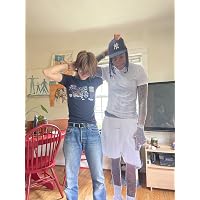
The photo on the cover makes a lot of sense after reading Guibert and Savitzkaya’s exchanges over ten years. Both men look awkward in the photo, which is how their initial writings began, and it fits perfectly with the content. Guibert spent ten years writing Savitzkaya. And, while Savitzkaya responds and engages through his own correspondence, it is much less frequent and shorter. Guibert must have had a good understanding of Savitzkaya’s personality to have persisted. It is easy to see the friendship develop from introductory, to friends, to lovers, and back to friends.
Guibert doesn’t hold back and fits so much feeling into his letters. It is art the way he can work in insult, respect, and lust into the same paragraph. I had to put the book down from laughing when I read that kissing Savitzkaya “felt like cold flesh, shrinking back, the lips of a cadaver or a devious little girl.” And, in the same paragraph Guibert tells him he likes him and wants to see him again.
Then there is Guibert’s letter from 25-June-1986 when he tells Savitzkaya, “I am not so great at the moment: everything, or almost everything, looks bleak, but since this isn’t the first time this has happened to me, I am trying to wait it out until I can see more clearly.” It is two years before his HIV diagnosis but tears at the heart.
Spread across years of knowing* each other, this decade-spanning correspondence between Guibert and Savitzkaya illustrates the, at times lacking but, slow transformation of idyllic desperation and romantic detachment on a balance into a friendship that tugged my heart at the final lines of Guibert's last letter.
Followed by a letter written by Savitzkaya in response to Guibert's unsent letter(s) from Egypt, that sealed my adoration of how it could have been for these two, yet it turned out hopeful, what with Saviztkaya's lines:
“Time hasn’t been very accomodating to our adventures. It fills the distances that separate us by immense star-clusters, light years, snowdrifts hardened by frost that prevent any possible reunion. I am closer to the deep freeze than to the furnace. I am not in a tomb but I keep exemplary tools with me always, the ones you offered me in I don’t know what magical circumstances and whose weight I will carry forever.”
This was written after Guibert's death, and what a way to break my heart on New Year's Eve to think of possibilities that were unfulfilled, unrealized, and how life must have really been that way—a series of comings and goings.
*I was really blinded by Guibert's devotion to Saviztkaya that I didn't recognize that switch/morph in their relationship until the final letters. May Guibert's soul rest eternally in peace for being such a good writer and friend.
Je découvre Lettres à Eugène, et dans les premières pages je me dis : « Encore un livre posthume qui ne va rien m’apprendre, tant tous les mots qu’ils échangent sont attendus, lus et relus. » Puis je me prête à rire, en traitant Guibert de manipulateur, de petite pute. Puis au post-scriptum de la page 49, c’est un éclat de rire qui fuse. Guibert faisait œuvre littéraire même lorsqu’il écrivait des lettres. A fortiori à un écrivain comme Savitzkaya, qui le fascinait, l’intriguait et sans nul doute le troublait, par la clarté et la perversité de son écriture. Toute cette relation va tourner à la fiction. Si Savitzkaya s’y refuse d’abord, il se laisse prendre au jeu guibertien, au point de donner réponse à une lettre existante, mais jamais reçue. Guibert contaminé par la langue de Savitzkaya, inocule post-mortem le virus du mensonge à Eugène. De cela seule la littérature est capable. C’est à la fois sa grandeur, sa démesure, sa limite.
I absolutely adore this collection of letters because it allows us to see a side of Guibert we have yet to see in English translations. Without fictional elements, we see his insecurities, his neediness, his longing to be loved, and his loneliness. We also see him move from being the fan to the celebrity in this collection. The only thing I don’t love is the conclusion. We are given no sort of closure or explanation for the abrupt end to their letters. Did they ever speak again?
This entire review has been hidden because of spoilers.
Almost seems like this lays the groundwork for — or is an even "realer life" version of — Chris Kraus's epistolary novel "I Love Dick," also on Semiotext(e), in that this generally one-sided correspondence has some of the very same projection and desperation that are hallmarks of the aforementioned autofiction. Eugéne was Hervé's Dick, seemingly.
An epistolary account between two lovers. One with an unrelenting desperation. It’s hard to observe, but the question of the other’s unrequitedness is never answered. That mysteriousness propels the read.
“But I would so like for you to tell me about you: I only tell you about me to make myself believe that by doing so I’m bridging the gap of news from you.”
Quite painful to read because of Guibert’s effusiveness and Savitzkaya’s reticence. Though there’s something almost charming about Guibert—whose work is usually so immediate and frank—fronting for once. Gay guys are very good at inventing ways of punishing each other.
Maybe knowing more about these people and their lives would help give a bit more sentimentality to their exchanges, but i was quite untouched, especially the second half was really weird - not confusing weird, but weird in a sense that i just didn't want to be part of their dialogue.