Well, that ending was ridiculous.
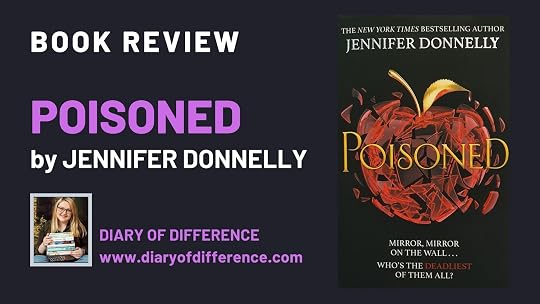
If I hadn't enjoyed the story so much, I'd have been annoyed by it. But fortunately, I did like Donnelly's take on the Snow White fairy tale for a couple of reasons, mainly that she went for the Grimm version that pulls no punches (the stepmother tried to kill Snow three times, mind you, don't believe Disney!), and that the world her retelling is set in is basically a thinly disguised Germany masquerading as an invented fantasy place. Snow White is the one tale I consider German (yes, I know the other versions worldwife and its older origins, but I'm speaking of the Grimm tale here, which is the most famous one of 'em all, and that one is 100% German), but rarely do I see a retelling that pays homage to the country. However, I do believe the worldbuilding could've been better, because Donnelly doesn't draw the line between invented world and our real world quite clearly; there's stuff that are clearly from our world inserted in this fictional world without change, for ex., the Black Forest cake exists in a world where there's no Black Forest, only the Darkwood.
I also liked that she built a good case for the villain. Lots of authors want to make the evil stepmother sympathetic by making Snow the unsympathetic one or even the real villain, which to me is a cheap cop-out. Here, Queen Adelaide is a villain, but isn't the true villain. She has a reason to be like she is, as all villains have one, but whilst that reason does make her human and explains her outlook in life, it doesn't make her sugary sympathetic nor redeems her. Of which she's conscious. Snow's characterisation doesn't suffer to make her stepmother sympathetic. Even the true villain is more of the "I'm just following my nature" sort than the Snidely Whiplash sort. Though I can't say all characters avoid the mustache-twirling stereotype.
Is there a feminist message in this retelling? Yes, there is. But it doesn't go for the no-males-need-apply cliché. Sophie does get help, lots and lots of help, but she's shown to have earned the help she gets. She's not rescued simply because she's the princess in distress, she's rescued because she's the princess in distress that helped others in distress that now want to pay her kindness back. That's stressed on every single time she runs into difficulties, and in the end her outcome is one she worked hard for. The romance is also not primary to the plot, but important for her character growth.
Still, that ridiculous, ridiculous ending!
I'm going to just pretend the book ended before the Epilogue and ignore what I read there. I have my suspicions that Donnelly wrote that as a lead-in to future retellings she's planning to write, specifically Hansel & Gretel, Little Red Riding Hood, and Rapunzel, to judge by the clues she left as Easter eggs. And I'm going to be thrilled and over the moon happy if my suspicions are confirmed, because I've loved her retellings warts and all so far. Even so, did she have to write that ridiculous ending?