

What do you think?

Boon
First published in Britain and America in 1915 under the pseudonym Reginald Bliss, Boon (its full subtitle being the Mind of the Race, the Wild Asses of the Devil, and the Last Trump: Being a First Selection From the Literary Remains of George Boon, Appropriate to the Times. Prepared for Publication by Reginald Bliss, with an Ambiguous Introduction by H. G. Wells) is a caustic satire aimed at those who engage in literary pomposity and pretentious high-mindedness, and shows the bitter side of H. G. Wells.
The New York Times, in July 1915, described the book as 'a criticism of literature and thought, of the lives of men and their defensive instinct, constantly at war with ''all the great de-individualizing things, with Faith, with Science, with Truth, with Beauty"'.
Boon is presented as a 'superannuated man of letters' supposedly killed in the Great War, but when Bliss - his self-appointed 'literary executor' - discovers that Boon's literary 'remains' are no more than a few sketches and jottings, he constructs a narrative from his own thoughts on Boon, his friends, conversations they had, and reconstructs from memory never-written works that Boon had described to him.
Among these pieces is the infamous parody of the late style of Henry James, all the more effective for being so distinctive a target. Describing James as the 'culmination of the superficial type', it is not surprising that the 'indiscreet, ill-advised' content of Boon, as Wells describes it in his 'Introduction', put a serious strain on the relationship between the two authors.
The New York Times, in July 1915, described the book as 'a criticism of literature and thought, of the lives of men and their defensive instinct, constantly at war with ''all the great de-individualizing things, with Faith, with Science, with Truth, with Beauty"'.
Boon is presented as a 'superannuated man of letters' supposedly killed in the Great War, but when Bliss - his self-appointed 'literary executor' - discovers that Boon's literary 'remains' are no more than a few sketches and jottings, he constructs a narrative from his own thoughts on Boon, his friends, conversations they had, and reconstructs from memory never-written works that Boon had described to him.
Among these pieces is the infamous parody of the late style of Henry James, all the more effective for being so distinctive a target. Describing James as the 'culmination of the superficial type', it is not surprising that the 'indiscreet, ill-advised' content of Boon, as Wells describes it in his 'Introduction', put a serious strain on the relationship between the two authors.
154 pages, Kindle Edition
Published June 11, 2020
About the author
H.G. Wells
5,911 books11.5k followersHerbert George Wells was born to a working class family in Kent, England. Young Wells received a spotty education, interrupted by several illnesses and family difficulties, and became a draper's apprentice as a teenager. The headmaster of Midhurst Grammar School, where he had spent a year, arranged for him to return as an "usher," or student teacher. Wells earned a government scholarship in 1884, to study biology under Thomas Henry Huxley at the Normal School of Science. Wells earned his bachelor of science and doctor of science degrees at the University of London. After marrying his cousin, Isabel, Wells began to supplement his teaching salary with short stories and freelance articles, then books, including The Time Machine (1895), The Island of Dr. Moreau (1896), The Invisible Man (1897), and The War of the Worlds (1898).
Wells created a mild scandal when he divorced his cousin to marry one of his best students, Amy Catherine Robbins. Although his second marriage was lasting and produced two sons, Wells was an unabashed advocate of free (as opposed to "indiscriminate") love. He continued to openly have extra-marital liaisons, most famously with Margaret Sanger, and a ten-year relationship with the author Rebecca West, who had one of his two out-of-wedlock children. A one-time member of the Fabian Society, Wells sought active change. His 100 books included many novels, as well as nonfiction, such as A Modern Utopia (1905), The Outline of History (1920), A Short History of the World (1922), The Shape of Things to Come (1933), and The Work, Wealth and Happiness of Mankind (1932). One of his booklets was Crux Ansata, An Indictment of the Roman Catholic Church. Although Wells toyed briefly with the idea of a "divine will" in his book, God the Invisible King (1917), it was a temporary aberration. Wells used his international fame to promote his favorite causes, including the prevention of war, and was received by government officials around the world. He is best-remembered as an early writer of science fiction and futurism.
He was also an outspoken socialist. Wells and Jules Verne are each sometimes referred to as "The Fathers of Science Fiction". D. 1946.
More: http://philosopedia.org/index.php/H._...
http://www.online-literature.com/well...
http://www.hgwellsusa.50megs.com/
http://www.britannica.com/EBchecked/t...
http://en.wikipedia.org/wiki/H._G._Wells
Wells created a mild scandal when he divorced his cousin to marry one of his best students, Amy Catherine Robbins. Although his second marriage was lasting and produced two sons, Wells was an unabashed advocate of free (as opposed to "indiscriminate") love. He continued to openly have extra-marital liaisons, most famously with Margaret Sanger, and a ten-year relationship with the author Rebecca West, who had one of his two out-of-wedlock children. A one-time member of the Fabian Society, Wells sought active change. His 100 books included many novels, as well as nonfiction, such as A Modern Utopia (1905), The Outline of History (1920), A Short History of the World (1922), The Shape of Things to Come (1933), and The Work, Wealth and Happiness of Mankind (1932). One of his booklets was Crux Ansata, An Indictment of the Roman Catholic Church. Although Wells toyed briefly with the idea of a "divine will" in his book, God the Invisible King (1917), it was a temporary aberration. Wells used his international fame to promote his favorite causes, including the prevention of war, and was received by government officials around the world. He is best-remembered as an early writer of science fiction and futurism.
He was also an outspoken socialist. Wells and Jules Verne are each sometimes referred to as "The Fathers of Science Fiction". D. 1946.
More: http://philosopedia.org/index.php/H._...
http://www.online-literature.com/well...
http://www.hgwellsusa.50megs.com/
http://www.britannica.com/EBchecked/t...
http://en.wikipedia.org/wiki/H._G._Wells
Ratings & Reviews
Friends & Following
Create a free account to discover what your friends think of this book!
Community Reviews
Displaying 1 - 3 of 3 reviews

December 9, 2019
In 1915, the prolific H.G. Wells, a man who purported to write 7000 words PER DAY, elected to publish an excoriating patchwork of rants, cartoons, and rambles under the nom de plume Reginald Bliss. This allowed him the illusion of distance as he ripped into old friend Henry James, taking apart the author’s style in a series of brutal pastiches and forensic attacks (the spat between the two followed HJ’s refusal to review Rebecca West’s book on Wells), alongside German philosophers, Nietzsche in particular. If viewed as an alter ego of Wells, the titular author Boon is a vehicle for self-mockery, with Wells’ notions of a collective consciousness (the World Brain) parodied here as an unfinished excerpt from The Mind of the Race. There are attacks on the “greatness” school of authorship, with pokes at Ford Madox Ford and George Bernard Shaw, and two short stories of a religious/satirical bent, ‘The Last Trump’, (prescient, we hope, about 2020), and ‘The Wild Asses of the Devil’. As a novel, Boon holds together well, with the narrator’s conversational set-up of these fragments and dialogues making the novel feel less like a series of table scraps pieced together, which I suspect this is.
July 16, 2023
3.5⭐
This book which is supposed to consist of the papers of the late George Boon edited by Reginald Bliss, is in fact a collection of Wells's views on all kinds of subjects in semi-conversational form concerning Wells's debate on the nature of literature with Henry James.
CONTENTS:
Introduction by H. G. Wells ✔
I. The Back of Miss Bathwick and George Boon
This chapter presents us with Reginald Bliss (a nom de plume for H.G. Wells) who being made Boon's literary executor is editing a book out of the literary fragmentary remains of the recently deceased (fictionalized) popular author of books and plays, George Boon. Bliss has attributed his death to depression on account of the war (WWI).
Boon's caricature drawing of Bliss found among his papers which were stuffed in barrels in the attic.
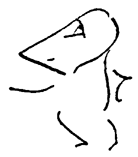
II. The First Chapter of the Mind of the Race
Boon and Bliss planned and discussed a book that Boon pretended that Bliss was writing, and that Bliss believed Boon to be writing, in entire concealment from Miss Bathwick, Boon's amanuensis, about the collective mind of the whole human race entitled The Mind of the Race. Bliss also recounts conversations about the themes of this work which he has had with Boon and with Edwin Dodd, "a leading member of the Rationalist Press Association, a militant agnostic," They had these discussions with Dodd sitting on a large, inverted flowerpot in Boon's greenhouse, Dodd having his suspicions about this collective mind of Boon’s.
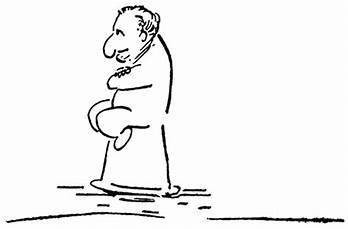
Dodd the Agnostic sitting on an inverted flowerpot.
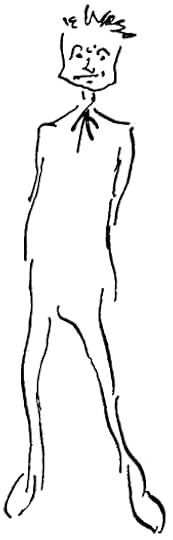
For his book Boon suggests to Bliss about using a hero protagonist who is an obsessed leading character called Hallery. Hallery being fanatically obsessed by this idea of the "Mind of the Race," the collective thought of humanity, and that he would look something like this:
III. The Great Slump, the Revival of Letters, and the Garden by the Sea
Here Boon bemoans to Bliss about the slump in great literature since the great and golden Victorian times leaving a void for the educated classes reading anything new having them to rely on the older classics. However, Boon now talks about the dawn of a great Literary Revival coming. Boon showcases this with a group meeting at an old Victorian villa with a weedy and unkempt garden for a summer conference on a Revival of Thought. This group will include a Dr. Tomlinson Keyhole, a character Boon intends for the character Hallery to murder.
IV. Of Art, of Literature, of Mr. Henry James
Chapter 4 of Boon is largely a frontal assault on Henry James's more recent manner of writing and contains long pastiches of Wellsian imitations of James's style. James's belief that a novel should have unity is vigorously attacked, as are his characters. Wells calls his characters "eviscerated people he has invented" who "never make lusty love, never go to angry war, never shout at an election or perspire at poker," but only "nose out suspicions, hint by hint, link by link." (p. 106)
V. Of the Assembling and Opening of the World Conference on the Mind of the Race
In Chapter 5 Boon has the conference leaving the Villa Garden by the Sea on a Conference special night journey on the Special Train to Bâle with two adjacent deluxe compartments labelled respectively “Specially Reserved for Miss Marie Corelli,” and “Specially Reserved for Mr. and Mrs. George Bernard Shaw.” The other compartments were less exclusive, and contained curious mingling of greatness, activity, and reputation. In Chapter 5 we find Wells spoofing other writers, especially George Bernard Shaw.
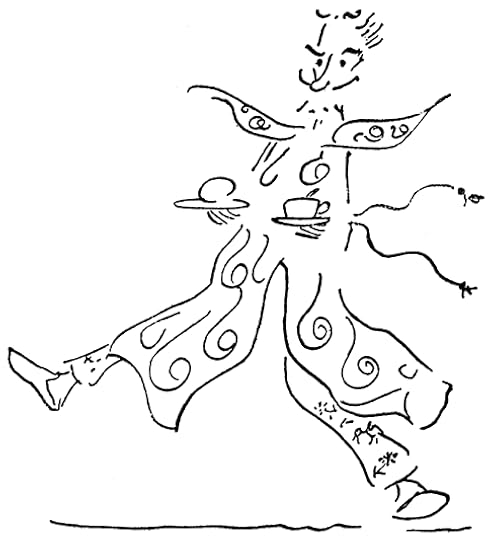
How Mr. Shaw knocked them all on the Bâle platform and got right into the middle of the picture. Remark his earnest face. This surely is not a boastful unscrupulous pretender.
Chapter 5 includes an outline of a paper on "The Natural History of Greatness, with especial reference to Literary Reputations" which highlights some of Wells's critical notions that were far ahead of his time. Boon decided that the President of his conference must be Hallery who in his Presidential speech argues for an expansion of the concept of literature that anticipates future critical developments.
VI. Of Not Liking Hallery and the Royal Society for the Discouragement of Literature
Chapter 6 analyses the resistance Hallery's quasi-religious concept of the institution of literature inspires, even in Hallery himself.
VII. Wilkins Makes Certain Objections
Chapter 7 criticizes the thought of Friedrich Nietzsche and lambastes Houston Stewart Chamberlain's pro-German 1899 book The Foundations of the Nineteenth Century.
Boon concludes his outline for his book with two humorous symbolic tales entitled The Wild Asses of the Devil Chapters 8 and 9 and Chapter 10 The Story of the Last Trump.
VIII. The Beginning of "The Wild Asses of the Devil"
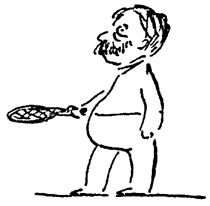
Drawing of the Author of this story whose life although appearing perfect was about as boring and intolerable a life as any creature with a soul to be damned could possibly pursue.
On a wet and dreary day, the Author takes home a dirty wretched stoker to warm him in front of his fire and to study him for material for his new book. Much to his surprise the Author discovers that the stoker is a poor, lost, homeless devil. This devil's job had been that of watcher and minder of a herd of sinister beings hitherto unknown to our Author, the Devil’s Wild Asses. One day the Devil’s Wild Asses escaped and the poor herdsman was sentenced that he must go to the earth and find the Wild Asses and return them. The Author feeling sorry for the devil decides to uplift the devil's spirit by helping him find the Wild Asses of the Devil and send them back to hell.
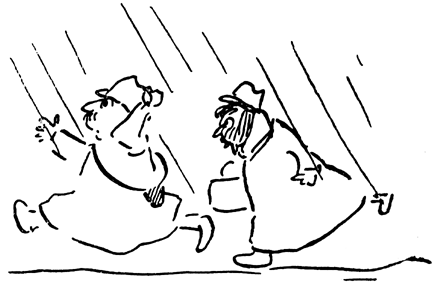
Precipitate start of the Wild Ass hunters.
IX. The Hunting of the Wild Asses of the Devil
With WWI breaking out Boon becomes ill and depressed stating "War is just the killing of things and the smashing of things. And when it is all over, then literature and civilization will have to begin all over again. They will have to begin lower down and against a heavier load, and the days of our jesting are done. The Wild Asses of the Devil are loose and there is no restraining them." (p.284)
X. The Story of the Last Trump
This tale engages theological themes that H. G. Wells would soon be developing in a serious vein in his theological tract God the Invisible King (1917).
This book which is supposed to consist of the papers of the late George Boon edited by Reginald Bliss, is in fact a collection of Wells's views on all kinds of subjects in semi-conversational form concerning Wells's debate on the nature of literature with Henry James.
CONTENTS:
Introduction by H. G. Wells ✔
I. The Back of Miss Bathwick and George Boon
This chapter presents us with Reginald Bliss (a nom de plume for H.G. Wells) who being made Boon's literary executor is editing a book out of the literary fragmentary remains of the recently deceased (fictionalized) popular author of books and plays, George Boon. Bliss has attributed his death to depression on account of the war (WWI).
Boon's caricature drawing of Bliss found among his papers which were stuffed in barrels in the attic.
II. The First Chapter of the Mind of the Race
Boon and Bliss planned and discussed a book that Boon pretended that Bliss was writing, and that Bliss believed Boon to be writing, in entire concealment from Miss Bathwick, Boon's amanuensis, about the collective mind of the whole human race entitled The Mind of the Race. Bliss also recounts conversations about the themes of this work which he has had with Boon and with Edwin Dodd, "a leading member of the Rationalist Press Association, a militant agnostic," They had these discussions with Dodd sitting on a large, inverted flowerpot in Boon's greenhouse, Dodd having his suspicions about this collective mind of Boon’s.
Dodd the Agnostic sitting on an inverted flowerpot.
For his book Boon suggests to Bliss about using a hero protagonist who is an obsessed leading character called Hallery. Hallery being fanatically obsessed by this idea of the "Mind of the Race," the collective thought of humanity, and that he would look something like this:
III. The Great Slump, the Revival of Letters, and the Garden by the Sea
Here Boon bemoans to Bliss about the slump in great literature since the great and golden Victorian times leaving a void for the educated classes reading anything new having them to rely on the older classics. However, Boon now talks about the dawn of a great Literary Revival coming. Boon showcases this with a group meeting at an old Victorian villa with a weedy and unkempt garden for a summer conference on a Revival of Thought. This group will include a Dr. Tomlinson Keyhole, a character Boon intends for the character Hallery to murder.
IV. Of Art, of Literature, of Mr. Henry James
Chapter 4 of Boon is largely a frontal assault on Henry James's more recent manner of writing and contains long pastiches of Wellsian imitations of James's style. James's belief that a novel should have unity is vigorously attacked, as are his characters. Wells calls his characters "eviscerated people he has invented" who "never make lusty love, never go to angry war, never shout at an election or perspire at poker," but only "nose out suspicions, hint by hint, link by link." (p. 106)
V. Of the Assembling and Opening of the World Conference on the Mind of the Race
In Chapter 5 Boon has the conference leaving the Villa Garden by the Sea on a Conference special night journey on the Special Train to Bâle with two adjacent deluxe compartments labelled respectively “Specially Reserved for Miss Marie Corelli,” and “Specially Reserved for Mr. and Mrs. George Bernard Shaw.” The other compartments were less exclusive, and contained curious mingling of greatness, activity, and reputation. In Chapter 5 we find Wells spoofing other writers, especially George Bernard Shaw.
How Mr. Shaw knocked them all on the Bâle platform and got right into the middle of the picture. Remark his earnest face. This surely is not a boastful unscrupulous pretender.
Chapter 5 includes an outline of a paper on "The Natural History of Greatness, with especial reference to Literary Reputations" which highlights some of Wells's critical notions that were far ahead of his time. Boon decided that the President of his conference must be Hallery who in his Presidential speech argues for an expansion of the concept of literature that anticipates future critical developments.
VI. Of Not Liking Hallery and the Royal Society for the Discouragement of Literature
Chapter 6 analyses the resistance Hallery's quasi-religious concept of the institution of literature inspires, even in Hallery himself.
VII. Wilkins Makes Certain Objections
Chapter 7 criticizes the thought of Friedrich Nietzsche and lambastes Houston Stewart Chamberlain's pro-German 1899 book The Foundations of the Nineteenth Century.
Boon concludes his outline for his book with two humorous symbolic tales entitled The Wild Asses of the Devil Chapters 8 and 9 and Chapter 10 The Story of the Last Trump.
VIII. The Beginning of "The Wild Asses of the Devil"
Drawing of the Author of this story whose life although appearing perfect was about as boring and intolerable a life as any creature with a soul to be damned could possibly pursue.
On a wet and dreary day, the Author takes home a dirty wretched stoker to warm him in front of his fire and to study him for material for his new book. Much to his surprise the Author discovers that the stoker is a poor, lost, homeless devil. This devil's job had been that of watcher and minder of a herd of sinister beings hitherto unknown to our Author, the Devil’s Wild Asses. One day the Devil’s Wild Asses escaped and the poor herdsman was sentenced that he must go to the earth and find the Wild Asses and return them. The Author feeling sorry for the devil decides to uplift the devil's spirit by helping him find the Wild Asses of the Devil and send them back to hell.
Precipitate start of the Wild Ass hunters.
IX. The Hunting of the Wild Asses of the Devil
With WWI breaking out Boon becomes ill and depressed stating "War is just the killing of things and the smashing of things. And when it is all over, then literature and civilization will have to begin all over again. They will have to begin lower down and against a heavier load, and the days of our jesting are done. The Wild Asses of the Devil are loose and there is no restraining them." (p.284)
X. The Story of the Last Trump
This tale engages theological themes that H. G. Wells would soon be developing in a serious vein in his theological tract God the Invisible King (1917).

September 30, 2021
A bit of a slog unfortunately. This is a satirical novel that pokes fun at other writers of the time with special treatment for Henry James - taking up a good portion of Chapter 4. I always enjoy Wells' articulate and masterful prose, but this novel could've benefited from an actual plot.
Displaying 1 - 3 of 3 reviews