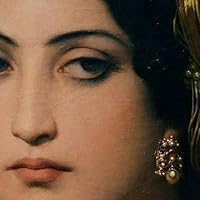
Anna Ahmatova ünlü kitabına “Tespih” adını vermekle aslında yerinde bir isim kullanmıştır. Çünkü Ahmatova’nın dizelerinde duaya benzer yakarışlar vardır. Ahmatova’nın şiirleri onu kirli ve kötü güçlerden koruyan tespih ya da birer muskadır; (inandığı şey buydu) ama bu muska yine de onu aşk illetinden koruyamamıştır. Talihsiz ve doyumsuz aşkını bütün dünyaya şiirleriyle haykırır. Bu kitap Anna Ahmatova’nın yaratılıcılığının samimi bir günlüğüdür, ama bu ilginç bir samimiyettir; genellikle insan ruhunun en derinliklerinde olan her şey gerçek manada toplumla buluştuğu için bu kitap kişisel itirafın da ötesine geçmiştir. Şair kendi döngüsünü sübjektif olarak tamamlarken hedefe geri döner. Anna Ahmatova, “o zamanlar ziyaret ederken dünyayı, vaftizde bir isim verildi bana: Anna. Ne tatlı bir isimdi bu, insanların dudaklarına ve kulaklarına dokunurcasına.” dizeleriyle ismini sevdiğini gösterirken şiiriyle onu başkalarına da sevdirmiştir. Anna Ahmatova, aşkı zehir, hastalık ve illet olarak gören bir kadın imajı ortaya çıkarmıştır.
Personal themes characterize lyrical beauty of noted work of Russian poet Anna Akhmatova, pseudonym of Anna Andreevna Gorenko; the Soviet government banned her books between 1946 and 1958.
People credit this modernist of the most acclaimed writers in the canon.
Her writing ranges from short lyrics to universalized, ingeniously structured cycles, such as Requiem (1935-40), her tragic masterpiece about the Stalinist terror. Her work addresses a variety of themes including time and memory, the fate of creative women, and the difficulties of living and writing in the shadow of Stalinism. She has been widely translated into many languages, and is one of the best-known Russian poets of 20th century.
In 1910, she married the poet, Nikolay Gumilyov, who very soon left her for lion hunting in Africa, the battlefields of World War I, and the society of Parisian grisettes. Her husband did not take her poems seriously, and was shocked when Alexander Blok declared to him that he preferred her poems to his. Their son, Lev, born in 1912, was to become a famous Neo-Eurasianist historian.
Nikolay Gumilyov was executed in 1921 for activities considered anti-Soviet; Akhmatova then married a prominent Assyriologist Vladimir Shilejko, and then an art scholar, Nikolay Punin, who died in the Stalinist Gulag camps. After that, she spurned several proposals from the married poet, Boris Pasternak.
After 1922, Akhmatova was condemned as a bourgeois element, and from 1925 to 1940, her poetry was banned from publication. She earned her living by translating Leopardi and publishing essays, including some brilliant essays on Pushkin, in scholarly periodicals. All of her friends either emigrated or were repressed.
Her son spent his youth in Stalinist gulags, and she even resorted to publishing several poems in praise of Stalin to secure his release. Their relations remained strained, however. Akhmatova died at the age of 76 in St. Peterburg. She was interred at Komarovo Cemetery.
There is a museum devoted to Akhmatova at the apartment where she lived with Nikolai Punin at the garden wing of the Fountain House (more properly known as the Sheremetev Palace) on the Fontanka Embankment, where Akhmatova lived from the mid 1920s until 1952.