

What do you think?

Control: The Foundation of Life
As the title suggests, the book offers a broad perspective which uses one simple fact of life, control, to analyze how that fact is actually an integrative concept which ties together not only an explanation for the basic existence of life forms but also how and why those life forms exhibit their typical behavior. This includes every living being from plants and microbes to humans. All live according to the same necessity of control.
The topics covered are quite diverse since the perspective encompasses many aspects of living, especially those of humans—from concepts of self and memory to religion and government to AI and the future. It is a paradigm of reality which is important for undersanding of life in general and is applicable to the reader's own daily existence.
The topics covered are quite diverse since the perspective encompasses many aspects of living, especially those of humans—from concepts of self and memory to religion and government to AI and the future. It is a paradigm of reality which is important for undersanding of life in general and is applicable to the reader's own daily existence.
- GenresNonfiction
190 pages, Kindle Edition
Published October 1, 2020
About the author
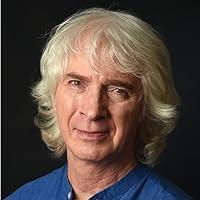
Lance Packer
2 books3 followersI have been a retired public school teacher since 2002, an important milestone after 27 years in Alaska employed in that rewarding profession. The most time was spent at middle school level teaching social studies and English, primarily composition, although I did teach at all levels 1-12, eventually.
My wife, Ginny, was a music teacher, and we spent much of our teaching time together at the same school. Actually, we have spent virtually all our lives sharing everything we have done: gardening, crafts, working on farms, mountaineering, camping and hiking, sailing, skin and scuba diving, traveling, and Peace Corps. Consequently, it has been a life of companionship and exploration.
Academically, I have a Ph.D. in anthropology and that focus has oriented my interest in viewing the world as an integrated spectrum of humanity, all other species of life, and the forces and elements of nature. Hence, my interest in just about everything and writing about it.
I have always enjoyed writing, but never got manuscripts published that I wrote earlier in life since the demands and enjoyments of simply living took precedence. Now that circumstances, primarily Ginny's Alzheimer's, have brought about a reorientation, I have published my first book, "Control: The Foundation of Life," and set up a website with blog and forum to further my interests in writing and sharing.
Many of those blog entries are posted here and are themed around the concept of control in our daily lives. My website forum (just starting) is intended to provide another opportunity to discuss most any aspect of life that anyone wants to bring up. All are invited to take a look and join in if they wish. https:www.lancepacker.com
My wife, Ginny, was a music teacher, and we spent much of our teaching time together at the same school. Actually, we have spent virtually all our lives sharing everything we have done: gardening, crafts, working on farms, mountaineering, camping and hiking, sailing, skin and scuba diving, traveling, and Peace Corps. Consequently, it has been a life of companionship and exploration.
Academically, I have a Ph.D. in anthropology and that focus has oriented my interest in viewing the world as an integrated spectrum of humanity, all other species of life, and the forces and elements of nature. Hence, my interest in just about everything and writing about it.
I have always enjoyed writing, but never got manuscripts published that I wrote earlier in life since the demands and enjoyments of simply living took precedence. Now that circumstances, primarily Ginny's Alzheimer's, have brought about a reorientation, I have published my first book, "Control: The Foundation of Life," and set up a website with blog and forum to further my interests in writing and sharing.
Many of those blog entries are posted here and are themed around the concept of control in our daily lives. My website forum (just starting) is intended to provide another opportunity to discuss most any aspect of life that anyone wants to bring up. All are invited to take a look and join in if they wish. https:www.lancepacker.com
Ratings & Reviews
Friends & Following
Create a free account to discover what your friends think of this book!
Community Reviews
Displaying 1 - 18 of 18 reviews

September 24, 2020
An extremely well written, well presented and professional study textbook, in which Lance – clearly a very knowledgeable author and academic mind – presents what amounts to a vast and comprehensive thesis on the subject of control. He uses all the basic schools of psychology, sociology and even philosophy and biology, to give as detailed an explanation as he can – and suffice to say it is an admirable feat, which he achieves well. It is fair to say that he leaves no stone unturned in explaining the objectives, predispositions and motivations of the need of species to control, not just in the animal kingdom, but in nature generally. The humanities and sciences are all brought together under one umbrella, to create an entire unique category, presented as a module.
There are no big revelations here, nor really expert scientific conclusion as such – it more accurately presents a surface level correlation between the desire to control, and literally everything else. A simplistic study, which is probably not aimed at the more learned in any of the related fields, but it definitely has a good deal of educational value, from a universal point of view. It’s food for thought for students, and an articulate example of a study textbook, informative without being too stuffy.
Control… is not a cover-to-cover book, as I read it, but a profound and detailed reference guide. It does digress continuously, with a lot of factoids and other information, and the degree of this does make it tough to gel with at times; I felt that the comprehensive bank of information could perhaps do with a touch more cohesion, and a more defined narrative. It is also hugely philosophical at times. But, overall, Lance’s study is a piece of hard-worked, superbly constructed academia, and it could be a very useful tool for intermediates or students of the humanities. Control is, after all – certainly as the author suggests – one of the fundamental cornerstones of the self, whether you’re a tree, a human or a fish; Lance has just found a way to collate and articulate it as a subject better than I believe anyone else ever could have. Definitely a worthy book for the serious non-fiction shelf, and I recommend it.
There are no big revelations here, nor really expert scientific conclusion as such – it more accurately presents a surface level correlation between the desire to control, and literally everything else. A simplistic study, which is probably not aimed at the more learned in any of the related fields, but it definitely has a good deal of educational value, from a universal point of view. It’s food for thought for students, and an articulate example of a study textbook, informative without being too stuffy.
Control… is not a cover-to-cover book, as I read it, but a profound and detailed reference guide. It does digress continuously, with a lot of factoids and other information, and the degree of this does make it tough to gel with at times; I felt that the comprehensive bank of information could perhaps do with a touch more cohesion, and a more defined narrative. It is also hugely philosophical at times. But, overall, Lance’s study is a piece of hard-worked, superbly constructed academia, and it could be a very useful tool for intermediates or students of the humanities. Control is, after all – certainly as the author suggests – one of the fundamental cornerstones of the self, whether you’re a tree, a human or a fish; Lance has just found a way to collate and articulate it as a subject better than I believe anyone else ever could have. Definitely a worthy book for the serious non-fiction shelf, and I recommend it.

May 4, 2026
Control: The Foundation of Life by Lance V. Packer is an ambitious and intellectually rich nonfiction work that examines a single unifying concept, control, and expands it into a framework for understanding life itself.
What makes this book stand out is its scope. Packer connects biology, psychology, sociology, philosophy, and even modern technology into one overarching idea: that every living system, from the simplest microorganism to complex human societies, operates through mechanisms of control. Rather than treating these fields separately, he weaves them together into a single continuous perspective on existence.
The writing is dense at times, but deliberately so. This is not a casual read, it is a reflective, idea driven book that rewards patience and attention. Readers are encouraged to think deeply, question assumptions, and reconsider how much of life is shaped by control structures we often overlook, from personal memory and identity to institutions like government and religion.
One of the book’s strengths is its ability to remain both academic and accessible. Even when dealing with complex concepts, the author explains ideas clearly enough to keep the reader engaged without losing intellectual depth. It often feels less like reading a textbook and more like engaging in a long philosophical conversation.
Overall, Control: The Foundation of Life is a compelling and original work that challenges how you interpret reality. It is especially valuable for readers who enjoy philosophy, human behavior, systems thinking, and deep conceptual analysis.
A highly recommended read for anyone who wants more than entertainment from a book, this is a work that stays with you long after the final page.
What makes this book stand out is its scope. Packer connects biology, psychology, sociology, philosophy, and even modern technology into one overarching idea: that every living system, from the simplest microorganism to complex human societies, operates through mechanisms of control. Rather than treating these fields separately, he weaves them together into a single continuous perspective on existence.
The writing is dense at times, but deliberately so. This is not a casual read, it is a reflective, idea driven book that rewards patience and attention. Readers are encouraged to think deeply, question assumptions, and reconsider how much of life is shaped by control structures we often overlook, from personal memory and identity to institutions like government and religion.
One of the book’s strengths is its ability to remain both academic and accessible. Even when dealing with complex concepts, the author explains ideas clearly enough to keep the reader engaged without losing intellectual depth. It often feels less like reading a textbook and more like engaging in a long philosophical conversation.
Overall, Control: The Foundation of Life is a compelling and original work that challenges how you interpret reality. It is especially valuable for readers who enjoy philosophy, human behavior, systems thinking, and deep conceptual analysis.
A highly recommended read for anyone who wants more than entertainment from a book, this is a work that stays with you long after the final page.
February 22, 2021
If you are looking for an easy read, this book is not for you. To me, it was a welcome getaway from the concerns of my everyday life. It was an intellectually pleasing and stimulating conversation with the author about many areas and ways where control is applied over both this planet and humanity’s. It was truly a conversation, because I had to read some passages aloud to hold the thought’s thread more firmly or just clarify a concept for myself. The vast arsenal of the author’s arguments came from his obviously broad experience in a number of areas; history, science and philosophy to name a few. His thoughts on the matter come across as surprising to me at first, but in a short time, Lance makes them quite evident. I thoroughly enjoyed the read.

May 1, 2026
Control The Foundation of Life is not just a book it is a perspective shift. Lance Packer takes a concept we often overlook control and reveals how deeply it shapes every part of our lives from personal decisions to the systems that govern society.
What makes this book stand out is its clarity and depth. Complex ideas are explained in a way that feels natural insightful and thought provoking without being overwhelming. You do not just read it you reflect on it.
If you enjoy meaningful idea driven books that challenge the way you think and see the world this is a must read. It has the rare ability to stay with you long after you finish it.
A compelling intelligent and deeply relevant book highly recommended.
What makes this book stand out is its clarity and depth. Complex ideas are explained in a way that feels natural insightful and thought provoking without being overwhelming. You do not just read it you reflect on it.
If you enjoy meaningful idea driven books that challenge the way you think and see the world this is a must read. It has the rare ability to stay with you long after you finish it.
A compelling intelligent and deeply relevant book highly recommended.

May 2, 2026
Control: The Foundation of Life by Lance Packer is a powerful and eye-opening read that completely shifts how you think about life and behavior. The way the author breaks down the concept of control and connects it to everything, from biology to human society, is both fascinating and deeply insightful.
What makes this book stand out is its ability to take complex, interdisciplinary ideas and present them in a way that feels meaningful and thought-provoking. It’s the kind of book that doesn’t just inform, you actually find yourself reflecting on your own decisions and the systems around you.
This isn’t a light read, but it’s incredibly rewarding. If you enjoy books that challenge your thinking and offer a fresh perspective on the world, this is absolutely worth it.
Highly insightful, intellectually engaging, and memorable, definitely a 5-star read.
What makes this book stand out is its ability to take complex, interdisciplinary ideas and present them in a way that feels meaningful and thought-provoking. It’s the kind of book that doesn’t just inform, you actually find yourself reflecting on your own decisions and the systems around you.
This isn’t a light read, but it’s incredibly rewarding. If you enjoy books that challenge your thinking and offer a fresh perspective on the world, this is absolutely worth it.
Highly insightful, intellectually engaging, and memorable, definitely a 5-star read.

May 4, 2026
I recently finished Control: The Foundation of Life, and it definitely left me thinking. The idea that “control” is at the core of everything from human behavior to larger systems like religion and AI is explored in a really interesting and easy to follow way.
What I appreciated most is how the book takes a big concept and makes it feel relatable. It made me reflect on everyday actions and how much they’re shaped by the need for control.
Overall, it’s a thoughtful and engaging read, especially if you enjoy books that challenge the way you see life.
What I appreciated most is how the book takes a big concept and makes it feel relatable. It made me reflect on everyday actions and how much they’re shaped by the need for control.
Overall, it’s a thoughtful and engaging read, especially if you enjoy books that challenge the way you see life.

May 28, 2026
This is one of those rare books that quietly changes the way you think. What makes Control: The Foundation of Life stand out is how it takes a familiar human experience, the need for control, and explores it through biology, behavior, society, and personal reflection. The writing feels insightful without becoming overwhelming. Several passages made me stop and think about how much of life is shaped by perceived control versus actual control. It’s a book that invites reflection long after you finish reading.

May 28, 2026
I didn’t expect this book to stay with me the way it did. Beyond its concepts and theories, there’s a deeply human element running through the writing. The author doesn’t just discuss ideas; he examines the emotional realities behind choices, stress, relationships, and expectations. I found myself relating to many of the observations. Rather than telling readers what to believe, the book offers a new lens for understanding everyday life.

May 31, 2026
This book succeeds in doing something difficult: building a clear framework around an abstract idea without oversimplifying it. The discussion of control across biological, psychological, and societal systems is thoughtful and well-structured. What impressed me most is the balance between complexity and clarity. The ideas are ambitious, yet accessible. If you enjoy intellectually engaging books that challenge assumptions, this is a rewarding read.

May 31, 2026
I wasn’t entirely sure what to expect from this book, but it turned out to be surprisingly engaging. It doesn’t read like a traditional self-help book, even though it touches on growth, behavior, and decision-making. Instead, it feels like an honest conversation about how life works beneath the surface. The examples are relatable, the writing is easy to follow, and the ideas linger in your mind afterward.

June 1, 2026
There’s a depth to this book that reflects years of observation and reflection. The author explores control not just as a concept, but as something woven into human behavior, culture, conflict, and survival. I particularly appreciated the connection between personal choices and larger systems. The book doesn’t hand out easy answers; it offers perspective and trusts the reader to engage with it thoughtfully

May 4, 2026
Control: The Foundation of Life by Lance Packer is a deeply thought-provoking read. The way it connects the concept of control to human behavior and life as a whole is both insightful and engaging. It’s not a light read, but it’s definitely rewarding and stays with you after you finish. Highly recommended

June 1, 2026
One of the strongest qualities of this book is its ability to connect broad ideas with everyday experiences. The author explores motivation, identity, memory, and social structures through the unifying concept of control. The writing is intelligent but never inaccessible. It’s the kind of book that encourages readers to rethink familiar patterns in themselves and in the world around them.

June 4, 2026
This book challenged me in unexpected ways. It made me reconsider how much of human behavior is driven by the desire to maintain stability, meaning, and influence over our surroundings. The author handles complex topics with care and clarity, making them feel relevant rather than theoretical. It’s thoughtful, layered, and surprisingly personal in its impact.

June 4, 2026
What I appreciated most about this book is its balance. It blends philosophy, psychology, biology, and social commentary without losing focus. The concept of control is explored from multiple perspectives, yet the writing remains coherent and grounded. The author clearly understands the complexity of the subject but communicates it in a way that feels natural and engaging.

June 4, 2026
This book offers a compelling examination of why people behave the way they do. From relationships and family dynamics to politics and societal systems, the author consistently returns to the role of control in shaping outcomes. The arguments are persuasive without feeling forceful, and the insights are practical enough to connect with real life

June 4, 2026
Control: The Foundation of Life is original, thoughtful, and intellectually engaging. It explores a powerful idea with depth and confidence, connecting individual behavior with larger biological and cultural patterns. The writing is reflective, clear, and often surprisingly relatable. This is not a book you simply read and forget, it’s one that continues to shape your thinking afterward.

May 4, 2026
This is a thoughtfully written and engaging book that delivers real value to the reader. The author presents ideas in a clear and compelling way, making the content both easy to understand and enjoyable to follow. I truly appreciate the effort, depth, and dedication that went into writing this work. It reflects strong insight and a genuine passion for the subject. I highly recommend this book to anyone interested in the topic, and I sincerely commend the author for such an excellent piece of work. We are already looking forward to the author publishing another book.
Displaying 1 - 18 of 18 reviews