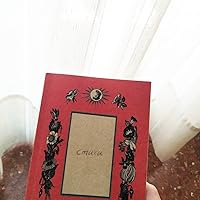
Osip Mandelstam's is one of the dozen luminous names in Russian poetry. Mandelstam (1891–1938) began as one of the more original poets of the Russian avant-garde before the First World War, but his extraordinary growth as a poet over the next quarter-century set him a great distance apart from almost all of his contemporaries. By the 1930s he was writing the most memorable poems in the language. This collection includes translations of 50 poems by Mandelstam, mostly from the 1930s, along with an extended commentary on the poems and on Mandelstam's poetics.
In English, Mandelstam has long been better appreciated for his biography than for his poetry. This is to his Russian admirers, the value of Mandelstam's poetry owes nothing to whatever might be the value of his biography. These translations and the afterword that accompanies them attempt to remedy that prevailing misvaluation.
The translations were guided by the belief that the most important thing about a poem is neither its meaning nor its sound, but whatever in it makes its readers memorize it. Accordingly, they aim to capture some of the re-readability of the originals, with the hope of making English-language versions of Mandelstam’s poems that at least point to that which invites memorization in his work, and which in the best cases may be memory-worthy in their own right.
Osip Emilyevich Mandelstam (also spelled Osip Mandelshtam, Ossip Mandelstamm) (Russian: Осип Эмильевич Мандельштам) was a Russian poet and essayist who lived in Russia during and after its revolution and the rise of the Soviet Union. He was one of the foremost members of the Acmeist school of poets. He was arrested by Joseph Stalin's government during the repression of the 1930s and sent into internal exile with his wife Nadezhda. Given a reprieve of sorts, they moved to Voronezh in southwestern Russia. In 1938 Mandelstam was arrested again and sentenced to a camp in Siberia. He died that year at a transit camp.
LXI Más agudos los ojos que de guadaña el filo, en cada pupila un cuclillo y una gota de rocío, y de cuerpo entero aprendieron apenas a distinguir la solitaria multitud de las estrellas. 9 febrero 1937
Traducciones aberrantes, pretenciosas y rimbombantes que solo cobran sentido cuando ves que el traductor era jurista de profesión y un abierto fascista, defensor de Franco, Mussolini y Pinochet. Una vergüenza que Vaso Roto le ponga a traducir a Mandelstam.
I was washing in the yard at night. The firmament was brilliant with rude stars. On an axe, the starlight looked like salt – The barrel cooling, filled up to the brim.
The gates are tightly shut and locked Аnd the earth in conscience most severe. No foundation is likely to be found As pure in truth as fresh canvas.
Like a grain of salt, a star melts in the barrel, And the water becomes even blacker – Evil fate more salty, death more pure, And the earth more frightening and truer. (1921)
il secolo "mia età, mia belva, chi potrà guardarti dentro agli occhi e saldare col suo sangue le vertebre di due secoli? dalla gola delle cose terrestri fiotta sangue fabbriciere. sulla soglia dei nuovi giorni a tremare è soltanto il parassita. finché c'è vita deve la creatura portare la propria schiena, vanno, scherzano i flutti con l'invisibile spina dorsale. tenera, infantile cartilagine è l'era neonata della terra. di nuovo, agnello, hanno immolato l'osso frontale della vita. per liberare il secolo in catene, per dare inizio al mondo nuovo, bisogna a flauto saldare i segmenti nodosi dei giorni. è il secolo che l'onda di umana angoscia sommuove, all'aureo ritmo del secolo nell'erba la vipera respira. e si gonfieranno ancora le gemme e zampillerà il verde dei germogli. ma è spezzata la tua spina dorsale mio stupendo, mio povero secolo. e con un sorriso demente, come una belva un tempo flessuosa ti volti indietro, debole e crudele, a contemplare le tue orme" [1922]