

What do you think?

Suffragette Manifestos
Bringing together the voices of women who fought for equal rights and representation - from aristocrats and actresses to mill workers and trade unionists - these speeches, pamphlets, letters and articles form an inspiring testament to the power of a movement. GREAT IDEAS. Throughout history, some books have changed the world.
They have transformed the way we see ourselves - and each other. They have inspired debate, dissent, war and revolution. They have enlightened, outraged, provoked and comforted.
They have enriched lives - and destroyed them. Now Penguin brings you the works of the great thinkers, pioneers, radicals and visionaries whose ideas shook civilization and helped make us who we are.
They have transformed the way we see ourselves - and each other. They have inspired debate, dissent, war and revolution. They have enlightened, outraged, provoked and comforted.
They have enriched lives - and destroyed them. Now Penguin brings you the works of the great thinkers, pioneers, radicals and visionaries whose ideas shook civilization and helped make us who we are.
139 pages, Kindle Edition
Published September 24, 2020
About the author
Various
1,362 followersVarious is the correct author for any book with multiple unknown authors, and is acceptable for books with multiple known authors, especially if not all are known or the list is very long (over 50).
If an editor is known, however, Various is not necessary. List the name of the editor as the primary author (with role "editor"). Contributing authors' names follow it.
Note: WorldCat is an excellent resource for finding author information and contents of anthologies.
If an editor is known, however, Various is not necessary. List the name of the editor as the primary author (with role "editor"). Contributing authors' names follow it.
Note: WorldCat is an excellent resource for finding author information and contents of anthologies.
Ratings & Reviews
Friends & Following
Create a free account to discover what your friends think of this book!
Community Reviews
Displaying 1 - 30 of 40 reviews

October 31, 2022
welcome to: THE PENGUIN GREAT IDEAS PROJECT!
as you all know, i'm:
a) addicted to projects (and my book club, my long classics project, and my genius project are all on pause)
b) mildly behind on my reading challenge (see: months-long reading slump and corresponding existential crisis)
c) very into short books that make me look smart (much like the penguin great ideas collection).
i have acquired a couple dozen penguin great ideas installments, and i will be attempting to read one a day until i get bored, catch up, or reach spiritual fulfillment!
find past books here:
WHAT IS EXISTENTIALISM?
REFLECTIONS ON THE GUILLOTINE
THREE JAPANESE BUDDHIST MONKS
let's do this!
immediately this ALSO took longer than a day, and in fact was closer to 3, but to be honest i found this to vary a lot. and not in a fun way.
each manifesto was kind of a surprise...also not in a fun way? they vacillated wildly in terms of quality, modern relevance, readability...etc etc.
i love you, penguin great ideas, but i don't always LIKE you!
as you all know, i'm:
a) addicted to projects (and my book club, my long classics project, and my genius project are all on pause)
b) mildly behind on my reading challenge (see: months-long reading slump and corresponding existential crisis)
c) very into short books that make me look smart (much like the penguin great ideas collection).
i have acquired a couple dozen penguin great ideas installments, and i will be attempting to read one a day until i get bored, catch up, or reach spiritual fulfillment!
find past books here:
WHAT IS EXISTENTIALISM?
REFLECTIONS ON THE GUILLOTINE
THREE JAPANESE BUDDHIST MONKS
let's do this!
immediately this ALSO took longer than a day, and in fact was closer to 3, but to be honest i found this to vary a lot. and not in a fun way.
each manifesto was kind of a surprise...also not in a fun way? they vacillated wildly in terms of quality, modern relevance, readability...etc etc.
i love you, penguin great ideas, but i don't always LIKE you!

November 26, 2020
I'm intrigued by the Penguin Classics "Great Ideas" series and have requested to read/review a handful of them. Each slim title covers essays, speeches, and other writings that surround a particular idea, movement, or individual that changed the way the world thinks or operates. The series seem to focus very much on Euro-centric ideas, the ideas of white people, and the ideas of men. That said, I'm excited to explore the series and evaluate whether these books are digestible introductions to the topics covered. I'm not sure about the other books yet, but this one was 130 pages, so it's a very quick read.
This title features speeches and writings from various UK suffragettes. I found some of the speeches to be surprisingly dry as a reader in 2020, especially given my love and interest in the history of women's suffrage. This collection only covers ideas about white women's suffrage in the UK (I wasn't aware of that going in - I hadn't read the description, only read the title, so that's on me). Many of the essays remain powerful and some of the ideas mentioned STILL have yet to be realized. I did enjoy several of the essays very much and the collection was worth reading because of it.
Don't expect contextualization or contemporary commentary on any of the speeches or writings collected here. These are purely the texts of exact speeches or opinion pieces written at the time of women's suffrage, so you can't expect anything beyond that. This is a very narrow view of the history of suffrage. I don't believe there are any speeches featured by people of color, and the topic of suffrage isn't covered in any kind of intersectional way. I assume this is partially due to the curation on behalf of Penguin, and because many women's movements that get published about were, and remain, very white.
Many of the showcased works are sexist, some ableist, some classist. I cringed at times the lack of awareness or solidarity expressed. This is a collection that very much represents "white feminism" at the time the works were published, and illustrates how little some things have changed in that regard. It's a shame about the lack of solidarity across race, class, etc at the time (and it continues), but that does not mean there weren't people from other marginalized groups working toward suffrage. I did appreciate that the curators chose speeches from working class women and women working in different occupations. I was very interested in the couple of speeches that touched on women's suffrage as it relates to, or was ignored by, the union labor movement.
I would have appreciated more commentary, or reflections of these works from a contemporary standpoint. But, that's not what these titles are trying to do, and I understand that. They're meant to be brief and show purely the text as spoken or written. Still, those responsible for curating these works decide what to include and exclude, who to include or exclude from the collection.
Suffragette Manifestos represents more of the same as we've seen in history books since, well... forever. I get it's called Penguin Classics for a reason, you kind of know what to expect. Regardless, I would love to see Penguin broaden its coverage within the Great Idea series to topics, countries, and individuals that haven't already been exhaustively published about by American and European scholars and historians. There are a couple of those in the series that do, but not many. Penguin has the resources and clout to be doing so much more with it. This book felt a bit lazy to me.
Thanks to #NetGalley and Penguin for sharing a copy of this book with me in exchange for an honest review.
This title features speeches and writings from various UK suffragettes. I found some of the speeches to be surprisingly dry as a reader in 2020, especially given my love and interest in the history of women's suffrage. This collection only covers ideas about white women's suffrage in the UK (I wasn't aware of that going in - I hadn't read the description, only read the title, so that's on me). Many of the essays remain powerful and some of the ideas mentioned STILL have yet to be realized. I did enjoy several of the essays very much and the collection was worth reading because of it.
Don't expect contextualization or contemporary commentary on any of the speeches or writings collected here. These are purely the texts of exact speeches or opinion pieces written at the time of women's suffrage, so you can't expect anything beyond that. This is a very narrow view of the history of suffrage. I don't believe there are any speeches featured by people of color, and the topic of suffrage isn't covered in any kind of intersectional way. I assume this is partially due to the curation on behalf of Penguin, and because many women's movements that get published about were, and remain, very white.
Many of the showcased works are sexist, some ableist, some classist. I cringed at times the lack of awareness or solidarity expressed. This is a collection that very much represents "white feminism" at the time the works were published, and illustrates how little some things have changed in that regard. It's a shame about the lack of solidarity across race, class, etc at the time (and it continues), but that does not mean there weren't people from other marginalized groups working toward suffrage. I did appreciate that the curators chose speeches from working class women and women working in different occupations. I was very interested in the couple of speeches that touched on women's suffrage as it relates to, or was ignored by, the union labor movement.
I would have appreciated more commentary, or reflections of these works from a contemporary standpoint. But, that's not what these titles are trying to do, and I understand that. They're meant to be brief and show purely the text as spoken or written. Still, those responsible for curating these works decide what to include and exclude, who to include or exclude from the collection.
Suffragette Manifestos represents more of the same as we've seen in history books since, well... forever. I get it's called Penguin Classics for a reason, you kind of know what to expect. Regardless, I would love to see Penguin broaden its coverage within the Great Idea series to topics, countries, and individuals that haven't already been exhaustively published about by American and European scholars and historians. There are a couple of those in the series that do, but not many. Penguin has the resources and clout to be doing so much more with it. This book felt a bit lazy to me.
Thanks to #NetGalley and Penguin for sharing a copy of this book with me in exchange for an honest review.

June 15, 2021
• This book is quite focused on the suffrage itself so it’s quite political. However, we can still learn about the context of gender equality and women empowerment in general. If we dive deeper, main reason behind the suffrage is this urge to make women be heard – isn’t that the core of our movement? For us to be heard and to be seen as human beings.
• The fact: “Give some women votes, and it will tend to make all women think seriously of the concerns of the nation at large, and their interest having once been fairly roused, they will take pains, by reading and by consultation with persons better informed than themselves, to form sound opinions.” (pg 6)
• The logic: “But, it is said, women have other duties. The function of women is different to that of men, and their function is not politics. It is very true that women have other duties – many and various. But so have men. No citizen lives for his citizen duties only. He is a professional man, a tradesman, a family man, a club man, a thousand things as well as a voter. Of course these occupations sometimes interfere with a man’s duties as a citizen, and when he cannot vote, he cannot. So with women; when they cannot vote, they cannot.” (pg 10)
• The most important thing: “It makes me very happy to see what a few years ago I thought I should never live to see. They said ‘You will never rouse women’. Well, we have done what they thought, and what they hoped impossible – we women are roused. Perhaps it is difficult to rouse women, and they are longsuffering and patient, now that we are roused, we will never be quiet again.” (pg 42)
• The sad truth: “The second argument is, that it is unnecessary for the woman to have a voice; the man is the head of the household, and is quite competent of deciding for his household.” (pg 72) – sadly up until now many men (and women) still think this way :(
• Women as human beings: “We women, in trying to make our case clear, always have to make as part of our argument, and urge upon men in our audience the fact – a very simple fact – that women are human beings.” (pg 103)
• The fact: “Give some women votes, and it will tend to make all women think seriously of the concerns of the nation at large, and their interest having once been fairly roused, they will take pains, by reading and by consultation with persons better informed than themselves, to form sound opinions.” (pg 6)
• The logic: “But, it is said, women have other duties. The function of women is different to that of men, and their function is not politics. It is very true that women have other duties – many and various. But so have men. No citizen lives for his citizen duties only. He is a professional man, a tradesman, a family man, a club man, a thousand things as well as a voter. Of course these occupations sometimes interfere with a man’s duties as a citizen, and when he cannot vote, he cannot. So with women; when they cannot vote, they cannot.” (pg 10)
• The most important thing: “It makes me very happy to see what a few years ago I thought I should never live to see. They said ‘You will never rouse women’. Well, we have done what they thought, and what they hoped impossible – we women are roused. Perhaps it is difficult to rouse women, and they are longsuffering and patient, now that we are roused, we will never be quiet again.” (pg 42)
• The sad truth: “The second argument is, that it is unnecessary for the woman to have a voice; the man is the head of the household, and is quite competent of deciding for his household.” (pg 72) – sadly up until now many men (and women) still think this way :(
• Women as human beings: “We women, in trying to make our case clear, always have to make as part of our argument, and urge upon men in our audience the fact – a very simple fact – that women are human beings.” (pg 103)

January 18, 2026
“It is not at all difficult if revolutionaries come to you from Russia, if they come to you from China, or from any other part of the world, if they are men. But since I am a woman it is necessary to explain why women have adopted revolutionary methods in order to win the rights of citizenship. We women, in trying to make our case clear, always have to make as part of our argument, and urge upon men in our audience the fact – a very simple fact – that women are human beings.”
I felt very inspired by this collection of manifestos. Every time I read or see something about the suffragettes I feel so much pride and pressure at the same time.
The sacrifices they all made for the uprising of women’s rights, just so all women could be taken seriously in society. The things they did to these women were disgusting. But after a long battle of proving that women are humans too and, therefore, they too deserve to vote, now I feel that the vote is the reason all the other rights came for women eventually. The fact that they had to debate every single prejudice men had about women just to prove it was nonsensical is actual proof that culture can be change through diplomacy. Because, even though the women had to riot so they could get the attention to make their proposition, in the end they won because they played the “bureaucracy game”.
The ‘Enfranchisement of Women’ movement back at the beginning of the 1900’s was (and still is) of the upmost importance to me. And the fact that, after all that happen, when they finally got the right to vote, amongst other things, there were still people (mostly men) who thought it made no difference at all, regarding it as a useless act… well, I thing we can safely say from the future that it did mattered. It shaped society and completely changed the game for many new generations of girls, including myself, around the world.
Still, the battle is never over, hence the pressure. The responsibility to follow up these manifestos is still important today. There are still many places in the world where these ideas are not implemented. And, even in the ones it did, the moment we start to get too comfortable, someone changes the game. Subtle changes in culture can have a massive impact on our futures and today we are finding new reasons to fight. Simone de Beauvoir said “Never forget that it only takes one political, economic or religious crisis for women's rights to be put in jeopardy. Those rights are never to be taken for granted; you must remain vigilant throughout your life”. Any woman who thinks its safe must remember we still live in a patriarchy and men didn’t give us the vote, it was taken by force, by the body and soul of our ancestors.
I think that we were so worried about empowering little girls that, without even noticing, we failed on educating the boys according to these new ideas of equality, and as a result some of them didn’t evolve as we were expecting. Instead of assimilating the idea of equal rights and responsibilities for men and women, some boys grew up surrounded by the toxic masculinity, maximized by social media and, in my opinion, by the cultural biases in the upbringing of both girls and boys that still exist today. It seems that society thinks that if girls can “do it all” then they should definitely do it all alone. On the other hand, “boys will be boys” is still the excuse society gives for not having any expectations on young men’s education and upbringing, making them feel like they can do whatever they want, without being fully accountable for their actions, which as enormous consequences in their futures.
So, it’s a different century but some problems are very similar.
Now we have young boys in schools that don’t listen to their woman teachers because some random guy on the internet said women don’t deserve to be respected or listened to. Now we have grown “men” finding everything a woman says or does to be emasculating and thinking equal rights means splitting the bill on dates. Now we have created a generation of men who don’t have any basic life skills because we didn’t care enough to teach them, because people assume someday these boys will have wives, who do everything and more while they play videogames in the living room. So I guess we raised women to be more than maids and forgot to tell the boys. And of course, the violence towards women continues, and when someone tries to have a conversation about it, it ends with the classic “not all men”, to which someone responds “but still, always men”, and even thought that is appropriate this days it still doesn’t solve anything.
It seems that we created “men” who view women as anything (and everything) except actual human beings, a view that existed then and still remains. I guess we thought that by changing the system for women, the men would follow and that happen for some men but now all men. Until this can be achieved, there will never be equality amongst men and woman.
With all these being said, I will leave here some passages from the manifestos that I believe are still relevant today:
“The argument that a woman has quite sufficient to do in looking after her house and children without worrying her head about politics strikes at the mainspring of a nation’s development. The mothers of the nation are, to some extent, responsible for the world into which they bring the children; they are not mere breeding animals.”
“It may be said that I have a tendency to idealize women; that all mothers are not wise, nor tender, nor unselfish; that I forget, moreover, the wisdom and responsibility of the father. But I am not pleading that he should be disenfranchised; I only say that all fathers and husbands with a certain economic qualification have a vote. I would point out that we wives and mothers have an equal stake in the nation and contribute equally to its health and well-being. But comes the cry of the frivolity of woman’s interests; and her indifference to political, and her apathy in municipal matters, are cited as proof of her incapacity of understanding. I admit the frivolity of her present interests; but I would ask men to remember that it is they who push woman into social whirlpool, by the mere fact of their eliminating all serious interests from her life as unwomanly.”
And I’ll just leave a note to the patriarchy from Miss Christabel Pankhurst: “They said ‘You will never rouse women’. Well, we have done what they thought, and what they hoped impossible – we women are roused. Perhaps it is difficult to rouse women, and they are long suffering and patient, now that we are roused, we will never be quiet again.”
This entire review has been hidden because of spoilers.
March 21, 2021
This book is a collection of speeches, short essays or articles from Suffragettes.
At first I was quite excited to read it, but what disappointed me was that it was only focused on Britain and it's movement. I wish they had made it clearer. I would have read it anyway!
I feel that they could have made this so much more educational. Instead it just feels like a lazy collection put together and at the end a short summary about women portrayed.
I would love to see a world collection. The suffragette movement was not only in the UK. New Zealand was first to give women the vote, Ecuador was the first in South America and in some countries, white women were given the vote before aboriginal women (Australia), and others, women and men got it at the same time (India I believe).
I'm still glad I read this, and I'd definitely recommend it! It's a good first step to learn about suffragettes. I'm just a bit disappointed at the publishing company.
At first I was quite excited to read it, but what disappointed me was that it was only focused on Britain and it's movement. I wish they had made it clearer. I would have read it anyway!
I feel that they could have made this so much more educational. Instead it just feels like a lazy collection put together and at the end a short summary about women portrayed.
I would love to see a world collection. The suffragette movement was not only in the UK. New Zealand was first to give women the vote, Ecuador was the first in South America and in some countries, white women were given the vote before aboriginal women (Australia), and others, women and men got it at the same time (India I believe).
I'm still glad I read this, and I'd definitely recommend it! It's a good first step to learn about suffragettes. I'm just a bit disappointed at the publishing company.

Read
February 8, 2025Really interesting articles and speeches from suffragettes during the suffragette movement. My favourite was ‘The civic rights of the Married Woman’ by Constance Smedley. So well written and persuasive. I also thought ‘Freedom or Death’ by Emmeline Pankhurst was such a powerful speech delivered in America. Particularly as there are still now rights being taken away from women at the moment, these speeches feel even more relevant. To think we are STILL battling this very subject in so many places is so sad!

June 8, 2024
“We women are roused. Perhaps it is difficult to rouse women, and they are longsuffering and patient, now that we are roused, we will never be quiet again.”
Het mooiste dat ik op de vooravond van mijn tweede verkiezingen kon lezen.
(De reviews die kwaad zijn omdat de essaykeuzes, of erger nog, de inhoud vd speeches en opiniestukken zelf, niet intersectional genoeg is 🤣 goed gelachen.)
Het mooiste dat ik op de vooravond van mijn tweede verkiezingen kon lezen.
(De reviews die kwaad zijn omdat de essaykeuzes, of erger nog, de inhoud vd speeches en opiniestukken zelf, niet intersectional genoeg is 🤣 goed gelachen.)

October 3, 2025
The fight for suffrage was less about gaining and more about equalizing rights for all citizens who abide by the law. The suffrage movement didn't just end with women getting the vote, it was an ongoing process that went on to include advocating for equal pay, equal guardianship of children, and allowing women into the legal profession.
March 10, 2026
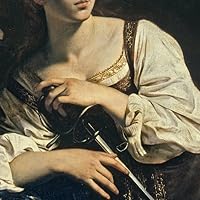
"it almost drives one to the conclusion that men not only do not expect women to be worth much, morally or intellectually, but they do not want them to be worth much. only then one remembers man's reverence for womanhood and his ideal of a noble, altruistic, ministering angel!"

July 3, 2023
One of the most important movements in Women's history is well documented by this book: manifestos, public speeches, written ones... Thanks Penguin edition!

February 28, 2026
Although some of these work best said aloud, as they are transcribed speeches, I enjoyed this book massively. Even hundreds of years on the inspiration of these manifestos, and these brave women, strike a chord.

December 22, 2021
The voices of women, from artists & aristocrats to mill workers & trade unionists, is brought together in this powerful collection of speeches, pamphlets, letters, articles amongst others.
Utterly atmospheric as one can't help but feel themselves in the crowds surging with urgency for women's rights.
This read was a moving reminder of the very many years of struggle it took to rouse women from complacent idleness to being the force the patriarchy could not ignore.
A testament to the consistency of the movement & the inspiring passion of the women that were behind it.
Utterly atmospheric as one can't help but feel themselves in the crowds surging with urgency for women's rights.
This read was a moving reminder of the very many years of struggle it took to rouse women from complacent idleness to being the force the patriarchy could not ignore.
A testament to the consistency of the movement & the inspiring passion of the women that were behind it.

February 1, 2021
A beautiful gem full of wisdom, indignation and passion. Truly inspiring!

December 20, 2022
This was such an informative read! It gives you a real snapshot of what the suffragette movement was up against, the kind of arguments they needed to make and to whom.
It took a special kind of strength of mind to do what these women did; they were asking for something that had never existed before, without posing any sort of violent threat, fighting not their enemies but their own friends and family. It’s extremely difficult to advocate for something that makes the people around you think less of you.
I especially liked the essay asking “idle women” to stop being silly and actually help out their sisters who have to work for a living.
It took a special kind of strength of mind to do what these women did; they were asking for something that had never existed before, without posing any sort of violent threat, fighting not their enemies but their own friends and family. It’s extremely difficult to advocate for something that makes the people around you think less of you.
I especially liked the essay asking “idle women” to stop being silly and actually help out their sisters who have to work for a living.

October 19, 2025
Shameful to think that, 100 years after these texts were originally written, there still exists a pay gap. This renders this more topical than one might hope. That said, while the suffragette biographies at the end of the book are a welcome addition to what, in this series, would usually be just the texts themselves, there's still an argument for further context. But then, maybe the point of these books is to pique the reader's interest and encourage them to go digging further for themselves. Regardless, it remains a fascinating and important series.

September 25, 2021
This was such a great little snippet into the writings and speeches of Suffragettes. I especially loved the speech that Emmeline Pankhurst gave in the Royal Albert Hall on 19 March 1908. I did find a couple of the speeches to be mildly inscrutable, but I think that is an effect of the time difference, cultural context and just general political speech forms. It's nice to read these now and see where we've gotten to but it's also slightly saddening to think about where we aren't yet.

June 14, 2025
Such an important read. It really taught me new things that I didn’t know. I really appreciated the little bio’s of the women in the back. There is some amazingly strong phrases that inspire and awe. I did wish there was a little bit more information on the status of the suffragette movement at the start of the different pieces, for some context. Also, as always, there were stronger pieces and less impactful ones. Overall, 3.75 stars.

December 7, 2021
This is a conglomerate of essays, news coverage, and letters of the British Suffragette movement's leaders. The book goes chronologically - from the beginning of the movement up until women got the franchise. I enjoyed most of the bits I read.
MUST-READ: "Freedom or Death" by Emmeline Pankhurst. Truly heartbreaking.
MUST-READ: "Freedom or Death" by Emmeline Pankhurst. Truly heartbreaking.

January 26, 2022
It’s a compilation of essays, rather than a novel on the suffragette movements. It was really interesting to see how the things we take for granted today in western countries where once real struggles in the past. It was really insightful to read the ideas of the great activists of the past and this topic is a part of history that is not discussed nearly enough!

June 15, 2025
An interesting selection
A sprinkling of speeches and writings of a variety of women in the suffrage movement, showing how the anti-tax movement dovetailed with the effort to get women the vote. It takes the reader a little past what I assumed at first was their only goal to see what they started working on after they won the right to vote. Inspiring stuff.
A sprinkling of speeches and writings of a variety of women in the suffrage movement, showing how the anti-tax movement dovetailed with the effort to get women the vote. It takes the reader a little past what I assumed at first was their only goal to see what they started working on after they won the right to vote. Inspiring stuff.
December 26, 2023
Every book I own in this penguin great ideas collection is annotated beyond belief. I loved this one through and through and it was so great reading the speeches that helped make the change for woman during that time.

November 26, 2024
It's interesting to read essays from a long dead debate about the right's of women. It's sobering to think that there were people who argued against what we would consider common sense and decency, it makes you wonder how the debates of our day will be viewed in fifty or one hundred years.

October 22, 2025
Well worth reading. What a lot was done by so many committed women that we might have the vote and be regarded as citizens in our own right. What a fight! I wish I could thank them and tell them how grateful I am.
November 7, 2021
A good brief collection of writings, probably a good introduction to the suffragette movement

December 21, 2021
very good little snippets

December 30, 2022
Great collection of speeches/letters/news articles to show the suffragette movement.

October 21, 2023
while this was a very interesting reading experience in some ways, it was also flat and quite repetitive. some of the pieces were difficult to read and less well written than others.

Read
December 31, 2023I decided not to rate this book since it's a piece of contemporary testimony

April 30, 2024
Het is eigenlijk best ernstig hoe relevant dit nog steeds is.

May 29, 2024
Inspiring and informative.
I only wish there had been more context to each essay.
I only wish there had been more context to each essay.
Displaying 1 - 30 of 40 reviews