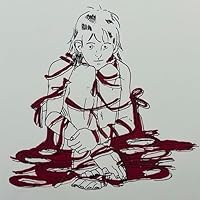
In twenty short books, Penguin brings you the classics of the environmental movement.
With honesty, passion and heart, Terry Tempest Williams's essays explore the impact of nuclear testing, the vital importance of environmental legislation, and the guiding spirit of conservation.
Over the past 75 years, a new canon has emerged. As life on Earth has become irrevocably altered by humans, visionary thinkers around the world have raised their voices to defend the planet, and affirm our place at the heart of its restoration. Their words have endured through the decades, becoming the classics of a movement. Together, these books show the richness of environmental thought, and point the way to a fairer, saner, greener world.
Terry Tempest Williams is an American author, conservationist and activist. Williams’ writing is rooted in the American West and has been significantly influenced by the arid landscape of her native Utah in which she was raised. Her work ranges from issues of ecology and wilderness preservation, to women's health, to exploring our relationship to culture and nature.
She has testified before Congress on women’s health, committed acts of civil disobedience in the years 1987 - 1992 in protest against nuclear testing in the Nevada Desert, and again, in March, 2003 in Washington, D.C., with Code Pink, against the Iraq War. She has been a guest at the White House, has camped in the remote regions of the Utah and Alaska wildernesses and worked as "a barefoot artist" in Rwanda.
Williams is the author of Refuge: An Unnatural History of Family and Place; An Unspoken Hunger: Stories from the Field; Desert Quartet; Leap; Red: Patience and Passion in the Desert; and The Open Space of Democracy. Her book Finding Beauty in a Broken World was published in 2008 by Pantheon Books.
In 2006, Williams received the Robert Marshall Award from The Wilderness Society, their highest honor given to an American citizen. She also received the Distinguished Achievement Award from the Western American Literature Association and the Wallace Stegner Award given by The Center for the American West. She is the recipient of a Lannan Literary Award for Nonfictionand a John Simon Guggenheim Fellowship in creative nonfiction. Williams was featured in Ken Burns' PBS series The National Parks: America's Best Idea (2009). In 2011, she received the 18th International Peace Award given by the Community of Christ Church.
Williams is currently the Annie Clark Tanner Scholar in Environmental Humanities at the University of Utah and a columnist for the magazine The Progressive. She has been a Montgomery Fellow at Dartmouth College where she continues to teach. She divides her time between Wilson, Wyoming and Castle Valley, Utah, where her husband Brooke is field coordinator for the Southern Utah Wilderness Alliance.
Some of the most beautiful nature writing and creative nonfiction I’ve read <3 in 7 essays, Williams writes about her family’s relationship with cancer and the patterns of fallout resulting from 1950s atom bomb testing in Nevada, she writes about capitalism v. conservation, the endangered species list, the arctic national wildlife refuge, protecting public lands, US national parks and the legislation fighting against wilderness development, & the beauty of the natural world (and our relationship to it) —huge recommend!!!
Some compelling advocacy, some eloquent prose, and some thought-provoking ideas (and, yes, it's all about the ideas).
For me, it was all worth it for this little riff:
The eyes of the future are looking back at us and they are praying for us to see beyond our own time. They are kneeling with hands clasped that we might act with restraint, that we might leave room for the life that is destined to come....
The first (and title) essay was well worth the price of admission, everything that followed was gravy (or icing on the cake).
I've read this a few times, and I like it more each time I read it.
[I]maginations shared invite collaboration and collaboration creates community. A life in association, not a life independent, is the democratic ideal. ...
and, for that matter:
We have made the mistake of confusing democracy with capitalism and have mistaken political engagement with a political machinery we all understand to be corrupt. It is time to resist the simplistic, utilitarian view that what is good for business is good for humanity in all its complex web of relationships....
Nicely said.
This worked fine as a standalone, but, unlike many in the series (see below), it was more obviously a (small) collection of prior work - in this case, spanning two decades, from 1991 to the present) - thus, in the end, it was something not quite whole and complete and less cohesive than some of the others.
This slight, pocket/bite-sized collection of pieces is volume 8 in the Penguin Green Ideas collection, which, apparently, is not available for sale (in the slipcase collection) in the U.S. (but, if you're interested, it's not that difficult to order it from a UK supplier).
I really enjoyed reading this. I was a little hesitant when starting this novella, but the way the information was being relayed was unique. So many tabs and underlines in this book. ______________________________ A little snippet (and one of my favourite parts from the book):
She found a pen and a pad of paper tucked inside my left boot. "And these?" she (the officer) asked. "Weapons" I (the author) smiled.
This tiny book was so profound and moving. I would recommend it to everyone. It was not at all what I was expecting and I love that it surprised me. 5*
Some good writer-activism, but the collection missed a certain something for me, I’m not sure what. It was also a bit more spiritual than I prefer from nonfiction but overall this was solid.
A mixed bag that ultimately comes out on top due to the beauty and lyricalness of the writing.
Rock, Paper, Scissors: I found this to be the weakest essay in the Green Ideas series so far. The metaphors just don't carry and feel very awkward.
The Erotic Landscape: YES. 100% YES. I want a whole BOOK on this topic.
Intense somatic experiences are how humans "touch the divine" (or whatever the biochemical explanation for that kind of ecstatic experience is) which are so transformative and vital to feeling like a full, embodied, spiritual living being. Nature and sex are two of the best gateways to that kind of experience which humans have. Who doesn't get horny in nature???? Yes Terry, I too believe that if more people had sex al fresco there'd be a lot more climate activists!!! Wait, that's not what she said? Oh. Well, I choose to believe it's implied.
I enjoyed the explorations of the difference between the erotic: the spontaneous, the feeling, the embodied (which modern Western society represses) and the pornographic: the dysfunctional, the objectified, the restrictive (which modern Western society is obsessed with). Big "Everyone is beautiful and no-one is horny" vibes. I resonated with every sentence of it.
Speaking of which, I just do NOT believe that the erotically charged mud bath party she describes here didn't end in an orgy. Like I just don't. And if it didn't, boooo!!! What a waste!!
The other essays leaned a bit too far to "yeehaw American values and democracy!!" for me to *love* love them, but it makes sense for a USAmerican writer to use national pride to try to persuade other USAmericans to be more ecologically minded. I suppose it's an angle that has some merit if your audience is specifically, idk, Washington Post readers.
Sebenernya buku ini aku baca sebagian tahun waktu hiking ke curug bersama Bapak-Bapak Forest, lantas ketika pulang hujan. Jadi buku ini hampir jadi bubur. Aku melakukan misi penyelamatan dengan memasukan buku ini ke microwave. Terlihat smart bukan? Memang kadang sekacau itu otakku lantas bukunya hampir dibuang sama yg punya rumah. Pas pulang kemarin aku menemukan buku ini di tumpukan benda yang mau di recycle. Tak pungut lagi dan aku baca ulang.
Bukunya Terry ini mengingatkanku betapa aku suka membaca penulis perempuan terutama yang berkaitan dengan isu lingkungan. Rasanya mirip ketika di awal kuliah jatuh cinta sama Rachel Carson akibat tugas hukum lingkungan Mas Yuyun. Tulisannya itu menuntunmu mengamati lingkunganmu, dia menempatkanmu dalam pelukan hangat meskipun sedang bicara soal nestapa bernama krisis iklim.
Dalam essaynya yang jadi judul buku ini, Terry berdiri bukan hanya sebagai seorang naturalis tapi juga seorang manusia yang menyusuri sungai yang tercemar limbah tambang seperti dia menyusuri tubuhnya sendiri. Setapak demi setapak lalu menghargai semua informasi layaknya pengetahuan yang adiluhung.
Memang tulisannya jadi sangat subyektif, tapi bukankah krisis iklim itu lahir dari pengalaman individu yang merumpun jadi ketakutan kolektif? Buku ini cuma 80an halaman, kalau kamu nggak sempat baca ya kebangetan sih. Masih underrated banget bukunya Terry diantara series #GreenIdeas nya Penguin ini.
Terry Tempest Williams is a writer and activist of whom I was not familiar. This tidy 90 pages was a great introduction. Following in a tradition of seeing the non-human world as conscious as ours, she proclaims her love for it all. She also does a damn good job of emphasizing the need for affection and empathy to achieve the greatest impact for change against misguided and corrupted politics and corporate greed-oriented bottom lines. . “We are in need of a reflective activism born out of humility, not arrogance. Reflection, with deep time spent in the consideration of others, opens the door to becoming a compassionate participant in the world.”
Es hat ein paar gute Momente, insbesondere die Passagen über den harten Kampf gegen Regierung und Interessenvertreter, griffige Umweltmassnahmen festzulegen, umzusetzen und dafür zu sorgen, dass sie nicht bald schon wieder aufgeweicht oder ganz abgeschafft werden. Dafür gibt sie aber auch einige positive Beispiele die zeigen, dass es sehr wohl klappen kann. Beim Rest lehnt es sich für mich dann aber zu sehr in die Richtung von persönlichen, spirituellen Erfahrungen.
Strong starter with the anti-atomic sentiment in the American Southwest with the unique perspective of the Mormon minority dealing with the social and environmental fallout from nuclear testing and the legacy of the Cold War on the landscape and its inhabitants. The book then falls into environmentalist musings from the author from different time periods rather than forming a cohesive narrative or idea.
The reason this short collection of essays is powerful is because the writings approach environmentalism from so many different angles - they combine spirituality and abstraction, with the very tangible lived experiences (and losses) of people, and the analytical critique of how the state is run. An interesting read.
En liten bok om veldig mye. Første essay er kanskje mest hartreffende, da den tar for seg skribentens skavanker som resultat av hvordan en bruker jorden. Boken handler mye om hvordan en velger å se på og behandle jorda rundt seg. Særlig gøy sines jeg det er at det er innblandet litt mormonsk perspektiv på det hele. En fin bok inn i en litt ukjent kultur på USAs vestkant.
Williams is a fascinating person who sheds light on important issues, but as an author she falls a little short. Her essays can feel a bit unnecessarily 'deep' at times, and often fail to move fluidly between exposition and anecdote. Killer title though !
The cover says it best: With honesty, passion and heart, these essays explore the impact of nuclear testing, the vital importance of environmental legislation, and the guiding spirit of conservation. Also loved: A community engaged is a community empowered.
This is one of the Penguin green ideas series about the environment movement. Terry Tempest Williams writes beautifully and captures the full depth of emotions when considering the relationship between nature and humans, the effect of nuclear testing, and why environmental legislation is important.