

What do you think?

Shadows of Eternity
Shadows of Eternity
is legendary author Gregory Benford’s return to interstellar science fiction as a discovery within the SETI library on the moon turns out to be deadly.
Shadows of Eternity is a novel set two centuries from now. Humanity has established a SETI library on the moon to decipher and interpret the many messages from alien societies we have discovered. The most intriguing messages are from complete artificial intelligences.
Ruth, a beginner Librarian, must talk to alien minds—who have aggressive agendas of their own. She opens doors into strangeness beyond imagination—and in her quest for understanding nearly gets killed doing it.
Gregory Benford is one of science fiction’s iconic writers, having been nominated for four Hugo Awards and twelve Nebula Awards. Shadows of Eternity marks Gregory Benford’s return to the sweeping galactic science fiction that readers have been waiting for.
Shadows of Eternity is a novel set two centuries from now. Humanity has established a SETI library on the moon to decipher and interpret the many messages from alien societies we have discovered. The most intriguing messages are from complete artificial intelligences.
Ruth, a beginner Librarian, must talk to alien minds—who have aggressive agendas of their own. She opens doors into strangeness beyond imagination—and in her quest for understanding nearly gets killed doing it.
Gregory Benford is one of science fiction’s iconic writers, having been nominated for four Hugo Awards and twelve Nebula Awards. Shadows of Eternity marks Gregory Benford’s return to the sweeping galactic science fiction that readers have been waiting for.
496 pages, Hardcover
First published October 19, 2021
About the author
Gregory Benford
563 books622 followersGregory Benford is an American science fiction author and astrophysicist who is on the faculty of the Department of Physics and Astronomy at the University of California, Irvine.
As a science fiction author, Benford is best known for the Galactic Center Saga novels, beginning with In the Ocean of Night (1977). This series postulates a galaxy in which sentient organic life is in constant warfare with sentient mechanical life.
As a science fiction author, Benford is best known for the Galactic Center Saga novels, beginning with In the Ocean of Night (1977). This series postulates a galaxy in which sentient organic life is in constant warfare with sentient mechanical life.
Ratings & Reviews
Friends & Following
Create a free account to discover what your friends think of this book!
Community Reviews
Displaying 1 - 30 of 119 reviews

July 14, 2021
Interestingly enough, if I had read the post-script before the novel, I probably would have gotten into the tale a bit quicker.
Why?
Because it's an ongoing conversation with the writer Poul Anderson and his future history, concepts of future history, aliens, and where we might go as a species. And being a fan of Poul Anderson, I probably would have been much more enthusiastic. At least, I would have had a better idea where this might have gone.
As it is, this is not a short-term SF adventure featuring a simple librarian in space. Librarian for an alien archive, that is. What we actually get is snippets and adventures across decades and decades and then much further on down the line as humanity grows and learns and gets more involved in its own long-term survival.
But honestly? I didn't care so much for the MC. She was okay. The problems and the discoveries and the long-term SFnal ideas were much more interesting but that usually isn't entirely enough to hold a tale. Even if I wish it were so.
All told, I still found it enjoyable enough and don't regret it at all. Long-term adventure is pretty awesome, after all.
Why?
Because it's an ongoing conversation with the writer Poul Anderson and his future history, concepts of future history, aliens, and where we might go as a species. And being a fan of Poul Anderson, I probably would have been much more enthusiastic. At least, I would have had a better idea where this might have gone.
As it is, this is not a short-term SF adventure featuring a simple librarian in space. Librarian for an alien archive, that is. What we actually get is snippets and adventures across decades and decades and then much further on down the line as humanity grows and learns and gets more involved in its own long-term survival.
But honestly? I didn't care so much for the MC. She was okay. The problems and the discoveries and the long-term SFnal ideas were much more interesting but that usually isn't entirely enough to hold a tale. Even if I wish it were so.
All told, I still found it enjoyable enough and don't regret it at all. Long-term adventure is pretty awesome, after all.

May 29, 2021
I received a digital advanced reading copy of this book from NetGalley in exchange for an honest review. I really wanted to like it. The cover caught my attention and then I read the description. A SETI library on the moon, messages from aliens, and artificial intelligences?! Count me in! Unfortunately, I was greatly disappointed, frustrated, and it left a bad taste in my mouth.
POSITIVES
The overall plot and various details were fascinating. Humans colonizing the moon and Mars, how they communicate with alien artificial intelligences and study messages from undiscovered alien societies, contact with intelligent aliens, intelligent planets, wormholes, etc. These things alone are what kept me reading.
However, the negatives almost made me quit halfway and, honestly, I probably should have.
NEGATIVES
[Trigger Warning: The following section contains references to events that may be traumatic to some readers.]
Small Issues
The overall pacing was slow and the timeline was confusing. I had no sense of how much time was passing within and between chapters. Subplots were never resolved and some characters were just never mentioned again. It actually felt like the second half was a new plot and should’ve been a separate book. The editing needs some work as well. Words were often misspelled and the same sentence, paragraph, and even an entire section popped up twice as if the author had decided to move it and forgot to delete it’s original.
Writing Style
This is a hard science novel, which is completely fine. I can handle some hard science but the writing style was straight like reading a textbook. I’m sure there are numerous, amazing ideas and theories but they were written in a way that was difficult to understand. Environments were overly described and I often zoned out reading them. Overall, it felt pompous and pretentious. This writing style also made it extremely difficult to connect with the characters, especially the protagonist, Rachel. We were often told what she was seeing, doing, and feeling, but never felt as if we were experiencing it with her.
[Trigger Warning]
Sexism
Surprisingly, most of the sexism was directed towards men in this book. Men were often implied to be aggressive and unsafe for women. Women make plans for how to deal with men in bars and there’s a type of human genetically created to be sexless, being described as safe for women to be around them. Related side note, the genetically altered people are said to generally prefer they/them pronouns but Rachel chooses not to respect that, referring to her specific higher ups as men due to their masculine appearance. Somewhat rude and bigoted.
Sexual Assault and Sexuality
This is my biggest problem with this novel. Whether or not it’s just an issue of a man trying to write from a woman’s perspective, there are things that happen in this book that are just unacceptable. Red flags went up when Rachel was kissed and groped against her will by a stranger and no one, not even herself, said or did anything about it, acting as if it was fine and normal and just a little embarrassing.
Blaring alarms went off not much later. While communicating with an alien AI using a full sensory “pod,” it demands sex in return for solar system saving information. Rachel refuses, her commanding officer tells her to do it anyway, she still refuses, tries to get the info again, and the AI basically rapes her. Her higher ups deny knowing this was going to happen and when she confronts the AI later, it tells her it was acceptable because she wanted it. Then Rachel feels guilty because she thinks she actually enjoyed it. There were no consequences or punishments. Besides getting the information they needed, the only other result was Earth media found out she was the first to have sex with an alien AI, leaving out it was technically rape. In the end, she doesn’t even seem the least bit upset claiming this like it’s some kind of accomplishment.
I believe in women having sexual freedom but after this disgusting, pointless rape subplot, the way Rachel’s sexuality was written just made me uncomfortable. Rachel goes out looking for men to sleep with regularly, sleeps with a coworker, finds a future coworker attractive and she becomes “moist” while looking at him. She even fantasizes about sleeping with a bird-like alien to then become his lover in the end. Were any of these details really needed to build her character and drive this story? No.
Conclusion
All that said, I really do believe the bones of a really amazing story with amazing characters is here. It’s just buried under subplots and details that are uncomfortable and not needed. Needless to say, I do not recommend this book and I hope the author might consider making a number of edits before it's officially released.
POSITIVES
The overall plot and various details were fascinating. Humans colonizing the moon and Mars, how they communicate with alien artificial intelligences and study messages from undiscovered alien societies, contact with intelligent aliens, intelligent planets, wormholes, etc. These things alone are what kept me reading.
However, the negatives almost made me quit halfway and, honestly, I probably should have.
NEGATIVES
[Trigger Warning: The following section contains references to events that may be traumatic to some readers.]
Small Issues
The overall pacing was slow and the timeline was confusing. I had no sense of how much time was passing within and between chapters. Subplots were never resolved and some characters were just never mentioned again. It actually felt like the second half was a new plot and should’ve been a separate book. The editing needs some work as well. Words were often misspelled and the same sentence, paragraph, and even an entire section popped up twice as if the author had decided to move it and forgot to delete it’s original.
Writing Style
This is a hard science novel, which is completely fine. I can handle some hard science but the writing style was straight like reading a textbook. I’m sure there are numerous, amazing ideas and theories but they were written in a way that was difficult to understand. Environments were overly described and I often zoned out reading them. Overall, it felt pompous and pretentious. This writing style also made it extremely difficult to connect with the characters, especially the protagonist, Rachel. We were often told what she was seeing, doing, and feeling, but never felt as if we were experiencing it with her.
[Trigger Warning]
Sexism
Surprisingly, most of the sexism was directed towards men in this book. Men were often implied to be aggressive and unsafe for women. Women make plans for how to deal with men in bars and there’s a type of human genetically created to be sexless, being described as safe for women to be around them. Related side note, the genetically altered people are said to generally prefer they/them pronouns but Rachel chooses not to respect that, referring to her specific higher ups as men due to their masculine appearance. Somewhat rude and bigoted.
Sexual Assault and Sexuality
This is my biggest problem with this novel. Whether or not it’s just an issue of a man trying to write from a woman’s perspective, there are things that happen in this book that are just unacceptable. Red flags went up when Rachel was kissed and groped against her will by a stranger and no one, not even herself, said or did anything about it, acting as if it was fine and normal and just a little embarrassing.
Blaring alarms went off not much later. While communicating with an alien AI using a full sensory “pod,” it demands sex in return for solar system saving information. Rachel refuses, her commanding officer tells her to do it anyway, she still refuses, tries to get the info again, and the AI basically rapes her. Her higher ups deny knowing this was going to happen and when she confronts the AI later, it tells her it was acceptable because she wanted it. Then Rachel feels guilty because she thinks she actually enjoyed it. There were no consequences or punishments. Besides getting the information they needed, the only other result was Earth media found out she was the first to have sex with an alien AI, leaving out it was technically rape. In the end, she doesn’t even seem the least bit upset claiming this like it’s some kind of accomplishment.
I believe in women having sexual freedom but after this disgusting, pointless rape subplot, the way Rachel’s sexuality was written just made me uncomfortable. Rachel goes out looking for men to sleep with regularly, sleeps with a coworker, finds a future coworker attractive and she becomes “moist” while looking at him. She even fantasizes about sleeping with a bird-like alien to then become his lover in the end. Were any of these details really needed to build her character and drive this story? No.
Conclusion
All that said, I really do believe the bones of a really amazing story with amazing characters is here. It’s just buried under subplots and details that are uncomfortable and not needed. Needless to say, I do not recommend this book and I hope the author might consider making a number of edits before it's officially released.

Want to Read
June 7, 2021ahhhhhhh!, This my first ARC!
I'm so excited to read this!!
THIS BETTER BE GOOD!
cause I want my first ARC to memorable in a good way! :))

I'm so excited to read this!!
THIS BETTER BE GOOD!
cause I want my first ARC to memorable in a good way! :))

December 5, 2021
I never write reviews but this book was way too shitty not to say anything. Only got 37 pages in and I had to stop.
My first problem was how the only examples of Asian characters (the only race besides white that was mentioned) were all in positions of academic authority which definitely felt like stereotyping to me. ALSO in describing the Prefect, Benford writes “He was tall and bald, his Asian features expressive” (11), which felt like a really strange way to describe anyone and makes it seem like all Asians share the same features. Not an adequate way to describe someone.
My second problem was the assumed lesbian character Ruby. Rachel goes out to meet her roommate’s friends, one of which is a woman name Ruby who kisses, gropes, and makes her feel quite uncomfortable. This beyond a doubt plays into the “predatory lesbian” stereotype and makes queer women into the villains. Not to mention no one comes to Rachel’s defense after this. After Catty and Rachel go back to the apartment they talk about how they’ve experimented with kissing girls but found it had no spark and they sadly must continue to date men. Which is some comphet bullshit if I’ve ever heard it.
Then we get to the Noughts which are supposed to be sexless and gender neutral people. Rachel chooses to ignore this and refers to them with he/him pronouns because they appear masculine to her. Which is weird and gross and why make non-binary characters if you’re just gonna ignore them.
Next we get to page 36. Rachel is told that she as an Ashkenazi Jew has a higher Iq that others, and that Ashkenazim are smarter than other Jews (Benford uses Sephardic Jews as the example here). This is such a weird bit of stereotyping and is totally not necessary to the plot so I can’t think of a reason this author would need to write it in, other than to implement his own prejudices into the story.
This book additionally has sexist undertones in nearly every other line, and from reading other reviews I can see it has instances of rape and sexual assault that are brushed off as if they don’t matter. Don’t fucking read this book.
My first problem was how the only examples of Asian characters (the only race besides white that was mentioned) were all in positions of academic authority which definitely felt like stereotyping to me. ALSO in describing the Prefect, Benford writes “He was tall and bald, his Asian features expressive” (11), which felt like a really strange way to describe anyone and makes it seem like all Asians share the same features. Not an adequate way to describe someone.
My second problem was the assumed lesbian character Ruby. Rachel goes out to meet her roommate’s friends, one of which is a woman name Ruby who kisses, gropes, and makes her feel quite uncomfortable. This beyond a doubt plays into the “predatory lesbian” stereotype and makes queer women into the villains. Not to mention no one comes to Rachel’s defense after this. After Catty and Rachel go back to the apartment they talk about how they’ve experimented with kissing girls but found it had no spark and they sadly must continue to date men. Which is some comphet bullshit if I’ve ever heard it.
Then we get to the Noughts which are supposed to be sexless and gender neutral people. Rachel chooses to ignore this and refers to them with he/him pronouns because they appear masculine to her. Which is weird and gross and why make non-binary characters if you’re just gonna ignore them.
Next we get to page 36. Rachel is told that she as an Ashkenazi Jew has a higher Iq that others, and that Ashkenazim are smarter than other Jews (Benford uses Sephardic Jews as the example here). This is such a weird bit of stereotyping and is totally not necessary to the plot so I can’t think of a reason this author would need to write it in, other than to implement his own prejudices into the story.
This book additionally has sexist undertones in nearly every other line, and from reading other reviews I can see it has instances of rape and sexual assault that are brushed off as if they don’t matter. Don’t fucking read this book.

March 3, 2025
Rachel Cohen a lunar SETI Librarian: saved the solar system, made first contact, and was at the forefront of humanities exploring the galaxy.
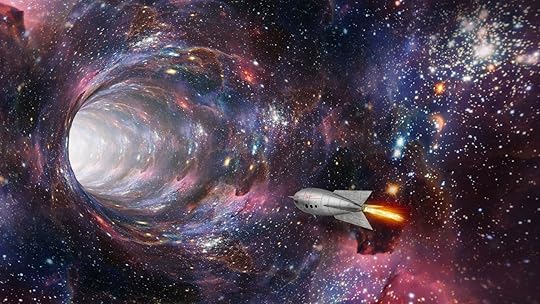
The Silver Metal Lugger entering the Solar System’s wormhole. .
My dead tree version was a hefty 490-pages. It had a US 2021 copyright.
Gregory Benford is an American science fiction author and astrophysicist. He has written more than 30 novels, and numerous works of short fiction. I have read several books by the author in the past. However, none recently.
TL;DR
In the future there was a lunar library setup to mine the flood in interstellar information found to being broadcast by alien races across the galaxy. The protagonist Rachel Cohen was a prodigy amongst SETI librarians. Deciphering the transmissions, despite the futuristic automation, still required a certain je ne sais quoi to achieve understanding. Few folks could. Cohen was successful at it. The story follows her personal journey as: trainee learning the library’s ropes, her initial successes and sacrifices as an alien AI whisperer, being instrumental in humanity's first First Contact and her fatedly leaving of the Library.
Benford has been hit or miss with me. While not a miss, this was not a solid hit; it was more like a glancing blow. The world building was quite good. (It helps that I am a sucker for Moon-based base stories.) However, the main character was not well done, and the plotting was clunky. Although, overall the book was a simple Apprentice to Master trope progression. I particularly, did not like the daisy-chaining of sub-stories in the protagonist’s decades-long story. Frankly, any two of those sub-stories, would have been a good-enough novel.
The Review
The prose was well-groomed. I found only one continuity error. There was some repetition. For example, several of times the reader was reminded that "80 is the new 40" through the easy availability of anti-aging treatments. However, I found the organization of the book to be problematic. It was a sequence of stories. I am not a fan of the Dashed Plot Line. In this case, The whole was not greater than the sum of the parts. One of two of the stories would have been more than enough to complete this book. In addition, the first sequence reeked of a Prolonged Prologue.
Benford’s dialog was OK. In places the badinage was humorous. His word usage could be peculiar. “yeasty” was not a word I have ever associated with the sex act? There were two POVs, Cohen’s and an alien’s (Fraq). I was more comfortable with Benford’s alien’s inner dialog, than his human female’s. Action scenes were OK, although they could be overly long, when exposition was included. Descriptive prose was good. Benford was consistently able to render very technical concepts into an easily understandable form. Note that there was a lot of expositional prose that only a geek could love.
The protagonist was Rachel Cohen. Hers was the main POV. Fraq, an alien was the other POV.
I did not recognize Cohen as being a woman. She was an 80-year-old guy’s picture of a twenty-something woman about 100-years in the future. That she was brilliant and dedicated—I got that part. Benford being a Southern Guy, I could only envision her having visited there, but not having grown-up there and in a Jewish family. I just wrote her off as a male character. Some male writers, particularly elderly male writers, should not be writing young female characters.
Benford did better with the Fraq alien character. (Funny how that worked out?) Fraq’s inner dialog, mostly on his alien observation of humans was well done. Fraq and his crew were an updated homage to Poul Anderson and used with permission of the author's estate. (Those old-skool sf writers were a small and clubby bunch.) The aliens came from Anderson’s story The People of the Wind (1973).
The story also included numerous other characters, although they were thin. Mostly they were Cohen’s gal pals, hook-ups, or story-centered antagonists. An interesting inclusion was the Noughts. They were a synthetic, human sub-species without sex-- neuters. I saw them as an example of Straw Vulcans. They would have been a good story, without introducing aliens? Although, I wondered if they were a third gender in a bobbled gender-related sub-plot?
At its heart, this was an apprentice to master story that takes place over years.
There was: “Sex, Drugs, and Rock’n roll (sorta)”.
Everyone on the moon had sex. Although, it took a while for Cohen to get into the swing of things. Sex was of the fade to black and cut to Kirk putting his boots on while sitting on the edge of the bed type. I found Fraq’s observations on human sexuality to be amusing. Intoxicants were used. Old fashioned alcohol: liquor, beer, and wine, was consumed in social settings, sometimes in excess. Realistically, off-planet folks drink vodka. Ethanol, doped with synthetic flavors is easy to fabricate in space. Peaty, single malts have to come up the gravity-well, sans heavy, glass bottle, at great expense. Futuristic, synthetic drugs were mentioned. Tobacco appears to have gone extinct? (Then) contemporary music was described as “noise.” A sub-plot involving Baroque music, mathematics and aliens appeared.
The body count was low. Folks were more likely to expire through misadventure. (Vacuum and non-breathable atmospheres kill.) The interpersonal violence was physical. Note there was an incident of sexual violence. The violence was moderately graphic. Cohen got banged-up in numerous crashes. She took a beating, but “kept on ticking,” like the Energizer Bunny. Medical nanites provided quick recoveries. Fraq was invincible, for an alien with hollow bones.
World building was excellent in its breadth and depth. Benford took the reader on a tour of the colonized inner solar system.
The Lunar setting displayed the deepest world-building. It was deeper and better than John Varley and Robert Heinlein’s lunar sets. (Cohen ironically mentions both.) However, Benford had the advantage of decades of modern lunar science and exploration to work with.
The Mars setting was also good, although it was only used briefly in comparison to Luna. The Martian alien was clever and unusual.
As mentioned above Fraq was a Ythri alien from another star. Benford embellished Anderson’s original race, with credible result.
Several of the technologies were “sufficiently advanced technologies to be indistinguishable from magic.” Although, in general Benford is a hard-ish sf author. Most of the tech would be recognizable from today. All space systems were embellishments of systems under study today. For example, the Mars cycler . Quantum computers were prevalent technology too. I really liked the idea of SETI transmissions consisting of whole AIs being broadcast. (Alien ambassadors in a data stream.) Benford made note to describe Earthside fashion changes over the decades-long story. Although, I did note there were no new, unrecognizable Consumer Products. (Pervasive futurism is hard to do.)
That I geeked-out on the world building would be an understatement.
Summary
Benford wrote an awkward, credible, old-fashioned, hard science fiction story that incorporated contemporary themes. The story had good, hard science-based, world building for an inner solar system-wide civilization. The lunar SETI Library was a brilliant premise. The Ythri first contact was brilliant. The Martian alien was brilliant. However, good world building and aliens alone do not make for good novels together of by themselves.
This long book was crippled by a poorly written protagonist, and an overall story plot that got lost in the book’s “sub-stories.” Cohen was unrecognizable to me as a woman. The sexual politics that Cohen catalyzed in the story were at times cringe worthy. The sub-stories made the book too long. I continually anticipated the book ending with each sub-story—it just kept going. At the end Cohen looks back at her life, and I thought “Now what?”
I liked the worldbuilding, but I did not like the story. I think Benford knew what concepts modern science fiction readers are interested in. However, he had no experience with them. He can write about astrophysics, but not genderless or sexual fluid, humans. Writers should only write about what they know.
Maybe as a collection of related novellas, and with the help of a ruthless, contemporarily savvy editor, this would have been a good anthology. As a novel it was a disappointment.
The Silver Metal Lugger entering the Solar System’s wormhole. .
My dead tree version was a hefty 490-pages. It had a US 2021 copyright.
Gregory Benford is an American science fiction author and astrophysicist. He has written more than 30 novels, and numerous works of short fiction. I have read several books by the author in the past. However, none recently.
TL;DR
In the future there was a lunar library setup to mine the flood in interstellar information found to being broadcast by alien races across the galaxy. The protagonist Rachel Cohen was a prodigy amongst SETI librarians. Deciphering the transmissions, despite the futuristic automation, still required a certain je ne sais quoi to achieve understanding. Few folks could. Cohen was successful at it. The story follows her personal journey as: trainee learning the library’s ropes, her initial successes and sacrifices as an alien AI whisperer, being instrumental in humanity's first First Contact and her fatedly leaving of the Library.
Benford has been hit or miss with me. While not a miss, this was not a solid hit; it was more like a glancing blow. The world building was quite good. (It helps that I am a sucker for Moon-based base stories.) However, the main character was not well done, and the plotting was clunky. Although, overall the book was a simple Apprentice to Master trope progression. I particularly, did not like the daisy-chaining of sub-stories in the protagonist’s decades-long story. Frankly, any two of those sub-stories, would have been a good-enough novel.
The Review
The prose was well-groomed. I found only one continuity error. There was some repetition. For example, several of times the reader was reminded that "80 is the new 40" through the easy availability of anti-aging treatments. However, I found the organization of the book to be problematic. It was a sequence of stories. I am not a fan of the Dashed Plot Line. In this case, The whole was not greater than the sum of the parts. One of two of the stories would have been more than enough to complete this book. In addition, the first sequence reeked of a Prolonged Prologue.
Benford’s dialog was OK. In places the badinage was humorous. His word usage could be peculiar. “yeasty” was not a word I have ever associated with the sex act? There were two POVs, Cohen’s and an alien’s (Fraq). I was more comfortable with Benford’s alien’s inner dialog, than his human female’s. Action scenes were OK, although they could be overly long, when exposition was included. Descriptive prose was good. Benford was consistently able to render very technical concepts into an easily understandable form. Note that there was a lot of expositional prose that only a geek could love.
The protagonist was Rachel Cohen. Hers was the main POV. Fraq, an alien was the other POV.
I did not recognize Cohen as being a woman. She was an 80-year-old guy’s picture of a twenty-something woman about 100-years in the future. That she was brilliant and dedicated—I got that part. Benford being a Southern Guy, I could only envision her having visited there, but not having grown-up there and in a Jewish family. I just wrote her off as a male character. Some male writers, particularly elderly male writers, should not be writing young female characters.
Benford did better with the Fraq alien character. (Funny how that worked out?) Fraq’s inner dialog, mostly on his alien observation of humans was well done. Fraq and his crew were an updated homage to Poul Anderson and used with permission of the author's estate. (Those old-skool sf writers were a small and clubby bunch.) The aliens came from Anderson’s story The People of the Wind (1973).
The story also included numerous other characters, although they were thin. Mostly they were Cohen’s gal pals, hook-ups, or story-centered antagonists. An interesting inclusion was the Noughts. They were a synthetic, human sub-species without sex-- neuters. I saw them as an example of Straw Vulcans. They would have been a good story, without introducing aliens? Although, I wondered if they were a third gender in a bobbled gender-related sub-plot?
At its heart, this was an apprentice to master story that takes place over years.
There was: “Sex, Drugs, and Rock’n roll (sorta)”.
Everyone on the moon had sex. Although, it took a while for Cohen to get into the swing of things. Sex was of the fade to black and cut to Kirk putting his boots on while sitting on the edge of the bed type. I found Fraq’s observations on human sexuality to be amusing. Intoxicants were used. Old fashioned alcohol: liquor, beer, and wine, was consumed in social settings, sometimes in excess. Realistically, off-planet folks drink vodka. Ethanol, doped with synthetic flavors is easy to fabricate in space. Peaty, single malts have to come up the gravity-well, sans heavy, glass bottle, at great expense. Futuristic, synthetic drugs were mentioned. Tobacco appears to have gone extinct? (Then) contemporary music was described as “noise.” A sub-plot involving Baroque music, mathematics and aliens appeared.
The body count was low. Folks were more likely to expire through misadventure. (Vacuum and non-breathable atmospheres kill.) The interpersonal violence was physical. Note there was an incident of sexual violence. The violence was moderately graphic. Cohen got banged-up in numerous crashes. She took a beating, but “kept on ticking,” like the Energizer Bunny. Medical nanites provided quick recoveries. Fraq was invincible, for an alien with hollow bones.
World building was excellent in its breadth and depth. Benford took the reader on a tour of the colonized inner solar system.
The Lunar setting displayed the deepest world-building. It was deeper and better than John Varley and Robert Heinlein’s lunar sets. (Cohen ironically mentions both.) However, Benford had the advantage of decades of modern lunar science and exploration to work with.
The Mars setting was also good, although it was only used briefly in comparison to Luna. The Martian alien was clever and unusual.
As mentioned above Fraq was a Ythri alien from another star. Benford embellished Anderson’s original race, with credible result.
Several of the technologies were “sufficiently advanced technologies to be indistinguishable from magic.” Although, in general Benford is a hard-ish sf author. Most of the tech would be recognizable from today. All space systems were embellishments of systems under study today. For example, the Mars cycler . Quantum computers were prevalent technology too. I really liked the idea of SETI transmissions consisting of whole AIs being broadcast. (Alien ambassadors in a data stream.) Benford made note to describe Earthside fashion changes over the decades-long story. Although, I did note there were no new, unrecognizable Consumer Products. (Pervasive futurism is hard to do.)
That I geeked-out on the world building would be an understatement.
Summary
Benford wrote an awkward, credible, old-fashioned, hard science fiction story that incorporated contemporary themes. The story had good, hard science-based, world building for an inner solar system-wide civilization. The lunar SETI Library was a brilliant premise. The Ythri first contact was brilliant. The Martian alien was brilliant. However, good world building and aliens alone do not make for good novels together of by themselves.
This long book was crippled by a poorly written protagonist, and an overall story plot that got lost in the book’s “sub-stories.” Cohen was unrecognizable to me as a woman. The sexual politics that Cohen catalyzed in the story were at times cringe worthy. The sub-stories made the book too long. I continually anticipated the book ending with each sub-story—it just kept going. At the end Cohen looks back at her life, and I thought “Now what?”
I liked the worldbuilding, but I did not like the story. I think Benford knew what concepts modern science fiction readers are interested in. However, he had no experience with them. He can write about astrophysics, but not genderless or sexual fluid, humans. Writers should only write about what they know.
Maybe as a collection of related novellas, and with the help of a ruthless, contemporarily savvy editor, this would have been a good anthology. As a novel it was a disappointment.

May 9, 2021
I have received a digital advance review copy of this book via Netgalley in exchange for my honest opinion. Thank you!
1 star - This could have been so good ...
DNF at 51 %
Okay, so I have many feelings and this will be a bit ranty, but bear with me.
When I first heard about the premise I thought this book would be a total winner. A SETI-Library on the moon? Deciphering and translating alien messages? What could possibly go wrong?
Well, this is an excellent example for how to ruin a good idea.
Let's start with the good stuff: this book is chock full of great ideas. The whole setup with the SETI library on the moon is fantastic. We are a couple of hundred years in the future and humanity has received plenty of messages through the SETI program. So many and complex messages actually, that the library that has been installed to understand them is now a very prestigious organization and only the best get accepted to work there.
The received data streams have in some cases contained even whole AIs, called Minds, that now live on the servers of the library. Librarians can communicate with them via so-called pods, basically an interface that connects to the whole sensory range.
I actually really liked how the translation process is described as being very mathematical and complex - and understanding the alien thought processes is not possible by using mere words. It is quite mind-bending, actually, and this aspect was captured well.
But now here's the less good stuff.
So, this one's hopelessly old-fashioned in the worst way regarding gender roles and the treatment of sexuality.
Want some examples? Early on, Rachel, the protagonist, is being groped and kissed (against her will) by another woman and only reacts with being kind of embarrassed. Not a single person surrounding this scene (and there are many!) feels like this is a violation and the whole incident is just being shrugged off.
Then there's the comments about how women are safe with a certain group of people because they have been removed of their sexuality - because of course we all know that men are just hypersexual brutes who cannot help themselves but to attack women who cross their path.
Every single stupid stereotype about men and women you have ever heard of is scattered throughout the story. Men are aggressive and territorial. Women are intuitive. PMSing women are moody.
All of the above is dumb, but I could maybe have lived with it if I really tried. But there is more and it is NOT COOL.
See, there is a whole sub-plot about one of the AIs Rachel interacts with wanting to have sex with her. She doesn't want to and tells the AI so. She also tells her supervisor - and guess how they react: they order her to do it anyway, because they hope to get some very important information from this AI. Rachel continues interacting with that AI and, sure enough, it enters her mind against her will and has sex with her. Not sure how to call this anything but rape. But worst of all: Rachel is mostly a little angry at herself because she kind of enjoyed it and otherwise just shrugs it off. Her supervisor actually even tells her that they don't see her issue, because she seemed to be enjoying herself. Awesome. And that's it, Rachel reacts by banging some dude (yes, really) and the story just moves on.
Later in the plot some aliens who have wings and can fly enter the stage. And, would't we have guessed it, again Rachel is being encouraged to "get to know the leader better" by her supervisor (yes, it is very much implied that her having sex with him would be appreciated). Her reaction: "Umm, sure, that smart bird (her words, not mine - and really offensive on its own) is actually kinda a hot dude..."
I CANNOT.
I have this feeling that the author doesn't really GET people. All of the characters are incredibly two-dimensional, some you could only call one-dimensional really. I do not care about any of them, there is no growth, no relatable feelings. The dialogue is ridiculous and most of the time I have no idea what everybody is supposed to be insinuating. And seriously, why did Benford chose a female main character? He clearly cannot relate to her at all, so I cannot help but think this is just a bit of tokenism, because feminist Sci-Fi is on the rise. Well, this is NOT how you do feminist Sci-Fi!
Also, the prose is really stuffy, convoluted and not terribly accessible. I guess it's supposed to be literary and metaphorical but to me it just feels very self-congratulatory.
I'm so dissappointed and did not finish this one. I cannot remember the last time I did that, actually. I guess there's an audience for this book out there, but it definitely was not for me.
1 star - This could have been so good ...
DNF at 51 %
Okay, so I have many feelings and this will be a bit ranty, but bear with me.
When I first heard about the premise I thought this book would be a total winner. A SETI-Library on the moon? Deciphering and translating alien messages? What could possibly go wrong?
Well, this is an excellent example for how to ruin a good idea.
Let's start with the good stuff: this book is chock full of great ideas. The whole setup with the SETI library on the moon is fantastic. We are a couple of hundred years in the future and humanity has received plenty of messages through the SETI program. So many and complex messages actually, that the library that has been installed to understand them is now a very prestigious organization and only the best get accepted to work there.
The received data streams have in some cases contained even whole AIs, called Minds, that now live on the servers of the library. Librarians can communicate with them via so-called pods, basically an interface that connects to the whole sensory range.
I actually really liked how the translation process is described as being very mathematical and complex - and understanding the alien thought processes is not possible by using mere words. It is quite mind-bending, actually, and this aspect was captured well.
But now here's the less good stuff.
So, this one's hopelessly old-fashioned in the worst way regarding gender roles and the treatment of sexuality.
Want some examples? Early on, Rachel, the protagonist, is being groped and kissed (against her will) by another woman and only reacts with being kind of embarrassed. Not a single person surrounding this scene (and there are many!) feels like this is a violation and the whole incident is just being shrugged off.
Then there's the comments about how women are safe with a certain group of people because they have been removed of their sexuality - because of course we all know that men are just hypersexual brutes who cannot help themselves but to attack women who cross their path.
Every single stupid stereotype about men and women you have ever heard of is scattered throughout the story. Men are aggressive and territorial. Women are intuitive. PMSing women are moody.
All of the above is dumb, but I could maybe have lived with it if I really tried. But there is more and it is NOT COOL.
See, there is a whole sub-plot about one of the AIs Rachel interacts with wanting to have sex with her. She doesn't want to and tells the AI so. She also tells her supervisor - and guess how they react: they order her to do it anyway, because they hope to get some very important information from this AI. Rachel continues interacting with that AI and, sure enough, it enters her mind against her will and has sex with her. Not sure how to call this anything but rape. But worst of all: Rachel is mostly a little angry at herself because she kind of enjoyed it and otherwise just shrugs it off. Her supervisor actually even tells her that they don't see her issue, because she seemed to be enjoying herself. Awesome. And that's it, Rachel reacts by banging some dude (yes, really) and the story just moves on.
Later in the plot some aliens who have wings and can fly enter the stage. And, would't we have guessed it, again Rachel is being encouraged to "get to know the leader better" by her supervisor (yes, it is very much implied that her having sex with him would be appreciated). Her reaction: "Umm, sure, that smart bird (her words, not mine - and really offensive on its own) is actually kinda a hot dude..."
I CANNOT.
I have this feeling that the author doesn't really GET people. All of the characters are incredibly two-dimensional, some you could only call one-dimensional really. I do not care about any of them, there is no growth, no relatable feelings. The dialogue is ridiculous and most of the time I have no idea what everybody is supposed to be insinuating. And seriously, why did Benford chose a female main character? He clearly cannot relate to her at all, so I cannot help but think this is just a bit of tokenism, because feminist Sci-Fi is on the rise. Well, this is NOT how you do feminist Sci-Fi!
Also, the prose is really stuffy, convoluted and not terribly accessible. I guess it's supposed to be literary and metaphorical but to me it just feels very self-congratulatory.
I'm so dissappointed and did not finish this one. I cannot remember the last time I did that, actually. I guess there's an audience for this book out there, but it definitely was not for me.

August 13, 2022
0 stars. I can’t believe I finished it. I am so angry about the ending that I kept notes whilst reading, intending to write out a long review, but now I can’t stand to think about this book any longer. The most shocking part I think was finding out that this man was actually a physicist. How. Just how. Idk maybe I’ll come back and make a proper review if my seething rage ever leaves me idk.

December 5, 2021
Disappointing, especially because I’ve enjoyed his other work.
Great sci fi ideas, marred by misogyny and over-sexualized female protagonist.
Also too many loose plot threads,and very poor editing (I.e., same longish paragraph shows up twice separated by 100 pages).
Great sci fi ideas, marred by misogyny and over-sexualized female protagonist.
Also too many loose plot threads,and very poor editing (I.e., same longish paragraph shows up twice separated by 100 pages).

November 24, 2021
Read this review and other Science Fiction/Fantasy book reviews at The Quill to Live
I’m always up to visit the works of well established authors in the genre. Most of the time, I end up reading their newer work because it’s more relevant. So when a book is touted as being the return of an award winning author, my ears perk up and my nose picks up the scent of new prey, UwU. Unfortunately, this time the trail led me astray, and I found myself wanting. The Shadows of Eternity, by Gregory Benford, is a squandering of potential that spends more time trying to find a point than make one.
The book is a series of stories that follows the life of Rachel, as she pursues her career as a librarian at a large SETI station on the moon. Here, massive amounts of data from far flung intelligent civilizations are compiled and given to AI personalities that serve as avatars for those civilizations. Rachel’s job is to communicate and bargain with these AIs to break their code and gain knowledge that is helpful to humanity. Over the course of decades Ruth solves several puzzles while dealing with several AI and the civilizations they are compiled from. However, she ends up being visited by a trailer from another star and becomes his primary envoy for the human race. And right now you are probably thinking, “How could a book with such a good premise go wrong?”
From a technical standpoint, the book isn’t bad nor is it good. Benford does a decent job of describing bigger technical things in easy to consume ways. The characters are bland but not the worst I’ve seen. They’re there to move the story along. Rachel is just a woman with something to prove, no matter how often we’re told she’s becoming a prodigy among librarians. The dialogue is clunky and expositional without revealing anything about the characters. Every detail is told. Even when Benford decides to show, it feels like he doesn’t trust the reader, and goes out of his way to highlight it by spelling it out again in dialogue.
The story itself is meandering, and the more interesting beginning stories just feel like stepping stones to the larger, less potent narrative. In the first story in the book, Rachel takes on one of the most enigmatic of these machines, having spent her life up until this point preparing to interact with it. She gets it to open up fairly quickly, and without much effort on her part. The book follows this sort of rhythm as Rachel runs into a wall with successive machines, eventually finding a way to break through. That is until she is visited by a traveler from another race, something that has never happened before in human history. And from there on, the rest of the book becomes an ongoing quest for bigger and greater technological advances hidden under the veneer of “building relationships.” It’s a boring slog that treads the burial grounds of science fiction.
Where the book really struggles for me is it’s sexual politics. Rachel makes headway with the first AI not through her own ingenuity and understanding, but because she is essentially raped by the machine. It sees it as a quid quo pro transaction that rewards her with status and humanity with astounding technology to stick around for a while longer. I had issues with this because it’s sort of just hand waved away without acknowledgment. It could have been a “at the mercy of Gods” moment, but it’s just a thing that happens. Rachel is also written like a golden age sci fi masculine hero, thinking often about the men she wants to have sex with, and occasionally has the sex, then walks away without emotional attachment. She even fantasizes about a sexual relationship with an alien species. Now this wouldn’t be bad if it truly felt liberating, intimate, or even a character flaw. Instead, it feels vindictive as if to say “see, women can be powerful and treat the world as a sex object too” vibe.
That’s not even to get into the sexless Noughts, a third gender “created” to be logical and non-emotional rational beings to serve the library. There are a lot of issues with them, but the most fascinating one is their complete lack of understanding of or willingness to understand sex and gender relations. I’m not saying that they should per se, but Benford spends little to no effort on why they would or wouldn’t, it’s just a fact of their nature. They view her rape as a necessary stepping stone and that she should just get over it, so she does. There are plenty of other situations in which they look down on Rachel and struggles she faces due to her sex and gender, but I’m going to avoid them to say it’s all just a mess.
The worst part about going through all of this book, is that none of this seems to serve a point. Benford seems fundamentally uninterested in the world he has created, forsaking my curiosity as the reader. The Shadows of Eternity doesn’t really end anywhere. It builds and builds to pivotal moments that are just another thing-a-ma-bob. Hell the book ends with Rachel looking back and being like “haters gonna hate,” and it’s just tiring. There is not a lot redeeming about this book other than the central premise of the library itself. I wish there was more of it, and it’s a shame that this is just a chronicle of ideas from the past, packaged to look like the future.
Rating: The Shadows of Eternity 3.0/10
-Alex
An ARC of this book was provided to me by the publisher in exchange for an honest review. The thoughts on this book are my own.
I’m always up to visit the works of well established authors in the genre. Most of the time, I end up reading their newer work because it’s more relevant. So when a book is touted as being the return of an award winning author, my ears perk up and my nose picks up the scent of new prey, UwU. Unfortunately, this time the trail led me astray, and I found myself wanting. The Shadows of Eternity, by Gregory Benford, is a squandering of potential that spends more time trying to find a point than make one.
The book is a series of stories that follows the life of Rachel, as she pursues her career as a librarian at a large SETI station on the moon. Here, massive amounts of data from far flung intelligent civilizations are compiled and given to AI personalities that serve as avatars for those civilizations. Rachel’s job is to communicate and bargain with these AIs to break their code and gain knowledge that is helpful to humanity. Over the course of decades Ruth solves several puzzles while dealing with several AI and the civilizations they are compiled from. However, she ends up being visited by a trailer from another star and becomes his primary envoy for the human race. And right now you are probably thinking, “How could a book with such a good premise go wrong?”
From a technical standpoint, the book isn’t bad nor is it good. Benford does a decent job of describing bigger technical things in easy to consume ways. The characters are bland but not the worst I’ve seen. They’re there to move the story along. Rachel is just a woman with something to prove, no matter how often we’re told she’s becoming a prodigy among librarians. The dialogue is clunky and expositional without revealing anything about the characters. Every detail is told. Even when Benford decides to show, it feels like he doesn’t trust the reader, and goes out of his way to highlight it by spelling it out again in dialogue.
The story itself is meandering, and the more interesting beginning stories just feel like stepping stones to the larger, less potent narrative. In the first story in the book, Rachel takes on one of the most enigmatic of these machines, having spent her life up until this point preparing to interact with it. She gets it to open up fairly quickly, and without much effort on her part. The book follows this sort of rhythm as Rachel runs into a wall with successive machines, eventually finding a way to break through. That is until she is visited by a traveler from another race, something that has never happened before in human history. And from there on, the rest of the book becomes an ongoing quest for bigger and greater technological advances hidden under the veneer of “building relationships.” It’s a boring slog that treads the burial grounds of science fiction.
Where the book really struggles for me is it’s sexual politics. Rachel makes headway with the first AI not through her own ingenuity and understanding, but because she is essentially raped by the machine. It sees it as a quid quo pro transaction that rewards her with status and humanity with astounding technology to stick around for a while longer. I had issues with this because it’s sort of just hand waved away without acknowledgment. It could have been a “at the mercy of Gods” moment, but it’s just a thing that happens. Rachel is also written like a golden age sci fi masculine hero, thinking often about the men she wants to have sex with, and occasionally has the sex, then walks away without emotional attachment. She even fantasizes about a sexual relationship with an alien species. Now this wouldn’t be bad if it truly felt liberating, intimate, or even a character flaw. Instead, it feels vindictive as if to say “see, women can be powerful and treat the world as a sex object too” vibe.
That’s not even to get into the sexless Noughts, a third gender “created” to be logical and non-emotional rational beings to serve the library. There are a lot of issues with them, but the most fascinating one is their complete lack of understanding of or willingness to understand sex and gender relations. I’m not saying that they should per se, but Benford spends little to no effort on why they would or wouldn’t, it’s just a fact of their nature. They view her rape as a necessary stepping stone and that she should just get over it, so she does. There are plenty of other situations in which they look down on Rachel and struggles she faces due to her sex and gender, but I’m going to avoid them to say it’s all just a mess.
The worst part about going through all of this book, is that none of this seems to serve a point. Benford seems fundamentally uninterested in the world he has created, forsaking my curiosity as the reader. The Shadows of Eternity doesn’t really end anywhere. It builds and builds to pivotal moments that are just another thing-a-ma-bob. Hell the book ends with Rachel looking back and being like “haters gonna hate,” and it’s just tiring. There is not a lot redeeming about this book other than the central premise of the library itself. I wish there was more of it, and it’s a shame that this is just a chronicle of ideas from the past, packaged to look like the future.
Rating: The Shadows of Eternity 3.0/10
-Alex
An ARC of this book was provided to me by the publisher in exchange for an honest review. The thoughts on this book are my own.
November 23, 2021
With this book, Benford has written a very compelling first draft of a novel. I say “first draft“ because there are lots of ideas here – he certainly didn’t hold back any intriguing concept or notion that he had while writing this book – but they’re presented as a meandering, oddly paced chain of events rather than as an actual story. There’s very little structure here, and I could feel him searching for the story on every page. Things get really bad in the very last section we’re not only was I not feeling the resolution of a story, I was feeling the protagonist having changed into a completely different person than she was before, In a way that I just could not buy.
When a book needs tightening and structuring it’s easy to say “this book needs an editor.“ Of course a book from a major publisher like this had an editor, but I really have to ask where they were. Consider this sentence: “no guy was going to notice what shoes you were wearing, and if he did, he was the wrong guy.” That’s a funny gag. In fact, it’s so funny that Benford uses it twice, once on page 311 and again on page 406. There’s another gag that he duplicates this way. I can understand not remembering that you’ve already used a gag, but not catching that in a reread, and an editor not catching it at all? There’s really no excuse for that.
This book so lacks any kind of narrative throughline that there is no way I could explain to you a sequence of events that occurred. I remember a number of interesting scenes and ideas, but I have no idea what order they come in. I expect you could easily chop 100 pages out of this book, rewrite the rest with some structure and order and end up with a very compelling, exciting book. Until someone does that, we’re left with this mishmash that probably isn’t worth the time.
When a book needs tightening and structuring it’s easy to say “this book needs an editor.“ Of course a book from a major publisher like this had an editor, but I really have to ask where they were. Consider this sentence: “no guy was going to notice what shoes you were wearing, and if he did, he was the wrong guy.” That’s a funny gag. In fact, it’s so funny that Benford uses it twice, once on page 311 and again on page 406. There’s another gag that he duplicates this way. I can understand not remembering that you’ve already used a gag, but not catching that in a reread, and an editor not catching it at all? There’s really no excuse for that.
This book so lacks any kind of narrative throughline that there is no way I could explain to you a sequence of events that occurred. I remember a number of interesting scenes and ideas, but I have no idea what order they come in. I expect you could easily chop 100 pages out of this book, rewrite the rest with some structure and order and end up with a very compelling, exciting book. Until someone does that, we’re left with this mishmash that probably isn’t worth the time.

November 12, 2021
I quit at 35%. I read some reviews to find out what I'm missing and found many who agreed with me.
Benford's stories never appealed to me much, they were too grey (not dark, just not at all hopeful or exciting). But I did recognize that Benford was a good writer and since it's been years since I read anything by him - well, the brief description sounded very interesting. I also don't like Greg Bear's stories, but do like David Brin a lot. So you might not agree with my review.
I'm 1/3 of the way through and I don't like the main characters. Our protagonist, Rachel, seems very passive and somewhat confused and it's hard to believe she's in her 40s. You see, human lifespan is around 200, so I guess we're supposed to believe that maturity is also much slower. Her friend Kat is just a party girl. But worst of all is that these two women are characters created by an emeritus professor of astrophysics and I don't think he has much understanding of younger women. I do think he fantasizes about sex too much.
Well, how about the story? To this point it reads like a few short stories with the same characters. What happens in these stories is muddled. We are to believe that alien minds transmitted by radio signals and then reconstructed in computers are (1) fully cognizant minds and (2) so alien in their world views that the author cannot adequately describe Rachel's encounters with them. And you know what? I can't adequately describe my utter lack of interest in this book.
Benford's stories never appealed to me much, they were too grey (not dark, just not at all hopeful or exciting). But I did recognize that Benford was a good writer and since it's been years since I read anything by him - well, the brief description sounded very interesting. I also don't like Greg Bear's stories, but do like David Brin a lot. So you might not agree with my review.
I'm 1/3 of the way through and I don't like the main characters. Our protagonist, Rachel, seems very passive and somewhat confused and it's hard to believe she's in her 40s. You see, human lifespan is around 200, so I guess we're supposed to believe that maturity is also much slower. Her friend Kat is just a party girl. But worst of all is that these two women are characters created by an emeritus professor of astrophysics and I don't think he has much understanding of younger women. I do think he fantasizes about sex too much.
Well, how about the story? To this point it reads like a few short stories with the same characters. What happens in these stories is muddled. We are to believe that alien minds transmitted by radio signals and then reconstructed in computers are (1) fully cognizant minds and (2) so alien in their world views that the author cannot adequately describe Rachel's encounters with them. And you know what? I can't adequately describe my utter lack of interest in this book.

June 22, 2021
According to the author's afterword, Shadows of Eternity grew out of the idea of not writing the standard SETI story of the first message received, but fast-forwarding hundreds of years to when many messages have been detected and their study is an academic discipline all its own (which is a pretty great idea). As such, the book is centered around the SETI Library, an archive of such messages on the Moon, and one particular new librarian, Rachel Cohen. Frankly, the book feels like it wants to be a short story collection rather than a novel; there are, I'd say, 6 distinct plot sections, each of which could stand alone with a different POV character:
1) Some kind of interstellar cloud of danger is impinging on the solar system, and Rachel must try to find out some information from the archive that can help humanity survive it
2) Rachel is set the task of deciphering another difficult AI message, and learns to express math as an alien symphony
3) A ship full of sentient bird-like aliens (called the Ythri, inspired by the work of Benford's friend and contemporary Poul Anderson) arrives in the solar system via wormhole and demands Rachel as the liaison for making first contact (which consists of her basically doing a bunch of extreme sports with the leader of the Ythri, named Fraq) due to her role in resolving the threat in Part 1
4) Fraq and Rachel (and others) go to Mars to communicate with the Marsmat, a semi-sentient anaerobic organism living underground there, about a previous visit by the Ythri something like a million years ago
5) Rachel accompanies an expedition to retrieve the Mouth of the wormhole that Fraq's ship came in through, which spun away as they exited it and ended up trapped in a magnetic arch very near the surface of the sun
6) Seven years later, now Rachel is a full-time co-pilot of the ship from Part 5, and takes part in the first human transit of the wormhole
Some of these bits are super interesting, especially the Marsmat section. But the pacing is a little weird (the first two sections are MUCH shorter than the greater Ythri plotline, and have virtually nothing to do with anything that happens later), and there's no real credible reason why Rachel should be central to all of these. She starts out as a librarian of no particular prowess or experience, and Part 1 is solved by no real action of her own -- the AI she's talking to kind of just thinks she's hot and basically rapes her so it can experience her sensorium when she has an orgasm, and then tells her how to save the solar system (because its prime directive is its own preservation and propagation, and if the solar system gets fried so does it). Which is more than a little uncomfortable as a reader. She has a more active role as a librarian in Part 2, but all the subsequent parts are so far afield from her training and specialization it doesn't really make sense to have her as the unitary POV carrying through each. It saves Benford from having to introduce and characterize a new protagonist for each section, but it's not like Rachel is a well-fleshed-out character in the first place; the only real consistent character trait that sticks out is that she's kinda horny and keeps sexualizing and hooking up with men. Not a strong enough character to be worth the suspension of disbelief that she would be part of all these subplots.
This is my first Benford, but it seems to me that people read Benford for the hard-SF technical detail and cool science, so the above complaints probably aren't that big a problem -- and probably are just a consequence of him having too many interesting ideas, that range too widely, for one plot through-line to encompass them coherently. If you're here for the hard-SF of it all, you won't be disappointed; it would just be nice if the other aspects of the book were a little stronger.
Thanks to NetGalley for providing me an ARC.
1) Some kind of interstellar cloud of danger is impinging on the solar system, and Rachel must try to find out some information from the archive that can help humanity survive it
2) Rachel is set the task of deciphering another difficult AI message, and learns to express math as an alien symphony
3) A ship full of sentient bird-like aliens (called the Ythri, inspired by the work of Benford's friend and contemporary Poul Anderson) arrives in the solar system via wormhole and demands Rachel as the liaison for making first contact (which consists of her basically doing a bunch of extreme sports with the leader of the Ythri, named Fraq) due to her role in resolving the threat in Part 1
4) Fraq and Rachel (and others) go to Mars to communicate with the Marsmat, a semi-sentient anaerobic organism living underground there, about a previous visit by the Ythri something like a million years ago
5) Rachel accompanies an expedition to retrieve the Mouth of the wormhole that Fraq's ship came in through, which spun away as they exited it and ended up trapped in a magnetic arch very near the surface of the sun
6) Seven years later, now Rachel is a full-time co-pilot of the ship from Part 5, and takes part in the first human transit of the wormhole
Some of these bits are super interesting, especially the Marsmat section. But the pacing is a little weird (the first two sections are MUCH shorter than the greater Ythri plotline, and have virtually nothing to do with anything that happens later), and there's no real credible reason why Rachel should be central to all of these. She starts out as a librarian of no particular prowess or experience, and Part 1 is solved by no real action of her own -- the AI she's talking to kind of just thinks she's hot and basically rapes her so it can experience her sensorium when she has an orgasm, and then tells her how to save the solar system (because its prime directive is its own preservation and propagation, and if the solar system gets fried so does it). Which is more than a little uncomfortable as a reader. She has a more active role as a librarian in Part 2, but all the subsequent parts are so far afield from her training and specialization it doesn't really make sense to have her as the unitary POV carrying through each. It saves Benford from having to introduce and characterize a new protagonist for each section, but it's not like Rachel is a well-fleshed-out character in the first place; the only real consistent character trait that sticks out is that she's kinda horny and keeps sexualizing and hooking up with men. Not a strong enough character to be worth the suspension of disbelief that she would be part of all these subplots.
This is my first Benford, but it seems to me that people read Benford for the hard-SF technical detail and cool science, so the above complaints probably aren't that big a problem -- and probably are just a consequence of him having too many interesting ideas, that range too widely, for one plot through-line to encompass them coherently. If you're here for the hard-SF of it all, you won't be disappointed; it would just be nice if the other aspects of the book were a little stronger.
Thanks to NetGalley for providing me an ARC.

November 14, 2021
The book’s concept seemed like it would be great but I couldn’t get passed the fact that I didn’t like the protagonist or her friends. It felt like her learning about these entities was glanced over and sacrificed for all the chapters about her and her friends going out and partying. I didn’t pick this book up to read about a 20 something and her friends trying to find themselves. And reading a man’s version of how a woman experiences orgasm was really eyeball rolling. Several other reviewers expressed my own sentiments about the casualness of sexual assault in this book much better than I could and I agree with them. I would add that no one is saying books can’t discuss assault. I think we’re all saying, no one forgets about it when it happens and if a genuine friend saw their friend casually assaulting you, they’d step in and that person would not be in people’s lives. Also the protagonist wouldn’t just take it. They’d push the person off and say something. But apparently this person just goes around sexually assaulting everyone, so it’s okay. She’s just like that.
Basically, when a reader starts thinking about how they wished a book would delve into or follow a different character etc…it’s time to realize that book isn’t for you.
This review is in half a book because I am putting it down in the middle.
Basically, when a reader starts thinking about how they wished a book would delve into or follow a different character etc…it’s time to realize that book isn’t for you.
This review is in half a book because I am putting it down in the middle.

August 27, 2021
Overall, I really enjoyed Shadows of Eternity. This is probably the only time I will ever say this but, this book would have greatly benefited from being turned into a series.. The story is told over decades and beyond.
I loved the concepts, SETI library on the moon, first contact, wormholes, this book has them all and then some. Ruth, the main character is a librarian trainee. She is there to study the messages gathered over the years by SETI. Most of these messages are in the form of an AI that interacts with the librarian. The librarian uses a pod that enables them to take in the experiences with all their senses.
My only real complaint is that the author should really talk to some actual women. The sex and sexuality was was just bad. The Noughts are always referred to as he/him and the main character is weirdly obsessed with her periods. Trust me, no woman thinks of her periods that much. For me, this ruined the flow of the book, no pun intended,
I will be looking for more from this author, despite these issues because the concepts were truly wonderful.
I loved the concepts, SETI library on the moon, first contact, wormholes, this book has them all and then some. Ruth, the main character is a librarian trainee. She is there to study the messages gathered over the years by SETI. Most of these messages are in the form of an AI that interacts with the librarian. The librarian uses a pod that enables them to take in the experiences with all their senses.
My only real complaint is that the author should really talk to some actual women. The sex and sexuality was was just bad. The Noughts are always referred to as he/him and the main character is weirdly obsessed with her periods. Trust me, no woman thinks of her periods that much. For me, this ruined the flow of the book, no pun intended,
I will be looking for more from this author, despite these issues because the concepts were truly wonderful.

February 5, 2022
I have enjoyed many of Gregory Benford's books before, but this was an exception. The basic idea--that SETI in the future records many messages from alien civilizations, including some very intelligent AIs--is excellent and thought-provoking. That is a great starting point, but this book felt scattershot. It reads as if Benford had a bunch of ideas and decided to cram them all into this book. As a consequence, each idea feels only half-developed, and there is a lack of unity. Once Benford is through with one tool, he drops it and picks up the next, without convincing we readers what one has to do with the other. It was a brisk read, but pretty unsatisfying in the end.

December 5, 2021
I reviewed this book for Nerds of a Feather:
http://www.nerds-feather.com/2021/12/...
(TL;DR this novel is a disgusting piece of rape apology that should never have been published)
http://www.nerds-feather.com/2021/12/...
(TL;DR this novel is a disgusting piece of rape apology that should never have been published)

July 6, 2021
Gregory Benford has been writing science fiction forever. Well, at least for a very long time, anyway. His wikipedia bibliography shows that his first novel was published in 1970, and his first short story was published in 1966. His breakout novel, TIMESCAPE, was published in 1980 and won the Nebula, British SF, and Campbell Awards. Aside from TIMESCAPE, he may best be known for his Galactic Center Saga - one of my favorite series of all time. I have a certain fondness for FOUNDATION'S FEAR, his contribution as one of the Killer B's (Brin, Benford, and Bear) in the Second Foundation series. While I've read a smattering of his novels, I don't believe I've read any of his short fiction, although sitting on my to be read stack is "The Best of Gregory Benford", so I suspect that at some point I'll get around to reading his short fiction as well.
His latest novel, SHADOWS OF ETERNITY, is touted as a "return to the sweeping galactic science fiction that readers have been waiting for". That is the tag line that caught my attention and drew my interest enough to want to read the novel. While I don't think that "sweeping galactic science fiction" is an accurate description, it does take the reader to places that are certainly not of
this planet.
The good news is that SETI has born fruit. We have received messages from aliens far beyond our solar system. Two centuries from now, there is a SETI library on the moon, where Librarians attempt to dissect and understand messages from those alien civilizations, but the most interesting ones are from alien artificial intelligences. Ruth, the protagonist that we follow throughout the book, is a Librarian in training, and she starts with the most difficult of projects, one which no experienced Librarian has been able to crack. She thinks highly of herself, and while those thoughts appear to be warranted, they end up being a bit unbelievable at times.
It's difficult to describe the plot of the novel, as there are many different stories going on. They do occur in a serial fashion, and in general one does not seem to have anything to do with the next except the final story is set up by one of Ruth's successes early in the novel. The early events are not interesting in and of themselves, other than to set up Ruth's notoriety which leads to the final story that makes up a majority of the novel. The Ythri (an idea that originally came from Poul Anderson who is credited in the Afterword) are coming to our Solar System to talk to Ruth. They feel she has the key to help them find what they are looking for. The Ythri are secretive, of course, and don't really want to divulge the secret of their quest, although we find out early on in this story that they came via a wormhole and need to find the wormhole to be able to go home. Humanity has
never found a wormhole, although the existence of them has always been postulated.
In the course of the story, Fraq, the leader of the Ythri, takes Ruth on a series of challenges, including free fall from space to the surface of the Earth, to going deep under the surface of Mars, to wrangling a wormhole near the corona of the sun. But what is it all for?
And that indeed is the question the reader is left with when reaching the completion of the novel. Yes, the novel has a lot of interesting ideas that Benford explores in great detail; it *is* a hard science fiction novel, after all. And ideas always form the basis of traditional core sf, which this is. However, the novel is disjointed. As I previously stated, there are multiple stories here. Characters are introduced early on and then left behind, either never to be mentioned again or brought up in an offhand way. And while each of the stories within the novel are interesting in and of themselves, other than the common point of having the SETI library involved, they are not interconnected at all. Indeed, the final sections of the novel state that Ruth is no longer with the SETI library, without much explanation of why the separation happened. In the end, it's not really clear what story Benford was trying to tell.
I would be remiss if I didn't bring up what I believe to be something totally irrelevant to whatever story Benford is trying to tell, that of how sex is treated in the book, and in particular Ruth's sexual escapades. They really don't add anything to the novel at all, and at times are down right...icky. While I'm not a prude by any stretch of the imagination, I still can't see the non-consensual sex with an AI episode as anything but off putting. It didn't add anything to the ongoing story, and it certainly didn't add anything to Ruth's character.
I really wanted to like this novel, and in fact there were portions that I found fascinating and interesting. But in the end, no number of interesting ideas - I really did like that sequence where the attempt was made to wrangle a wormhole excruciatingly close to the sun - were able to make this an inviting book. Benford is 80 now, and I hope that if he writes another novel that it will be better than this one. If he doesn't write another one, he's had a terrific career. Of that there is no doubt.
His latest novel, SHADOWS OF ETERNITY, is touted as a "return to the sweeping galactic science fiction that readers have been waiting for". That is the tag line that caught my attention and drew my interest enough to want to read the novel. While I don't think that "sweeping galactic science fiction" is an accurate description, it does take the reader to places that are certainly not of
this planet.
The good news is that SETI has born fruit. We have received messages from aliens far beyond our solar system. Two centuries from now, there is a SETI library on the moon, where Librarians attempt to dissect and understand messages from those alien civilizations, but the most interesting ones are from alien artificial intelligences. Ruth, the protagonist that we follow throughout the book, is a Librarian in training, and she starts with the most difficult of projects, one which no experienced Librarian has been able to crack. She thinks highly of herself, and while those thoughts appear to be warranted, they end up being a bit unbelievable at times.
It's difficult to describe the plot of the novel, as there are many different stories going on. They do occur in a serial fashion, and in general one does not seem to have anything to do with the next except the final story is set up by one of Ruth's successes early in the novel. The early events are not interesting in and of themselves, other than to set up Ruth's notoriety which leads to the final story that makes up a majority of the novel. The Ythri (an idea that originally came from Poul Anderson who is credited in the Afterword) are coming to our Solar System to talk to Ruth. They feel she has the key to help them find what they are looking for. The Ythri are secretive, of course, and don't really want to divulge the secret of their quest, although we find out early on in this story that they came via a wormhole and need to find the wormhole to be able to go home. Humanity has
never found a wormhole, although the existence of them has always been postulated.
In the course of the story, Fraq, the leader of the Ythri, takes Ruth on a series of challenges, including free fall from space to the surface of the Earth, to going deep under the surface of Mars, to wrangling a wormhole near the corona of the sun. But what is it all for?
And that indeed is the question the reader is left with when reaching the completion of the novel. Yes, the novel has a lot of interesting ideas that Benford explores in great detail; it *is* a hard science fiction novel, after all. And ideas always form the basis of traditional core sf, which this is. However, the novel is disjointed. As I previously stated, there are multiple stories here. Characters are introduced early on and then left behind, either never to be mentioned again or brought up in an offhand way. And while each of the stories within the novel are interesting in and of themselves, other than the common point of having the SETI library involved, they are not interconnected at all. Indeed, the final sections of the novel state that Ruth is no longer with the SETI library, without much explanation of why the separation happened. In the end, it's not really clear what story Benford was trying to tell.
I would be remiss if I didn't bring up what I believe to be something totally irrelevant to whatever story Benford is trying to tell, that of how sex is treated in the book, and in particular Ruth's sexual escapades. They really don't add anything to the novel at all, and at times are down right...icky. While I'm not a prude by any stretch of the imagination, I still can't see the non-consensual sex with an AI episode as anything but off putting. It didn't add anything to the ongoing story, and it certainly didn't add anything to Ruth's character.
I really wanted to like this novel, and in fact there were portions that I found fascinating and interesting. But in the end, no number of interesting ideas - I really did like that sequence where the attempt was made to wrangle a wormhole excruciatingly close to the sun - were able to make this an inviting book. Benford is 80 now, and I hope that if he writes another novel that it will be better than this one. If he doesn't write another one, he's had a terrific career. Of that there is no doubt.
January 2, 2022
A book that touches on some interesting concepts (the idea of a alt history library of SETI messages just waiting to be decoded by the protagonist) but fails in the weird gender politics that reek of 'written by a man' disorder. like full 'she breasted boobily down the stairs' type shit. Benford says 'uh a strong female character is one who fanaticizes about screwing every shlubby guy she meets and is horny all the time bc uh girl power babey'. comes across like he wrote the protagonist as a man and then just CTRL F'd the name and pronouns and then added descriptions of her tits.
first of all we have the non-gendered Noughts, who are EXPLICTLY stated to not ascribe to 'he' or 'she' pronouns and ideas of binary gender and sexual attraction. however the narrative and our protagonist immediately choose to disregard this stated fact and immediately gender the individuals we see. this is never challenged by any of the Noughts, who are treated by the narrative as weird freaks and consistently dehumanized. but of course our protagonist does remark that women have nothing to fear from them, making some weird gender essentialist points about the nature of sexual assault.
speaking of sexual assault! this book contains a lot of it, and this goes completely uncommented on by any of the cast. the only stated LGBT character, a bi woman, is frequently shown assaulting people, playing into the predatory lesbian trope and all the stereotypes of bi people as sex obsessed and unconcerned with boundaries. she frequently assaults the main character, and neither her nor any of her supposed friends protest this in the slightest. the main event is where the . like i guess the author thinks that women are just shrugging off sexual assault left and right.
i forced myself to read the entire thing, but honestly the later half of the book (all the assault is just character building garnish in like the first 1/4 of the book) doesn't make any of it worth it. read another book.
first of all we have the non-gendered Noughts, who are EXPLICTLY stated to not ascribe to 'he' or 'she' pronouns and ideas of binary gender and sexual attraction. however the narrative and our protagonist immediately choose to disregard this stated fact and immediately gender the individuals we see. this is never challenged by any of the Noughts, who are treated by the narrative as weird freaks and consistently dehumanized. but of course our protagonist does remark that women have nothing to fear from them, making some weird gender essentialist points about the nature of sexual assault.
speaking of sexual assault! this book contains a lot of it, and this goes completely uncommented on by any of the cast. the only stated LGBT character, a bi woman, is frequently shown assaulting people, playing into the predatory lesbian trope and all the stereotypes of bi people as sex obsessed and unconcerned with boundaries. she frequently assaults the main character, and neither her nor any of her supposed friends protest this in the slightest. the main event is where the . like i guess the author thinks that women are just shrugging off sexual assault left and right.
i forced myself to read the entire thing, but honestly the later half of the book (all the assault is just character building garnish in like the first 1/4 of the book) doesn't make any of it worth it. read another book.
December 5, 2021
I've been revisiting the books available through my local (online) library, and I figured I'd give this one a chance. I slogged and slogged through this book to about 35%, at which point I thought, why am I doing this to myself? I rarely give up on a book, but I gave up on this one. And not (just?) because the author seemed to have a hard time writing believable female characters, or . No, I gave up because the writing left me unengaged, unenthused, and often confused about timelines and motivations. I have no idea why the MC does half the things she does. I have little idea how she feels about what's going on around her. I have a feeling that the author doesn't know why she does the things she does, or why the people around her do the things they do, either. Maybe it's intended to be a brilliant way of giving the reader the same feeling of alienation (ooh, a pun!) that the main character feels, but in the end it just fell flat.
I'll give it a whole two stars because the specifics of alien communication (as revealed before I metaphorically threw this book against the wall) were interesting.
Also GET YOUR PAWS OFF THE ROSETTA STONE. Did it bother anyone else how she kept running her fingers over it every time she walked by? Surely it would be worn down to a nub by now if people are just touching it all the time. ... Surely that's not allowed where it's displayed in the museum right now?
I'll give it a whole two stars because the specifics of alien communication (as revealed before I metaphorically threw this book against the wall) were interesting.
Also GET YOUR PAWS OFF THE ROSETTA STONE. Did it bother anyone else how she kept running her fingers over it every time she walked by? Surely it would be worn down to a nub by now if people are just touching it all the time. ... Surely that's not allowed where it's displayed in the museum right now?

August 4, 2023
Rachel, une jeune apprentie, a été assignée à la bibliothèque du SETI, basée sur la Lune, et se met en tête de déchiffrer l’un des messages aliens les plus complexes reçu par l’humanité.
Très intéressant de découvrir le dernier Benford, après avoir lu il y a quelques mois le livre qui lui a valu un Hugo en 1980. Et en 40 ans, son écriture a plutôt bien évolué ; j’ai apprécié son écriture des personnages féminins, ses descriptions d’une race entièrement technologique, même si l’histoire est un peu farfelue et franchement fragmentée par endroits. Une lecture sympathique, mais qui ne me laissera probablement aucun souvenir.
Très intéressant de découvrir le dernier Benford, après avoir lu il y a quelques mois le livre qui lui a valu un Hugo en 1980. Et en 40 ans, son écriture a plutôt bien évolué ; j’ai apprécié son écriture des personnages féminins, ses descriptions d’une race entièrement technologique, même si l’histoire est un peu farfelue et franchement fragmentée par endroits. Une lecture sympathique, mais qui ne me laissera probablement aucun souvenir.

September 6, 2021
5'5/10
Que lástima. Es muy variado y entretenido a rato, y la parte especulativa es muy interesante, con algunos momentos brillantes, pero como están conjuntados los diferentes episodios y como se narra la vida personal de la protagonista es, francamente, un desastre. Es una mezcla de muchos ingredientes muy interesantes y de buen sabor, pero que acaba en un plato soso y sin gracia.
Que lástima. Es muy variado y entretenido a rato, y la parte especulativa es muy interesante, con algunos momentos brillantes, pero como están conjuntados los diferentes episodios y como se narra la vida personal de la protagonista es, francamente, un desastre. Es una mezcla de muchos ingredientes muy interesantes y de buen sabor, pero que acaba en un plato soso y sin gracia.

November 13, 2021
The premise pulled me in, but the execution drove me away. Too many plots left hanging, and too much sexism, to be frank. The ideas here are amazing, but they deserve better treatment.

January 24, 2022
A promising beginning that turned into an inscrutable mess. I wish I could travel back in time and stop myself from trying so hard to go on.
March 22, 2022
Honestly I bailed due to weird sexist / non-consensual stuff, as well as racial stuff. I couldn’t believe it was published a year ago.

August 13, 2021
Content notes:
It should be obvious by now that while I’m very much into science fiction, I’m more a space opera person than hard scifi. Gadgets and gizmos are cool, but I care mostly about the characters. Unfortunately, despite the blurb (a SETI library on the moon?!?) this book is the exact opposite of what I like.
The Library on the Moon is a collection of alien AIs, referred to as Minds, and Messages, SETI communications. Ruth, newly arrived from Earth, wins a place training to become one of the Librarians responsible for interpreting those alien messages. Over the course of a series of loosely interconnected stories, Ruth explores the edges of alien intelligence – and the universe.
Let’s just start out with my main issue. Ruth is utterly boring and suffers from the worst sort of man-writing-woman cringiness. I should’ve been prepared for this, as very early on she waxes nostalgic about reading Bradbury (ok) and Heinlein, which, oh boy, yeah, that certainly puts into perspective where this particular portrayal of women is coming from. She has a roommate/friend who is basically a caricature of drunk party girl, and a few reoccurring flings. Which, I mean, get it, girl, but maybe you shouldn’t bone the lawyer who’s there to basically pressgang you? There’s frequent references to putting off a serious relationship (and children) until her career is more established (in the future, periods can be slowed down to extend fertility). Perfectly reasonable, except it’s repeated, almost word for word, several times over the course of the book. And the one time she gets her period in the book, she acts irrationally and gets weirdly emotional. I have literally no idea what purpose that section served, except that perhaps it was meant as humor. If so, it failed for me.
The worst was a section where Ruth is raped by one of the Minds. Communicating with the Minds involves full immersion in a pod so that they can be experienced. Verbal or written communication, apparently, is terribly inefficient and very backwards. The Mind initially floats the idea of having sex with her in return for some scientific information that will literally save Earth, which she quickly shuts down, but the next time they meet, it rapes her. Her bosses at the Library brush off it off, and the Mind itself gaslights her (“well, I wouldn’t have done it if part of you didn’t want it” basically). And that’s it. It happens, Ruth is obviously traumatized for a few pages, and then the story just moves on. And that’s not even going into the sexless Noughts, who prefer nonbinary pronouns and who Ruth and other characters repeatedly misgender as male.
So what’s good about it? The whole structure of the library and its purpose – that some SETI messages are alien AIs, that humans can train themselves to communicate with them – was absolutely fascinating. There’s also some bits about wormholes and math concepts that seemed interesting but were, frankly, incomprehensible to me. There are occasional pops of humor (Ruth’s categorization of the various sorts of messages has stuck with me), though most of it fell flat.
Overall, unless all you’re looking for are some cool scifi concepts and don’t care about all that pesky characterization, I don’t recommend this book.
I received an advance review copy of this book from NetGalley. This does not affect my opinion of the book or the content of my review.
It should be obvious by now that while I’m very much into science fiction, I’m more a space opera person than hard scifi. Gadgets and gizmos are cool, but I care mostly about the characters. Unfortunately, despite the blurb (a SETI library on the moon?!?) this book is the exact opposite of what I like.
The Library on the Moon is a collection of alien AIs, referred to as Minds, and Messages, SETI communications. Ruth, newly arrived from Earth, wins a place training to become one of the Librarians responsible for interpreting those alien messages. Over the course of a series of loosely interconnected stories, Ruth explores the edges of alien intelligence – and the universe.
Let’s just start out with my main issue. Ruth is utterly boring and suffers from the worst sort of man-writing-woman cringiness. I should’ve been prepared for this, as very early on she waxes nostalgic about reading Bradbury (ok) and Heinlein, which, oh boy, yeah, that certainly puts into perspective where this particular portrayal of women is coming from. She has a roommate/friend who is basically a caricature of drunk party girl, and a few reoccurring flings. Which, I mean, get it, girl, but maybe you shouldn’t bone the lawyer who’s there to basically pressgang you? There’s frequent references to putting off a serious relationship (and children) until her career is more established (in the future, periods can be slowed down to extend fertility). Perfectly reasonable, except it’s repeated, almost word for word, several times over the course of the book. And the one time she gets her period in the book, she acts irrationally and gets weirdly emotional. I have literally no idea what purpose that section served, except that perhaps it was meant as humor. If so, it failed for me.
“The Library had shown that human speech, with its linear meanings and weakly linked concepts, was simple, utilitarian, and typical of younger minds along the evolutionary path. So Messages could be more like experiences than signals.”
The worst was a section where Ruth is raped by one of the Minds. Communicating with the Minds involves full immersion in a pod so that they can be experienced. Verbal or written communication, apparently, is terribly inefficient and very backwards. The Mind initially floats the idea of having sex with her in return for some scientific information that will literally save Earth, which she quickly shuts down, but the next time they meet, it rapes her. Her bosses at the Library brush off it off, and the Mind itself gaslights her (“well, I wouldn’t have done it if part of you didn’t want it” basically). And that’s it. It happens, Ruth is obviously traumatized for a few pages, and then the story just moves on. And that’s not even going into the sexless Noughts, who prefer nonbinary pronouns and who Ruth and other characters repeatedly misgender as male.
“Immersed in a Message, do less. In gliding slowness you may glimpse the seeds of eternity.”
So what’s good about it? The whole structure of the library and its purpose – that some SETI messages are alien AIs, that humans can train themselves to communicate with them – was absolutely fascinating. There’s also some bits about wormholes and math concepts that seemed interesting but were, frankly, incomprehensible to me. There are occasional pops of humor (Ruth’s categorization of the various sorts of messages has stuck with me), though most of it fell flat.
Overall, unless all you’re looking for are some cool scifi concepts and don’t care about all that pesky characterization, I don’t recommend this book.
I received an advance review copy of this book from NetGalley. This does not affect my opinion of the book or the content of my review.
July 12, 2024
Imagine, if you will, a rollercoaster on a circular track that goes up about 10 feet with a maximum speed of 5 mph. Yet still manages to give you major whiplash. This is that in book form. 15/100
August 12, 2021
*I received an eARC via Netgalley in exchange for an honest review.*
I loved the premise of this so much - a SETI library on the moon interpreting alien messages? It sounded so much like my jam. Unfortunately, I should have read some of the reviews before requesting because if I had, I would have given this a pass.
Let's start with the positives. As I said, I loved the premise! The whole concept was imaginative and I loved the science behind everything. The author clearly knows his stuff and you can tell because this reads as very much "hard" sci-fi. In this library, the librarians use pods to interface with whole AIs built from alien messages and I loved the look into how translating across species might work. I also appreciated the short chapters because it made the book fly by despite all the technical language.
On the other hand, aspects of the writing were really jarring to me. It probably took me 10% of the book to start to get a feel for the sentence structure and voice of the author and by then I had already cringed so many times at content in the book that I seriously considered DNFing it.
For example, early on Rachel is in a pod interfacing with an alien AI who wants to have sex with her and she says no because she doesn't want to and tells her supervisor who essentially orders her to do it anyway, eventually leading to rape that is just shrugged off. Additionally she is consistently assaulted by another woman in her "friend group" (although to be honest characters come and go so quickly with no explanation that I can't be sure) and just ignores it, only for it to be later revealed that which comes out of nowhere and is never mentioned again. Rachel also thinks about her boobs and her period way more than any woman I've ever met, and something about her sexuality made me really uncomfortable. I'm all for sexual freedom, etc. but she was constantly on the lookout for a new hookup and it did not feel necessary.
Some other things that bothered me:
-The upper ranks of library workers are written to be sexless and genderless but they only use he/him pronouns?
-How is a Trainee Librarian qualified to do all of this top secret/world saving work?
-The overall plot felt really disjointed. What felt like the main plot (the Ythri) didn't show up until over a third of the way through the book and even then there was a series of little vignette adventures that didn't seem relevant. Even the end of didn't make it make sense. In fact it was kind of a let down.
Overall I definitely think there is an audience for this book, but unfortunately it was not me.
I loved the premise of this so much - a SETI library on the moon interpreting alien messages? It sounded so much like my jam. Unfortunately, I should have read some of the reviews before requesting because if I had, I would have given this a pass.
Let's start with the positives. As I said, I loved the premise! The whole concept was imaginative and I loved the science behind everything. The author clearly knows his stuff and you can tell because this reads as very much "hard" sci-fi. In this library, the librarians use pods to interface with whole AIs built from alien messages and I loved the look into how translating across species might work. I also appreciated the short chapters because it made the book fly by despite all the technical language.
On the other hand, aspects of the writing were really jarring to me. It probably took me 10% of the book to start to get a feel for the sentence structure and voice of the author and by then I had already cringed so many times at content in the book that I seriously considered DNFing it.
For example, early on Rachel is in a pod interfacing with an alien AI who wants to have sex with her and she says no because she doesn't want to and tells her supervisor who essentially orders her to do it anyway, eventually leading to rape that is just shrugged off. Additionally she is consistently assaulted by another woman in her "friend group" (although to be honest characters come and go so quickly with no explanation that I can't be sure) and just ignores it, only for it to be later revealed that which comes out of nowhere and is never mentioned again. Rachel also thinks about her boobs and her period way more than any woman I've ever met, and something about her sexuality made me really uncomfortable. I'm all for sexual freedom, etc. but she was constantly on the lookout for a new hookup and it did not feel necessary.
Some other things that bothered me:
-The upper ranks of library workers are written to be sexless and genderless but they only use he/him pronouns?
-How is a Trainee Librarian qualified to do all of this top secret/world saving work?
-The overall plot felt really disjointed. What felt like the main plot (the Ythri) didn't show up until over a third of the way through the book and even then there was a series of little vignette adventures that didn't seem relevant. Even the end of didn't make it make sense. In fact it was kind of a let down.
Overall I definitely think there is an audience for this book, but unfortunately it was not me.

November 24, 2022
I read this in its entirety just to see how bad it could get, to be honest, after reading the reviews and after starting the novel and finding it to be reasonably compelling. Like many, I love the idea of a library in space dedicated to collecting and interpreting messages from the stars. Right off the bat the writing was overly alliterative which I mistook for an unseasoned writer striving to sound smart (lol). (Turns out the author is an old white dude born in 1941 in the South, which may explain some things.)
I found a paragraph that was repeated, verbatim, in two different chapters. Sloppy editing. I noticed the weird handling of the nonbinary characters and the main character's refusal to use they/them pronouns, which was just stupid. Why include the nonbinary characters at all? It literally made no sense as they were supposed to be better at interpreting the alien messages without adding sexual meanings or something like that? But then Rachel and other "regular humans" are the ones that do the interpreting anyway? What?
I noticed the sexual assault that was dismissed by the main character, and bizarro depiction of an agressive lesbian (which did have a "reason" for happening, as a strange side-plot of espionage btw). I disagree that the sexism was only toward men, stereotyping them as unsafe. Check out this paragraph:
Oh. My. God.
Various points in the dialog and narrative made very little sense. The second half of the novel was like an add-on story where somehow the librarian restarts her life as a pilot. Totally ridiculous and with many repetative long descriptions of the wormhole. Ridiculous ending where she is now coupled with the bird alien, whatever! Absolute garbage.
I found a paragraph that was repeated, verbatim, in two different chapters. Sloppy editing. I noticed the weird handling of the nonbinary characters and the main character's refusal to use they/them pronouns, which was just stupid. Why include the nonbinary characters at all? It literally made no sense as they were supposed to be better at interpreting the alien messages without adding sexual meanings or something like that? But then Rachel and other "regular humans" are the ones that do the interpreting anyway? What?
I noticed the sexual assault that was dismissed by the main character, and bizarro depiction of an agressive lesbian (which did have a "reason" for happening, as a strange side-plot of espionage btw). I disagree that the sexism was only toward men, stereotyping them as unsafe. Check out this paragraph:
Her modestly proportioned figure had not suffered the bulges that came with childbearing or overeating, nor the oddities that attended living in Luna’s 0.17 gravs. Her breasts, medium-size and still pink-tipped, had not fallen. Nor had her face taken on an expression she saw in older women—the drawn lines of the former beauty, who wonders where all that attention went. She had not gone over to the common strategy, to coo, simper, paint, and decorate.
Oh. My. God.
Various points in the dialog and narrative made very little sense. The second half of the novel was like an add-on story where somehow the librarian restarts her life as a pilot. Totally ridiculous and with many repetative long descriptions of the wormhole. Ridiculous ending where she is now coupled with the bird alien, whatever! Absolute garbage.
June 18, 2023
Disappointing. My go to anthology mentioned it as a notable book by a great author (or something) but it was a long slog. I didn’t like the protagonist that much - (overdone and a cliche character). Too much obnoxious sexual activity and innuendo. Written in parts that jumped all over and seemed disconnected. (Editor anyone?). Te end waxed philosophical but by then I was over it, desperate to finish, and the philosophy was preachy, heavy handed and unmoving. Nothing new or well-stated. It had three-star sections that were pretty good, but the sim of the parts were less than the whole.

January 11, 2022
A fascinating example of science fiction as it was once practiced and contemporary cutting edge speculation, mixed up with the social observations of someone who has let no moss grow on any part of his imagination.
Displaying 1 - 30 of 119 reviews