Winner of the IPPY Award for Best Non-Fiction Series of 2023Train Gone (an expression in American Sign Language meaning “you missed out”) is the memoir of a young-girl-turned-woman in search of personal freedom. Being a Child Of Deaf Adults (CODA), Rebekah grew up not only interpreting the monotony of day-to-day life but also scriptural intimidation via the Kingdom Hall of Jehovah’s Witnesses. Raised under the heavy hand of theocratic order, Rebekah rebels, is disfellowshipped, and subsequently struggles to make good choices in a new-to-her world.Rebekah is disoriented, abused, damaged. After nine years—and a slew of reckless, amoral decisions—Rebekah returns to the Kingdom Hall, quickly realizing she’s made a grave mistake. Led by her strong intuition, she leaves the Truth again and is shunned once more. Feeling defeated and alone, Rebekah begins therapy. As pieces of her life come together, a bigger picture is unveiled and somewhere on the train tracks of her childhood, Rebekah discovers truth, acceptance, and autonomy.Recalling sessions with her therapist, Joel, Rebekah finds herself candid and a bit jocose. This daring memoir explores the after-effects of heavy-handed cult mind control, and what one woman must do to break free. Train Gone is a unique life story where Rebekah straddles not only the everyday world and that of a doomsday cult, but also both the Deaf and hearing world, being the first ex-Jehovah’s Witness CODA to publish her story.
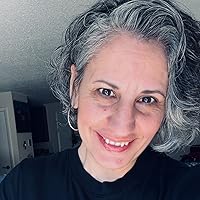
Rebekah Mallory is an author, CODA (Child Of Deaf Adults), and INFJ.
She has written and published two memoirs, winning an Independent Publisher Book Award, a.k.a the IPPY, for Best Memoir Series of 2023. She has lived experience with high-control religion while being raised in a unique subculture.
As a result, she has attracted voices hailing from a distant realm. They belong to the hushed and oppressed, demanding their stories be told.
Together, they guide each other through the muck and mayhem of all that makes them human, stumbling upon incredible experiences where (sometimes) extraterrestrials and cryptids reign. Why this occurs, Rebekah may never know. She's just along for the ride.
There's room for you once you sign up for her newsletter.
This memoir absolutely hit it out of the park. It’s not an easy-breezy read, but I finished it in three days nonetheless because I. Could. Not. Stop. Reading. I was totally immersed in the writer’s world and everything that had happened to her during her life journey.
Train Gone starts with our protagonist, Rebekah, being born as a CODA (Child of Deaf Adults) in a small town in New Hampshire to parents who are firmly entrenched in the Jehovah’s Witnesses organization. Before reading this book, I had only the barest of knowledge about the Jehovah’s Witnesses, but I am interested in all things pertaining to restrictive religions and cults, so this was super interesting for me. What made everything even more intriguing was how the author shows that what her parents went through as Deaf people who were raised in a hearing society (being forced into a residential school for Deaf children at a young age and programmed to suppress their natural preference to communicate in ASL) primed them to be perfect targets for recruitment by the Jehovah’s Witnesses.
Rebekah also shows how the oppressive religious programming she was raised with inside the organization groomed her to suppress her own needs, desires, independent voice, and critical thinking skills. As someone who consumes a lot of information that’s come out in the past decade or so about abusive cults, I can tell you that you don’t see a whole ton of stuff out there that specifically addresses the misogyny that runs rampant through these organizations and the aftermath of the psychological damage for the women who were abused within them. Train Gone delves deep into this, and as a woman who has also had a lot of trouble speaking up for herself and protecting herself from abusive, manipulative men (and people in general), I really appreciated that.
Train Gone is not an easy read, let me repeat that. It is intense and provoking and will have you thinking about it the entire time you’re reading it and for days afterward. It’s that kind of book. It will challenge you and open you up and push you to look at your own darkness, and your own capacity for healing and forgiveness. And, if you’re into cults—Scientology and Leah Remini’s series on Netflix, Jim Jones, Charles Manson, etc.—you will absolutely love it.
I highly recommend this book to anyone who loves memoir, memoirs by women, religious studies, sociology, psychology, personal growth, personal development, and just a plain good story.
This book is without question one of the best memoirs I've ever read for a number of reasons aside from the author's obvious writing talent. First, Rebekah Mallory tackles a topic that is tough and uncomfortable for just about everyone out there: the intersection of cults and faith. Whatever your religious bent (or lack thereof), the intricate inner workings of the Jehovah's Witness community will not only open your eyes to their particular flavor of mind-control, but leaves you unable to ignore the similarities to other organized religions. Regardless of what you believe, you should believe it by choice and Rebekah's story illuminates how we can be manipulated into doing what others want us to while believing we're making the choices for ourselves.
The author also holds nothing back. Nothing. But she does this in a way not often seen. I've read memoirs where it's obvious the author is keeping some things behind the curtain, maybe due to privacy concerns for others or out of shame, but you can feel that lack, that thinness to the rounding out of the person when they do so. I've also read memoirs where the authors bare all, but it's done in an aggressive and abrasive "in your face" kind of manner, where it's apparent they haven't worked through what they're sharing and feel the need to throw on a coat of armor and declare war on the reader with their revelations. This book, however, is different. She shares everything; she doesn't try to sugarcoat or skim over the painful and ugly parts, but she's also not flinging it in your face in the most offensive way she can. She's honest - brutally honest - and yet gentle at the same time, showcasing a beautiful humanity as we follow along with her on her journey of self-discovery.
Which leads me to the third quality of this book that sets it apart from so many others; she doesn't shy away from how hard that journey is. She doesn't dwell on the fact that she's in a better place now after spending time on how bad things were at one point, skimming over the messy, twisty, nearly soul-crushing path between those two points. As a survivor of childhood trauma, I know how important it is to see that middle bit, to know how difficult it is even once you know what you have to do, to see people have so many setbacks along the way. I think it's easier for folks to sweep the light past that part of their stories pretty quickly because it's hard not to feel embarrassed when we screw up. But everyone does screw up and pretending otherwise is dishonest in its own way; in this manner, Rebekah's book is as honest as it gets.
Lastly, her book is relatable. I have never been a Jehovah's Witness and I've never known someone personally who relied on sign language to communicate, but I related to her story anyway because it is the story of a girl and a young woman who has not been provided with the tools she needs to love herself or to make sound decisions. It is the story of someone who was abused without realizing it while it was happening, someone who is drawn to the humanity in people no matter their flaws - seeing them as whole people and not just a positive or negative subset of their personality. It is the story of someone who was unimaginably brave and strong in the way strength and bravery are in real life - messy, painful, full of self-doubt and regret, but driven forward by gritty determination.
Her story, her willingness to be vulnerable and share all of it with the world, her insistence on being true to herself, is truly awe-inspiring and can teach something to every one of us.
Wow. Wow. Wow. Where to even begin? I suppose wiping the tears out of my eyes and closing up the last few pages of this book, I saw myself in it, my own story, my own life. Rebekah’s story is the story of thousands of Jehovah’s Witnesses who have been born in or raised in this high control religion, not learning which choices are theirs to make and suffering the consequences of being fearmongered our whole lives.
The writing is phenomenal. Rebekah takes us through her therapy sessions, and we watch things get much worse before they get better, as they usually do in therapy. The healing process is hard, it’s work, it’s shame, it’s anger, it’s joy and pride, but it’s all so so so worth it in the end, much like it was for Rebekah. Her description of growing up being looked at as the weaker vessel and the good for nothing slave... words I heard too many times in a Kingdom Hall once upon a time, shapes the entirety of the book. It also reminded me very much of “Educated” a memoir by Tara Westover, coming from an extremist Mormon group and being treated very similarly to Rebekah. Overall, absolutely amazing story, amazing writing, amazing woman!
There’s a revolution in the literary world right now, full of people willing to share their most human pieces in order to help others through hard times. Rebekah Mallory is one of those necessary and valuable people. In this book, she bravely shows her battle through the most raw, vulnerable, and painful events in her childhood and young adult life, making her story and message of perseverance relatable to many different people and backgrounds. From the many ex-JWs that will pick up this book and nod their heads at Rebekah’s struggle through (and ultimately out of) the Truth, to the CODAs (Children of Deaf Adults) who will relate to having to speak, reason, and interpret for their parents—or anyone who has ever dealt with repression of self, stacks of misplaced guilt, or the unfathomable tooth-and-nail effort of breaking free of society’s shackles, there is something here for everyone. Her unique voice and undeniable sense of writing style make this book an experience worth having. I highly recommend it, especially to intuitives and empaths (INFJs especially, since Rebekah is one of our alien kind) who will appreciate the honesty and openness. Rebekah is, undeniably, an INFJ warrior in a fight for her soul, and her book illustrates that beautifully. **Note: I had early access to this book as an editor of a previous draft, but have included an honest review.**
I haven’t finished the book. I am Deaf and I feel like I finished the book after first few chapters. What I need to do as a reader is one thing at a time. Resonating with Mallory’s words, not worldly but signly (actually the “ly” isn’t what I am pursuing) I can’t thank anyone who couldn’t be blunt. Prevarication was the word of the day today and I wonder how Bek would fingerspell my voice once she hears my tongue attempting to make a roll out of that word for one more visual word. Memoir is about one’s journey and you’ve been reading memoirs in words while there are memoirs in sign language. As a Deaf child of hearing family opposing CODA, true to be told is out of the question that they also have incredible tales to sign (instead of tell). Brilliant memoir. Gotta love life to come with a book. One star because I haven’t finished the book. If you are thinking about who can write when her mom or dad couldn’t, there are Deaf writers out there too. I love this book already, somehow. There are deaf therapists like Joel but still raw yet potential. Instead of knocking on anyone’s door, write a damn book! For the hell of it, ay-kah-geesha is what we needed.
Full disclosure: Rebekah and I were childhood friends and neighbors. Seeing on Facebook her success with publishing, I was anxious to support her achievement. And was excited to read a book where I knew the landscape so well: the train tracks, her home, our hometown. I finished, realizing I knew SO LITTLE. I'm ashamed I didn't ask more questions, check on her more often, recognize her abuses. That being said: This is the kind of book you'll genuinely want to read in one sitting, unable to put it down. Heart-breaking, but also funny & poignant. You'll experience a whirlwind of emotions. It helped me recognize times when I was in a culture that wasn't completely my own, but did so to appease people I loved. And what the after -effects have been. Having a 14 year old daughter of my own now, I feel better equipped after reading Train Gone; how to have some difficult conversations with her. Not only about taking care of and being true to herself, but how to better check in on friends and people she cares about. An important lesson in these times of unprecedented loneliness and separation.
Train Gone is a book that you just can't put down, this true story of a girl growing up as a Jehovah's Witness was thought provoking and extremely raw. Told mostly through therapy sessions, Rebekah described how those she loved had abused her, not just mentally but physically too in some cases. This book is a unique look into what it's like to be a JW and how this cult behaviour is so damaging for those who are trapped inside. I am looking forward to Rebekah's next (hopefully happier) chapter.
TRAIN GONE is a masterful work. Rebekah Mallory reaches out and grabs the reader from the very beginning with vivid imagery, a gut-wrenching story, and plenty of vulnerability. Rebekah's strength and intuition shine brightly as a false religion seeks to enslave and abuse her. Escaping such a cult proves trickier than navigating a winding forest road full of pot holes. A true story of survival, I felt so many emotions while reading this book. Well done!
Being an avid reader & an ASL interpreter, I couldn't wait to delve into this memoir and I was not disappointed. Rarely does an autobiographer become so vulnerable and impeccably honest with their reader. At times uncomfortable (feeling like a voyeur) but relatable, I have come to know the author and through her exquisite writing, she takes me along on the journey of finding herself.