

What do you think?

The Boys (Trade Paperbacks)
The Boys Dear Becky
Twelve years after the events of The Boys, Hughie finds himself back home in Scotland where he intends to finally marry Annie in the company of friends and family. But the sudden appearance of a peculiar document sends our hero into a tailspin and threatens to bring the events of his nightmarish past crashing down on him in the worst possible way. There was one story about The Boys that Hughie never knew. Now, whether he likes it or not, he's going to.
Introduction by Eric Kripke Executive Producer of The Boys Prime series, also known as the creator of the fantasy drama series Supernatural(2005-2020) and the NBC science fiction series Timeless(2016-2018).
Introduction by Eric Kripke Executive Producer of The Boys Prime series, also known as the creator of the fantasy drama series Supernatural(2005-2020) and the NBC science fiction series Timeless(2016-2018).
200 pages, Paperback
First published March 16, 2021
About the author
Garth Ennis
2,731 books3,265 followersEnnis began his comic-writing career in 1989 with the series Troubled Souls. Appearing in the short-lived but critically-acclaimed British anthology Crisis and illustrated by McCrea, it told the story of a young, apolitical Protestant man caught up by fate in the violence of the Irish 'Troubles'. It spawned a sequel, For a Few Troubles More, a broad Belfast-based comedy featuring two supporting characters from Troubled Souls, Dougie and Ivor, who would later get their own American comics series, Dicks, from Caliber in 1997, and several follow-ups from Avatar.
Another series for Crisis was True Faith, a religious satire inspired by his schooldays, this time drawn by Warren Pleece. Ennis shortly after began to write for Crisis' parent publication, 2000 AD. He quickly graduated on to the title's flagship character, Judge Dredd, taking over from original creator John Wagner for a period of several years.
Ennis' first work on an American comic came in 1991 when he took over DC Comics's horror title Hellblazer, which he wrote until 1994, and for which he currently holds the title for most issues written. Steve Dillon became the regular artist during the second half of Ennis's run.
Ennis' landmark work to date is the 66-issue epic Preacher, which he co-created with artist Steve Dillon. Running from 1995 to 2000, it was a tale of a preacher with supernatural powers, searching (literally) for God who has abandoned his creation.
While Preacher was running, Ennis began a series set in the DC universe called Hitman. Despite being lower profile than Preacher, Hitman ran for 60 issues (plus specials) from 1996 to 2001, veering wildly from violent action to humour to an examination of male friendship under fire.
Other comic projects Ennis wrote during this time period include Goddess, Bloody Mary, Unknown Soldier, and Pride & Joy, all for DC/Vertigo, as well as origin stories for The Darkness for Image Comics and Shadowman for Valiant Comics.
After the end of Hitman, Ennis was lured to Marvel Comics with the promise from Editor-in-Chief Joe Quesada that he could write The Punisher as long as he cared to. Instead of largely comical tone of these issues, he decided to make a much more serious series, re-launched under Marvel's MAX imprint.
In 2001 he briefly returned to UK comics to write the epic Helter Skelter for Judge Dredd.
Other comics Ennis has written include War Story (with various artists) for DC; The Pro for Image Comics; The Authority for Wildstorm; Just a Pilgrim for Black Bull Press, and 303, Chronicles of Wormwood (a six issue mini-series about the Antichrist), and a western comic book, Streets of Glory for Avatar Press.
In 2008 Ennis ended his five-year run on Punisher MAX to debut a new Marvel title, War Is Hell: The First Flight of the Phantom Eagle.
In June 2008, at Wizard World, Philadelphia, Ennis announced several new projects, including a metaseries of war comics called Battlefields from Dynamite made up of mini-series including Night Witches, Dear Billy and Tankies, another Chronicles of Wormwood mini-series and Crossed both at Avatar, a six-issue miniseries about Butcher (from The Boys) and a Punisher project reuniting him with artist Steve Dillon (subsequently specified to be a weekly mini-series entitled Punisher: War Zone, to be released concurrently with the film of the same name).
Taken from: http://en.wikipedia.org/wiki/Garth_Ennis
Another series for Crisis was True Faith, a religious satire inspired by his schooldays, this time drawn by Warren Pleece. Ennis shortly after began to write for Crisis' parent publication, 2000 AD. He quickly graduated on to the title's flagship character, Judge Dredd, taking over from original creator John Wagner for a period of several years.
Ennis' first work on an American comic came in 1991 when he took over DC Comics's horror title Hellblazer, which he wrote until 1994, and for which he currently holds the title for most issues written. Steve Dillon became the regular artist during the second half of Ennis's run.
Ennis' landmark work to date is the 66-issue epic Preacher, which he co-created with artist Steve Dillon. Running from 1995 to 2000, it was a tale of a preacher with supernatural powers, searching (literally) for God who has abandoned his creation.
While Preacher was running, Ennis began a series set in the DC universe called Hitman. Despite being lower profile than Preacher, Hitman ran for 60 issues (plus specials) from 1996 to 2001, veering wildly from violent action to humour to an examination of male friendship under fire.
Other comic projects Ennis wrote during this time period include Goddess, Bloody Mary, Unknown Soldier, and Pride & Joy, all for DC/Vertigo, as well as origin stories for The Darkness for Image Comics and Shadowman for Valiant Comics.
After the end of Hitman, Ennis was lured to Marvel Comics with the promise from Editor-in-Chief Joe Quesada that he could write The Punisher as long as he cared to. Instead of largely comical tone of these issues, he decided to make a much more serious series, re-launched under Marvel's MAX imprint.
In 2001 he briefly returned to UK comics to write the epic Helter Skelter for Judge Dredd.
Other comics Ennis has written include War Story (with various artists) for DC; The Pro for Image Comics; The Authority for Wildstorm; Just a Pilgrim for Black Bull Press, and 303, Chronicles of Wormwood (a six issue mini-series about the Antichrist), and a western comic book, Streets of Glory for Avatar Press.
In 2008 Ennis ended his five-year run on Punisher MAX to debut a new Marvel title, War Is Hell: The First Flight of the Phantom Eagle.
In June 2008, at Wizard World, Philadelphia, Ennis announced several new projects, including a metaseries of war comics called Battlefields from Dynamite made up of mini-series including Night Witches, Dear Billy and Tankies, another Chronicles of Wormwood mini-series and Crossed both at Avatar, a six-issue miniseries about Butcher (from The Boys) and a Punisher project reuniting him with artist Steve Dillon (subsequently specified to be a weekly mini-series entitled Punisher: War Zone, to be released concurrently with the film of the same name).
Taken from: http://en.wikipedia.org/wiki/Garth_Ennis
Ratings & Reviews
Friends & Following
Create a free account to discover what your friends think of this book!
Community Reviews
Displaying 1 - 30 of 127 reviews

February 20, 2022
Eleven years after the last volume of The Boys was published the creative team are back with this '12 years later' catch up with The Boys' universe. Hughie is sent what appears to be Butcher's musing in his own words written in what was once his murdered wife Becky's diary. The volume covers the early pre-Hughie The Boy's encounter with Vought American and their then primary competitor Mediacorp who were looking to launch their own brand of super powered beings. What at first feels like yet another apologist, 'he had a tough life' and 'he did it for his murdered wife' excuse for a white male murderer becomes something a bit more nuanced, that does try to a degree to go against the cliché of a sympathetic misunderstood white male that does really nasty things... which is not that surprising from Garth Ennis, who although he does romanticise toxic white male vigilantes, he rarely portrays them as 'good guys' underneath, or even with having good intentions.

(amended Dear Becky 'review' imagery above from major.spoilers.com)
I can't think of any example of a returning creative team adding additional material to their work was a good idea, and even though I always dreamed of more of The Boys, the TV adaptation truly fed that need and this new volume didn't. Without the ongoing conspiracies and slowly revealed pasts that populated the original series this volume was severely lacking. It is an interesting stand alone piece of work, one that could have been much more interesting if it focussed on anyone else bar Butcher, in my opinion. 7 out of 12 (easily my lowest rating for a volume in this series) ...also annoyingly I had to go and buy this volume to make sure my collection was complete. I'd be hard-pressed not to believe that this project was green-lit to make some capital from the TV show.

2022 read
(amended Dear Becky 'review' imagery above from major.spoilers.com)
I can't think of any example of a returning creative team adding additional material to their work was a good idea, and even though I always dreamed of more of The Boys, the TV adaptation truly fed that need and this new volume didn't. Without the ongoing conspiracies and slowly revealed pasts that populated the original series this volume was severely lacking. It is an interesting stand alone piece of work, one that could have been much more interesting if it focussed on anyone else bar Butcher, in my opinion. 7 out of 12 (easily my lowest rating for a volume in this series) ...also annoyingly I had to go and buy this volume to make sure my collection was complete. I'd be hard-pressed not to believe that this project was green-lit to make some capital from the TV show.
2022 read

March 21, 2021
Set ten years after the events of the last book, Hughie and Annie are living a happy, quiet life in Scotland - a life suddenly disrupted by the delivery of Butcher’s notebook. A notebook full of letters to his long-dead wife, Becky - but what secrets does it contain, and who sent it?
Dear Becky is an unnecessary and really, really boring coda to The Boys. Appearing this late in the (name of the) game, I can only speculate that this was published to capitalise on the success of the more recent TV show because this book adds nothing to the series that ended in 2012.
Maybe Garth Ennis felt that he needed to give more substance to Butcher’s wife Becky to better explain his actions in the story but that should’ve really been done before and during the main story - not nearly ten years after! And I think Ennis did enough in the main series anyway to explain Butcher’s motivations. We didn’t need to read eight dreary issues of him saying over and over how much he loved his wife - we got that from the little bits and pieces Ennis dropped throughout the series, which was enough, and better, because it allowed readers to fill in the blanks themselves.
The flashback “B” storyline was some convoluted rubbish about how Vought are putting together a new team of supes that secretly don’t have superpowers. It was so, so, sooooo dull to read - I couldn’t have cared less. It’s just an excuse to bring back the characters to smash some more supes once again. I suppose the “Shazam” bit was kinda funny though. Ennis also clearly hates Thor but then he hates most superheroes so eh.
Ennis still writes incredible comics - the last couple of his I’ve read, Punisher: Soviet and Sara, are two of the best comics I’ve read in recent years - but Dear Becky certainly isn’t one of them. The Boys has some gems but it’s a very uneven series with some utter crap mixed in like Highland Laddie and Herogasm. With all the Hughie/Scotland stuff, and the general low quality of the book, Dear Becky is basically Highland Laddie 2 and one of the worst books in the series. Definitely skippable and worth ending the series with just The Bloody Doors Off instead.
Dear Becky is an unnecessary and really, really boring coda to The Boys. Appearing this late in the (name of the) game, I can only speculate that this was published to capitalise on the success of the more recent TV show because this book adds nothing to the series that ended in 2012.
Maybe Garth Ennis felt that he needed to give more substance to Butcher’s wife Becky to better explain his actions in the story but that should’ve really been done before and during the main story - not nearly ten years after! And I think Ennis did enough in the main series anyway to explain Butcher’s motivations. We didn’t need to read eight dreary issues of him saying over and over how much he loved his wife - we got that from the little bits and pieces Ennis dropped throughout the series, which was enough, and better, because it allowed readers to fill in the blanks themselves.
The flashback “B” storyline was some convoluted rubbish about how Vought are putting together a new team of supes that secretly don’t have superpowers. It was so, so, sooooo dull to read - I couldn’t have cared less. It’s just an excuse to bring back the characters to smash some more supes once again. I suppose the “Shazam” bit was kinda funny though. Ennis also clearly hates Thor but then he hates most superheroes so eh.
Ennis still writes incredible comics - the last couple of his I’ve read, Punisher: Soviet and Sara, are two of the best comics I’ve read in recent years - but Dear Becky certainly isn’t one of them. The Boys has some gems but it’s a very uneven series with some utter crap mixed in like Highland Laddie and Herogasm. With all the Hughie/Scotland stuff, and the general low quality of the book, Dear Becky is basically Highland Laddie 2 and one of the worst books in the series. Definitely skippable and worth ending the series with just The Bloody Doors Off instead.

April 9, 2025
Not bad. Not good.
I enjoyed going back and dipping my toes into the world but this honestly doesn't do much for the original story.
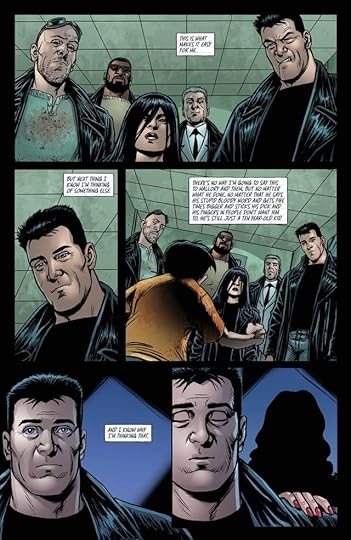
The skinny gist is that some mysterious person sends Hughie Butcher's diary. Well, Becky's old diary that Butcher decides to write down all of his feelings in. So there's some kind of exposition as he shares his motivations with his dead wife. But (for me, at least) there didn't seem to be much of anything new in here.
And as far as the nefarious plan that was brewing? The reason behind someone sending him the diary?
Pfft.
Whatever. <--least interesting thing in the whole story.
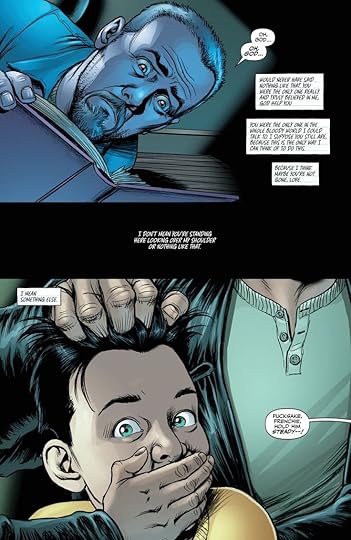
And the parts with Hugie and Annie were just...unnecessary. I didn't want to know that Hughie was still dragging his feet about getting married and that Annie was still really understanding about it.
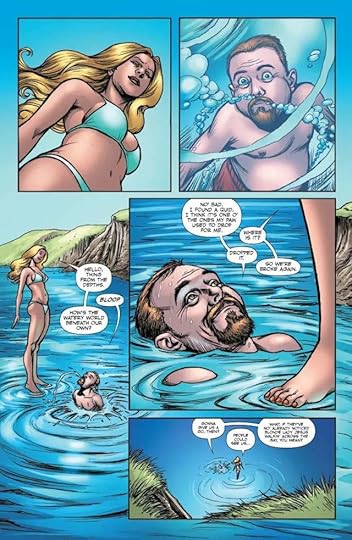
If you're a fan of The Boys, you'll probably want to read this. I did, and no regrets. I don't think it's a must-read, though. Filler and padding.
For completionists.
I enjoyed going back and dipping my toes into the world but this honestly doesn't do much for the original story.
The skinny gist is that some mysterious person sends Hughie Butcher's diary. Well, Becky's old diary that Butcher decides to write down all of his feelings in. So there's some kind of exposition as he shares his motivations with his dead wife. But (for me, at least) there didn't seem to be much of anything new in here.
And as far as the nefarious plan that was brewing? The reason behind someone sending him the diary?
Pfft.
Whatever. <--least interesting thing in the whole story.
And the parts with Hugie and Annie were just...unnecessary. I didn't want to know that Hughie was still dragging his feet about getting married and that Annie was still really understanding about it.
If you're a fan of The Boys, you'll probably want to read this. I did, and no regrets. I don't think it's a must-read, though. Filler and padding.
For completionists.

March 4, 2022
I love the original run of The Boys, it’s probably my favorite series Ennis did (yes I like it more than Preacher and yes I’ll do a reread and review sometime down the line), and as most people who have seen my reviews before know, I am a HUGE Garth Ennis fan. I just jive with the dudes work, but even as much of a hardcore Ennis fanboy as I am, this wasn’t it at all. Clearly a cash grab to capitalize off the show, Ennis gives us an epilogue of sorts to the series, which doesn’t work since the final issue already worked as the perfect epilogue.
While it is undeniably cool seeing The Boys all working together in the flashback portions, this book never justified it’s existence. The ending feels forced and lazy, meaning I’ll probabaly just skip this on my reread of the series when I get around to it. As I said before, I love pretty much everything Ennis puts out, and I will most definitely read anything he writes, but this was one of his works that just doesn’t work on any level for me. Fun cameos and some cool moments aside, this is a dud and I can’t recommend it to anyone, especially those who are more critical of Ennis’ work.
Check out “I’m Your Pusher” from the animated The Boys: Diabolical show that just came out if you want to see more adventures with The Boys from the comic books. It honestly feels like a cut segment from the comic and Simon Pegg voices Hughie. It also only runs for 12 minutes, there are some cool cameos from characters from the comics, and it has a darkly hilarious ending that’s very Ennis-Esque. I’d rather see an animated adapation of the comics, since it’s different enough from the show, than ever see this world continued in comic form. It is fine where it was left off.
While it is undeniably cool seeing The Boys all working together in the flashback portions, this book never justified it’s existence. The ending feels forced and lazy, meaning I’ll probabaly just skip this on my reread of the series when I get around to it. As I said before, I love pretty much everything Ennis puts out, and I will most definitely read anything he writes, but this was one of his works that just doesn’t work on any level for me. Fun cameos and some cool moments aside, this is a dud and I can’t recommend it to anyone, especially those who are more critical of Ennis’ work.
Check out “I’m Your Pusher” from the animated The Boys: Diabolical show that just came out if you want to see more adventures with The Boys from the comic books. It honestly feels like a cut segment from the comic and Simon Pegg voices Hughie. It also only runs for 12 minutes, there are some cool cameos from characters from the comics, and it has a darkly hilarious ending that’s very Ennis-Esque. I’d rather see an animated adapation of the comics, since it’s different enough from the show, than ever see this world continued in comic form. It is fine where it was left off.

April 12, 2021
I thought it was cool Garth Ennis was doing a sequel to The Boys . . . until I read it and discovered it was an unnecessary backstory intent on exploring the motivations of Billy Butcher in the original series through a mysterious diary about his one true love. Ummm, sure.
It's padded out with some wheel-spinning and ultra-violence regarding a new group of corporate superheroes, going over territory already well covered in the original books.
It's a visit with old friends where you discover how much you have drifted apart or they reveal they are now distributors for some multi-level marketing scheme.
It's padded out with some wheel-spinning and ultra-violence regarding a new group of corporate superheroes, going over territory already well covered in the original books.
It's a visit with old friends where you discover how much you have drifted apart or they reveal they are now distributors for some multi-level marketing scheme.

January 8, 2024
A somewhat satisfying return to the world of the Boys, after the series' end a decade ago. You get to see more supes get what's coming to them. I read this in hopes of seeing more of that, so this is a win for me.

May 29, 2024
It’s giving “nothing.”

March 18, 2021
Here was the main problem with "Dear Becky": I just didn't care.
I mean, let's be honest, The Boys was never high literature. But, it tended to keep my attention except when it grossed me out. This didn't. Hughie and Annie are just treading water. Their story doesn't go much of anywhere until the plot says it should. The flashbacks just aren't that interesting. And then we get a finale with a character from the original series that hasn't showed up anywhere else in this new volume (and thus hasn't appeared in ten years), and so it's meaningless.
There's some big effort to give the Butcher some pathos or something, but it doesn't work.
I mean, let's be honest, The Boys was never high literature. But, it tended to keep my attention except when it grossed me out. This didn't. Hughie and Annie are just treading water. Their story doesn't go much of anywhere until the plot says it should. The flashbacks just aren't that interesting. And then we get a finale with a character from the original series that hasn't showed up anywhere else in this new volume (and thus hasn't appeared in ten years), and so it's meaningless.
There's some big effort to give the Butcher some pathos or something, but it doesn't work.

March 22, 2021
Damn my completionist hide.
-----------------------
So Dear Becky really doesn't need to exist. It's just a small collection of The Boys' hijinks tormenting supes and undermining Vought during their heyday under Colonel Mallory. And it's wrapped in a brief, unsurprising happy-ending epilogue about Hughie and Annie twelve years down the line.
It is, of course, stunningly violent: Wouldn't be The Boys otherwise.
Little of substance is added. We already knew in detail how Butcher was motivated by what a superpowered individual did to his wife. We knew how The Boys operate. We knew that Vought-American was utterly soulless in its pursuit of a strong quarterly financial report.
Which doesn't mean this extraneous volume is entirely unwelcome. I enjoyed the little window into the past, the revisiting of some great characters in their fun-awful prime. If it's a cash grab, it's not one that bothers me.
The only bits that are really new are Ennis using his platform to take potshots at Trump, Bojo, and some aspects of woke culture.
"If you can fit it in a Tweet, there are people who'll believe it."
"No fuckin' way."
"Which planet have you been on for the last four fucking years?"
-----------------------
So Dear Becky really doesn't need to exist. It's just a small collection of The Boys' hijinks tormenting supes and undermining Vought during their heyday under Colonel Mallory. And it's wrapped in a brief, unsurprising happy-ending epilogue about Hughie and Annie twelve years down the line.
It is, of course, stunningly violent: Wouldn't be The Boys otherwise.
Little of substance is added. We already knew in detail how Butcher was motivated by what a superpowered individual did to his wife. We knew how The Boys operate. We knew that Vought-American was utterly soulless in its pursuit of a strong quarterly financial report.
Which doesn't mean this extraneous volume is entirely unwelcome. I enjoyed the little window into the past, the revisiting of some great characters in their fun-awful prime. If it's a cash grab, it's not one that bothers me.
The only bits that are really new are Ennis using his platform to take potshots at Trump, Bojo, and some aspects of woke culture.
"If you can fit it in a Tweet, there are people who'll believe it."
"No fuckin' way."
"Which planet have you been on for the last four fucking years?"

February 2, 2022
Well, this was... ok!
I want to say it was mediocre at best, and half the time the flashback story was boring as hell, meaningless for The Boys and it basically didn't need to happen.
I liked the stuff with Hughie and all, but talking about what was Billy like a thousand times is getting really old really fast.
Oh well! It was nice I guess, to read about the Boys once again, especially since I just finished the second season too, but it wasn't necessary for this mini series to happen after so many years.
I want to say it was mediocre at best, and half the time the flashback story was boring as hell, meaningless for The Boys and it basically didn't need to happen.
I liked the stuff with Hughie and all, but talking about what was Billy like a thousand times is getting really old really fast.
Oh well! It was nice I guess, to read about the Boys once again, especially since I just finished the second season too, but it wasn't necessary for this mini series to happen after so many years.

October 27, 2021
Hughie, who now lives in Scotland with Annie, and hasn't dealt with or addressed his time with the Boys for about 10 years, suddenly receives a package that contains Butcher's diary, which is basically just a series of letters written to his late wife, Becky. This causes Hughie to spiral back into the world of the Boys, and allows us, the readers, to delve back into the days of the Boys when Hughie wasn't even there yet.
I feel like Garth Ennis wrote this as a love letter of sorts to the series. Because not only are the loose ends from the series... not tied up cause they were already... but we get to check in on every plot thread and also get the origin of Butcher as a villain. By way of this diary, we see him cross that line from a do-gooder with a serious chip on his shoulder, to full blown supervillain. And the way he does it is by eliminating his conscious, aka Becky. Because Becky was the dam that held back the darkness in him. And without it, the darkness comes rushing in. This story is really the story of when Butcher gave in to his internal evil.
And as great as it was to see this origin, and to see the old gang back at it and interacting with each other, and even seeing Hughie's life as it is now, I did find the volume to be a bit.... unnecessary. Don't get me wrong, I liked it a lot and it was interesting to see all these plot points, but we could have done without this chapter and been totally cool with it. Still, it was great to see Hughie's ultimate happy ending, and the final chapter close on the Boys.
An interesting albeit a bit inessential chapter of the Boys, I would still recommend this for fans of the series.
I feel like Garth Ennis wrote this as a love letter of sorts to the series. Because not only are the loose ends from the series... not tied up cause they were already... but we get to check in on every plot thread and also get the origin of Butcher as a villain. By way of this diary, we see him cross that line from a do-gooder with a serious chip on his shoulder, to full blown supervillain. And the way he does it is by eliminating his conscious, aka Becky. Because Becky was the dam that held back the darkness in him. And without it, the darkness comes rushing in. This story is really the story of when Butcher gave in to his internal evil.
And as great as it was to see this origin, and to see the old gang back at it and interacting with each other, and even seeing Hughie's life as it is now, I did find the volume to be a bit.... unnecessary. Don't get me wrong, I liked it a lot and it was interesting to see all these plot points, but we could have done without this chapter and been totally cool with it. Still, it was great to see Hughie's ultimate happy ending, and the final chapter close on the Boys.
An interesting albeit a bit inessential chapter of the Boys, I would still recommend this for fans of the series.
October 6, 2022
Like, I was happy to see how Hughie and Annie were doing and see what the world was like post the finale... But this felt uneeded? It really wasn't necessary.
Only giving it a 2 star due to my love for Hughie, Annie and their relationship.
Only giving it a 2 star due to my love for Hughie, Annie and their relationship.

April 9, 2021
It was nice catching up with Hughie and Annie and Bobbi, but the rest of this overlong slog (EIGHT ISSUES!) was completely pointless and unnecessary.

August 15, 2024
If we're honest, there's no valid reason for the existence of this sequel.

December 19, 2024
Il mio è un voto complessivo per l’opera “The Boys” di Garth Ennis - un fumetto coraggioso che è stato in grado di scuotere la nona arte e apportare elementi innovativi in un momento storico in cui il fumetto americano supereroistico era fermo sulle sue classiche e stantie idee.
Lo stile di Ennis, qui volutamente volgare ed esagerato (e in alcuni tratti eccessivamente parodistico) non può, per forza di cose essere apprezzato da tutti ma, sia che lo si apprezzi e sia che lo si disprezzi, lascia comunque il segno.
La storia riesce ad alternare momenti di azione e violenza ad altri toccanti e profondi, essendo però sempre significativo nel messaggio che voleva comunicare: in un mondo di individui dotati di super poteri, chi ci dice che la maggior parte di loro sarebbero brave persone? Ma sopratutto, chi ci dice che il loro potere non venga veicolato e manipolato da chi detiene il potere economico e politico?
Lo stile di Ennis, qui volutamente volgare ed esagerato (e in alcuni tratti eccessivamente parodistico) non può, per forza di cose essere apprezzato da tutti ma, sia che lo si apprezzi e sia che lo si disprezzi, lascia comunque il segno.
La storia riesce ad alternare momenti di azione e violenza ad altri toccanti e profondi, essendo però sempre significativo nel messaggio che voleva comunicare: in un mondo di individui dotati di super poteri, chi ci dice che la maggior parte di loro sarebbero brave persone? Ma sopratutto, chi ci dice che il loro potere non venga veicolato e manipolato da chi detiene il potere economico e politico?

January 10, 2022
Let’s hear it for Russ Braun. He’s a really underrated artist. His facial expressions/reactions are among the best in comics, perfectly capturing the emotion required for any given scene. I love his art.
As for the story… I suspect Ennis wrote this to cash in on the popularity of the TV show (which I haven’t watched). I don’t blame him; he’s far from the first author to do this, and I’m happy for him that The Boys has become a hit. But compared to other comics where he’s returned to characters he’s written before, stories you can tell he was just itching to write like The Platoon, My War Gone By, and Out of the Blue, this feels forced and unnecessary. Worse, it’s boring. Butcher gains some depth, and it’s cool to see these characters again, but the flashback plot is entirely forgettable while Hughie and Annie tread water. I didn’t care about the ending reveal. Interestingly, Ennis sets the story in 2020 and references real-life events like the pandemic. Some of his commentary is good but some falls flat.
Even though I like Braun’s art and Ennis’ dialogue is typically sharp, Dear Becky gets a thumbs down from me.
As for the story… I suspect Ennis wrote this to cash in on the popularity of the TV show (which I haven’t watched). I don’t blame him; he’s far from the first author to do this, and I’m happy for him that The Boys has become a hit. But compared to other comics where he’s returned to characters he’s written before, stories you can tell he was just itching to write like The Platoon, My War Gone By, and Out of the Blue, this feels forced and unnecessary. Worse, it’s boring. Butcher gains some depth, and it’s cool to see these characters again, but the flashback plot is entirely forgettable while Hughie and Annie tread water. I didn’t care about the ending reveal. Interestingly, Ennis sets the story in 2020 and references real-life events like the pandemic. Some of his commentary is good but some falls flat.
Even though I like Braun’s art and Ennis’ dialogue is typically sharp, Dear Becky gets a thumbs down from me.

January 21, 2021
It's easier to sneak reading digital floppies in at work than a novel, in part because I tend to get more involved with a novel and end up not paying as much attention as I should at work.
Being aware of how popular the television show is, as was this series when it first ran, I know that I am reading this out of order. However, living in the U.S. and the events of the last three weeks make the final issue more poignant.
Perhaps, this should be promoted more as a coda to the original series, which is in the much too long TBR list.
It shows/states politicians are idiots who only care about themselves, PTSD damages people for years, and no one should have too much power.
Along with Bill Willingham's Pantheon these are the two series which say, and within their context very good reason, why super heroes are bad for society.
Being aware of how popular the television show is, as was this series when it first ran, I know that I am reading this out of order. However, living in the U.S. and the events of the last three weeks make the final issue more poignant.
Perhaps, this should be promoted more as a coda to the original series, which is in the much too long TBR list.
It shows/states politicians are idiots who only care about themselves, PTSD damages people for years, and no one should have too much power.
Along with Bill Willingham's Pantheon these are the two series which say, and within their context very good reason, why super heroes are bad for society.

July 6, 2024
I hope I'm not beginning a trend here in my readings. This is the second occasion within a month that I pick up a comics series by one of my favorite writers only to be disappointed. Just like I commented about LUCKY DEVIL by Cullen Bunn, I have the same opinion of THE BOYS: DEAR BECKY by Garth Ennis. Both writers are personal favorites, but I would not recommend either of these as a starting point for readers new to both authors.
What redeemed this a little bit and helped it to earn a respectable rating from me is the expressive artwork by the under-rated Russ Braun, as well as some nifty covers by Darick Robertson. (I read this in the single monthly issues.)
Since the final story arc of THE BOYS was a more-than-appropriate-and-satisfactory ending to the series, we really didn't need a second ending here. Also, this is more of a flashback - although the scenes with Hughie occur in the present day. I'm guessing the popularity of the Amazon Prime series prompted a return visit. I don't blame Ennis for taking the payday.
Fans of THE BOYS should be prepared for the differences in this version so that their expectations aren't crushed:
1) The main focus here is on two characters, Wee Hughie and Billy Butcher, as Ennis takes a deep dive into their thoughts and how romance/love altered their personalities - perhaps permanently for Hughie but not as fixed for Butcher.
2) It's twelve years since the final battle, and the team is only viewed in some flashback scenes.
3) The scenes of lurid sex and bloody graphic violence (a trademark of the series) are infrequent. The best way I can describe this new series as compared to the original is . . . this is subdued (maybe on tranquilizers).
4) The story meanders and takes forever to get to the reveal about Butcher and the reason why Hughie became traumatized when reading Buther's diary in Issue #1 and further. Eight issues to get to this point? (Must have be a contractual obligation, lots of padding and repetitive scenes).
In conclusion, meh.
What redeemed this a little bit and helped it to earn a respectable rating from me is the expressive artwork by the under-rated Russ Braun, as well as some nifty covers by Darick Robertson. (I read this in the single monthly issues.)
Since the final story arc of THE BOYS was a more-than-appropriate-and-satisfactory ending to the series, we really didn't need a second ending here. Also, this is more of a flashback - although the scenes with Hughie occur in the present day. I'm guessing the popularity of the Amazon Prime series prompted a return visit. I don't blame Ennis for taking the payday.
Fans of THE BOYS should be prepared for the differences in this version so that their expectations aren't crushed:
1) The main focus here is on two characters, Wee Hughie and Billy Butcher, as Ennis takes a deep dive into their thoughts and how romance/love altered their personalities - perhaps permanently for Hughie but not as fixed for Butcher.
2) It's twelve years since the final battle, and the team is only viewed in some flashback scenes.
3) The scenes of lurid sex and bloody graphic violence (a trademark of the series) are infrequent. The best way I can describe this new series as compared to the original is . . . this is subdued (maybe on tranquilizers).
4) The story meanders and takes forever to get to the reveal about Butcher and the reason why Hughie became traumatized when reading Buther's diary in Issue #1 and further. Eight issues to get to this point? (Must have be a contractual obligation, lots of padding and repetitive scenes).
In conclusion, meh.

Read
February 10, 2021An epilogue to The Boys, framing a prequel which itself contains flashbacks to a still earlier time. Which is to say we follow Wee Hughie, years after the comic concluded, reading Butcher's journal, written as Butcher took control of the team and looking back at his lost chance to live a better life beforehand. Obviously its existence is a consequence of the success of the TV show, which I'm not watching, and as such it's hardly surprising if it feels fun but never quite necessary; obviously I can't read Garth Ennis' mind, and gods know I probably wouldn't want to even if I could, but reading this I definitely didn't feel the same sense of a story he was aching to tell that I get on his regular returns to the Punisher.
Possibly an odd point of comparison, here, but one reference point which came to mind as I was reading this was Frankie Boyle. Like him, Ennis used to just be gleefully offensive, going for the shocking laugh and assuming anyone who took offence probably deserved it; and then in latter years, with the cultural climate curdling such that the right to offend with comedy is now more of a right-wing touchstone, both of them have tried to negotiate a path where without turning doctrinaire or lily-livered, they're a little more focused in their targets. Where the comparison breaks down, alas, is that comics are a collaborative artform in a way stand-up isn't. Leading to some incredibly awkward scenes here, because one of Hughie's mates has transitioned. Now, the script is taking a sweary but nuanced line on that – essentially, you can take the piss out of your mates, but it'd best be built on a foundation of respect or you're a right cunt. The problem being, the artist doesn't seem to have got the memo, and is still playing it for a very dated attempt at laughs. Which is a real shame, not just because it makes those scenes jarring and nasty in themselves, but because a character who's been raised male and then left it behind could really have added another layer to Ennis' enduring fascination with the fucked-up-ness of masculinity. Which, in other respects, is threaded right through this: the lies men tell themselves more convincingly than their nearest and dearest, the way they use loss as an excuse. Elements of Dear Becky recall the way Ennis understood and undercut fridging when he tweaked Frank Castle's backstory in Born, and if anything work better this time out, precisely because Butcher is a dead bastard, not a character who still has to be kept viable as an ongoing protagonist.
Not that it's all an attempt to do The Boys But Serious, like when Ennis first returned to Punisher and stripped out the comic elements of his initial run. The violence still runs more grotesque than genuinely horrific, and the main superhuman antagonists in the flashbacks are a knowingly OTT superteam launched in the British tabloids, with members like Teen Temptress and Sex Vicar – which works on a surface WTF level, but also reveals some nicely placed further dimensions as the Boys investigate. And there are the moments of tenderness too, whether that be Hughie and Annie, despite all his bullshit, in the present – or checking in on the rest of the Boys in the past, the charm of seeing old friends again, most of all when we see the Female painting along with Bob Ross. When the resolution comes, the solution to the mystery element of the plot is far less satisfactory, feels much less urgent, than where Hughie and Annie end up. Which in itself could, I suppose, be taken as a way of emphasising what really matters in life. But now, let's hope that really is the end.
Possibly an odd point of comparison, here, but one reference point which came to mind as I was reading this was Frankie Boyle. Like him, Ennis used to just be gleefully offensive, going for the shocking laugh and assuming anyone who took offence probably deserved it; and then in latter years, with the cultural climate curdling such that the right to offend with comedy is now more of a right-wing touchstone, both of them have tried to negotiate a path where without turning doctrinaire or lily-livered, they're a little more focused in their targets. Where the comparison breaks down, alas, is that comics are a collaborative artform in a way stand-up isn't. Leading to some incredibly awkward scenes here, because one of Hughie's mates has transitioned. Now, the script is taking a sweary but nuanced line on that – essentially, you can take the piss out of your mates, but it'd best be built on a foundation of respect or you're a right cunt. The problem being, the artist doesn't seem to have got the memo, and is still playing it for a very dated attempt at laughs. Which is a real shame, not just because it makes those scenes jarring and nasty in themselves, but because a character who's been raised male and then left it behind could really have added another layer to Ennis' enduring fascination with the fucked-up-ness of masculinity. Which, in other respects, is threaded right through this: the lies men tell themselves more convincingly than their nearest and dearest, the way they use loss as an excuse. Elements of Dear Becky recall the way Ennis understood and undercut fridging when he tweaked Frank Castle's backstory in Born, and if anything work better this time out, precisely because Butcher is a dead bastard, not a character who still has to be kept viable as an ongoing protagonist.
Not that it's all an attempt to do The Boys But Serious, like when Ennis first returned to Punisher and stripped out the comic elements of his initial run. The violence still runs more grotesque than genuinely horrific, and the main superhuman antagonists in the flashbacks are a knowingly OTT superteam launched in the British tabloids, with members like Teen Temptress and Sex Vicar – which works on a surface WTF level, but also reveals some nicely placed further dimensions as the Boys investigate. And there are the moments of tenderness too, whether that be Hughie and Annie, despite all his bullshit, in the present – or checking in on the rest of the Boys in the past, the charm of seeing old friends again, most of all when we see the Female painting along with Bob Ross. When the resolution comes, the solution to the mystery element of the plot is far less satisfactory, feels much less urgent, than where Hughie and Annie end up. Which in itself could, I suppose, be taken as a way of emphasising what really matters in life. But now, let's hope that really is the end.
June 24, 2021
'The Boys' is my favourite superhero comic. It plays with tropes of the genre while exposing flaws. Garth Ennis uses it as a prism through which to see the world. In the course of the series, his plots discuss corporate greed, American intervention, and great moments of history. It's impossible to read 'The Boys' and not be changed by the experience.
Thus, when a friend recommended 'Dear Becky', an epilogue set twelve years after the series ended, I was sceptical. After all, the series ended on a high note. Would it be wise to return to a story that concludes so well? Apparently, it is. 'Dear Becky' is not just a welcome addition to the series, but a necessary coda that expands on the series' themes.
There are moments in the comic that are familiar. Fans of the original will find the dark humour and the ultraviolence that made 'The Boys' famous. ('Dear Becky' opens with a mission in a public toilet that ruins the image of a popular hero for good.) Of course, what makes 'Dear Becky' special is the treatment it gives two characters: Billy Butcher and his late wife.
Billy Butcher leads 'The Boys'. An abusive childhood and a stint in the Royal Marines destroyed his humanity. Frequently, he refers to his late wife Becky, killed before the series begins, who steered him away from criminality and self-destruction. In 'The Boys', we know something about her past, but little about her influence. 'Dear Becky' corrects this omission.
Hughie Campbell, the only survivor of Butcher's team, receives a parcel in the post that contains Butcher's diary, into which he pored his thoughts about his late wife, talking to her as though she would read it. This allows Hughie - and the reader - to explore the mind of Billy Butcher, the love of Becky, and the human cost of corporate malfeasance.
What makes the book so successful, beyond the humour and the gore, is Mr. Ennis himself. 'Dear Becky' reveals his sense of pathos and his love of ordinary people. Proof of his success comes in the final pages: readers will end 'Dear Becky' with the sense they've lost friends they've known for years. If that's not a mark of genius, I don't know what is.
Thus, when a friend recommended 'Dear Becky', an epilogue set twelve years after the series ended, I was sceptical. After all, the series ended on a high note. Would it be wise to return to a story that concludes so well? Apparently, it is. 'Dear Becky' is not just a welcome addition to the series, but a necessary coda that expands on the series' themes.
There are moments in the comic that are familiar. Fans of the original will find the dark humour and the ultraviolence that made 'The Boys' famous. ('Dear Becky' opens with a mission in a public toilet that ruins the image of a popular hero for good.) Of course, what makes 'Dear Becky' special is the treatment it gives two characters: Billy Butcher and his late wife.
Billy Butcher leads 'The Boys'. An abusive childhood and a stint in the Royal Marines destroyed his humanity. Frequently, he refers to his late wife Becky, killed before the series begins, who steered him away from criminality and self-destruction. In 'The Boys', we know something about her past, but little about her influence. 'Dear Becky' corrects this omission.
Hughie Campbell, the only survivor of Butcher's team, receives a parcel in the post that contains Butcher's diary, into which he pored his thoughts about his late wife, talking to her as though she would read it. This allows Hughie - and the reader - to explore the mind of Billy Butcher, the love of Becky, and the human cost of corporate malfeasance.
What makes the book so successful, beyond the humour and the gore, is Mr. Ennis himself. 'Dear Becky' reveals his sense of pathos and his love of ordinary people. Proof of his success comes in the final pages: readers will end 'Dear Becky' with the sense they've lost friends they've known for years. If that's not a mark of genius, I don't know what is.

October 30, 2023
I suppose if the preceding books had been better, this could have been more enjoyable. I'm normally a fan of sentimental and happy endings, but it didn't make sense in this context. The protagonist of the entire series is a psychopath who convinces a decent human being to partake in his psychopathic murder spree. And then at the very end, we get this heartfelt ending.
I don't think we get any special insight into the story of Billy Butcher, though we get a little more on Hugh Campbell. We learn a little more about Billy's beloved wife Becky, but I'm not sure it provided greater insight than the previous six books. He loved her and she was the reason that he did these horrible things for all those years.
This is one of those rare situations where the television show is not only better than the source material, but vastly superior. All the characters are more fleshed out, their motivations make more sense, and the storylines are more coherent. That could be the ability to edit and interpret the work a decade later, but overall, there just isn't enough for me to ever return to these stories.
I don't think we get any special insight into the story of Billy Butcher, though we get a little more on Hugh Campbell. We learn a little more about Billy's beloved wife Becky, but I'm not sure it provided greater insight than the previous six books. He loved her and she was the reason that he did these horrible things for all those years.
This is one of those rare situations where the television show is not only better than the source material, but vastly superior. All the characters are more fleshed out, their motivations make more sense, and the storylines are more coherent. That could be the ability to edit and interpret the work a decade later, but overall, there just isn't enough for me to ever return to these stories.
January 24, 2022
I read this to round out the series and I've got to say it didn't really need to be written. You can skip this altogether and it won't make too much of a difference to your experience with the series. The present day sequences were ok and added a little bit to the story but not much and the flashbacks just seemed pointless and reiterated what was already established in previous issues. Even though it's only short, it felt like a bit of chore to read.

October 30, 2021
As strange and violent as the original series. It does give a slightly different insight into Butcher and seeing the progression of Hugie and Annie's relationship was welcome. I enjoyed this and hope Ellis continues to tell stories from this universe.

December 5, 2021
I can this describe this book in one word: unnecessary.

January 31, 2023
It was nice to see to there is a life for Hughie and Annie after The Boys, but IMO it adds nothing to the series and I found it a waste of my time.
April 28, 2022
Muy flojo si se compara con sus predecesores. Tampoco revela nada notable de la historia.

December 27, 2024
Eh. Se nota bastante que está pensado bastante a posteriori

January 14, 2023
... you were with him all the way

September 1, 2022
The completionist gene made me do it. Had to read this as just finished the series and it was jut ok.

January 3, 2022
What can I say? Another volume of the Boys? Count me in!
Blurb:
Who was she?
Her name was Becky, and she gave Billy Butcher his only chance at a decent life. When that life was snatched away, his rage blazed bright enough to burn the world. But who was she?
Twelve years after the events of The Boys, lone survivor Hughie is living quietly in his native Scotland, inventing reasons not to marry Annie January. But the sudden appearance of a certain document leaves him reeling - and sends him back into the violent past of Butcher, M.M., Frenchie and the Female. There was one story Hughie never knew about The Boys. Now, whether he likes it or not, he's going to find out everything.
Collecting issues 1-8 of Dear Becky, by Garth Ennis and Russ Braun, with covers by Darrick Robertson.
What can I say without giving it away? I relished the chance to get back into the world created by Garth Ennis (who has written some of my all time favourite graphic novel sets - you can probably guess what they are!), and I was not disappointed.
DO NOT COMPARE THIS WITH THE TV SHOW! They are completely different beasts. And this is my favourite beastie - wee and timorous it ain't. It's in your face, but it's still a love story at the heart of it, disguised with a shed load of blood and gore, and Becky is the heart of that love. So good to get all the detail about her, and why this so warped Butcher, which led to the events in The Boys.
There is an introduction by Erk Kripke (the showrunner for the TV version of The Boys, but also the creator of Supernatural! Geek hero, or what?), and it is so obvious he is a massive fan of the original works; that, I love. (And it's why we gave up on Preacher - there wasn't the same love for the graphic novels, and it didn't work for us as a TV show.)
READ THIS! That's all I have to say.
(P.S. Christmas present. Yes, it was a good one.)
Blurb:
Who was she?
Her name was Becky, and she gave Billy Butcher his only chance at a decent life. When that life was snatched away, his rage blazed bright enough to burn the world. But who was she?
Twelve years after the events of The Boys, lone survivor Hughie is living quietly in his native Scotland, inventing reasons not to marry Annie January. But the sudden appearance of a certain document leaves him reeling - and sends him back into the violent past of Butcher, M.M., Frenchie and the Female. There was one story Hughie never knew about The Boys. Now, whether he likes it or not, he's going to find out everything.
Collecting issues 1-8 of Dear Becky, by Garth Ennis and Russ Braun, with covers by Darrick Robertson.
What can I say without giving it away? I relished the chance to get back into the world created by Garth Ennis (who has written some of my all time favourite graphic novel sets - you can probably guess what they are!), and I was not disappointed.
DO NOT COMPARE THIS WITH THE TV SHOW! They are completely different beasts. And this is my favourite beastie - wee and timorous it ain't. It's in your face, but it's still a love story at the heart of it, disguised with a shed load of blood and gore, and Becky is the heart of that love. So good to get all the detail about her, and why this so warped Butcher, which led to the events in The Boys.
There is an introduction by Erk Kripke (the showrunner for the TV version of The Boys, but also the creator of Supernatural! Geek hero, or what?), and it is so obvious he is a massive fan of the original works; that, I love. (And it's why we gave up on Preacher - there wasn't the same love for the graphic novels, and it didn't work for us as a TV show.)
READ THIS! That's all I have to say.
(P.S. Christmas present. Yes, it was a good one.)
Displaying 1 - 30 of 127 reviews