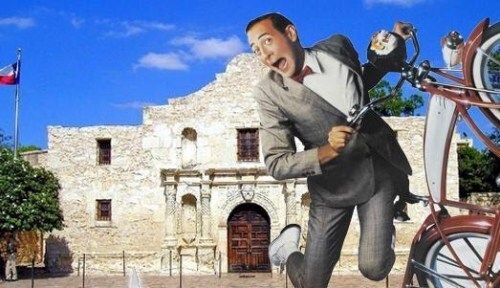
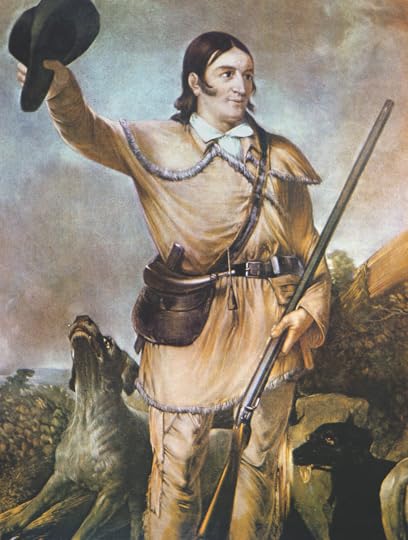
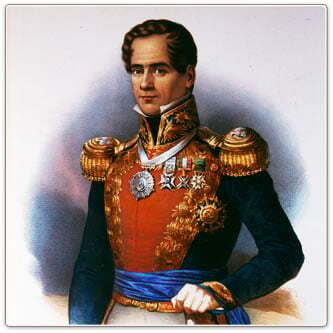
“The story of the Alamo is simple, right? Davy Crockett, Jim Bowie, William Barret Travis, and a bunch of their friends come to Texas to start new lives, suddenly realize they are being oppressed by the Mexican dictator Santa Anna, and rush off to do battle with him at an old Spanish mission in San Antonio. They are outnumbered but fight valiantly and die to a man, buying Sam Houston enough time to defeat Santa Anna at the Battle of San Jacinto. As almost any Texan will tell you, their sacrifice turned the Alamo into the cradle of Texas liberty. The problem is that much of what you think you know about the Alamo is wrong. What you just read? That’s the Almo myth, the legend. The actual story, well, it’s a lot more complicated…”
- Bryan Burrough, Chris Tomlinson, and Jason Stanford, Forget the Alamo: The Rise and Fall of an American Myth
History operates on two basic levels. First, it is a quest for truth – or a close approximation thereof – regarding a past event. This requires careful detective work utilizing the available evidence. Second, there is the interpretation of that event, and what it means to later generations. This is the work of mythmakers, boosters, storytellers, and politicians.
With regard to the March 1836 Battle of the Alamo, these two historical planes collide in fascinating ways. There is the essential mystery of what really went down during the fatal, predawn fight, in which one side was all killed, thereby leaving no record. Just as potently, there is the longstanding argument about what that clash symbolized, with traditionalist seeing it as a beacon of sacrifice in the cause of liberty, and revisionists decrying it as a potent example of continental imperialism in the service of slave-owning cotton growers.
In Forget the Alamo, Bryan Burrough, Chris Tomlinson, and Jason Stanford attempt to disentangle these two strands through the process of history and historiography. In a loose, conversational style – leavened with occasional dad jokes – the authors provide the unvarnished, often inconvenient facts, while also deconstructing the long process by which the Alamo legend was made.
***
Forget the Alamo is a relatively short work, coming in well below four-hundred pages. Roughly the first third is dedicated to a recounting of the leadup to the siege and battle. This is probably the strongest section, because it carefully lays out the context for the Texas Revolution. That context is slavery.
As the authors note, this is not what a lot of people want to hear. And I get it. Sometimes you just want to enjoy a story about a gang of outnumbered misfits fighting against impossible odds. Slavery is a dark cloud that hovers over much of America’s past, complicating everything. Still, it cannot be hand-waved away just for simplicity’s sake.
At the time of the Alamo’s fall, Texas was an underpopulated part of Mexico. In a bid to stave off the Comanche Empire, Mexico allowed legal immigration from the United States. Americans received land in return for an oath of allegiance and a wink-wink promise to become Catholic. This land was good for growing cotton, and so these immigrants brought with them enslaved humans. This is not really a secret. Stephen F. Austin – the “Father of Texas” – wrote about it all the time. Heck, there were actually slaves inside the Alamo, owned by the fort’s co-commanders, James Bowie and William Travis.
Only recently having attained its independence from Spain, Mexico was not exactly a font of political stability. Even as Americans flooded across their borders, they started changing the rules. In 1830, they outlawed further immigration. They also banned slavery. This infringement on Texian liberty – the liberty of property – spurred the revolt that ended in the creation of the Texas Republic.
Though this is certainly not an academic treatise, the authors do a fine job of setting all this out with reference to contemporary sources. More than that, the authors avoid the smugness, condescension, and moral superiority that often make modern histories tedious to read. No one likes a lecture, after all. To their credit, the authors handle these weighty issues with a light touch.
***
The centerpiece of any Alamo book is usually the battle itself. That’s not really the case with Forget the Alamo, which is probably not entirely surprising given its title. There is a chapter on the climatic last moments, but the authors are not all that interested in the furious debates over the smallest details.
One of the points they do try to make is that the Alamo was of limited significance. Contrary to conventional wisdom that their doomed stand gave General Sam Houston time to form an army, the authors side with Santa Anna, who harumphed that the battle was but “a small affair.” There is some truth to this assertion, given that the siege lasted less than a fortnight. Nevertheless, the propaganda value of the Alamo – and to a lesser extent, the cold-blooded massacre of Texians at Goliad – was immediately apparent. Indeed, the men who defeated Santa Anna at San Jacinto went about their slaughter of Mexican troops screaming “Remember the Alamo.”
***
After dispensing with the history, the authors commence with the historiography, which takes up the final two-thirds of Forget the Alamo. This covers a lot of ground. Despite Texas’s avowed love of its history, most of the physical Alamo disappeared over the years, with only small parts of it belatedly saved and turned into a literal shrine. The authors discuss the two women most responsible for this rescue – Claire Driscoll and Adina de Zavala – and their intense dislike of each other. They also note the differing meanings placed on the battle by Americans, Mexicans, Mexican-Americans, and Indians, and the strident arguments over how that should be expressed at the battle site.
While I was engaged by this material, my mileage varied from chapter to chapter, with some areas of emphasis better than others. For example, the authors spend a lot of time on the backroom politics of the Daughters of the Texas Revolution, a series of nothing-fights between entitled individuals with an impossibly high regard for themselves based on the actions of ancestors they never met. More interesting is the strange saga of singer Phil Collins and his collection of questionable Alamo artifacts.
***
The Alamo is one of the worst historical sites I’ve ever visited, and I’ve been to quite a few.
The so-called “shrine,” where guards pompously make visitors remove their hats, has nothing of value inside. During the dawn of battle, Almeron Dickinson fired his cannon from the open roof of that church, trying to hold at bay the lancers of Joaquin Ramirez y Sesma as they ran down Texians trying to escape. Of course, you will read nothing of this at the spot where it happened. Meanwhile, across the street is a Ripley’s Believe It or Not, its garishness somewhat undercutting the pretentions of sanctity.
As noted above, most of the Alamo is long-gone, including the north wall, scene of some of the most intense violence. The top floor of the Long Barracks has also been lopped off. The museum is small and terrible, and utterly dwarfed by the gift shop, which is the largest attraction on the property. There is precious little signage to give guidance about what happened and where, so you have to bring your own guidebook. What interpretative efforts have been made are ridiculous, including a line in the ground meant to represent Travis’s “line in the sand,” which never happened.
Much of Forget the Alamo is devoted to efforts to change this, with a wholesale revamping of the grounds that might allow it to encompass the Alamo’s multitudes. Unfortunately, every time someone proposes to make even modest changes, men with guns start to congregate around the enormous cenotaph inscribed with the defenders’ names. There is no indication this will change any time soon. Unlikely to be forgotten, the Alamo will continue to be misremembered.