

What do you think?

Rembrandt: The mystery of the revealed form
The mystery of the revealed A mirror of the artistic and intellectual developments of the 17th century Rembrandt Harmensz van Rijn (1606–1669) was one of the most complex and multi–faceted artists of the 17th century. From his initial period in Leiden to his early and late phases in Amsterdam, the stages of Rembrandt’s career mirror the artistic and intellectual developments of the century.
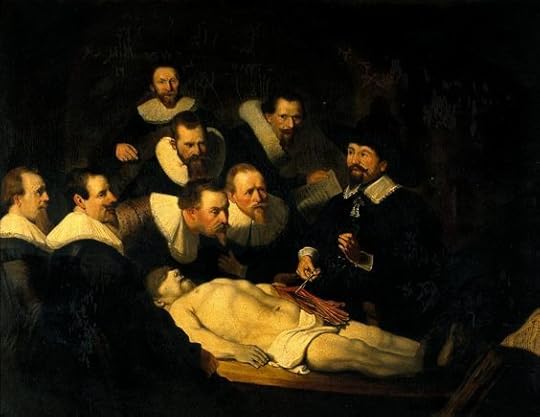
After breaking off his studies in Leiden, the young Rembrandt trained as a painter for two years and eventually established his own painting workshop. Characteristic of the Leiden period are his biblical histories, such as The Raising of Lazarus , but the roots of Rembrandt’s portraiture, nourished by his intensive studies of physiognomy, also are to be found in these same years. Later, in Amsterdam, the perfection of Rembrandt’s likenesses initially won him the favor of numerous patrons—but the artist soon surpassed their expectations. Transcending traditional modes of presentation, Rembrandt composed his portraits in the same manner in which he had earlier constructed his scenes. The results are visible, for example, in the famous group portrait The Anatomy Lesson of Dr. Nicolaes Tulp from 1632. In the last phase of Rembrandt’s work—when, plagued by financial problems, he had withdrawn into seclusion—it is no longer possible to distinguish between event paintings and portraits. About the
Each book in TASCHEN’s Basic Art series
After breaking off his studies in Leiden, the young Rembrandt trained as a painter for two years and eventually established his own painting workshop. Characteristic of the Leiden period are his biblical histories, such as The Raising of Lazarus , but the roots of Rembrandt’s portraiture, nourished by his intensive studies of physiognomy, also are to be found in these same years. Later, in Amsterdam, the perfection of Rembrandt’s likenesses initially won him the favor of numerous patrons—but the artist soon surpassed their expectations. Transcending traditional modes of presentation, Rembrandt composed his portraits in the same manner in which he had earlier constructed his scenes. The results are visible, for example, in the famous group portrait The Anatomy Lesson of Dr. Nicolaes Tulp from 1632. In the last phase of Rembrandt’s work—when, plagued by financial problems, he had withdrawn into seclusion—it is no longer possible to distinguish between event paintings and portraits. About the
Each book in TASCHEN’s Basic Art series
96 pages, Paperback
First published January 1, 1992
About the author
Michael Bockemühl
27 books4 followersMichael Bockemühl (1943–2009) was one of Germany's foremost art historians during the 1990s and early 2000s. In 1990 he became Professor of Art Theory, Aesthetics and Art Education at Witten/Herdecke University, where he taught until his death in 2009. He published numerous influential books and essays on Rembrandt, Turner and a variety of Modern artists
Ratings & Reviews
Friends & Following
Create a free account to discover what your friends think of this book!
Community Reviews
Displaying 1 - 30 of 35 reviews

January 29, 2008
Excellent both as a study of Rembrandt's work and as a portrayal of the man and the culture in which he lived.

May 29, 2022
I've been reading through a number of these books, and this one has the least amount of biographical detail of any thus far. It does well to explore some select paintings as representative of Rembrandt's style at various points of his career, but is far less engaging than most other volumes at an introductory level.

August 12, 2019
Sigh, why are some of these Taschen written so boring? Some parts were interesting and others were kind of strange.
I still like the Rembrandts who are pictured inside of this book.
I still like the Rembrandts who are pictured inside of this book.

April 3, 2020
A useful book as a brief study on Rembrandt's work. The description was kinda boring in some pages but the drawings were amazing.

Read
June 22, 2026Thank fuck that his life is a 2 page spread and the rest is an in-depth analysis of his work including some of sketches that span 5 pages or more
August 10, 2023
It was very interesting to see how the book mostly focused on analyzing the paintings and not so much on Rembrandt's biography. Didn't mind it though

July 10, 2024
Michałkowa Janina
December 30, 2014
The book is ok.Not the best book on Rembrandt.Rembrandt was in a christian sect some think and also a book on Rembrandt should talk more about Calvenism and the freedom it gave artists.The big wonder is how did he paint his work,no one knows,we only know he worked very slow,many months on a painting. Well he is the greatest painter in the history of the world.

September 19, 2008
My favorite artist - brilliant!

September 27, 2009
Sort of dry but a very good deal on glossy color prints of this artists work.

December 18, 2018
Куча пустословия - раскрытие личности Рембранда на нуле.

April 11, 2026
Rembrandt ile Taschen ressamlar dizisine devam ediyorum. Açıkçası, “kare sanat” serisinden daha ayrıntılı ve kronolojik ilerleyen düzene sahip. Bu şekilde resimleri daha ayrıntılı ve kategorize ederek akılda yer ediniyor. “Hollanda Altın Çağı” serisinin önemli ressamı, Rembrandt’ın en önemli özelliği, teknolojinin gelişmediği -17. yüzyıllar- yıllarda, otoportrelerini yaparak, bir nevi resim alanında “selfie” gerçekleştirmiştir. Aynı zamanda, eşini, oğlu Titus, gelini, Aristoteles ve Homeros gibi tarihi karakterleri de tuvale taşımış. Burada Caravaggio olan benzerlik konusu söz konusu. Caravaggio da eserlerinde modelleri sokaktan, tanıdıklardan ve dışlanmışlardan seçerdi. Bir başla benzerlikte, Rembrandt’ın eserlerinde görülen arka plan karanlığı ve obje-modellerin ışıklandırılması yönünden de benzerlikler mevcut. Bu yüzden zaten, ışığın ve gölgenin ressamı denir.
Eserleri daha iyi sindirebilmek için, bulunduğu sayfadan kopan resim açıklamalarını daha iyi sindirebilmek adına, incelemesini okuduğum resmi telefondan açıp önüme koyuyorum. Böylelikle, her okuduğum ayrıntıyı görebilme imkanına sahip oluyorum. Sanat kitapları okuyorsanız, bu yöntemi tavsiye ederim. Rembrandt, tarihsel resim çalışmalarında; el, kol, mimik ve jest hareketlerin getirdiği duyguların ifadesini yansıtmak için, o zamanlar “çile” diye adlandırılıyordu. Çalışmalardaki figürlerde görebilmek mümkün.
Yahudi Gelini, Suzanna ve Yaşlılar, Gece Devriyesi, Dokumacılar Loncası isimli eserlerin ayrıntılı olarak incelenmiş ve fikir sahibi oluyorsunuz. En büyük üzüntüm, Hollanda’ya gittiğimde Van Gogh için vakit bulup, Rembrandt ve diğer sanatçıların eserlerini görememek üzmüştü. Hala pişmanlığını yaşıyorum. Rembrandt’ı daha fazla açıklayarak büyüsünü kaçırmak istemiyorum. Okuyun! Okuması inanılmaz zevkli idi. Kaçırmayın, tüm seriyi!
Eserleri daha iyi sindirebilmek için, bulunduğu sayfadan kopan resim açıklamalarını daha iyi sindirebilmek adına, incelemesini okuduğum resmi telefondan açıp önüme koyuyorum. Böylelikle, her okuduğum ayrıntıyı görebilme imkanına sahip oluyorum. Sanat kitapları okuyorsanız, bu yöntemi tavsiye ederim. Rembrandt, tarihsel resim çalışmalarında; el, kol, mimik ve jest hareketlerin getirdiği duyguların ifadesini yansıtmak için, o zamanlar “çile” diye adlandırılıyordu. Çalışmalardaki figürlerde görebilmek mümkün.
Yahudi Gelini, Suzanna ve Yaşlılar, Gece Devriyesi, Dokumacılar Loncası isimli eserlerin ayrıntılı olarak incelenmiş ve fikir sahibi oluyorsunuz. En büyük üzüntüm, Hollanda’ya gittiğimde Van Gogh için vakit bulup, Rembrandt ve diğer sanatçıların eserlerini görememek üzmüştü. Hala pişmanlığını yaşıyorum. Rembrandt’ı daha fazla açıklayarak büyüsünü kaçırmak istemiyorum. Okuyun! Okuması inanılmaz zevkli idi. Kaçırmayın, tüm seriyi!

May 28, 2024
The developments that Rembrandt's paintings undergo is no path from the incomplete to the perfect, from the approximate to the precise, from the sketched to the accomplished; nor does it follow the reverse course. It completely converts everything comprehended in the picture - the symbols, the narrations, the figures, the spatial dimension, the light, even the temporal event - into the observational reality of the picture: in short, it changes comprehension itself into vision. This art thereby touches upon the fundamental certainties of recognition. The experience of Rembrandt's art appears more relevant than before. It can reveal itself today as a never-ending challenge to make oneself conscious of the chances offered by the observational act. Rembrandt - a never-ending experience.

June 10, 2018
Rembrandt was one of the most complex and multi-faceted artists of the 17th century. From his initial period in Leiden to his earlier and later phases in Amsterdam, the stages of Rembrandt's career mirror the artistic and intellectual developments of the century. This brilliantly written and detailed book takes you through the artist's life, giving exceptional insight to his life's changes and how they were reflected in his works. This is lavishly illustrated and brings a much deeper understanding to the paintings of one of the great masters. I felt this was the best book I had read this year.

January 30, 2019
Portando le sue scene all'estremo, al punto culminante dell'azione esteriore, il giovane Rembrandt tocca i limiti del quadro. Le sue scene estremamente concitate lasciano però intendere che l'artista non riconosce questi limiti e che anzi vuole superarli, utilizzando, se necessario, anche la violenza. È importante osservare come le opere giovanili di Rembrandt comincino proprio laddove finiscono le possibilità della pittura. Nel corso di tutta la sua carriera, l'artista terrà fede al principio di rappresentare eventi e fatti sempre nel momento in cui questi raggiungono il culmine.

August 4, 2024
I usually enjoy quite a lot Taschen's books, but this one about Rembrandt was unexpectedly boring. If the author does not provide, not even as a hint, basically any biographical data, one must think that it's either because they're negligible -which is false- or unavailable. Even if it's true that there's not much about Rembrandt's life, his pictures -where are his self portraits?- can scarcely be comprehended without knowing his life; the author, yes, describes extensely some of the paintings, yet they're utterly boring, mostly technical.

April 8, 2024
I usually love these Taschen books but this was brutal. I finished this book learning nothing about Rembrandt. It basically consists of the writer describing a select few paintings. I had to read some parts out loud to my wife as it was close to a parody of stuffy, art-critic prose. I definitely need to find another book to learn SOMETHING about this great artist.

June 28, 2019
A useful reference to Rembrandt's life and works. The book draws to the reader's attention the effect upon the observer of Rembrandt's paintings. Rembrandt's works have a characteristic nature all their own. The book is amply illustrated with plates of many of Rembrandt's paintings.

July 24, 2025
Une initiation intéressante et déjà ambitieuse par son approche technique à l'art mystérieux et si riche de Rembrandt. Le parcours du maître hollandais du clair-obscur y est retracé à travers l'évolution de son style et de son langage pictural.

September 9, 2025
Auf etwa 100 Seiten werden die wichtigsten Bilder und Lebensabschnitte von Rembrandt gezeigt. Genügt für einen groben Überblick über sein Werk. Es gibt natürlich umfangreichere Bücher. Aber diese sind wesentlich teurer und so tief wollte ich da nicht eintauchen...

September 16, 2023
I can't express how much I enjoyed this book. The storyline was a thrilling ride that had me eagerly turning pages, and the characters felt like old friends. It's a story I'll revisit time and again.

February 14, 2024
This dude could paint, yo.

April 12, 2024
I didn’t realise the paintings were so religious until I was.
February 9, 2025
Beautiful book, well made, well research and all image presented well and in high definition.

June 8, 2025
Great book introducing the masterpieces of Rembrandt!

October 20, 2023
"Rembrandt" by Michael Bockemühl and Michael Claridge is likely a comprehensive exploration of the life and art of the renowned Dutch painter. Bockemühl and Claridge are reputable scholars, so the book likely combines insightful analysis with historical context. If you're passionate about art history and looking for a detailed yet accessible overview of Rembrandt's work, this book is probably a valuable resource.
February 2, 2022
Michael Bockemühl’s Rembrandt 1606–1669: The Mystery of the Revealed Form offers a compelling exploration of the interplay between artistic technique, historical context, and the enigmatic psychological depth of Rembrandt’s works. Through a richly nuanced analysis, Bockemühl situates Rembrandt not merely as a historical figure but as a transcendent artist whose innovative approach reshaped the boundaries of visual expression.
A Synthesis of Form and Philosophy
Bockemühl’s title signals his central thesis: the "revealed form" in Rembrandt's work is both a technical achievement and a philosophical statement. Rembrandt's mastery of chiaroscuro—his ability to manipulate light and shadow—becomes, in Bockemühl’s reading, a metaphor for the tension between concealment and revelation that defines human existence. This duality is explored through the analysis of major works such as The Night Watch and Self-Portrait with Two Circles, where light does not merely illuminate but evokes an existential inquiry. The author’s interpretation resonates with art historical discourses while remaining accessible to the reader through lucid prose and well-chosen visual examples.
Historical Context and Artistic Innovation
Bockemühl is particularly insightful in linking Rembrandt’s artistry to the socio-political currents of the Dutch Golden Age. He argues that the rise of the merchant class and the increasing secularization of society are mirrored in Rembrandt’s shift from overtly religious themes to deeply personal, introspective portraits. These paintings become a canvas for the universal human condition, transcending their cultural moment. The book also delves into Rembrandt’s experimentation with printmaking and etching, contextualizing his technical innovations within broader developments in 17th-century art.
The Psychology of the Artist
Perhaps the most intriguing aspect of Bockemühl’s analysis is his focus on the psychological dimension of Rembrandt’s work. Through a close reading of the artist’s self-portraits, Bockemühl traces a narrative of vulnerability and resilience. Each self-portrait becomes a dialogue with time, mortality, and identity. Bockemühl’s reflections are informed by both psychoanalytic theory and phenomenological approaches, yet he avoids over-determining Rembrandt’s intent, allowing the mystery of the artist’s vision to persist.
The Writing and Structure
Bockemühl’s writing is scholarly yet evocative, weaving art history, philosophy, and technical critique into a cohesive narrative. The book is visually enriched by high-quality reproductions of Rembrandt’s paintings, which are seamlessly integrated with the text to underscore the author’s arguments. However, at times, Bockemühl’s dense theoretical digressions may challenge readers unfamiliar with the terminologies of art criticism and philosophy.
Conclusion
Rembrandt 1606–1669: The Mystery of the Revealed Form is an invaluable contribution to the study of one of history’s most profound artists. Bockemühl’s work bridges the gap between academic rigor and the poetic spirit of Rembrandt’s art, offering readers a multifaceted lens through which to engage with his oeuvre. For scholars and enthusiasts alike, this book is an invitation to contemplate the enigmatic genius of Rembrandt and his enduring relevance in understanding the complexities of the human condition.
Bockemühl’s analysis reveals not just an artist of extraordinary skill, but a thinker and observer whose works continue to resonate with the essential mysteries of life, light, and form.
A Synthesis of Form and Philosophy
Bockemühl’s title signals his central thesis: the "revealed form" in Rembrandt's work is both a technical achievement and a philosophical statement. Rembrandt's mastery of chiaroscuro—his ability to manipulate light and shadow—becomes, in Bockemühl’s reading, a metaphor for the tension between concealment and revelation that defines human existence. This duality is explored through the analysis of major works such as The Night Watch and Self-Portrait with Two Circles, where light does not merely illuminate but evokes an existential inquiry. The author’s interpretation resonates with art historical discourses while remaining accessible to the reader through lucid prose and well-chosen visual examples.
Historical Context and Artistic Innovation
Bockemühl is particularly insightful in linking Rembrandt’s artistry to the socio-political currents of the Dutch Golden Age. He argues that the rise of the merchant class and the increasing secularization of society are mirrored in Rembrandt’s shift from overtly religious themes to deeply personal, introspective portraits. These paintings become a canvas for the universal human condition, transcending their cultural moment. The book also delves into Rembrandt’s experimentation with printmaking and etching, contextualizing his technical innovations within broader developments in 17th-century art.
The Psychology of the Artist
Perhaps the most intriguing aspect of Bockemühl’s analysis is his focus on the psychological dimension of Rembrandt’s work. Through a close reading of the artist’s self-portraits, Bockemühl traces a narrative of vulnerability and resilience. Each self-portrait becomes a dialogue with time, mortality, and identity. Bockemühl’s reflections are informed by both psychoanalytic theory and phenomenological approaches, yet he avoids over-determining Rembrandt’s intent, allowing the mystery of the artist’s vision to persist.
The Writing and Structure
Bockemühl’s writing is scholarly yet evocative, weaving art history, philosophy, and technical critique into a cohesive narrative. The book is visually enriched by high-quality reproductions of Rembrandt’s paintings, which are seamlessly integrated with the text to underscore the author’s arguments. However, at times, Bockemühl’s dense theoretical digressions may challenge readers unfamiliar with the terminologies of art criticism and philosophy.
Conclusion
Rembrandt 1606–1669: The Mystery of the Revealed Form is an invaluable contribution to the study of one of history’s most profound artists. Bockemühl’s work bridges the gap between academic rigor and the poetic spirit of Rembrandt’s art, offering readers a multifaceted lens through which to engage with his oeuvre. For scholars and enthusiasts alike, this book is an invitation to contemplate the enigmatic genius of Rembrandt and his enduring relevance in understanding the complexities of the human condition.
Bockemühl’s analysis reveals not just an artist of extraordinary skill, but a thinker and observer whose works continue to resonate with the essential mysteries of life, light, and form.

December 10, 2021
The book is ok.Not the best book on Rembrandt.Rembrandt was in a christian sect some think and also a book on Rembrandt should talk more about Calvenism and the freedom it gave artists.The big wonder is how did he paint his work,no one knows,we only know he worked very slow,many months on a painting. Well he is the greatest painter in the history of the world!!

July 22, 2011
Explored it a lot as a kid.
December 16, 2012
I wish there'd be more space for his biography.
Displaying 1 - 30 of 35 reviews