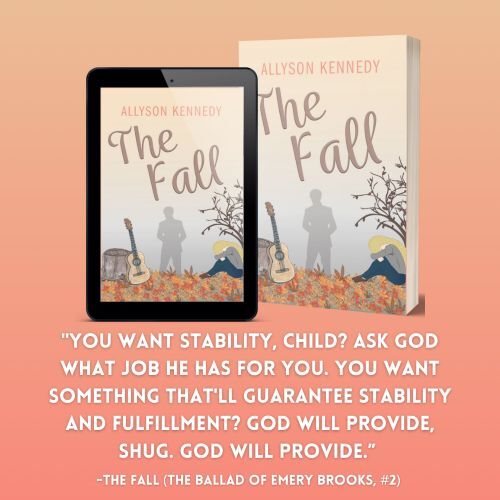
The Fall surprised and impressed me in all the best of ways. It amounted to precisely the kind of book that I had been seeking for a while: a sequel to a great realistic (preferably YA coming-of-age) work that organically continues all of the threads established in the first book, ultimately producing a powerful, cogent story on its own merit. Impressive sequels to realistic works prove difficult to craft, especially in coming-of-age narratives—because, once the main character has traversed their trial and thereby “come of age,” what more does there exist to write about? I tried reading sequel after sequel to so many young adult coming-of-age books, but almost none of them struck me as necessary, and almost none of them felt anywhere near as heartfelt as the original—until I read The Fall. What sets The Fall apart from other Young Adult coming-of-age sequels is the fact that The Crush culminates with a personal tragedy occurring in Emery’s life. So The Fall explores how Emery responds to this tragedy and how she ultimately recovers from it; the first book naturally provides fertile ground for a sequel.
While, for me, The Fall admittedly lacks some of the emotional, riveting punch that The Crush contained (making me enjoy it slightly less than the original installment), this sequel nonetheless succeeds beautifully in expanding upon Emery’s storyline from the first book of learning to let go of her preconceived ideals of romance. I personally do not agree with the prominent theme of this series that we ought to look to God to write our love story; I personally believe that God gives us the freedom to merely choose our spouse (within reason, of course). However, I nonetheless so appreciate the way that Kennedy deconstructs the concept of soul-mates through Emery’s complex experiences. While Emery ultimately retains belief in relying on God to craft the right love story for her, she is forced in this installment to remove her sugar-coated glasses and come to the sobering realization that life is messy and that her love story will not be quite what she initially idealized. The first guy that she ever loved—someone who God probably even put in her life—died as a teenager (not to mention that he did so after hurting her tremendously). Emery learns that it is alright for her love story to significantly diverge from the storybook romance that her grandparents shared—that she can have two loves at different times of her life—and that this is okay.
To be sure, Emery does not amount to the only well-written character. While I so appreciated the development of Emery and Sawyer in The Crush, I did not feel that the other characters were captured quite as vividly as they could have been. In The Fall, however, far more characters—from Rider to Becca to Ryanne to Miss Jodie—undergo distinct arcs of their own, causing the reader to care for them, understand them, and resonate with them vastly more than they had in previous installments. Rider in particular feels so much more realistically rendered than he had in book one. Ryanne likewise had not quite managed to stand out to me in The Crush—but now I officially love her. When Emery makes a thoughtlessly cruel comment to Ryanne, causing Ryanne to finally stand up to Emery and call her out on all of her crap, I felt so proud of that girl! What’s more, watching how Brynn and Miss Jodie react to the death that occurred in their family proves immensely powerful. And while I do feel like a few flaws could have potentially enhanced Jace’s character, I still certainly like him—and I find his relentless pursuit to push Emery’s buttons hilarious.
Yet another thing to laud The Fall for would be the way that it steers clear of common shortcomings in the genres of Christian fiction and romance. Much like The Crush, I was encouraged by how much truer-to-life and grittier this work feels than most Christian novels do. A prominent theme in The Fall is how important it can be to abandon an idealized fairy-tale view of life and do the best that we can with the hand that we have been dealt, rather than merely relying on God to render everything perfect for us—which shines through in aspects of the book like Rider’s arc as he endeavors to fix up to his grandparents’ property. Such themes prove so refreshing in a piece of Christian fiction. There may not exist another Christian writer out there quite like Alyson Kennedy. And, similarly, in neither installment of this series did the romance ever strike me as overly sappy or gag-worthy. While some romances certainly come across as less sappy than others, I have never encountered any romance novel that seemed completely devoid of excessive sap—until now. Well done, Kennedy! I am impressed.
I would easily rank The Fall as Kennedy’s second-best work, after The Crush. It delivers as a powerful and fitting sequel to an outstanding novel—rendering it the best sequel that I have ever encountered in the genre of Young Adult Realism. The Fall truly seems to culminate Emery’s arc beautifully—which makes me wonder what Kennedy has in store for book three. Will she manage to produce a third installment that feels every bit as organic as this one does? It seems like an immensely difficult feat. The Ballad of Emery Brooks feels like a two-act story, with The Fall as its conclusion. Nevertheless, Alyson Kennedy has already surprised me and impressed me time and time again; I have little doubt that she can do so once more!