

What do you think?
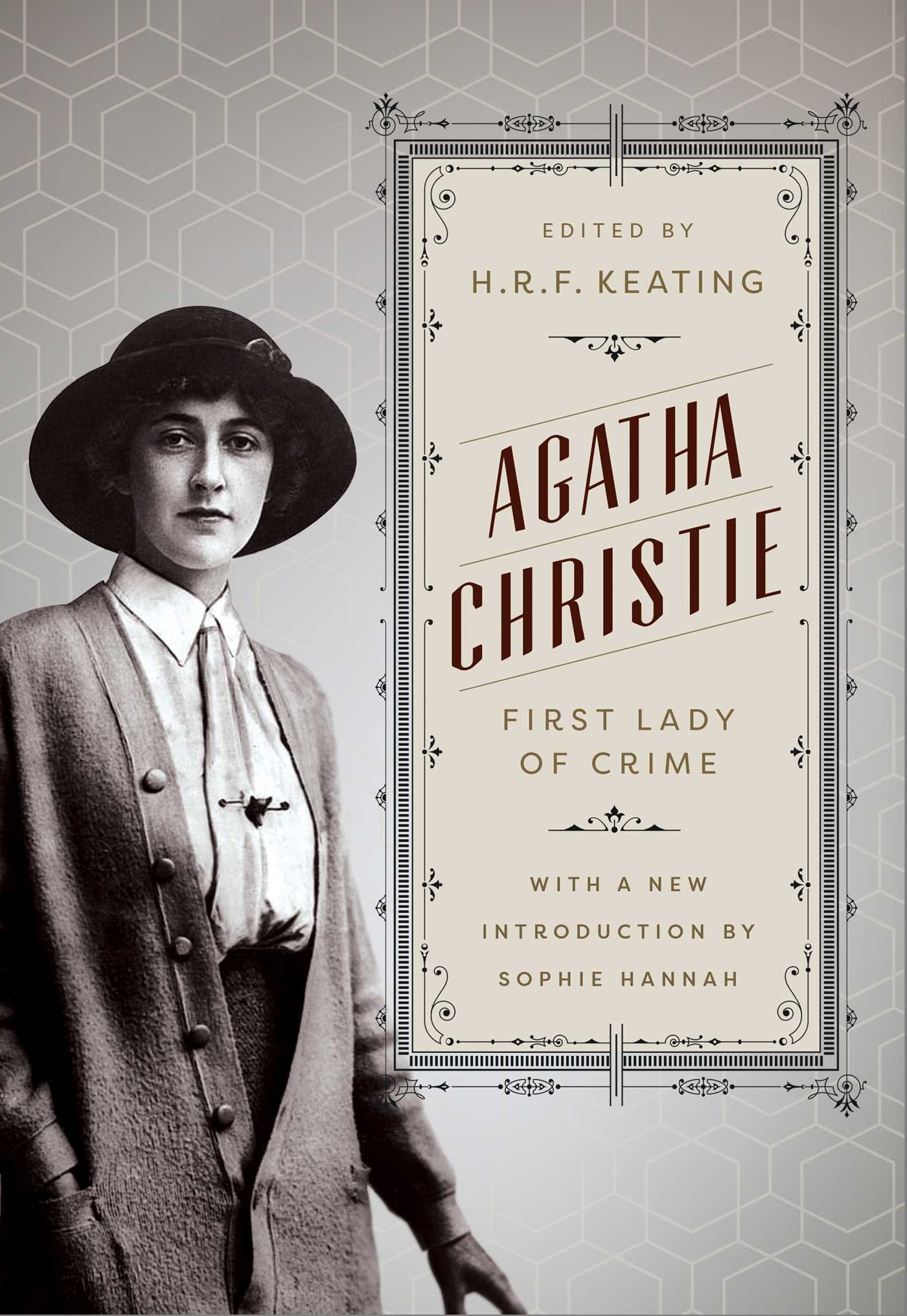
Agatha Christie: First Lady of Crime
From Poirot to Miss Marple, from The Mousetrap to Witness for the Prosecution, this a fascinating look at the life and work of Agatha Christie, the world's most successful and popular crime writer.
Agatha Christie was not only the most successful author of detective stories the world has ever known, she was also a mystery in herself, giving only the rarest interviews—declining absolutely to become any sort of public figure—and a mystery, too, in the manner in which she achieved her astonishing success.
Distinguished crime novelist (and acclaimed critic) H. R. F. Keating brings together a dozen noted writers from both sides of the Atlantic to throw light on the ever-intriguing Dame Agatha. Some essays analyze Christie’s art itself; some explain the reasons for her success—not just the books, but also in film and theatre.
The myriad of critical angles explored here are penetrating, affectionate, enthusiastic, analytical, and even funny. Together, they give an almost unique insight into the life and work of the First Lady of Crime.
Includes essays by Sophie Hannah, H. R. F. Keating, Elizabeth Walter, Julian Symons, Edmund Crispin, Michael Gilbert, Emma Lathen, Colin Watson, Celia Fremlin, Dorothy B. Hughes, J. C. Trewin, Philip Jenkinson, William Weaver, and Christianna Brand.
Agatha Christie was not only the most successful author of detective stories the world has ever known, she was also a mystery in herself, giving only the rarest interviews—declining absolutely to become any sort of public figure—and a mystery, too, in the manner in which she achieved her astonishing success.
Distinguished crime novelist (and acclaimed critic) H. R. F. Keating brings together a dozen noted writers from both sides of the Atlantic to throw light on the ever-intriguing Dame Agatha. Some essays analyze Christie’s art itself; some explain the reasons for her success—not just the books, but also in film and theatre.
The myriad of critical angles explored here are penetrating, affectionate, enthusiastic, analytical, and even funny. Together, they give an almost unique insight into the life and work of the First Lady of Crime.
Includes essays by Sophie Hannah, H. R. F. Keating, Elizabeth Walter, Julian Symons, Edmund Crispin, Michael Gilbert, Emma Lathen, Colin Watson, Celia Fremlin, Dorothy B. Hughes, J. C. Trewin, Philip Jenkinson, William Weaver, and Christianna Brand.
246 pages, Hardcover
First published January 1, 1977
About the author
Agatha Christie
6,461 books79.4k followersAgatha Christie also wrote romance novels under the pseudonym Mary Westmacott, and was occasionally published under the name Agatha Christie Mallowan.
Dame Agatha Mary Clarissa Christie, Lady Mallowan, DBE (née Miller) was an English writer known for her 66 detective novels and 14 short story collections, particularly those revolving around fictional detectives Hercule Poirot and Miss Marple. She also wrote the world's longest-running play, the murder mystery The Mousetrap, which has been performed in the West End of London since 1952. A writer during the "Golden Age of Detective Fiction", Christie has been called the "Queen of Crime". She also wrote six novels under the pseudonym Mary Westmacott. In 1971, she was made a Dame (DBE) by Queen Elizabeth II for her contributions to literature. Guinness World Records lists Christie as the best-selling fiction writer of all time, her novels having sold more than two billion copies.
This best-selling author of all time wrote 66 crime novels and story collections, fourteen plays, and six novels under a pseudonym in romance. Her books sold more than a billion copies in the English language and a billion in translation. According to Index Translationum, people translated her works into 103 languages at least, the most for an individual author. Of the most enduring figures in crime literature, she created Hercule Poirot and Miss Jane Marple. She atuhored The Mousetrap, the longest-running play in the history of modern theater.
Associated Names:
Agata Christie
Agata Kristi
Агата Кристи (Russian)
Агата Крісті (Ukrainian)
Αγκάθα Κρίστι (Greek)
アガサ クリスティ (Japanese)
阿嘉莎·克莉絲蒂 (Chinese)
Dame Agatha Mary Clarissa Christie, Lady Mallowan, DBE (née Miller) was an English writer known for her 66 detective novels and 14 short story collections, particularly those revolving around fictional detectives Hercule Poirot and Miss Marple. She also wrote the world's longest-running play, the murder mystery The Mousetrap, which has been performed in the West End of London since 1952. A writer during the "Golden Age of Detective Fiction", Christie has been called the "Queen of Crime". She also wrote six novels under the pseudonym Mary Westmacott. In 1971, she was made a Dame (DBE) by Queen Elizabeth II for her contributions to literature. Guinness World Records lists Christie as the best-selling fiction writer of all time, her novels having sold more than two billion copies.
This best-selling author of all time wrote 66 crime novels and story collections, fourteen plays, and six novels under a pseudonym in romance. Her books sold more than a billion copies in the English language and a billion in translation. According to Index Translationum, people translated her works into 103 languages at least, the most for an individual author. Of the most enduring figures in crime literature, she created Hercule Poirot and Miss Jane Marple. She atuhored The Mousetrap, the longest-running play in the history of modern theater.
Associated Names:
Agata Christie
Agata Kristi
Агата Кристи (Russian)
Агата Крісті (Ukrainian)
Αγκάθα Κρίστι (Greek)
アガサ クリスティ (Japanese)
阿嘉莎·克莉絲蒂 (Chinese)
Ratings & Reviews
Friends & Following
Create a free account to discover what your friends think of this book!
Community Reviews
Displaying 1 - 30 of 43 reviews

October 15, 2020
This is a collection of essays which was originally published in 1977, a year after Christie’s death (I was only ten at the time, but I can still remember having a bit of a cry while devouring “Death on the Nile”). Suffice it to say, Christie has been my comfort author since I moved seamlessly from Enid Blyton to more grown up mysteries and one of the most enjoyable things about this collection is that many of her contemporaries were involved.
These contemporaries include many of my personal favourite Golden Age authors; including articles by Christianna Brand, Michael Gilbert and Celia Fremlin. There is also an interview between H.R. Keating and Edmund Crispin. As well as portraits of Miss Marple and Hercule Poirot, other essays look at her infamous disappearance, her Mary Westmacott novels, plays and films based on her books and her appeal in the US. An enjoyable read although, even in 1977, sadly some of those involved tend to dismiss her as better at plotting than character, which really tends to misunderstand why she remains so popular, well over forty years after this collection was first published.
These contemporaries include many of my personal favourite Golden Age authors; including articles by Christianna Brand, Michael Gilbert and Celia Fremlin. There is also an interview between H.R. Keating and Edmund Crispin. As well as portraits of Miss Marple and Hercule Poirot, other essays look at her infamous disappearance, her Mary Westmacott novels, plays and films based on her books and her appeal in the US. An enjoyable read although, even in 1977, sadly some of those involved tend to dismiss her as better at plotting than character, which really tends to misunderstand why she remains so popular, well over forty years after this collection was first published.

October 23, 2020
A mildly interesting collection of essays about Agatha Christie, first published in 1977. Most are rather patronising in tone, with a condescending ‘how extraordinary, why are her books so popular?’ Theme running through the collection (the simple answer ‘because she was a genius) occurs to none of the contributors). Some updating to the new edition might have been helpful, the essay on films of Christie ends with the Albert Finney Murder on the Orient Express, and there have been rather a lot of other film and TV versions since then. The best thing about the new edition is the spirited introduction by Sophie Hannah, a pity the rest of the book is not as good.

November 19, 2024
This isn't a book for casual fans of Christie, but only of real interest to those of us who have read everything, probably more than once, and thus are happy to accept anything that touches on her work or life. I quite enjoyed the first few essays, about her book sales in England and across the world, writing style, life, etc. But then there were some that I didn't care for - one was snarky and dismissive, one too outdated to hold much interest, for example - and I worried if all the rest would be so disappointing. I should have withheld my judgement, as the last two essays were fun. The final one about Poirot by HRF Keating was good, but the best of the book was the penultimate "Miss Marple - A Portrait" by Christianna Brand. Delightfully written, pleasantly tart and a loving tribute to both author and creator, this essay makes the entire book worth seeking out.

August 11, 2021
Agatha Christie is the best-selling novelist of all-time, but does this make her one of the best? If you are a long-time reader of Dame Agatha or have seen some of her movies and plays but never cracked open one of her novels, this collection of essays compiled by the late author H.R.F. Keating is a great place to start.
AGATHA CHRISTIE: FIRST LADY OF CRIME was first released back in 1977, but the thoughts and study of her work that is captured within this book are still quite relevant today. What makes this book worth the price of admission is the New introduction written by best-selling mystery/thriller author, Sophie Hannah. Many of you may be aware that Hannah is a Christie expert and the only writer to ever receive the permission of the Christie Foundation to continue writing novels featuring characters from Dame Agatha’s legendary Inspector Hercule Poirot series. If you have not read any of them, I strongly urge you to seek them out as she has already penned four new Poirot novels and it is like she is channeling Christie the entire time.
In this introspective intro, Hannah presents a handful of questions that she often receives whenever she is appearing at a Christie Festival or during a book tour for one of her own Poirot novels. These questions include: Why is she still the no. 1 bestselling novelist of all-time? Even though she widely and rightfully regarded as a plotting genius, wouldn’t [the panel] all agree she’s not a very good writer, in a literary sense? Isn’t her prose style wooden and her characters two-dimensional? In Sophie Hannah’s mind, she fiercely disagreed. In a humorous turn, she shares the response that she held in her inner monologue to these absurd questions: “You’re all gravely and heinously wrong! Anyone who suggests that Agatha Christie’s actual writing or prose style or novelistic ability is anything other than top-notch is a crazy fool! Not only is she a brilliant plotter and entertainer, but she is also a writer of unparalleled excellence! No, not just a great storyteller --- a great writer in a literary sense! Like Virginia Woolf! Like Charles Dickens! Like Shakespeare!”
No matter where your personal opinions lie in this matter it is important to enter into the essays contained in this collection with an open mind. Hopefully, you will leave learning something about Dame Agatha you had not known before, and it will increase your appreciation of her work. H.R.F. Keating unfortunately passed away in 2011 and several of the contributors to this collection, ironically released one year after Christie herself passed away, are no longer with us --- but it does not for a moment take away from the impact of what is said here. Dame Agatha Christie’s work is almost timeless and any deep dive into her catalogue of titles would be the same today as it was four decades ago.
Keating recognizes from the onset that Christie was a phenomenon, and her impact is global. In China, they preached at her puritanically; in Nicaragua, Inspector Hercule Poirot is on a postage stamp. Her plays have been translated into 103 languages, fourteen more than Shakespeare! Elizabeth Walter starts from the very beginning of Christie’s career by exploring her first novel, THE MURDER OF ROGER ACKROYD. Up to this point, reader’s and mystery lovers had not experienced anything like what Christie presents in this brilliant and complex puzzle of a murder mystery.
Julian Symons in the essay “The Mistress Of Complication” refers to Christie and all the foreign settings she utilizes for her novels. The personal favorite she had of any foreign-based novel was DEATH ON THE NILE, which represented her own family experience in Egypt. Michael Gilbert in the essay, “A Very English Lady”, focuses on the dichotomy of writers typically not leading interesting or exciting lives themselves. Dame Agatha lived through two World Wars, two marriages, and enough joy and tragedy with her own family to have encountered a fair measure of tragedy, comedy, and romance to fuel ideas for her mystery novels.
Celia Fremlin in “The Christie Everybody Knew” touches upon the dark and mysterious period of her life that showed not everyone knew everything about her. 1926 was considered The Great Divide in her life as she not only saw the success of the then controversial MURDER OF ROGER ACKROYD, but she also mysteriously disappeared for a few weeks --- an event that she chose to never explain and has since become the impetus for speculative novels and even movies. Christie also was cognitive enough prior to the end of her own life to kill off her most popular character, Hercule Poirot, in the 1975 novel CURTAIN. To this day, critics still debate this decision and we have at least been able to enjoy a resurgence of Poirot via the new works of Sophie Hannah.
J.C. Trewin details Christie’s success with her many plays in the essay, “A Midas Gift To the Theatre”. It is no secret that her play version of the novel THE MOUSETRAP is the longest running play in the history of theatre and is still active on the London Stage. As an actor, I have performed in and directed many Christie plays but I can attest that there was nothing like the privilege of being in her two most popular stage plays --- the afore-mentioned “The Mousetrap” and “And Then There Were None”. It is examined in this essay that the stage version of “And Then There Were None” features a different, and happier, ending then the novel does. Phillip Jenkinson cites the many film versions of Christie’s work which has been seen on the big screen nearly as long as she was writing. Fans of Dame Agatha will recognize that things are no different today as Kenneth Branagh has brought Poirot back to the big screen while BBC, PBS, Acorn, and Britbox all broadcast new and revised versions of her work often with brilliant results.
Keating saves the last essay in this collection for himself, and it is dedicated to the immortal Hercule Poirot. Our favorite Belgian Detective is quite a unique character himself and his neatness is commented on in this essay as being there from the first time we saw him grace the pages of one of Christie’s novels that featured him. Since many of the novels with Poirot do not include dates, Keating reckons that his age was somewhere in the area of 130. A healthy life for an ageless creation.
AGATHA CHRISTIE: FIRST LADY OF CRIME concludes with a listing of all her many titles --- stand-alones, Miss Marple novels, and Hercule Poirot novels. I can only hope that this encourages both fans and novices to seek out titles they have not read and jump right into them. Christie lovers will thoroughly enjoy this collection and hopefully will learn something new about their favorite mistress of murder!
Reviewed by Ray Palen for Book Reporter
AGATHA CHRISTIE: FIRST LADY OF CRIME was first released back in 1977, but the thoughts and study of her work that is captured within this book are still quite relevant today. What makes this book worth the price of admission is the New introduction written by best-selling mystery/thriller author, Sophie Hannah. Many of you may be aware that Hannah is a Christie expert and the only writer to ever receive the permission of the Christie Foundation to continue writing novels featuring characters from Dame Agatha’s legendary Inspector Hercule Poirot series. If you have not read any of them, I strongly urge you to seek them out as she has already penned four new Poirot novels and it is like she is channeling Christie the entire time.
In this introspective intro, Hannah presents a handful of questions that she often receives whenever she is appearing at a Christie Festival or during a book tour for one of her own Poirot novels. These questions include: Why is she still the no. 1 bestselling novelist of all-time? Even though she widely and rightfully regarded as a plotting genius, wouldn’t [the panel] all agree she’s not a very good writer, in a literary sense? Isn’t her prose style wooden and her characters two-dimensional? In Sophie Hannah’s mind, she fiercely disagreed. In a humorous turn, she shares the response that she held in her inner monologue to these absurd questions: “You’re all gravely and heinously wrong! Anyone who suggests that Agatha Christie’s actual writing or prose style or novelistic ability is anything other than top-notch is a crazy fool! Not only is she a brilliant plotter and entertainer, but she is also a writer of unparalleled excellence! No, not just a great storyteller --- a great writer in a literary sense! Like Virginia Woolf! Like Charles Dickens! Like Shakespeare!”
No matter where your personal opinions lie in this matter it is important to enter into the essays contained in this collection with an open mind. Hopefully, you will leave learning something about Dame Agatha you had not known before, and it will increase your appreciation of her work. H.R.F. Keating unfortunately passed away in 2011 and several of the contributors to this collection, ironically released one year after Christie herself passed away, are no longer with us --- but it does not for a moment take away from the impact of what is said here. Dame Agatha Christie’s work is almost timeless and any deep dive into her catalogue of titles would be the same today as it was four decades ago.
Keating recognizes from the onset that Christie was a phenomenon, and her impact is global. In China, they preached at her puritanically; in Nicaragua, Inspector Hercule Poirot is on a postage stamp. Her plays have been translated into 103 languages, fourteen more than Shakespeare! Elizabeth Walter starts from the very beginning of Christie’s career by exploring her first novel, THE MURDER OF ROGER ACKROYD. Up to this point, reader’s and mystery lovers had not experienced anything like what Christie presents in this brilliant and complex puzzle of a murder mystery.
Julian Symons in the essay “The Mistress Of Complication” refers to Christie and all the foreign settings she utilizes for her novels. The personal favorite she had of any foreign-based novel was DEATH ON THE NILE, which represented her own family experience in Egypt. Michael Gilbert in the essay, “A Very English Lady”, focuses on the dichotomy of writers typically not leading interesting or exciting lives themselves. Dame Agatha lived through two World Wars, two marriages, and enough joy and tragedy with her own family to have encountered a fair measure of tragedy, comedy, and romance to fuel ideas for her mystery novels.
Celia Fremlin in “The Christie Everybody Knew” touches upon the dark and mysterious period of her life that showed not everyone knew everything about her. 1926 was considered The Great Divide in her life as she not only saw the success of the then controversial MURDER OF ROGER ACKROYD, but she also mysteriously disappeared for a few weeks --- an event that she chose to never explain and has since become the impetus for speculative novels and even movies. Christie also was cognitive enough prior to the end of her own life to kill off her most popular character, Hercule Poirot, in the 1975 novel CURTAIN. To this day, critics still debate this decision and we have at least been able to enjoy a resurgence of Poirot via the new works of Sophie Hannah.
J.C. Trewin details Christie’s success with her many plays in the essay, “A Midas Gift To the Theatre”. It is no secret that her play version of the novel THE MOUSETRAP is the longest running play in the history of theatre and is still active on the London Stage. As an actor, I have performed in and directed many Christie plays but I can attest that there was nothing like the privilege of being in her two most popular stage plays --- the afore-mentioned “The Mousetrap” and “And Then There Were None”. It is examined in this essay that the stage version of “And Then There Were None” features a different, and happier, ending then the novel does. Phillip Jenkinson cites the many film versions of Christie’s work which has been seen on the big screen nearly as long as she was writing. Fans of Dame Agatha will recognize that things are no different today as Kenneth Branagh has brought Poirot back to the big screen while BBC, PBS, Acorn, and Britbox all broadcast new and revised versions of her work often with brilliant results.
Keating saves the last essay in this collection for himself, and it is dedicated to the immortal Hercule Poirot. Our favorite Belgian Detective is quite a unique character himself and his neatness is commented on in this essay as being there from the first time we saw him grace the pages of one of Christie’s novels that featured him. Since many of the novels with Poirot do not include dates, Keating reckons that his age was somewhere in the area of 130. A healthy life for an ageless creation.
AGATHA CHRISTIE: FIRST LADY OF CRIME concludes with a listing of all her many titles --- stand-alones, Miss Marple novels, and Hercule Poirot novels. I can only hope that this encourages both fans and novices to seek out titles they have not read and jump right into them. Christie lovers will thoroughly enjoy this collection and hopefully will learn something new about their favorite mistress of murder!
Reviewed by Ray Palen for Book Reporter

January 23, 2022
A collection of essays about Ms. Christie and her works. Some were interesting, such as the ones about Miss Marple and Poirot, her two most famous characters. But others were long and boring, such as the ones focused on her plays and “her” movies. While Ms. Christie did write several plays, I am not sure that you can call movies that were made from her books “her” movies. Those essays spoke of directors and actors, probably famous at the time, that I have never heard of so they were decidedly uninteresting to me. So this was a mixed bag, in my opinion.

May 5, 2011
See my review on my book blog: http://quirkyreader.livejournal.com/2...

February 12, 2022
I have enjoyed several of Agatha Christie's books and tried to get into this book of essays but read to only 64 out of 234 pages. This book had interesting parts but is geared more toward the diehard Christie fanatic than the casual Christie fan. The essays go into detail about her books, plays, etc., and if you haven't read all the books, it's rather boring. The book starts out kind of interesting but then gets more dull and dry as it goes on. Also, my copy has no photos in it, so there was nothing to enlived the boring text. Unfortunately, I gave up.


January 28, 2022
Read it the first time round in 1977, but apart from the new Sofie Hannah introduction, this revised edition feels rather soulless. The original version had lots of lovely photos and illustrations, plus some great artwork and design. But this one is so generic as to be boring. If you can source the first edition in hardback, then stick with that.
© Koppowitz 2022
© Koppowitz 2022

August 21, 2021
I was hoping for a biographical book, but this is a collection of essays relating to Agatha Christie, but many of these are a bit dry. Some were good, especially towards the beginning of the book, but I found myself skimming more as I went along. There are essays about Agatha Christie and the theater and AC and the movies. The more recent book on Poirot covers both topics and is a more enjoyable read. This book was underwhelming for me.

September 26, 2021
This one’s probably only a jolt for hardcore Christie fans (check). Some essays are fascinating and full of insight. Others are confusingly crafted and of highly questionable accuracy. And then there’s the whole late-1970s askew social perspective. The new intro is slight and lacking in any true contemporary wisdom. And yet, I did like this as a sweeping survey of Christie context.

November 16, 2021
Totally thought this was going to be a biography of Agatha Christie, but instead it's a collection of essays written by peers, friends, and other writers who knew of her. Although there are interesting thoughts, opinions, and beliefs about her life and choices, one can never know what is true or not because it is all speculation rather than fact.

February 19, 2016
Quite informative but rather outdated,especially the film section.
November 28, 2018
I think that this biography was very repetitive. While a clear amount of research was put into the book, it was not very helpful in the sense that I didn't really get much out of the book.

July 8, 2017
Could have been a lot better = barely 3 stars. This 216 page book claims the dubious distinction of being "the fullest account of her life yet published in this country." While this statement may be technically speaking true, Christie's 516-page autobiography was published the same year, and several heavy-enough-to-be-doorstops British biographies are readily available at my public library.
The photos in this book are far better than those in the biography I read recently. They paint a somewhat more personal picture of Christie, however, only some of them are tied into the related text. Others seem to be scattered almost at random. Sometimes the text is interrupted by photos and sometimes text appears on part of the same page. Captions for the photos are all over the place, on the same page, on the facing page or even a previous page.
The book is divided into 13 chapters, each written by a different author.
1. "The Case of the Escalating Sales" by Elizabeth Walter was so boring that I almost decided to stop reading. I have absolutely no idea why Keating chose it to be first. My coach used to start relay races with the second best runner. I took that to mean that there was an even worse chapter yet to come.
2. "The Mistress of Complication" by Julian Symons.
3. "The Mistress of Simplicity" by Edmund Crispin.
4. "A Very English Lady" by Michael Gilbert.
5. "Cornwallis's Revenge" by Emma Lathen. Yes, this must be it: the worst chapter. The only possible explanation for the totally lame premise for this chapter is that the book was being written during the Bicentennial. Skip this chapter if you haven't read Christie's entire output yet. Lathen must have written this chapter with a checklist of spoilers next to her.
6. "The Message of Mayhem Parva" by Colin Watson
7. "The Christie Everybody Knew" by Celia Fremlin. This chapter was outstanding.
8. "The Christie Nobody Knew" by Dorothy B. Hughs. Read one of the full-length biographies instead.
9. "A Midas Gift to the Theatre" by J. C. Trewin. This chapter would have been more interesting if I had not already read a biography that provided better coverage of her plays.
10. "The Agatha Christie films" by Philip Jenkinson. This was published in 1977.
11. "Music and Mystery" by William Weaver. I assume that William Weaver copes very well with his OCD.
12. "Miss Marple - A Portrait" by Christianna Brand. About what you'd expect and, now, out of date in the coverage of how Miss Marple has been portrayed by various actresses.
13. "Hurcule Poirot - A Companion Portrait" by H.R.F. Keating. Is it possible for a book to have TWO worst chapters?
Note: There were more typos than I expected in a book published in 1977.
The photos in this book are far better than those in the biography I read recently. They paint a somewhat more personal picture of Christie, however, only some of them are tied into the related text. Others seem to be scattered almost at random. Sometimes the text is interrupted by photos and sometimes text appears on part of the same page. Captions for the photos are all over the place, on the same page, on the facing page or even a previous page.
The book is divided into 13 chapters, each written by a different author.
1. "The Case of the Escalating Sales" by Elizabeth Walter was so boring that I almost decided to stop reading. I have absolutely no idea why Keating chose it to be first. My coach used to start relay races with the second best runner. I took that to mean that there was an even worse chapter yet to come.
2. "The Mistress of Complication" by Julian Symons.
3. "The Mistress of Simplicity" by Edmund Crispin.
4. "A Very English Lady" by Michael Gilbert.
5. "Cornwallis's Revenge" by Emma Lathen. Yes, this must be it: the worst chapter. The only possible explanation for the totally lame premise for this chapter is that the book was being written during the Bicentennial. Skip this chapter if you haven't read Christie's entire output yet. Lathen must have written this chapter with a checklist of spoilers next to her.
6. "The Message of Mayhem Parva" by Colin Watson
7. "The Christie Everybody Knew" by Celia Fremlin. This chapter was outstanding.
8. "The Christie Nobody Knew" by Dorothy B. Hughs. Read one of the full-length biographies instead.
9. "A Midas Gift to the Theatre" by J. C. Trewin. This chapter would have been more interesting if I had not already read a biography that provided better coverage of her plays.
10. "The Agatha Christie films" by Philip Jenkinson. This was published in 1977.
11. "Music and Mystery" by William Weaver. I assume that William Weaver copes very well with his OCD.
12. "Miss Marple - A Portrait" by Christianna Brand. About what you'd expect and, now, out of date in the coverage of how Miss Marple has been portrayed by various actresses.
13. "Hurcule Poirot - A Companion Portrait" by H.R.F. Keating. Is it possible for a book to have TWO worst chapters?
Note: There were more typos than I expected in a book published in 1977.
September 24, 2024
This collection of essays about Agatha Christie, first published in 1977 but now with a new foreword/introduction, is something that would be of interest to any Agatha Christie fans.
I'm not really a "fan," though. I've read a couple of the books, but in fact I've seen more of the film adaptations of her mysteries than I have read the actual mysteries on which they are based -- which isn't the same. I definitely enjoyed the books I did read, and will probably pick up a couple of specific ones based on what I've read in this volume, and I certainly appreciate Christie's ability to craft a good puzzle and keep readers engaged and guessing right up until the very end, time after time after time.
These essays are interesting, intriguing, informative, and in at least one case quite snarky, in my opinion. They cover a wide variety of topics related to Christie's life, career, and works, including whether or not she's a "good" writer, why she hit at just the right time for a reading public hungry for books like hers, and how her books have been translated to the big and small screen.
So, if this book wasn't really my cup of English tea, then why did I read it? Well, I lead a book group at the library where I work, and I chose this book because... I thought it was something else. I thought it was ANOTHER Christie-focused nonfiction book that dealt with her 11 "missing" days where she disappeared and left a reading public wondering and worried. In fact, there is an essay in this book about that incident, but it's not the entire book.
And while I might not have finished the book, having chosen the wrong one, in this case that wasn't an option. I'm the one who chooses the books for the overwhelmingly female and largely older-than-me members of my book group. In nearly every instance, there are some of them who enjoy the book and some who really DON'T enjoy it. For those who don't enjoy it, I don't want to pass a book along to them and then not read it myself -- that just seems rude. So I read it even though it wasn't exactly what I was after.
And it wasn't bad. It just wasn't necessarily aimed at me, a casual fan.
I'm not really a "fan," though. I've read a couple of the books, but in fact I've seen more of the film adaptations of her mysteries than I have read the actual mysteries on which they are based -- which isn't the same. I definitely enjoyed the books I did read, and will probably pick up a couple of specific ones based on what I've read in this volume, and I certainly appreciate Christie's ability to craft a good puzzle and keep readers engaged and guessing right up until the very end, time after time after time.
These essays are interesting, intriguing, informative, and in at least one case quite snarky, in my opinion. They cover a wide variety of topics related to Christie's life, career, and works, including whether or not she's a "good" writer, why she hit at just the right time for a reading public hungry for books like hers, and how her books have been translated to the big and small screen.
So, if this book wasn't really my cup of English tea, then why did I read it? Well, I lead a book group at the library where I work, and I chose this book because... I thought it was something else. I thought it was ANOTHER Christie-focused nonfiction book that dealt with her 11 "missing" days where she disappeared and left a reading public wondering and worried. In fact, there is an essay in this book about that incident, but it's not the entire book.
And while I might not have finished the book, having chosen the wrong one, in this case that wasn't an option. I'm the one who chooses the books for the overwhelmingly female and largely older-than-me members of my book group. In nearly every instance, there are some of them who enjoy the book and some who really DON'T enjoy it. For those who don't enjoy it, I don't want to pass a book along to them and then not read it myself -- that just seems rude. So I read it even though it wasn't exactly what I was after.
And it wasn't bad. It just wasn't necessarily aimed at me, a casual fan.
May 17, 2021
I really enjoyed this 1977 collection of essays about Agatha Christie, even though I felt cheated to find that the only change to the "2020 edition" was an extra introduction! As she had died and her work completed, this was really only a problem for the essay on films, which could easily have had a post-script.
H.R.F.Keating gathered twelve writers with very different specialist knowledge, and somewhat differing opinions, to combine for a very interesting and informative read. I particularly enjoyed the chapters on Miss Marple and Poirot which included rare comments made by Agatha about them. And I look forward to reading/rereading some "Agatha Christies" with my new understanding of her plot techniques.
H.R.F.Keating gathered twelve writers with very different specialist knowledge, and somewhat differing opinions, to combine for a very interesting and informative read. I particularly enjoyed the chapters on Miss Marple and Poirot which included rare comments made by Agatha about them. And I look forward to reading/rereading some "Agatha Christies" with my new understanding of her plot techniques.
November 25, 2023
These thirteen essays/articles by different authors about the life and career of Dame Agatha Christie are quite interesting. I learned a lot about her. My previous knowledge had been limited to her plays, “And Then There Were None,” “Mousetrap,” and “Black Coffee.” I had no idea that her writing was so prolific. Nor did I know that she wrote six novels under the pen name of Mary Westmacott.
The last two essays were “biographies” of Miss Marple and Hercule Poirot. The authors must have read every novel featuring these characters and then created a biography based on all the facts mentioned in the novels. e.g. Based on the dates in the various novels Poirot would have been 130 years old… Fun!
The last two essays were “biographies” of Miss Marple and Hercule Poirot. The authors must have read every novel featuring these characters and then created a biography based on all the facts mentioned in the novels. e.g. Based on the dates in the various novels Poirot would have been 130 years old… Fun!

Read
November 18, 2023I’ve been reading Agatha Christie books for as long as, well, as long as I can remember reading. So quite possibly from the time when this book was first published back in 1977. It’s a collection of essays about the Queen of Crime’s life and works. When I started reading, I didn’t quite realise how long ago it was originally published. Oddly, the commentary/opinions didn’t feel especially dated, other than references to (then) contemporary events.
I enjoyed the mix of personal insights, commercial “analysis” and commentary on her wide range of works: fiction, plays, memoir... And of course, now I’m in a mood to revisit some of her mysteries again.
I enjoyed the mix of personal insights, commercial “analysis” and commentary on her wide range of works: fiction, plays, memoir... And of course, now I’m in a mood to revisit some of her mysteries again.

March 1, 2025
I got this in a blind date with a book bag and felt like it was worth reading. I probably wouldn't have picked it out myself but it was interesting. Keating brings together a number of authors to look at various aspects of Christie to look at why she was so successful. The essays are varied and topics include: dissecting her writing style, talking about times they met her/her personal life, her disappearance (about which much has been made), the things people don't think of like Mary Westmacott or Christie's 12 plays, her take on artists and writers (not complimentary), and the way her works have been adapted for movies.

December 19, 2025
This isn't so much a biography as a literary review. Multiple authors wrote articles about Christie and her writing, plays, and characters just after she died to honor her work.
I think my favorite article was the one where the author dismissed criticisms that say "well, she only used stock characters, so it was pretty trivial writing."
The author talked about how people found her work cozy and comforting, which sounds odd to say about murder stories, but still: you knew the detective was going to solve the case, the villain was going to come to justice, etc etc. In the gaps of time between and after major wars, cozy was what people wanted.
I think my favorite article was the one where the author dismissed criticisms that say "well, she only used stock characters, so it was pretty trivial writing."
The author talked about how people found her work cozy and comforting, which sounds odd to say about murder stories, but still: you knew the detective was going to solve the case, the villain was going to come to justice, etc etc. In the gaps of time between and after major wars, cozy was what people wanted.
August 14, 2023
This was very hit and miss. It started well. There were some 5* essays, about Agatha's writing style and writing method, and analysing her huge success. Other essays were written by people who obviously didn't like her, who never considered that her 'simplistic' writing style and lack of long descriptive passages might have been deliberate!
This anthology was originally written/published in the late 70s, meaning that the most recent TV adaptations and films were not mentioned; most of those that were, I'd never heard of.
The foreword by Sophie Hannah was excellent though!
This anthology was originally written/published in the late 70s, meaning that the most recent TV adaptations and films were not mentioned; most of those that were, I'd never heard of.
The foreword by Sophie Hannah was excellent though!

December 20, 2023
Actually 3.5/5
This collection of essays was first published a year or so after the death of Agatha Christie and examines how she became the phenomenon she did. Now reprinted almost 50 years later, these observations still ring true as Christie continues to reign as the queen of crime!
Though I did enjoy the book, some essays were way better than others. But it could also be a simple matter of interest. I wasn’t into the analyses of her plays and films, so those essays were skippable for me. Overall, however, a good and comprehensive collection.
This collection of essays was first published a year or so after the death of Agatha Christie and examines how she became the phenomenon she did. Now reprinted almost 50 years later, these observations still ring true as Christie continues to reign as the queen of crime!
Though I did enjoy the book, some essays were way better than others. But it could also be a simple matter of interest. I wasn’t into the analyses of her plays and films, so those essays were skippable for me. Overall, however, a good and comprehensive collection.

January 6, 2024
Long forgotten Crime writers/Critics from the 1970s show us how clever they are by explaining how the Queen of Crime will soon be forgotten. Oh the irony!
The essays Music and Mystery by W. Weaver and Brand's Miss Marple- A Portrait are quite possibly the worst thing I have ever read.
The book finishes with Keating's Portrait of Poirot where he assures us Poirot was gay because he knew about women's hairstyles and fashions. Hilarity ensues.
The essays Music and Mystery by W. Weaver and Brand's Miss Marple- A Portrait are quite possibly the worst thing I have ever read.
The book finishes with Keating's Portrait of Poirot where he assures us Poirot was gay because he knew about women's hairstyles and fashions. Hilarity ensues.

March 10, 2024
Pleasant enough overview of Christie from some very basic viewpoints: sales, movies, nationality, etc. Most of the essays are ok, except the horrible journalese of the one about her plays, and the one by Emma Lathen that manages to give away whodunnit in about a dozen of her books (do NOT read that essay). Best is the charming and funny one on Marple by Christianna Brand. And Brand makes a strong point: “…it is never safe to underrate Agatha Christie.”
January 1, 2025
This was a interesting collection of essays look at many different aspects of Agatha Christie's books, characters, and personal life. I read most of Agatha Christie's books as a teen and enjoyed her immensely. Some of the essays were very interesting, but the book was written in the 1970's and some of it seemed very out of date. I think my interest level was more along the lines of one or two essays, vs. a whole book of them.

February 8, 2025
As a pretty big Agatha Christie fan, this was a collection of essays to savor. There are some spoilers, so I would only recommend this to someone who has read many of her works. Some of the essays contain biographical information and some highlight the characters of her detective novels. One of my favorite essays examined film adaptations (up to that point- the book was originally published in 1977).

May 8, 2024
I really enjoyed this book focusing on Agatha Christie, one of the premier mystery writers of all time. I learned many things about her that I didn't know. I highly recommend this book for anyone who loves Agatha Christie! I want to thank the author, the publisher, and Edelweiss for giving me an e-copy of this book, in return for an honest review.

January 27, 2024
Some of this was interesting, but much of it was probably articles gathered from other sources. Various opinions about her and her work, written in that oddly verbose yet not very communicative way of magazines in the 1970s

February 13, 2024
A collection of essays written shortly after Christie’s death, investigating aspects of her life and works and postulating reasons for her success. The authors are admiring but not uncritical, and in many cases were practitioners within the genre. Chummy scholarship, gently enlightening.
Displaying 1 - 30 of 43 reviews