

What do you think?

The Women's March: A Novel of the 1913 Woman Suffrage Procession
New York Times bestselling author Jennifer Chiaverini returns with The Women’s March , an enthralling historical novel of the women’s suffrage movement inspired by three courageous women who bravely risked their lives and liberty in the fight to win the vote. Twenty-five-year-old Alice Paul returns to her native New Jersey after several years on the front lines of the suffrage movement in Great Britain. Weakened from imprisonment and hunger strikes, she is nevertheless determined to invigorate the stagnant suffrage movement in her homeland. Nine states have already granted women voting rights, but only a constitutional amendment will secure the vote for all. To inspire support for the campaign, Alice organizes a magnificent procession down Pennsylvania Avenue in Washington, DC, the day before the inauguration of President-elect Woodrow Wilson, a firm antisuffragist. Joining the march is thirty-nine-year-old New Yorker Maud Malone, librarian and advocate for women’s and workers’ rights. The daughter of Irish immigrants, Maud has acquired a reputation—and a criminal record—for interrupting politicians’ speeches with pointed questions they’d rather ignore. Civil rights activist and journalist Ida B. Wells-Barnett resolves that women of color must also be included in the march—and the proposed amendment. Born into slavery in Mississippi, Ida worries that white suffragists may exclude Black women if it serves their own interests. On March 3, 1913, the glorious march commences, but negligent police allow vast crowds of belligerent men to block the parade route—jeering, shouting threats, assaulting the marchers—endangering not only the success of the demonstration but the women’s very lives. Inspired by actual events, The Women’s March offers a fascinating account of a crucial but little-remembered moment in American history, a turning point in the struggle for women’s rights.
352 pages, Hardcover
First published July 27, 2021
About the author
Jennifer Chiaverini
77 books5,490 followersJennifer Chiaverini is the New York Times bestselling author of thirty-three novels, including acclaimed historical fiction and the beloved Elm Creek Quilts series. She has also written seven quilt pattern books inspired by her novels. A graduate of the University of Notre Dame and the University of Chicago, she lives with her husband and two sons in Madison, Wisconsin. About her historical fiction, the Milwaukee Journal Sentinel writes, "In addition to simply being fascinating stories, these novels go a long way in capturing the texture of life for women, rich and poor, black and white, in those perilous years."
Ratings & Reviews
Friends & Following
Create a free account to discover what your friends think of this book!
Community Reviews
Displaying 1 - 30 of 820 reviews
December 1, 2021
3.5 stars
What’s interesting about this one is even though it’s mostly set in the US, Alice, the main character is from New Jersey and spent several years in Great Britain battling for suffrage there before returning to the US to continue here. I’m the book, she’s only twenty-five, and she’s already been imprisoned for her steadfast commitment to suffrage.
At this point in history, nine states have granted women the right to vote, but the suffragists are seeking a constitutional amendment. Joining Alice are Maud Malone, an advocate for both women and worker’s rights, and Ida B. Wells-Barnett, who is seeking the right to vote for ALL women, including women of color.
The march happens on March 3, 1913, but not without resistance from men who block the parade and assault the women. Like with most historical fiction, I yearn to read and learn more, and in this case, it’s about Ida B. Wells, a champion of suffragists. I also have a book on my TBR about her and can’t wait to pick it up. Chiaverini’s writing is detailed with a charming and resilient cast of characters, and the story felt timely.
I received a gifted copy.
Many of my reviews can also be found on my blog: www.jennifertarheelreader.com and instagram: www.instagram.com/tarheelreader
What’s interesting about this one is even though it’s mostly set in the US, Alice, the main character is from New Jersey and spent several years in Great Britain battling for suffrage there before returning to the US to continue here. I’m the book, she’s only twenty-five, and she’s already been imprisoned for her steadfast commitment to suffrage.
At this point in history, nine states have granted women the right to vote, but the suffragists are seeking a constitutional amendment. Joining Alice are Maud Malone, an advocate for both women and worker’s rights, and Ida B. Wells-Barnett, who is seeking the right to vote for ALL women, including women of color.
The march happens on March 3, 1913, but not without resistance from men who block the parade and assault the women. Like with most historical fiction, I yearn to read and learn more, and in this case, it’s about Ida B. Wells, a champion of suffragists. I also have a book on my TBR about her and can’t wait to pick it up. Chiaverini’s writing is detailed with a charming and resilient cast of characters, and the story felt timely.
I received a gifted copy.
Many of my reviews can also be found on my blog: www.jennifertarheelreader.com and instagram: www.instagram.com/tarheelreader

March 17, 2021
I really struggled with this book. I have read Ms Chiaverini's book "Resistance Women", also a fictionalized version of real people and events, and absolutely loved it, so I was expecting much of the same with this. However, "The Women's March" was mostly a narrative of facts and events, with very small bits of dialogue scattered in, making it read more like a nonfiction history book or a biography of the 3 women featured. It didn't feel at all like a fiction book. I'm not really sure what was fictionalized but it seemed to be trying to have a foot in both worlds instead of doing either really well.
Fiction is supposed to allow you to step into the characters' worlds, while being laced with emotion and dialogue, feeling what they are feeling while walking with them in their story. This, however, had very little emotion, and felt like you were outside looking in, watching events as they happened instead of being invited into them. This was almost a DNF for me, except that I know very little about women's suffrage and felt it was an important story to hear nonetheless, although I probably skimmed most of the second half just trying to get thru it. Bottom line, the content was important and good but if this was supposed to be a novel of fiction, it fell very flat for me and I was really disappointed with it.
Thank you to Netgalley and William Morrow for an advanced copy of this book in exchange for an honest review.
Fiction is supposed to allow you to step into the characters' worlds, while being laced with emotion and dialogue, feeling what they are feeling while walking with them in their story. This, however, had very little emotion, and felt like you were outside looking in, watching events as they happened instead of being invited into them. This was almost a DNF for me, except that I know very little about women's suffrage and felt it was an important story to hear nonetheless, although I probably skimmed most of the second half just trying to get thru it. Bottom line, the content was important and good but if this was supposed to be a novel of fiction, it fell very flat for me and I was really disappointed with it.
Thank you to Netgalley and William Morrow for an advanced copy of this book in exchange for an honest review.

March 28, 2023
The Women’s March depicts the 1913 march in Washington D.C. a day before Woodrow Wilson’s inauguration. It is the fight for right to vote for women of all color. There are of course some internal discussions should it be the fight for all women? It could involve some complications.
The story is driven by three courageous women, who had the nerve to speak against the law, earning a criminal record in the world ruled by men. The story driven by such women is always something that interests me, but the way it’s presented it’s more of stating facts rather than an engaging storytelling. It lacks the emotional part of characters.
It is always fascinating to learn about brave women who paved a better path for the future generations of women. I applaud authors for bringing such stories. However, I found the style of writing lacking creative storytelling. It almost felt like the author was afraid to step into the minds of women, as a result creating a dry storytelling. As a result I was getting disengaged from the story many times.
Keep in mind, I’ve read a few books by this author and only one had a good pace for me where I was fully engaged with the storytelling – Mrs. Lincoln’s Sisters. If you liked her previous books, then you may feel differently about this one.
The story is driven by three courageous women, who had the nerve to speak against the law, earning a criminal record in the world ruled by men. The story driven by such women is always something that interests me, but the way it’s presented it’s more of stating facts rather than an engaging storytelling. It lacks the emotional part of characters.
It is always fascinating to learn about brave women who paved a better path for the future generations of women. I applaud authors for bringing such stories. However, I found the style of writing lacking creative storytelling. It almost felt like the author was afraid to step into the minds of women, as a result creating a dry storytelling. As a result I was getting disengaged from the story many times.
Keep in mind, I’ve read a few books by this author and only one had a good pace for me where I was fully engaged with the storytelling – Mrs. Lincoln’s Sisters. If you liked her previous books, then you may feel differently about this one.
July 20, 2021
In 1920, the 19th Amendment went into effect, granting women the right to vote. The suffrage movement was a long and difficult fight. The Women's March in January 1913 occurred the day before the presidential inauguration and is considered a key moment in helping sway the public's opinion. This historical fiction novel features 3 suffragists: Alice Paul, Maud Malone, and Ida B. Wells-Barnett and follows each woman's role in the movement as well as the famous march in Washington D.C..
This book is much more fact based rather than the author taking creative license with the material. The writing style isn't the most exciting when compared to other historical fiction books but that doesn't mean it wasn't a fascinating read for me. It just has more of a nonfiction style in that the reason to read this book is to learn more so than be entertained or emotionally impacted by the writing.
The author did a good job in showing that just because the suffragists had a common goal, it didn't mean that they always agreed about the best way to achieve it. The fact it was even up for debate about whether or not Black women should be included in the march is appalling but unfortunately not surprising. After reading this book, I have a strong desire to learn more about Ida B. Wells-Barnett. Talk about a remarkable woman! She was a journalist and civil rights activist in addition to fighting for the rights of all women. Ida was also one of the founders of the NAACP. The chapters that featured her were my favorites in the book.
One of the great things about historical fiction is it can ignite an interest and I'm thankful the author chose to write about an important part of American history. I will definitely be seeking out more books about the suffrage movement.
Thank you to William Morrow for providing me with an advance copy! All thoughts expressed are my honest opinion.
This book is much more fact based rather than the author taking creative license with the material. The writing style isn't the most exciting when compared to other historical fiction books but that doesn't mean it wasn't a fascinating read for me. It just has more of a nonfiction style in that the reason to read this book is to learn more so than be entertained or emotionally impacted by the writing.
The author did a good job in showing that just because the suffragists had a common goal, it didn't mean that they always agreed about the best way to achieve it. The fact it was even up for debate about whether or not Black women should be included in the march is appalling but unfortunately not surprising. After reading this book, I have a strong desire to learn more about Ida B. Wells-Barnett. Talk about a remarkable woman! She was a journalist and civil rights activist in addition to fighting for the rights of all women. Ida was also one of the founders of the NAACP. The chapters that featured her were my favorites in the book.
One of the great things about historical fiction is it can ignite an interest and I'm thankful the author chose to write about an important part of American history. I will definitely be seeking out more books about the suffrage movement.
Thank you to William Morrow for providing me with an advance copy! All thoughts expressed are my honest opinion.

August 16, 2021
Jennifer Chiaverini never disappoints. Her new historical fiction novel is about the 1913 Women's March for the right to vote. The march took place in Washington D.C. during Woodrow Wilson's inauguration. This is a well-researched and inspiring story introducing the reader to three fascinating women- Alice Paul, Ida B. Wells, and Maud Malone. This novel depicts not just the suffragist movement, but also the fight within the movement about whether or not African-American women should also be given the same rights. An honest look at both sexism and racism, The Women's March shows us that despite the incredible sacrifices of our mother's, grandmothers and great-grandmothers, the struggle for equal rights and the access to voting rights still continues today. A timely and inspiring novel.
Thank you to William Morrow and NetGalley for the e-ARC.
Thank you to William Morrow and NetGalley for the e-ARC.

September 15, 2021
Well written book! Disappointed to find out President Wilson was such a worm. Women owe the beginning of Women’s rights to these ladies! Kudos!!

July 12, 2021
Thank you William Morrow for an ARC!
I wanted to like this book. Sadly, I found no enjoyment in reading it. I was excited to read it because I thought it would be like normal historical fiction. But to me, this book read like a history textbook.
The author put a lot of time and research into this novel, but I think all that research made the book filled with facts and unnecessary details that made the book dragged on. It is noted that events in this book were sometimes real events and sometimes the work of the author's imagination. But to be honest, I could not distinguish the difference between what was true history and fiction because all of it felt like events that really happened. I could tell where maybe some things were over-exaggerated for entertainment purposes but I felt like it could have been developed more to make it feel like we were reading about their story instead of just being thrown facts about their story.
I think a lot of the characters and events in this book were real with tiny bits of fiction thrown in. Since this book was already considered historical fiction, I wish that she had written it in a way that was more entertaining and more fictional. This could have made it feel more like a story and not like you're studying for an exam.
The book follows three different women, but I felt no attachment to any of them. The main book was just explaining different organizations and historical events with very little development into the women's lives, and this made it very hard to attach to their story and to become engaged and interested in them.
It took me a long time to finally finish this book and there were many times where I thought I just wanted to DNF it. The book was simply too long and not very entertaining. It was hard to read, and I found my mind wandering off a lot. It was hard to follow along with what was being told. I had déjà vu of when I was studying for History exams and read the whole chapter and realized I forgot everything I just read because I wasn’t really reading it but simply seeing the words. Not my type of book so it wasn’t my style of book and I went into it thinking it would be completely different.
I wanted to like this book. Sadly, I found no enjoyment in reading it. I was excited to read it because I thought it would be like normal historical fiction. But to me, this book read like a history textbook.
The author put a lot of time and research into this novel, but I think all that research made the book filled with facts and unnecessary details that made the book dragged on. It is noted that events in this book were sometimes real events and sometimes the work of the author's imagination. But to be honest, I could not distinguish the difference between what was true history and fiction because all of it felt like events that really happened. I could tell where maybe some things were over-exaggerated for entertainment purposes but I felt like it could have been developed more to make it feel like we were reading about their story instead of just being thrown facts about their story.
I think a lot of the characters and events in this book were real with tiny bits of fiction thrown in. Since this book was already considered historical fiction, I wish that she had written it in a way that was more entertaining and more fictional. This could have made it feel more like a story and not like you're studying for an exam.
The book follows three different women, but I felt no attachment to any of them. The main book was just explaining different organizations and historical events with very little development into the women's lives, and this made it very hard to attach to their story and to become engaged and interested in them.
It took me a long time to finally finish this book and there were many times where I thought I just wanted to DNF it. The book was simply too long and not very entertaining. It was hard to read, and I found my mind wandering off a lot. It was hard to follow along with what was being told. I had déjà vu of when I was studying for History exams and read the whole chapter and realized I forgot everything I just read because I wasn’t really reading it but simply seeing the words. Not my type of book so it wasn’t my style of book and I went into it thinking it would be completely different.

August 2, 2021
Since history books usually give Women's Suffrage only a passing paragraph, I was anxious to learn more from this book. The problem for me was this book read more like a dry, nonfiction book, not the usual historical fiction I enjoy. But I certainly did learn lots about the women behind the 1913 march in Washington D.C.
Thanks to NetGalley & the publisher for my ARC.
Thanks to NetGalley & the publisher for my ARC.

June 9, 2021
I was really hoping to like this one a bit better. It just did not sing to me.
Filled with facts and heavy descriptive passages of events leading up to the National American Woman Suffrage Association's March, down Pennsylvania Avenue, the day before Woodrow Wilson's inauguration, in 1913. I was hoping for more of a character-driven story and was disappointed. Real-life women Maud Malone, Ida B. Wells-Barnett, and Alice Paul are stars of the narrative but I never felt a connection to any of them.
Just OK for me, but many others have rated it higher.
I won this book in a GoodReads Giveaway-Thank you GR's and Morrow Publishing
Filled with facts and heavy descriptive passages of events leading up to the National American Woman Suffrage Association's March, down Pennsylvania Avenue, the day before Woodrow Wilson's inauguration, in 1913. I was hoping for more of a character-driven story and was disappointed. Real-life women Maud Malone, Ida B. Wells-Barnett, and Alice Paul are stars of the narrative but I never felt a connection to any of them.
Just OK for me, but many others have rated it higher.
I won this book in a GoodReads Giveaway-Thank you GR's and Morrow Publishing

October 30, 2021
Audiobook narrated by Saskia Maarleveld
Subtitle: A Novel of the 1913 Woman Suffrage Procession
As the subtitle suggest, this novel focuses on the women who risked their liberty, and their lives, to win the vote for women, including women of color. Chiaverini focuses on three of the most important suffragists of the day: Alice Paul, Maud Malone, and Ida B Wells-Barnett, to tell the story of how the idea for the march was conceived and the struggles they faced in planning for the event.
In order for women to be allowed to vote, the men who held the power, had to be the ones to grant that power, and let’s be clear, it was white men who held the power. And they were not willing to do so. The women who demonstrated were frequently taunted and assaulted by onlookers. No matter how peacefully they tried to ask a political candidate, “Do you support women’s suffrage?” they were taunted and jeered at by the men in the crowd, bodily ejected by a group of policemen, and like as not, arrested.
But the women, themselves, were hardly united. The National American Woman Suffrage Association – known simply as “the National” – was focused on gaining suffrage rights for women on a state-by-state basis. Alice Paul, who had been offered a position organizing their open-air meetings, felt strongly that the way to go was to push for a constitutional amendment, and one that would include ALL women, including blacks, a stance that alienated the women suffrage organizations in the South.
Chiaverini brings these historical figures to life. The chapters alternate between these three central figures, showing how each approached the issue and the unique challenges each faced. The scenes of the march itself, and the near disaster it became due to the failure of the Police Superintendent to provide adequate security, are harrowing. And I felt as disheartened as the women themselves must have felt when they finally had a meeting with President Wilson and he dismissed them stating, “I have no opinion on woman suffrage. I’ve never given the subject any thought.”
That first national march was a triumph of organization and courage, but it would be another seven years, until August 1920, before the Eighteenth Amendment was finally ratified.
While the novel itself is interesting and engaging, I really enjoyed the author’s notes at the end, where Chiaverini gives more details on what happened after the march. I had not realized before that Alice Paul drafted the first Equal Rights Amendment in 1922. I recall the attention the ERA received in the 1970s. It has yet to be ratified.
Saskia Maarleveld does a fine job of narrating the audiobook. She sets a good pace and Chiaverini’s writing helped to keep all these various female characters clearly defined.
Subtitle: A Novel of the 1913 Woman Suffrage Procession
As the subtitle suggest, this novel focuses on the women who risked their liberty, and their lives, to win the vote for women, including women of color. Chiaverini focuses on three of the most important suffragists of the day: Alice Paul, Maud Malone, and Ida B Wells-Barnett, to tell the story of how the idea for the march was conceived and the struggles they faced in planning for the event.
In order for women to be allowed to vote, the men who held the power, had to be the ones to grant that power, and let’s be clear, it was white men who held the power. And they were not willing to do so. The women who demonstrated were frequently taunted and assaulted by onlookers. No matter how peacefully they tried to ask a political candidate, “Do you support women’s suffrage?” they were taunted and jeered at by the men in the crowd, bodily ejected by a group of policemen, and like as not, arrested.
But the women, themselves, were hardly united. The National American Woman Suffrage Association – known simply as “the National” – was focused on gaining suffrage rights for women on a state-by-state basis. Alice Paul, who had been offered a position organizing their open-air meetings, felt strongly that the way to go was to push for a constitutional amendment, and one that would include ALL women, including blacks, a stance that alienated the women suffrage organizations in the South.
Chiaverini brings these historical figures to life. The chapters alternate between these three central figures, showing how each approached the issue and the unique challenges each faced. The scenes of the march itself, and the near disaster it became due to the failure of the Police Superintendent to provide adequate security, are harrowing. And I felt as disheartened as the women themselves must have felt when they finally had a meeting with President Wilson and he dismissed them stating, “I have no opinion on woman suffrage. I’ve never given the subject any thought.”
That first national march was a triumph of organization and courage, but it would be another seven years, until August 1920, before the Eighteenth Amendment was finally ratified.
While the novel itself is interesting and engaging, I really enjoyed the author’s notes at the end, where Chiaverini gives more details on what happened after the march. I had not realized before that Alice Paul drafted the first Equal Rights Amendment in 1922. I recall the attention the ERA received in the 1970s. It has yet to be ratified.
Saskia Maarleveld does a fine job of narrating the audiobook. She sets a good pace and Chiaverini’s writing helped to keep all these various female characters clearly defined.

July 25, 2021
This is a difficult review for me to write, as I am a huge fan of Jennifer Chiaverini. Historical fiction is my favorite genre, and I've enjoyed all of the other books that Jennifer Chiaverini has written. I know that she spends a great deal of time researching her subjects and usually I learn so much from reading her novels. But I found The Women's March to be very tedious and I had a hard time getting through it. I'm sure there was a lot of conflict and competition between the different women's groups involved in the march, but reading all the pettiness just irritated me. It was interesting and a bit depressing to realize that many of the issues they dealt with in 1913 are still problems today, more than 100 years later.
I was provided an ARC of The Women's March by Netgalley in exchange for an honest review.
#thewomensmarch#netgalley#jenniferchiaverini
I was provided an ARC of The Women's March by Netgalley in exchange for an honest review.
#thewomensmarch#netgalley#jenniferchiaverini

July 26, 2021
Unfortunately, this historical fiction account of three women and their pivotal roles in women’s suffrage is rather lackluster and dry. I’m not quite sure why because author Jennifer Chiaverini has done well with her quilt series and other tales. This book, THE WOMEN’S MARCH, though, feels like a cross between a history book and a newspaper story; there’s a missing spark that would have brought life to the pages. Coming on the heels of the large Women’s March after the 2016 Election, this should have been a juicy topic. There’s so much about this century that feels like a repeat from the last; this tale offers more for that line of thinking. I received my copy from the publisher through NetGalley.
August 21, 2021
I waited my entire life to vote in the centennial anniversary of the 19th amendment and the pandemic ruined the experience. Voting at home does not have the same feel as stepping into a voting booth and getting to push the buttons. Nor did I see an recognition of the event anywhere.
I thought I was going to like this novel. Instead, I could barely finish it. There is barely any dialogue or story. It reads like a historical account, rather than historical fiction. I didn't even realize when the "story" ended and the Author's Note started because the tone of the writing did not change. It would have been much better if the author had just written a nonfiction historical account rather than attempting historical fiction for this book.
I thought I was going to like this novel. Instead, I could barely finish it. There is barely any dialogue or story. It reads like a historical account, rather than historical fiction. I didn't even realize when the "story" ended and the Author's Note started because the tone of the writing did not change. It would have been much better if the author had just written a nonfiction historical account rather than attempting historical fiction for this book.
May 19, 2021
An interesting and well researched look into just a small part of the fight for women's suffrage in the United States. As historical fiction there are parts of the story that were changed with artistic license, but overall it is interesting to learn more details of the 1913 suffrage procession, many of which were true. The questioning of who was responsible for failing to control the mob that attacked the procession resonates even more strongly after the events at the U.S. Capitol on January 6th 2021.

October 16, 2025
A wonderful book! It is very heavy on historical facts with the fiction woven in it.

December 11, 2021
I knew from the moment I saw this novel The Women's March: A Novel of the 1913 Woman Suffrage Procession being advertised months before its release date in late July that this would very much interest me and be a must read for 2021 . . .
This is my second historical fiction read by author Jennifer Chiaverini, with the first being many years ago in Mrs. Lincoln's Dressmaker.
I found this novel to be a unique mixture of non-fiction & historical fiction, as at times this novel did read like non-fiction (not truly though), and historical fiction at the same time. In my opinion, I believe the author needed to present this novel in this way to truly tell the story of this pivotal event in American history and to bring the spotlight into focus on the women who made this happen.
This novel alternates between three (3) main characters during this as mentioned above pivotal event in American history. They are listed below:
- Alice Paul: Native of New Jersey, but spent few years overseas in Great Britain helping out with the suffrage movement but came back to the United States to help further the goal of women suffrage
- Ida Wells-Barnett: Black lady who was born as a slave in Mississippi, journalist and anti-lynching activist. Believed that ALL women regardless of race deserved the right to vote in elections
- Maud Malone: Irish, heckler, she was notorious for interrupting politician's speeches and causing a lot of trouble for herself in the process
Below, you'll find pictures of these ladies mentioned above so you can put a face to the names to help visualize better. I've included underneath a caption of who they are.

Alice Paul

Ida Wells-Barnett
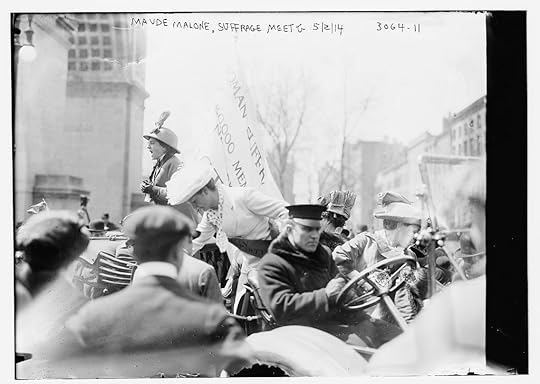
Maud Malone
Of course, the women suffrage movement cannot be completed, without another important character in the name of US President Woodrow Wilson
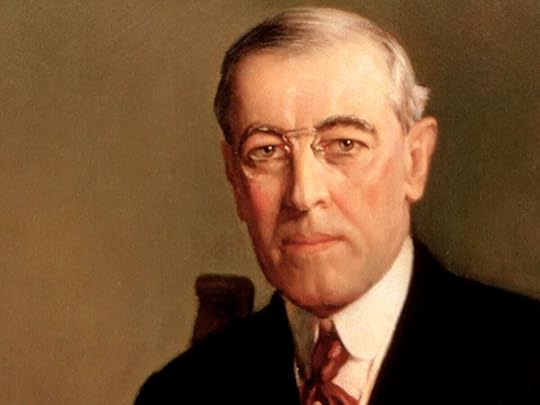
The Women's March: A Novel of the 1913 Woman Suffrage Procession looks at racism and sexism as two big themes. As mentioned above, this novel did have a lot of non-fiction pieces integrated into a well researched and well written historical fiction novel.
This novel not only looked at the 1913 Women's March event, but as I mentioned above alternated between Alice Paul, Ida Wells-Barnett and Maud Malone, and the challenges and triumphs each woman went through to culminate to the big finale.
I quite enjoyed reading this novel about these outstanding women and this very important event in US history as democracy is vital to ensuring that we're all moving forward into the future as best as we can with the knowledge we have and ensuring that we are providing a better future for generations to come.
I thank the author Jennifer Chiaverini for bringing this novel to the forefront and telling the story of the courage and sacrifices that ensured that ALL American women were treated equal when it comes to the right to vote, but I believe we still have a ways to go to making things a lot better in other ways . . .
Should you be interested in these ladies and/or this event, I highly recommend the 2004 HBO made for TV movie "Iron Jawed Angels" starring Hilary Swank as Alice Paul among others.
I leave you with this quote which I believe will leave you very much inspired whether you're male, female, black or white:
"We have a long hard fight ahead of us, and we will endure many dark days, but the outcome is certain. We will triumph, we will win the vote, because we will not give up until we do".
This is my second historical fiction read by author Jennifer Chiaverini, with the first being many years ago in Mrs. Lincoln's Dressmaker.
I found this novel to be a unique mixture of non-fiction & historical fiction, as at times this novel did read like non-fiction (not truly though), and historical fiction at the same time. In my opinion, I believe the author needed to present this novel in this way to truly tell the story of this pivotal event in American history and to bring the spotlight into focus on the women who made this happen.
This novel alternates between three (3) main characters during this as mentioned above pivotal event in American history. They are listed below:
- Alice Paul: Native of New Jersey, but spent few years overseas in Great Britain helping out with the suffrage movement but came back to the United States to help further the goal of women suffrage
- Ida Wells-Barnett: Black lady who was born as a slave in Mississippi, journalist and anti-lynching activist. Believed that ALL women regardless of race deserved the right to vote in elections
- Maud Malone: Irish, heckler, she was notorious for interrupting politician's speeches and causing a lot of trouble for herself in the process
Below, you'll find pictures of these ladies mentioned above so you can put a face to the names to help visualize better. I've included underneath a caption of who they are.
Alice Paul
Ida Wells-Barnett
Maud Malone
Of course, the women suffrage movement cannot be completed, without another important character in the name of US President Woodrow Wilson
The Women's March: A Novel of the 1913 Woman Suffrage Procession looks at racism and sexism as two big themes. As mentioned above, this novel did have a lot of non-fiction pieces integrated into a well researched and well written historical fiction novel.
This novel not only looked at the 1913 Women's March event, but as I mentioned above alternated between Alice Paul, Ida Wells-Barnett and Maud Malone, and the challenges and triumphs each woman went through to culminate to the big finale.
I quite enjoyed reading this novel about these outstanding women and this very important event in US history as democracy is vital to ensuring that we're all moving forward into the future as best as we can with the knowledge we have and ensuring that we are providing a better future for generations to come.
I thank the author Jennifer Chiaverini for bringing this novel to the forefront and telling the story of the courage and sacrifices that ensured that ALL American women were treated equal when it comes to the right to vote, but I believe we still have a ways to go to making things a lot better in other ways . . .
Should you be interested in these ladies and/or this event, I highly recommend the 2004 HBO made for TV movie "Iron Jawed Angels" starring Hilary Swank as Alice Paul among others.
I leave you with this quote which I believe will leave you very much inspired whether you're male, female, black or white:
"We have a long hard fight ahead of us, and we will endure many dark days, but the outcome is certain. We will triumph, we will win the vote, because we will not give up until we do".
Read
August 4, 2021This is a story that needs to be told, and this book had the potential ~ but fell a bit flat, a bit too dry.
May 24, 2021
My full review will be up on the Brink Literacy Project's site soon. I was excited to read this ARC because I'm all about historical fiction and social justice movements. I really enjoyed this intersectional, well-rounded depiction of all of the work that went into planning the 1913 Women's Suffrage March on Washington. I was also happy to see the portrayal of a strong Black suffragist leader and the struggles she faced in the movement – and how they were similar to and differed from women from other backgrounds. Clearly well researched, this novel shows the different experiences women had advocating for suffrage depending on their socioeconomic status, state, race, profession, etc. While the story did lag a bit in the middle, it quickly picked back up again. I learned a lot from this and enjoyed getting a glimpse at Alice, Maud, and Ida's lives.

September 18, 2021
3.5 🌟
I always enjoy this author, although this is not her best book. The topic and information given were very insightful and I learned so much about women’s suffrage. I didn’t realize they were so political amongst themselves with SO many different organizations and groups. Some wanted to fight at the state level while others wanted to focus on the federal constitutional amendment.
Some parts were very exciting to read, others I had to trudge through. Somehow the writing didn’t flow into true fiction form. Much of it felt like facts everywhere with all these names thrown in.
The actual March was interesting and sad that so many women were treated so despitefully in trying to portray a beautiful scene. Another 7 years before the government listened!
The end talks about the Equal Rights Amendment that was originally presented by Alice Paul in 1923. I can guarantee you that the meaning of “equal rights” has changed and it’s not about equality anymore but they want NO distinction between the sexes. God created men and women equal but with different roles and responsibilities.
I am very thankful for the women who endured much so I could vote in my country today! 🗳
P.s. Would like to read more about Ida Wells.
I always enjoy this author, although this is not her best book. The topic and information given were very insightful and I learned so much about women’s suffrage. I didn’t realize they were so political amongst themselves with SO many different organizations and groups. Some wanted to fight at the state level while others wanted to focus on the federal constitutional amendment.
Some parts were very exciting to read, others I had to trudge through. Somehow the writing didn’t flow into true fiction form. Much of it felt like facts everywhere with all these names thrown in.
The actual March was interesting and sad that so many women were treated so despitefully in trying to portray a beautiful scene. Another 7 years before the government listened!
The end talks about the Equal Rights Amendment that was originally presented by Alice Paul in 1923. I can guarantee you that the meaning of “equal rights” has changed and it’s not about equality anymore but they want NO distinction between the sexes. God created men and women equal but with different roles and responsibilities.
I am very thankful for the women who endured much so I could vote in my country today! 🗳
P.s. Would like to read more about Ida Wells.

October 8, 2021
Very interesting and very, very frustrating. To think that women are still fighting for things that women were asking for 100 years ago makes my blood boil. And the division that exists among women as a group also was an issue in the past and continues to be today - another frustrating situation highlighted in this book. Many, many thanks to the fearless women who fought for the right to vote and continue to fight for equality

August 11, 2021
Alice Paul, Ida Wells-Barnett, and Maud Malone. These three strong-willed suffragists advocated for a woman's right to vote through a federal constitutional amendment. The book begins with the presidential election of Woodrow Wilson, a man who was against women's suffrage, yet attempted to keep his opinion on the subject out of the headlines during his presidential campaign. Maud Malone challenged him whenever she could. Alice Paul, having worked with English suffragettes on a militant campaign for women's suffrage in England, decided to take a less militant but very bold approach to advocate for a federal amendment in the United States. Journalist and activist Ida Wells-Barnett advocated for equal voting rights for not just women, but women of color. Each of these women had different tactics and ideas for gaining suffrage but they all ultimately came together at the Women's March of 1913.
Under the organizational efforts of Alice Paul and Lucy Burns, The Women's March was a parade of suffragists and their supporters that proceeded down Pennsylvania Avenue in Washington, D. C. on the day of Woodrow Wilson's arrival into the capital for his inauguration. In an attempt to put the subject of suffrage in the forefront of the public's mind as Wilson takes his oath, thousands of women marched in support of suffrage. These women suffered verbal, mental, and physical abuse and constant challenges just to walk in a peaceful parade. Although the 19th amendment giving women the right to vote did not come into law until 1920, the effort of these three women and the thousands of other suffragists were not in vain.
Jennifer Chiaverini stays very close to the actual events that led to the Women's March of 1913 in her fictionalized story of the suffrage movement. She takes the story of these women from headlines and archival records and brings to life their story in a very relatable way. You want to cheer for each of these women and you get frustrated with those that attempt to block their efforts. Another great story from Chiaverini.
Under the organizational efforts of Alice Paul and Lucy Burns, The Women's March was a parade of suffragists and their supporters that proceeded down Pennsylvania Avenue in Washington, D. C. on the day of Woodrow Wilson's arrival into the capital for his inauguration. In an attempt to put the subject of suffrage in the forefront of the public's mind as Wilson takes his oath, thousands of women marched in support of suffrage. These women suffered verbal, mental, and physical abuse and constant challenges just to walk in a peaceful parade. Although the 19th amendment giving women the right to vote did not come into law until 1920, the effort of these three women and the thousands of other suffragists were not in vain.
Jennifer Chiaverini stays very close to the actual events that led to the Women's March of 1913 in her fictionalized story of the suffrage movement. She takes the story of these women from headlines and archival records and brings to life their story in a very relatable way. You want to cheer for each of these women and you get frustrated with those that attempt to block their efforts. Another great story from Chiaverini.

January 7, 2026
I read this for a book club this month. The Women's March describes the build up to the 1913 Women's March in Washington DC through several viewpoints. This is heavy duty historical fiction, a deep read, one that obviously involved incredible research. It is still approachable, however, and also highly educational. I knew a little bit about the march, but nothing about the key players or the racial controversies involved. This will make for a great book club discussion.

June 6, 2021
I received this book through a Goodreads Giveaway.
This book focuses on a specific part of the U.S. women's suffrage movement: the march in Washington DC in 1913 and events leading up to it. Chiaverini picks three women with different rolls in the suffrage movement and different perspectives to carry the story: Maud Malone, Alice Paul and Ida B. Wells-Barnett.
Maud Malone was a librarian in New York who interrupted several politicians during their speeches to ask about their views on women's suffrage. She also demonstrated for suffrage at the state capital in Albany. Alice Paul was a young women who joined the suffrage movement while studying in England, and became a leader of the movement in the U.S., advocating a national strategy rather than state by state. She later founded the Women's Party and was the first to advocate for the ERA. Ida B. Wells-Barnett was an African-American journalist in Chicago who wrote numerous articles condemning lynching and racism in the North as well as in the southern states.
Because last year was the 100th anniversary of women's suffrage, there were several documentaries on PBS that mentioned this march. I had heard of Alice Paul and Ida B. Wells, but I didn't know anything about Maud Malone and I actually went on line to see if she was also a real person or whether Chiaverini had conflated other people to create a new character. (She was real.)
I have read most of Jennifer Chiaverini's books, and have found them to be uneven. Some have been very quick reads with empathetic characters (most of the Elm Creek Quilters series). Others have dragged because the historical events that she includes have been at the expense of character development (The Union Quilters, Mrs Lincoln's Dressmaker, and The Spymistress). This one struck a good balance between the characters and the events.
(The cover for this edition (ARC) is the same light blue as the others. It looks different because I took the photo on my phone and uploaded it to Goodreads.)
This book focuses on a specific part of the U.S. women's suffrage movement: the march in Washington DC in 1913 and events leading up to it. Chiaverini picks three women with different rolls in the suffrage movement and different perspectives to carry the story: Maud Malone, Alice Paul and Ida B. Wells-Barnett.
Maud Malone was a librarian in New York who interrupted several politicians during their speeches to ask about their views on women's suffrage. She also demonstrated for suffrage at the state capital in Albany. Alice Paul was a young women who joined the suffrage movement while studying in England, and became a leader of the movement in the U.S., advocating a national strategy rather than state by state. She later founded the Women's Party and was the first to advocate for the ERA. Ida B. Wells-Barnett was an African-American journalist in Chicago who wrote numerous articles condemning lynching and racism in the North as well as in the southern states.
Because last year was the 100th anniversary of women's suffrage, there were several documentaries on PBS that mentioned this march. I had heard of Alice Paul and Ida B. Wells, but I didn't know anything about Maud Malone and I actually went on line to see if she was also a real person or whether Chiaverini had conflated other people to create a new character. (She was real.)
I have read most of Jennifer Chiaverini's books, and have found them to be uneven. Some have been very quick reads with empathetic characters (most of the Elm Creek Quilters series). Others have dragged because the historical events that she includes have been at the expense of character development (The Union Quilters, Mrs Lincoln's Dressmaker, and The Spymistress). This one struck a good balance between the characters and the events.
(The cover for this edition (ARC) is the same light blue as the others. It looks different because I took the photo on my phone and uploaded it to Goodreads.)

July 14, 2021
Set in the early 1900s in the United States, The Women's March is based on three real life suffragettes, Alice Paul (25), Ida B. Wells-Barnett (48), and Maud Malone (39).
I have been waiting YEARS for an engaging and comprehensive story about the woman suffrage movement and Jennifer Chiaverni absolutely nailed it with her latest release. Of course, no movement is free of disagreement even among those fighting for the same cause. This time, there was dissension among the women as to whether or not Black women should be allowed to participate in the parades. Despite the serious topics, I loved that the author also included intelligent zingers from each of the women. The unexpected humor often took me by surprise, causing me to laugh out loud with glee numerous times.
My favorite part was when the women marched 250 miles from New York City to Washington DC in the cold March 1913 weather in order to participate in the subsequent “Woman Suffrage Procession” parade. I felt honored and privileged to join their ranks albeit from my couch, and I could feel their joy and jubilation (and unfortunately, also their trepidation and fear) as they marched through the streets chanting “votes for women!”
“[Maud] was simply glad to be there, in the nation’s capital among her sister suffragists beneath clear, sunny skies, marching for a cause she believed in with all her heart.”
The Women's March was an often brutal and raw look at both sexism and racism, but yet, it also provided a beautiful and bright ray of hope. Thank you to this author for penning the exact book I have been waiting for; this reader could not be more pleased, and I implore you to march to the bookstore now to pick up a copy!
If you would like to read more about the woman suffrage movement, then I would highly recommend The Woman's Hour: The Great Fight to Win the Vote (4 stars) by Elaine F. Weiss. If you’d like to learn more about racial issues and prejudice in the United States judicial system, then be sure to read Just Mercy: A Story of Justice and Redemption (5 stars) by Bryan Stevenson.
Location: NYC, Philadelphia, Chicago, and Washington DC
I received an advance copy of this book. All opinions are my own.
I have been waiting YEARS for an engaging and comprehensive story about the woman suffrage movement and Jennifer Chiaverni absolutely nailed it with her latest release. Of course, no movement is free of disagreement even among those fighting for the same cause. This time, there was dissension among the women as to whether or not Black women should be allowed to participate in the parades. Despite the serious topics, I loved that the author also included intelligent zingers from each of the women. The unexpected humor often took me by surprise, causing me to laugh out loud with glee numerous times.
My favorite part was when the women marched 250 miles from New York City to Washington DC in the cold March 1913 weather in order to participate in the subsequent “Woman Suffrage Procession” parade. I felt honored and privileged to join their ranks albeit from my couch, and I could feel their joy and jubilation (and unfortunately, also their trepidation and fear) as they marched through the streets chanting “votes for women!”
“[Maud] was simply glad to be there, in the nation’s capital among her sister suffragists beneath clear, sunny skies, marching for a cause she believed in with all her heart.”
The Women's March was an often brutal and raw look at both sexism and racism, but yet, it also provided a beautiful and bright ray of hope. Thank you to this author for penning the exact book I have been waiting for; this reader could not be more pleased, and I implore you to march to the bookstore now to pick up a copy!
If you would like to read more about the woman suffrage movement, then I would highly recommend The Woman's Hour: The Great Fight to Win the Vote (4 stars) by Elaine F. Weiss. If you’d like to learn more about racial issues and prejudice in the United States judicial system, then be sure to read Just Mercy: A Story of Justice and Redemption (5 stars) by Bryan Stevenson.
Location: NYC, Philadelphia, Chicago, and Washington DC
I received an advance copy of this book. All opinions are my own.

August 28, 2021
The Women’s March
By: Jennifer Chiarevini
5⭐️⭐️⭐️⭐️⭐️
1913-An epic historical novel about the woman’s suffrage movement. Three women risk their lives to fight for the right to vote.
🗳
Alice Paul returns to New Jersey after fighting for women’s rights in Great Britain. She has endured prison and hunger strikes. Nine states have granted women the right to vote but she knows a constitutional amendment will guarantee every women the right to vote.
🗳
Alice organizes a procession down Pennsylvania Ave in Washington, DC, the day before the inauguration of President-elect Woodrow Wilson who is against the suffragist. Others going on the March are Maud Malone, a librarian from NY of Irish decent and Ida B. Wells-Barnett a women of color. She was born into slavery and wants to be included to make sure women of color are not excluded.
🗳
March 3, 1913-They march but the crowds are vicious and endangering the women’s lives. A must read! The research and details were beyond anything I have ever read before. Brilliant move! #thewomensmarch, #jenniferchiaverini, #williammorrow, #bookreview, #bookstagram, #bookreview, #bookstagrammer, #booksconnetus, #stamperlady50
By: Jennifer Chiarevini
5⭐️⭐️⭐️⭐️⭐️
1913-An epic historical novel about the woman’s suffrage movement. Three women risk their lives to fight for the right to vote.
🗳
Alice Paul returns to New Jersey after fighting for women’s rights in Great Britain. She has endured prison and hunger strikes. Nine states have granted women the right to vote but she knows a constitutional amendment will guarantee every women the right to vote.
🗳
Alice organizes a procession down Pennsylvania Ave in Washington, DC, the day before the inauguration of President-elect Woodrow Wilson who is against the suffragist. Others going on the March are Maud Malone, a librarian from NY of Irish decent and Ida B. Wells-Barnett a women of color. She was born into slavery and wants to be included to make sure women of color are not excluded.
🗳
March 3, 1913-They march but the crowds are vicious and endangering the women’s lives. A must read! The research and details were beyond anything I have ever read before. Brilliant move! #thewomensmarch, #jenniferchiaverini, #williammorrow, #bookreview, #bookstagram, #bookreview, #bookstagrammer, #booksconnetus, #stamperlady50

March 10, 2023
Alternate tile for the book “women doing stuff” This book took me 4 months to read because it was SO boring. I was looking forward to this book but it really fell short. Obviously it was an important event and these women’s stories need to be told but this book just didn’t do it for me. It only gets good in the last 20 pages or so. The rest is just them doing things like moving a desk around the office. Honestly each character’s back story was better than the main story and I would have rather read more about that.
All this to say, women are amazing and I’m so glad to have the right to vote.
All this to say, women are amazing and I’m so glad to have the right to vote.

January 15, 2023
When I was a child the events of this book were not in the far distant past. My grandmothers and great-grandmothers could remember a time when they were not allowed to vote, although I don't remember ever asking them about it.
Now it is all over 100 years ago. When I think about how these women fought for such a basic right and how we squander it, I am ashamed. Yes, MTG, I am thinking of you!
Now it is all over 100 years ago. When I think about how these women fought for such a basic right and how we squander it, I am ashamed. Yes, MTG, I am thinking of you!

November 9, 2021
Too many dates and stats, not enough story. I read 3 other Chiaverini books and enjoyed them. This one...not so much.

September 6, 2026
I admit to bringing a bit of prejudice to this novel. I was involved in the production of Suffs, a musical about the women’s march that premiered on Broadway in April 2025. I had hoped that would flesh out details in a way the show could not, and while it did provide more backstory to the participants, the musical was much more stirring and emotional.

March 15, 2022
A very interesting book based on the women’s march to Washington DC and the stories of 3 separate women involved in it, basically women who lead the march and kept the suffrage movement going after women like Susan B Anthony... my first book by the author, I’m not big into historical fiction but I’d read more by her. Thank goodness
For women like these 3 and the others who started the movement and kept it up or women might not have ever had the right to vote!
For women like these 3 and the others who started the movement and kept it up or women might not have ever had the right to vote!
Displaying 1 - 30 of 820 reviews