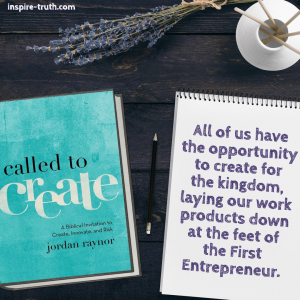
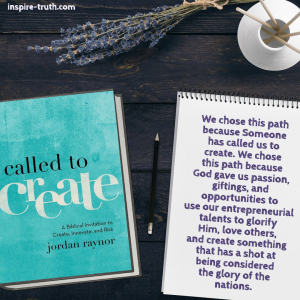
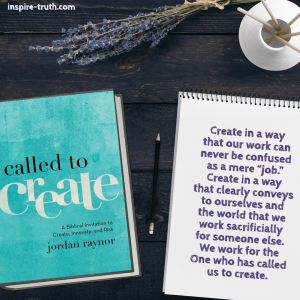
We are all creative in some manner. We all create processes, routines, or methods for our jobs (whether paid or unpaid). We all must figure out how to best juggle various roles and responsibilities, without failing miserably in any of them. We all must effectively adapt prior-learned skills and academic knowledge to our current situations. In doing so, we reflect our Maker — the very first creative being. He was the One who established order out of chaos to make something new for the good of others. This book gives some interesting food for thought on the idea of God as the First Entrepreneur, identifying the ways that role was reflected through each member of the Trinity (a unique but biblically-based perspective!), and connecting that to His invitation to us to continue creating in this world: “God created us to be co-creators with him, to do ‘the things that God has done in creation — bringing order out of chaos’ to create new things for the good of others.”
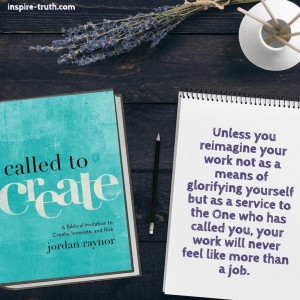
The crux of the matter is that everyone is called to create, or be creative, for the purpose of glorifying God, loving others, and making disciples. We cannot separate creativity from those things. And in order to accomplish them, we must find the place where our skill and ability intersect with the need of others. Raynor says: “In order to best glorify our Creator and love others, Christians should do the work we are best at, work that God has equipped us to do exceptionally well . . . If we choose work we can’t do well, that’s a poor reflection on God, whose character we are called to image to the world.”
This doctrine of creativity is developed throughout the rest of the book by focusing on four key elements.
— Calling: considering God as the First Entrepreneur, the theology of work, and embracing our call to create.
— Creating: understanding how the fact of our “Caller” changes the why, what, and how of our creating.
— Challenges: balancing hard work and trust, handling disappointment and failure, and renewing our minds.
— Charge: fulfilling the Great Commission through our unique calling, stewarding profit wisely, and creating for eternity’s sake.
Raynor cites examples and shares wisdom from over forty different Christian entrepreneurs — from the founders of Chick-fil-A and In-N-Out Burger, to content creators such as Lewis, Tolkien, and Bach. He shares personal examples too, since he is (what he calls) a serial entrepreneur. He’s learned some of these lessons the hard way, and wants us to benefit from his mistakes.
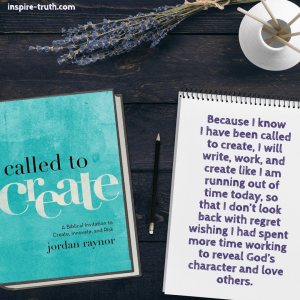
Called to Create is not a dry examination of theory or a trifling record of stories: it is a biblically-based, richly-developed, practically-applied look at how and why every Christian is called to be creative. It is one of the best books I’ve read on the topic of creativity, partly because it’s one of the few written from a worldview firmly rooted in the inerrancy and authority of Scripture. I would highly recommend to anyone considering the purpose of vocation, the motivations for work, the reasons for pursuing various occupations, or how to create with eternity always in view.
Disclaimer: I received this book for free as part of the Baker Books Bloggers program, in exchange for sharing an honest review. All opinions expressed herein are completely my own.