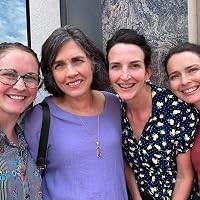
What is it like to discover that something you’ve believed all your life might be wrong? Sally Gary knew since her early adulthood that she was attracted to women. But as a devoted Christian, she felt there was no way to fully embrace this aspect of her identity while remaining faithful. Now, as she prepares to marry the love of her life, she’s ready to speak out about why—and how—her perspective changed. In this deeply personal memoir, Sally traces the experiences, conversations, and scriptural reading that culminated in her seeing her sexuality as something that made sense within the context of her faith—not outside of it or in opposition to it. Along the way, she addresses specific aspects of her journey that will resonate with many other gay the loneliness and isolation of her previously celibate life, the futile attempts she made to resist or even “change” her sexual orientation, and the fear of intimacy that followed a lifetime of believing same-sex relationships were sinful. Sally’s story—one of heritage, learning, courage, and love—is written especially for the generations of LGBTQ Christians after her who are questioning whether they can stay part of the church they call home. It’s a resounding reminder that, just like Sally’s own heart, things can change, and sometimes, when we earnestly search for the truth, we find it in the most unexpected places. Table of Contents Prologue Part Practicing Hospitality 1. Faith Roots 2. Welcoming the Stranger 3. Looking in the Mirror and Seeing the Stranger 4. The Birth of CenterPeace Part Interpreting Scripture 5. The Spirit of the Law 6. What’s in a Translation? 7. Embracing Mystery 8. Overcoming Fear to Find Truth Part Embracing Covenant 9. What Healing Looks Like for Me 10. “It’s Not Good for Man to Be Alone” 11. Covenant Part Inviting the Church to Make a Difference 12. Loving the Samaritan 13. Saving the Next Generation 14. Why I Stay Resources
Reducing a human to an “issue” is .... dehumanizing. In your church history, in conversations about LGBTQ “issues”, how many of these conversations included LGBTQ people?
In this memoir, Sally asks the critical question: “What if our churches that had been an integral part of our lives hadn’t been shrouded in fear of this topic, but had embraced it, and us, rather than perpetuating decades of secrecy and shame?”
This is an important book and a must-read for church leaders and for any of us, really, for whom “love matters more”.
I read this in one setting and so did my conservative mom. I think it's so important to have conversations about how the church is treating lgbtq people and teens. Are we being welcoming and loving, or is our reputation such that gay/same sex attracted people feel they can't even come be part of the body? This is more of a memoir than a theological deep dive. It's well written, and it spoke to me.
Raw and real. Her previous book, which touted the cruel and unrealistic life of celibacy (which then results in a life of isolation and loneliness) as the only answer for LGTBQ Christians was an absurdity to me. This book is different, and I recognized so many things in it. I'm desperately sad that it took her so long to find peace and happiness, but am happy for her now. I'm grateful that she has shared her story and know that it will save lives and relationships for those that are brave enough to seek the path toward faith and love and away from fear and hate.
In 2013, Sally Gary published a memoir entitled Loves God, Likes Girls. It focused a lot on her early life, her conservative upbringing in the Church of Christ, and the tension she held between reconciling what she believed Scripture said about same-sex behavior while acknowledging the reality of her same-sex attraction. In many ways, it was a groundbreaking work, a sort of spiritual predecessor to Gay Girl, Good God is how it tenuously advocated for something that was only beginning to be understood by many conservative Christians at the time: that you could both believe in Jesus and experience same-sex attraction.
But Loves God, Likes Girls wasn’t the end of the journey. In the years since, Gary has moved to a understanding of Scripture that allows for monogamous, same-sex relationships. It’s a movement in her thinking that made this sequel necessary. She writes “I set out to follow a traditional Christian sexual ethic. But in the end, God showed me a different way.”
Affirming is a second memoir coming from a different place and perspective. It doesn’t negate the story of Loves God, Like Girls. It doesn’t mean that she was lying back then. Gary is honest with herself in both books. Her story is an important one, I think, because it shows how someone can move from non-affirming to affirming in clear, rational ways almost in spite of what they want to believe. Too often, Christians tend to think that people hold to certain theological positions because of what that position allows them to do. Sometimes they’re right (and sometimes it’s projection), but that’s not always the case. Gary’s story shows how someone with every reason to be affirming resisted that because they wanted to be true to Scripture until they came to believe that one could both hold to Scripture and be affirming.
Whether you are affirming or not, Affirming is an important story. For LGBT+ Christians, Sally’s story will give hope, encouragement, and solidarity to stick with the Church and Jesus. For affirming Christians, it will open your eyes to ways in which even affirming churches and believers can do better. And for non-affirming Christians, it will hopefully put a human face on an issue that’s often politicized and reduced to paper-thin stereotypes.
More than everything, I appreciate Gary’s candor and authenticity and her commitment to remain faithful to Jesus and the church. There are so many stories from people who’ve left the church or deconstructed their faith and they look back on their upbringing with disdain and vitriol. I don’t want to discount the validity of those stories, but it’s refreshing to see someone who looks back at their past and still sees value and a richness in the faith of their upbringing. Even now, Gary remains within the Church of Christ, challenging it expand its boundaries and perspectives. While we sometimes need those prophets who will burn it with fire, we also need those prophets who will poke and prod and challenge from inside the system with sacrificial grace and love. Sally Gary is that latter kind of prophet and her testimony and example is a precious and beautiful gift.
"What if our churches that had been an integral part of our lives hadn't been shrouded in fear of this topic, but had embraced it, and us, rather than perpetuating decades of secrecy and shame?"
Sally and her story are a 5+ (the weird thing about "rating" a memoir). So grateful for her courage to share and inspired by her love of Jesus.
I found the writing not as compelling or well organized as it think it could have been to do justice to the telling of Sally's journey, but absolutely worth reading all the same.
4.5 stars This resonated with me so much, and I cried more than once. So powerful to read her earlier Side B memoir from years ago and then read about her journey to becoming Side A in this book (fully affirming of LGBTQ).
I remember when Sally Gary spoke in chapel at ACU and talked of same sex attraction and her life of celibacy. I was still a very conservative evangelical at the time, but it’s the only chapel I actually remember. I’ve thought of her over the years, and as my views have changed, though I’ve stayed in the church (albeit a very different one from where I was raised), I’ve wondered about hers. I never had her in class, as she taught in a different department, but now I wish I had. I *loved* this book. I listened to it and her voice was so comforting and she made me feel nostalgic for various things. I got excited when she mentioned Richard Beck, as he was one of the professors I had a lot in my psychology program. I found myself crying during so much of this book, but not for reasons one might think. I would highly recommend this book to anyone who thinks it sounds interesting, but particularly to people who are from a more conservative traditional Christian background (especially Church of Christ, as that is her background, though it’s not mine) and are willing to listen and learn about LGBTQ+ issues that may differ from what they’ve always thought. This is *not* an exegetical teaching of scripture, this is not an attempt to “make” anyone change their staunchly held beliefs, but it is a memoir full of love and an invitation to experience Christ and his teachings in a way that many in marginalized communities have not.
I love how the author starts off by describing the lifestyle her family set as she grew up. Living frugal lives, helping others, and not judging them. The charity her grandparents provided to people who were “Down-On-Their-Luck” (not homeless with addiction problems) during the Great Depression. The environment was different then, people in need, showing up on a framer’s back porch looking for a meal, and being grateful for the kindness and respect shown to them.
I can appreciate her growth in understanding that she had the ability to interpret (seek personal revelation) to the scripture and not necessarily take them literally. Then learning about the different versions and translations to the Bible, particularly 1st Corinthians 6:9 and 1st Timothy 1:10. Where the Greek term “arsenokoties” has been translated as “Homosexual” in modern versions, but in previous versions was translated as “abusers of themselves with mankinde” (King James version 1611) and “abusers of themselves with men” American Standard (version 1900). Implying child abuse, this is something to research further for personal validation.
Her final chapter called “Why I Stay” is a tribute to her love of Jesus, his teaching, and the community of faith a church can provide.
This is a commendable book, and it is of great value to anyone who is part of a conservative tradition of scriptural interpretation such as Gary’s “Tribe” (her term), with their history of exclusion of those outside a narrow path of faith practice, of which I am and have always been a member, though often dissenting.
I am not sure how helpful it will be for anyone who has not been a part of this faith tradition, or who has found peace in leaving it for more tolerant and open-minded acceptance. (There are many in my cohort, and I precede her by a bit.)She is dedicated to the brotherhood of her upbringing and seems to hint that nowhere else can one find the same level of love, support, fellowship, and scriptural truth. She spends a bit of time laying out some alternate ideas of how to read key scriptures, but mostly she leaves that to her “Recommendations for Further Reading”, as she should, since she is no biblical scholar.
I hope many will heed her call for a more affirming and embracing church, and more importantly, that it may give comfort to those who have longed for the church of their childhood to once again be “restored” to following Jesus.
"But a bigger part of healing for me has been the realization that it's not the ability to do things that the culture labels" feminine" that makes me a woman. Being a woman is not limited to specifi5c tasks or traits."
"Removal-rejection- from the body has only served to create greater negative emotions, particularly shame and fear, not just for the person disfellowshipped but for all of us sitting in the pews, wondering who will be next."
The writer's courageous spirit is a reminder of what a bit of hope and a lot of consistency and determination can accomplish. She took a situation that was doomed to end badly and changed the outcomes into thriving new ideas and ministries helping those in need.
Beautiful memoir, loved reading all of what she had experienced throughout her life.
Would recommend this book for those willing to choose to love even when they don't understand or accept what's being presented in front of them.
Sally has written a thought-provoking memoir of her personal journey. After spending many years hiding her sexuality, and the continued wrestling she went through after coming out, she relates how she came to a fully-affirming position. While I know that some will read what I've just written and not be in agreement with that, I would encourage you to read Sally's book to have empathy with Christians like her who are in our congregations, silently hurting and longing for a place of Christian community where they can be accepted as they are. As with many things, there are Christians around the world who have come to different conclusions on this subject - even if you disagree, there are things to be learned here. I'm thankful for her transparency and ministry to those who are hurting.
This book’s biggest strength is that it speaks to being an affirming Christian without seeming radically progressive. I personally appreciate progressive theology, but so many people in my life are not in that place and I would still feel very comfortable giving them this book. It appeals to Christian hospitality, Jesus’ consistent radical acceptance of the “unclean,” and nurturing the next generation into spiritual maturity—all things that conservative Christians would agree are “good fruit.” I truly wish that all evangelical Christians would read this book and thoughtfully reconsider where their heart is on this topic. Sally did such a beautiful job of giving the LGBTQ community faces and stories that should remind us all of our shared humanity.
I have not read Sally’s first book and, in light of her paradigm shift, I probably won’t. I’m her first book, she still believed she should remain celibate in order to be faithful to God. I appreciate the way she addressed her change in views in this book. I hope that parents and family members of LGBTQ+ people will read this. I hope that people who are struggling to reconcile their sexuality and their faith will read this. I mostly hope that Christian’s who are NOT in the LGBTQ+ community will read this and become Ally’s. It was a quick book written with kindness and pure hope. I will be recommending this book often.
This book feels like a balm. While I do not identify as part of the LGBTQ+ community, I am an ally. And I’m a Christian. I have spent much of my adulthood wrestling and deconstructing and reconstructing so many issues in regard to my faith. While I still identify as a Christian, I have left the church tradition of my youth. This author is part of the church tradition of my youth, and has given me a glimmer of hope as she shares her story as a queer woman who deeply loves God. Highly recommend. Thank you, NetGalley, for this advance reader copy.
While I didn’t feel like this book gave an overwhelming amount of biblical evidence as to why living in a covenant relationship as a gay Christian is in accordance with God’s will, I did feel like the author did a good job explaining her story. I think the biggest take away is not whether or not you agree with the author’s lifestyle but how you can and should treat others who have different viewpoints with the same compassion that Jesus did.
While I appreciate Sally’s vulnerable storytelling, she sort of glosses over the part where she participated in ex-gay therapy and possibly even encouraged others to do so. At the very least, she at one time practiced and promoted a “conservative sexual ethic” that included lifelong celibacy. I know that when we know better, we do better, but it’s possible that her ministry did real harm to people, and that should be fully acknowledged before making another dime for her ministry.
My good friend Sally does a wonderful job of painting the picture of her life for others to follow those breadcrumbs to a healthier place. She helps us ask important questions about our faith and what we've been taught. She revives in us the hope of a loving Savior. She reminds us of why we need community around us.
I skimmed this book, I often get tired of reading works like this one because this type of thing was all I thought about as a young teen. But this book deserves 5 stars simply for chapter 10, as well as for all the other passages I happened to read as I flipped through over the course of a few reading sessions.
An excellent work for such a time as this. The church needs more writing like this to be common place. Too many people are left feeling like they are not welcome in the place where welcome should be extended to all. Traditional teachings are always worth looking over again to see if biases and non-traditional interpretations have influenced us in the past
Reading Sally’s story, I felt like I was reading my story—from coming out to my mom on Mother’s Day to the woman bleeding for twelve years being a pivotal biblical story inn own salvation. My church did a book study and invited Sally Gray to speak and meet with us. She is a blessing from God as is this book.
I found this to be repetitious at times. It also bothered me that it didn't follow a linear timeline, so I got confused at where we were in her life during some parts. Said many things about Christianity that really resonated with me, and listening to her (I did this part as an audio book) talk about her mother's death was heartwarming. ❤️
I recommend this book for anyone wishing to understand the journey of what it means to be a gay Christian woman, how to be more loving to ALL people, and how to understand what the journey feels like for those with gay family members. It is extremely well written. Highly recommend!!
A great insight into the struggles of a faithful Christian trying to be true to her faith while navigating her natural attraction to members of the same sex. Her journey from non-affirming to affirming provides a perspective that is much needed in our day and age.
Hate that it’s taken me this long to crack this one. But it was worth the wait, loved every page.
Anyone and everyone that truly strives to “love thy neighbor” needs to read Sally’s work. What a beautiful story! Looking forward to meeting her again and thanking her for the life she is living!
If your spirit needs comfort read this book. It’s like sitting down for coffee with a dear friend for an hour but afterwards realizing 4 hours have gone by.
I appreciated the heart and perspective Sally provided in her book, but if I was looking for something that was compelling to change my views, I didn't find what I was looking for.