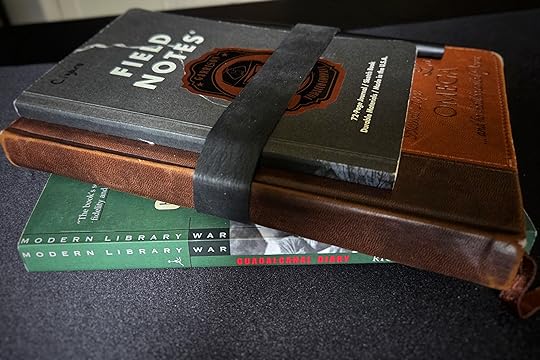
During the Second World War, the USA fought a series of vicious battles against the Japanese on islands in the Pacific. Richard Tregaskis went along as a war correspondent for the first of those battles, on the island of Guadalcanal, and wrote an account – Guadalcanal Diary. Writing with candor and restraint, Tregaskis describes the look and feel, and smell of the Pacific War, the oppressive tropical heat and humidity that caused rashes and fungi to appear on men's bodies, the horror of fighting in tall grass and in jungles against an often invisible enemy, the odd transformation of paradisiacal Pacific landscapes into Hell itself. Tragaskis brings to life the nightmare of that fighting but also the inspiring camaraderie of men at war, the humorous details of life in combat zone, and the bizarre juxtaposition of the gruesome and the mundane. He also demystifies the new ground war. His story reveals the legendary professional Japanese suicide warriors to be merely human, cunning, determined fighters – men vulnerable to American artillery and infantry and not the eager to attempt a sucide once denied a knife. Above all, Tregaskis captures the stoic young Americans who calmly boarded landing crafts, knowing that probably one in four of them would be killed. His diary shows the determination and courage of American soldiers in 1941, a diverse ethnic and racial mix, who would prove to be more than a match for the fierce Japanese.
In his diary, Tregaskis is less concerned with the stories of individuals than with the fate of the entire effort, on which everyone's survival depended. What makes his account unique, however, is that he didn't aim to explain the source of the conflicts or to critique the judgement of generals and statesmen. Rather, he had recorded the experience of war itself through the eyes of those living and dying in it.
Although Tregaskis writes admiringly of the men he risked his life to watch, Guadalcanal Diary is no whitewash. He directly records the racist banter of young Marines steeling themselves for battle against a feared alien enemy, dehumanazing the soldiers they were trying to kill. He tells of the trophy hunters who pried gold fillings from Japanese teeth to make necklaces and sliced ears off the dead, and of those who strolled among the dead and dying after a battle, shooting them one by one to make sure they were all dead. Yet, he neither condemns nor glorifies the deeds of men in desperate straits, whose resolve to survive and whose rage over the loss of their friends rapidly overshadowed moral restraint.
Guadalcanal Diaries is a raw, honest, and highly compelling account of the war as it was fought in the Pacific and a brilliant example of war reporting.