From lockdowns to lockups, viruses to vaccination, the movement of people to the movement of bowels, from rats to cats, and more, The Age of Pandemics chronicles the many facets of the cholera, plague and influenza pandemics, which claimed over 70 million lives between 1817 and 1920, with India being the epicentre in all these episodes.
The book argues that the period between the early nineteenth century to the early twentieth century - an age otherwise known for the worldwide spread of the industrial revolution, imperialism and globalization - was also the 'age of pandemics'. It documents the scale of devastation, the likely causes and consequences, and the resilience with which people faced those pandemics.
The book also provides the first comprehensive coverage of the world's greatest demographic disaster ever to descend upon a country in a short period of time - the influenza pandemic in India in 1918, which claimed more lives than all the battle casualties of World War I. And it shows the continuing relevance of learning from those times to tackle contemporary challenges, such as COVID-19.
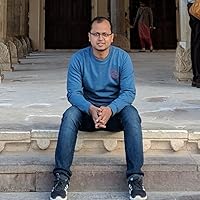
Chinmay Tumbe loves to laugh and learn. He is passionate about migration, cities, firms and history, and is currently Associate Professor in the Economics Area at the Indian Institute of Management Ahmedabad. An alumnus of the London School of Economics and Political Science, the Indian Institute of Management Bangalore; Ruia College, Mumbai; and Rishi Valley School, Madanapalle; he has been a faculty member at the Tata Institute of Social Sciences, Hyderabad. He was a 2013 Jean Monnet Fellow at the European University Institute, Florence, and the 2018 Alfred D. Chandler Jr. International Visiting Scholar in Business History at Harvard Business School, Boston. His first book, 'India Moving: A History of Migration', was published in 2018 and second book 'The Age of Pandemics, 1817-1920: How they shaped India and the World', was published in 2020. He was a member of the The Lancet Covid-19 India Taskforce in 2020-22 and the Working Group on Migration of the Ministry of Housing and Urban Poverty Alleviation in 2016-17. He has published widely in leading journals and newspapers and helped set up the IIMA Archives.
History doesn’t repeat itself, but it rhymes. That is why we need to read this superbly researched book. Our education system doesn’t even make a passing reference to these pandemics that killed over 40 million people in India. And our oral traditions don’t have stories either. Kudos to the author for unearthing all these stories and facts.
I have always thought that public health and community medicine was never taught well in the Indian medical education system but I never could put my finger on what it was missing though it was clear that focusing on definitions, formulae , short notes and MCQs did no good beyond examinations. Reading this book made me realise that it was missing a sense of narrative. When we say community medicine we need to realise that as a physicians we too are a part of the community and the community feels and perceives a disease differently from the scientific evidence based way the researcher/ physician does and I suppose the narrative is what is missed out on by a lot of us in the medical fraternity. It seems to me that to be able to see things from a social or community perspective is more inculcated than it is inherent , and that is an area that needs to be explored. Every pandemic has had a narrative , be it the ‘Indian Cholera ‘ or the ‘Wuhan Virus’. As shown in the book, villages even have deities dedicated to Smallpox, Cholera and heck, even Covid 19. Here’s the common disease cycle- Patient gets sick, patient seeks help from doctor who is a specialist of disease , patient receives treatment and gets better. But what does one do when an entire community gets sick, especially when pandemic outcomes depend largely on the behaviour of groups? How do we make a bridge between community perceptions ( arguably the biggest determinant of population behaviour) and the rigours of evidence based medicine ? These are some of the questions this book made me ponder over. There is an air of fatalism here because it truly seems like nothing has changed over a hundred years.
Author covers some of the most untouched parts of Indian history, like his previous book on migration history. but this is an era of "Big History", "Cilodynamics", " Complexity theory" etc. which allows one find complex patterns in even when overwhelmed with facts and information, which books doesn't do at all, this book falls in same category of previous author's previous book on Indian migration, this being an encyclopedia for pandemic hit India in past.
but lot of unknown things have been brought up to surface, which can provoke future research, but this book isn't about how they shaped India and world at all, its all about Age of Pandemics In India (1817-1920). (full stop)
"Denial, and erasure": the first and last stages of a pandemic that has seen itself replay across the eras of Cholera, Plague, Influenza and probably the COVID-19. Chinmay Tumbe's work is distinctly academic (and the 200+ footnotes reminds you of the stringent expectations on course submissions at IIM :p), but has a narrative thread that brilliantly connects the dots. Whether it is the fact that 50% of worldwide plague deaths (~20mn) in India in 1919, exacerbated by poor nutrition due to lockdowns and systemic issues, led to the momentous Rowlatt Satyagraha and a huge spurt in nationalistic fervour. To the way in which urban planning owes much debt to the lethal impacts of unsanitary living conditions. To how the devastating Bengal famines, and Refugee Crisis in 1971 led Mahalanabis to administer the ORS and bring relief to millions in camps: goes on to demonstrate how what we went through in 2020 is no freak incident or Mayan prophecy at all. Looking forward to such rigour, quantitative insights and historical narrations in the future!
Reading this book helped me gain fresh insight into the many pandemics-plague, influenza, cholera and the recent COVID-19 from a non-medical perspective. It traces the trajectory of various pandemics that have shaped the world over centuries. It is well researched and mindfully written with many vignettes from the past. COVID-19 had the blessing of scientific advancements, while the previous pandemics were hard to deal with. Lives are lost and living is affected in many ways during any pandemic, the chapters on plague extensively highlights this. How evolution and ecology influences economy and human existence is well within our understanding, but beyond our control. The sooner we get this, the better.
This is a great source of history curated about pandemics in India over a century and a diagnosis is provided. However much of the inference is an educated guess and just that - inference. I would still argue that they haven't shaped India as they should - public health care should have been better, we should have reacted better to pandemic, these should have been part of our education system and taught systematically, but nothing of that sort has happened. So changes...how? Thousands have lost their life, be it Cholera or Plague or Covid, its been reactionary politics, people dying and bereavement that has taken us out.
Tumbe's book is a timely addition to public's memory.
This is a light book but well researched into the history of pandemics in India in the past 200 years. I came across great snippets of information.
I would gladly give it 4 stars but I dock it that 1 star because of the title is slightly misleading- There is not much research but some odd speculation on the title 'How they shaped India and the World" part.
The book puts the COVID pandemic in the context of other pandemics that raged across the globe in the past. Cholera, plague and influenza claimed more lives than the World Wars, yet, the barely merit more than a footnote in history. I'd we do not understand and internalise them, we will keep making the same mistakes.
Ultimately, the politics of pandemic revolves around showcasing your success. Of lives saved. Of places doing worse than you. Of your timely action. However, the age of pandemic tells us to do no such thing. Premature celebrations come back to haunt the British in India as pandemics tore through the subcontinent. And hence, honest politics, if there is such a thing, should be aware of two fallacies of pandemic management: concerning the number of people and regional variation.
An educational, engaging read about how pandemics in the past have affected the Indian subcontinent while it was ravaging the world.
Released during the pandemic, The Age Of Pandemics is a microscopic view into the three famous pandemics of the previous centuries - Cholera, Plague and Influenza.
With detailed statistics and through well researched experiences as well as documents, the author explains the impact the above diseases have had on India, and how they changed the course of history.
An insightful, suspenseful read; it’s easy to follow too.
This book confirms the power of the historian; the scholar makes the sources speak as interests him. How brilliantly Tumbe listens to the troubles, madnesses, and sufferings of the earlier era. The point he argues is well-made and taken: that between 1817, the year of Cholera's outbreak in Eastern India and 1920, one witnessed not just Hobsbawn's Age of Revolution, Age of Capital, and Age of Empire but also the Age of Pandemics wherein 70 mn lives were lost. The book also has the curious argument that this maybe because of the eurocentrism that continues to 'plague' historiography; the regions most badly were hit were China and India (the latter saw 55% of these deaths and in the case of the plague, over 90%).
Many institutions of the present came to be invented in this period. The outbreak of Cholera, the first of the three pandemics witnessed 'quarantines', mostly as antidotes to Mecca and Puri, among other Eastern pilgrimages which were deemed as the spreaders and almost sources of the pandemic. This study brings to the fore the notion that science is a social institution too (or what can be stated as 'science is what is done by the scientist and not the other way around'); it took much progress and dissenters outside the scientific establishment in the case of Cholera itself to notice that it may be water-borne.
The book also reads like a thriller - Tumbe meticulously assembles news articles and overlays a sheet of anecdotal recollections from some endearing classics - to reconstruct the route taken by these pandemics. In say, the Plague, as against Cholera, Bombay was the epicentre and Bengal and North East India of today were fairly untouched. The arteries for the spread was the food circuit and Punjab was hence apparently the worst hit. The terror of the pandemic can be felt in the descriptions of well-known personalities. The Royal Family of Mysore for example quarantined in the Jaganmohan Palace. The high moment of the book's artifice is in the recollection of UR Ananthamurthy's Samskara and foregrounding the plague that kills Narayanappa. Tumbe then pulls out the conversations that surround the dead body and tease out the fear that the plague struck in the hearts of people in the Mysore territory.
The penultimate achievement, as suggested in the introduction of this review already, is tying his sources together to suggest the Age of Pandemics to be a major moving force in the times that concern us. The three pandemics, the deadliest of which was the last to break-out, the flu converge in the Early 20th century and fizzle out in the 20s. There is a fairly convincing case to be made that the pandemics have indeed been either accidental causes or significant causes for the rise of Tilak and Gokhale, subsequently the foil for the development of popular and mass nationalism in the Gandhian era by forming an odious complex with the repressive laws like the Rowlatt Act. "With a case fatality ratio of 10 per cent and higher, as reports of that time indicated, it is possible that 40–60 per cent of the Indian population contracted the flu in 1918. 168 Its impact on the economy was devastating. Between 1900 and 2019, 1918–19 stands as the worst year for India in macroeconomic terms: output or real GDP contracted by 10 per cent and inflation surged to 30 per cent."
Tumbe's book is obviously for our times and of our times but most brilliantly, written in our times. An excellent read!
"Those who cannot remember the past are condemned to repeat it" - George Santayana
This gem by Chinmay Tumbe is timely, to say the least. But it is also an instruction that 2020-2021 (and 2022 Anguished face?) should not be forgotten the way past tragedies were.
As Tumbe says therein, "Memory is important as it is the fundamental way in which knowledge accumulates".
Prof Chinmay Tumbe's wide-angle window into the pandemics that ravaged the world (and India, in particular) in the 19th and early 20th century is an invaluable addition to medical history and public memory. I can't wait to read Prof Tumbe's book on migration soon.
A book written while the nation and the rest of the world was and still is in the grip of yet another pandemic.
Reading the book is like reliving the past in the present, the denial, the confusion and the rumours, the acceptance and finally, forgetting the process till the next epidemic hits. The story gets repeated - the quarantine as well as the social censure, the apathy of the bureaucracy or the government and the empathy of individuals and other social organisations, the period of scientific research, medical discoveries and inventions, the migration and the type casting of a particular caste, religion or profession. These 100 years that saw the death of 40 million people in India alone remained largely undocumented even outside the realm of collective memory and oral history traditions.
The Age Of Pandemics by Chinmay Tumbe is a well researched book to add to the history of India that has been forgotten and ignored.
An absolutely brilliant book by an author I’m really starting to admire. More 4.5/5 than a 4/5. It’s quite fascinating, as Tumbe points out, how collective memory in India’s just sort of forgotten these that cholera, the plague, and influenza wreaked havoc across the subcontinent for about a century. True, there was a lot else going on, but these pandemics played a crucial, if less visible, role in these developments. The book is extremely well researched and engaging enough, though can get dry in parts where the focus turns to recounting numbers and statistics across parts of the country. Some bits of the last section on COVID 19 felt premature, given that we’re still very much in the middle of things right now.
An engaging, well-researched book on India's history of pandemics and our ability to have erased them from collective memory. Chinmay takes you on a journey across three significant pandemics in India - cholera, plague, and influenza. Each leaving in it's wake, death, fear, and a flurry of scientific discoveries. The discussions on how the pandemics then used the same strategies we are seeing now (masks, quarantines) are most illuminating. History at its best. The last chapter on the present COVID-19 pandemic felt hurried and unnecessary. But overall, a good book with lots to teach.
It's a good read on previous pandemics and sensitizes us on under what conditions they emerged, the general pattern, health and political climate in those years, and the nature of the virus. Telling tale on measure adopted by the government of that time and the research by the scientific community. Emphasizes good points on what to take into account while dealing with such outbreaks and the results of those actions. In short, a good read to make some sense of current times.
A very vivid history of the past pandemics, much relevant in today's times. Also, a very holistic view of the various factors in play during those times, and how they all interacted with each other. Quite interesting that things which seem so out of the blue today, like masks, quarantine and social distancing are actually not new, and it has all happened before.
I did not enjoy this book as much as I had the author's previous book 'India Moving'. This book turned out to be more dry and factual and somewhat structured like a research project article rather than a book for a general audience. I also felt that it did not do justice with the title in describing a lot on how the pandemics of the past shaped India and the world.
The interesting part of the book is, it introspects why the word pandemic wasn't been accentuated in our history books. By finishing the book, you would be coming out with a broader idea of pandemics occured worldwide and it's effect in India.
Do phrases like lockdown, canceled exams, pandemic origin blames, health care infrastructure issues sound new to you in the context of a global pandemic of COVID-19?
The whole world is suffering from a lack of evidence and learning from past pandemics. Countries which learned from their recent past experiences like South East Asian countries did from SARS experience, are the one who was able to tackle effects of COVID-19 in an effective way.
In human history, we have suffered from many pandemic eras, and the aftermath of those outbreaks was quite severe than COVID-19. Cholera (1817-1920), Plague (1894-1920), Influenza (1918-20) are the 3 most severe of all of them. The collective death toll of all pandemics is estimated to be around 72 million globally and more than half of global deaths (40 million) is in India. While underestimation of death and active cases caught our attention, it is not a new phenomenon. During the outbreak of Plague and Influenza, British Government in Bombay Province tried to suppress reporting of new infections and increasing cases just to postpone containment measures to postpone the closure of markets which could directly impact trade with England.
During the peak of the COVID-19 outbreak, many media sources and political leaders were busy blaming China for the outbreak by calling it a “Chinese Virus”. The authenticity of this claim is an altogether different point of discussion. Something similar occurred during the Influenza pandemic in 1918. Even after a relatively low fatality rate and no evidence of virus origin from the country, the influenza outbreak came to be known as the “Spanish Flu” for the world.
Among all these highlights of past and current pandemics, the most important one is the disappearance of these fatal experiences from the memory of humankind. With the advent of new technological development in medical science and the development of vaccines against these virulent diseases, the frequency and intensity of pandemics become controllable. With control came the complacency and when COVID-19 hit us, it caught us barehanded, unprepared, and at the mercy of a virus.
Learning about these facts and events has been an amazing experience. Especially for Indians, it is good to know how these pandemics played an important role in freedom fighting against the Colonial Government.
As always my mind is bombarded with thoughts and i have recollect and refresh while penning a review.
This book is the best example one can give when one quotes, Those who dont learn from history are bound to repeat it.
Nothing we saw during covid pandemic, i repeat nothing hasnt happenee before.
Though book talks about history of Pandemics starting from Cholera to Plague and Influenze.
It quotes widely from research works, memoirs across the globe, thus its a mammoth work and needed to be given its due.
In all three pandemics India was worst affected with more than 10% population wiped out by Cholera, 6% in Influenza approx 20 millions. Lemme share few common things of covid 19 and Influenza wave of 1919.
1. Second wave was devastating 2. Second wave effected 20 to 40 age group more. 3. Police and healthcare workers were attacked. 4. Religious congregation like Tableeghi Jamaat and Kumbh were blamed. 5. Schools were closed. 6. Public transports were closed.
7. The region wise effect was diffrent. 8. East and south were relatively unscathed. 9. Mumbai was worse effected so was pune and deccan and Gujarat.
Now the pertinent question i want to ask is, why these disease were collectively wiped out of our memory.
When the Influenza was spreading, Jallianwala bagh happened, Rowlatt act was passed WW1 had just ended, we know of all that, why we dont know of these three major pandemics and Influenza in particular.
The symptoms were precisely same and factors suggest so was issues of fungus.
Why didnt Maharashtra remembered all that, why centre never spoke to this 100 year old pandemic?
We had highest mortality rate in the world, only of we knew about our history, we would have been better prepared, one note worthy thing was Britishers didnt stop migration during Influenza as they learned it during Plague pandemic less that 20 years back that even if migrants are stopped they will still go home, so people walked, hitesh bullock cart rides and many died on the way.
This book is about three forgotten pandemics Cholera, Plague, Influenza that took more than 40 million lives. It is very well researched about pandemics affecting our country for more than 200 years and has citations from various historical sources around the world. The book mainly covers these events which must not be forgotten easily and makes us well prepared to tackle future outbreaks. These events did not make a part of the history and our memory as we have gradually ignored them due to other major events like the World Wars, struggle for independence and Industrial revolution.
Mark Twain said, "History doesn’t repeat itself, but it rhymes". The book covers the beginning, confusion, spread, medical discovery, bureaucracy, quarantines, travel restrictions, lock-downs, dead bodies piling up, social prejudice, cure, vaccines, and then forget what happened. It is dangerously relatable how the situation today seems similar.
Must read for people and doctors who want to read more about epidemiology. Hopefully we will learn from this pandemic and get better prepared if there are future outbreaks. Let's hope we come out of this situation soon. Remember, WE ARE IN THIS TOGETHER AND WE WILL BE OUT OF THIS TOGETHER. History will remember us as a generation who fought and helped each other.
This is an informative book about 19th Century pandemics, particularly as they relate to India (a country particularly afflicted by them, and one whose history is under-covered in the West). It's ultimately more of a survey than a full deep dive, and one clearly written in some haste with relevancy in mind — it was published in 2020, in the early throes of the COVID-19 pandemic, whose specter lies over the entire project. People interested in either pandemics or 19th Century India will come away knowing more, and for a relatively minor time investment, but it fell far short of my hopes.
A well-researched account of the Cholera, the Plague, and the Influenza from around the world at a time when science was still in its experimental stages on many levels. Although there is plenty of data presented, it has been knit into a good narrative, which will clear quite some queries about the pandemic we are currently in. It will put things in perspective and act as a caution the next we jump to conclusions based on the rumors presented to us as "news" today.
This entire review has been hidden because of spoilers.