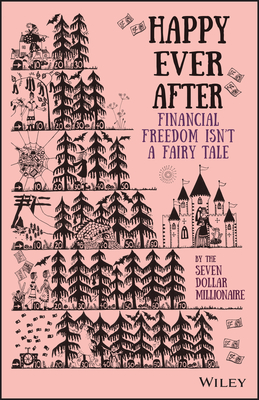
Discover how financial freedom – and not fairy tales – is at the heart of your very own Happy Ever After Did you know you can become a millionaire by saving just $7 a day and investing for 7% returns? Probably not, because financial literacy is a subject that’s overlooked by the vast majority of schools and universities, despite its importance to every single person on the planet. Written initially for a teenage daughter and then turned into a course to train migrant workers, Happy Ever Financial Freedom Isn’t a Fairy Tale focuses on the fundamentals of understanding money, saving and investing, showing how the "magic" of compound investing can transform tiny initial amounts into genuine wealth. Finally, it shows readers how to achieve the "Freedom Formula" of 25x your annual spending – that can set you free. Perfect for anyone who hopes to make their future financially brighter than their present, or help their own children avoid mistakes they made, Happy Ever After has a playful tone, featuring a spoiled princess and talking frog, hand-illustrated to help explain some of the trickier ideas that can help change your life.
Money, it's a topic that is always up for discussion, is the basis for many arguments and what many say is the route of all evil.
This guide on gaining financial security is beyond helpful for young and old alike.
Broken down into short, sharp chapters, there is an abundance of advice that really makes sense and will give anyone a strong foundation for stability when it comes to the money we earn, save and invest.
I'll be making sure my children read it as early as possible to gain full benefits from it.
Since the pandemic hit I have been trying to sort my finances out. So if something like this were to happen again, I would be in a much better position. When Literally PR contacted me to be part of the blog tour, I had to say yes. 1 because It seemed like a really interesting and informative book that was easy to understand. 2 the author has incorporated fairy tales which I found very appealing.
This book has opened up my eyes and has made me think about what I am doing with my money. It explains in detail how you can get your money under control without it being confusing. It's even quite fun to read! Instead of there being loads of text and loads of maths and numbers, there are quick recap questions, graphs, parts you can fill in yourself, and yes, fairy tales explaining the sections in a very unique way.
As much as I know I need to start saving before spending, this book is written in a way that has made me take action straight away. This book clearly outlines all the main points you should be thinking about in a simple acronym: M.I.S.S.I.O.N. It's made me realise there is a lot more to saving than actually saving as much as you can and also that it's not too late to turn your life around. I'm happy to say I'm already making changes in my life so I can have financial freedom!
Happy Ever After Financial Freedom Isn't A Fairy Tale is perfect for the younger generation and I will definitely be passing this on to any kids I have in the future so they can understand the importance and benefit from this as early as possible. But, It's not just for the younger ones because this book has helped me understand so much about my finances already and I know it will continue to help me in the future.
I'm ashamed to say nearing 50 and having worked for half for my life , I really had no idea what kind of financial position I was in . Could I retire, when could I retire, how much money did i need, how was i going to save that... all unanswered, and whats worse unasked questions. I knew guiltily I had been avoiding the subject entirely all my life, hoping indeed for miracles or fairytales to come true! That's why this book is a must read most especially for your kids, so that they acquire an early and fundamental understanding of how savings work, how to build a strong financial foundation and ultimately true independence early on in adulthood. (I'd also recommend it for any grown ups who like me haven't quite taken their financial bull by the horns). I learned heaps.
this book is genuinely really, really good. i've gone from someone who maybe had five pounds left over at the end of the month to someone who actively puts money in a savings account at the end of every week! the book takes you through a cute adventure starring a frog and a princess to learn how to earn your happy ever after.
i was a bit daunted by the amount of adding up in this book, since i did almost fail remedial maths, but all the numbers were super easy to understand and actually made sense to me! the illustrations are also all stunning, with big kay nielsen vibes.
five stars, such a fun book & a very important read.
This book was a great introduction to basic personal finance planning, and more particularly, planning for financial freedom. Rather than just saying things along the lines of "spend less than you make" and "save the rest" (which is part of it), he really sets up the goal of the whole exercise, which is to quantify how much money you actually need in order to achieve financial freedom, then providing a sensible roadmap for how to get there, regardless of your financial situation before starting.
Although this book is written with a young audience in mind (his university-aged daughter was the original "audience" this book was intended for), the tips and strategies provided here are useful to anyone at any age, with the only downside for older audiences being they have less time available to allow their savings and investments to compound.
I will definitely make use of the plan and strategies outlined in this book, and highly recommend this book to others. The only thing I didn't really like were the goofy fairy tales interspersed between the chapters. So if you don't mind the occasional cheesy personal finance-style retelling of fairy tales (which you can easily skip without missing anything important), this is an excellent book to get you started towards financial freedom.
I think this book is mostly useful for people who have never done their own math on what compounding can do and how much they might need to live one.
The most valuable idea I took away is balancing your spend or burn rate against your income from savings and therefore figuring out your retirement nest egg based on your current savings rate. Because of compounding, a high savings rate early is equivalent to many years of freedom from work later on.
Demonstrating that if you save only $7/day you can hit one million dollars of savings is powerful.
But, like many of the more accessible personal finance books, this one assumes straight line returns and doesn't deal with market risk. Because market returns are uncertain, you really need a Monte Carlo analysis or similar to find a spread of possible outcomes because you don't actually achieve average returns. You stop your job or retire on a specific date and start withdrawing from that time, so the immediate market return at that time has an outsized effect on your assets at end of life, especially if you stop working at an earlier age.
-Explains concepts without drowning the reader in jargon -Drops intermittent quizzes in to ensure the reader is taken on the journey, retaining the knowledge and not left behind
Things I feel are missing:
-Promotes side hustles but doesn't go gives examples of things that work in practice -Encourages thinking outside the box with property ownership, e.g. consideration of acquiring a garage or office space to bring in income, but doesn't share any advice on how to go about this
This is arguably my best finance book and probably the best book I have read this year. Michael Gilmore (The Seven Dollar Millionaire) has produced a simplified MONEY 101 course book and everyone should read this, pick the keep lessons and apply in their lives. This should be taught in schools at all levels. I will not put any spoiler here, please get the book and read the magic of how to get out of the worlds and dump the fairy tales we've all believed.