In these devastating lyric poems Jen Sookfong Lee unfolds the experience of her narrator, following her through frost-chilled nights and salt-scented days, as she pulls at the knot of accumulated expectations around her trying to create space to want and to be. The Shadow List is a book filled with desire, where we question the politics of who gets to choose and who doesn't and where the narrator creates hidden lists of what she really wants.
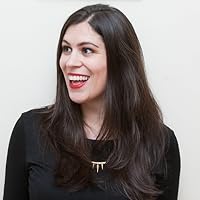
Jen Sookfong Lee writes, talks on the radio and loves her slow cooker.
In 2007, Knopf Canada published Jen’s first novel, The End of East, as part of its New Face of Fiction program. Hailed as “an emotional powerhouse of a novel,” The End of East shines a light on the Chinese Canadian story, the repercussions of immigration and the city of Vancouver.
Shelter, Jen’s first fiction for young adults, was published in February 2011 as part of Annick Press’ Single Voice series. It follows a young girl as she struggles to balance her first and dangerous love affair with a difficult and demanding family.
Called “straight-ahead page-turning brilliance” by The National Post and shortlisted for the City of Vancouver Book Award, The Better Mother, Jen’s sophomore novel, was published by Knopf in May 2011. Set in Vancouver during the mid-20th century and early 1980s, The Better Mother is about the accidental friendship between Miss Val, a longtime burlesque dancer, and Danny Lim, a wedding photographer trying to reconcile his past with his present.
A popular radio personality, Jen was the writing columnist for CBC Radio One’s On the Coast and All Points West for three years. She appears regularly as a columnist on The Next Chapter and Definitely Not the Opera, and is a frequent co-host of the Studio One Book Club. Jen is a member of the writing group SPiN and is represented by the Carolyn Swayze Literary Agency.
Born and raised in East Vancouver, Jen now lives in North Burnaby with her husband, son and hoodlum of a dog.
I love that this collection of poems follows a loose narrative from the point of view of a central character. The poems are often moody, snarky, or acerbic, but they're also tender and wistful, and filled with nuances that come from someone's particular experience of daily life; they're very set in a particular environment and moment of time.
It's easy to lose myself in these poems in the way I would in a novel, except unlike in a novel, I can really pause to think about the particular poem's instance, emotions, ideas and reflect on them. This poetry collection really suits me as a reader. I enjoyed reading this front-to-back over a couple days, and expect I'll be picking it up regularly to read a poem here or there for many years to come.
Over the past century, literature has been rewarded by poets—from Sylvia Plath to Ocean Vuong—writing novels.
But what happens when a novelist writes a debut poetry collection?
The Shadow List reveals a precise, and markedly painful, narrative tension that is frequently attributed to fiction. Sookfong Lee demonstrates all the attentiveness to language and image that poetry lovers look for; we can meditate on her verse through line-by-line, image-by-image readings. And, looking at The Shadow List as a whole, there is a cumulative narrative-voice-driven anticipation and uncertainty that drives the collection. Akin to fiction, the reader is compelled to make an emotional investment. Sookfong Lee reminds us that a meaningful, meticulously-crafted examinations of discomfort offer rewards in any genre.
I will often buy poetry on impulse, and I will often read it before bed. But I don't often finish anthologies. Either because the poetry is too abstract or I lose interest. This one actually made it off my nightstand the morning after I started it and I finished it on the way to work. It's not simple poetry, but it's also not so abstract that I didn't understand it. Like a lot of poetry, it is sad and melancholic, but I really enjoyed the author's way with words. Plus, I was enthused to discover after purchasing that she is a Vancouver author! For this I thank my local indie bookstores for highlighting local authors!
I can't say much good about this book. I read it as a workshop assignment, and I was very happy it was a quick read. I'm not into poems, and this book didn't do anything to attract me to this genre. I have the feeling the author chose this format to hide her low writing skills. I also feel that she copied the format from other authors, but who am I to write this. I will hear what the other workshop's participants have to say about this book before making up my mind.
It started out a bit awkward because I did not like the second-person point of view of the poems. After a while, I got used to the style, but I still would have preferred it to be first or third person. The topics were very modern. I liked the flow of some poems and thought the word choice was pretty good. However, there were a few times where I would have preferred sparser language than Lee wrote with.
Reading this did make me a bit curious about her novels.