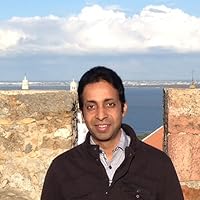
Eknath Easwaran (1910–1999) is the originator of passage meditation and the author of more than 30 books on spiritual living.
Easwaran is a recognized authority on the Indian spiritual classics. His translations of The Bhagavad Gita, The Upanishads, and The Dhammapada are the best-selling editions in the USA, and over 1.5 million copies of his books are in print.
Easwaran was a professor of English literature and well known in India as a writer and speaker before coming to the United States in 1959 on the Fulbright exchange program. In 1961, he founded the Blue Mountain Center of Meditation, based in Tomales, California, which continues his work today through publications and retreats.
His 1968 class on the theory and practice of meditation at UC Berkeley is believed to be the first accredited course on meditation at any Western university. For those who seek him as a personal spiritual guide, Easwaran assured us that he lives on through his eight-point program of passage meditation.
"I am with you always”, he said. “It does not require my physical presence; it requires your open heart."
“That is the message of the Upanishads. The infinite – free, unbounded, full of joy – is our native state. We have fallen from that state and seek it everywhere: every human activity is an attempt to fill this void. But as long as we try to fill it from outside ourselves, we are making demands on life which life cannot fulfill. Finite things can never appease an infinite hunger. Nothing can satisfy us but reunion with our real Self, which the Upanishads say is sat-chit-ananda: absolute reality, pure awareness, unconditioned joy.”
"He who sees all beings in his Self and his Self in all beings, he never suffers; because when he sees all creatures within his true Self, then jealousy, grief and hatred vanish."
"The supreme Self is beyond name and form, beyond the senses, inexhaustible, without beginning, without end, beyond time, space, and causality. Eternal, immutable, those who realize the Self are forever free from the jaws of death."
“Materialism reinforces a “paradigm of scarcity”: there is not enough to go around, so we are doomed to fight one another for ever-diminishing resources. Spiritual economics begins not from the assumed scarcity of matter but from the verifiable infinitude of consciousness.”
A bit slow to get though (sorry, library) but enjoyable to sit with especially while on the beach on the sound dunking into cold water on a hot day!
I love exploring the mysteries of consciousness and this helped scratch that itch as well as reminded me of yoga philosophy I learned and enjoyed years ago. Good to be back, I want more!
Key takeaways: Separation is an illusion The self / consciousness is infinite and incomprehensible, but more real and everlasting than this experience of time and space Happiness does not exist in things, it is always waiting within
This was such a marvellous and inspiring read! I loved the layout and how each Upanishad had an introduction that helped frame its content; each had such wisdom and a great way of looking at ourselves. I will be sure to revisit this book (and hopefully other translations) in the future. A must-read for anyone interested in the spiritual path and the inward journey into finding what we truly are.
Eknath ji has done a huge service to the common man by making these ancient gems of India accessible in English. Considering the eternal nature of Sanatan, reading Upanishads today and finding it relatable is amazing but expected (proudly) at the same time, would definitely recommend!
It would appear that what divides humanity is illusion, whereas what connects humanity is divine.
“In the centre of the castle of Brahman, our own body, there is a small shrine in the form of a lotus flower, and within can be found a small space. We should find who dwells there, and we should want to know him. And if anyone asks, "Who is he who dwells in a small shrine in the form of a lotus flower in the centre of the castle of Brahman? Whom should we want to find and to know?" we can answer: "The little space within the heart is as great as this vast universe. The heavens and the Earth are there, and the sun and the moon and the stars; fire and lightning and winds are there; and all that now is and all that is not, for the whole universe is in him, and he dwells within our heart." And if they should say, "If all things are in the castle of Brahman, all desires—what remains when old age overcomes the castle, or when the life of the body is gone?" we can answer: "The spirit who is in the body does not grow old and does not die, and no one can ever kill the spirit who is everlasting. This is the real castle of Brahman, wherein dwells all the love of the universe. It is Atman, pure spirit, beyond sorrow, old age, and death, beyond evil and hunger and thirst. It is Atman, whose love is truth."
This passage beautifully reminds us that while our physical bodies and worldly desires are temporary, the eternal spirit (Atman)within connects us all to the entire universe. It is a timeless call to look inward for true peace.
The book begins on a promising note, attempting to cover the Upanishads' main concepts, such as the Self and the Brahman. These foundational themes are engaging and offer valuable insights into the essence of Upanishadic philosophy.
However, as I progressed through the book, it became evident that the author focused heavily on drawing parallels between the Upanishads and other religions or schools of thought. While relatability can be enriching, this approach feels somewhat reductive in the context of the Upanishads. The vast and timeless wisdom of the Upanishads risks being diminished when tied to external philosophies solely for the sake of comparison.
In the concluding chapters, the author incorporates numerous references to Mahatma Gandhi, attempting to align his actions with Upanishadic principles. This approach, especially when linking historical political events to the Upanishads, raises questions about its appropriateness. The Upanishads are meant to transcend worldly events, and such connections can detract from their spiritual depth.
Despite these shortcomings, the book does offer good content for readers seeking an introduction to the Upanishads. For its attempt to explore key concepts and provide accessible knowledge, I would rate this book 3 stars.
As for the review itself the upanishads eagerly reiterate the idea of self and the self supremely transcending all with no bounds - as long as we are guided by awareness and consciousness. Each upanishad follows a different story utilized to demonstrate the principles it wishes to promote. The principles revolve around the same idea of self, liberation and renunciation. Basically - The self is rampant in everything around us, all that we could ever seek are naturally the feelings we derive from attaining it …. that have been contently tucked in within us all this time.
it’s beautifully poetic and timeless, it’s definitely a must read for those interested in spirituality and or indian philosophy. One of my favourite extracts; “Good deeds make one pure; bad deeds make one impure. You are what your deep, driving desire is. As your desire is, so is your will. As your will is, so is your deed. As your deed is, so is your destiny.”
To add, the introduction and afterwords are definitely essential to read. I found them very informative especially if you’re unfamiliar with key concepts and or sanskrit terms.
Decades ago, I plugged through a book called "The Thirteen Principal Upanishads", at the time I found it especially useful. However, I am the type of person who needs someone to tell me when my shoe is untied. Not so much a guru as an explication or guide to what I am about to read so I can slow down and look for those points besides the ones I find on my own.
I perused through the Upanishads books available and found I had already purchased this as a series. I then decided to also re-purchase this in the Kindle edition. I do not know if it is his classical background or just skillful presentation; however, Eknath Easwaran is perfect at showing you what is about to be presented and tying it back to the concrete or classical world. I now realize it was not that I just wanted to reread the Upanishads but to understand and dwell on them. Thank you Eknath Easwaran.
You might want to do what you are not supposed to do with mysteries and go to the back of the book first to view the Glossary first for pronunciations and the descriptions of all the different players.
Be sure to read his other books.
[[ASIN:1586380192 The Bhagavad Gita (Classics of Indian Spirituality)]] [[ASIN:1586380206 The Dhammapada (Classics of Indian Spirituality)]] [[ASIN:1586380222 Classics of Indian Spirituality]]
I have been interested in Indian spirituality for a while now, and I thought it would be good to go through Eknath Easwaran's trilogy of translations of core Indian spiritual texts: the Bhagavad Gita (which I had read before, the Barbara Stoler Miller translation), the Upanishads, and the Dhammapada (yet to read). I don't know what I was expecting, but reading the Upanishads was truly transformative; I look forward to integrating the insights they contain into my own spirituality. I was particularly fond of the Katha Upanishad (teaching set in the context of a fable about a young boy Nachiketa meeting Yama, the god of death) and Taittiriya Upanishad (especially discussion on the five koshas, or sheaths of being). It seems to me that interfaith dialogue between Christians and Hindus may be especially fruitful; we have a lot in common, and can learn from each other!
I started reading this book as it is proported to give the basis for Hindu Advaita philosophy. Additionally I had read Eknath Easwaran's book on Gandhi and liked it
Alas I am none the wiser after reading this book.
To me the book appeared as pseudo-profundity — writing that sounds deep and intellectual but is actually vague, tautological, or based on banal truths, made to appear complex through language tricks.
The book 1) uses abstract and vague vocabulary and jargon 2) uses complex sentences, 3) uses multiple subordinate clauses to obscure the core message, 4) uses metaphors rather than specific examples that imply depth but ultimately lacks clarity, and 5) is full of contradictions.
How can you give this a bad review, when it is the collected highest wisdom of an old culture. I enjoyed reading it the first time and I will likely return to this again, and meditate on it in the future. Its nice to have on my shelf alongside other examples of the perennial philosophy, including the Tao Te Ching, the wisdom of NDEs, and mystic writings of all tradition... plus.
While I love these kinds of books, i think the best advice is: meditate. "Keep repeating the ancient mantram OM until it reverberates in your heart." And when you need to: pray. But keep reading books like this is also good.
Maybe this was all humanity was meant to do: spend years in a forest, think about life, and share that knowledge with others. It's really impressive how these Upanishads reflect on complex topics of consciousness and reality with very simple imagery and analogies.
<< A jar seems to enclose something, but the same air exists within and without, and when the jar breaks, the air within it is released into the air to which it belonged. Similarly the Self is the same in all, despite the "clay pot" of the body and the apparent differences between individuals that the body imposes >>
In the whole world there is no study so beneficial and so elevating as that of the Upanishads. It has been the solace of my life, it will be the solace of my death. -Arthur Schopenhauer.
Good voice, is great for an introduction to the Upanishads but some of the Upanishads he condenses too much to where a lot is left out. As I said, it’s a great introduction, though.
I came to enjoy this text less and less. other than a few stanzas in Shvetashvatara speaking to gender neutrality of God, the patriarchy seeps through in pronouns and the male protagonist.
More than this, I do not hold that the mind is supreme to the body. Both can be used for enlightenment, disillusionment, or abandonment.
addendum: from 2 stars to 3
In the later Upanishads, beginning with Manduka, some space was present to contemplete some phrases. It is unfortunate, that the work "Lord" was used often, which introduces a hierarchy even where the Self, atman, Braham within is being explored.
Kena Upshanishad contemplates the origin of all things. Thus far, it is my favorite.
Upshanishad Taiitriya has good cadence. It seems to be intended to be read aloud.