

What do you think?

Disciplined Minds: A Critical Look at Salaried Professionals and the Soul-Battering System That Shapes Their Lives
"This book is stolen. Written in part on stolen time, that is. Because like millions of others who work for a living, I was giving most of my prime time to my employer..."
So begins Jeff Schmidt in this riveting book about the world of professional work. Schmidt demonstrates that the workplace is a battleground for the very identity of the individual, as is graduate school, where professionals are trained. He shows that professional work is inherently political, and that professionals are hired to maintain strict "ideological discipline."
The hidden root of much career dissatisfaction, argues Schmidt, is the professional's lack of control over the political component of his or her creative work. Many professionals set out to make a contribution to society and add meaning to their lives. Yet our system of professional education and employment abusively inculcates an acceptance of politically subordinate roles in which professionals typically do not make a significant difference, undermining the creative potential of individuals, organizations, and even democracy.
Schmidt details the battle one must fight to be an independent thinker, showing how an honest reassessment of what it means to be a professional in today's corporate society can be remarkably liberating. After reading this book, no one who works for a living will ever think the same way about his or her job.
So begins Jeff Schmidt in this riveting book about the world of professional work. Schmidt demonstrates that the workplace is a battleground for the very identity of the individual, as is graduate school, where professionals are trained. He shows that professional work is inherently political, and that professionals are hired to maintain strict "ideological discipline."
The hidden root of much career dissatisfaction, argues Schmidt, is the professional's lack of control over the political component of his or her creative work. Many professionals set out to make a contribution to society and add meaning to their lives. Yet our system of professional education and employment abusively inculcates an acceptance of politically subordinate roles in which professionals typically do not make a significant difference, undermining the creative potential of individuals, organizations, and even democracy.
Schmidt details the battle one must fight to be an independent thinker, showing how an honest reassessment of what it means to be a professional in today's corporate society can be remarkably liberating. After reading this book, no one who works for a living will ever think the same way about his or her job.
306 pages, Paperback
First published March 9, 2000
Ratings & Reviews
Friends & Following
Create a free account to discover what your friends think of this book!
Community Reviews
Displaying 1 - 30 of 47 reviews

September 3, 2011
Disciplined Minds is the best piss-take of office culture I've come across since Ricky Gervais's The Office. Here are a few quotes that leapt out at me.
"Resisting the system carries some risk, but not resisting is a far deadlier course for your individual identity."
"The criterion for certification as a professional is not just technical knowledge, but also attitude, specifically, an uncritical attitude."
"Nonprofessional employees follow assigned procedures. Professional employees follow assigned ideologies."
"The fact that the [Wall Street] Journal does not use photographs, together with the widespread but incorrect belief that it contains only boring financial data and articles that praise the system, help keep the wrong eyes from seeing the big picture."
"Opposition groups that... honor system-based credentials, and thereby import hierarchies from the system, should not wonder why few people stick around. People subordinate themselves to authority at work because they are paid to do so, and even then they resist. Few are about to do so voluntarily."
"When professionals have good politics, it is not because of their professional training, but IN SPITE of it."
"People willing to take a stand often get treated better than people with a butt-kissing attitude, who often get taken advantage of."
"The bosses' high priority on control over the workforce and control over the political content of their work REQUIRES them to be concerned about the attitudes and values of their employees."
"Only by playing a creative role in some organised form of opposition can an individual gain perspective on what otherwise appears to be an all-encompassing, total system. The system is forced to reveal its true nature to those involved in such struggles."
"Work with other independent thinkers in organised oppositional activity."
"The atmosphere in university departments is not freethinking, but repressive."
"Those who have no vision of greater democracy... retreat in fear at the mere suggestion of joining with others in struggle, for those who act as part of a group admit to being less than autonomous individuals and give up the comforting fiction that they meet their bosses as equals."
"In an undemocratic organisation, the price of belonging is one's individuality."
"The thinking that people do when they create their own ideology - their own vision for society - is broader than the thinking involved in following a perspective that is given."
"Generally speaking, the greater the power, whether corporate or state or even oppositional, the more eager professionals are to subordinate themselves to it."
"At the workplace, experts can be somewhat independent in informal discussions, but almost never within their professional work itself; it is considered 'unprofessional' for experts to bring independent political thinking to bear in their work."
"To have any chance of success, the latter [the individual working for progress in the social structure] must step outside the confines of professional work."
"[T]hose who favour the qualifying examination system often turn out to be the least critical of the social hierarchy and the dominant ideology, that is, the least critical of existing power relationships and therefore the least progressive politically."
"The system protects itself by producing people with 'know-how' rather than people with 'know-why'. The system is set up to produce servants, not critics."
"The physics student who wants a career designing missile guidance systems is not required to know much about the philosophical foundations of physics, but the physics student who wants to pursue the philosophical issues is required to demonstrate employability by the aerospace industry."
"[There is a] potential mismatch between a student's interest in a profession and the profession's primary role in society."
"People under time pressure don't simply do faster work. They do different work. (It is of lower quality.)"
“No amount of income or status can make whole a social being who has abandoned his own intellectual and political goals.”
“[Y]our blood, sweat and tears are going into work of questionable social value, work whose bottom line is enriching some corporation, serving the military or bolstering some elite.”
“The division of work into narrow tasks denies workers a feeling for what they are producing, thereby discouraging them from challenging management on the nature or design of the product or service.”
“The well-known tendency of employers to overlook the shortcomings of incompetents who display the proper attitude…"
"Lawyers feel the need [to redeem their poorly-perceived image] by working ‘pro bono’ - for the public good. Most journalists and other professionals would feel insulted if you asked them whether they set aside any working time to help make the world a better place."
“Professionals generally avoid the risk inherent in critical thinking and cannot properly be called critical thinkers. They are simply ideologically disciplined thinkers. Real critical thinking means uncovering and questioning social, political and moral assumptions..."
“The nonprofessional who is conservative off their job is often not at all conservative on workplace issues and therefore is not necessarily a net conservative force in society. The professional who is liberal off the job is often very conservative on work issues and is a net conservative force in society.”
"Resisting the system carries some risk, but not resisting is a far deadlier course for your individual identity."
"The criterion for certification as a professional is not just technical knowledge, but also attitude, specifically, an uncritical attitude."
"Nonprofessional employees follow assigned procedures. Professional employees follow assigned ideologies."
"The fact that the [Wall Street] Journal does not use photographs, together with the widespread but incorrect belief that it contains only boring financial data and articles that praise the system, help keep the wrong eyes from seeing the big picture."
"Opposition groups that... honor system-based credentials, and thereby import hierarchies from the system, should not wonder why few people stick around. People subordinate themselves to authority at work because they are paid to do so, and even then they resist. Few are about to do so voluntarily."
"When professionals have good politics, it is not because of their professional training, but IN SPITE of it."
"People willing to take a stand often get treated better than people with a butt-kissing attitude, who often get taken advantage of."
"The bosses' high priority on control over the workforce and control over the political content of their work REQUIRES them to be concerned about the attitudes and values of their employees."
"Only by playing a creative role in some organised form of opposition can an individual gain perspective on what otherwise appears to be an all-encompassing, total system. The system is forced to reveal its true nature to those involved in such struggles."
"Work with other independent thinkers in organised oppositional activity."
"The atmosphere in university departments is not freethinking, but repressive."
"Those who have no vision of greater democracy... retreat in fear at the mere suggestion of joining with others in struggle, for those who act as part of a group admit to being less than autonomous individuals and give up the comforting fiction that they meet their bosses as equals."
"In an undemocratic organisation, the price of belonging is one's individuality."
"The thinking that people do when they create their own ideology - their own vision for society - is broader than the thinking involved in following a perspective that is given."
"Generally speaking, the greater the power, whether corporate or state or even oppositional, the more eager professionals are to subordinate themselves to it."
"At the workplace, experts can be somewhat independent in informal discussions, but almost never within their professional work itself; it is considered 'unprofessional' for experts to bring independent political thinking to bear in their work."
"To have any chance of success, the latter [the individual working for progress in the social structure] must step outside the confines of professional work."
"[T]hose who favour the qualifying examination system often turn out to be the least critical of the social hierarchy and the dominant ideology, that is, the least critical of existing power relationships and therefore the least progressive politically."
"The system protects itself by producing people with 'know-how' rather than people with 'know-why'. The system is set up to produce servants, not critics."
"The physics student who wants a career designing missile guidance systems is not required to know much about the philosophical foundations of physics, but the physics student who wants to pursue the philosophical issues is required to demonstrate employability by the aerospace industry."
"[There is a] potential mismatch between a student's interest in a profession and the profession's primary role in society."
"People under time pressure don't simply do faster work. They do different work. (It is of lower quality.)"
“No amount of income or status can make whole a social being who has abandoned his own intellectual and political goals.”
“[Y]our blood, sweat and tears are going into work of questionable social value, work whose bottom line is enriching some corporation, serving the military or bolstering some elite.”
“The division of work into narrow tasks denies workers a feeling for what they are producing, thereby discouraging them from challenging management on the nature or design of the product or service.”
“The well-known tendency of employers to overlook the shortcomings of incompetents who display the proper attitude…"
"Lawyers feel the need [to redeem their poorly-perceived image] by working ‘pro bono’ - for the public good. Most journalists and other professionals would feel insulted if you asked them whether they set aside any working time to help make the world a better place."
“Professionals generally avoid the risk inherent in critical thinking and cannot properly be called critical thinkers. They are simply ideologically disciplined thinkers. Real critical thinking means uncovering and questioning social, political and moral assumptions..."
“The nonprofessional who is conservative off their job is often not at all conservative on workplace issues and therefore is not necessarily a net conservative force in society. The professional who is liberal off the job is often very conservative on work issues and is a net conservative force in society.”

June 5, 2017
Oh dear, finally a Ph.D. level physicist from USA lays down in simple terms the modus operandi of how I, my friends, and people like us proceed in this life. What a funny feeling to have such a mirror.
Yes, we are, indeed, professionals. We get the job done, not many questions asked. Except the technical ones that pertain to the job at hand. And why should we ask more? This is how I, my friends, and people like us were educated and trained: there were so many exams and one does not get points for unrelated questions, but only for focused, dedicated work. After all, isn't science and technology 'beyond politics' and 'objective'? An aircraft is safer or not, that has got nothing to do with your political views. A surgery technique is more successful or not whatever political line you subscribe to as a doctor, right? A nuclear bomb is more effective or not independent of your political leanings, isn't it? A drone, an unmanned aerial vehicle is more effective in its operations regardless of its designer's beliefs, isn't it. Isn't it?
Jeff Schmidt's observation and analyses are laser-sharp, cutting right into the core of the issues, and strongly debating that there are indeed some 'issues', and we'd better tackle them. Not that most of us, professionals will do that; after all, it took us so many years of education, training, and investment to be molded into our current shapes, and why should we give up our privileges?
Some parts of the book are super-specific: there are so many pages dedicated to Ph.D. candidates going through the experience of grueling qualification exams, mostly people in physics departments. But I agree with the author, you don't have to be Ph.D. candidate in physics to relate to it, because very similar mechanisms are already in place for so many different tracks that lead to the modern professional life. Nevertheless, it is impossible not to make comparisons and draw conclusions. Ah, and imagine Einstein being forced to sit those qualification exams, getting bored, and ... who knows what'd be next :) Certainly not the type of guy to follow the established rules some would say, a kind of troublemaker.
Apart from that, I think I'll never forget the part where he compares how the funding agencies describe their projects, and how the professors that work on scientific projects for those agencies describe the very same work: The people who are actually in power and decide to give money to this or that professor, they are very blunt and straightforward in describing the problems to be solved, whereas the professors working on those problems describe the same work as if it were directed by their scientific, child-like curiosity, focused on discovering some abstract laws for understanding nature. It becomes so obvious that it hurts.
This is a unique book, maybe the only one of its kind, and I consider it to be valuable not for its recommendation, but for the reflections it leads the reader to. The questions it forced me to ask. No easy answers, because those are some dangerous, disturbing questions, so think twice before pursuing their logical consequences.
Oh, and the next time you see common working-class folk becoming a little skeptic towards the ideas of objective, scientific bureaucrats, those professionals that are highly-trained and claiming that they are progressive, free thinkers, well, I'm sure this book will be among the ones worth remembering and re-reading.
Finally, dear professionals, working for government, or companies, trying to solve 'interesting' problems, you owe yourself to read this book. After all, it's good to be made uncomfortable every once in a while, right?
Yes, we are, indeed, professionals. We get the job done, not many questions asked. Except the technical ones that pertain to the job at hand. And why should we ask more? This is how I, my friends, and people like us were educated and trained: there were so many exams and one does not get points for unrelated questions, but only for focused, dedicated work. After all, isn't science and technology 'beyond politics' and 'objective'? An aircraft is safer or not, that has got nothing to do with your political views. A surgery technique is more successful or not whatever political line you subscribe to as a doctor, right? A nuclear bomb is more effective or not independent of your political leanings, isn't it? A drone, an unmanned aerial vehicle is more effective in its operations regardless of its designer's beliefs, isn't it. Isn't it?
Jeff Schmidt's observation and analyses are laser-sharp, cutting right into the core of the issues, and strongly debating that there are indeed some 'issues', and we'd better tackle them. Not that most of us, professionals will do that; after all, it took us so many years of education, training, and investment to be molded into our current shapes, and why should we give up our privileges?
Some parts of the book are super-specific: there are so many pages dedicated to Ph.D. candidates going through the experience of grueling qualification exams, mostly people in physics departments. But I agree with the author, you don't have to be Ph.D. candidate in physics to relate to it, because very similar mechanisms are already in place for so many different tracks that lead to the modern professional life. Nevertheless, it is impossible not to make comparisons and draw conclusions. Ah, and imagine Einstein being forced to sit those qualification exams, getting bored, and ... who knows what'd be next :) Certainly not the type of guy to follow the established rules some would say, a kind of troublemaker.
Apart from that, I think I'll never forget the part where he compares how the funding agencies describe their projects, and how the professors that work on scientific projects for those agencies describe the very same work: The people who are actually in power and decide to give money to this or that professor, they are very blunt and straightforward in describing the problems to be solved, whereas the professors working on those problems describe the same work as if it were directed by their scientific, child-like curiosity, focused on discovering some abstract laws for understanding nature. It becomes so obvious that it hurts.
This is a unique book, maybe the only one of its kind, and I consider it to be valuable not for its recommendation, but for the reflections it leads the reader to. The questions it forced me to ask. No easy answers, because those are some dangerous, disturbing questions, so think twice before pursuing their logical consequences.
Oh, and the next time you see common working-class folk becoming a little skeptic towards the ideas of objective, scientific bureaucrats, those professionals that are highly-trained and claiming that they are progressive, free thinkers, well, I'm sure this book will be among the ones worth remembering and re-reading.
Finally, dear professionals, working for government, or companies, trying to solve 'interesting' problems, you owe yourself to read this book. After all, it's good to be made uncomfortable every once in a while, right?

March 25, 2014
One of the most influential and important books I have ever read, really puts some pieces of the puzzle together for me and confirms some thoughts and feelings I have had for decades. This author exposes the dirty laundry of the educational/professional system and it ain't pretty at all folks, this guy is a whistle blower and it took big, big guts for this guy to go public with this book and he paid for it. I've obtained two degrees, worked within higher education on the bottom rung and always wondered why it was so sadistic, wasteful and so self-centered and now I know. All the rebellious instincts are carefully selected against and weeded out by the professional educational system. It doesn't make much sense unless you consider that the whole system is designed to produce compliant technicians who are uncritical workers and can be trusted to do the bidding of their masters. Bingo! I've never seen anyone express these thoughts, thoughts I had my very first semester of graduate school, but of course, I'm working class and never assimilated to the system and frankly, it goes against my core values. The author understand the depth of anguish and misery those who don't fit and those who do, he talks about prisoner of war anti-indoctrination training gleaned from Army manuals, discusses workplace violence and goes so far as to offer up a plan of resistance. This book makes me realize, you have to choose which side you're on or was the author phrases it, "Who are you?" Love on page 266 "Individuals who call themselves radical professionals, but who think of themselves as professionals first, are in essence liberals. Such people make the social reform movement unattractive by bringing to it the same elitism, the same inequality of authority and ultimately the same hierarchy of "somebodies" and "nobodies" that turns people off to the status quo in the first place and sparks their interest in the opposition." I'm going to rank this author up there with Fromm, John McMurty, Howard Zinn and Chomsky in their critical analysis of the power system in place. It's written in understandable and passionate language, the author writes with some soul, he's been touched and wounded by what he's seen and experience and wishes to help others. In this sense, he's no professional in a sense he's chose to side with clients and the general public in face of his profession's interests. This book made me remember who I am and what I care about at a pivotal moment in my life. Can't recommend this book highly enough! P.S. - A good companion book to this is "Excellent Sheep" by William Deresiewicz which addressed a similar issue from more of a humanities perspective. Taken together, these two books get to the heart of the matter.

May 19, 2014
Schmidt says that, in “professional” jobs — everything “from journalism and architecture to education and commercial art” — employers judge an employee’s “ideological discipline” to be of paramount importance. The employee is required to take the attitude that they will follow their employer’s point of view, as this is part of the nature of the work itself. He says “it is by far the most socially significant requirement in that it distinguishes the professional from the skilled nonprofessional.” Professionals work within a hierarchical structure and generally cannot advocate for more equal, democratic distribution of power among workers. Generally, they must not only outwardly obey rules, but must seem to internalize their employers’ ideology. A professional who has internalized a particular political agenda still “sees ‘politics’ as a dirty word” and will advocate taking a route that “feels right” or is “technically best,” which happens to align with the employer’s political agenda that they have internalized.
For this reason, the mandatory examinations for beginning in and for graduating from educational programs are not only looking for the applicant’s brightness and technical knowledge but also for their willingness to comply with the assumptions, framework and restrictions of the test questions. Therefore, although the tests are couched in highly technical, objective-sounding language, they are not politically neutral. The students they weed out are not necessarily ignorant of or incurious about factual knowledge in the field; more notably, they may be noncompliant with the authoritarian political agenda of the universities and the workforce. “Middle-class students are simply easier than working-class students to train as professionals,” he writes. “They are not smarter; their attitudes and outlook simply need less adjustment to meet the system’s demands.” In graduate programs, qualifying exams are designed to retain only those students with whom the professors want to continue working. In situations where the professors are uncertain about whether the exam will work well in this regard, they may choose to keep the test scores secret. “Opposition to the simple reform of letting students know their test scores is nothing more than opposition to an open political discussion of the actual qualifying attributes.”
“The resulting professional,” Schmidt writes, “is an obedient thinker, an intellectual property whom employers can trust to experiment, theorize, innovate and create safely within the confines of an assigned ideology.” And, since “refraining from questioning doesn’t look like a political act,” he says, “professionals give the appearance of being politically neutral in their work.”
A professional worker struggles when he criticizes the intelligence of those above him but “cannot risk admitting to himself that he has been hired to serve interests that conflict with his own.” He may put more effort into work that suits his own agenda and try to make management see why his work is good, but management cannot see why it is good because they do not share his values or agenda. This frustrated employee, feeling that he is the victim of “politics,” is more likely to recommend “a mythical nonpolitical approach rather than an alternative distribution of political power.”
In the context of entrance examinations, Schmidt brings up the debate over affirmative action, going back to 1974 when Allan Bakke, a white student, sued the highly competitive UC Davis medical school for rejecting him while admitting several non-white students who had lower grades and test scores. “Opponents of affirmative action would have us view the 16 positions [that generally went to non-whites] as ‘political’ and the other 84 as going ‘according to merit,” Schmidt writes, saying he finds it “ludicrous” that “almost 2,000 rejected whites could think of 16 minorities as stealing their opportunity to become doctors.” He points out that all college admissions are political, because the entrance exams are political; affirmative action admissions are just differently political. The “racist diversion” of the claim of “reverse discrimination” distracts from “the hierarchical system that by its very nature restricts the number of openings.” Colleges mimic “the current social structure, so that middle-class, white and male-gendered attitudes, values, outlooks and approaches to problems spell success in college, while working-class, minority and female-gendered perspectives do not.” The problem is not that entrance exams don’t predict students’ success in college; the problem is that they do predict their success within the biased environment and thereby enable the bias to occur. Some test reform has removed unnecessary bias from questions (e.g. deleting references to hobbies like golf and sailing, including reading comprehension questions on passages about immigrant experience, or changing “John” to “Mary”), but this amounts to merely cosmetic change that “put[s] an egalitarian face on an instrument of pro-system bias.”
Universities project a facade of manicured, middle-class isolation where students can direct their own studies and protest authority and as such are often contrasted with the “real world” which is characterized by “the control of production, where the hierarchy of power and wealth is clear and no one is surprised to encounter exploitation, alienation and crime.” This dichotomy cannot be entirely accurate, however, since university graduates do, in fact, go forth and work in the “real world,” so it seems that somehow universities manage to prepare students for it during college. One way this happens, Schmidt explains, is that graduate programs recommend full-time study and furthermore recommend that any work for pay should be on campus, as this ensures that the professors have their students’ “undivided attention” so that they can inculcate values. In particular, when university research programs are funded by the government, it should be clear that the researchers will have to serve government interests and cannot be “self-directed.” For scientists in particular (the author speaks from personal experience in a physics program), any road can lead to new scientific discoveries, but the scientist must be on the lookout specifically for “scientific truth of interest to those who employ the scientists or sponsor their research” if they care about having a job.
In some cases, as with police and military work, the necessary hierarchical attitude — toward one’s immediate superiors/inferiors on the job, as well as toward the world at large — is easy to see. With other professional jobs, it’s still there, but not widely acknowledged. Sometimes campaigns of harassment, especially on race and gender lines, motivate members of certain groups (but not others) to drop out. They “run into trouble not because they are incapable of comprehending more advanced concepts, but because consciously or unconsciously they refuse to make peace with the dominant attitudes and values.”
While “nonprofessionals are trusted to make only decisions that can be made mechanically” and “often feel that their employers treat them like unthinking machines,” professionals are additionally trusted to make ideological decisions.
In addition to the Marxist analysis, Schmidt attributes the hierarchy of concepts over material things as a product of the Dark Ages, when the Church held power and therefore “the status of priests was higher than that of craftsmen.” Even today in academia, theorists generally have greater status than people who do applied work in the same field, and there is a perception “that the work of theorists is more intellectually difficult than that of experimenters”. It is the case that “work gains social status if it resembles in form the activity of those at the top, and loses status if it resembles the work of laborers…So if your job requires ‘getting your hands dirty’ you automatically have one strike against you as far as social status goes, whereas if your job is extremely intellectual, your work is seen as semidivine, glowing with the radiance of disembodied thought.” In any case, “students with such elitist beliefs are often happy never to have contact with the actual objects of the theory that they are studying.”
Schmidt recommends that workers become “radical professionals” — simultaneously fighting and obeying the status quo — the contradiction of which is partially resolved by placing a primary emphasis on the “radical” identity, meaning not personally identifying with the authorities of one’s institution and being willing to criticize it, and doing work that is socially beneficial (above and beyond what anyone, even a nonradical, would do anyway in the same job position). The hierarchical system in graduate/professional school is cultlike, he says, and students who don’t take advantage of opportunities to organize politically and to negotiate better deals for themselves will be subjected to what amounts to cult indoctrination. The negotiation can be achieved, he says, with organized support from fellow stakeholders and with some strategic concessions made to play by the rules just enough to retain the opportunity to change the status quo.
For this reason, the mandatory examinations for beginning in and for graduating from educational programs are not only looking for the applicant’s brightness and technical knowledge but also for their willingness to comply with the assumptions, framework and restrictions of the test questions. Therefore, although the tests are couched in highly technical, objective-sounding language, they are not politically neutral. The students they weed out are not necessarily ignorant of or incurious about factual knowledge in the field; more notably, they may be noncompliant with the authoritarian political agenda of the universities and the workforce. “Middle-class students are simply easier than working-class students to train as professionals,” he writes. “They are not smarter; their attitudes and outlook simply need less adjustment to meet the system’s demands.” In graduate programs, qualifying exams are designed to retain only those students with whom the professors want to continue working. In situations where the professors are uncertain about whether the exam will work well in this regard, they may choose to keep the test scores secret. “Opposition to the simple reform of letting students know their test scores is nothing more than opposition to an open political discussion of the actual qualifying attributes.”
“The resulting professional,” Schmidt writes, “is an obedient thinker, an intellectual property whom employers can trust to experiment, theorize, innovate and create safely within the confines of an assigned ideology.” And, since “refraining from questioning doesn’t look like a political act,” he says, “professionals give the appearance of being politically neutral in their work.”
A professional worker struggles when he criticizes the intelligence of those above him but “cannot risk admitting to himself that he has been hired to serve interests that conflict with his own.” He may put more effort into work that suits his own agenda and try to make management see why his work is good, but management cannot see why it is good because they do not share his values or agenda. This frustrated employee, feeling that he is the victim of “politics,” is more likely to recommend “a mythical nonpolitical approach rather than an alternative distribution of political power.”
In the context of entrance examinations, Schmidt brings up the debate over affirmative action, going back to 1974 when Allan Bakke, a white student, sued the highly competitive UC Davis medical school for rejecting him while admitting several non-white students who had lower grades and test scores. “Opponents of affirmative action would have us view the 16 positions [that generally went to non-whites] as ‘political’ and the other 84 as going ‘according to merit,” Schmidt writes, saying he finds it “ludicrous” that “almost 2,000 rejected whites could think of 16 minorities as stealing their opportunity to become doctors.” He points out that all college admissions are political, because the entrance exams are political; affirmative action admissions are just differently political. The “racist diversion” of the claim of “reverse discrimination” distracts from “the hierarchical system that by its very nature restricts the number of openings.” Colleges mimic “the current social structure, so that middle-class, white and male-gendered attitudes, values, outlooks and approaches to problems spell success in college, while working-class, minority and female-gendered perspectives do not.” The problem is not that entrance exams don’t predict students’ success in college; the problem is that they do predict their success within the biased environment and thereby enable the bias to occur. Some test reform has removed unnecessary bias from questions (e.g. deleting references to hobbies like golf and sailing, including reading comprehension questions on passages about immigrant experience, or changing “John” to “Mary”), but this amounts to merely cosmetic change that “put[s] an egalitarian face on an instrument of pro-system bias.”
Universities project a facade of manicured, middle-class isolation where students can direct their own studies and protest authority and as such are often contrasted with the “real world” which is characterized by “the control of production, where the hierarchy of power and wealth is clear and no one is surprised to encounter exploitation, alienation and crime.” This dichotomy cannot be entirely accurate, however, since university graduates do, in fact, go forth and work in the “real world,” so it seems that somehow universities manage to prepare students for it during college. One way this happens, Schmidt explains, is that graduate programs recommend full-time study and furthermore recommend that any work for pay should be on campus, as this ensures that the professors have their students’ “undivided attention” so that they can inculcate values. In particular, when university research programs are funded by the government, it should be clear that the researchers will have to serve government interests and cannot be “self-directed.” For scientists in particular (the author speaks from personal experience in a physics program), any road can lead to new scientific discoveries, but the scientist must be on the lookout specifically for “scientific truth of interest to those who employ the scientists or sponsor their research” if they care about having a job.
In some cases, as with police and military work, the necessary hierarchical attitude — toward one’s immediate superiors/inferiors on the job, as well as toward the world at large — is easy to see. With other professional jobs, it’s still there, but not widely acknowledged. Sometimes campaigns of harassment, especially on race and gender lines, motivate members of certain groups (but not others) to drop out. They “run into trouble not because they are incapable of comprehending more advanced concepts, but because consciously or unconsciously they refuse to make peace with the dominant attitudes and values.”
While “nonprofessionals are trusted to make only decisions that can be made mechanically” and “often feel that their employers treat them like unthinking machines,” professionals are additionally trusted to make ideological decisions.
“The root of the bosses’ bimodal behavior is structural: In the professional/nonprofessional division of labor, nonprofessionals play a role analogous to that of a machine. Machines are ‘dead’ in the sense that they add to the product no more value than that of the labor that went into building them. In the language of economics, they produce no ‘surplus value,’ or profit. * * * …just as machines are dead as compared to human workers, nonprofessionals are dead as compared to professionals in terms of doing ideological work.”While “nonprofessionals are often forbidden to be creative in their work,” professionals “are required to be creative in their work—but within strict political limits. Their creativity must serve their employers’ interests, which often are not the same as their own interests, the interests of clients or customers or the public interest.” This is why many professionals feel dissatisfied with their careers. Also, when labor is specialized, it is difficult for entry-level employees to climb the ladder, since nothing in their highly specialized workload prepares them to do anything else with their current employer or with any other employer.
In addition to the Marxist analysis, Schmidt attributes the hierarchy of concepts over material things as a product of the Dark Ages, when the Church held power and therefore “the status of priests was higher than that of craftsmen.” Even today in academia, theorists generally have greater status than people who do applied work in the same field, and there is a perception “that the work of theorists is more intellectually difficult than that of experimenters”. It is the case that “work gains social status if it resembles in form the activity of those at the top, and loses status if it resembles the work of laborers…So if your job requires ‘getting your hands dirty’ you automatically have one strike against you as far as social status goes, whereas if your job is extremely intellectual, your work is seen as semidivine, glowing with the radiance of disembodied thought.” In any case, “students with such elitist beliefs are often happy never to have contact with the actual objects of the theory that they are studying.”
Schmidt recommends that workers become “radical professionals” — simultaneously fighting and obeying the status quo — the contradiction of which is partially resolved by placing a primary emphasis on the “radical” identity, meaning not personally identifying with the authorities of one’s institution and being willing to criticize it, and doing work that is socially beneficial (above and beyond what anyone, even a nonradical, would do anyway in the same job position). The hierarchical system in graduate/professional school is cultlike, he says, and students who don’t take advantage of opportunities to organize politically and to negotiate better deals for themselves will be subjected to what amounts to cult indoctrination. The negotiation can be achieved, he says, with organized support from fellow stakeholders and with some strategic concessions made to play by the rules just enough to retain the opportunity to change the status quo.

March 24, 2017
The most radical act of freedom in today’s society is to recognize one’s own confirmation bias AND THEN TO FUCKING OWN IT. What, did you expect me to say something like, “and then to carefully research arguments for the other side, weigh the pros and cons, and develop a more reflective, more nuanced perspective through the power of dialectical reasoning?” Nah nah nah. Before we go on, let me be ab-so-lu-tely clear about one thing:
THE ONLY REASON I’M READING THIS BOOK IS TO CONFIRM MY OWN PREEXISTING BIASES.
Two further points:
1) If you find yourself categorically unable to make statements like this and mean them, you can enjoy remaining eternally stuck in the realm of dukkha.
2) The reason I’m able to make such a statement and actually mean it is that the superiority of my biases (over others') is evidentially obvious to any organism with more neurons than an amoeba. Duh!
Like, you know how Social Security is the biggest Ponzi scheme since Bernie Madoff? Well, white-collar office work is the biggest collective Stockholm syndrome we humans have ever inflicted upon ourselves. The thing with blue-collar people is that they’re honest. They’re miserable, they hate their lives, they’re not afraid to say it. White-collar people are miserable and hate their lives too but have to pretend like they enjoy them. So the blue-collar people become envious of the white-collar people while the white-collar people become yet more envious of one another, all because of the big little lie “Yes, I’m happy!” The world’s entire economy is predicated on this lie, and in case we ever approach the verge of finding out, our minds have evolved a wonderful defense mechanism: Turn on Netflix. John Oliver and Stephen Colbert make us laugh just enough to forget we’re lying to ourselves. That encroaching existential despair? Let me procrastinate that with a few more hours at the office.
---
The single most important thing I got out of this book was, as the best insight porn is wont to provide, a way of articulating what had been previously only a nagging felt sense: “I couldn’t have said it better myself.” What am I talking about? Specifically this: Nonprofessionals follow assigned procedures, professionals follow assigned ideologies. Where nonprofessionals run fixed, dehumanizing scripts, professionals are given creative freedom—to achieve the stated goals of their employers. Thus it is a limited, dehumanizing creative freedom; where nonprofessionals are subjected to methodological discipline, professionals are subjected to methodological and ideological discipline. In business school, they call this “company culture”; drink the Kool-Aid or we’ll fire you.
The rest of Disciplined Minds essentially amounts to a Foucauldian analysis of the politics and power dynamics of the professionalization process. If you think a test question about the energy levels of a one-dimensional harmonic oscillator can’t have a political agenda, guess again. Schmidt reveals all the magic tricks accreditation exams, dissertation boards, and governmental organizations love to pull under the veil of “objectivity.” The subtle little things, the invisible little strings, become easier and easier to spot as you understand what to look for and how to look. Eventually, they become so obvious that you become slightly, or perhaps majorly, horrified at the blindness, the will-less blindness, of other human individuals. But that’s good; you can use that horror to change things, help others see. To use the argot en vogue: Read this, get woke.
More interesting, as always, is the why behind the what. Who is Jeff Schmidt, what motivated him to pen this jeremiad? And make no mistake, these close to 300 pages were motivated; here's an example. Page 84, footnote 19:
One may wonder whether this ironic twist of fate was in fact the greatest move of Schmidt’s career. Judging from his Wikipedia page which contains a grand total of zero facts about his journalistic career and contributions to physical science, the answer—if we are to associate “career” with “public renown”–must be an unequivocal yes.
Yet as I read, I could not shake the feeling that I was wandering through the guts of a giant straw man, filled with picked cherries. Should I resist my intuition and give Schmidt the benefit of the doubt? Maybe not, after all, Chesterton’s fence has two sides and Schmidt only represents the one. But I will anyway; I want what he says to be true. Confirmation bias is a powerful thing.
Favorite Quotes
“Self-blame is another form of victim blaming, and through it the hierarchical system that limits opportunity is once again spared criticism.” [p.105]
“Performing intense alienated labor for an extended period of time changes the student. It dampens his creativity and curiosity, clouds his memory of his original interests and ideas and weakens his resolve to pursue them, while getting him used to doing protracted, disciplined labor on assigned problems. It is empty rhetoric to tell the student who has gone through the qualification process that he is free now to pursue in his career his original goals, for he is now a different person.” [p.136]
“We are expected to believe that the exam bosses the faculty, dictating its decision on each student—that the dummy decides what the ventriloquist says.” [p.155]
“The system protects itself by producing people with ‘know-how’ rather than people with ‘know-why.’” [p.175]
“Because [the favored individual] internalizes the requisite ideology, he doesn’t see himself as following an ideology at all, but as simply doing what he judges to be technically best.” [p.204]
“These days one finds students and professionals who have some awareness of the big picture but who cynically adjust their behavior for the system. This is quite acceptable to the hierarchy because these individuals, even as they blast distant power figures such as the president, carefully avoid any confrontation with those who hold immediate power over them. As Max Horkheimer said in 1946… ‘Well-informed cynicism is only another mode of conformity.’” [p.208]
See also whom Venkatesh Rao calls Losers in The Gervais Principle .
“Totalist organizations have their own language—an ‘in-group’ lingo that allows members to describe the world in terms of the group’s all-explaining ‘science,’ often by being prematurely abstract in their analysis. The thought-terminating cliché is one such premature abstraction. Thus, for example, ‘War is the work of Satan,’ ends the potentially revealing debate about the politics of a particular war. Describing or merely labeling something using this language counts as understanding it, ending any need for further consideration.” [p.232]
“The notion that professional activity and political activity can be thought of separately is very convenient for the liberal professional, because it allows for unfettered career-building. When you challenge this notion you confront the individual’s careerism.” [p.270]
THE ONLY REASON I’M READING THIS BOOK IS TO CONFIRM MY OWN PREEXISTING BIASES.
Two further points:
1) If you find yourself categorically unable to make statements like this and mean them, you can enjoy remaining eternally stuck in the realm of dukkha.
2) The reason I’m able to make such a statement and actually mean it is that the superiority of my biases (over others') is evidentially obvious to any organism with more neurons than an amoeba. Duh!
Like, you know how Social Security is the biggest Ponzi scheme since Bernie Madoff? Well, white-collar office work is the biggest collective Stockholm syndrome we humans have ever inflicted upon ourselves. The thing with blue-collar people is that they’re honest. They’re miserable, they hate their lives, they’re not afraid to say it. White-collar people are miserable and hate their lives too but have to pretend like they enjoy them. So the blue-collar people become envious of the white-collar people while the white-collar people become yet more envious of one another, all because of the big little lie “Yes, I’m happy!” The world’s entire economy is predicated on this lie, and in case we ever approach the verge of finding out, our minds have evolved a wonderful defense mechanism: Turn on Netflix. John Oliver and Stephen Colbert make us laugh just enough to forget we’re lying to ourselves. That encroaching existential despair? Let me procrastinate that with a few more hours at the office.
---
The single most important thing I got out of this book was, as the best insight porn is wont to provide, a way of articulating what had been previously only a nagging felt sense: “I couldn’t have said it better myself.” What am I talking about? Specifically this: Nonprofessionals follow assigned procedures, professionals follow assigned ideologies. Where nonprofessionals run fixed, dehumanizing scripts, professionals are given creative freedom—to achieve the stated goals of their employers. Thus it is a limited, dehumanizing creative freedom; where nonprofessionals are subjected to methodological discipline, professionals are subjected to methodological and ideological discipline. In business school, they call this “company culture”; drink the Kool-Aid or we’ll fire you.
The rest of Disciplined Minds essentially amounts to a Foucauldian analysis of the politics and power dynamics of the professionalization process. If you think a test question about the energy levels of a one-dimensional harmonic oscillator can’t have a political agenda, guess again. Schmidt reveals all the magic tricks accreditation exams, dissertation boards, and governmental organizations love to pull under the veil of “objectivity.” The subtle little things, the invisible little strings, become easier and easier to spot as you understand what to look for and how to look. Eventually, they become so obvious that you become slightly, or perhaps majorly, horrified at the blindness, the will-less blindness, of other human individuals. But that’s good; you can use that horror to change things, help others see. To use the argot en vogue: Read this, get woke.
More interesting, as always, is the why behind the what. Who is Jeff Schmidt, what motivated him to pen this jeremiad? And make no mistake, these close to 300 pages were motivated; here's an example. Page 84, footnote 19:
Air Force contract F19628-93-C-0136, as described in DTIC Work Unit Summary of 24 November 1995, accession no. DF594616. I had to pose as a defense contractor to obtain this report on Professor Van Hoven’s work. It is stamped: ‘RELEASE TO U.S. GOV’T AND THEIR CONTRACTORS ONLY. FURTHER DISTRIBUTION IS NOT AUTHORIZED WITHOUT PERMISSION OF OUSD(A+T)DDR+E.’Yeah. Each of the 16 chapters is filled with meticulous citations. Schmidt used hundreds of different sources of all different types to construct his arguments, from other books to personal interviews to newspaper articles to, yes, classified army documents obtained via social engineering. This man had a vendetta. Looking into his author description on the back cover, we find:
“Jeff Schmidt was an editor at Physics Today magazine for nineteen years, until he was fired for writing this provocative book. He has a PhD in physics from the University of California, Irvine, and has taught in the United States, Central America and Africa…”Quite uncharacteristic to tout being fired as an authorial qualification, but it works brilliantly as a marketing strategy, one which has been snaring humanity since time immemorial. Thinks the reader: “The content in here must be forbidden, elusive, powerful stuff. Hell, the guy felt it was so important that he wrote it at his own personal risk and, get this, the risk manifested. I want a taste of that.” But if we read just a little between the lines, we’ll see that the salient words are, in fact, “nineteen years”; Schmidt bode his time until he was in a position secure enough personally and financially—one assumes—to launch this tirade, when he could rest easy from meaningful repercussions. Indeed, the only one that seems to have happened, his firing, happened to support exactly the points he makes in the book. Convenient.
One may wonder whether this ironic twist of fate was in fact the greatest move of Schmidt’s career. Judging from his Wikipedia page which contains a grand total of zero facts about his journalistic career and contributions to physical science, the answer—if we are to associate “career” with “public renown”–must be an unequivocal yes.
Yet as I read, I could not shake the feeling that I was wandering through the guts of a giant straw man, filled with picked cherries. Should I resist my intuition and give Schmidt the benefit of the doubt? Maybe not, after all, Chesterton’s fence has two sides and Schmidt only represents the one. But I will anyway; I want what he says to be true. Confirmation bias is a powerful thing.
Favorite Quotes
“Self-blame is another form of victim blaming, and through it the hierarchical system that limits opportunity is once again spared criticism.” [p.105]
“Performing intense alienated labor for an extended period of time changes the student. It dampens his creativity and curiosity, clouds his memory of his original interests and ideas and weakens his resolve to pursue them, while getting him used to doing protracted, disciplined labor on assigned problems. It is empty rhetoric to tell the student who has gone through the qualification process that he is free now to pursue in his career his original goals, for he is now a different person.” [p.136]
“We are expected to believe that the exam bosses the faculty, dictating its decision on each student—that the dummy decides what the ventriloquist says.” [p.155]
“The system protects itself by producing people with ‘know-how’ rather than people with ‘know-why.’” [p.175]
“Because [the favored individual] internalizes the requisite ideology, he doesn’t see himself as following an ideology at all, but as simply doing what he judges to be technically best.” [p.204]
“These days one finds students and professionals who have some awareness of the big picture but who cynically adjust their behavior for the system. This is quite acceptable to the hierarchy because these individuals, even as they blast distant power figures such as the president, carefully avoid any confrontation with those who hold immediate power over them. As Max Horkheimer said in 1946… ‘Well-informed cynicism is only another mode of conformity.’” [p.208]
See also whom Venkatesh Rao calls Losers in The Gervais Principle .
“Totalist organizations have their own language—an ‘in-group’ lingo that allows members to describe the world in terms of the group’s all-explaining ‘science,’ often by being prematurely abstract in their analysis. The thought-terminating cliché is one such premature abstraction. Thus, for example, ‘War is the work of Satan,’ ends the potentially revealing debate about the politics of a particular war. Describing or merely labeling something using this language counts as understanding it, ending any need for further consideration.” [p.232]
“The notion that professional activity and political activity can be thought of separately is very convenient for the liberal professional, because it allows for unfettered career-building. When you challenge this notion you confront the individual’s careerism.” [p.270]

March 14, 2013
As a child attending compulsory education, I felt entitled to throw a fit every time I perceived my Values being maligned or marginalized. The farther up the educational food chain I've travelled, the less appropriate such feelings of indignation have felt, especially with the crucial jump (in the hard sciences especially) to being paid for the privilege of pursuing knowledge.
The way the author frames his arguments seems to suggest he's been exposed to some Marxist theory. This background comes through gratingly in the middle majority chunk of the book.
The central thesis being repeated entreaties to maintain one's pure sense of identity, which translated in effective terms to being a contrarian shithead at every given opportunity without actually going so far as to lose your job.
I don't think there's a critical thinker alive who would say that the ostensibly meritocratic system of education in the United States is completely without flaw. However, it would perhaps behoove one to make a compelling case for an alternative way of doing things before repeatedly recommending the complete dissolution of the status quo.
The fundamental question: is there a need to put limits and standards on access to educational opportunity, professional advancement? If the author's answer to that question is yes, then I read what he's written as a tirade about not having been able to set those standards himself.
Do I want to live in a world of completely unfettered intellectual pursuit? Do I want to be independently wealthy? Robots aren't sophisticated enough to have decoupled these questions. Yet.

March 1, 2021
Unsure how to rate this one. I wasn't expecting a treatise on how to be a "radical professional" and it's a bit of a slog. I mostly skimmed the last few chapters. But I understand the feeling of entering a "do-gooder" profession wanting to make change and instead ending up feeling like a replaceable "cog in a wheel," something I verbalized when I was in my (more idealistic) twenties in the 1990s but never saw written anywhere in a book until this one.
The book is also valuable for understanding some of the trends that are playing out in workplaces today in that it gives a list in the last chapter of how to sneak radical activism into the workplace, like fighting against "neutrality" in a profession and collapsing the professional/ non-professional distinction.
The book is also valuable for understanding some of the trends that are playing out in workplaces today in that it gives a list in the last chapter of how to sneak radical activism into the workplace, like fighting against "neutrality" in a profession and collapsing the professional/ non-professional distinction.

Read
August 13, 2022Does a good job at explaining how the conservative bias comes into the professional character. The specific details of how this happens in practice are explained: how, say, an exam 'magically' works to select for the most pliable, subordinate people despite being, on its surface, just a technical exam; how do leaders retaliate when the status quo is threatened (when you confront a physicist who wants to make better bombs).
The author brings in some interesting material, with references to the US Army's manual for prisoners of war, to Horkheimer, the stories of murders and executions. He would have been better off if he had more substantively engaged with Marxist thinkers and writers, but I suppose considering he was writing back during the 'end of history' days, such a book would have been harder to publish.
The author brings in some interesting material, with references to the US Army's manual for prisoners of war, to Horkheimer, the stories of murders and executions. He would have been better off if he had more substantively engaged with Marxist thinkers and writers, but I suppose considering he was writing back during the 'end of history' days, such a book would have been harder to publish.

November 11, 2009
Disciplined Minds is truly a revolutionary work, a one-of-a-kind examination of the socializing effects of graduate-level education, and the professional work experience that follows it. With pinpoint precision, Schmidt delineates not only how these systems – often assumed to be unbiased – instead serve to support the status quo and undermine leftist social values, but also how to survive the experience with your values intact. This is a must-read – much more so than the standard guidebooks – for would-be and current professionals, not to mention those non-professions wishing to better understand the system that oppresses them.

Read
April 7, 2017I'm really not sure how to rate this one. While the book definitely gave me some new thoughts to chew over, it's been a while since I've read something that so relentlessly adopts a specific ideological position. There's no attempt to persuade the reader of any of the author's fundamental beliefs, just the assumption that they are shared - which is probably better than a polemic, I suppose. Also no effort to define positions and terms, and in this case I think the assumption of shared beliefs hurts the book more.

March 1, 2018
Seriously this was awesome. Especially happy that the author's profession of choice to look at was physicists. An interesting delve into self-delusion and self-importance. (The author largely looked at the involvement in the military-industrial complex) I think these days with the more open information, people are generally much more aware, though there is still plenty of ideology floating around. It is academia after all.
Also surprised that the author actually had some serious suggestions for how to stay sane. Wait, actually I'm not sure if they were any good, but whatever it was, I got enough thoughts happening in my brain that I feel much, much safer in keeping my identity safe while masquerading as a professional. Was telling the number of excerpts he had from Army POW resistance training manuals.
This guy goes on my list of 'cynics and critics who are total badasses'.
Also surprised that the author actually had some serious suggestions for how to stay sane. Wait, actually I'm not sure if they were any good, but whatever it was, I got enough thoughts happening in my brain that I feel much, much safer in keeping my identity safe while masquerading as a professional. Was telling the number of excerpts he had from Army POW resistance training manuals.
This guy goes on my list of 'cynics and critics who are total badasses'.

May 2, 2012
Jeff Schmidt is not the best writer in the world, but I still have to give this book 5 stars. His sincerity and concern for humanity and the contrivances and systems that manipulate to funnel people into their appropriate positions of mindless subordination are so tangible on every page of this book. It is as if a lifetime of frustration and lessons learned had just built up in his being to the point that he couldn't contain them anymore and they all exploded onto the pages of this book. Reading it was a lot like listening to a Rage Against the Machine album - without most of the F words. I would recommend it to anybody who genuinely desires to make the world a better place.

January 26, 2013
I think any critical look at how society is structured and effectively controls its self is interesting, this is a readable book and I like the radical view though can see people might simply categorise Schmidt into a marxist/socialist box. I thin there is something important about challenging the self perpetuating military-industrial complex especially around how it biases research. Meh, I'm more radical than I realised!

November 11, 2010
This is a quite an accurate analysis of what goes on in graduate schools. However, if I had been the editor I would have taken out the political tangent at the end. Not everyone is concerned about/motivated by the political implications of their work and I fear those who disagree with the author here might ding this book for that.

June 29, 2023
“Take it from me, an authority on expertise: You can’t trust experts.” — Jeff Schmidt
Jeff Schmidt has a solid thesis that while nonprofessional wage workers merely abide by workplace rules with no room for creative interpretation, salaried professionals are largely made into chameleon-like, obedient, credential worshipping fascists in a similar process to military bootcamps through the cult-like atmosphere of graduate school and then the by the oppressive reality of employment itself. This is done because at a certain point of work complexity managers cannot micromanage everything employees do to ensure they abide by the workplace and larger societal ideology in their work. Therefore, professionals internalize the ideology itself, acting as arms of the law so to speak, so they can be trusted to act independently of management without coming into conflict with them ideologically, say by supporting democratic values in the workplace or opposing imperialism. In short, the professional “believes” whatever they are paid to “believe”—in many cases, that is their real job.
His argument seems simple but cannot be conveyed in its full persuasiveness through a simple review, the book itself is required reading for anyone interested in the internal issues of leftism and is perhaps more important than ever now in the era, or immediate aftermath of the era, of coronafascism.
Often his examples center on the interaction between higher education and the military industrial complex, his own work having been as a highly successful physicist, though he makes clear that the fascist-making process still exists in varying degrees in all graduate school programs, indeed all hierarchical organizations — for this reason, he also considers the agitation for and development of workplace democracy to be critically important to his vision of a fully democratic society which has erased the professional-nonprofessional distinction and democratized the distribution of knowledge itself.
Ultimately he advocates an alliance between professionals and nonprofessionals for this very purpose. Schmidt himself is what he terms a “radical professional”, backed up by his biography and history of principled action in opposition to the status quo. He was fired from his job at Physics Today for writing this, a future risk he seems to acknowledge in the book itself, only to win a settlement, be reinstated, and immediately resign. Given this, he naturally does not see professionals as irredeemable.
Personally, in my experience, I see a lot of reality in the middle class values he talks about, their role in American society as intellectually servile, credential worshipping enforcers of ideology, and the training they receive to make them hypersensitive to adopting and subtly adjusting whatever ideology is mandatory according to the currents and winds of university research departments, or the private employers funding said departments or the government agencies funded by private employers also funding said research departments. In my experience for myself and others coming to leftism from a working class background, our earnestness, a value he also ascribes to people who are quickly shut out of university research departments, can easily get us in trouble. Unlike many coming from middle class professional families, we do not understand how to “play the game” so to speak, something which became abundantly clear to me in 2020 amid a left engaged in expert worship and energetically agitating for, among other admittedly better causes, pharmaceutical deregulation and a further conservative regression of the status quo on civil liberties.
Even before then, in my personal conflicts with other leftists from richer, more credentialed backgrounds than mine, I found myself wondering to myself—how is it that this person seems at once completely amoral (able to turn a blind eye to sexual assault, for instance, when socially convenient), and yet otherwise scrupulously, imperiously moral to the point of insanity? This is what is bewildering, and it can often seem bewildering too to conscientious professionals or people coming from middle class professional families with a reasonable amount of principle and intellectual independence still intact.
Aside from these personal musings, one small issue I found was with a fairly minor point he makes near the beginning of the book before transitioning to talking mostly exclusively about the nature and values of professionals. He brings up that during the height of the War in Vietnam, it was by a large margin salaried professionals who supported the war, and blue collar workers were against it in much larger numbers than we might imagine today. However for that very reason I think this is an overly optimistic view in the aftermath of the depoliticization and defeat of the US working class since 1980. The truth is that the US now is an unremittingly fascist society, with many paths towards fascist indoctrination. Sometimes this indoctrination leads to sectarianism and disagreements among different style of fascists, but the result of an undemocratic society is the same. Even since this book was written, the rigid, often multiple choice answer test standardization which Schmidt attacks as particularly stunting of a university student’s ability to be intellectually and morally independent from power has been used to stunt a generation of K12 public school students in the same way from an even earlier age, thanks to George W. Bush’s now defunct No Child Left Behind Act. The results of this, I think, are only now in the last few years starting to make them apparent, but there is little reason to believe that it would produce a *more* democratically-minded and intellectually independent generation than the already repressive and brainwashing public school system did before.

June 10, 2017
A book that will make you question your job and your look at what it means to be 'employed'. Well-worth my time and all the reflections.

July 27, 2019
I found this book frustrating for many reasons, including:
First, it describes itself as general study of salaried professionals, but the actual experience the author is generalizing from is very narrow. Most of the "data" is the author's anecdotal experience as a physics PhD student (and is totally different from my experience as a math and CS PhD student). The author then went on to work at a physics magazine for 19 years, before getting fired in relation to this book (in the last chapter he exhorts readers to "steal as much time and as many resources as possible" from their employers, and "channel inside info to opposition groups"), and that seems to be the extent of his industry experience. And he doesn't really say anything about his experience at the magazine, except that he got away with most of the radical interventions he suggests in the last chapter. So, a more accurate title might be "Angry PhD Students: A Critical Rant About Qualifying Exams".
Second, it's incredibly repetitive and simplistic. Over, and over, and over, he tells us the "the system" and "hierarchy" are bad, and school and industry are also bad, because they work together to reenforce this "status quo", and the solution to everything is "more democracy". Sometimes it feels like a short pamphlet that turned into a full length book, without becoming any more compelling.
Third, it's very dogmatic. He doesn't provide much argument for his position that "the system" is bad, or how his solution of "more democracy" works. He says that hierarchies stifle creative self expression and self direction, and make work "not fun", but doesn't consider the possibility that they could also have benefits (e.g. scaling, specialization), and so he doesn't any kind of cost/benefit analysis. He says we need to be "radicals", fighting to challenge "the system's ideology and hierarchy" and push for "new, more democratic ideologies". He doesn't explain what he has in mind in any detail. For example, is he suggesting that all schools and businesses should be run as direct democracies, so that, say, when Walmart is choosing a shipping logistics consultant, the cashiers should vote to determine who gets hired?
Fourth, he criticizes testing (standardized tests such as SAT, LSAT, and GRE, and PhD qualifying exams in physics) as "biased", but also argues that they do a good job of predicting success in the academic programs they gate keep ... a very strange notion of bias! The reasoning seems to be that he opposes "the system" as "biased" (meaning not sufficiently "democratic"), industry supports "the system", school trains you for participation in industry, and testing predicts your performance in school. Hence testing predicts your performance in the system, and so is biased. This seems like an absurd way to use the term "bias" in this context.
Fifth, he criticizes the PhD qualifying exam process as brainwashing and indoctrination, but, ironically, his framework for indoctrination (given in Ch 14) seems to apply to his book itself in many ways! For example, the following are some common themes in cult indoctrination he gives, paired with how they apply to the book:
- Big Promises and The Only Path to Salvation: he tells us over and over again that radicalizing and fighting the system is the only way forward for society.
- Unquestioned Authority and "Scientific" Dogma: he doesn't sufficiently explain why the system is bad, or why his interventions (vague "increasing democracy") will help. And he claims to be "demonstrating" his conclusions, when he's mostly just wildly generalizing from his physics PhD anecdotes.
- Guilt Tripping and Shaming: he tells us being a radical in the way he describes is the only way. Any other way -- e.g. being a "liberal", which he defines as someone who fights the system outside of their job, but not within their job -- is working for "the system" and is part of the problem, not part of the solution.
Now, all this is not to say there was nothing in the book I appreciated. For example, in chapters 4 and 5 he argues compellingly that military funding in physics is much more pervasive than it appears on the surface, and that physicists who are well aware of the direct military applications motivating the government funding of their work obscure this influence in their publications and research statements. They make no mention of these motivating applications and pretend they're doing basic research, purely for the sake of extending human understanding, in part to feel less guilty about what they're working on. I also liked his suggestions in the last chapter to strive for more openness in the work place, e.g. by establishing a policy of making compensation public within the company.
Overall, the book reminds me of enthusiastic student "radicals" that purport to have all the answers, but when pressed have only a simplistic model of the world ("when all you have is a hammer everything looks like a class struggle") and vague ideas for an alternative utopia. Low on concrete details, and high on enthusiasm and repetition, they quickly become tedious to listen to. Perhaps you've had a conversation like this at some point:
Radical: "Down with the system! Equality of outcomes for all!"
You: "Who will collect the garbage?"
Radical: "Robots!"
You: "Can you provide more detail on your plan?"
Radical: "Dialectical Materialism!
You: "What the hell is that?"
Radical: "I'm not really sure, but I heard Hegel and Marx were really smart dudes ... and it sounds cool!"
First, it describes itself as general study of salaried professionals, but the actual experience the author is generalizing from is very narrow. Most of the "data" is the author's anecdotal experience as a physics PhD student (and is totally different from my experience as a math and CS PhD student). The author then went on to work at a physics magazine for 19 years, before getting fired in relation to this book (in the last chapter he exhorts readers to "steal as much time and as many resources as possible" from their employers, and "channel inside info to opposition groups"), and that seems to be the extent of his industry experience. And he doesn't really say anything about his experience at the magazine, except that he got away with most of the radical interventions he suggests in the last chapter. So, a more accurate title might be "Angry PhD Students: A Critical Rant About Qualifying Exams".
Second, it's incredibly repetitive and simplistic. Over, and over, and over, he tells us the "the system" and "hierarchy" are bad, and school and industry are also bad, because they work together to reenforce this "status quo", and the solution to everything is "more democracy". Sometimes it feels like a short pamphlet that turned into a full length book, without becoming any more compelling.
Third, it's very dogmatic. He doesn't provide much argument for his position that "the system" is bad, or how his solution of "more democracy" works. He says that hierarchies stifle creative self expression and self direction, and make work "not fun", but doesn't consider the possibility that they could also have benefits (e.g. scaling, specialization), and so he doesn't any kind of cost/benefit analysis. He says we need to be "radicals", fighting to challenge "the system's ideology and hierarchy" and push for "new, more democratic ideologies". He doesn't explain what he has in mind in any detail. For example, is he suggesting that all schools and businesses should be run as direct democracies, so that, say, when Walmart is choosing a shipping logistics consultant, the cashiers should vote to determine who gets hired?
Fourth, he criticizes testing (standardized tests such as SAT, LSAT, and GRE, and PhD qualifying exams in physics) as "biased", but also argues that they do a good job of predicting success in the academic programs they gate keep ... a very strange notion of bias! The reasoning seems to be that he opposes "the system" as "biased" (meaning not sufficiently "democratic"), industry supports "the system", school trains you for participation in industry, and testing predicts your performance in school. Hence testing predicts your performance in the system, and so is biased. This seems like an absurd way to use the term "bias" in this context.
Fifth, he criticizes the PhD qualifying exam process as brainwashing and indoctrination, but, ironically, his framework for indoctrination (given in Ch 14) seems to apply to his book itself in many ways! For example, the following are some common themes in cult indoctrination he gives, paired with how they apply to the book:
- Big Promises and The Only Path to Salvation: he tells us over and over again that radicalizing and fighting the system is the only way forward for society.
- Unquestioned Authority and "Scientific" Dogma: he doesn't sufficiently explain why the system is bad, or why his interventions (vague "increasing democracy") will help. And he claims to be "demonstrating" his conclusions, when he's mostly just wildly generalizing from his physics PhD anecdotes.
- Guilt Tripping and Shaming: he tells us being a radical in the way he describes is the only way. Any other way -- e.g. being a "liberal", which he defines as someone who fights the system outside of their job, but not within their job -- is working for "the system" and is part of the problem, not part of the solution.
Now, all this is not to say there was nothing in the book I appreciated. For example, in chapters 4 and 5 he argues compellingly that military funding in physics is much more pervasive than it appears on the surface, and that physicists who are well aware of the direct military applications motivating the government funding of their work obscure this influence in their publications and research statements. They make no mention of these motivating applications and pretend they're doing basic research, purely for the sake of extending human understanding, in part to feel less guilty about what they're working on. I also liked his suggestions in the last chapter to strive for more openness in the work place, e.g. by establishing a policy of making compensation public within the company.
Overall, the book reminds me of enthusiastic student "radicals" that purport to have all the answers, but when pressed have only a simplistic model of the world ("when all you have is a hammer everything looks like a class struggle") and vague ideas for an alternative utopia. Low on concrete details, and high on enthusiasm and repetition, they quickly become tedious to listen to. Perhaps you've had a conversation like this at some point:
Radical: "Down with the system! Equality of outcomes for all!"
You: "Who will collect the garbage?"
Radical: "Robots!"
You: "Can you provide more detail on your plan?"
Radical: "Dialectical Materialism!
You: "What the hell is that?"
Radical: "I'm not really sure, but I heard Hegel and Marx were really smart dudes ... and it sounds cool!"

January 10, 2021
Schmidt veers between perceptive criticism and naive teenage rebellion. The chapter on standardized testing had some shockers (he compares qualifiers to guns lol) but had a nice idea about how maths tests don't test ability, rather the combination of time pressure and professor's love of clever "tricks" mean preparation rewards people who recognise as many "tricks" as possible.
Like most leftists, he's better at reasoning about systemic effects than individual psychology. Agencies fund certain areas (e.g military research) and PhD students take the funding while vowing to work on a more interesting topic later in their career. But then they discover the demands of winning tenure mean they have to publish on the area/techniques they know well.
Another nice chapter argues admission and testing in higher education function primarily to convince people they didn't deserve a high-status job. He compares this to how three card montey schemes always place a fellow scammer in the crowd to convince the loser they lost.
But then on individual psychology he'll talk about "students are who are willing and able to conform" without talking about the actual psychological trait (a mix of agreeableness and conscientiousness). He could've used this to measure the effects of different stages of filtering. E.g most likely the agreeable/conscientious people are kept on. He also had a patronising strand of false consciousness throughout like only ignorant people can drink the kool aid. Plenty of people knowingly do it, man.
The final few chapters on "how to resist" are embarrassing.
Like all critical theory, Schmidt identifies uncomfortable truths about the status quo. Professionals often retreat into technicalities rather than address political issues, and the system selects for and rewards this practice. It is easy to sketch out local resistance. Professionals could put tiny spanners in the works, but what does this actually do? If one person does it, they slowly lose standing and are eventually forced out of the organisation. If many people do it, the organisation is impacted but long term the group is replaced or an alternative institution pops up. For example, the critical humanities drifted to a position in which technical solutions don't exist and everything is political activism, but they've been slowly out-maneuvered by other departments and schools who are more willing to compromise to win research funds. The alternative would be tax payers funding political organisations in all but name.
A solutions-oriented book would need to focus on alternative organisations to professionalized hierarchies. I think it is possible but it relies on the uberisation of knowledge work. Research funders can break down the technical tasks into small bundles that individuals can bid for and complete. Their remaining time is free to commit to political activities. In essence, they become non-professionals who complete narrow tasks and are otherwise free. But in doing so they'd lose more than they gain in autonomy.
Like most leftists, he's better at reasoning about systemic effects than individual psychology. Agencies fund certain areas (e.g military research) and PhD students take the funding while vowing to work on a more interesting topic later in their career. But then they discover the demands of winning tenure mean they have to publish on the area/techniques they know well.
Another nice chapter argues admission and testing in higher education function primarily to convince people they didn't deserve a high-status job. He compares this to how three card montey schemes always place a fellow scammer in the crowd to convince the loser they lost.
But then on individual psychology he'll talk about "students are who are willing and able to conform" without talking about the actual psychological trait (a mix of agreeableness and conscientiousness). He could've used this to measure the effects of different stages of filtering. E.g most likely the agreeable/conscientious people are kept on. He also had a patronising strand of false consciousness throughout like only ignorant people can drink the kool aid. Plenty of people knowingly do it, man.
The final few chapters on "how to resist" are embarrassing.
Like all critical theory, Schmidt identifies uncomfortable truths about the status quo. Professionals often retreat into technicalities rather than address political issues, and the system selects for and rewards this practice. It is easy to sketch out local resistance. Professionals could put tiny spanners in the works, but what does this actually do? If one person does it, they slowly lose standing and are eventually forced out of the organisation. If many people do it, the organisation is impacted but long term the group is replaced or an alternative institution pops up. For example, the critical humanities drifted to a position in which technical solutions don't exist and everything is political activism, but they've been slowly out-maneuvered by other departments and schools who are more willing to compromise to win research funds. The alternative would be tax payers funding political organisations in all but name.
A solutions-oriented book would need to focus on alternative organisations to professionalized hierarchies. I think it is possible but it relies on the uberisation of knowledge work. Research funders can break down the technical tasks into small bundles that individuals can bid for and complete. Their remaining time is free to commit to political activities. In essence, they become non-professionals who complete narrow tasks and are otherwise free. But in doing so they'd lose more than they gain in autonomy.

July 16, 2018
So the blurb you’ll read is that the author was fired because he begins with a confession that the book was written on stolen time.
But the final chapter, “Now or Never,” might just as easily have been titled “33 Bullet Points to Help Get You Fired.” It’s the kind of stuff that management doesn’t cotton to, and it’s all way more serious than “stolen” time on the job (how many people have filled their Facebook profile on the boss’s dime?). It verges on a manifesto of how to be a “radical” professional—it reads like a list of how to maintain your sanity or save some shred of your soul if you have bills to pay and no access to family wealth. I have to believe that anyone who works for a living—white collar, blue collar, professional, nonprofessional—encounters the friction between what’s best for the individual and company ideology. How often and to what degree is likely determined by a complex formula of personal characteristics, corporate climate, economic factors, and interpersonal office politics. Many of his bullet points seem less “radicalizing,” and more a practical way to not feel so isolated and powerless. Many of them, though, are likely to go nowhere, and all depend on the context of industry, personality, legality, and the “radical’s” social capital.
Schmidt’s second to last chapter might be retitled “Death is the Only Way Out” as he details three stories of graduate student suicide, murder, and suicide + murder. Graduate school is, after all, just another step on the way to losing your soul in the service of a corporate ideology that you are brainwashed to believe is politically neutral. He makes a case that grad school (and also the professional life) is a form of brainwashing in which so much gets stripped from an individual that the consequences can be severe, the effects lasting, and the payoff modest.
If you’re inclined to toe the company line, this book won’t convince you of anything. If you have any doubts about why you’re doing what you’re doing, or why you worked so hard to get to a position that doesn’t feel as fulfilling as you’d hoped it would, this book may shed some light. Just don’t get caught operationalizing any of those last 33 bullet points.
But the final chapter, “Now or Never,” might just as easily have been titled “33 Bullet Points to Help Get You Fired.” It’s the kind of stuff that management doesn’t cotton to, and it’s all way more serious than “stolen” time on the job (how many people have filled their Facebook profile on the boss’s dime?). It verges on a manifesto of how to be a “radical” professional—it reads like a list of how to maintain your sanity or save some shred of your soul if you have bills to pay and no access to family wealth. I have to believe that anyone who works for a living—white collar, blue collar, professional, nonprofessional—encounters the friction between what’s best for the individual and company ideology. How often and to what degree is likely determined by a complex formula of personal characteristics, corporate climate, economic factors, and interpersonal office politics. Many of his bullet points seem less “radicalizing,” and more a practical way to not feel so isolated and powerless. Many of them, though, are likely to go nowhere, and all depend on the context of industry, personality, legality, and the “radical’s” social capital.
Schmidt’s second to last chapter might be retitled “Death is the Only Way Out” as he details three stories of graduate student suicide, murder, and suicide + murder. Graduate school is, after all, just another step on the way to losing your soul in the service of a corporate ideology that you are brainwashed to believe is politically neutral. He makes a case that grad school (and also the professional life) is a form of brainwashing in which so much gets stripped from an individual that the consequences can be severe, the effects lasting, and the payoff modest.
If you’re inclined to toe the company line, this book won’t convince you of anything. If you have any doubts about why you’re doing what you’re doing, or why you worked so hard to get to a position that doesn’t feel as fulfilling as you’d hoped it would, this book may shed some light. Just don’t get caught operationalizing any of those last 33 bullet points.

February 29, 2020
Schmidt's investigation of the indoctrination of professionals through graduate education and hierarchical corporate, scientific, and military structures of employment, unfolds from beginning to end. My initial impressions were admittedly poor. Schmidt's early statements, a supposed revelation of the "hidden curriculum" of "struggle over a single underlying issue: subordination" in professional employment, seemed to ignore the pervasive, daily existence of such a struggle in most or all aspects of American society for women and non-white persons. However, later chapters drew better parallels between hierarchical social structures limiting opportunities, and ideological hierarchies in professional employment. As Schmidt explored the inherent conflicts between personal goals and institutional goals with increasing depth, his points began to resonate. Clearly outlined in the middle three-quarters of the book is the primary thesis: "Professionals do exercise technical skills, of course, but it is their use of political skills that distinguishes them from non-professionals. The product of professional labor is politics." He challenges the "non-partisan" image that scientists uphold (even cling to), and offers a compelling explanation for the high attrition rates of some professional development/education programs. Schmidt exposes the social framework of status quo supported by tools like standardized testing, and argues for why such tools encourage a specific type of thinking and learning, and are biased against other styles of learning. As closing remarks, Schmidt offers a list of tactics for fighting this system of indoctrination. Overall, this is a compelling, interesting read. Some professionals might find it demoralizing, but it lends an enlightened perspective, with knowledge, and knowledge is power.

January 16, 2017
The subtitle is an understatement. This is not "a critical look at salaried professionals", but a devastating and insightful analysis of our modern society. It makes you think what you actually want to achieve with your life and what are the personal and societal costs of pursuing your career.
And if you thought that science would be the one area in society which is still objective and not tainted by office politics, you are in for a surprise.
The beginning of the book made me think of the recent Trump victory in the US elections. How come there is a large part of society which is doubtful of experts and the elite? Why are college-educated professionals the ones who supported the status quo in such a radical way? The author shows with a poll from the Vietnam war that this is not a new phenomenon. The working class was much more critical of the war than the politically more liberal professionals.
And if you thought that science would be the one area in society which is still objective and not tainted by office politics, you are in for a surprise.
The beginning of the book made me think of the recent Trump victory in the US elections. How come there is a large part of society which is doubtful of experts and the elite? Why are college-educated professionals the ones who supported the status quo in such a radical way? The author shows with a poll from the Vietnam war that this is not a new phenomenon. The working class was much more critical of the war than the politically more liberal professionals.

January 15, 2021
Not surprising that I hadn't heard of this book until a few days ago. Provides a solid critique of the ideological disciplining of the professional class. The subtility of the conditioning is exposed here in a way rarely seen. Like most texts written by white men, it would be well served to understand the author's experience may be impacted by this position, he seems to have been able to resist repeatedly within professional situations and survive blowback and in way a Black person would not, thus POC should take the recommendations here with that in mind. Also, I fear the book being 20 years old undersells the degree to conditioning and violence as a professional opportunity is even more scarce and educational debt loads are increased, meaning these dynamics might be even WORSE now, require even more precision of analysis and resistance than the author presents.
A text which could really use a rewrite/revisit but stands up well even 20 years after publication.
A text which could really use a rewrite/revisit but stands up well even 20 years after publication.

April 14, 2019
This book, in some ways an update of C. Wright Mills' White Collar, should be read by anyone considering going to graduate school or going into academia. Schmidt exposes the subtle and not-so-subtle forms of repression and oppression that go on in universities. The group-think of the professional-managerial class as it is expressed and reinforced in the universities is truly totalitarian.

September 9, 2018
A really subversive book.
Must read for those who call themselves professionals and cathartic for those who have gone through the grind.
Must read for those who call themselves professionals and cathartic for those who have gone through the grind.

Want to Read
January 17, 2020Recommended in Graeber’s “Bullshit Jobs”

February 11, 2021
It's a bit disorganised and doesn't delve into the issues very deeply, but it's also the only book of its kind that talks about the specific sort of indoctrination that salaried professionals undergo.
A striking story that the book starts with is quite revealing, and indicative of what you find in the book:
His basic point is that this story is a symptom of a specific sort of ideological oppression, in which free thought itself is constrained in those who lubricate the corridors of power in our society.
This oppression operates in both a direct indoctrination as well as a selection effect --- if you don't fall into line, you get jettisoned from the salaried career (or at least from one salaried career into another less prestigious one).
A striking story that the book starts with is quite revealing, and indicative of what you find in the book:
On 12 January 1971, the federal government indicted Philip Berrigan and other East Coast antiwar activists on felony charges of plotting to impede the Vietnam War through violent action. The activists’ agenda supposedly included blowing up underground heating pipes in Washington to shut down government buildings, kidnapping presidential adviser Henry Kissinger to ransom him for concessions on the war and raiding draft boards to destroy records and slow down the draft.
The Justice Department prosecutors chose to hold the conspiracy trial in Harrisburg, Pennsylvania, a conservative area where a randomly chosen jury would be heavily against the defendants. However, before the jury was selected at what came to be known as the Harrisburg trial, a group of left-leaning social scientists supporting the defendants interviewed a large number of registered voters in the area to try to figure out how to get a sympathetic jury there. They discovered, among other things, that college-educated people were more likely than others to be conservative and to trust the government. Thus, in court, during the three weeks that it took to examine 465 potential jurors and pick a panel of 12, lawyers for the defense quietly favored skilled blue-collar workers and white-collar workers without a lot of formal education—nonprofessionals, although the sociologists and lawyers apparently never used that term.
The lawyers were uneasy doing this, however, because it went against their intuition. The notion of closed-minded hard hats and open-minded intellectuals is widespread and is reinforced by mass-media characters like loading-dock worker Archie Bunker and his college-student son-in-law, “pinko” Mike. In fact, All in the Family made its television debut the very day of the Harrisburg indictments, 12 January 1971; by the time the trial and jury selection started, it had been on the air for a year.
Ignoring these false stereotypes paid off. The government put on a monthlong, $2 million extravaganza featuring 64 witnesses, including 21 FBI agents and 9 police officers. The defense called no one to the witness stand. After seven days of deliberation, the jury was not able to reach a unanimous decision, and the judge declared a mistrial; but with 10 of the 12 carefully selected jurors arguing for a not-guilty verdict, the government dropped the case.
Blue-collar skeptics? Loyal intellectuals? Was the Harrisburg survey a regional fluke? Look at what the nationwide polls showed at the time. On 15 February 1970 the New York Times reported the results of a Gallup poll on the war in Vietnam.3 Gallup had found that the number of people in sharp disagreement with the government over the war had increased but still constituted a minority. While this increase in opposition was important news, what were particularly intriguing were the data on the opinions of subgroups of the population. These numbers announced with striking clarity that those with the most schooling were the most reluctant to criticize the government’s stand in Vietnam. There was a simple correlation (although only in part a cause-aud-effect relationship): The further people had gone before leaving school, the less likely they were to break with the government over the war.
His basic point is that this story is a symptom of a specific sort of ideological oppression, in which free thought itself is constrained in those who lubricate the corridors of power in our society.
This oppression operates in both a direct indoctrination as well as a selection effect --- if you don't fall into line, you get jettisoned from the salaried career (or at least from one salaried career into another less prestigious one).

February 17, 2024
Disciplined Minds is a very thought-provoking book. It's dense with conjecture and ideas, but at times it can feel light on evidence, relying heavily on anecdotes. I found the chapters on academia especially thin - I'm not sure Schmidt is incorrect, but I also don't think he's done enough to prove his point.
The other half of the book, focused on professionals after they've been credentialed and integrated into the political workforce is fascinating. There is a little data backing his theories here, but (perhaps given my proximity to the working world and not to academia) I still found them intriguing.
Schmidt argues that hierarchical structures, including businesses, rely on a class beneath the owners and upper managers - who set the ideology of the business - to internalize and enforce that ideology when the hierarchy can't make decisions for them. Professionals are trained to not see this as ideological, but merely part of the way business works. Even in cases where work seems completely apolitical, Schmidt argues that given our inherently hierarchical society and hyper-capitalist marketplace, every decision a professional makes reifies that structure, and contributes to the ideological goals of the hierarchy.
The disconnect a professional consciously or subconsciously feels between the way they would ideally want their work to conform to their social values, and the ultimate "lack of control over the political content of their creative work is the hidden root of much career dissatisfaction". Professional or not, one can also perceive the friction this causes. Schmidt describes the gatekeeping the hierarchy does to non-professionals, carefully barring them from professionalism if they believe they don't have the ability to adopt and follow the required ideology. He also exhibits extreme cases, where the system intentionally selects in the credentialing process for socially undesirable traits, in order to ensure the individual can adopt the socially undesirable ideology necessary for the given role - e.g. police academies encouraging racism toward non-white recruits, to ensure those recruits could become police officers who would embrace the racism necessary to adhere to policing's ideology.
Schmidt closes with some thoughts about what this means and what professionals should do to resist. He believes they should see themselves as allies to the non-professionals, and not be lulled into complacency as a drone in the hierarchy. They should "admit to themselves that they have been hired to serve interests that conflict with their own". They "must hold a very critical view of the social role of their profession and of the institution that employs them". They must "see the contradiction between the institution’s work and the work that would be best for society, and they must try to do as little of the former and as much of the latter as they can get away with". They must seek to effect change outside of their professional hierarchy, where their actions will be more fruitful. Ultimately, they should resist in whatever manner they can.
As a reader I found much to ponder over, and many interesting ideas put into words better than I'd been able to. I also found some ideas I found weak, or which needed more consideration. I think a more tightly formed argument, in a package about half the size, might be a thing I would recommend, but in its current form it's slightly unapproachable.
The other half of the book, focused on professionals after they've been credentialed and integrated into the political workforce is fascinating. There is a little data backing his theories here, but (perhaps given my proximity to the working world and not to academia) I still found them intriguing.
Schmidt argues that hierarchical structures, including businesses, rely on a class beneath the owners and upper managers - who set the ideology of the business - to internalize and enforce that ideology when the hierarchy can't make decisions for them. Professionals are trained to not see this as ideological, but merely part of the way business works. Even in cases where work seems completely apolitical, Schmidt argues that given our inherently hierarchical society and hyper-capitalist marketplace, every decision a professional makes reifies that structure, and contributes to the ideological goals of the hierarchy.
The disconnect a professional consciously or subconsciously feels between the way they would ideally want their work to conform to their social values, and the ultimate "lack of control over the political content of their creative work is the hidden root of much career dissatisfaction". Professional or not, one can also perceive the friction this causes. Schmidt describes the gatekeeping the hierarchy does to non-professionals, carefully barring them from professionalism if they believe they don't have the ability to adopt and follow the required ideology. He also exhibits extreme cases, where the system intentionally selects in the credentialing process for socially undesirable traits, in order to ensure the individual can adopt the socially undesirable ideology necessary for the given role - e.g. police academies encouraging racism toward non-white recruits, to ensure those recruits could become police officers who would embrace the racism necessary to adhere to policing's ideology.
Schmidt closes with some thoughts about what this means and what professionals should do to resist. He believes they should see themselves as allies to the non-professionals, and not be lulled into complacency as a drone in the hierarchy. They should "admit to themselves that they have been hired to serve interests that conflict with their own". They "must hold a very critical view of the social role of their profession and of the institution that employs them". They must "see the contradiction between the institution’s work and the work that would be best for society, and they must try to do as little of the former and as much of the latter as they can get away with". They must seek to effect change outside of their professional hierarchy, where their actions will be more fruitful. Ultimately, they should resist in whatever manner they can.
As a reader I found much to ponder over, and many interesting ideas put into words better than I'd been able to. I also found some ideas I found weak, or which needed more consideration. I think a more tightly formed argument, in a package about half the size, might be a thing I would recommend, but in its current form it's slightly unapproachable.

September 1, 2025
There are flashes of brilliance in Disciplined Minds, but overall the book is disappointing. David Graeber’s Bullshit Jobs is, in my view, an infinitely superior choice.
The book’s main argument is that, despite their education, professionals make a Faustian bargain with the capitalist system: surrendering intellectual freedom and submitting to ideological discipline within boundaries set by their employers, in exchange for wages, benefits, and the illusion of job security.
Although I found parts of the book interesting, it lacked focus and structure. Schmidt often circles around the same points, and entire chapters or subchapters could easily be skipped without loss.
On a more positive note, one anecdote I found particularly compelling concerned the censorship of Voice of America broadcasts within the USSR. The Soviet Union spent large sums of money to jam VOA’s broadcasts in the Soviet Union's many languages, but not the English programme. The government assumed that English-speaking cadres could be exposed to dissenting voices without risk, because they had developed the ideological discipline necessary to conform to the party line. Schmidt argues that professional classes today occupy a similar position: like Soviet cadres, they operate under strict ideological constraints, but in this case under the private tyranny of corporations. Professionals may be acutely aware of the contradictions and injustices of the system, yet they are trained into consent and obedience.
The book’s main argument is that, despite their education, professionals make a Faustian bargain with the capitalist system: surrendering intellectual freedom and submitting to ideological discipline within boundaries set by their employers, in exchange for wages, benefits, and the illusion of job security.
Although I found parts of the book interesting, it lacked focus and structure. Schmidt often circles around the same points, and entire chapters or subchapters could easily be skipped without loss.
On a more positive note, one anecdote I found particularly compelling concerned the censorship of Voice of America broadcasts within the USSR. The Soviet Union spent large sums of money to jam VOA’s broadcasts in the Soviet Union's many languages, but not the English programme. The government assumed that English-speaking cadres could be exposed to dissenting voices without risk, because they had developed the ideological discipline necessary to conform to the party line. Schmidt argues that professional classes today occupy a similar position: like Soviet cadres, they operate under strict ideological constraints, but in this case under the private tyranny of corporations. Professionals may be acutely aware of the contradictions and injustices of the system, yet they are trained into consent and obedience.
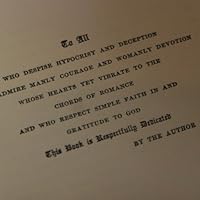
January 12, 2022
Endless incoherent word salad with no semblance of rational argument. Schmidt just repeats nonsense, the clearest of which was "professionals ought to conflict with their employers as part of a larger conflict between labor and capital." A complete waste of time, except for the following idea, read between the lines: universities inculcate the attitude that the right answer is the one your current boss would have given, because that is what pays on the job.
No thought is given to the possibility that the system rewards professional specialization and corporate hierarchy because their efficiency enriches the most people. However, specialization requires trust of other professionals in their own fields, even while incentivising the prioritization of one's own field to the detriment of others. This explains (as Schmidt does not) why most professionals (but not their managers) are progressives outside their workplaces.
No thought is given to the possibility that the system rewards professional specialization and corporate hierarchy because their efficiency enriches the most people. However, specialization requires trust of other professionals in their own fields, even while incentivising the prioritization of one's own field to the detriment of others. This explains (as Schmidt does not) why most professionals (but not their managers) are progressives outside their workplaces.

March 24, 2025
Thank you, Jeff, for writing this book. I’m happy I have obtained it and absorbed it, and I’m sorry I didn’t get a hold of it at the beginning of my career. I would have been able to maneuver much better.
My current goal is to get to early retirement as soon as possible. For that, I externalize having a disciplined mind and being a conformist to the organization- having the willingness and the ability to preserve the status quo.
My current goal is to get to early retirement as soon as possible. For that, I externalize having a disciplined mind and being a conformist to the organization- having the willingness and the ability to preserve the status quo.
Displaying 1 - 30 of 47 reviews